SUPPLY CHAIN & PROCUREMENT
Seasonal Silicone Mold Program for Bakery Brands: Buyer Guide
Plan a seasonal silicone mold program for bakery brands using sell-through dates, recipe trials, tooling gates, packout, capacity and replenishment controls.
DIRECT ANSWER
What B2B Buyers Need to Know
A seasonal silicone mold program for bakery brands should start with the final selling window and work backward through recipe trials, artwork approval, tooling, packaging and production capacity. Approve the mold with the bakery's real batter, oven and handling method, not just a supplier sample. Reserve a decision date for repeat orders, specify the complete packed SKU and keep alternate motifs or quantities conditional on evidence and capacity.
This guide is written for B2B importers, distributors, retailers, private-label brands, product developers, quality teams and sourcing managers. It provides a decision framework rather than legal advice or a universal specification. Product classification, use conditions and destination market should be confirmed before final testing, labelling or compliance decisions.
Key Takeaways
- Work backward from the shelf or bakery promotion date, not a vague launch month.
- Separate motif approval from recipe, oven, release and finished-cake validation.
- Freeze the sellable SKU before reserving tooling and production capacity.
- Use a contingency gate for late artwork or failed trials rather than hiding delay.
- Compare MOQ and carton assumptions against realistic seasonal demand.
- Keep repeat-order rights, mold custody and revision control explicit.
Seasonal Bakery Mold Program Gate Matrix
These gates express the dependency sequence rather than fixed lead-time promises. The buyer should insert actual supplier capacity, laboratory scope and market dates before accepting a calendar.
| Gate | Buyer decision | Evidence to release the next gate |
|---|---|---|
| Sell-through | Name the bakery promotion, sales channel and last useful arrival date | Approved channel calendar and quantity scenarios |
| Artwork | Freeze authorized motif, cake size and visual priority | Signed drawing, rights review and change log |
| Tooling | Approve cavity geometry, trial rounds and correction ownership | T0/T1 notes and production-tool sample identity |
| Recipe trial | Test the actual batter, oven, release and cleaning routine | Cavity-marked cakes and defect record |
| Packout | Approve the complete retail or bakery-operating unit | Physical sleeve/carton sample and case-count review |
| Replenishment | Define reorder trigger and reserved capacity | Forecast band, cutoff date and accepted first-off |
SECTION 01
Start with the Bakery Sales Window and SKU
Set the purchasing scenario with a realistic SKU mix, forecast, delivery window and cost-comparison basis. Anchor every gate to the last useful bakery selling date and the channel allocation lead time.
Define the sell-through deadline for seasonal silicone mold program for bakery brands
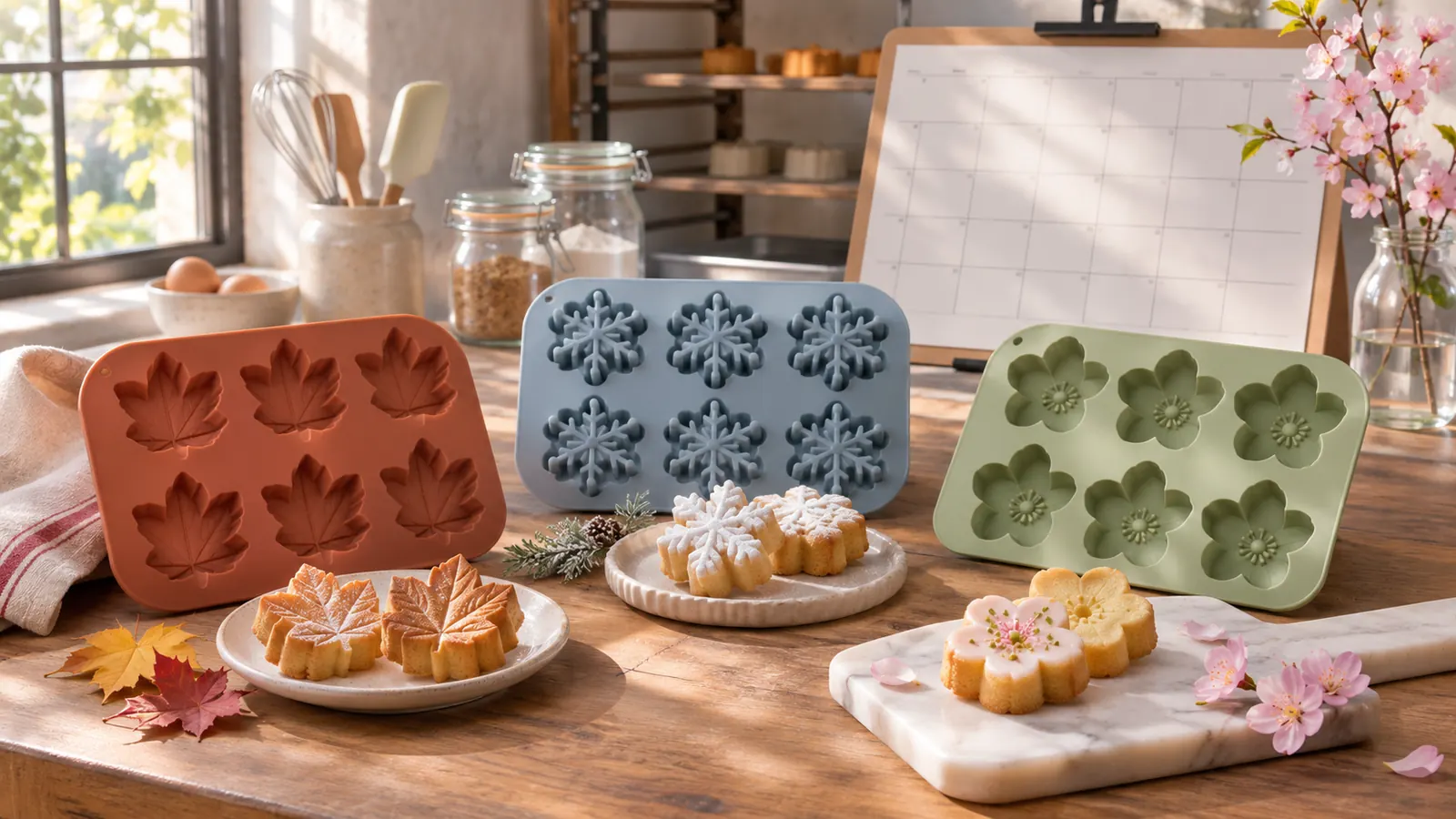
The date that matters to a bakery brand is the final useful selling day, not the day a mold leaves the factory. A leaf cake tray arriving after an autumn promotion or a snowflake tray arriving after holiday merchandising has little recovery value, even when the article itself is flawless. Begin with the shelf, wholesale or bakery-menu window and work backward through arrival, customs, packing, production, sample approval and tool correction. Assign an owner to each decision so that a missed gate has a visible consequence rather than a vague new target date.
We ask buyers to distinguish the first day of the season from the last day on which new stock can realistically sell. A distributor may require delivery well before bakeries need the molds because it must photograph, list and allocate them across accounts. A direct bakery program may need time to train staff and validate the recipe before the promotion opens. Put those channel-specific intervals on the same calendar as the factory milestones; otherwise a supplier's shipment date can look acceptable while the commercial launch is already late.
Choose the commercial SKU
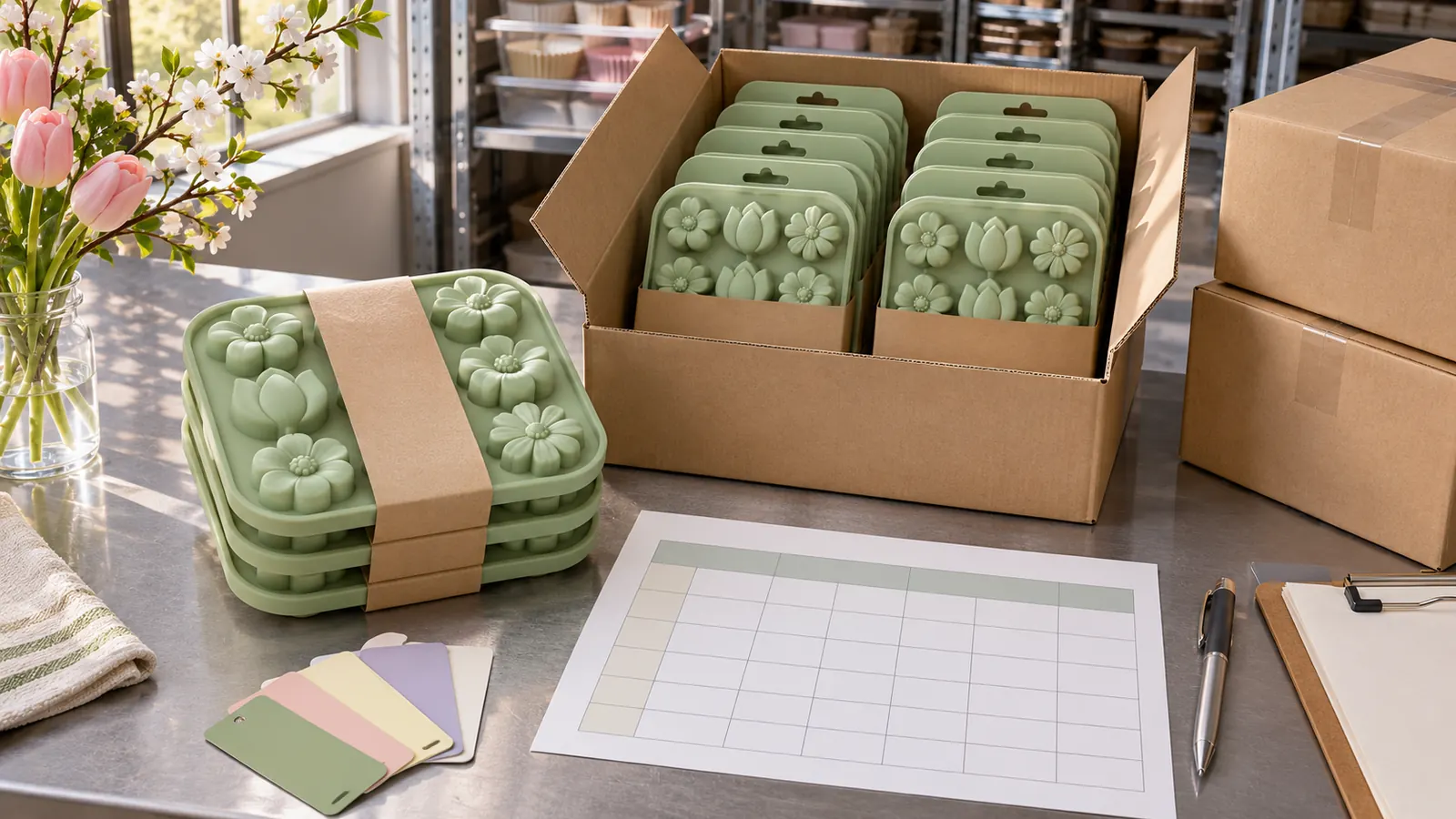
A seasonal mold is not one SKU until the buyer defines who will use it and what is sold. A bare tray for a professional bakery, a giftable retail mold with instructions and a three-season assortment have different packaging, evidence and replenishment requirements. Decide the cavity count, piece size, color, sleeve or carton, language set and case quantity before comparing quotations. The selling-unit definition determines whether the sample approval covers only the silicone or also a complete package that must survive warehousing and distribution.
Separate the motif family from the production item. A brand may want an autumn leaf, winter snowflake and spring flower under one visual program, but their relief depths, batter release and market dates will not necessarily share one validation result. Give each design a controlled drawing, sample code and approval record, even if they use similar compound or packaging. This makes it possible to launch one motif while holding another for correction without confusing stock, tooling or customer-facing claims.
Model demand scenarios
Seasonal demand is uncertain, so a single optimistic quantity is a poor basis for tooling and capacity commitments. Build conservative, base and upside cases by channel, then identify which demand evidence supports each case: firm orders, past sell-through, retailer allocations or a new concept test. Ask the factory for the minimum efficient run and the conditions for a later top-up, rather than assuming that any reorder quantity will fit the same unit price. Record the dates at which each quantity decision becomes binding.
A forecast should also state what happens to unsold stock. A neutral shape may be carried into another season, while a dated character, holiday color or printed sleeve may have almost no reuse. Estimate the exposure separately for molds, finished packaging and printed components; an overrun of sleeves can be just as real as an overrun of silicone. Make the buyer's markdown, transfer or cancellation decision explicit before selecting a larger production batch for apparent unit-cost savings.
SECTION 02
Sequence Artwork, Tooling and Recipe Trials
Separate fixed development costs from variable production and logistics costs before negotiating commercial terms. Freeze motif and cavity decisions before booking tool corrections or recipe trials.
Lock motif rights and artwork
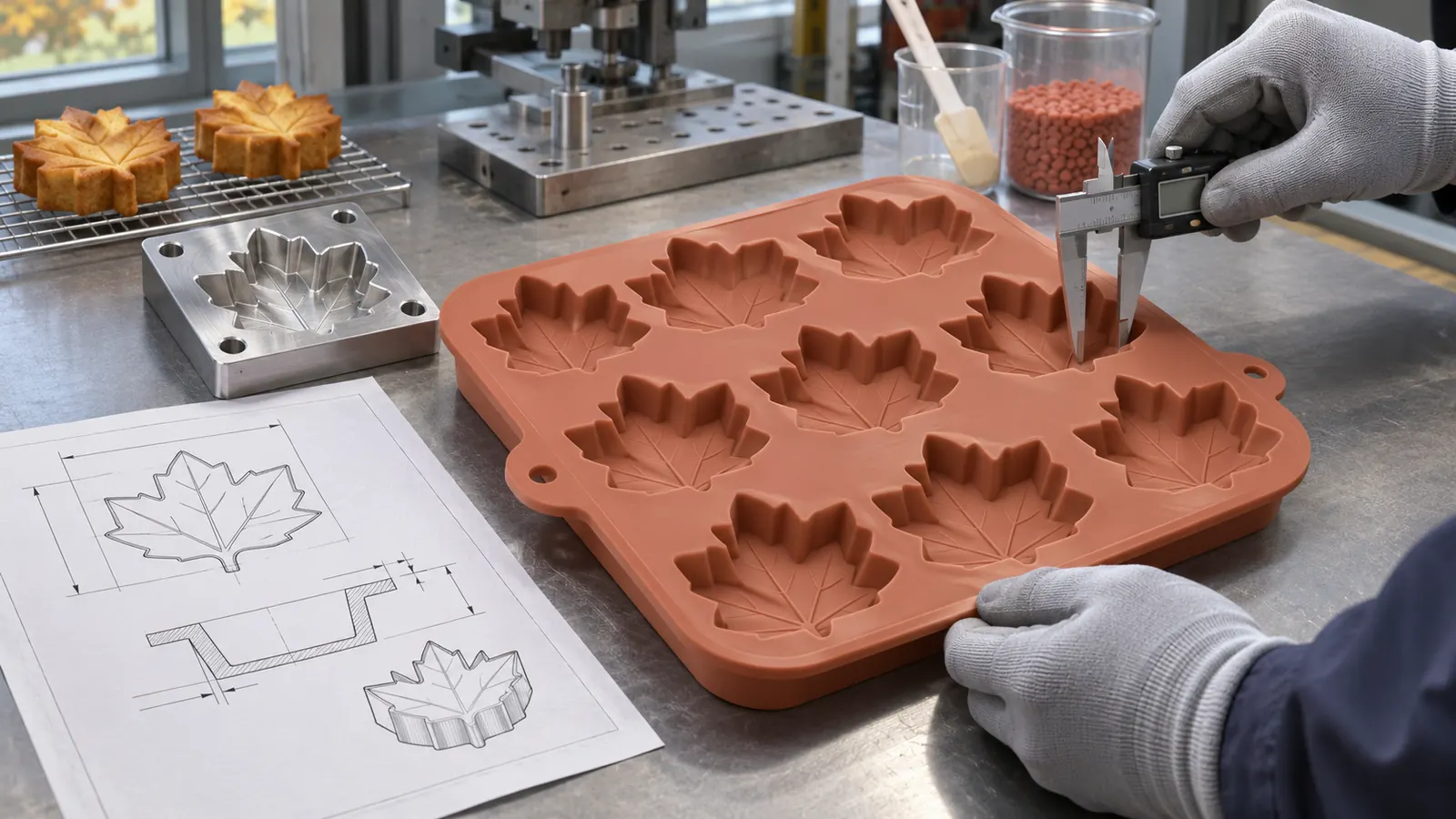
Artwork rights and geometry approval belong on the early critical path. Confirm that the bakery brand is authorized to use the motif, then freeze the vector or relief master from which the cavity will be developed. Flag delicate points, narrow channels and visual features that may need a radius or draft to release the cake. The factory should return a marked design-for-manufacture review showing what changed and why; a silently simplified motif can meet a nominal size while losing the brand element that justified the seasonal product.
The brand team and engineering team should sign the same revision, not parallel files with similar names. When an approved drawing changes, identify the affected tool insert, sample, printed sleeve, online image and testing record. Some cosmetic changes do not alter food-contact scope but still require a fresh cake trial, while a compound or pigment change may reopen evidence review. A change log with one owner prevents a late marketing correction from reaching production as an informal email attachment.
Review cavity DFM and tool strategy
Cavity engineering needs to match the bakery's real process rather than a generic catalog example. Record target cake volume, fill level, batter viscosity, oven arrangement, demolding temperature and cleaning routine before setting wall, base, rim and relief geometry. A deep decorative feature can bake unevenly or trap residue; a thin edge can distort when a full tray is lifted. Compare a first-off mold with the actual tray or rack that staff will use, including how it is carried into and out of the oven.
Tooling strategy can affect the calendar as much as unit economics. A dedicated multi-cavity tool may support the target output but leave little flexibility for a late motif correction; a smaller trial or insert approach may buy learning at a different per-unit cost. Request separate assumptions for prototype, production tool, cavity count, correction rounds and ownership. The buyer should know whether a quote includes the physical revision needed for release or merely the first attempt at it.
Plan sample rounds and correction buffer
A timeline that runs directly from first sample to mass production assumes the first sample will pass. Reserve a review-and-correction loop with named approvers from bakery operations, brand, quality and procurement, and specify the evidence they need. A T0 tray can reveal wall imbalance, poor release or blurred detail that is invisible in a rendering. T1 or later trials should recheck the affected cake and mold features; a tool correction is not complete just because the steel was modified.
The sample calendar should show the buyer's response time as well as the supplier's work time. If a holiday team cannot evaluate samples for a week, the resulting gap belongs in the critical path, not in a supplier delay category. Set a decision deadline for each gate and a fallback option if it fails, such as reducing cavity complexity or moving a motif to the next campaign. This protects the core launch from a single decorative feature that cannot be made robust in time.
SECTION 03
Validate Packout, Capacity and Evidence
Connect capacity, inspection, packaging and shipment readiness to named milestones and escalation triggers. Approve the exact packed SKU and manufacturing evidence before reserving the production run.
Test with the real bakery recipe
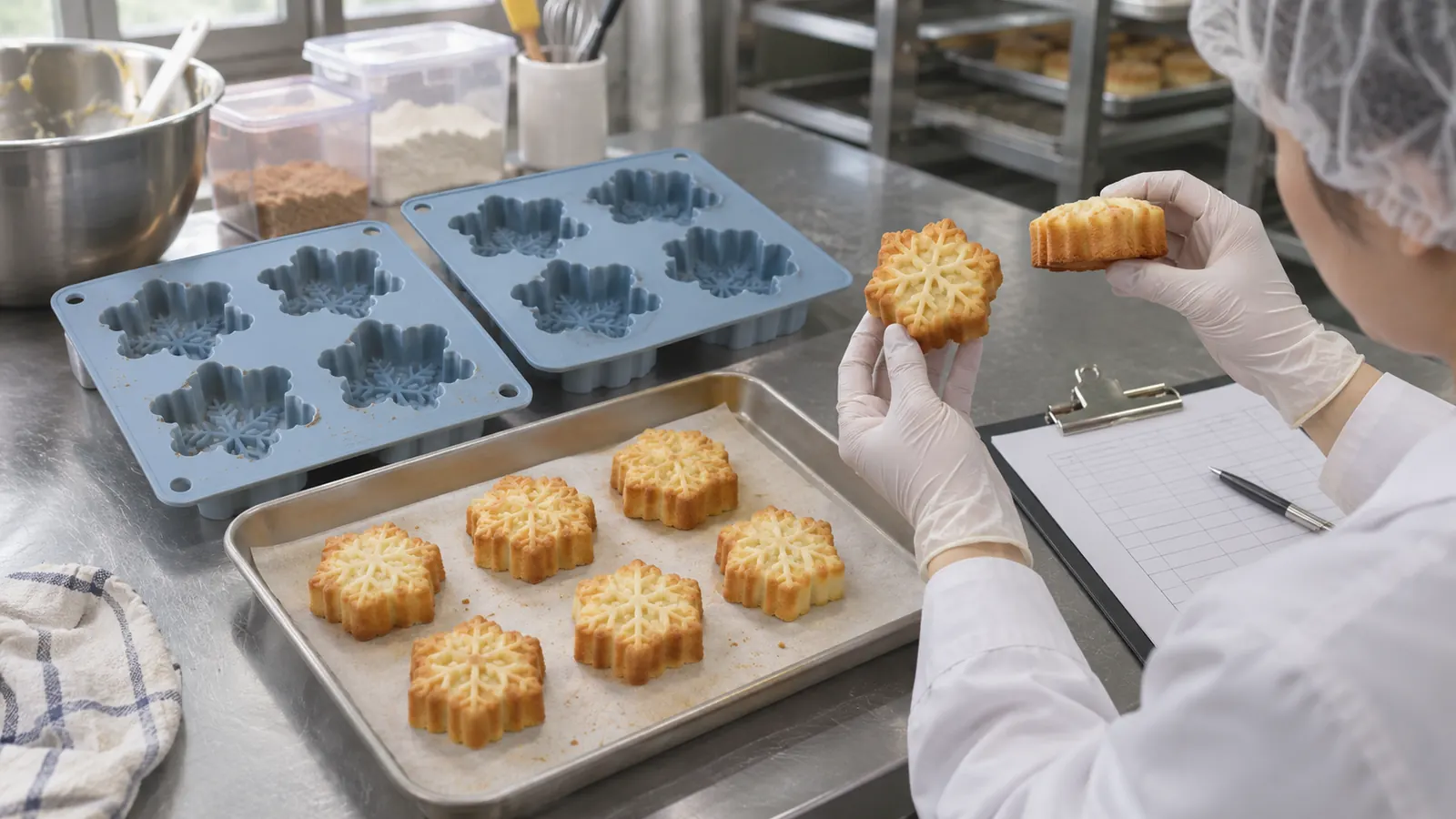
A bakery test should use the intended recipe family, fill quantity, oven setup and staff handling sequence. Record the batter identifier, fill method, bake and cool conditions, release action and cleaning steps beside the cavity-numbered samples. Compare intact cake rate, browning, relief definition and residue across more than one cycle. A supplier's showcase cake proves only that one demonstration was possible; it does not establish that the buyer's ordinary production line will repeat the result.
Match food-contact and claim scope
Food-contact records should identify the finished mold, material formulation, pigments and intended destination use. A general compound statement does not automatically cover every seasonal color or decoration, and a report for another tray does not approve the current selling unit. The European Commission describes the broader food-contact framework, but the applicable requirements depend on market, material and use conditions. Keep evidence tied to the tested sample revision and separate legal scope from mechanical cake-release performance.
Approve packaging and freight form
The packed unit is a second engineering specimen. Check whether a sleeve or tight carton bends the tray, transfers odor, obscures care instructions or lets cavities be crushed in a master case. Review the complete printed artwork against the approved mold revision and intended markets; a claim that was never validated can be introduced by packaging even when the silicone is unchanged. Retain a packed reference and a shipment arrangement showing case count and orientation.
SECTION 04
Set Purchase-Order and Replenishment Gates
Protect replenishment by recording review conditions for forecasts, prices, lead times, materials and order changes. Make the reorder cutoff and stock-exit decision explicit before the season closes.
Reserve production capacity
Production capacity should be treated as a reservation with conditions, not an implication of a quotation. Ask when material, molds, color, printing and packaging must be released to protect the intended run, and who has authority to confirm the slot. A bakery brand with three seasonal motifs may need staged output rather than one simultaneous factory order. Document what happens if the buyer delays artwork, a test fails or an upstream component becomes unavailable.
Issue the purchase order on one baseline
The purchase order should point to one coherent approved baseline: drawing revision, golden mold, recipe-trial record, material identity, packout, defect limits, quantity, price and shipment terms. If a phrase such as 'same as sample' is used, identify the sample code and custody location. Separate one-time tooling charges from mold unit price, printed components and correction costs. Otherwise procurement can approve a low price that excludes the very work necessary to meet the seasonal window.
Define the reorder and exit rule
A repeat run needs its own decision rule. Define the sales signal, inventory threshold, latest useful reorder date and quantity band before the first shipment, then compare each new first-off with retained references. A replacement color, tool repair or different pack can change the approved article even when the SKU name stays the same. When the reorder cutoff passes, the buyer should either close the program or explicitly approve a later channel; automatic replenishment is risky for time-limited motifs.
ACTION FRAMEWORK
Buyer Checklist Before Commercial Approval
Use this checklist as a meeting agenda. It is intentionally concise so the team can identify missing evidence without replacing its own quality, legal or supplier-management procedure.
| Check | Question | Why It Matters |
|---|---|---|
| Calendar | What is the last date a shipment can still support the seasonal sale? | A technically good mold has no value after the promotion closes. |
| Bakery process | Which batter, oven, release and cleaning sequence is intended? | A supplier display sample is not a recipe-specific production trial. |
| Artwork | Who owns the motif and approves tool-safe changes? | Late design revisions can reset sample and packaging gates. |
| Tooling | How many trial rounds and corrections are included? | An unpriced correction can consume the only launch buffer. |
| Packout | Is the selling unit a bare mold, sleeve, set or bakery-use case? | Carton, labels and master-case quantity affect landed readiness. |
| Reorder | What demand signal and cutoff authorize another run? | Seasonal demand can expire before replenishment arrives. |
NEXT READING
Continue the Supplier and Product Review
These internal resources connect the guide with Naike Silicone product, factory, customization and inquiry pages. Open the route that matches the next decision in your project.
Explore silicone kitchen products
Use explore silicone kitchen products to close this program gate. Attach the explore silicone kitchen products finding to the current bakery mold revision and calendar.
Open internal resource →Review custom silicone manufacturing
Use review custom silicone manufacturing to close this program gate. Attach the review custom silicone manufacturing finding to the current bakery mold revision and calendar.
Open internal resource →Review mold trial sample approval
Use review mold trial sample approval to close this program gate. Attach the review mold trial sample approval finding to the current bakery mold revision and calendar.
Open internal resource →Review a fine-detail chocolate mold program
Use review a fine-detail chocolate mold program to close this program gate. Attach the review a fine-detail chocolate mold program finding to the current bakery mold revision and calendar.
Open internal resource →Review food-contact migration test conditions
Use review food-contact migration test conditions to close this program gate. Attach the review food-contact migration test conditions finding to the current bakery mold revision and calendar.
Open internal resource →Review custom private-label packaging
Use review custom private-label packaging to close this program gate. Attach the review custom private-label packaging finding to the current bakery mold revision and calendar.
Open internal resource →Request a seasonal bakery mold program review
Use request a seasonal bakery mold program review to close this program gate. Attach the request a seasonal bakery mold program review finding to the current bakery mold revision and calendar.
Open internal resource →PRIMARY REFERENCES
Authoritative External Sources
The sources below are official primary references. Applicability depends on the product, intended use and destination market. Buyers should obtain qualified advice for final legal or regulatory decisions.
European Commission: Food Contact Materials
Official EU overview of food-contact material requirements; finished-product applicability depends on market, formulation and intended use.Check how European Commission: Food Contact Materials applies to this finished mold, market and decision. Keep the European Commission: Food Contact Materials scope alongside the buyer approval record.
ISO: Quality management principles
Official ISO overview of process-based quality management; it does not certify an individual product or supplier.Check how ISO: Quality management principles applies to this finished mold, market and decision. Keep the ISO: Quality management principles scope alongside the buyer approval record.
WIPO: Industrial designs
Official WIPO overview of industrial-design protection; ownership and freedom-to-operate questions require project-specific review.Check how WIPO: Industrial designs applies to this finished mold, market and decision. Keep the WIPO: Industrial designs scope alongside the buyer approval record.
GS1 Global Traceability Standard
Official GS1 framework for interoperable traceability; project records still need product-specific identifiers and ownership.Check how GS1 Global Traceability Standard applies to this finished mold, market and decision. Keep the GS1 Global Traceability Standard scope alongside the buyer approval record.
BUYER QUESTIONS
Frequently Asked Questions
When should a bakery brand begin a seasonal mold program?
Begin from the last useful selling date and work backward through channel allocation, shipping, production, packed-unit approval, recipe trials and tooling correction. Confirm real supplier lead times rather than accepting a universal number.
Can one test cover all seasonal motifs?
Not automatically. Similar material may support part of the evidence file, but each cavity shape can change filling, baking, release, cleaning and visual acceptance. Keep motif-specific sample and trial records.
What is the most important bakery sample?
A production-representative mold tested with the intended batter, oven and operator routine is more useful than a flawless presentation sample. Retain accepted and failed cakes by cavity.
How much correction time should be reserved?
Reserve a defined T0 review and at least one possible correction-and-retest gate in the agreed calendar. The exact duration depends on tool design, buyer response time and factory capacity.
Should the brand reserve production capacity before tooling approval?
A conditional reservation can be useful, but state the release requirements and cancellation or delay terms. A quotation alone should not be treated as a confirmed factory slot.
What belongs in the purchase-order baseline?
Reference the approved drawing, mold sample, material, packaging, defect limits, quantity, tooling terms and shipment conditions. Name the approver for any substitution.
When is a seasonal reorder too late?
It is too late when the realistic arrival and channel-allocation time leaves insufficient useful selling window. Set that cutoff before the first order and revisit it using actual sell-through.
Editorial and Scope Note
Conclusion: Seasonal Silicone Mold Program
Move from buyer research to a controlled supplier brief
The best seasonal mold program is the one that can still arrive, perform and sell within the bakery's actual window. Share Naike Silicone the approved motif, target cake, recipe and oven conditions, market, quantity bands and packaging concept so the factory can return a gate-based sample and quotation plan rather than an unsupported launch-date promise.
This factory-insider guide supports sourcing preparation and supplier discussion for seasonal silicone mold program for bakery brands. It does not replace product-specific engineering, laboratory, regulatory, legal or commercial review for the destination market.