CUSTOM MANUFACTURING & TOOLING
Custom Silicone Product Packaging Development for Private-Label Programs
Plan custom silicone product packaging from a physical sample through dieline, artwork, pack-out and approval gates. Request a private-label review.
DIRECT ANSWER
What B2B Buyers Need to Know
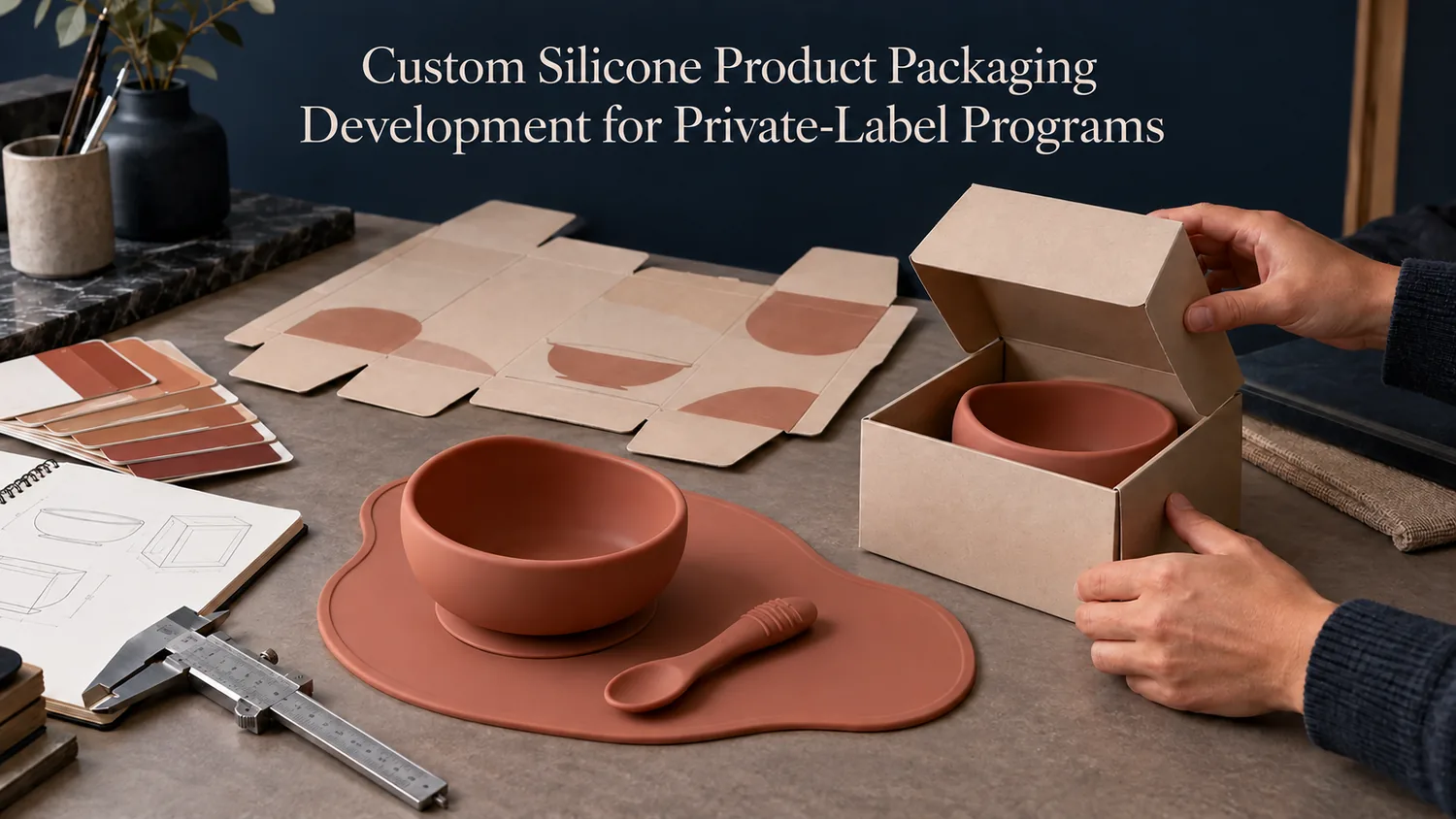
Custom silicone product packaging should be developed around the approved physical selling unit, not an artwork file alone. Measure the molded part and accessories, prototype its restraint and carton, then approve dieline, print proof, labels and packed sample under one revision. Buyers should set acceptance checks and change owners before ordering printed materials or releasing a private-label production run.
The structural pack and printed claims are separate approvals. Confirm the exact selling-unit revision, sales channel, destination and responsible artwork owner; a supplier's generic sample or another market's printed copy cannot authorize this package.
Key Takeaways
- Freeze the product, accessories and selling-unit count before sizing a private-label package.
- Approve a physical white sample before paying for printed cartons or inserts.
- Separate structural dieline approval from artwork, barcode and claim approval.
- Test the fully assembled pack after agreed conditioning and handling, not just the empty box.
- Track product, artwork, carton and master-carton revisions as one release set.
- Treat MOQ, printing price and lead time as conditional on material, color, quantity and production schedule.
Packaging Development Gates for a Silicone SKU
Each gate needs its own tangible approval; passing a digital layout does not establish packed-product fit.
| Gate | Buyer decision | Evidence to retain |
|---|---|---|
| Selling unit | Which molded parts, accessories and instructions ship together? | Controlled component list and production-representative sample |
| Structural prototype | Does the insert restrain the part without permanent deformation? | White sample, measured clearances and storage observations |
| Print release | Are artwork, claims, code and color correct on the erected carton? | Signed print proof and destination-market copy approval |
| Pack-out release | Does the assembled unit survive the agreed route and inspection? | Packed golden sample, test plan, carton specification and sign-off |
SECTION 01
Start with the Finished Silicone Selling Unit
Convert the commercial concept into controlled dimensions, functions and approval criteria before DFM begins.
Name the Selling Unit and the Primary Channel for custom silicone product packaging
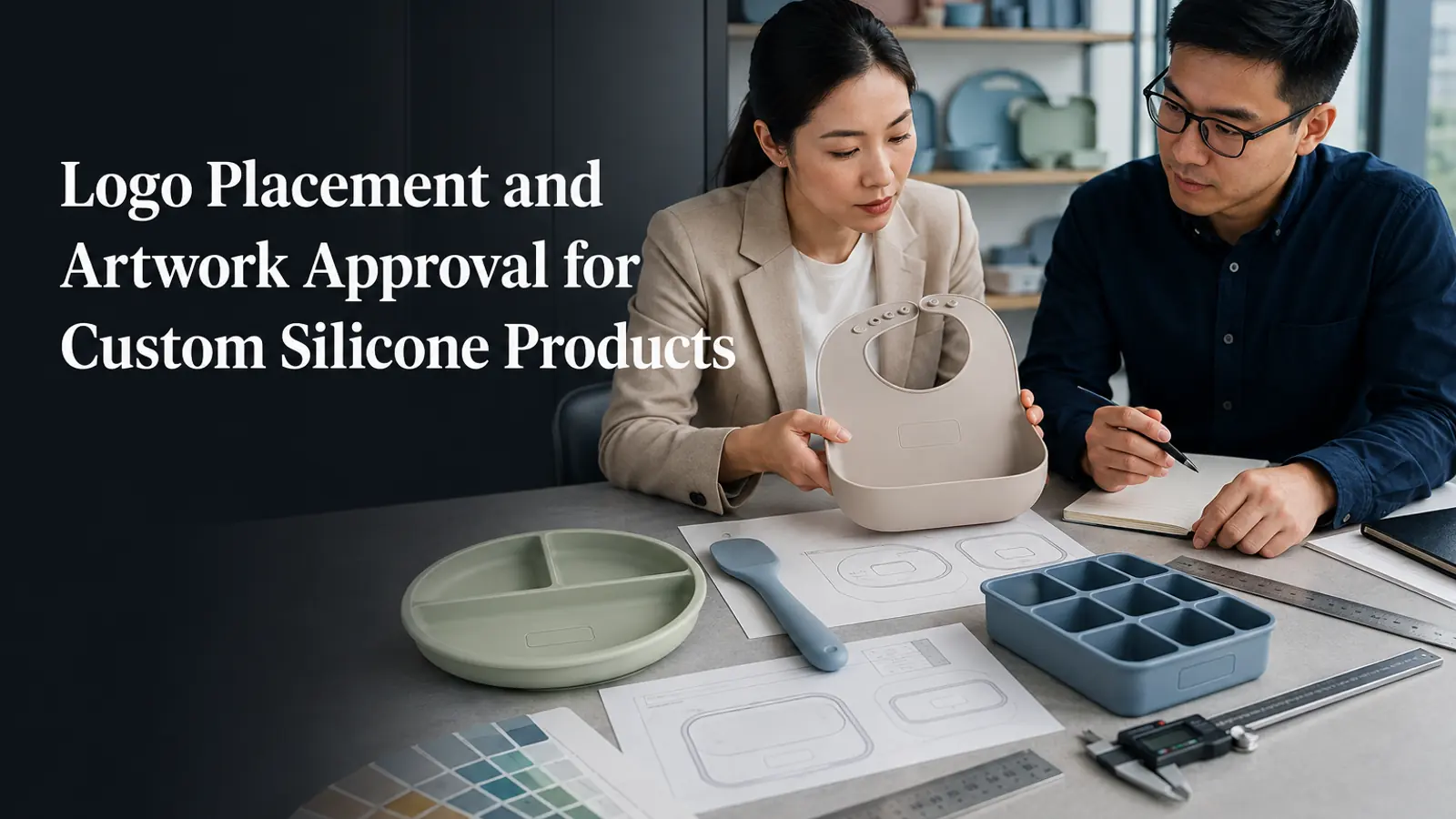
Begin with a photograph and component count of what the customer will actually buy. A bowl, spoon and mat packed together are one selling unit, but three loose samples on a desk do not define their final orientation, care leaflet or retail code. Ask the brand to name the first sales channel and destination before a designer draws the carton. Shelf display, parcel delivery and distributor replenishment make different demands on access, protection and outer dimensions.
We put the selling-unit definition beside the current molded-part revision and a named approval owner. This stops a packaging agency from designing around a prototype that differs from the production tool, or assuming an accessory is optional when it is actually included. Record the target pack quantity, languages, hanging or stacking position and any channel-specific identification. A change to the customer-facing contents then becomes a formal packaging change, not an informal layout tweak.
Measure the Actual Silicone Part and Accessories
Silicone can flex under a caliper, so one maximum dimension is rarely enough. Measure the production-representative part at its relaxed shape, note local protrusions such as handles and suction bases, and check whether folding is an intended user action or merely an expedient packing trick. For a multi-piece kit, measure the assembled envelope and plausible movement between pieces. Keep the sample identifier and measuring condition with those dimensions.
An insert that clears a rigid drawing may still press against a soft rim for weeks in storage. Try the real molded part in the proposed orientation, inspect contact points and allow the agreed recovery period after unpacking. If color, compound, wall thickness or tool revision changes, repeat the fit review where it could matter. Packaging dimensions should follow the approved product, not force an unapproved deformation into the product specification.
Decide What the Package Must Protect
Write the protection problem before selecting a material. Does the part need to stay flat, avoid scuffing on a printed surface, keep accessories from escaping, or preserve a clean food-contact surface until first use? Different risks need different restraints and barriers; a decorative sleeve may identify the product but do little to control a loose metal insert. Ask the receiving and fulfillment teams which handling events have caused returns in comparable products.
Separate appearance protection from physical restraint and hygiene presentation. The package may need a washable or removable barrier, but no material choice should be represented as a compliance certification without an applicable assessment. Identify the surfaces that contact printed board, adhesive, film or another component during storage. Then set a simple inspection rule for marks, residual curl, missing parts and dust after opening the proposed pack.
SECTION 02
Turn Dimensions into a Physical Packaging Prototype
Close the process, material and mold decisions that determine tooling scope, trial evidence and revision cost.
Prototype the Dieline Before Artwork
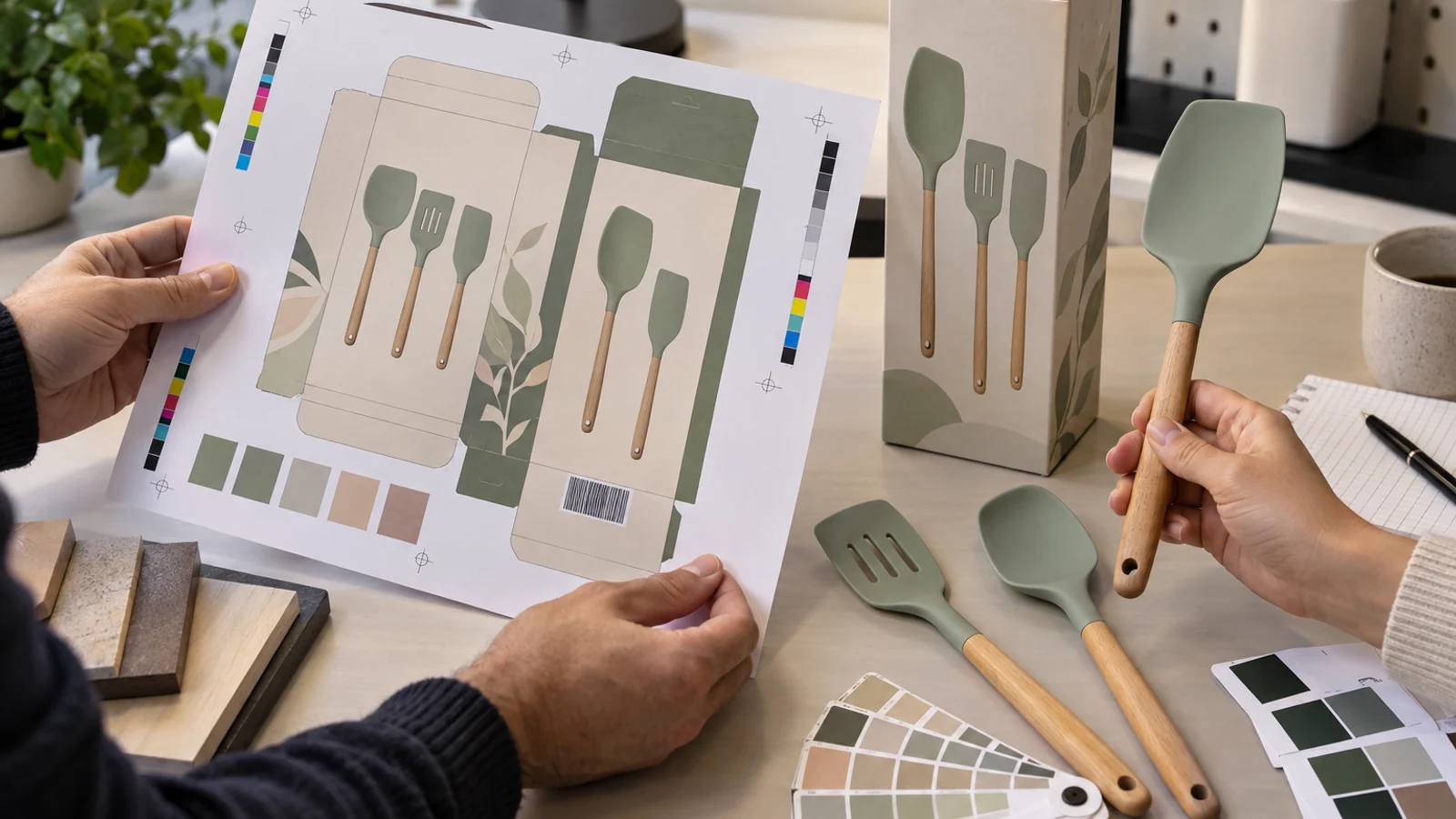
Start structural work with an unprinted white sample, erected at the intended board grade and fold direction. Load the actual silicone parts, close the pack as an operator would and open it as a customer would. Check flap access, locking tabs, internal clearance and where the product can shift when the carton changes orientation. A digital dieline can identify cut and crease positions, but cannot validate the assembled behavior by itself.
Mark measurements on the prototype after handling rather than approving only the designer's flat file. If a suction plate's flange catches the top flap, change the insert or orientation and issue another numbered sample. Do not buy printed inventory while those structural revisions remain open. The white-sample approval should state which product revision, insert revision and packaging material were used, along with the person who accepted them.
Set Insert Clearance and Product Orientation
Restraint should hold the part without permanently changing its usable shape. For a rolled mat, agree how long it may remain rolled, the unpacking recovery interval and acceptable edge lift; for a molded bowl, check pressure at the rim and base. The lowest-cost insert is not automatically the best when it adds assembly errors or leaves visible impressions. Compare the loaded pack after a stated storage period, not only immediately after insertion.
Orient the product for efficient packing and a credible first impression. An instruction card can protect a surface or act as a spacer, but its presence and placement must be controlled in the bill of materials. If an accessory has a sharp or heavy edge, prevent it from rubbing against the silicone in transport. Photograph the approved arrangement from above and from the opening side so factory staff can repeat it without interpreting a marketing rendering.
Review Unboxing and Assembly at the Packing Bench
Run a small packing-bench trial before declaring a structure ready. Give the unprinted parts and a one-page draft instruction to an operator who did not design the package, then observe the actual loading sequence. Count touches, awkward rotations, misfolded flaps and any place where a component can be omitted. A package that works only when the designer assembles it carefully may create avoidable line defects.
The unboxing check is separate from the packing trial. Open a sealed sample without special tools and see whether the customer can identify all components, instructions and any intended protective material. Record whether the product can be removed without pulling on delicate features. These observations may justify a small structural revision even if carton strength is sufficient; the selling experience is part of the private-label specification.

SECTION 03
Approve Print, Identity and Distribution Evidence
Treat each mold trial as a measured engineering gate rather than a visual sample-selection exercise.
Separate Structural Approval from Print Approval
Treat the dieline and graphic artwork as separate controlled objects. Structural approval confirms cut, crease, glue area, material, fit and closure; print approval confirms the visual and informational content on those surfaces. A brand can approve beautiful graphics while the carton still fails to close around a thickened silicone part. Conversely, a sound white sample says nothing about the correctness of a barcode or market claim.
Set two sign-off fields and preserve the exact file versions. The packaging converter should receive the locked structural file with the relevant print zones, while the brand and responsible market reviewer examine copy on an erected proof. If a late logo reposition changes the glue flap or visibility panel, send the structure back through fit review. This avoids treating artwork changes as harmless merely because the external box dimensions appear unchanged.
Approve Color, Barcode, Copy and Market Claims
Check color under agreed viewing conditions on the material that will actually be printed. Screen previews are useful for layout, but board texture, coating and ink can shift appearance relative to a silicone shade. Compare a physical printed proof with the molded product and a retained brand reference. Record acceptable variation where the two materials cannot reasonably look identical, rather than repeatedly requesting an impossible visual match.
The brand should own product name, barcode assignment, country-specific statements, care language and substantiation of safety or certification claims. We can flag where the space is insufficient or where the printed copy differs from the approved brief, but factory approval does not create a legal authorization for a destination market. Check symbol placement and scanner readability on an erected pack, not only on a PDF. Retain the final signed proof and the language version used for each SKU.
Evaluate the Packed Unit Under Agreed Conditions
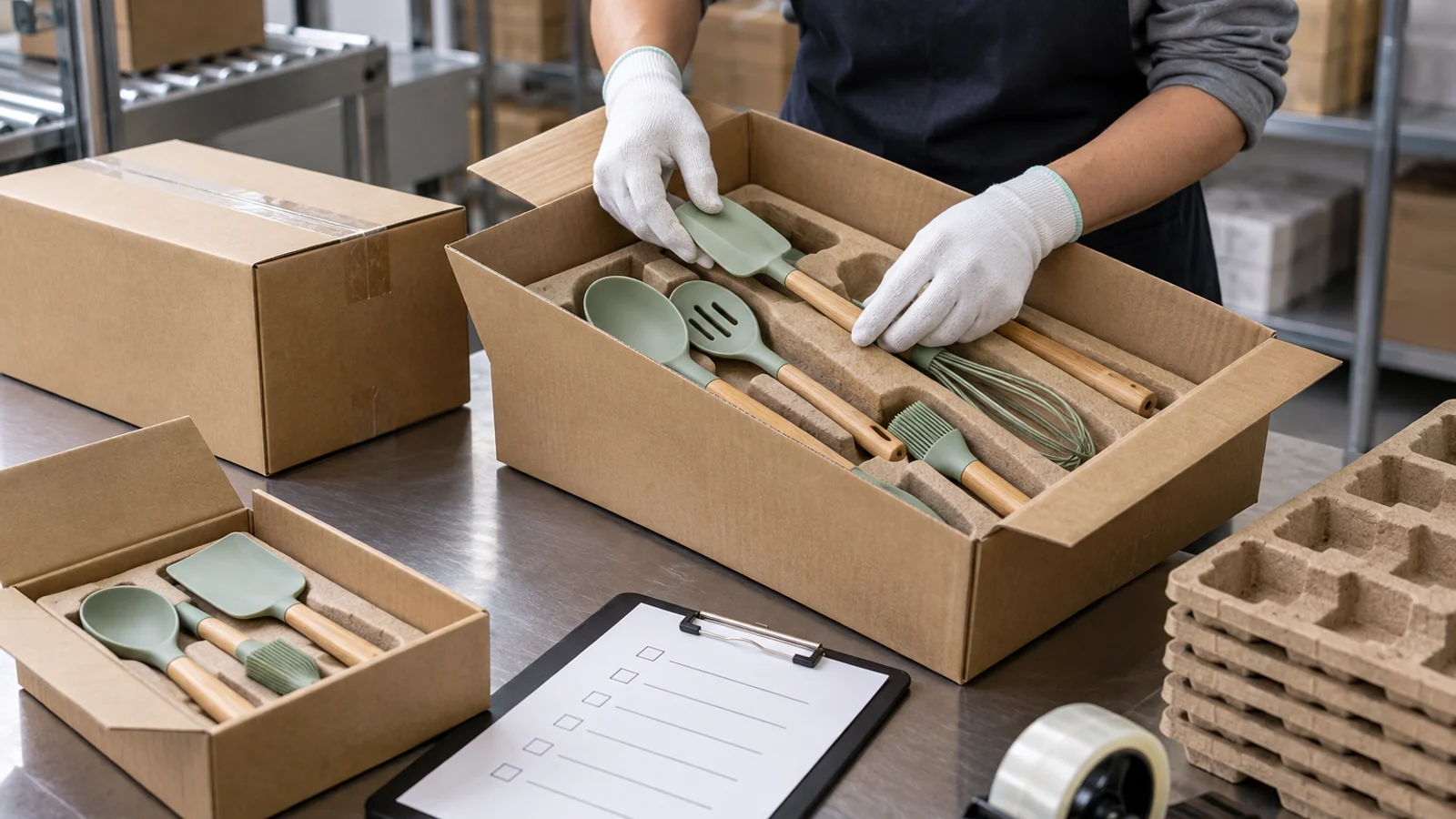
A filled retail carton is the unit to evaluate, not a blank printed board. Define the expected route, master-carton configuration, handling events and acceptance criteria with the logistics team. ISO 2233 describes conditioning of complete, filled transport packages and unit loads before testing; it does not certify a specific silicone SKU or prescribe every shipment simulation. Choose a conditioning and test program appropriate to the actual distribution exposure.
After the agreed handling sequence, inspect the outer carton, insert, product shape, surface and component count against the retained golden pack. Note the sample lot, orientation, conditioning period and any damage or movement rather than reporting a single unqualified 'pass.' If a different channel uses a parcel shipper instead of pallet distribution, reassess the package for that route. A successful one-off test cannot guarantee every future shipment without consistent materials and pack-out.
SECTION 04
Release a Repeatable Private-Label Pack-Out
Release production only when drawings, golden samples, inspection records and change authority describe the same revision.
Translate the Golden Pack into Factory Instructions
Convert the accepted sample into an operator-readable sequence: verify product revision, place the accessory, fold the insert, orient the silicone item, add leaflet, close and apply the correct identification. Include clear photographs of the finished interior and closed pack. Specify counts per retail unit, inner and master carton, plus any seal or label location. Inspectors then have observable criteria rather than an instruction to 'pack neatly.'
Set a first-article pack approval at the start of each relevant run. Check board cut, print version, insert size, packing direction and closure with production parts before thousands of units are assembled. If more than one language or color variant is on the line, separate components and record line clearance between SKUs. The quality file should connect the packed sample to the production order and retain a route for resolving deviations.
Quote Materials, Tooling and Printing by Revision
Ask for a quotation with product, structural insert, printed carton, tooling or die, proofing, assembly and master-carton assumptions visible. Printed-pack minimums may differ from silicone molding minimums, and multiple artwork variants can divide the quantity available to each printer run. Compare the cost of a revised dieline or second proof separately from the recurring pack cost. A low quoted box price is not the same as a fully approved finished-SKU cost.
The factory schedule starts to become reliable after the structure and artwork are approved, not when the initial concept is emailed. Board supply, ink proofing, mold readiness, packaging assembly labor and the reserved production slot can each become the critical path. State first-order and annual quantities by SKU and market, then ask which inputs drive MOQ and lead time for that particular configuration. Capacity and price should be reconfirmed if volumes, pack dimensions or delivery phases change.
Control Reorders and Packaging Changes
Keep one golden pack containing the approved product revision, insert, print, leaflet and closed carton, with digital references to the same versions. Record who owns structural files and brand artwork, where printing dies are held, and how replacement materials are qualified. A reorder should cite that release set and its destination market rather than a vague instruction to repeat the last box. This is especially important when a brand refresh changes only one visible panel.
List explicit change triggers: molded geometry, accessory supplier, silicone color, printed board, coating, ink, barcode, care copy, master-carton count or shipping route. Decide who can approve each type and whether a new fit sample, proof or packed-unit test is required. WIPO's industrial-design overview can inform a separate conversation about protecting distinctive visual appearance, but ownership and filing need qualified advice. The operational goal is simpler: no silent substitution in a customer-facing package.
ACTION FRAMEWORK
Buyer Checklist Before Commercial Approval
Take this gate-by-gate list into the packaging approval meeting. Name an owner and a physical artifact for each unresolved fit, artwork, distribution and commercial question.
| Check | Question | Why It Matters |
|---|---|---|
| Product baseline | Is the molded revision and full selling-unit component list frozen? | A change in flange, handle or accessory can invalidate the structural sample. |
| Pack mission | Which shelf, e-commerce, gift or distributor channel is primary? | Visibility, handling, unit cube and opening experience differ by channel. |
| Fit and restraint | Where is the part supported and how much movement is allowed? | A tight insert may deform silicone while loose packaging permits abrasion. |
| Artwork authority | Who approves copy, color, barcode, care language and legal marks? | Factory print approval cannot substitute for brand and market ownership. |
| Prototype gate | Was an erected white sample loaded with actual components? | A flat dieline does not prove assembly, opening or dimensional fit. |
| Distribution test | Which packed sample, conditioning and handling scenario is agreed? | Method, acceptance and logistics route determine what a test result means. |
| Factory instruction | Is the loading sequence, count and carton mark controlled? | Repeatable packing depends on an operator-readable specification. |
| Commercial release | Are print minimums, reorders, delivery dates and change costs explicit? | MOQ, unit price and lead time depend on the approved configuration. |
NEXT READING
Continue the Supplier and Product Review
Move from the physical silicone SKU to private-label development, then use the two related guides only for format and cost comparison. The next decision should determine which physical sample or signed file is missing.
Explore private-label silicone product development
Consult explore private-label silicone product development when preparing the physical pack prototype, artwork gate or final quotation brief.
Open internal resource →Review silicone customization and sampling
Consult review silicone customization and sampling when preparing the physical pack prototype, artwork gate or final quotation brief.
Open internal resource →Compare silicone packaging formats
Consult compare silicone packaging formats when preparing the physical pack prototype, artwork gate or final quotation brief.
Open internal resource →Understand silicone packaging cost drivers
Consult understand silicone packaging cost drivers when preparing the physical pack prototype, artwork gate or final quotation brief.
Open internal resource →Review a silicone pet feeding set pack-out
Consult review a silicone pet feeding set pack-out when preparing the physical pack prototype, artwork gate or final quotation brief.
Open internal resource →Explore all silicone product categories
Consult explore all silicone product categories when preparing the physical pack prototype, artwork gate or final quotation brief.
Open internal resource →PRIMARY REFERENCES
Authoritative External Sources
ISO references frame conditioning and handling communication, while WIPO describes the separate industrial-design context. These sources do not approve any specific carton, artwork, product claim or transit route.
ISO 2233:2000 Packaging Conditioning for Testing
ISO identifies conditioning of complete, filled transport packs before testing; agree separately on the actual distribution simulation and pass criteria.
ISO 780:2015 Distribution Packaging Symbols
ISO describes distribution-handling symbols where needed; approve the marks and their placement for the real shipping configuration.
WIPO: Industrial Designs
WIPO explains the industrial-design context for distinctive visual appearance; it is not a private-label ownership or filing opinion.
BUYER QUESTIONS
Frequently Asked Questions
When should a buyer start custom packaging design for a silicone product?
Begin the brief early, but lock dimensions only after a production-representative product and complete selling-unit list are available. A preliminary dieline can support budgeting; the structural release should follow physical fit and recovery checks. Keep product, insert and artwork revisions linked so later molding changes trigger a packaging review.
Can digital artwork approval replace a physical packaging sample?
No. A flat file can confirm copy and layout but cannot show carton erection, insert pressure, product movement or the opening experience. Approve an unprinted structural sample first, then compare a printed proof with the actual silicone product. Retain a packed golden unit as the factory reference.
Who approves private-label claims, barcode and destination-specific copy?
The brand or its authorized market reviewer owns those decisions. The factory can compare supplied artwork against the approved file and flag production constraints, but cannot infer a certification or legal claim from a generic material report. Record the responsible approver and applicable SKU, language and destination.
How should the packed silicone product be evaluated for shipping?
Agree on the filled pack, expected route, conditioning, handling method and acceptance criteria before testing. ISO 2233 is a reference for conditioning complete filled transport packs before tests, not a certificate that this SKU passed transit validation. Inspect product deformation, abrasion, component count and carton condition after the defined exercise.
What determines minimum order quantity and packaging lead time?
The approved carton material, printing process, number of artwork variants, die requirements, quantity per SKU and current supplier schedule all matter. Silicone molding and printed-pack minimums can differ, so quote the finished selling unit with those assumptions visible. Reconfirm price, MOQ and delivery timing when structure or volumes change.
Which files should accompany a repeat private-label packaging order?
Reference the approved product drawing and molded sample, structural dieline, signed print proof, bill of materials, packed golden sample, inspection instructions and carton specification. Identify every revision and destination. Any substitution in material, copy, insert geometry or shipping route should pass the agreed change-control gate before release.
Editorial and Scope Note
Conclusion: Custom Silicone Product Packaging Development
Move from buyer research to a controlled supplier brief
A private-label package is ready for quotation and production only when its product revision, approved selling unit, structural white sample, signed print proof, packed golden sample and factory instruction agree. Naike Silicone can review the molded geometry and sample fit with the buyer's packaging team, while the brand remains responsible for artwork, legal statements and market-specific claims. MOQ, unit price, print cost, lead time and capacity depend on the selected materials, print quantity, approved design and available production window. Share a current product sample or drawing, component list, destination market, sales channel and target first-order volume to request a packaging prototype and quotation review.
Ask for a review of the approved physical selling unit and pack-out; no structural prototype or print proof alone establishes destination-specific compliance or damage-free delivery.