PRODUCT SOURCING GUIDES
How Should Silicone Pet Feeding Sets Be Designed for Retail and Travel?
Design a silicone pet feeding set for home retail or travel with clear bowl, mat, cleaning and pack-out decisions. Request a Naike Silicone sample review.
DIRECT ANSWER
What B2B Buyers Need to Know
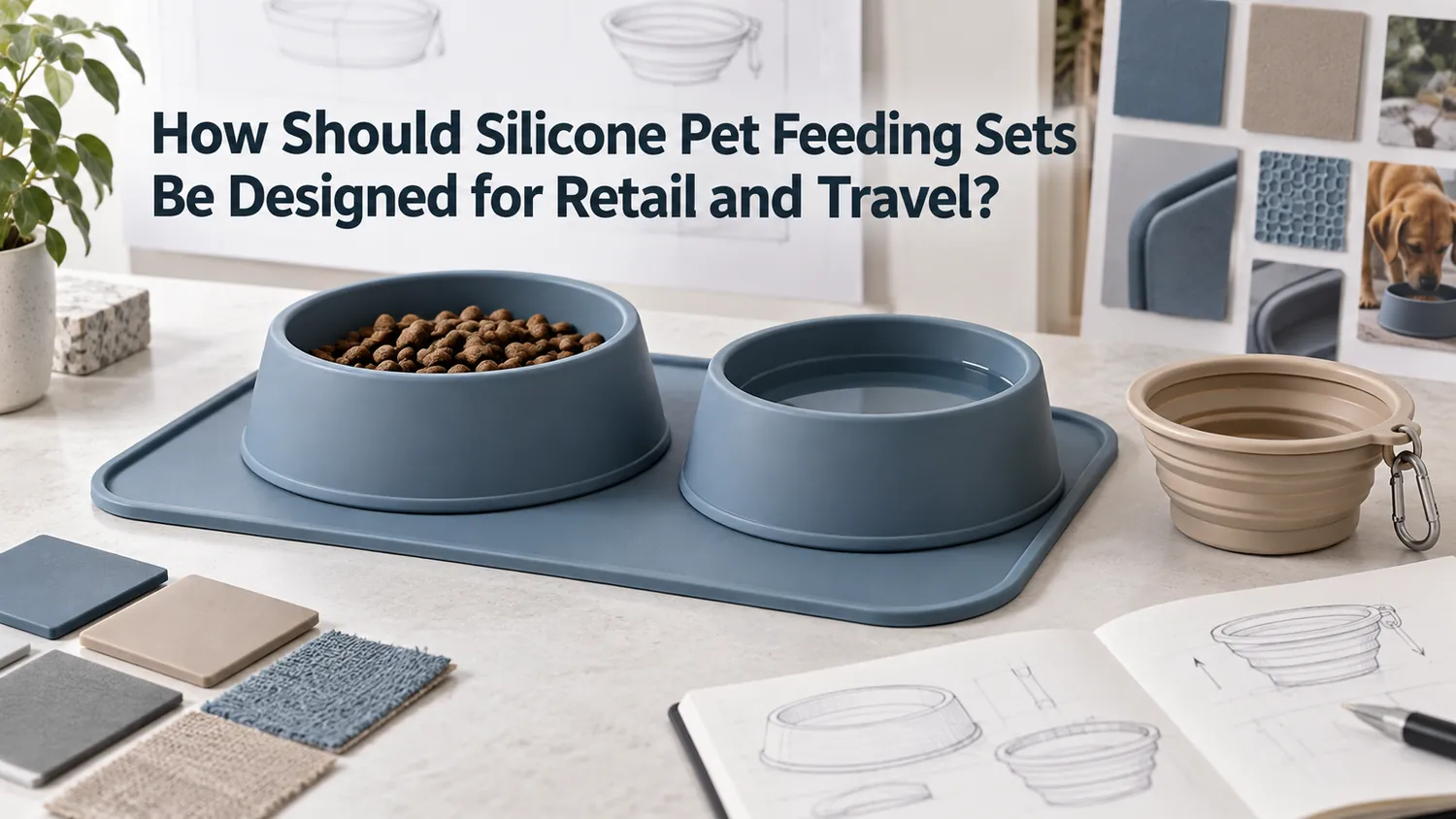
A silicone pet feeding set should be designed around one clearly defined use scenario before bowls, mats and accessories are combined. Home retail sets need stable placement, coordinated cleaning and a credible selling unit; travel sets prioritize packed size, fold recovery and attachment details. Buyers should approve construction, capacity, mat fit, care instructions, packaging and evidence on production-representative samples before ordering.
This design review is for buyers planning a specific home or travel kit. Confirm the animal, use setting, component construction and destination before finalizing claims, tests or care labels; a sample from a different set cannot settle those decisions.
Key Takeaways
- Choose a home-retail or travel mission first; one attractive assortment cannot optimize both without trade-offs.
- Separate integrated molded bowls from removable inserts because assembly, replacement and cleaning differ.
- Specify working fill, animal access, mat fit and floor conditions rather than claiming universal stability.
- Use a stated fold-and-recovery method before describing a travel bowl as durable or packable.
- Connect the cleaning instructions, material record and finished-SKU sample to the exact components sold.
- Keep MOQ, price, lead time and capacity conditional on final mold, color, package and order mix.
Home Retail Versus Travel Feeding Set Decisions
The preferred construction is conditional on pet size, feeding location, care routine and sales channel. Review actual samples under the proposed use and packaging conditions.
| Decision | Home-retail emphasis | Travel emphasis |
|---|---|---|
| Bowl architecture | Stable working fill, access diameter and coordinated food/water station | Folded envelope, open volume, rim recovery and secure carry detail |
| Mat geometry | Defined floor footprint, edge containment, two-bowl fit and flat storage | Packable mat size, roll recovery, light weight and cleaning in limited space |
| Evidence gate | Surface-specific placement, spill handling and repeat cleaning | Fold-cycle method, attachment retention, leak observation and unpacking recovery |
| Selling unit | Shelf-ready set, component count, barcode and carton plan | Carry pouch, attachment, compact dimensions and loss prevention |
SECTION 01
Choose the Home or Travel Job Before Drawing the Set
Begin with the target buyer, channel and assortment role so every specification decision supports a sellable range.
Define the Pet, Feeding Location and Channel for silicone pet feeding set
Begin with the place where the animal actually eats. A permanent kitchen station can carry a broad mat and two bowls; a day-trip kit has to fit into a bag, reopen quickly and keep its components together. Ask the brand to name its target dog or cat size, dry or wet food routine, water volume and expected floor or outdoor surface. We use those answers to reject attractive combinations that solve no coherent customer problem.
The retail channel then changes what counts as a set. A shelf buyer may need a visible color family, easy-to-count components and a carton that protects the rim, while an e-commerce buyer may prioritize compact shipping and a clear unpacking sequence. Write the intended selling unit in one line before design review: for example, two home bowls plus one mat, or one collapsible bowl plus one rollable mat and carry pouch. This keeps samples, artwork and quotations aligned.
Choose an Integrated, Removable or Hybrid Set Architecture
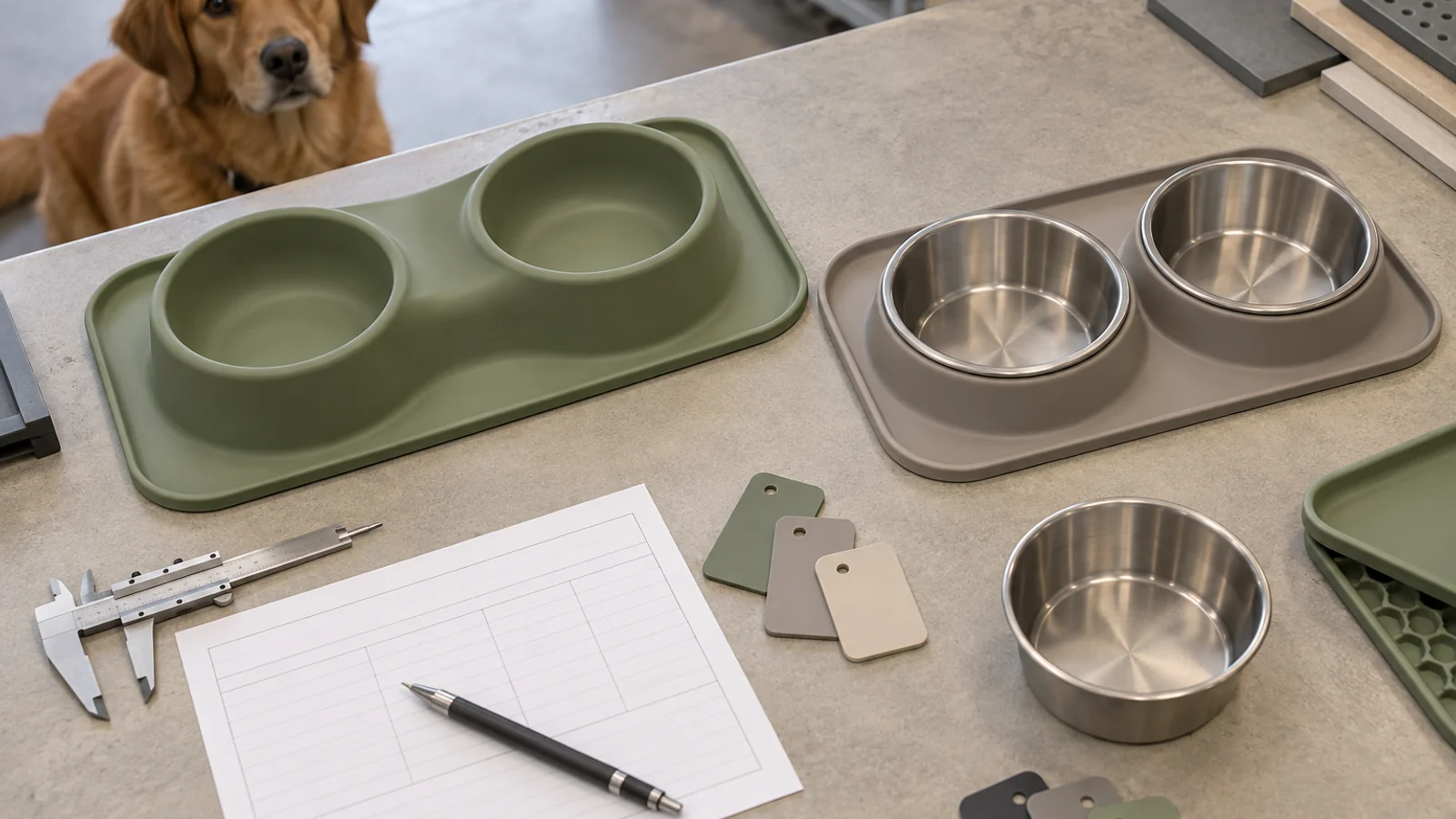
An integrated double-bowl mat is not the same product as a mat with two removable bowls. The first can reduce loose parts and may simplify station placement, but deep molded cavities and a broad footprint can make washing and packaging less convenient. Removable silicone or metal inserts permit separate cleaning and replacement, yet create fit, rattle, lift-out and missing-component questions. Put the chosen construction on the drawing and bill of materials, not only in a lifestyle image.
A hybrid proposal can be valid if it solves a specific issue, such as an easy-clean removable water vessel on a stable molded base. It also adds an interface: rim diameter, insertion depth, pull-out effort, material pairing and carton restraint must be checked together. Handle each version during sampling instead of assuming a mockup proves convenience. The approved selling unit must identify every included component and any replacement policy.
Set the Working Fill and Access Envelope
Brimful volume can overstate the amount a customer can use without splashing. Specify a working fill with a headspace reference, the method for measuring it and the expected food type; dry kibble, wet food and water load the bowl differently. Opening diameter and wall angle should be checked against the target pet's muzzle and feeding posture. Avoid assigning one universal capacity to every animal when the same kit is marketed across several sizes.
For a two-bowl home set, measure both openings and the space between them while the bowls are filled and in their normal position. An owner should be able to lift or clean one without accidentally displacing the other. Travel bowls need an additional comparison between open capacity and folded thickness, because a compact folded profile may sacrifice a usable working fill. Record the sample identifier beside each measured value so later quotes refer to the same geometry.
SECTION 02
Engineer Each Component as Part of One Feeding System
Translate the range plan into comparable product, packaging and approval evidence before requesting final quotations.
Design the Mat and Bowl Interface Together
The mat is a functional interface, not simply a coordinated color swatch. Place both proposed bowls on it and check center spacing, clearance to the raised rim and available capture area around the usual feeding motion. A narrow border may look efficient in a rendering but leave little room for drips, while a very tall edge can interfere with bowl removal. Mark bowl positions on the controlled drawing and verify them on a physical sample.
Mat thickness, underside texture and edge profile also affect storage and use. Test flatness after the actual pack-out period, especially if the mat ships rolled or folded, and record the recovery interval before judging edge lift. Evaluate the assembly on representative flooring rather than a single polished studio surface. If bowls are removable, repeat placement with realistic fill levels and verify that the mat does not bunch when a customer lifts an insert.
Specify Base Grip, Rim and Spill Containment
A broad base can resist a small push on a dry tile, but that observation is not a universal non-slip guarantee. Define the floor, moisture state, bowl fill and applied force before comparing samples, then state what movement is acceptable. Silicone texture and local wall thickness can change contact behavior, and an added metal insert changes the weight distribution. A buyer should review those variables before choosing a heavier or more elaborate construction.
Spill containment deserves a separate test. Place the station as a customer would, pour a measured small volume near the bowl and observe whether the raised edge captures it or redirects it beneath the bowl. A high rim may help with drips but make cleaning corners more difficult. Capture images of the mat and bowl together, note any deformation around molded feet and keep the acceptance rule proportional to the intended use rather than promising a spill-proof station.
Engineer Folding and Attachment for Travel
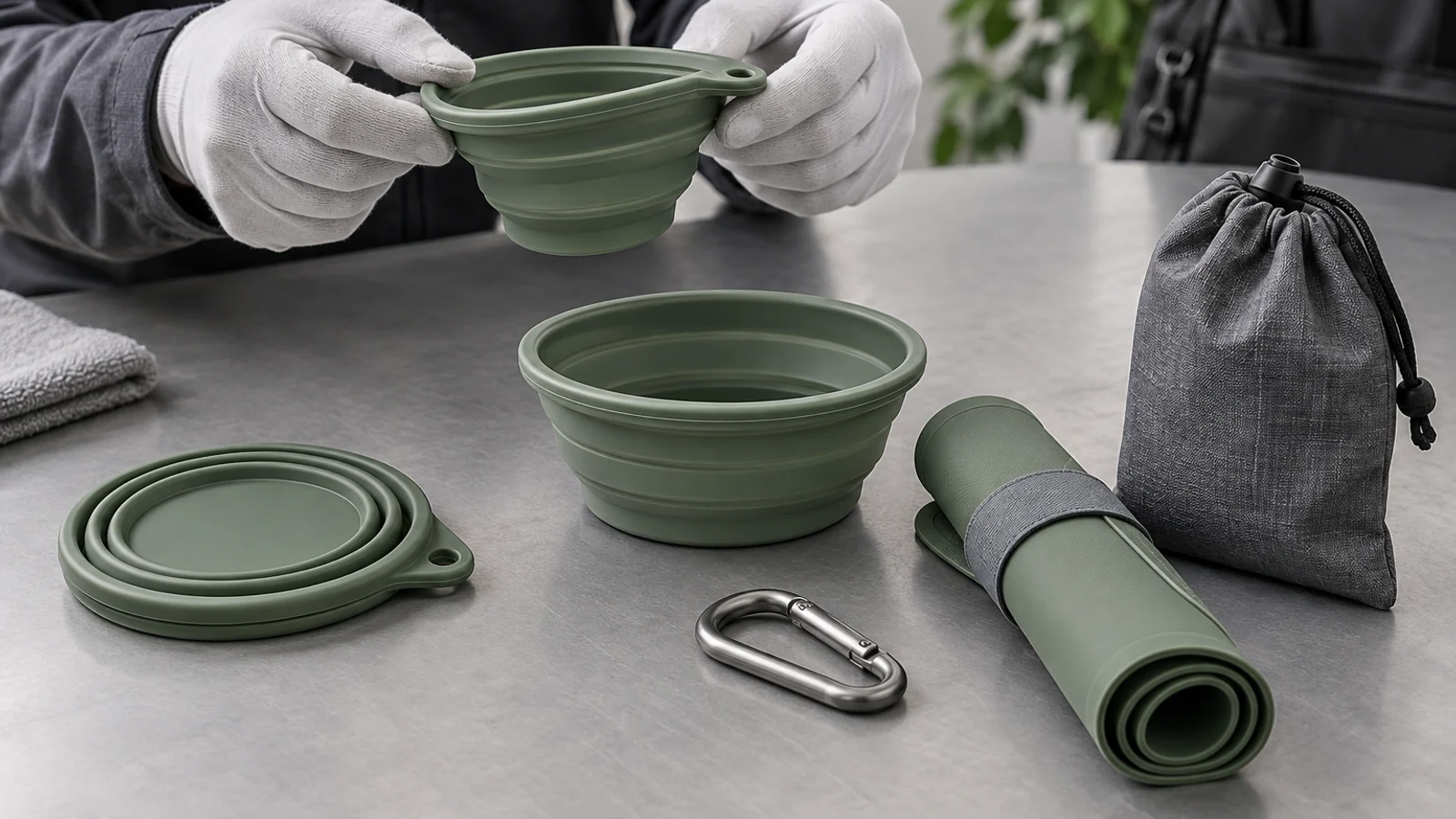
Travel bowls concentrate strain in fold lines, rim transitions and attachment holes. Record open height, collapsed height, wall thickness around each hinge and the orientation in which the user is expected to fold it. A carabiner is only useful if the silicone tab retains it under the defined carry load; its metal finish and edge condition also need review. The travel kit should still be easy to clean when the bowl is fully expanded.
Agree on a fold-cycle method before calling a sample durable. Set the operator, direction, number of cycles, resting period and acceptance observations, then photograph the same crease and rim before and after. Check recovery of the open shape and any visible tearing or whitening under the selected conditions. The result supports that construction and method only; it cannot establish an unlimited lifetime for every temperature, pet behavior or future compound revision.
SECTION 03
Validate Cleaning, Transport and Retail Evidence
Protect margin by reviewing production controls, landed-cost drivers and launch risks as one commercial system.
Make Cleaning Instructions Match Real Geometry
Cleaning language on packaging should match what a customer can do with the assembled kit. The CDC advises cleaning pet bowls after wet-food use and daily for dry food or water, while following item-specific care instructions; it also distinguishes ordinary cleaning from additional disinfection. For a molded set, examine corners, rim junctions and underside texture after use with the intended food. For a removable set, verify that components can be taken apart without hidden residue or excessive effort.
Do not print dishwasher-safe language from the appearance of a silicone sample alone. If the brand wants that claim, define the appliance cycle, placement, repeated runs and criteria for shape, surface and color, then evaluate the finished construction. Metal inserts, clips, sleeves or labels may require separate care instructions even when the silicone component tolerates a chosen wash method. Retain the final instructions with the approved product revision and packaging artwork.
Match Material and Evidence to the Finished Kit
Ask the supplier to identify the silicone compound, cure route, colorant and relevant lot records for each molded part. A kit with a silicone mat, silicone bowl and stainless insert has more than one material identity, so a generic report for one silicone sheet cannot stand in for all components. Select test methods based on destination market, intended contact and the actual finished article. A pet positioning statement does not by itself establish a human-food-contact certification or any universal safety approval.
We connect incoming material lots to the molded sample, color and purchase order in the review file, then document any change that could alter the approved evidence. Compare the sample description, method, date and conditions in a report with the current SKU. If a new pigment, insert supplier or post-cure route is proposed, request an applicability review rather than silently transferring a previous conclusion. Avoid placing unsupported certification badges on retail artwork.
Test the Packed Set Rather Than Loose Components
Loose samples can look excellent while the packed selling unit fails. Assemble the exact bowl, mat, pouch, clip and printed materials intended for shipment, then check whether the product arrives flat, clean and complete after the agreed handling scenario. ISO 2233 describes conditioning of filled transport packages before testing; it is a method reference, not proof that this particular set passed a route-specific transit program. Choose practical conditions with the buyer and logistics team.
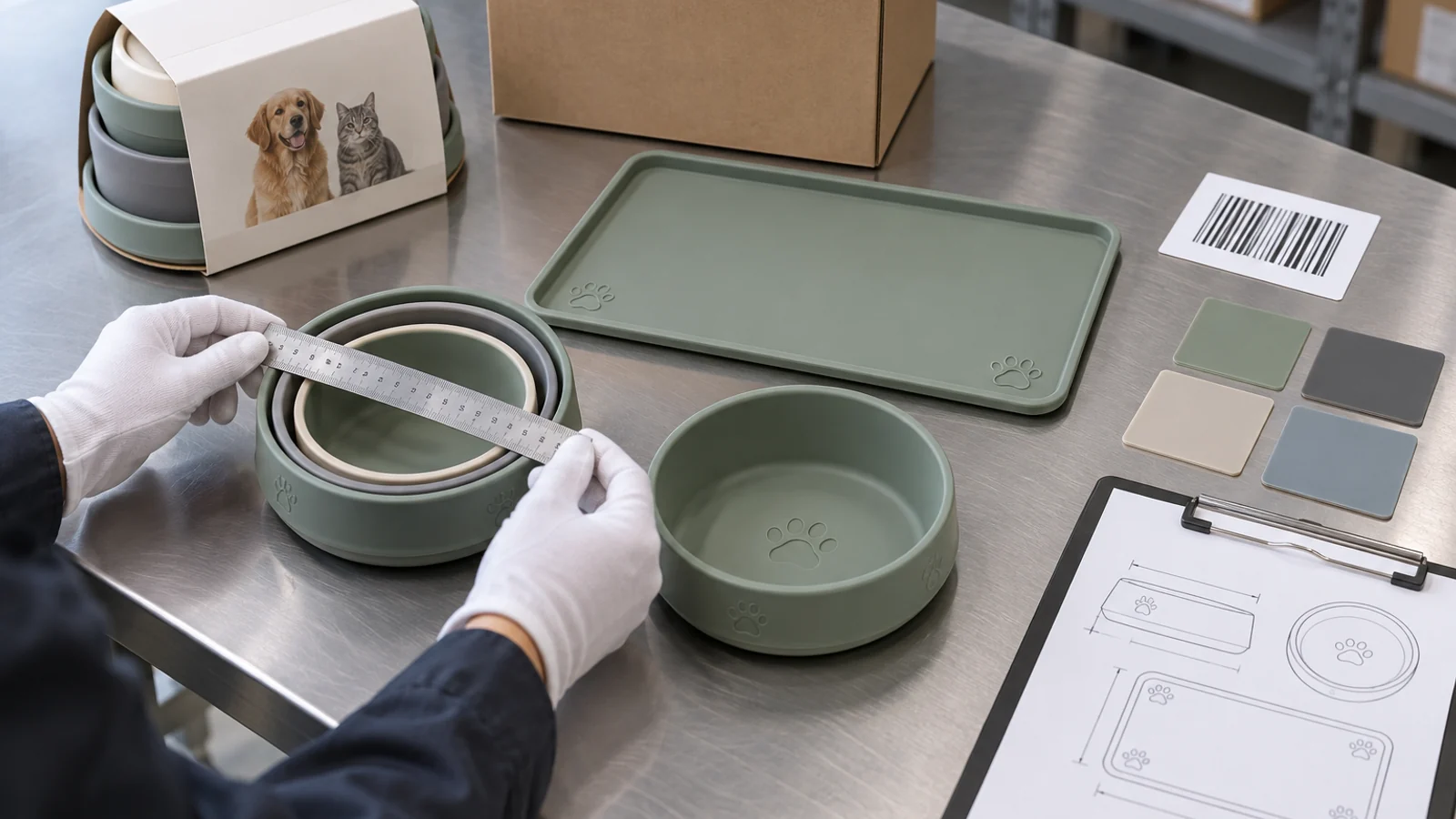
Measure the finished pack, inner quantity and master-carton count rather than quoting the empty box dieline. Nested bowls may save cube but create pressure marks, scuffs or difficult unpacking; a flat mat may protect shape but consume more carton volume. Inspect the assembled unit after a defined storage interval and document any edge curl or part movement. Those observations inform package revision, freight assumptions and the instructions given to pack-line inspectors.
SECTION 04
Release a Commercially Repeatable Feeding Set
Use early sales and replenishment assumptions to decide which variants deserve expansion and which should remain controlled.
Approve Color, Branding and Component Identity
A coordinated color family helps the range read as one offer, but every additional color divides first-order volume and creates another approval sample. Approve shades on the final surface texture and part thickness under agreed viewing light; a digital swatch alone cannot show the molded appearance. If a mat and bowl come from different tools or compounds, compare them together rather than assuming the same pigment recipe produces a visual match.
Decide whether the brand appears on the bowl exterior, mat corner, pouch or paper sleeve, then consider cleaning, fold lines and available geometry. A molded logo can affect tooling and surface detail, while print or a paper component follows different artwork and durability checks. Give each selling unit a controlled component list, color code and packaging revision. ISO 780 offers a reference for distribution-handling symbols, but the actual marks and legal copy still need destination-specific review.
Compare MOQ and Unit Cost by Selling Unit
Compare quotations by what the customer will receive, not only by the molded gram weight of a bowl. The home set may require a large mat tool, two bowl cavities and a retail insert; the travel set may need a folding mold, attachment hardware and a pouch. Ask for tooling, samples, tests, assembly, packaging and freight assumptions as separate lines where possible. A per-bowl price cannot be compared fairly with a complete packed-set quotation.
State first-order and annual quantities by finished SKU and color, along with destination, Incoterm and desired delivery phase. MOQ can be driven by a mold run, pigment batch, metal insert purchase or printed packaging minimum, so one fixed number is rarely meaningful before the configuration is approved. Lead time and capacity likewise depend on current tooling availability, component readiness and the production calendar. Invite the supplier to identify the bottleneck rather than promising a universal turnaround.
Release the Golden Set and Reorder Controls
The golden set should include every component in its approved use and pack condition. Identify the bowl and mat revision, color, working fill, logo, accessory, care text and package version, then photograph the assembled station and the packed unit. Store measurable acceptance points with the signed sample so a later inspector can judge fit, rim condition, folding recovery and component count. A beautiful hero photograph alone is not an inspection standard.
Set change triggers before the first purchase order: new compound, tool correction, insert supplier, color, artwork, carton design or market claim may require another review. Track first-production results by lot and note any deviation from the golden set before shipment release. For reorders, compare the planned quantity and delivery window with the approved assumptions and current capacity. This protects repeatability without pretending that sample approval guarantees every future batch automatically.
ACTION FRAMEWORK
Buyer Checklist Before Commercial Approval
Take this component-level checklist to the product, sourcing and packaging meeting. Assign each unresolved bowl, mat, travel and pack-out decision an owner before requesting a final set quotation.
| Check | Question | Why It Matters |
|---|---|---|
| Use mission | Is this a permanent home station or a portable travel kit? | The primary job controls weight, geometry, cleaning, packaging and realistic performance claims. |
| Animal fit | Which pet size, muzzle access and working fill does each bowl support? | Brimful volume alone cannot establish comfortable feeding or spill behavior. |
| Construction | Are bowls integrated, removable silicone pieces or separate metal inserts? | Each route has different assembly, replacement, fit, hygiene and quotation requirements. |
| Mat interface | Are bowl footprints, rim clearance and mat edge recovery measured together? | Independent samples can pass while the assembled station still rocks, crowds or curls. |
| Cleaning | Can the actual seams, textures and attachments be cleaned by the printed care method? | Pet feeding items require practical cleaning access and supportable care wording. |
| Travel validation | Are fold cycles, packed size, clip retention and recovery acceptance defined? | Portable appearance does not prove durability under the intended routine. |
| Retail release | Does the approved selling unit match the pack, barcode, component list and carton? | The customer receives a packed kit, not a hand-selected table of loose samples. |
| Commercial basis | Are per-SKU quantities, colors, tools, pack materials and delivery phases known? | MOQ, price, capacity and lead time depend on the actual configuration and schedule. |
NEXT READING
Continue the Supplier and Product Review
The routes below move from an assembled pet feeding concept to a real product sample, related range research and a packaging decision. Choose the resource that resolves the next open question in your kit brief.
Review Naike Silicone pet product options
Use review naike silicone pet product options to resolve the next open bowl, mat, packaging or supplier decision in this set.
Open internal resource →Examine a custom double-bowl feeding mat
Use examine a custom double-bowl feeding mat to resolve the next open bowl, mat, packaging or supplier decision in this set.
Open internal resource →Compare wholesale silicone pet product formats
Use compare wholesale silicone pet product formats to resolve the next open bowl, mat, packaging or supplier decision in this set.
Open internal resource →Review packaging options for silicone products
Use review packaging options for silicone products to resolve the next open bowl, mat, packaging or supplier decision in this set.
Open internal resource →Explore all silicone product categories
Use explore all silicone product categories to resolve the next open bowl, mat, packaging or supplier decision in this set.
Open internal resource →Review Naike Silicone manufacturing knowledge
Use review naike silicone manufacturing knowledge to resolve the next open bowl, mat, packaging or supplier decision in this set.
Open internal resource →PRIMARY REFERENCES
Authoritative External Sources
CDC guidance informs the cleaning discussion, while the two ISO pages frame conditioning and package-handling symbols. None is a certificate for this kit or a substitute for testing its approved construction and destination-specific claims.
CDC: Cleaning and Disinfecting Pet Supplies
U.S. CDC guidance distinguishes cleaning from disinfection, gives an example pet-bowl cleaning schedule, and advises following item-specific care instructions.
ISO 2233:2000 Packaging Conditioning for Testing
Official ISO page for conditioning complete, filled transport packages and unit loads before packaging tests.
ISO 780:2015 Distribution Packaging Symbols
Official ISO page for graphical symbols used to communicate handling and storage instructions on distribution packages.
BUYER QUESTIONS
Frequently Asked Questions
Should a retail feeding set use integrated bowls or removable inserts?
Choose from the cleaning routine and customer experience, not appearance alone. Integrated bowls reduce loose components but can increase the wash footprint; removable inserts simplify separate washing and replacement but add fit, lift-out and missing-part controls. Request both production-representative constructions only when both are feasible, then approve the actual selling unit and its component list.
How should working bowl capacity be stated?
State the usable fill at a defined headspace, food or water condition and measurement method. Brimful volume is a different figure and may not represent comfortable feeding or transport. Record the pet-size range, opening diameter and sample revision with the capacity so retailers do not inherit an ambiguous claim.
Can the same silicone feeding set serve home and travel buyers?
It can share a color family or selected components, but the two use cases have different priorities. A broad stable home mat may be awkward to carry, while a compact folding bowl may not be the best permanent water station. Evaluate each intended configuration, package and claim separately before combining them in one assortment.
What evidence supports a foldable travel-bowl durability claim?
Define a fold-cycle procedure with direction, count, operator, rest period and acceptance criteria for tearing, whitening and open-shape recovery. Inspect the attachment point if the kit will be clipped to a bag. A passing sample supports only that construction and test condition; material, wall thickness or tool revisions need renewed review.
How should a brand write cleaning instructions for a pet feeding kit?
Test the actual assembled kit using the care method the brand intends to print, including corners, inserts, mat texture and clips. Follow relevant public-health guidance for frequent cleaning of pet feeding items, but do not treat that guidance as proof of a product-specific dishwasher claim. Separate instructions for non-silicone components where necessary.
What information is needed for a reliable set quotation?
Send the target pet and channel, component drawing or reference, construction route, working capacities, mat dimensions, color and logo plan, packed selling unit, destination, first-order quantity and annual forecast. Ask the factory to list tooling, sample, test, packaging and freight assumptions. MOQ, price, lead time and capacity should remain conditional until those inputs and current production availability are confirmed.
Editorial and Scope Note
Conclusion: Silicone Pet Feeding Sets for Retail and Travel
Move from buyer research to a controlled supplier brief
A silicone pet feeding set is ready to quote when the buyer has chosen a home or travel mission and approved the actual bowl architecture, working fill, mat interface, cleaning method, material record and selling unit. Integrated and removable constructions should not be treated as interchangeable. Travel durability, spill control, MOQ, price, lead time, production capacity and any certification claim remain conditional on the approved design, test conditions, destination market, quantity and current production schedule. Send Naike Silicone a pet-size brief, component sketch, preferred color family, first-order forecast and pack reference to request a sample and quotation review.
Use the selected construction and packed sample to request engineering, material, quality and market-specific review before describing the kit as approved for any particular claim.