
PRODUCT SOURCING GUIDES
Supermarket Silicone Feeding Sets: Silicone Baby Feeding Sets for Supermarket Private-Label Programs
Plan supermarket silicone feeding sets with clear SKU roles, controlled colors, shelf-ready packaging, finished-set validation, replenishment and change control.

DIRECT ANSWER
What B2B Buyers Need to Know
A supermarket private-label feeding program should begin with a controlled range architecture, not a catalogue of similar sets. Define each SKU's shopper, price-position role, components, colors, pack dimensions and case pack; then validate the complete selling unit for fit, function, evidence and shelf presentation. Replenishment rules and substitutions must remain tied to the approved revision.
This guide is written for B2B importers, distributors, retailers, private-label brands, product developers, quality teams and sourcing managers. It provides a decision framework rather than legal advice or a universal specification. Product classification, use conditions and destination market should be confirmed before final testing, labelling or compliance decisions.
Key Takeaways
- Give every set and single-item SKU a distinct shopper, shelf and price-position role.
- Standardize components only after fit, function, color and revision compatibility are verified.
- Approve color families at range level so the shelf is coordinated without creating excess MOQ complexity.
- Treat the retail box, sleeve, insert, labels and master carton as part of the released product.
- Validate suction, stability, fasteners, utensils and component count on the exact packaged selling unit.
- Protect replenishment through SKU identifiers, retained references, allocation rules and formal change approval.
Supermarket Feeding-Set Range Architecture
A productive range gives each item a clear job while controlling shared components, pack footprint and production complexity. Review the layers together because a change in one SKU can alter color allocation, packaging quantities and replenishment across the program.
| Range Layer | Commercial Role | Buyer Approval Evidence |
|---|---|---|
| Entry set | Simple plate or bowl, cup and utensil combination at an accessible opening position | Approved component list, assembled sample, pack dimensions and case quantity |
| Core set | Primary private-label offer with the strongest everyday feeding coverage | Functional test record, color master, final artwork and complete selling-unit reference |
| Premium set | Additional bib, divided plate, snack cup or upgraded packaging where the shelf role supports it | Distinct shopper rationale, margin model and verified component compatibility |
| Single-item extension | Replacement, add-on or trial item that supports the core range | Compatibility matrix, separate identifier and replenishment rule |
| Channel or seasonal color | Controlled variation for promotion or retailer exclusivity | Color allocation, quantity plan, sell-through window and end-of-run disposition |
SECTION 01
Define the Supermarket Shopper and Shelf Strategy
Begin with the target buyer, channel and assortment role so every specification decision supports a sellable range. Record the decision owner, applicable supermarket silicone feeding sets revision and evidence required before the next gate.
Map the shelf mission for supermarket silicone feeding sets
For B2B importers, distributors, retailers, private-label brands, product developers, quality teams and sourcing managers, the commercial question behind “Map the shelf mission” is whether it improves sell-through without creating avoidable SKU complexity. Define the shopper, price position, shelf location and reason each SKU deserves space, then document nearby competing formats, expected facings, pack orientation, promotion mechanics and the decision that would justify adding or removing a variant from the launch range. For this decision, this makes quotations more comparable because every potential supplier is responding to the same operating assumptions.
The approval file should contain keep a signed range map with planogram dimensions, fixture constraints, target channel assumptions, reference photographs, buyer comments and the commercial owner responsible for resolving conflicts before artwork or tooling commitments. The unresolved exposure is selecting products from a catalogue can produce overlapping sets with no clear retail role, while an attractive product that ignores shelf depth, price ladder or replenishment logic can consume space without improving the category decision. Date the approval and preserve the conditions under which the evidence remains applicable.
Build the set architecture
Before a sourcing team adds another product option, “Build the set architecture” needs a clear buyer, channel and repeat-order purpose. Assign entry, core, premium and single-item roles, then freeze the exact component list for each, including size, capacity, closure or suction features, utensil type, bib configuration, approved combinations and whether an item is a replacement, add-on or independent retail unit. For this decision, the decision should be written in language that purchasing, engineering, quality and packaging teams can interpret consistently.
A useful sourcing discussion asks the supplier to provide retain bill-of-material records, component drawings, compatibility notes, costed configurations and complete assembled references by SKU, with a controlled identifier that purchasing, packaging, inspection and the retailer can all use. The unresolved exposure is component ambiguity creates pack errors, incompatible replacements and unreliable cost comparisons, and it becomes especially costly when one shared-looking lid, cup or utensil has changed fit, color or material revision without a matching range update. Keep the sample identity, lot and decision outcome together so a later reviewer can reconstruct the release.

SECTION 02
Engineer the Range, Components and Color Architecture
Translate the range plan into comparable product, packaging and approval evidence before requesting final quotations. Record the decision owner, applicable supermarket silicone feeding sets revision and evidence required before the next gate.
Control colors and shared parts
A category buyer should judge “Control colors and shared parts” by the role it plays in the assortment, price architecture and retail channel. Limit core colors, map component allocation and verify every claimed shared interface, while separating continuous colors from channel exclusives and seasonal tones so pigment batches, cavity allocation, assembly and pack quantities can be planned against realistic forecasts. For this decision, the requirement becomes useful only when it can be converted into a drawing, sample, record or repeatable check.
The evidence package is stronger when it includes approve color masters, combination samples, tolerance references, an allocation matrix and compatibility evidence for every shared interface, then link these records to the packed SKU rather than approving loose components with no destination. The unresolved exposure is uncontrolled color multiplication fragments MOQ, increases changeover and residual-inventory exposure, and shared parts can drift across revisions when purchasing assumes visual similarity proves fit or when a substitute is introduced to solve a short-term stock gap. Carry the approved limit into the inspection instruction rather than leaving it only in meeting notes.
Engineer shelf-ready packaging
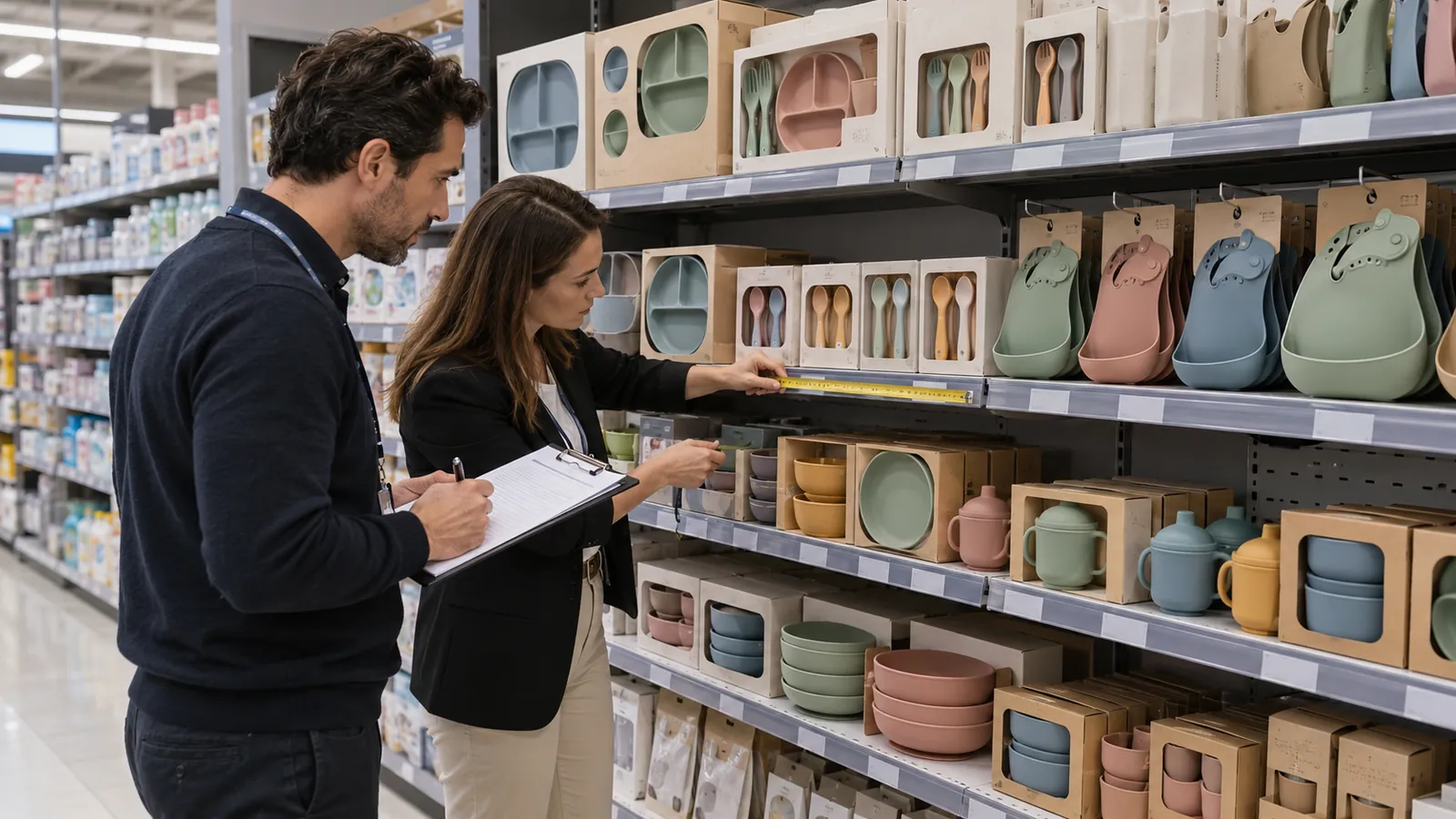
For B2B importers, distributors, retailers, private-label brands, product developers, quality teams and sourcing managers, the commercial question behind “Engineer shelf-ready packaging” is whether it improves sell-through without creating avoidable SKU complexity. Set pack dimensions, product restraint, visibility, labels, barcode zone, case quantity and shipment orientation, then check how the real silicone parts nest, press against windows or inserts, recover after storage and remain identifiable when several colorways share one packaging structure. For this decision, early alignment is less expensive than correcting a mold, replacing printed packaging or sorting finished inventory.
For an audit-ready decision, retain approve physical retail packs, artwork proofs, packed-weight records, drop or distribution checks where appropriate and a representative master-carton packout showing assortment mix, void space, divider use, carton markings and pallet orientation. The unresolved exposure is artwork approval alone cannot reveal shelf fit, scuffing, movement or carton inefficiency, and a late pack-size change can alter freight, case quantity, planogram facings, photography, label placement and the economics used to approve the range. Retain enough context to distinguish a process correction from a change to the buyer's requirement.
SECTION 03
Approve Packaging, Case Pack and Finished-Set Evidence
Protect margin by reviewing production controls, landed-cost drivers and launch risks as one commercial system. Record the decision owner, applicable supermarket silicone feeding sets revision and evidence required before the next gate.
Validate the selling unit
The factory view of “Validate the selling unit” begins with the finished selling unit, not an isolated silicone part. Check product identity, suction, stability, fasteners, utensils, cleaning and packed component count on representative parts, using the exact material, hardness, color, cavity state, decoration and packaging revision planned for production rather than convenient development samples. For this decision, the buyer should distinguish a mandatory acceptance point from a preference that can be traded against cost or timing.
A traceable project record should connect keep raw observations, retained sets, photos, reports, deviation decisions and packaging-lot references tied to the SKU, and distinguish supplier declarations, material data and finished-product validation so each item is used only for the conclusion it supports. The unresolved exposure is approving isolated components can miss problems introduced by the final combination or pack, such as distorted suction surfaces, mixed revisions, color mismatch, missing utensils, compressed rims, label interference or cleaning instructions that do not match the released set. Assign an escalation trigger for any material, tooling, packaging or destination-market change.
SECTION 04
Launch the Program and Protect Replenishment
Use early sales and replenishment assumptions to decide which variants deserve expansion and which should remain controlled. Record the decision owner, applicable supermarket silicone feeding sets revision and evidence required before the next gate.
Govern replenishment and change
Before a sourcing team adds another product option, “Govern replenishment and change” needs a clear buyer, channel and repeat-order purpose. Define forecasts, reorder lead points, substitution limits, revision notices and end-of-line handling, including who owns demand updates, how mixed colors are allocated, what inventory may carry forward and which changes require a new sample, pack review or retailer sign-off. For this decision, the team should identify who approves the requirement, how it will be measured and which later decisions depend on it.
During supplier review, the buyer should request maintain purchase-order revision, forecast history, retained references, lot traceability, authorized change records and a compatibility table for earlier inventory, then review complaints, returns and sell-through by SKU before expanding the assortment. The unresolved exposure is silent component, color, material or packaging changes undermine shelf consistency and prior approvals, while weak end-of-line rules can leave unmatched components, obsolete printed packs or substitute colors that cannot be reconciled with the retailer's current range promise. Link the record to the current SKU revision and name the person authorized to release it.

ACTION FRAMEWORK
Buyer Checklist Before Commercial Approval
Use this checklist as a meeting agenda. It is intentionally concise so the team can identify missing evidence without replacing its own quality, legal or supplier-management procedure.
| Check | Question | Why It Matters |
|---|---|---|
| Range role | What shopper, price position and shelf job does each SKU serve? | Near-duplicate sets create assortment overlap and slow replenishment decisions. |
| Set composition | Are component count, size, function and compatibility fixed for every selling unit? | A shared-looking component may not be approved for every combination. |
| Color plan | Are core colors, exclusives and component allocations mapped to realistic quantities? | Too many combinations can fragment pigment, molding and packaging orders. |
| Shelf footprint | Do pack width, height, depth, hanging or standing method and facings fit the planogram? | A good product can still fail the intended shelf system. |
| Pack evidence | Has the actual insert, window, label, barcode zone and master carton been reviewed? | Digital artwork alone cannot verify component restraint or transport presentation. |
| Product validation | Were suction, stability, fasteners, utensils and cleaning checked on production-representative parts? | Material documents do not prove the complete set's use performance. |
| Case pack | Are carton quantity, assortment mix, dimensions, weight and pallet handling controlled? | Distribution cost and store handling depend on the shipped configuration. |
| Replenishment | Which substitutions or changes require retailer approval before a repeat order? | Uncontrolled revisions can break shelf consistency and previously approved evidence. |
NEXT READING
Continue the Supplier and Product Review
These internal resources connect the guide with Naike Silicone product, factory, customization and inquiry pages. Open the route that matches the next decision in your project.
Explore silicone baby products
Use explore silicone baby products to gather the next level of product, manufacturing or commercial information. Connect the result to the current supermarket silicone feeding sets revision and next approval action.
Open internal resource →Review private-label silicone tableware
Use review private-label silicone tableware to gather the next level of product, manufacturing or commercial information. Connect the result to the current supermarket silicone feeding sets revision and next approval action.
Open internal resource →Review silicone feeding-set development
Use review silicone feeding-set development to gather the next level of product, manufacturing or commercial information. Connect the result to the current supermarket silicone feeding sets revision and next approval action.
Open internal resource →Plan a profitable baby tableware line
Use plan a profitable baby tableware line to gather the next level of product, manufacturing or commercial information. Connect the result to the current supermarket silicone feeding sets revision and next approval action.
Open internal resource →Review retail assortment planning
Use review retail assortment planning to gather the next level of product, manufacturing or commercial information. Connect the result to the current supermarket silicone feeding sets revision and next approval action.
Open internal resource →Request a supermarket range and packout review
Use request a supermarket range and packout review to gather the next level of product, manufacturing or commercial information. Connect the result to the current supermarket silicone feeding sets revision and next approval action.
Open internal resource →PRIMARY REFERENCES
Authoritative External Sources
The sources below are official primary references. Applicability depends on the product, intended use and destination market. Buyers should obtain qualified advice for final legal or regulatory decisions.
European Commission: Food Contact Materials
Official EU overview of food-contact material requirements; finished-product applicability depends on market, formulation and intended use. Confirm applicability against the listed product, revision, intended use and destination before relying on it for approval.
FDA: Food types and conditions of use
Official FDA framework for food type and use conditions; it does not approve a finished silicone SKU or its mechanical performance. Confirm applicability against the listed product, revision, intended use and destination before relying on it for approval.
ISO 2859-1:2026 lot-by-lot inspection
Official ISO page for attribute sampling schemes; the buyer must define defects, inspection level and release authority. Confirm applicability against the listed product, revision, intended use and destination before relying on it for approval.
BUYER QUESTIONS
Frequently Asked Questions
What should a buyer confirm first for supermarket silicone feeding sets?
Define the shopper, price position, shelf location and reason each SKU deserves space, then document nearby competing formats, expected facings, pack orientation, promotion mechanics and the decision that would justify adding or removing a variant from the launch range as the first controlled decision in the buyer's review. Support that review with keep a signed range map with planogram dimensions, fixture constraints, target channel assumptions, reference photographs, buyer comments and the commercial owner responsible for resolving conflicts before artwork or tooling commitments. The exact depth for map the shelf mission depends on product use, market, order value and whether the program uses an existing design or new tooling. Keep this decision linked to the current SKU revision, and reassess map the shelf mission whenever material, design, color, process, packaging or destination-market assumptions change.
How should buyers review build the set architecture?
Assign entry, core, premium and single-item roles, then freeze the exact component list for each, including size, capacity, closure or suction features, utensil type, bib configuration, approved combinations and whether an item is a replacement, add-on or independent retail unit as the first controlled decision in the buyer's review. Support that review with retain bill-of-material records, component drawings, compatibility notes, costed configurations and complete assembled references by SKU, with a controlled identifier that purchasing, packaging, inspection and the retailer can all use. The exact depth for build the set architecture depends on product use, market, order value and whether the program uses an existing design or new tooling. Keep this decision linked to the current SKU revision, and reassess build the set architecture whenever material, design, color, process, packaging or destination-market assumptions change.
How should buyers review control colors and shared parts?
Limit core colors, map component allocation and verify every claimed shared interface, while separating continuous colors from channel exclusives and seasonal tones so pigment batches, cavity allocation, assembly and pack quantities can be planned against realistic forecasts as the first controlled decision in the buyer's review. Support that review with approve color masters, combination samples, tolerance references, an allocation matrix and compatibility evidence for every shared interface, then link these records to the packed SKU rather than approving loose components with no destination. The exact depth for control colors and shared parts depends on product use, market, order value and whether the program uses an existing design or new tooling. Keep this decision linked to the current SKU revision, and reassess control colors and shared parts whenever material, design, color, process, packaging or destination-market assumptions change.
How should buyers review engineer shelf-ready packaging?
Set pack dimensions, product restraint, visibility, labels, barcode zone, case quantity and shipment orientation, then check how the real silicone parts nest, press against windows or inserts, recover after storage and remain identifiable when several colorways share one packaging structure as the first controlled decision in the buyer's review. Support that review with approve physical retail packs, artwork proofs, packed-weight records, drop or distribution checks where appropriate and a representative master-carton packout showing assortment mix, void space, divider use, carton markings and pallet orientation. The exact depth for engineer shelf-ready packaging depends on product use, market, order value and whether the program uses an existing design or new tooling. Keep this decision linked to the current SKU revision, and reassess engineer shelf-ready packaging whenever material, design, color, process, packaging or destination-market assumptions change.
How should buyers review validate the selling unit?
Check product identity, suction, stability, fasteners, utensils, cleaning and packed component count on representative parts, using the exact material, hardness, color, cavity state, decoration and packaging revision planned for production rather than convenient development samples as the first controlled decision in the buyer's review. Support that review with keep raw observations, retained sets, photos, reports, deviation decisions and packaging-lot references tied to the SKU, and distinguish supplier declarations, material data and finished-product validation so each item is used only for the conclusion it supports. The exact depth for validate the selling unit depends on product use, market, order value and whether the program uses an existing design or new tooling. Keep this decision linked to the current SKU revision, and reassess validate the selling unit whenever material, design, color, process, packaging or destination-market assumptions change.
How should buyers review govern replenishment and change?
Define forecasts, reorder lead points, substitution limits, revision notices and end-of-line handling, including who owns demand updates, how mixed colors are allocated, what inventory may carry forward and which changes require a new sample, pack review or retailer sign-off as the first controlled decision in the buyer's review. Support that review with maintain purchase-order revision, forecast history, retained references, lot traceability, authorized change records and a compatibility table for earlier inventory, then review complaints, returns and sell-through by SKU before expanding the assortment. The exact depth for govern replenishment and change depends on product use, market, order value and whether the program uses an existing design or new tooling. Keep this decision linked to the current SKU revision, and reassess govern replenishment and change whenever material, design, color, process, packaging or destination-market assumptions change.
Editorial and Scope Note
Conclusion: Supermarket Private-Label Silicone Feeding Sets
Move from buyer research to a controlled supplier brief
A supermarket silicone feeding program succeeds when the range, product revision, color plan, packaging and replenishment rules operate as one controlled system. Give every SKU a distinct shelf role, approve complete selling units and master-carton packouts, preserve product-specific evidence and require retailer review before substitutions. Share your target shopper, shelf dimensions, planned SKU count, destination market, forecast and packaging brief with Naike Silicone for a range architecture and sample-plan review.
This factory-insider guide supports sourcing preparation and supplier discussion for supermarket silicone feeding sets. It does not replace product-specific engineering, laboratory, regulatory, legal or commercial review for the destination market.