PRODUCT SOURCING GUIDES
Silicone Vs TPE Baby Products: Silicone vs TPE for Baby Feeding Products: Which Should Buyers Choose?
Compare silicone and TPE for baby feeding products through material identity, product geometry, cleaning, temperature exposure, evidence, tooling and repeat-order control.
DIRECT ANSWER
What B2B Buyers Need to Know
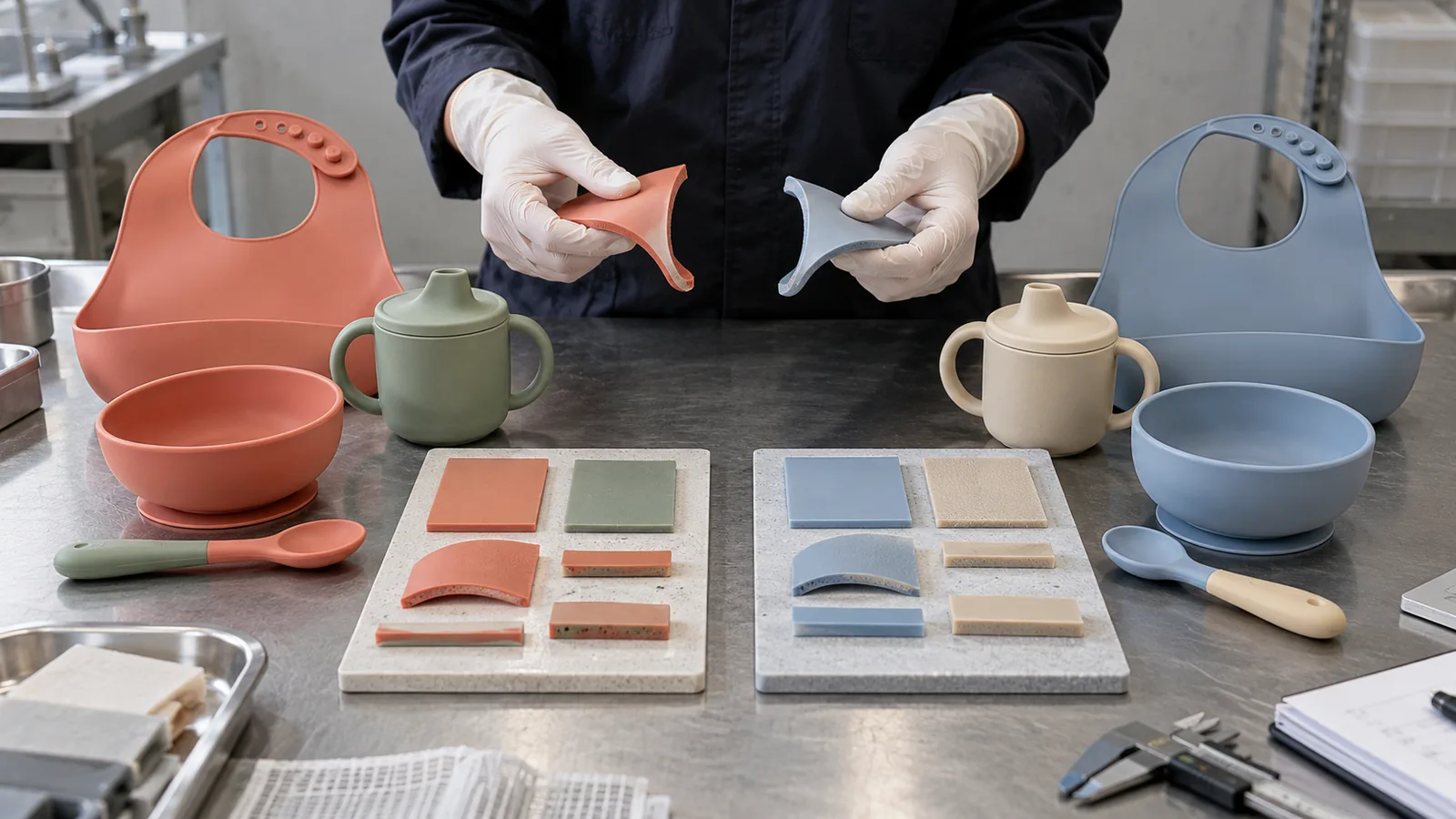
Neither silicone nor TPE is automatically the better baby-feeding material. Silicone often offers broad temperature capability and elastic recovery, while TPE can provide soft-touch performance through thermoplastic processing. Buyers should decide from the exact formulation, product geometry, use temperature, cleaning route, destination-market evidence, finished-SKU tests, traceability and controlled supplier changes—not from the polymer name alone.
This guide is written for B2B importers, distributors, retailers, private-label brands, product developers, quality teams and sourcing managers. It provides a decision framework rather than legal advice or a universal specification. Product classification, use conditions and destination market should be confirmed before final testing, labelling or compliance decisions.
Key Takeaways
- Specify the exact compound or grade; silicone and TPE are material families, not single performance levels.
- Match temperature, food contact, cleaning and age-stage assumptions to the finished feeding product.
- Compare softness together with wall thickness, flex pattern, tear risk and elastic recovery.
- Review declarations and laboratory evidence for the named formulation, color and finished SKU.
- Validate staining, odor, deformation, wash exposure and function on production-representative samples.
- Protect repeat orders through lot traceability, retained samples and formal material-change approval.
Silicone vs TPE Buyer Decision Matrix
Material selection should connect each product requirement to a named compound, controlled geometry and finished-product evidence. The observations below are decision prompts, not universal claims for every silicone or TPE grade.
| Decision Area | Silicone Review | TPE Review |
|---|---|---|
| Material identity | Confirm polymer system, cure route, additives, pigment and lot traceability | Confirm TPE family, hardness grade, additives, carrier resin and lot traceability |
| Temperature and cleaning | Validate the actual heating, cooling and washing conditions on the finished SKU | Verify the selected grade's exposure limits and dimensional response under the same use conditions |
| Softness and recovery | Review hardness with section thickness, tear zones and elastic recovery | Review hardness with wall design, compression set, flex hinges and permanent deformation risk |
| Manufacturing route | Assess liquid or solid silicone molding, cure, post-cure and tooling controls | Assess thermoplastic molding window, drying where applicable, residence history and regrind policy |
| Evidence scope | Tie supplier documents and test reports to compound, color, component and finished article | Tie supplier documents and test reports to exact grade, color, component and finished article |
SECTION 01
Start with the Feeding Product and Intended-Use Boundary
Begin with the target buyer, channel and assortment role so every specification decision supports a sellable range. Record the decision owner, applicable silicone vs TPE baby products revision and evidence required before the next gate.
Define the Baby Feeding Use Case Before Material Selection: Silicone vs TPE for Baby Feeding Products for silicone vs TPE baby products
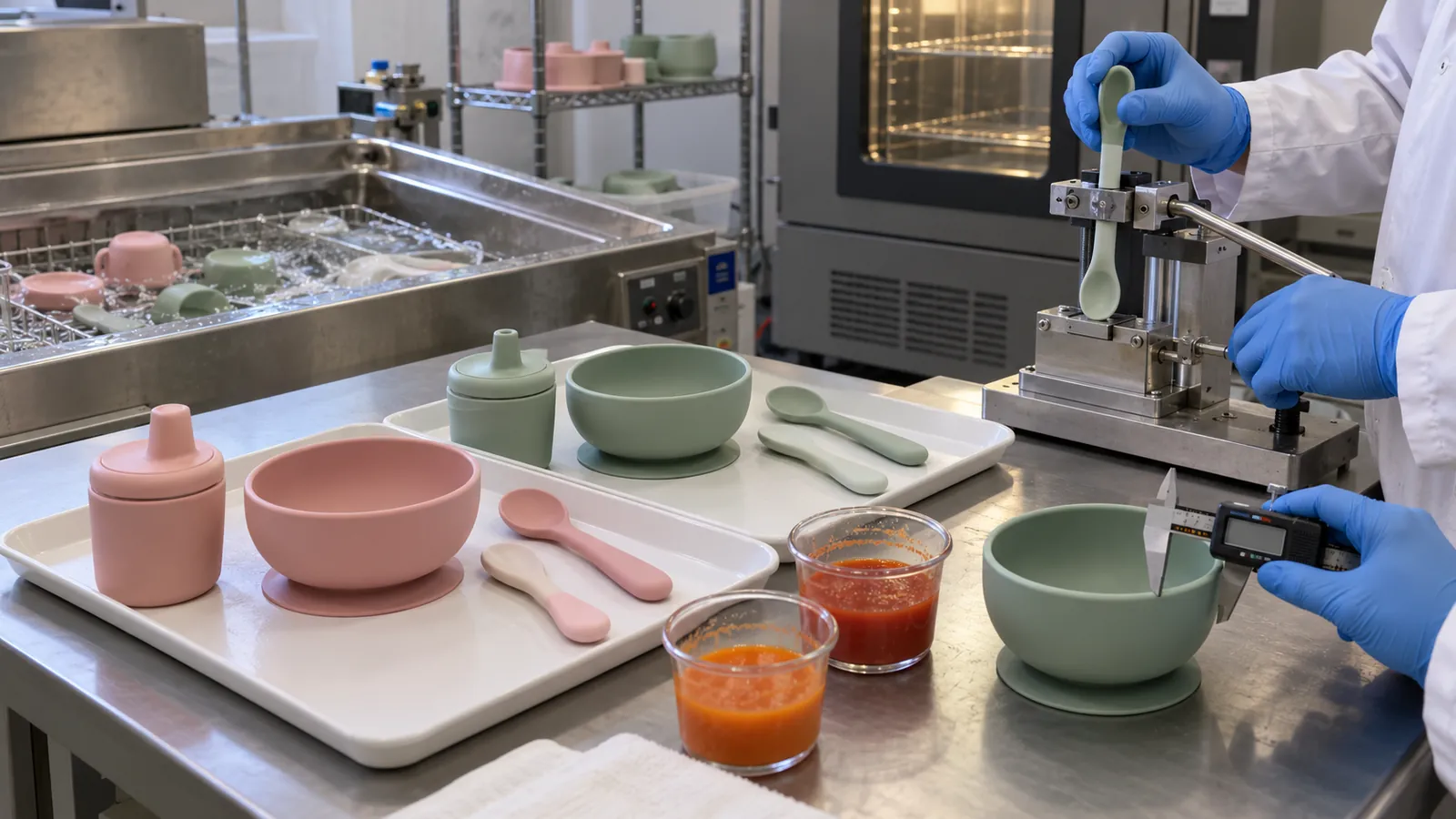
Before a sourcing team adds another product option, “Define the Baby Feeding Use Case Before Material Selection: Silicone vs TPE for Baby Feeding Products” needs a clear buyer, channel and repeat-order purpose. Compare material identity, feel, temperature exposure, staining, molding route, evidence scope and finished-product validation for the exact feeding SKU, with the 1th gate assigned to a named buyer or supplier owner. For this decision, the requirement becomes useful only when it can be converted into a drawing, sample, record or repeatable check.
The evidence package is stronger when it includes retain the current drawing, sample identity, review notes, method, raw result and approval record that support this silicone vs TPE baby products decision. The unresolved exposure is if this gate is skipped, the team may compare different assumptions or apply evidence beyond the product, lot, condition or market it actually covers. Carry the approved limit into the inspection instruction rather than leaving it only in meeting notes.
Compare Material Identity and Supplier Evidence: Silicone vs TPE for Baby Feeding Products
The factory view of “Compare Material Identity and Supplier Evidence: Silicone vs TPE for Baby Feeding Products” begins with the finished selling unit, not an isolated silicone part. Compare material identity, feel, temperature exposure, staining, molding route, evidence scope and finished-product validation for the exact feeding SKU, with the 2th gate assigned to a named buyer or supplier owner. For this decision, early alignment is less expensive than correcting a mold, replacing printed packaging or sorting finished inventory.
For an audit-ready decision, retain retain the current drawing, sample identity, review notes, method, raw result and approval record that support this silicone vs TPE baby products decision. The unresolved exposure is if this gate is skipped, the team may compare different assumptions or apply evidence beyond the product, lot, condition or market it actually covers. Retain enough context to distinguish a process correction from a change to the buyer's requirement.
SECTION 02
Compare Silicone and TPE as Controlled Material Systems
Translate the range plan into comparable product, packaging and approval evidence before requesting final quotations. Record the decision owner, applicable silicone vs TPE baby products revision and evidence required before the next gate.
Evaluate Softness, Elastic Response and Product Geometry: Silicone vs TPE for Baby Feeding Products
For B2B importers, distributors, retailers, private-label brands, product developers, quality teams and sourcing managers, the commercial question behind “Evaluate Softness, Elastic Response and Product Geometry: Silicone vs TPE for Baby Feeding Products” is whether it improves sell-through without creating avoidable SKU complexity. Compare material identity, feel, temperature exposure, staining, molding route, evidence scope and finished-product validation for the exact feeding SKU, with the 3th gate assigned to a named buyer or supplier owner. For this decision, the buyer should distinguish a mandatory acceptance point from a preference that can be traded against cost or timing.
A traceable project record should connect retain the current drawing, sample identity, review notes, method, raw result and approval record that support this silicone vs TPE baby products decision. The unresolved exposure is if this gate is skipped, the team may compare different assumptions or apply evidence beyond the product, lot, condition or market it actually covers. Assign an escalation trigger for any material, tooling, packaging or destination-market change.
Validate Temperature, Cleaning, Staining and Odor Conditions: Silicone vs TPE for Baby Feeding Products
Before a sourcing team adds another product option, “Validate Temperature, Cleaning, Staining and Odor Conditions: Silicone vs TPE for Baby Feeding Products” needs a clear buyer, channel and repeat-order purpose. Compare material identity, feel, temperature exposure, staining, molding route, evidence scope and finished-product validation for the exact feeding SKU, with the 4th gate assigned to a named buyer or supplier owner. For this decision, recording the applicable condition keeps the requirement from being reused outside its original product and market scope.
The next decision gate should reference retain the current drawing, sample identity, review notes, method, raw result and approval record that support this silicone vs TPE baby products decision. The unresolved exposure is if this gate is skipped, the team may compare different assumptions or apply evidence beyond the product, lot, condition or market it actually covers. Make the result accessible to purchasing, engineering and quality before the next commercial commitment.
SECTION 03
Validate Finished-Product Performance and Evidence
Protect margin by reviewing production controls, landed-cost drivers and launch risks as one commercial system. Record the decision owner, applicable silicone vs TPE baby products revision and evidence required before the next gate.
Compare Tooling, Processing and Commercial Constraints: Silicone vs TPE for Baby Feeding Products
A category buyer should judge “Compare Tooling, Processing and Commercial Constraints: Silicone vs TPE for Baby Feeding Products” by the role it plays in the assortment, price architecture and retail channel. Compare material identity, feel, temperature exposure, staining, molding route, evidence scope and finished-product validation for the exact feeding SKU, with the 5th gate assigned to a named buyer or supplier owner. For this decision, the team should identify who approves the requirement, how it will be measured and which later decisions depend on it.
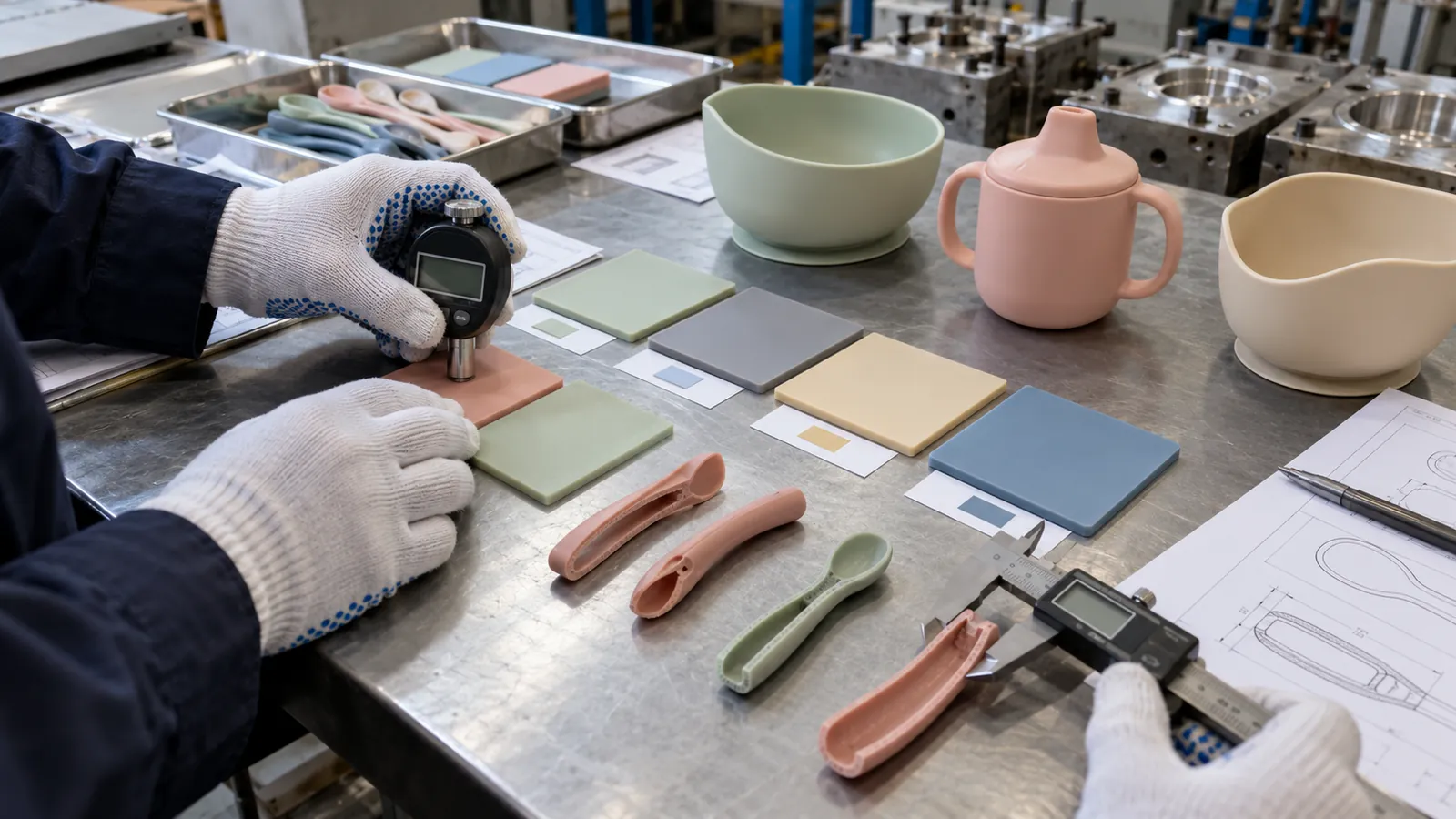
During supplier review, the buyer should request retain the current drawing, sample identity, review notes, method, raw result and approval record that support this silicone vs TPE baby products decision. The unresolved exposure is if this gate is skipped, the team may compare different assumptions or apply evidence beyond the product, lot, condition or market it actually covers. Link the record to the current SKU revision and name the person authorized to release it.
SECTION 04
Choose the Commercial Route and Protect Repeat Orders
Use early sales and replenishment assumptions to decide which variants deserve expansion and which should remain controlled. Record the decision owner, applicable silicone vs TPE baby products revision and evidence required before the next gate.
Release the Finished SKU with Traceability and Change Control: Silicone vs TPE for Baby Feeding Products
The factory view of “Release the Finished SKU with Traceability and Change Control: Silicone vs TPE for Baby Feeding Products” begins with the finished selling unit, not an isolated silicone part. Compare material identity, feel, temperature exposure, staining, molding route, evidence scope and finished-product validation for the exact feeding SKU, with the 6th gate assigned to a named buyer or supplier owner. For this decision, a clear baseline also helps the supplier explain any trade-off instead of silently selecting the easiest manufacturing option.
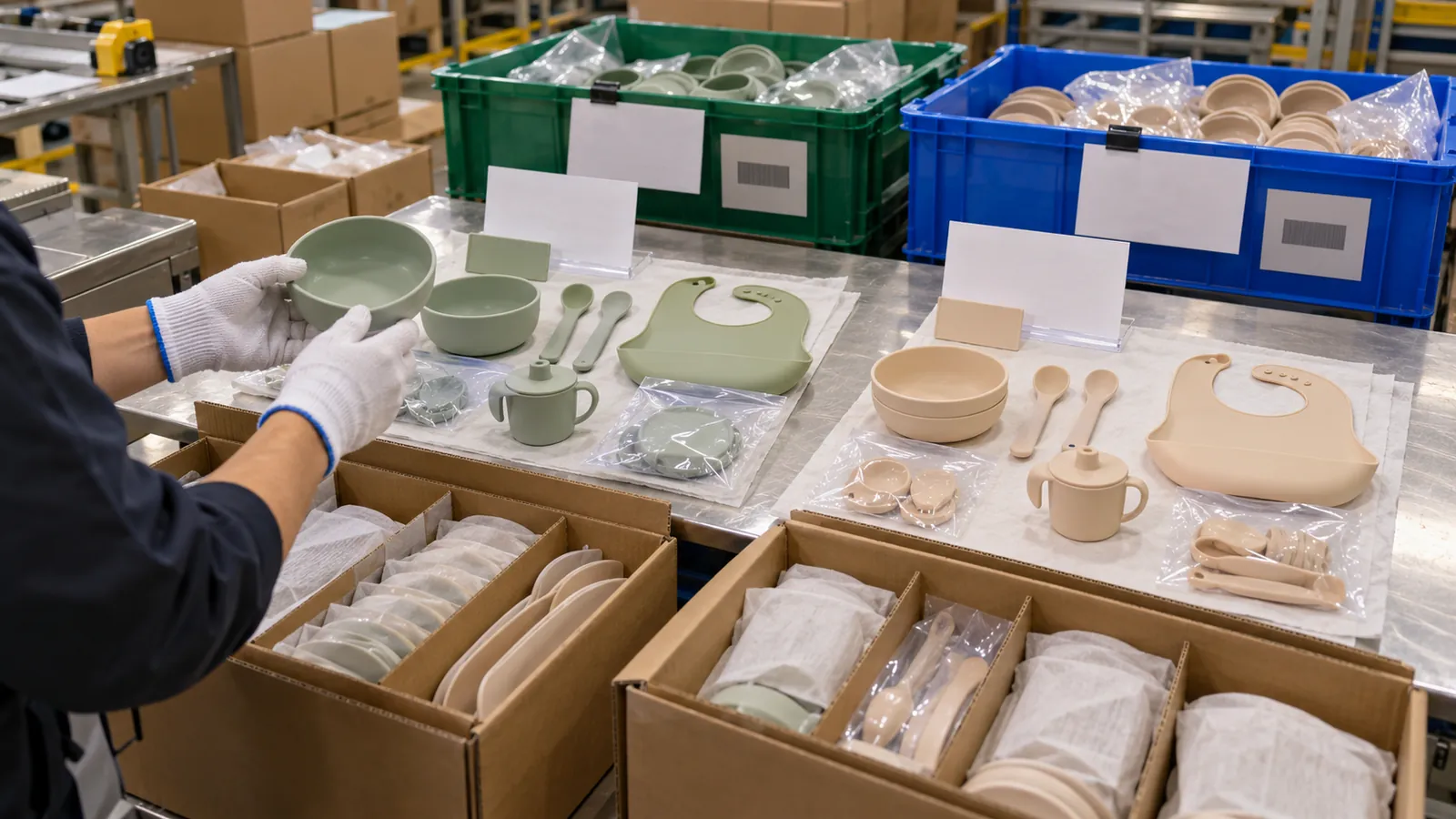
Before the next project gate, both parties should agree on retain the current drawing, sample identity, review notes, method, raw result and approval record that support this silicone vs TPE baby products decision. The unresolved exposure is if this gate is skipped, the team may compare different assumptions or apply evidence beyond the product, lot, condition or market it actually covers. Record any deviation separately and prevent it from becoming an undocumented repeat-order precedent.
ACTION FRAMEWORK
Buyer Checklist Before Commercial Approval
Use this checklist as a meeting agenda. It is intentionally concise so the team can identify missing evidence without replacing its own quality, legal or supplier-management procedure.
| Check | Question | Why It Matters |
|---|---|---|
| Use conditions | Are food type, contact time, temperature, cleaning and supervision assumptions written? | Material comparison is unreliable without a defined finished-product use case. |
| Material identity | Is the exact silicone compound or TPE grade, supplier and color system controlled? | A generic polymer label cannot support approval or repeat-order traceability. |
| Geometry | Are wall thickness, radii, flex zones, lips, handles and tear-sensitive features dimensioned? | Geometry can dominate feel, recovery and failure behavior. |
| Evidence | Do declarations and reports match the formulation, color, SKU and destination-market question? | Evidence from a different grade or sample may not apply to the released product. |
| Validation | Were stain, odor, wash, heat, deformation and functional checks run on representative parts? | Raw-material data alone does not prove finished-product performance. |
| Change control | Which supplier, grade, pigment, tooling or process changes require buyer approval? | Uncontrolled substitutions can invalidate the approved evidence and product feel. |
NEXT READING
Continue the Supplier and Product Review
These internal resources connect the guide with Naike Silicone product, factory, customization and inquiry pages. Open the route that matches the next decision in your project.
Explore silicone baby products
Use explore silicone baby products to gather the next level of product, manufacturing or commercial information. Connect the result to the current silicone vs TPE baby products revision and next approval action.
Open internal resource →Review private-label silicone tableware
Use review private-label silicone tableware to gather the next level of product, manufacturing or commercial information. Connect the result to the current silicone vs TPE baby products revision and next approval action.
Open internal resource →Review custom silicone molding
Use review custom silicone molding to gather the next level of product, manufacturing or commercial information. Connect the result to the current silicone vs TPE baby products revision and next approval action.
Open internal resource →Review food-contact silicone testing by market
Use review food-contact silicone testing by market to gather the next level of product, manufacturing or commercial information. Connect the result to the current silicone vs TPE baby products revision and next approval action.
Open internal resource →Compare silicone COAs, declarations and laboratory reports
Use compare silicone coas, declarations and laboratory reports to gather the next level of product, manufacturing or commercial information. Connect the result to the current silicone vs TPE baby products revision and next approval action.
Open internal resource →Request a material and finished-SKU review
Use request a material and finished-sku review to gather the next level of product, manufacturing or commercial information. Connect the result to the current silicone vs TPE baby products revision and next approval action.
Open internal resource →PRIMARY REFERENCES
Authoritative External Sources
The sources below are official primary references. Applicability depends on the product, intended use and destination market. Buyers should obtain qualified advice for final legal or regulatory decisions.
European Commission: Food Contact Materials
Official EU overview of food-contact material requirements; finished-product applicability depends on market, formulation and intended use. Confirm applicability against the listed product, revision, intended use and destination before relying on it for approval.
FDA: Food types and conditions of use
Official FDA framework for food type and use conditions; it does not approve a finished silicone SKU or its mechanical performance. Confirm applicability against the listed product, revision, intended use and destination before relying on it for approval.
ISO 2859-1:2026 lot-by-lot inspection
Official ISO page for attribute sampling schemes; the buyer must define defects, inspection level and release authority. Confirm applicability against the listed product, revision, intended use and destination before relying on it for approval.
BUYER QUESTIONS
Frequently Asked Questions
What should a buyer confirm first for silicone vs TPE baby products?
Compare material identity, feel, temperature exposure, staining, molding route, evidence scope and finished-product validation for the exact feeding SKU, with the 1th gate assigned to a named buyer or supplier owner as the first controlled decision in the buyer's review. Support that review with retain the current drawing, sample identity, review notes, method, raw result and approval record that support this silicone vs TPE baby products decision. The exact depth for define the baby feeding use case before material selection: silicone vs tpe for baby feeding products depends on product use, market, order value and whether the program uses an existing design or new tooling. Keep this decision linked to the current SKU revision, and reassess define the baby feeding use case before material selection: silicone vs tpe for baby feeding products whenever material, design, color, process, packaging or destination-market assumptions change.
How should buyers review compare material identity and supplier evidence: silicone vs tpe for baby feeding products?
Compare material identity, feel, temperature exposure, staining, molding route, evidence scope and finished-product validation for the exact feeding SKU, with the 2th gate assigned to a named buyer or supplier owner as the first controlled decision in the buyer's review. Support that review with retain the current drawing, sample identity, review notes, method, raw result and approval record that support this silicone vs TPE baby products decision. The exact depth for compare material identity and supplier evidence: silicone vs tpe for baby feeding products depends on product use, market, order value and whether the program uses an existing design or new tooling. Keep this decision linked to the current SKU revision, and reassess compare material identity and supplier evidence: silicone vs tpe for baby feeding products whenever material, design, color, process, packaging or destination-market assumptions change.
How should buyers review evaluate softness, elastic response and product geometry: silicone vs tpe for baby feeding products?
Compare material identity, feel, temperature exposure, staining, molding route, evidence scope and finished-product validation for the exact feeding SKU, with the 3th gate assigned to a named buyer or supplier owner as the first controlled decision in the buyer's review. Support that review with retain the current drawing, sample identity, review notes, method, raw result and approval record that support this silicone vs TPE baby products decision. The exact depth for evaluate softness, elastic response and product geometry: silicone vs tpe for baby feeding products depends on product use, market, order value and whether the program uses an existing design or new tooling. Keep this decision linked to the current SKU revision, and reassess evaluate softness, elastic response and product geometry: silicone vs tpe for baby feeding products whenever material, design, color, process, packaging or destination-market assumptions change.
How should buyers review validate temperature, cleaning, staining and odor conditions: silicone vs tpe for baby feeding products?
Compare material identity, feel, temperature exposure, staining, molding route, evidence scope and finished-product validation for the exact feeding SKU, with the 4th gate assigned to a named buyer or supplier owner as the first controlled decision in the buyer's review. Support that review with retain the current drawing, sample identity, review notes, method, raw result and approval record that support this silicone vs TPE baby products decision. The exact depth for validate temperature, cleaning, staining and odor conditions: silicone vs tpe for baby feeding products depends on product use, market, order value and whether the program uses an existing design or new tooling. Keep this decision linked to the current SKU revision, and reassess validate temperature, cleaning, staining and odor conditions: silicone vs tpe for baby feeding products whenever material, design, color, process, packaging or destination-market assumptions change.
How should buyers review compare tooling, processing and commercial constraints: silicone vs tpe for baby feeding products?
Compare material identity, feel, temperature exposure, staining, molding route, evidence scope and finished-product validation for the exact feeding SKU, with the 5th gate assigned to a named buyer or supplier owner as the first controlled decision in the buyer's review. Support that review with retain the current drawing, sample identity, review notes, method, raw result and approval record that support this silicone vs TPE baby products decision. The exact depth for compare tooling, processing and commercial constraints: silicone vs tpe for baby feeding products depends on product use, market, order value and whether the program uses an existing design or new tooling. Keep this decision linked to the current SKU revision, and reassess compare tooling, processing and commercial constraints: silicone vs tpe for baby feeding products whenever material, design, color, process, packaging or destination-market assumptions change.
How should buyers review release the finished sku with traceability and change control: silicone vs tpe for baby feeding products?
Compare material identity, feel, temperature exposure, staining, molding route, evidence scope and finished-product validation for the exact feeding SKU, with the 6th gate assigned to a named buyer or supplier owner as the first controlled decision in the buyer's review. Support that review with retain the current drawing, sample identity, review notes, method, raw result and approval record that support this silicone vs TPE baby products decision. The exact depth for release the finished sku with traceability and change control: silicone vs tpe for baby feeding products depends on product use, market, order value and whether the program uses an existing design or new tooling. Keep this decision linked to the current SKU revision, and reassess release the finished sku with traceability and change control: silicone vs tpe for baby feeding products whenever material, design, color, process, packaging or destination-market assumptions change.
Editorial and Scope Note
Conclusion: Silicone vs TPE for Baby Feeding Products
Move from buyer research to a controlled supplier brief
Silicone and TPE can both support baby-feeding designs when the selected formulation, geometry, manufacturing route and evidence match the intended product. Freeze the exact material identity, use conditions and drawing; validate production-representative parts for cleaning, temperature, staining, odor, deformation and function; then protect the decision with traceability and change control. Share your SKU concept, destination market, use conditions and target feel with Naike Silicone for a material-route and sample-plan review.
This factory-insider guide supports sourcing preparation and supplier discussion for silicone vs TPE baby products. It does not replace product-specific engineering, laboratory, regulatory, legal or commercial review for the destination market.