CUSTOM MANUFACTURING & TOOLING
How to Engineer a Custom Fine Detail Silicone Chocolate Mold
Engineer a custom fine detail silicone chocolate mold from artwork to releasable cavities, representative chocolate trials, food-contact evidence and B2B tooling approval.
DIRECT ANSWER
What B2B Buyers Need to Know
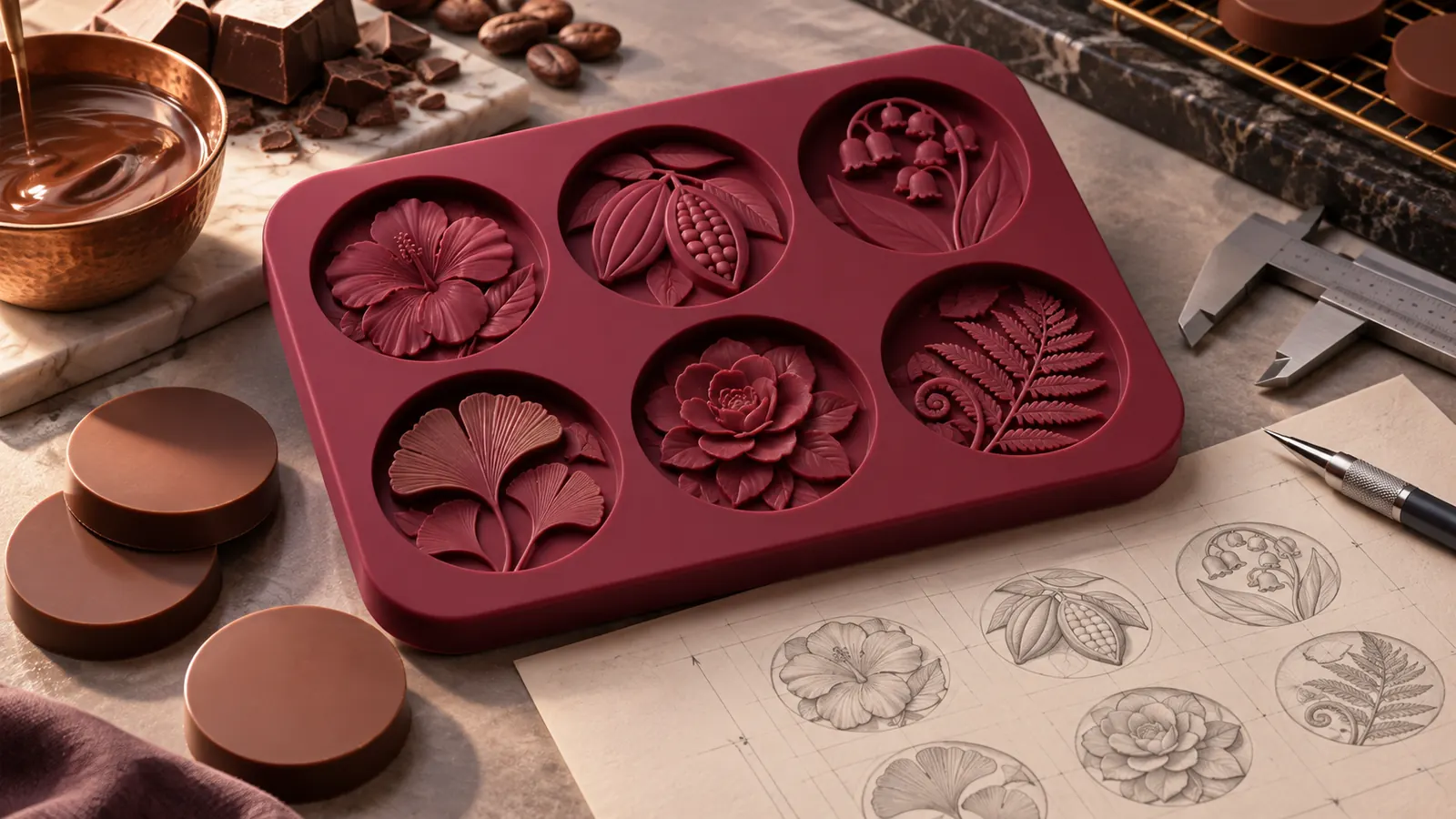
Engineer a custom fine detail silicone chocolate mold by translating the artwork into measurable cavity geometry, then trialing the actual chocolate and demolding method. Set minimum line width, relief depth, draft, radii, wall thickness, venting and inspection limits before steel cutting. Approve production-representative pieces, finished-mold food-contact evidence and packed samples together; a sharp rendering alone cannot prove clean release or repeatable detail.
This guide is written for B2B importers, distributors, retailers, private-label brands, product developers, quality teams and sourcing managers. It provides a decision framework rather than legal advice or a universal specification. Product classification, use conditions and destination market should be confirmed before final testing, labelling or compliance decisions.
Key Takeaways
- Treat the finished chocolate piece and the mold as two linked specifications.
- Set measurable relief, draft, radii and wall limits before tooling approval.
- Validate line definition, air release and breakage using the actual formulation.
- Tie food-contact records to the finished mold, market and use conditions.
- Inspect each cavity and repeat trial after material, tool or package changes.
- Quote cavity count, tooling corrections and packout on one approved baseline.
Fine-Detail Chocolate Mold Engineering Decision Matrix
The table frames design choices for trial approval, not universal dimensional limits. Actual limits depend on chocolate formulation, cavity size, tool process and the buyer's accepted appearance.
| Design question | Proposed control | Evidence before release |
|---|---|---|
| Fine line transfer | Minimum line width, depth and tip radius on a controlled drawing | Piece photographs and measured first-off cavity features |
| Demolding | Draft, undercut limit and flex direction matched to the piece | Breakage and deformation record across representative cavities |
| Air management | Fill route, high-point vents and practical tapping method | Void and incomplete-fill map from repeated chocolate trials |
| Mold integrity | Base thickness, wall balance, rim and handling zones | Dimension, flatness and tear observations after handling |
| Food contact | Named compound, pigments, finish and destination use | Applicable finished-article records and traceable sample identity |
| Retail readiness | Cavity count, instructions, protective sleeve and carton | Approved packed unit after storage and transit review |
SECTION 01
Translate Chocolate Artwork into a Tooling Brief
Convert the commercial concept into controlled dimensions, functions and approval criteria before DFM begins. Fix the finished chocolate target, authorized artwork and measurable cavity brief.
Name the chocolate result for custom fine detail silicone chocolate mold
We begin a fine-detail mold project with the chocolate that the buyer wants to sell, not the appearance of an empty silicone tray. The sales team should specify piece weight, visible face, edge shape, intended retail price tier and whether individual pieces will be wrapped or displayed loose. A delicate botanical vein may be the design signature, yet it has no commercial value if it disappears under the chosen chocolate or breaks during packing. Collect approved examples of acceptable and unacceptable pieces before discussing the cavity count.
The chocolate recipe is an engineering input because viscosity, inclusions, tempering practice and cooling sequence influence how a narrow feature fills and releases. A supplier can make an attractive CAD image from almost any motif, but that image does not reveal whether the buyer's actual confection will reproduce it. Give the factory a usable formulation description, target piece thickness and likely production method, even if the recipe itself must remain confidential. The development agreement can limit access while still defining the physical trial required for approval.
Control artwork rights and revisions
The source artwork must have an identified owner and a fixed revision before it is converted into relief. We ask for the approved vector file, height map or three-dimensional master, plus notes identifying which contours are essential brand elements and which can be adjusted for release. A low-resolution screenshot is useful for discussion but cannot govern tool cutting or inspection. Record the authorized designer, permitted use and revision history so that a later seasonal variation is not mistaken for the original approved motif.
Fine decorative detail often arrives as a collection of visually similar lines without any hierarchy of importance. The buyer should rank the elements that must survive on the finished chocolate, the elements that may be simplified and the areas that may be moved to protect the piece edge. This gives the toolmaker permission to propose manufacturable radii and spacing without silently changing the brand identity. Keep each proposed simplification marked on an overlay, with a named buyer approver and a corresponding chocolate trial result.
Convert relief into dimensions
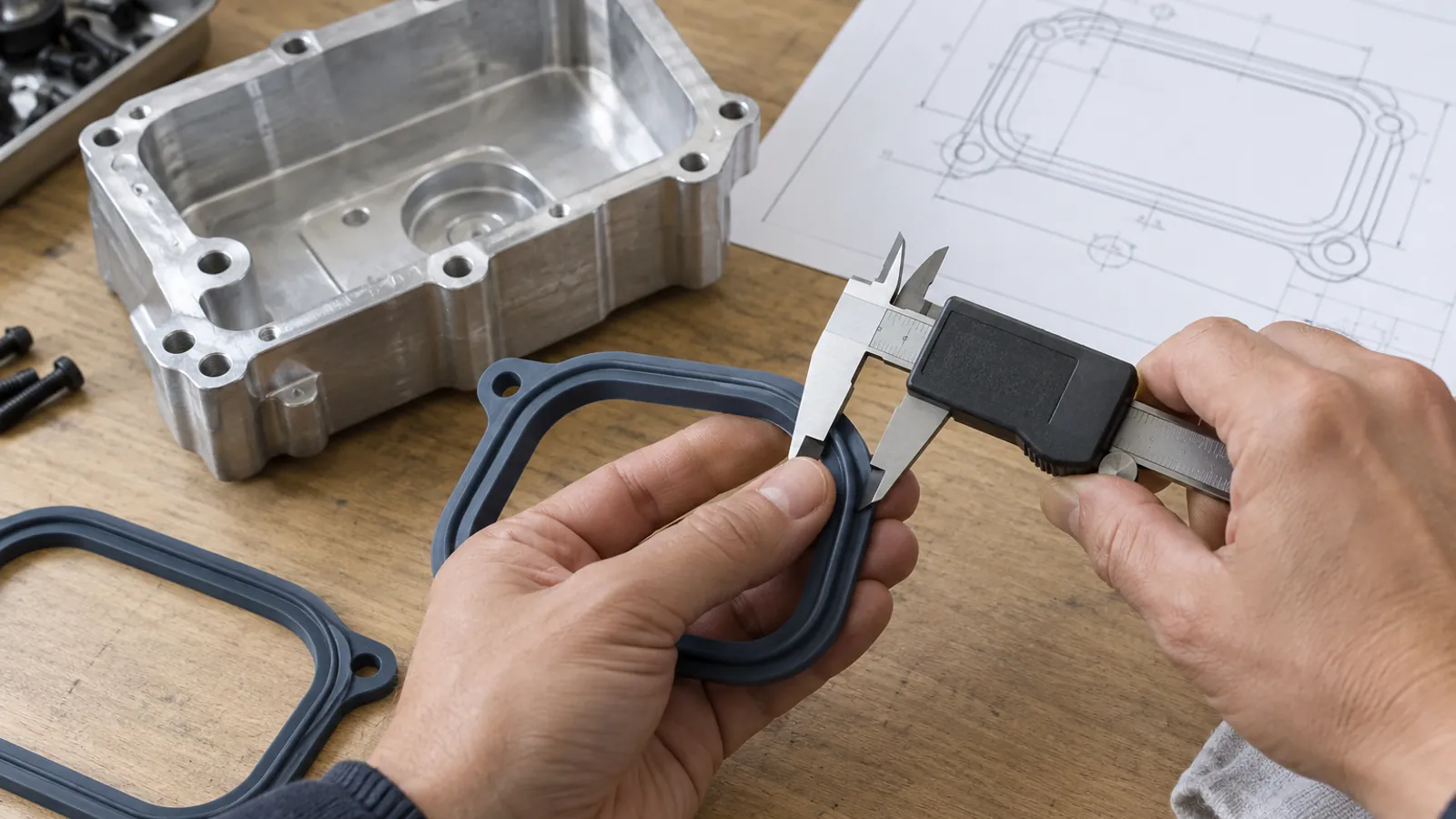
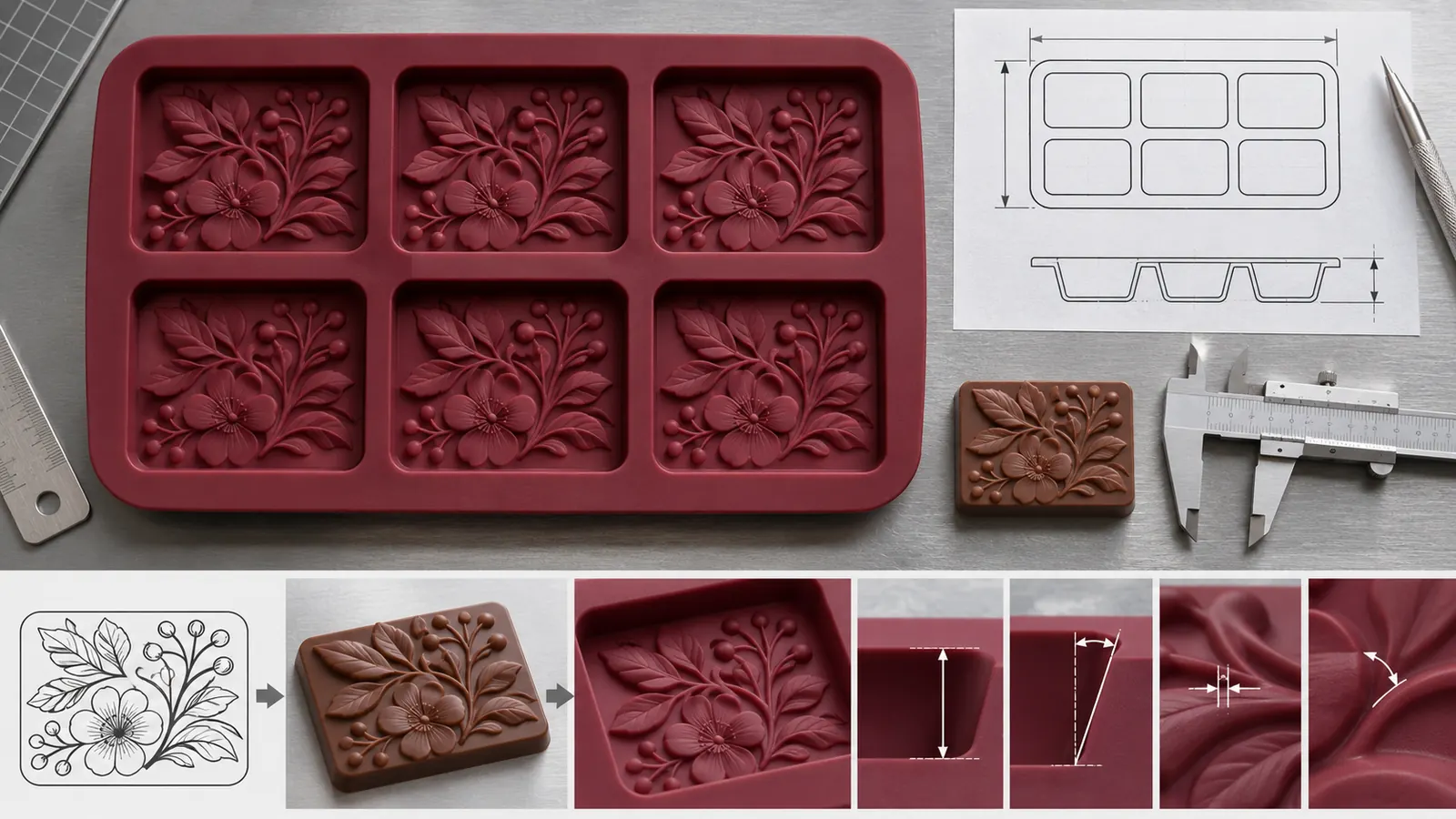
A dimensioned relief drawing should specify more than total cavity diameter and depth. Minimum line width, height difference, distance between adjacent ridges, tip radius and distance from the outer edge all influence whether a feature is machinable and whether chocolate can occupy it. We recommend identifying a few critical-to-appearance features and measuring them on both the tool and the molded silicone first-off. The actual permissible dimensions are project decisions; a generic rubber tolerance table cannot establish the buyer's decorative acceptance limit.
The moldmaker should flag every pointed tip, isolated island and very narrow valley before cutting steel. These shapes can produce fragile tool details, thin silicone features or chocolate that tears at release, depending on whether the motif is raised or recessed. A thicker line or a small fillet can preserve visual character while making the cavity more robust, but the buyer must see the proposed change in a rendered section and a physical sample. Approve the least intrusive correction that produces a repeatable finished piece.
SECTION 02
Engineer Relief, Draft, Walls and Air Escape
Close the process, material and mold decisions that determine tooling scope, trial evidence and revision cost. Review relief, extraction and fill paths on a marked production drawing.
Set draft and undercut limits
Draft is the small geometric allowance that helps a formed shape leave its cavity, but the correct direction depends on which surface carries the motif. A deep reverse feature may appear crisp in a digital model while mechanically locking a fragile chocolate branch in place. Review extraction direction on a cross-section, then identify any undercut that relies on silicone flex rather than ordinary straight release. That distinction matters when the piece is thin, cooled aggressively or handled by operators under production takt time.
Demolding is not a single laboratory gesture. The trial protocol should describe cooling endpoint, rest interval, support surface, tray orientation, flex direction, operator grip and whether the chocolate is pushed or peeled from the mold. Compare the first piece and later pieces after the tray has been handled repeatedly, because early success can mask wall distortion or operator-dependent breakage. Photograph the failed pieces as well as the winners, and record which cavity and relief area failed before authorizing a tool correction.
Balance silicone walls and base
The silicone surrounding each cavity has to hold the artwork without making the tray difficult to handle. Specify the base thickness, cavity-to-cavity wall, outer rim, corner support and any stiffening feature as controlled dimensions on the drawing. A very thin wall may flex attractively during a demonstration yet change cavity shape when filled or lifted, while an overly thick tray can frustrate controlled release. Measure the molded first-off at defined datums and compare the actual tray with the intended filling station and retail pack.
A tray also needs enough edge for safe handling without touching the chocolate surface. Ask where an operator will grip it, how it will be lifted when full and how many trays will be stacked during cooling or storage. These workflow details can reveal a rim that is too narrow, a base that bows or a cavity pitch that crowds the operator's fingers. If the buyer changes cavity count to improve unit economics, repeat the support review instead of copying the earlier wall thickness assumption.
Manage filling and trapped air
Air can hide in the highest point of a fine relief, especially when the fill enters from one side or the chocolate is relatively viscous. Draw the likely fill path and mark high points, narrow pockets and any feature that repeatedly shows voids in trial pieces. Depending on the geometry, the solution may be a local vent, a revised radius, a different fill sequence or a controlled tapping step. Each option changes either the tool, the production method or both, so the chosen method should be recorded.
A void map is more useful than a statement that the mold generally fills well. Trial several cavity positions with the actual chocolate, mark the location and size of incomplete features and note fill temperature and handling conditions beside each sample. Look for a pattern near one vent, a corner of the tray or an operator position, then correct the cause rather than polishing every feature indiscriminately. Reinspect after the correction because better air release can introduce flash or a visible vent witness mark.
SECTION 03
Validate Finished Pieces and Food-Contact Scope
Treat each mold trial as a measured engineering gate rather than a visual sample-selection exercise. Trial the real chocolate and map appearance, breakage and food-contact evidence to this SKU.
Trial the actual formulation
The trial should use the intended chocolate family rather than an easier substitute selected only to make the prototype look good. Dark, milk and white recipes can behave differently in narrow relief, and inclusions or colored decoration can create a separate fill problem. Record the material batch or a confidential formulation identifier, tempering method, fill temperature, cooling profile and approximate cycle used for every review set. These values are not universal recommendations; they make results comparable when the buyer and factory discuss changes.
Inspect transfer and defects
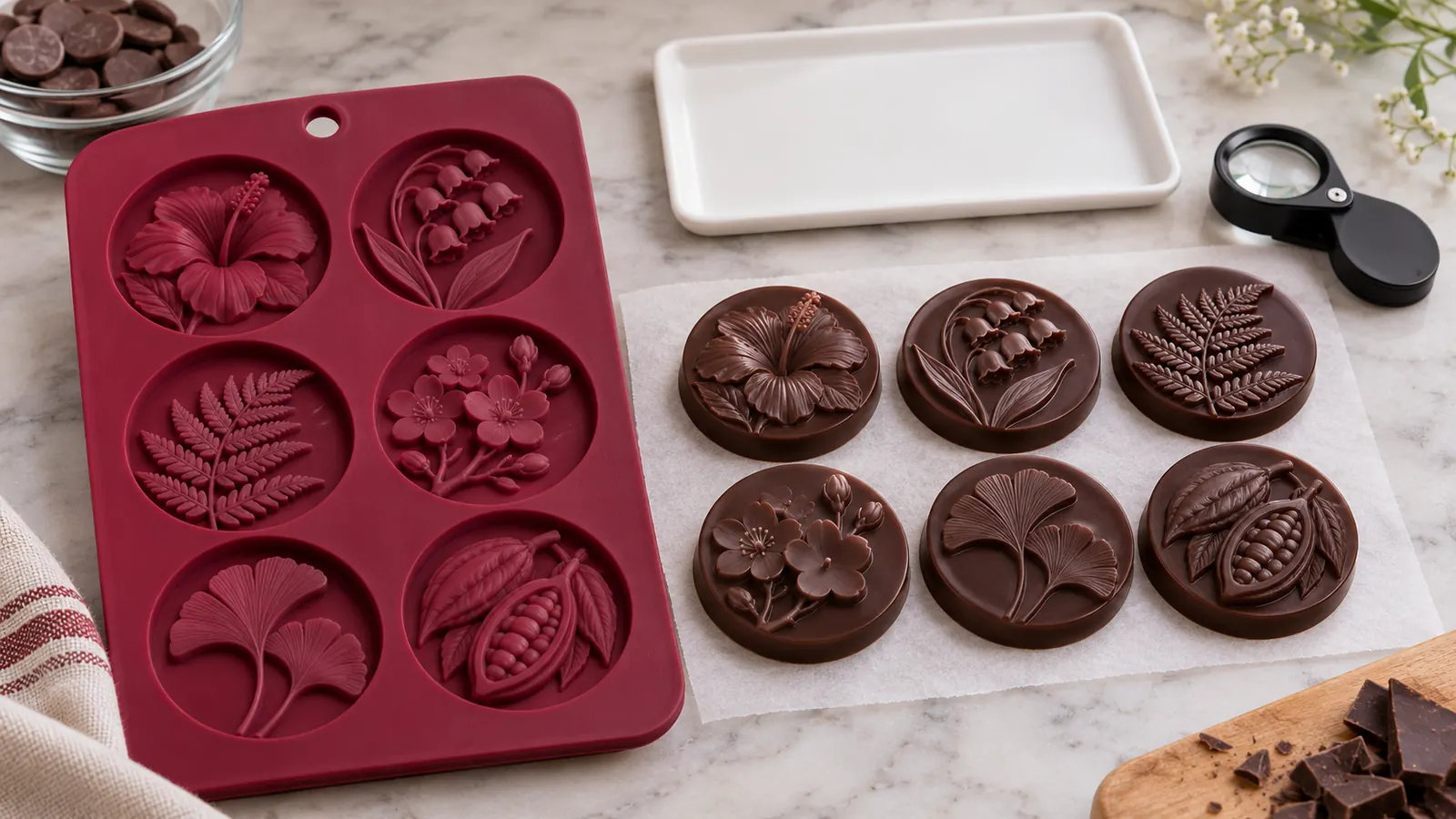
Appearance approval becomes repeatable when the buyer describes what a pass looks like. Define the critical line or logo edges, acceptable shallow areas, void locations, surface marks and maximum visible flash using photographs under fixed lighting. A broad instruction such as 'perfect detail' cannot be applied consistently by a factory inspector or a receiving warehouse. Pair each visual category with a cavity identifier and, where practical, a measured feature on the mold so corrections address the correct root cause.
Check finished food-contact scope
Food-contact evidence should identify the finished mold construction and the conditions in which it will be used. Ask which silicone compound, curing system, pigment and surface treatment are present in the released tray, then identify the destination market and the food, temperature and repeated-use assumptions. The European Commission describes a general framework and good manufacturing practice for food-contact materials, while market-specific measures can differ. A report on uncolored base material alone should not be presented as approval of every colored finished mold.
SECTION 04
Approve Tooling, Packaging and Repeat Orders
Release production only when drawings, golden samples, inspection records and change authority describe the same revision. Release tooling, packout and reorders only against the approved reference set.
Approve production tooling
Prototype, T0 and production tooling are different approval states. A printed or soft prototype can help assess motif proportions and handling, while the first production-tool trial reveals actual silicone shrinkage, edge formation and cavity repeatability. Record the proposed correction after each trial with a drawing mark-up, reason, affected cavities and expected effect on the finished chocolate. Do not merge all sample rounds into one 'approved' label, because the buyer needs to know which physical revision authorized mass production.
Validate packout and care
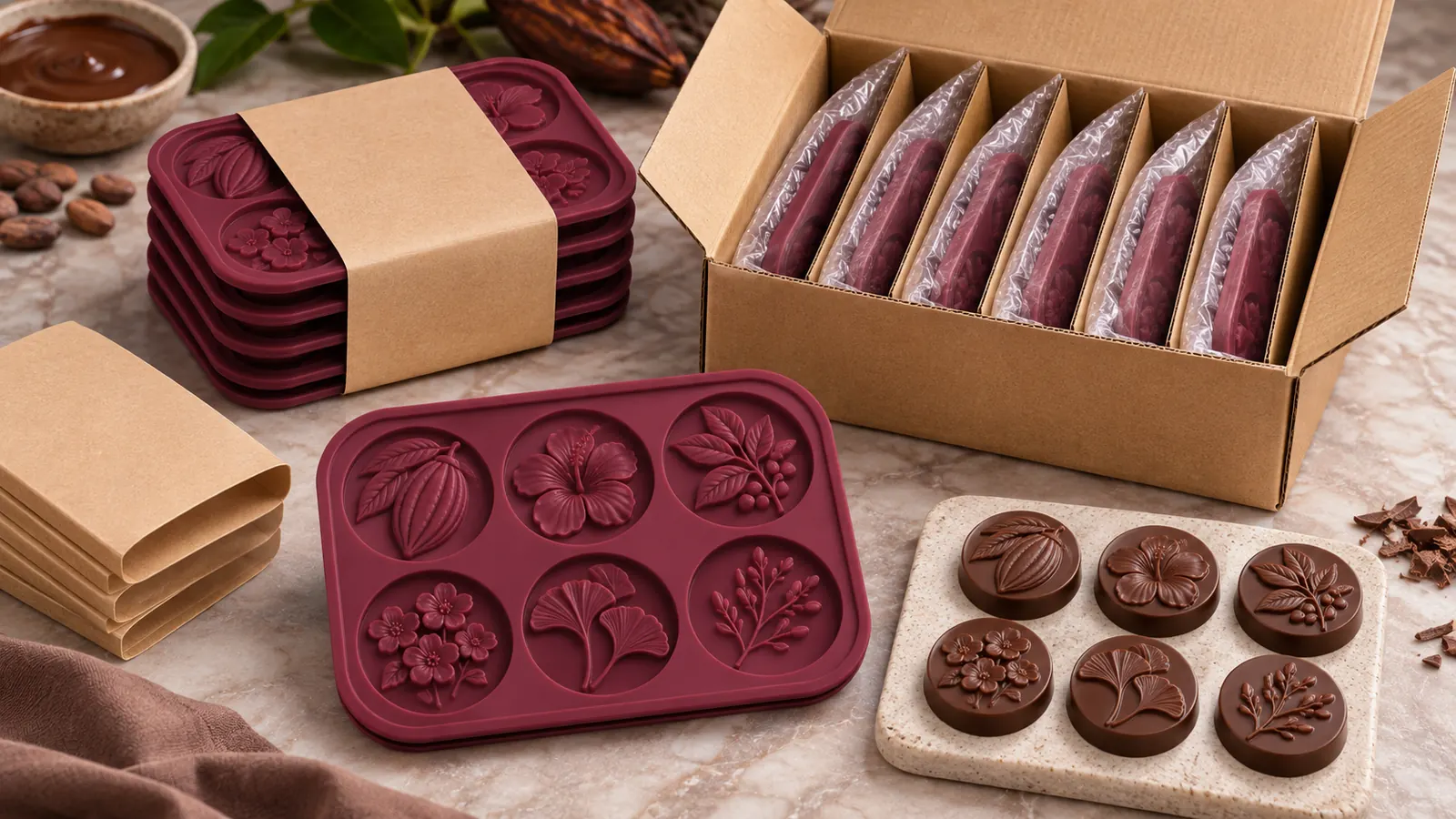
Packaging can deform a mold that passed all bench tests. Check how the tray lies in a sleeve, how cartons stack and whether another item presses into the relief during storage or transport. A distorted cavity may produce a visibly different chocolate even though the silicone article has no obvious tear. Approve the complete retail or wholesale selling unit after a representative packed dwell, then recheck flatness, cavity shape, odor and visible surface condition against the retained unpacked reference.
Control changes and reorder
A meaningful quotation should state cavity count, tray size, material and color, decoration route, tool ownership, sample rounds, correction allowance, inspection plan, packaging and forecast quantity. Ask the supplier to separate one-time tooling from unit cost and to explain what happens if the relief needs a second correction after chocolate trials. Compare proposals on the same approved drawing and acceptance matrix; otherwise a low price can simply omit the difficult detail or the evidence required to sell the product.
ACTION FRAMEWORK
Buyer Checklist Before Commercial Approval
Use this checklist as a meeting agenda. It is intentionally concise so the team can identify missing evidence without replacing its own quality, legal or supplier-management procedure.
| Check | Question | Why It Matters |
|---|---|---|
| Artwork authority | Who owns the motif and which revision is approved? | An attractive draft cannot authorize a protected or obsolete design. |
| Piece target | What are chocolate type, weight, visible face and defect limits? | Transfer quality is judged on a real piece, not on the empty cavity. |
| Geometry | Which line, depth, radius, draft and wall dimensions are critical? | Toolmakers need measurable limits and correction priorities. |
| Release trial | How will filling, cooling, flexing and breakage be reproduced? | A single demonstration cannot establish a robust production window. |
| Evidence | Do food-contact records cover the exact mold and intended market? | A base-compound statement is not blanket finished-SKU approval. |
| Commercial | Are cavities, corrections, MOQ, packout and lead time specified? | Quotes are incomparable when tooling and inspection scope differ. |
NEXT READING
Continue the Supplier and Product Review
These internal resources connect the guide with Naike Silicone product, factory, customization and inquiry pages. Open the route that matches the next decision in your project.
Review the fine-detail chocolate mold product concept
Use review the fine-detail chocolate mold product concept for this mold program. Record the review the fine-detail chocolate mold product concept finding against the approved artwork, cavity revision or chocolate trial.
Open internal resource →Explore silicone kitchen products
Use explore silicone kitchen products for this mold program. Record the explore silicone kitchen products finding against the approved artwork, cavity revision or chocolate trial.
Open internal resource →Review custom silicone manufacturing
Use review custom silicone manufacturing for this mold program. Record the review custom silicone manufacturing finding against the approved artwork, cavity revision or chocolate trial.
Open internal resource →Review Naike Silicone quality control
Use review naike silicone quality control for this mold program. Record the review naike silicone quality control finding against the approved artwork, cavity revision or chocolate trial.
Open internal resource →Review mold trial sample approval
Use review mold trial sample approval for this mold program. Record the review mold trial sample approval finding against the approved artwork, cavity revision or chocolate trial.
Open internal resource →Review food-contact migration test conditions
Use review food-contact migration test conditions for this mold program. Record the review food-contact migration test conditions finding against the approved artwork, cavity revision or chocolate trial.
Open internal resource →Request a chocolate-mold DFM and RFQ review
Use request a chocolate-mold dfm and rfq review for this mold program. Record the request a chocolate-mold dfm and rfq review finding against the approved artwork, cavity revision or chocolate trial.
Open internal resource →PRIMARY REFERENCES
Authoritative External Sources
The sources below are official primary references. Applicability depends on the product, intended use and destination market. Buyers should obtain qualified advice for final legal or regulatory decisions.
European Commission: Food Contact Materials
Official EU overview of food-contact material requirements; finished-product applicability depends on market, formulation and intended use.Check the scope of European Commission: Food Contact Materials against this specific finished mold and market. Keep any limitation visible in the buyer approval record.
FDA: Food types and conditions of use
Official FDA framework for food type and use conditions; it does not approve a finished silicone SKU or its mechanical performance.Check the scope of FDA: Food types and conditions of use against this specific finished mold and market. Keep any limitation visible in the buyer approval record.
ISO 3302-1:2014 moulded rubber tolerances
Official scope for dimensional tolerance classes on moulded rubber; project dimensions and test methods still require agreement.Check the scope of ISO 3302-1:2014 moulded rubber tolerances against this specific finished mold and market. Keep any limitation visible in the buyer approval record.
WIPO: Industrial designs
Official WIPO overview of industrial-design protection; ownership and freedom-to-operate questions require project-specific review.Check the scope of WIPO: Industrial designs against this specific finished mold and market. Keep any limitation visible in the buyer approval record.
BUYER QUESTIONS
Frequently Asked Questions
How small can a chocolate-mold relief line be?
There is no universal minimum that guarantees a clean chocolate impression. Agree a line-width and radius target with the toolmaker, then approve the result on pieces made with the intended formulation and release method.
Does deeper relief always produce sharper chocolate?
No. Depth can increase visual contrast, but it can also trap air or create a fragile chocolate feature. Compare depth variants on representative pieces before selecting the released cavity.
Can a silicone mold use undercuts?
Some undercuts may be possible because the mold flexes, but the chocolate may still break during removal. Record the extraction direction and test repeated release by the intended operators.
What should be inspected on every cavity?
Identify critical lines, void-prone pockets, dimensions, tears, contamination and trim limits by cavity number. Keep a signed golden mold and accepted pieces as the visual baseline.
Is an FDA-grade silicone statement sufficient?
No. Verify the applicable substance, intended use and finished-mold construction for the destination market. A generic compound claim cannot approve every pigment, finish or complete product.
When is the production tool approved?
Approve it after the buyer accepts dimensioned first-offs, representative chocolate trials, correction records, food-contact scope and packed samples against one controlled revision.
What should a B2B RFQ include?
Send authorized artwork, target piece and chocolate information, cavity count, market, color, packaging, forecast and acceptance priorities. Ask suppliers to identify tooling and correction assumptions separately.
Editorial and Scope Note
Conclusion: Fine Detail Silicone Chocolate Mold
Move from buyer research to a controlled supplier brief
A fine-detail chocolate mold is ready for commercial release only when the approved artwork, dimensioned cavity, production-representative mold, actual chocolate trial and finished-article evidence support the same SKU. Send Naike Silicone the authorized motif, piece target, formulation, destination market, forecast and packout requirement to request a focused DFM review and quotation.
This factory-insider guide supports sourcing preparation and supplier discussion for custom fine detail silicone chocolate mold. It does not replace product-specific engineering, laboratory, regulatory, legal or commercial review for the destination market.