
Custom Botanical or Brand Relief
Provide original vector artwork or a reference piece; approve manufacturable line width and depth on physical samples before tool release.
NON-STICK BAKEWARE
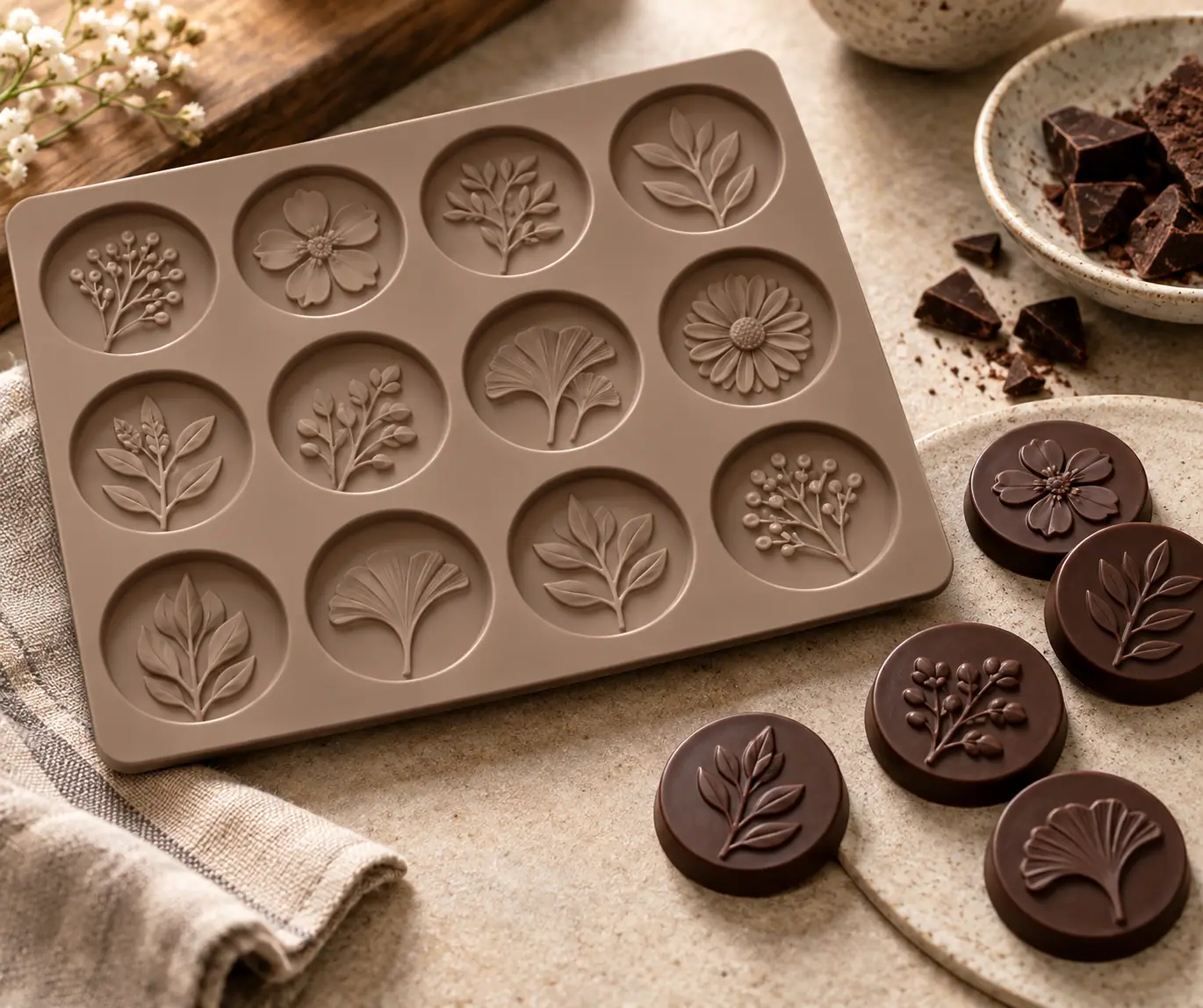
PRODUCT OVERVIEW
A fine-detail chocolate mold is purchased for the result on the confection, not merely for the number of cavities in a tray. This botanical-medallion concept illustrates a buyer-owned assortment of shallow relief patterns; the final piece diameter, depth, decoration and cavity count are defined from the buyer's product brief. Naike Silicone can review a custom tool and silicone construction against the desired demolding and display outcome rather than promising that every drawing will transfer with the same sharpness.
The engineering discussion starts with the intended chocolate type, tempering and filling process, piece dimensions, critical relief line widths, curvature, tray handling and release method. Fine recessed lines in the mold create raised chocolate features that may be vulnerable during release or packing. A sample program should examine clean edges, trapped air, surface appearance and repeated release under an agreed process; changing formulation or cooling conditions may change the outcome.
A retail or professional confectionery program also needs a controlled selling unit: exact mold count, approved colors, care instructions, artwork, insert and carton. Food-contact documentation must be appropriate for the finished material, pigment, intended contact and destination market. Tooling cost, MOQ, sample timing, unit price, production capacity and delivery remain conditional on the approved drawing, validation plan, variant mix, packaging and current factory schedule.
Product page updated:
Request a B2B QuotationENGINEERING & APPROVAL EVIDENCE
Each stage addresses a different purchasing risk: manufacturability, functional fit and private-label presentation.
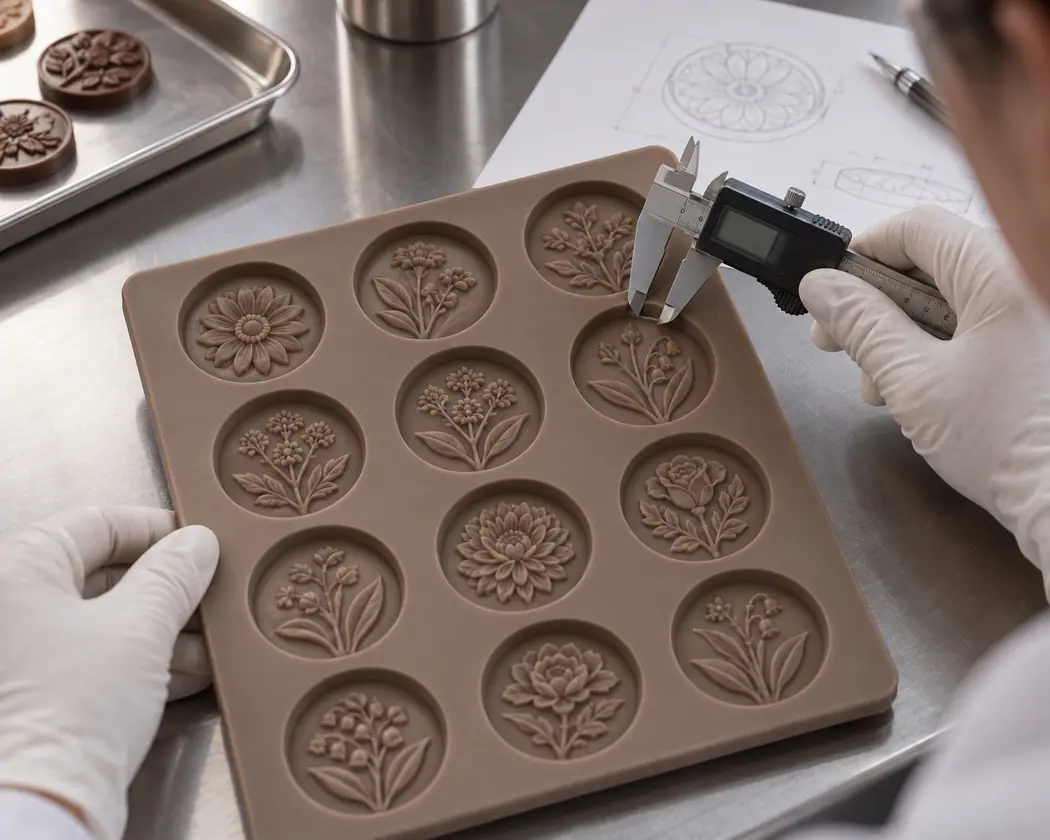
The DFM gate checks line width, relief depth, corner radius, wall balance, parting strategy and tool release on the selected artwork.
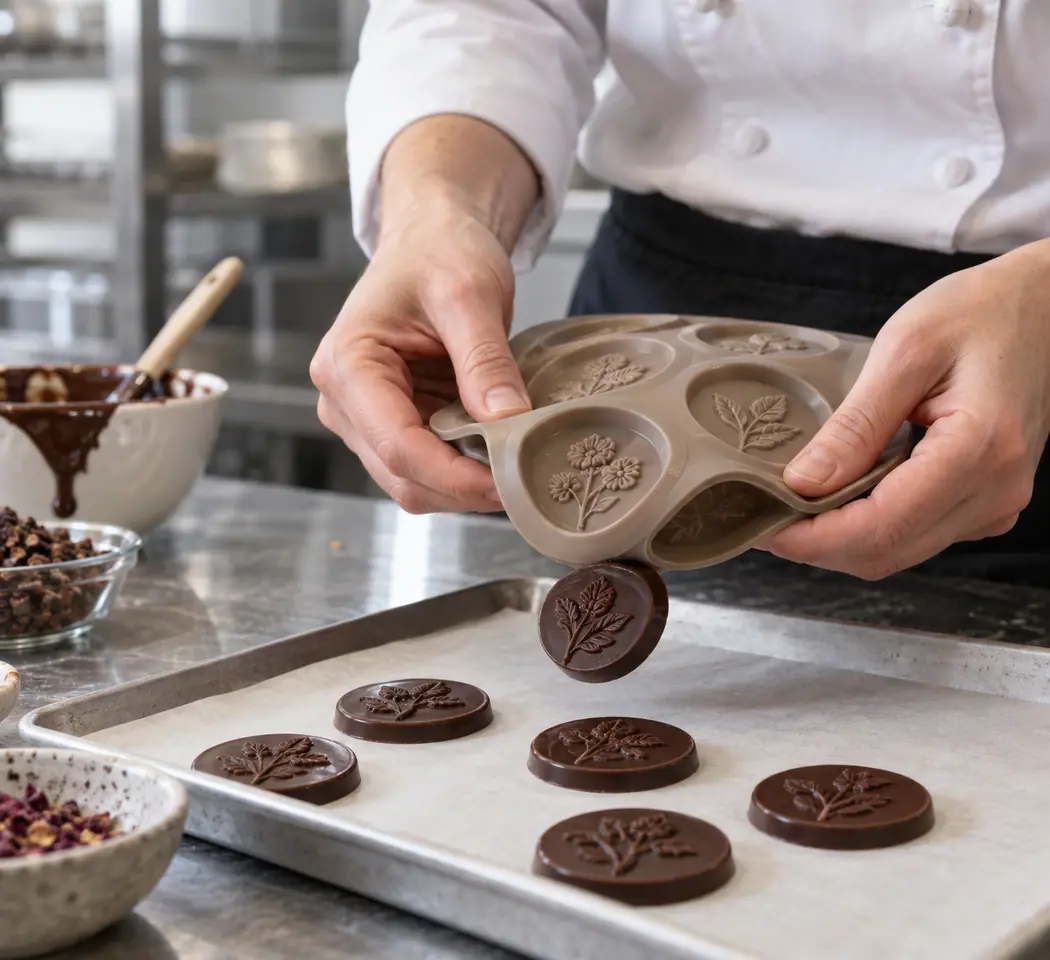
A documented fill, cooling and demolding sequence is needed before evaluating definition and breakage on real pieces.
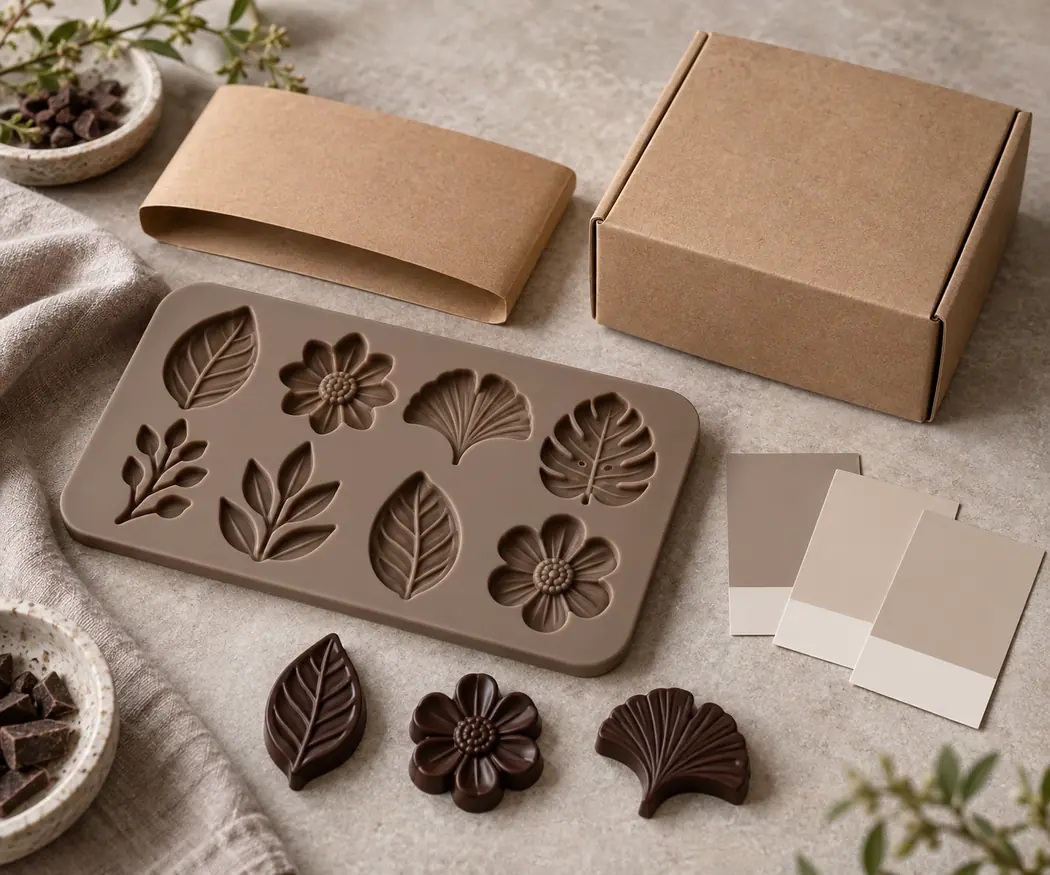
Mold count, color, instructions and packed protection form one approved retail SKU rather than separate artwork decisions.
B2B SOURCING SNAPSHOT
Final terms depend on the approved specification, packaging, quantity and delivery plan.
| Control Point | Buyer Decision | Approval Basis |
|---|---|---|
| Confection format | Target piece outline, diameter, thickness, portion weight and display orientation | Confirmed with a dimensional drawing and representative chocolate pieces |
| Relief architecture | Artwork vector, line width, depth, edge radius and pattern orientation | DFM review followed by physical molded and filled samples |
| Cavity layout | Count, spacing, fill access, tray footprint and carrying rim | Buyer-agreed handling and cavity-to-cavity dimensional inspection |
| Release and finish | Wall support, flex direction, surface texture and expected definition | Trial with named chocolate, tempering, cooling and removal conditions |
| Material scope | Silicone grade, cure route, hardness, pigment and intended contact conditions | Finished-SKU evidence reviewed for destination-specific requirements |
| Commercial release | Tooling, approved variants, inspection, package, MOQ and delivery | Quotation after artwork, sample plan, volume and current production window are agreed |
Each project is reviewed as a complete product specification.
Provide original vector artwork or a reference piece; approve manufacturable line width and depth on physical samples before tool release.
Set outline, chocolate thickness and cavity count from the target display, portion and packing arrangement rather than a stock mold grid.
Review rim grip, wall transitions, sheet flatness and release direction for the intended confectionery workflow.
Choose a controlled silicone compound, hardness and Pantone-referenced pigment for the intended use, process and destination.
Place a permitted molded brand mark away from the food-contact relief or critical flex area after rights and cleaning are reviewed.
Coordinate approved mold count, care language, unbranded trial sleeve, final artwork, barcode and export carton after the physical sample is accepted.
B2B BUYER FAQ
These answers define the decisions required before tooling, sampling and a reliable quotation.
Send the original relief artwork or reference piece, target chocolate dimensions, cavity count, desired tray footprint, expected order quantity, destination market, color, packaging concept and intended production process. A sample or annotated drawing helps define the first tooling review.
There is no universal minimum for every design. Feature width, depth, edge radius, compound, mold route and chocolate behavior must be reviewed together. We confirm feasible detail through DFM and a buyer-approved physical trial rather than promising exact transfer from a screen image.
Release depends on the chocolate formulation and temper, filling, cooling, piece geometry, flex direction and handling. Agree on a representative trial and objective breakage and appearance criteria; a sample observation does not establish a guarantee for every recipe or operator.
A mixed motif tray can be evaluated when every vector, orientation and critical detail is supplied. More variants can add tool review, sample inspection, artwork control and retail-count complexity. Approve each cavity design on physical pieces before production.
Tool surface, silicone finish, chocolate formulation and tempering conditions all influence the observed result. Set an approved physical reference and viewing condition, then check representative pieces; do not infer gloss from a digital render alone.
Define the intended contact, temperature, duration and destination before selecting evidence. The applicable finished-compound and pigment documentation and any tests are reviewed for the approved SKU; a general silicone label or a different color's report should not be treated as a universal certificate.
Yes, subject to documented artwork rights, a manufacturable relief, approved physical samples, color reference and the final pack specification. Trademark or licensed imagery permission remains the brand owner's responsibility, while the factory reviews production feasibility.
Relief complexity, cavity count, tray size, compound, color split, test scope, package quantity and current factory capacity affect the project. We provide commercial figures against a confirmed drawing, expected order mix, approval sequence and production window.
CATEGORY-SPECIFIC REVIEW
Release, heat exposure, shape support and repeated-use durability.
Draft, radii, detail definition and balanced wall thickness.
Cake forms, pastry trays, mats, cups and coordinated tools.
Prototype handling, baking tests, packaging and approved samples.
INQUIRY CHECKLIST
Providing clear requirements helps us evaluate tooling, samples, price and lead time.
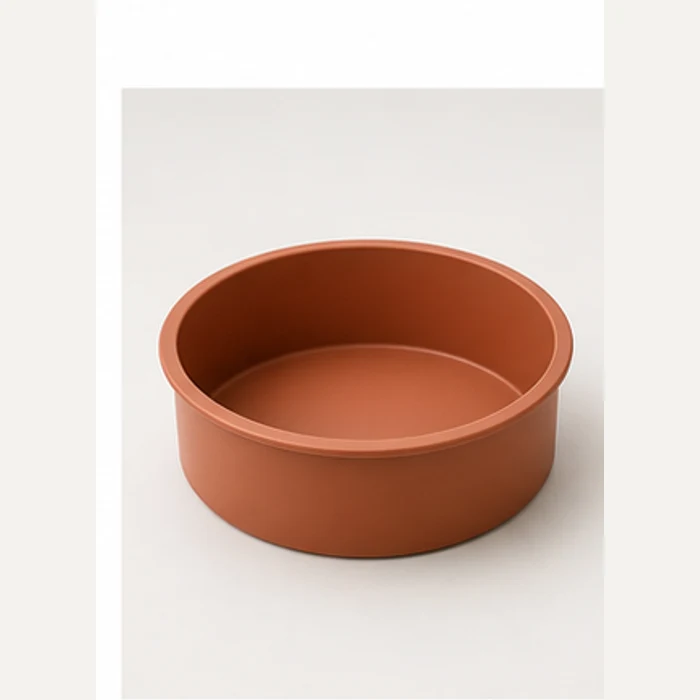
Classic flexible form for cakes, breads and chilled desserts.
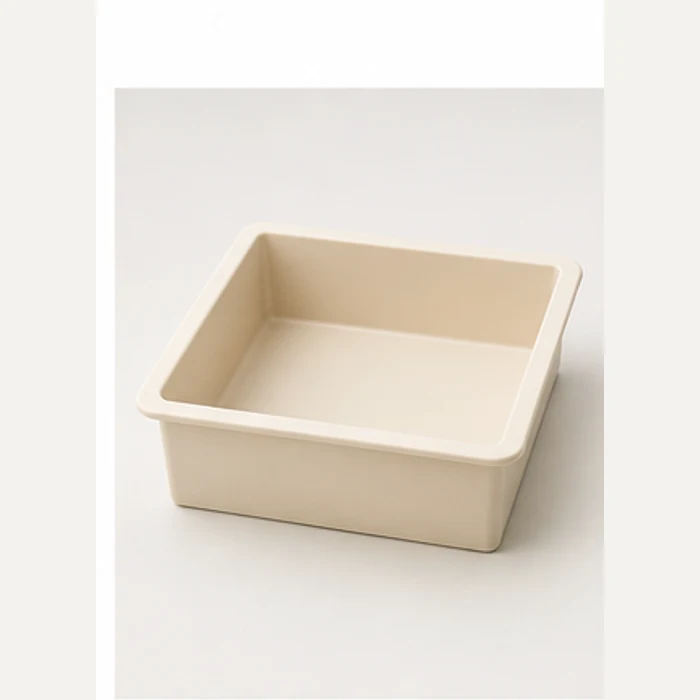
Straight-sided reusable mold for baking and presentation.
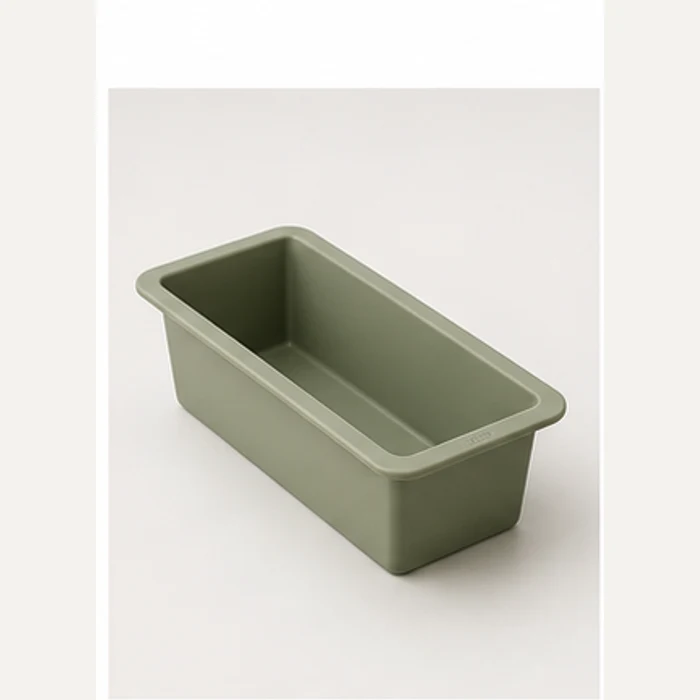
Easy-release loaf mold for bread, cake and private-label bakeware sets.
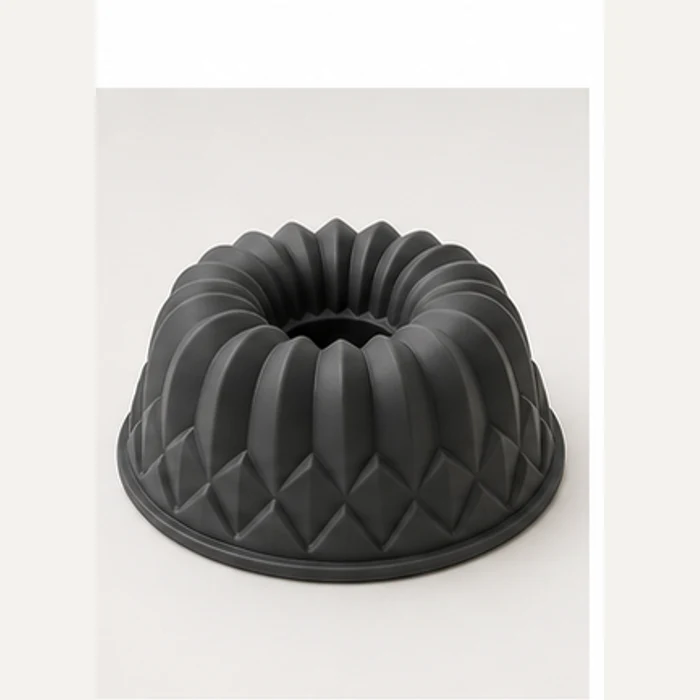
Detailed ring profile for distinctive baked finishes.
B2B PROJECT INQUIRY
Share the intended product, destination market, order quantity and launch plan. Our project team will review the information and identify the next practical step.
Drawings are helpful but not required. A sketch, reference photo or physical sample can be used for an initial discussion.
GENERAL SOURCING INQUIRY