SUPPLY CHAIN & PROCUREMENT
What Should a Hospitality Silicone Cover RFQ Include?
Build a comparable hospitality silicone cover RFQ covering container fit, use duties, cleaning, evidence, assortment, packaging, forecast and supplier responsibilities.
DIRECT ANSWER
What B2B Buyers Need to Know
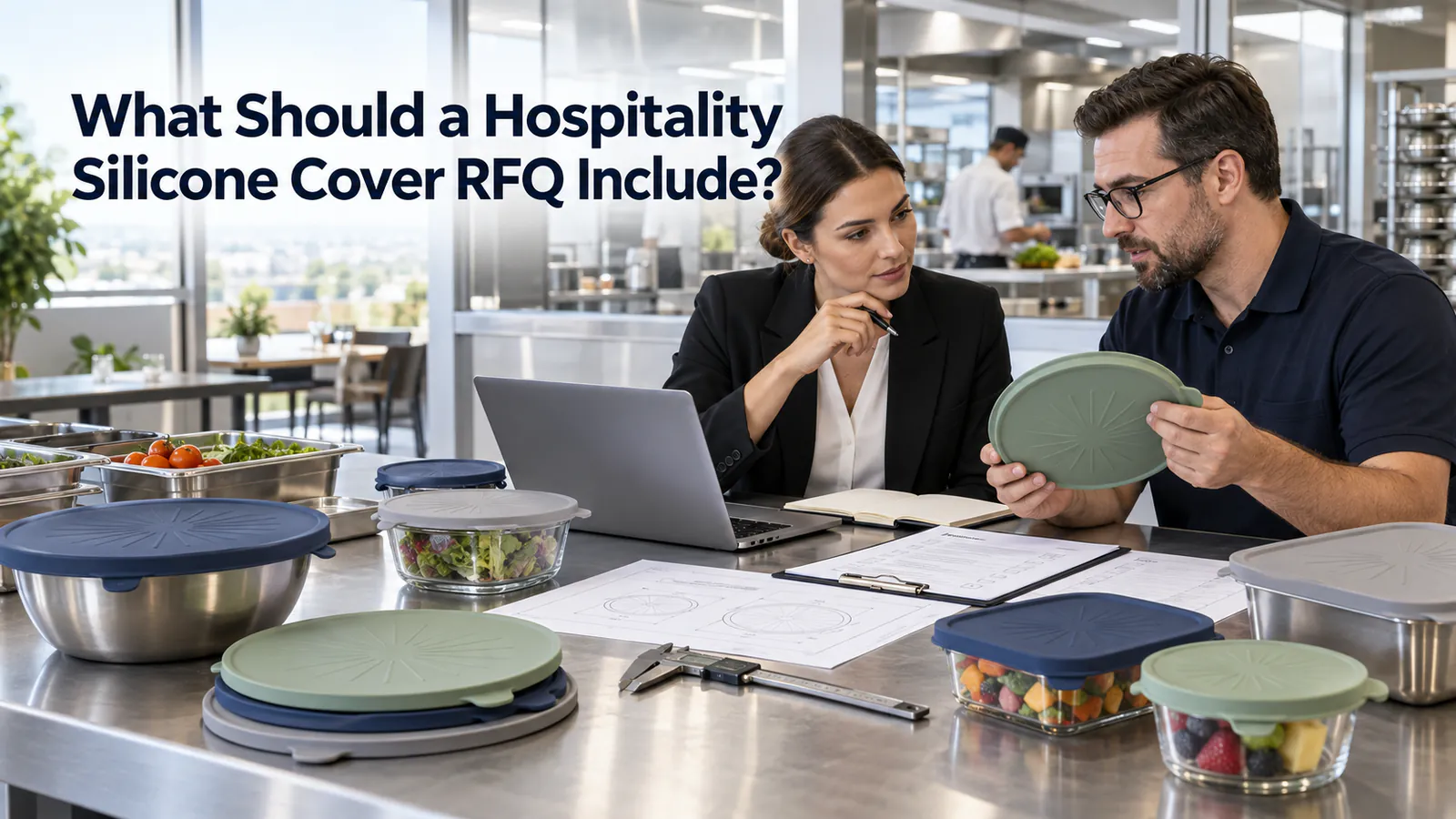
A hospitality silicone cover RFQ should define the operating sites, measured container matrix, cover-to-vessel assignments, food and temperature duties, cleaning and sanitizing process, fit and claim validation, size and color logic, packaging, forecast, approval samples, inspection criteria and evidence scope. It should also separate tooling, recurring unit price, MOQ, capacity and lead-time assumptions so suppliers quote the same finished program.
This guide is written for hotel groups, resorts, foodservice distributors, central kitchens and procurement teams sourcing silicone covers. It provides a decision framework rather than legal advice or a universal specification. Product classification, use conditions and destination market should be confirmed before final testing, labelling or compliance decisions.
Key Takeaways
- Issue one vessel matrix with measured rim geometry and cover assignments to every bidder.
- Separate refrigerated retention, splash protection, transport and leakage claims because each needs defined conditions and evidence.
- Describe the wash-rinse-sanitize-air-dry and storage process instead of asking only whether covers are dishwasher safe.
- Require drawings, production samples, evidence mapping, inspection methods and change-control responsibilities.
- Compare quotations only after tooling, tests, packaging, Incoterm, capacity and lead-time assumptions use the same program baseline.
Hospitality Silicone Cover RFQ Comparison Matrix
Use one issued RFQ revision for every supplier. Exact claims, evidence, MOQ, price, capacity and timing remain conditional on the approved finished covers and operating scenario.
| RFQ decision area | Minimum buyer input | Supplier response required |
|---|---|---|
| Vessel and fit scope | Container code, material, opening, rim, corner, obstruction and quantity | Assigned cover, drawing, fit limits, exclusions and sample matrix |
| Use and claims | Food, temperature, dwell, orientation, handling and intended retention or leakage language | Claim-specific method, sample condition, acceptance criteria and stated limitations |
| Cleaning and rotation | Soil, wash, rinse, sanitizer, concentration, time, temperature, drying and storage | Cycle plan, inspection points, retirement criteria and replacement assumptions |
| Assortment and pack-out | Sizes, colors, marks, site kit, carton quantity and instructions | Pack dimensions, packed sample, traceability route and carton data |
| Evidence and quality | Destination, applicable requirements, report expectations, inspection level and release authority | Evidence map, laboratory scope, finished-SKU applicability and production control plan |
| Commercial offer | Forecast, order split, delivery target, Incoterm and tooling ownership | Itemized tooling, samples, tests, price, MOQ, capacity, lead time and exclusions |
SECTION 01
Define Hospitality Scope, Vessels and Use Conditions
Set the purchasing scenario with a realistic SKU mix, forecast, delivery window and cost-comparison basis.
Issue a Controlled Hospitality RFQ Revision for hospitality silicone cover RFQ
Treat the RFQ as the first controlled project record, not as a request for a price list. Give it a project code, revision, issue date, response deadline and named buyer owner, then state whether the program covers one hotel, a regional group or a distributor assortment. The opening page should also identify the intended launch window and the decisions that remain provisional. This header lets engineering, operations and finance trace every later answer to the same purchasing event.
Send every bidder the same attachments and require a deviation list with the response. When one supplier prices a catalog assortment and another assumes custom molds, their totals are not comparable even if both quote silicone covers. A revision log prevents late container, color or packaging changes from disappearing into email threads and returning as a tooling dispute.
Map Sites, Kitchens and Container Families
Map the operating sites before selecting sizes. A breakfast kitchen, banquet prep room, central commissary and room-service station may use different containers, wash equipment and stock rotations, so list the sites and the duties the cover program must support. Record the number of active vessels, covers required during washing and the reserve expected at each location. Note seasonal occupancy or event peaks when they materially change the quantity circulating through a property's cleaning loop.
Separate the initial opening quantity from the annual replenishment forecast. This helps the factory model tool cavities, color changeovers, packaging labor and capacity without treating the launch order as steady monthly demand. If rollout is phased, give the sequence and the decision gate for each wave rather than asking the supplier to hold undefined capacity indefinitely.
Measure Rims, Flanges, Corners and Obstructions
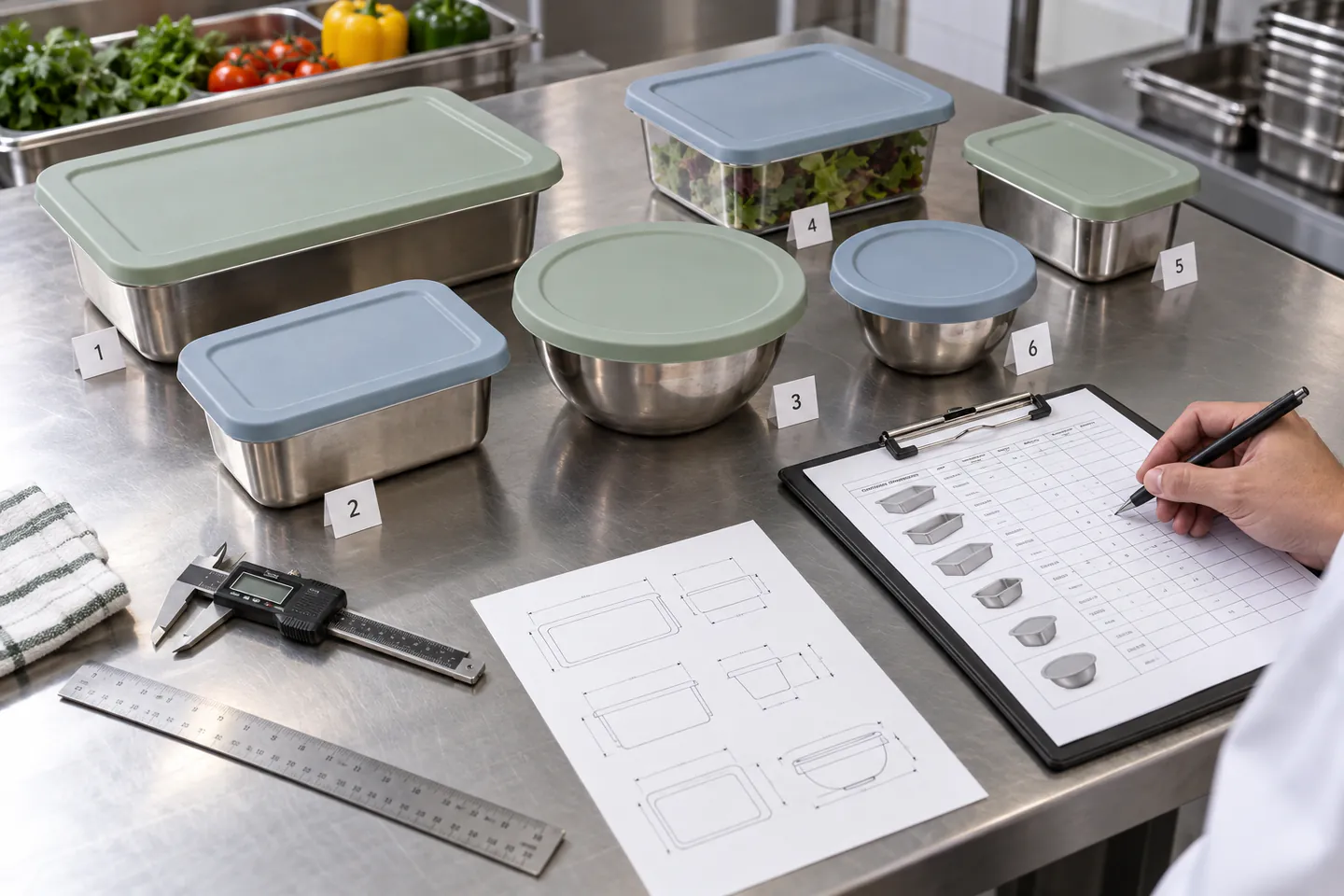
Build the vessel schedule from physical containers or controlled drawings. For every bowl, pan or tub, record supplier and model, material, opening dimensions, outside rim, flange width, corner radius, taper, handles and other interruptions in the sealing zone. Capacity labels and gastronorm names help identify equipment, but they do not prove that two rims present the same interface to a flexible cover. Photographs should carry the vessel code and scale reference so they support, rather than replace, dimensional information.
Ask the supplier to return a proposed cover assignment against each vessel row. The response should show the cover code, relaxed dimensions, intended fit range, exclusions and whether a sample vessel is required. Mark unverified combinations as open rather than letting a broad universal-fit statement turn into an undocumented acceptance decision.
SECTION 02
Write Fit, Cleaning, Claims and Evidence Requirements
Separate fixed development costs from variable production and logistics costs before negotiating commercial terms.
Define Food, Temperature and Handling Duties
Describe what happens after the cover is fitted. State the food family, fill level, starting temperature, storage temperature, dwell time, orientation, stacking condition, transport movement and expected staff handling. These conditions determine which geometry and evidence matter more than a generic soft, food-grade or reusable description. Identify sharp rims, hot-fill exclusions and maximum stack loads where misuse could damage a cover or container.
Keep each commercial claim in its own row. Refrigerated retention, splash control, inversion, liquid leakage and transport stability create different failure modes and should not share one pass statement. Require the bidder to propose the vessel, contents, conditioning, motion, duration, sample count and acceptance limit used to support each permitted claim.
Separate Fit, Retention, Leakage and Transport Claims
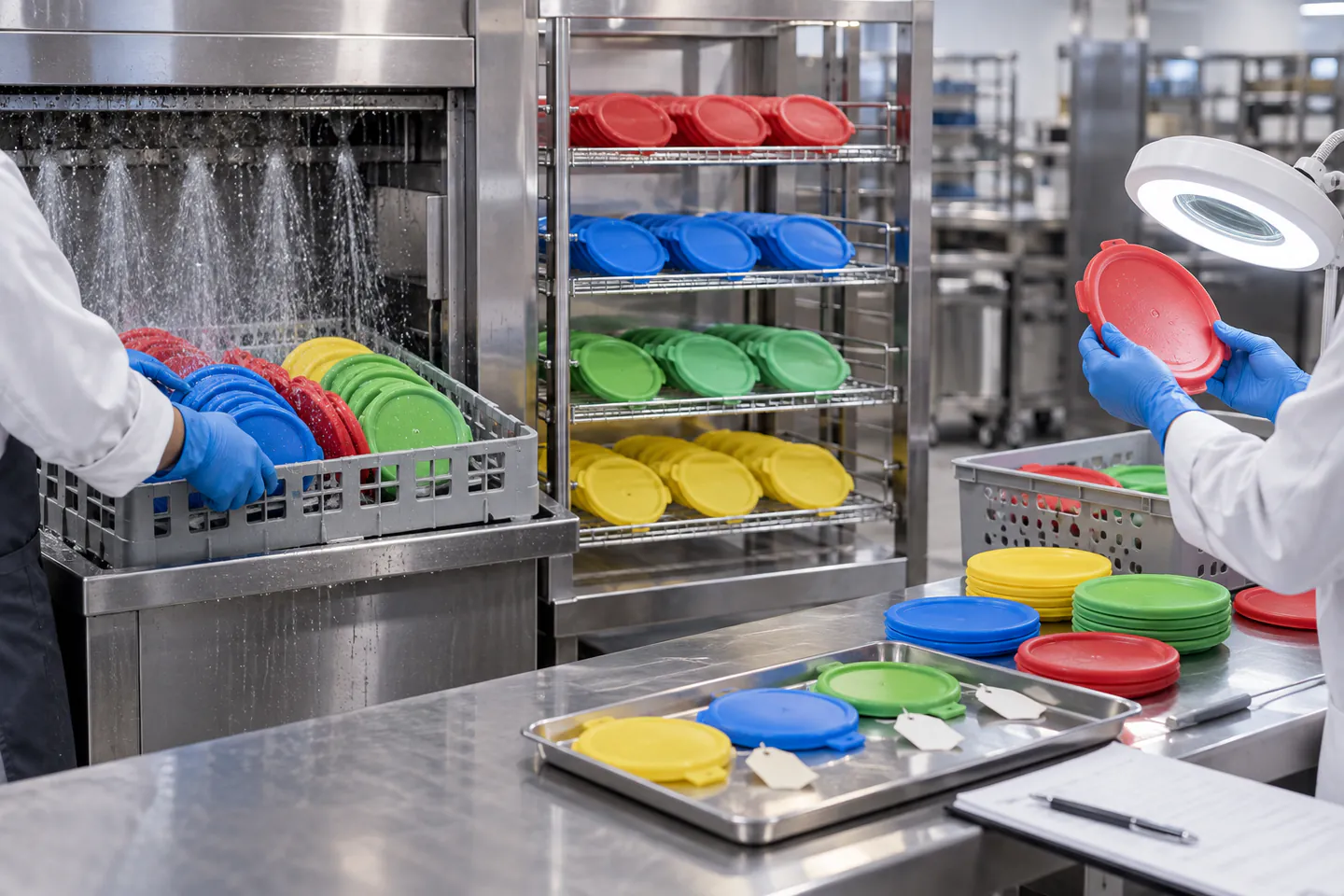
The RFQ should reproduce the property's cleaning system in enough detail for a sample plan. Include pre-scraping, detergent, wash and rinse temperatures, sanitizer chemistry and concentration, contact time, rack orientation, air-drying method and clean-storage location. A dishwasher-safe answer is incomplete when the cover may see a commercial cycle, concentrated chemistry or tight wet nesting. State the planned cycles per day and validation checkpoints so repeated exposure is evaluated on a realistic timetable.
Call out menu soils that challenge beads, tabs, molded marks and textured zones. Oil, starch, dairy, egg and strongly colored sauces can reveal residue, odor or staining that water-only trials miss. FDA foodservice material can frame sanitation and allergen-control discussions, but the property must follow its adopted rules and validate the actual cover geometry and procedure.
Document Washing, Sanitizing, Drying and Storage
Use an evidence matrix instead of asking for all certificates. One column should identify the question—material composition, food-contact scope, color, finished-product behavior or cleaning compatibility—while the remaining columns name the sample, method, laboratory or internal record, result and limitation. The supplier should explain which finished sizes and colors each document supports. Add an owner and due date for gaps so missing records remain visible through sample and order release.
Destination and intended conditions belong in the RFQ because evidence cannot be separated from scope. A report for another compound, pigment or use temperature may be informative without authorizing the proposed SKU. Require written notice when a material, colorant, cure route, manufacturing site or test basis changes so the buyer can decide whether reassessment is necessary.
SECTION 03
Normalize Assortment, Packaging and Commercial Assumptions
Connect capacity, inspection, packaging and shipment readiness to named milestones and escalation triggers.
Build Size, Color and Identification Logic
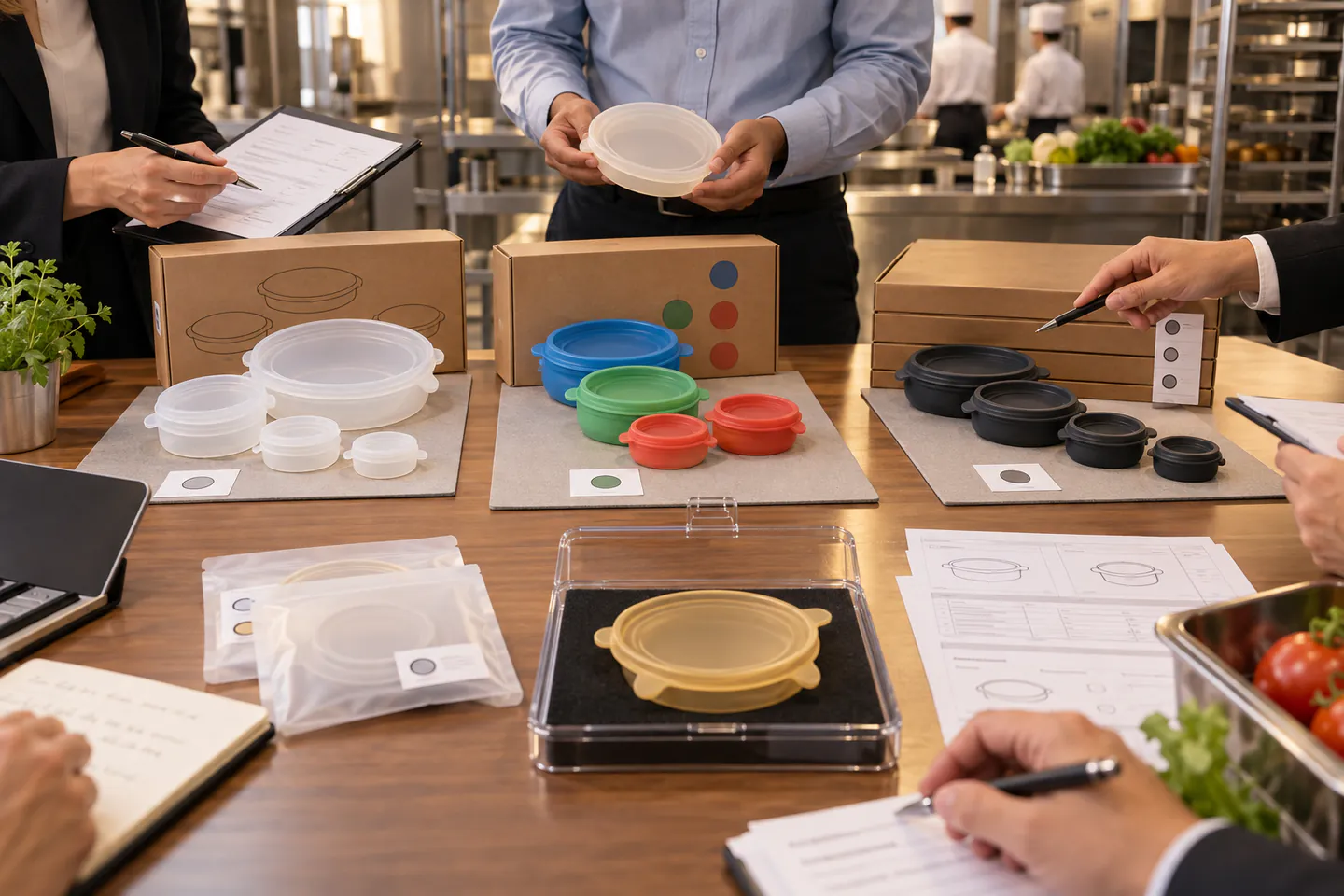
Reduce the assortment to a size and color system that staff can operate and purchasing can replenish. Define which cover code serves each vessel family, how sizes are molded or marked, what each color means and which locations receive each combination. If colors indicate stations or allergen controls, document the operational rule and keep cleaning verification separate from visual identification. Test the codes under actual kitchen lighting and after washing because subtle marks may become difficult to distinguish.
Ask for pricing by size, color and pack configuration rather than one blended unit figure. Small colors or uncommon sizes may create inefficient batches and unstable reserve stock, while a rational core mix can support repeat orders. The supplier response should identify minimum production lots, color-change assumptions and any combination that drives a different MOQ.
Specify Material and Finished-SKU Evidence
Specify the physical selling and distribution unit even when the covers are not retail products. State nested order, quantity per inner pack, separators, dust protection, label fields, lot identity, care instructions, site-kit composition, master-carton quantity and pallet assumptions. Request dimensions and gross weight from an approved packed sample, not a spreadsheet estimate alone. Include receiving and storage constraints when cartons must pass through service corridors, elevators or limited back-of-house shelving.
Hospitality receiving teams need visible product and site identity without excessive unpacking. The carton and inner pack should help them route the correct sizes and colors while preserving clean condition and preventing bead deformation. If the buyer supplies artwork or barcodes, name the responsible file owner and the point at which printed material becomes chargeable.
Require Comparable Samples and Approval Records
Require a staged sample route. A dimensional or fit set can close the vessel matrix, an engineering sample can close geometry and handling, and a preproduction set can represent active cavities, colors, marks and pack-out. Label every sample with revision, material, color, tool or cavity and date so a signed photograph cannot be confused with the physical golden reference.
The approval sheet should show what the sample proves and what remains open. One attractive cover cannot release the full size family, commercial wash durability, finished packaging or all destination claims. Keep sample approval, tooling approval, production release and shipment release as separate gates with named approvers and retained records.
SECTION 04
Release Samples, Tooling, Production and Repeat Orders
Protect replenishment by recording review conditions for forecasts, prices, lead times, materials and order changes.
Normalize Tooling, MOQ, Price and Capacity
Turn the product brief into inspection instructions before the first order. Identify critical dimensions, fit fixtures, visual zones, flash and contamination limits, color references, markings, packaging checks and claim-related functional methods. State whether results are recorded by size, cavity, batch or shipment and who can accept a deviation.
AQL language does not replace the definition of a defect. The RFQ should classify failures that affect fit, cleaning, traceability or permitted claims and distinguish them from controlled cosmetic variation. Ask how retained samples, nonconforming stock, rework and corrective actions will be linked to the purchase order and shipment decision.
Fix Packaging, Incoterm and Delivery Assumptions
Make the commercial response itemized. Separate design review, custom tooling, trial corrections, samples, external testing, recurring product, printing or packaging, inspection and freight-related services. State the forecast, order split, Incoterm, destination, payment assumptions and quotation validity so the buyer can compare landed program scope rather than a low isolated part price.
MOQ, price and lead time should be returned with their assumptions beside them. Ask the factory to show how tool cavities, cycle, colors, secondary operations, inspection, packing and current schedule shape the proposed capacity window. A factory-wide monthly output number is not evidence that the requested mix can ship on the desired date.
Release the Supplier Through Change and Repeat-Order Controls
Close the RFQ with ownership and change control. State who owns tooling, where it will be stored, how maintenance is recorded, which files define the product and how transfer or end-of-life decisions are handled. Require prior notice and written approval for changes to compound, pigment, geometry, mold cavity, process, site, subcontractor, marking or packaging.
Repeat orders should reference the same drawing, fit matrix, evidence map, golden samples, inspection plan and packed configuration unless an approved change record says otherwise. Naike Silicone can review the vessel list, operating conditions, forecast and evidence questions before proposing samples or tooling. Final certification scope, performance, MOQ, price, capacity and lead time remain conditional on the released program and current factory production schedule.
ACTION FRAMEWORK
Buyer Checklist Before Commercial Approval
Use this checklist as a meeting agenda. It is intentionally concise so the team can identify missing evidence without replacing its own quality, legal or supplier-management procedure.
| Check | Question | Why It Matters |
|---|---|---|
| Vessel matrix | Are model, material, opening, rim, corner, obstruction and site quantity recorded for every container? | Nominal capacity does not define the flexible interface the cover must grip. |
| Use conditions | Are food, temperature, dwell, orientation, handling and service location stated? | Fit and material evidence depend on the actual operating conditions and permitted claims. |
| Cleaning route | Are detergent, sanitizer, concentration, time, temperature, drying and storage defined? | A general dishwasher statement cannot reproduce a hospitality cleaning process. |
| Approval evidence | Are drawings, fit matrix, production samples, methods and acceptance limits required? | A catalog sample and a generic report cannot release the finished size family. |
| Assortment | Are sizes, colors, markings, packaging and site-level kits fixed for quotation? | Variant count and pack-out directly affect tooling, MOQ, production and inventory. |
| Commercial basis | Are tooling, tests, unit price, Incoterm, forecast and delivery assumptions itemized? | A single headline price conceals different supplier scopes and downstream costs. |
| Change control | Does the RFQ name who approves material, geometry, color, evidence and packaging changes? | Uncontrolled changes can invalidate fit, claims, cost and repeat-order references. |
NEXT READING
Continue the Supplier and Product Review
These internal resources connect the guide with Naike Silicone product, factory, customization and inquiry pages. Open the route that matches the next decision in your project.
Specify reusable silicone covers for restaurant operations
Use specify reusable silicone covers for restaurant operations to gather the next level of product, manufacturing or commercial information.
Open internal resource →Build a controlled silicone stretch-lid fit matrix
Use build a controlled silicone stretch-lid fit matrix to gather the next level of product, manufacturing or commercial information.
Open internal resource →Compare stretch lids with rigid storage lids
Use compare stretch lids with rigid storage lids to gather the next level of product, manufacturing or commercial information.
Open internal resource →Review the reusable silicone stretch lid set
Use review the reusable silicone stretch lid set to gather the next level of product, manufacturing or commercial information.
Open internal resource →Explore all silicone product categories
Use explore all silicone product categories to gather the next level of product, manufacturing or commercial information.
Open internal resource →Review Naike Silicone manufacturing knowledge
Use review naike silicone manufacturing knowledge to gather the next level of product, manufacturing or commercial information.
Open internal resource →PRIMARY REFERENCES
Authoritative External Sources
The sources below are official primary references. Applicability depends on the product, intended use and destination market. Buyers should obtain qualified advice for final legal or regulatory decisions.
FDA Food Code
Official FDA hub for the current Food Code, a model used by jurisdictions to regulate retail and foodservice operations; restaurants must confirm the rules adopted in their jurisdiction.
FDA: Allergen Removal and Transfer in Retail Food Establishments
Official FDA research summary on allergen removal and transfer using retail food-contact-surface wiping and full wash-rinse-sanitize-air-dry cleaning methods.
European Commission: Food Contact Materials
Official European Commission overview of the EU framework for materials and articles intended to contact food.
BUYER QUESTIONS
Frequently Asked Questions
What files should accompany a hospitality silicone cover RFQ?
Include the controlled vessel matrix, container drawings or samples, site and use schedule, cleaning process, intended claims, size and color plan, packaging brief, forecast, destination, evidence matrix and target approval dates. Identify every file by revision.
Can suppliers quote from container capacity alone?
No. Capacity does not define the outside rim, flange, corner radius, taper or obstructions that control flexible-cover fit. Provide measured geometry or representative vessels and require a returned cover-to-container matrix.
How should buyers request evidence without collecting irrelevant certificates?
List each claim or regulatory question and require the supplier to map it to the exact material, color, finished SKU, method, sample identity and limitation. Documents outside that scope should be identified as background only.
Should tooling and unit price appear in one total?
They should be itemized. Separate tooling, trials, samples, testing, recurring product, packaging, inspection and logistics assumptions so suppliers cannot hide different scopes inside one headline price.
What sample stages should the RFQ require?
Use a fit or dimensional set, an engineering sample where needed, and a production-representative approval set. Each stage should state the decisions it closes, its revision identity and the approver authorized to release the next gate.
How are MOQ, capacity and lead time made comparable?
Give all bidders the same size mix, colors, pack-out, forecast, Incoterm, validation scope and delivery target. Require them to state tool, cycle, changeover, secondary-operation and current-schedule assumptions beside the commercial offer.
Editorial and Scope Note
Conclusion: Hospitality Silicone Cover RFQ Guide
Move from buyer research to a controlled supplier brief
A hospitality silicone cover RFQ should make supplier offers comparable before price is evaluated. Control the vessel matrix, claims, cleaning, assortment, evidence, samples, inspection, packaging, tooling and forecast in one revision. Certification scope, performance, MOQ, price, capacity and lead time remain conditional on approved sizes, colors, destination, pack-out and schedule. Send Naike Silicone your container list, operating conditions, forecast and deadline to request an RFQ review, fit-matrix sample plan, tooling assessment or supplier-evaluation quotation.
This factory-insider guide supports sourcing preparation and supplier discussion; it does not replace product-specific engineering, laboratory, regulatory, legal or commercial review for the destination market.