
SUPPLY CHAIN & PROCUREMENT
What Should Importers Include in a Silicone Supplier Audit Checklist?
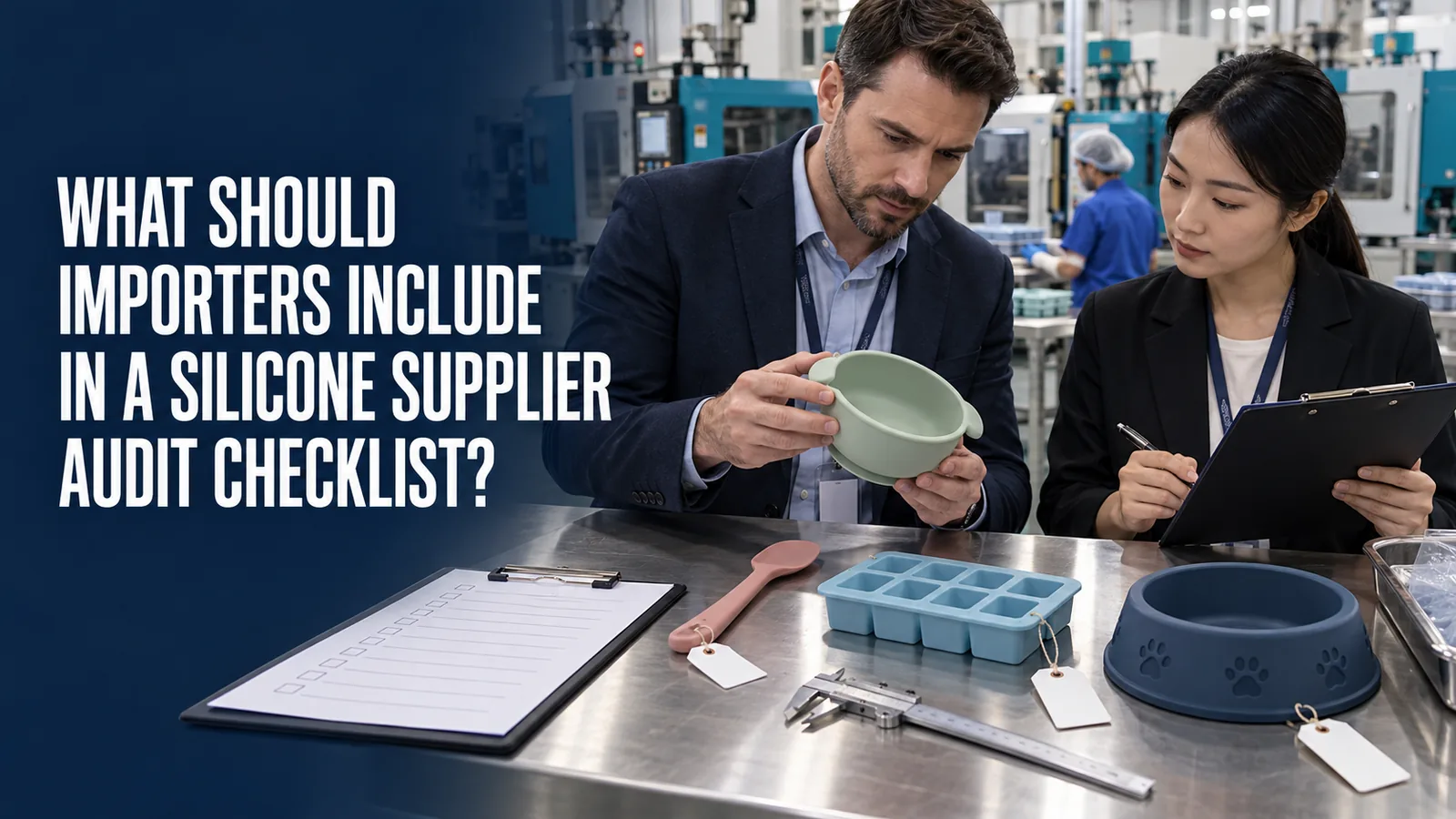
Use a silicone supplier audit checklist covering factory identity, material traceability, tooling, quality, test evidence, capacity and corrective action.
DIRECT ANSWER
What B2B Buyers Need to Know
A silicone supplier audit checklist should verify the legal manufacturing site, quality-system implementation, material traceability, tooling control, production methods, inspection records, test evidence, subcontractors, packaging, capacity and corrective-action discipline. Importers should audit these controls against the intended SKU and order scenario, then document approval conditions and open actions before releasing tooling, samples, mass production or the first purchase order.
This guide is written for importers, private-label brands, retailers, distributors, supplier-quality engineers and procurement teams qualifying silicone manufacturers. It provides a decision framework rather than legal advice or a universal specification. Product classification, use conditions and destination market should be confirmed before final testing, labelling or compliance decisions.
Key Takeaways
- Define the exact site, SKU family, process route and audit purpose before the visit.
- Trace documents and samples from the production floor instead of accepting presentation-only evidence.
- Challenge material and finished-product traceability in both backward and forward directions.
- Audit tooling, process, inspection and test evidence against the intended product rather than generic capability.
- Rebuild capacity from order-specific constraints and include subcontractors and packaging operations.
- Convert findings into conditional approval, corrective actions and a clear first-order release path.
Supplier Audit Evidence and Release Decisions
Use evidence from the actual site and intended product route. Certification, capacity and performance remain conditional on scope, current records and the proposed order.
| Audit area | Evidence to sample | Buyer decision supported |
|---|---|---|
| Legal site and QMS | Entity, address, organization, certification scope, controlled procedures and current floor records | Whether the quoted organization and manufacturing site have visible responsibility and implemented controls |
| Material and tooling | Approved sources, lot records, storage status, drawings, tool ownership, maintenance and change history | Whether the intended SKU can be traced and reproduced from controlled inputs |
| Production and inspection | First-piece release, process records, cavity checks, nonconforming control, final inspection and pack-out | Whether the factory can identify drift and release a defined finished lot |
| Evidence and capacity | Applicable reports, laboratory scope, order-specific capacity model, bottlenecks and backup resources | Whether claims and delivery assumptions have relevant support |
| Findings and approval | Containment, root cause, action owner, verification evidence, restrictions and closure authority | Whether the supplier is approved, conditionally approved, development only or not approved |
SECTION 01
Define Audit Scope and Supplier Identity
Set the purchasing scenario with a realistic SKU mix, forecast, delivery window and cost-comparison basis.
Set Product-Specific Audit Scope and Objectives for silicone supplier audit checklist
A silicone supplier audit should answer one purchasing question: can this legal site repeatedly make, inspect and release the buyer's intended product under controlled conditions? Define the product family, destination, forecast, customization, critical features and proposed manufacturing route before the visit. An audit of generic factory housekeeping cannot prove readiness for a molded feeding product, decorated utensil, reinforced baking mat or multi-component set. The checklist should follow the real order risk from material receipt through shipment release.
Write an audit plan that identifies scope, site, processes, departments, records, people and sampling windows. Separate qualification evidence from order-specific evidence: a quality-system certificate may inform supplier screening, while tool trials, approved samples and lot records support the actual SKU. State whether the review is initial qualification, new-process approval, corrective-action follow-up or periodic surveillance. This keeps auditors from collecting attractive documents that do not resolve the buyer's next commercial decision.
Verify Legal Site, Roles and Quality-System Practice
Confirm that the quoted entity, audited address, manufacturing site and payment beneficiary form a traceable business relationship. Review the business license or equivalent registration, site lease or ownership evidence where appropriate, organization chart, process ownership and any certification scope the supplier presents. A trading company, subcontractor and molding factory can participate in one supply chain, but their responsibilities must be visible rather than implied. Record who owns tooling, specifications, customer communication, quality release and corrective action.
Map the quality-management system to daily practice. Ask how document revisions reach production, who authorizes deviations, how training is recorded and how management reviews complaints, rejects, delivery performance and improvement. ISO 9001:2026 provides a process-based quality-management framework, yet a certificate does not certify the buyer's silicone product or guarantee capacity. Sample current records from the floor back to the procedure so the audit tests implementation instead of accepting a prepared presentation.
Map Product and Process Risks Before the Walkthrough
Translate the buyer brief into a product-and-process risk map before walking the line. Identify the material family, cure route, pigment, mold type, cavities, secondary operations, assembly, printing, packaging and any subcontracted step. Mark features whose failure could affect intended use, regulatory claims, saleability, fit or repeat-order consistency. A risk map tells the auditor where to spend time and prevents visible cosmetic topics from displacing less obvious traceability or process-control weaknesses.
Ask the supplier to show how these risks become drawings, bills of material, control plans, work instructions and inspection records. Compare identifiers and revisions across the sample set; a correct procedure attached to the wrong SKU is not usable evidence. Check how the team handles conflicting requirements between a drawing, golden sample, packaging file and purchase order. The supplier should have a defined authority for resolving the conflict before production continues, not after finished cartons are rejected.
SECTION 02
Follow Material, Tooling and Production Controls
Separate fixed development costs from variable production and logistics costs before negotiating commercial terms.
Audit Engineering, Tooling and Design Change Control
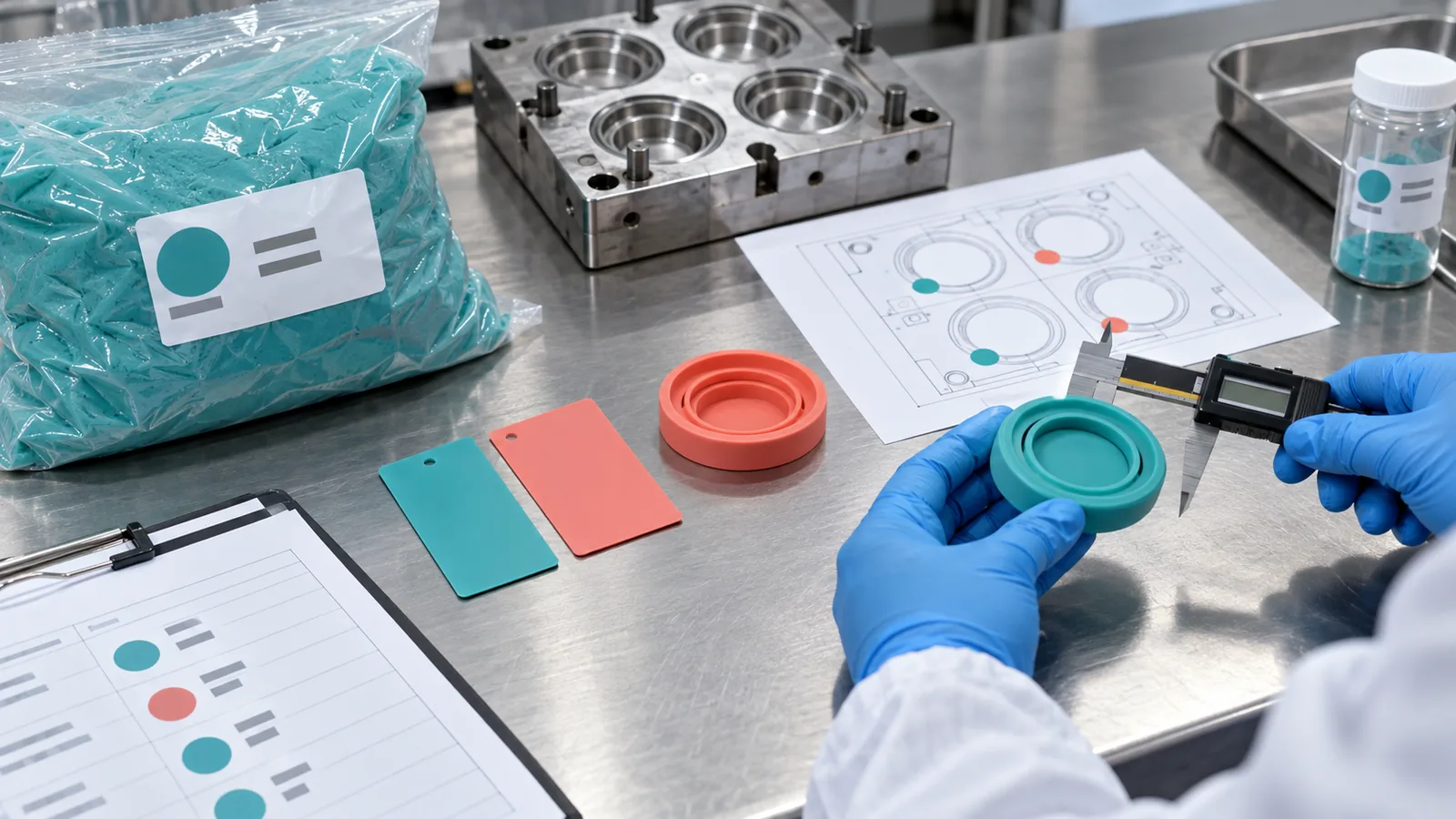
Engineering capability should be reviewed against the proposed customization route. For existing tools, inspect ownership, condition, cavity identification, maintenance history and change records. For new tooling, review DFM, drawing approval, steel release, trial stages, dimensional reporting, sample correction and golden-sample control. A showroom sample demonstrates appearance at one moment; it does not establish that the factory can transfer a buyer requirement into a stable tool and repeatable production setup.
Follow one recent engineering change from request through risk review, approval, tool action, sample verification and production communication. Confirm whether affected packaging, testing, instructions, fixtures and retained samples were considered. Unauthorized local polishing, vent adjustment or cavity repair can alter appearance or dimensions even when the product code remains unchanged. Buyers should define which tool and process changes require written notification and whether the supplier can segregate pre-change and post-change inventory.
Challenge Material Approval and Lot Traceability
At incoming control, trace one silicone compound and pigment from approved supplier information to receiving record, internal lot, storage location and released production batch. Review labeling, status identification, shelf-life or storage conditions where applicable, first-in-first-out logic and segregation of held or rejected material. Generic wording such as food grade does not identify the compound, cure system, color or evidence scope. The audited route should show which material is allowed for the exact SKU and how substitutions are prevented.
Challenge the traceability system with a practical sample. Select a finished part or retained sample and ask the team to reconstruct material lots, pigment batch, production date, machine, mold, cavity or batch reference and inspection result. Then select a material lot and trace forward to affected work orders and shipments. The depth should match product risk and process design, but the result must be fast enough to support containment if a complaint, report mismatch or supplier change appears.
Observe In-Process Controls and Finished-Lot Release
On the production floor, compare the running setup with the approved route. Review first-piece release, machine or press identification, mold status, parameter control, curing time, operator instructions, in-process sampling, cavity checks and the handling of start-up or interrupted production. The useful audit question is not whether parameters exist, but whether unauthorized changes are visible and investigated. Observe how inspectors identify nonconforming units and prevent them from returning to acceptable work in process.
Final inspection should connect the finished lot with product, packaging and release authority. Check dimensions, appearance, function, color, logo, assortment, selling-unit contents, carton quantity and labels against controlled references. Where acceptance sampling is used, confirm lot definition, sampling method, defect classification and disposition rules. A signed inspection sheet is weak evidence when the tested sample, measurement method, instrument status or approved limit cannot be reconstructed.
SECTION 03
Test Evidence, Capacity and Supply-Chain Control
Connect capacity, inspection, packaging and shipment readiness to named milestones and escalation triggers.
Match Test Reports and Laboratory Scope to the SKU
Review the test and compliance file by applicability, not by page count. Each report should identify the submitted sample, material, color or construction, method, result, laboratory, date and market context. Ask who decides whether a report supports a new SKU or whether a change requires additional review. ISO/IEC 17025 defines competence and consistent-operation requirements for laboratories, but accreditation scope and the relationship between the tested sample and shipped product still need buyer verification.
Separate supplier declarations, third-party reports, internal measurements and product-performance trials in the evidence matrix. They answer different questions and should not be treated as interchangeable. Confirm how the factory preserves report originals, test requests, sample photographs and chain-of-custody information where relevant. Certification scope, performance and regulatory applicability remain conditional on the approved finished product, intended use, destination and current evidence rather than the factory's broadest historical report.
Rebuild Capacity From the Proposed Order Scenario
Capacity claims should be rebuilt from the proposed order. Review relevant machines, tools, cavities, cycle assumptions, shifts, planned utilization, maintenance, color changes, secondary operations, packaging labor and known production commitments. Compare the calculation with recent work-order output and downtime records without assuming that one historical peak can be repeated indefinitely. A factory-wide monthly tonnage statement cannot prove delivery for a small multi-color SKU that depends on one mold and a constrained packaging line.
Audit continuity controls for the bottleneck, not only headline equipment count. Ask what happens if a critical tool, press, operator, material supplier, printer or carton vendor becomes unavailable. Verify whether backup resources are qualified for the actual product and whether moving production requires buyer approval or new evidence. MOQ, price, capacity and lead time should remain conditional until the SKU mix, tooling, material, packaging and confirmed schedule are reviewed together.
Control Subcontractors, Deviations and Supplier Changes
List every process the audited site does not perform itself, including compounding, printing, surface treatment, assembly, laboratory testing, packaging or overflow molding. Review how subcontractors are selected, approved, instructed, monitored and changed. The buyer should know whether material or product leaves the site, how identity and status are preserved and who performs incoming verification after return. A supplier cannot outsource responsibility merely because an operation is commercially external.
Test change control with examples from material, pigment, tool, machine, process, subcontractor, artwork and packaging. The record should show risk assessment, approvals, validation, effective date and affected inventory. Confirm that purchasing, engineering, quality and production receive the same decision before implementation. Silent substitutions often begin as schedule solutions; a strong system makes the proposed deviation visible and requires written disposition before it becomes a new repeat-order baseline.

SECTION 04
Close Findings and Make the Approval Decision
Protect replenishment by recording review conditions for forecasts, prices, lead times, materials and order changes.
Verify Packaging, Storage and Shipment Traceability
Audit the complete selling unit and export pack, not only the silicone part. Verify artwork revision, product code, barcode data, instructions, component count, protective insert, sealing, carton quantity, shipping marks and traceability information. Observe how mixed colors or sets are picked and checked because assortment errors can bypass part-level inspection. Review storage, finished-goods status and loading controls so released and held cartons cannot be combined accidentally.
Link packaging decisions to actual transport and channel conditions. A retail carton that looks correct may still deform a flexible product, permit contamination, obscure identifiers or waste container space. Check whether package trials use production-representative materials and whether changes to print supplier, board grade or packing method trigger review. Incoterm, shipment booking and documentation ownership should be clear, although the audit should not treat a logistics arrangement as proof of product conformity.
Close Nonconformities With Corrective-Action Evidence
A supplier audit is credible when it finds and manages nonconformities, not when every item is marked conforming. Classify findings by risk and describe the objective evidence, affected process and requirement. Require immediate containment when the issue can affect current material, work in process, finished goods or shipped lots. Do not prescribe a superficial correction as the root cause; the supplier should investigate why the control failed and whether the same mechanism exists elsewhere.
The corrective-action plan should name owner, action, due date, verification method and closure authority. Evidence may include revised documents, training, tool repair, records from a controlled trial or results from later production, depending on the finding. ISO 19011:2026 frames audit principles, program management and auditor competence, but the buyer still sets supplier-approval consequences. Keep approval conditional when a major finding cannot be verified before the first purchase order.
Translate the Audit Result Into Supplier Approval
Convert the audit outcome into a documented sourcing decision: approved, conditionally approved, development only, or not approved for the proposed scope. Name the products, processes, site and time period covered; list open actions and any restrictions on order value, tooling release or mass production. A numerical audit score can support consistency, but a high total should not average away a critical traceability, compliance or capacity gap. Procurement needs the reasoning behind the decision and the evidence required to change it.
For a Naike Silicone supplier-audit review, send the target products, destination markets, forecast, customization route, known critical requirements and proposed first-order timing. We can map the audit scope to material, tooling, production, quality, evidence, packaging and capacity records before the visit. Certifications, performance, MOQ, price, capacity and lead time remain conditional on the verified SKU, market and order plan. End the audit with named actions that lead to a sample, quotation, tooling review or supplier-approval decision.

ACTION FRAMEWORK
Buyer Checklist Before Commercial Approval
Use this checklist as a meeting agenda. It is intentionally concise so the team can identify missing evidence without replacing its own quality, legal or supplier-management procedure.
| Check | Question | Why It Matters |
|---|---|---|
| Audit scope | Are the site, product family, processes, markets and audit purpose named? | A generic tour cannot establish readiness for the proposed SKU and order. |
| Supplier identity | Do the quoted entity, factory, tooling owner and payment relationship align? | Hidden responsibilities weaken control of changes, quality release and corrective action. |
| Traceability | Can one finished sample trace backward and one material lot trace forward? | Traceability must support rapid containment, not merely create labels. |
| Tooling and process | Are drawings, trials, maintenance, parameters and change records linked? | Uncontrolled tool or process changes can invalidate samples and repeat-order baselines. |
| Quality evidence | Do inspection and test records identify method, sample, revision and lot? | A pass result is unusable when its applicability cannot be reconstructed. |
| Capacity | Is the delivery model built from the real tool, cycle, colors, operations and schedule? | Factory-wide headline output does not prove order-specific capacity. |
| Subcontracting | Are external processes approved, traceable and subject to change control? | Outsourcing a process does not outsource responsibility for the finished product. |
| Closure | Do findings have risk, containment, owner, due date and verification authority? | The audit cannot support supplier approval until critical gaps have a controlled disposition. |
NEXT READING
Continue the Supplier and Product Review
These internal resources connect the guide with Naike Silicone product, factory, customization and inquiry pages. Open the route that matches the next decision in your project.
Verify silicone supplier capacity for large orders
Use verify silicone supplier capacity for large orders to gather the next level of product, manufacturing or commercial information.
Open internal resource →Audit silicone production capacity without relying on claims
Use audit silicone production capacity without relying on claims to gather the next level of product, manufacturing or commercial information.
Open internal resource →Compare factory and third-party inspection
Use compare factory and third-party inspection to gather the next level of product, manufacturing or commercial information.
Open internal resource →Explore all silicone product categories
Use explore all silicone product categories to gather the next level of product, manufacturing or commercial information.
Open internal resource →Review Naike Silicone manufacturing knowledge
Use review naike silicone manufacturing knowledge to gather the next level of product, manufacturing or commercial information.
Open internal resource →Understand the customized-service workflow
Use understand the customized-service workflow to gather the next level of product, manufacturing or commercial information.
Open internal resource →PRIMARY REFERENCES
Authoritative External Sources
The sources below are official primary references. Applicability depends on the product, intended use and destination market. Buyers should obtain qualified advice for final legal or regulatory decisions.
ISO 19011:2026 Guidelines for Auditing Management Systems
Official ISO guidance for audit principles, audit-program management, conducting management-system audits and auditor competence; it does not certify a factory or prove order-specific capacity.
ISO 9001:2026 Quality Management Systems
Official ISO page for the current 2026 quality-management-system requirements; it frames controlled information and processes but does not certify this particular silicone SKU.
ISO/IEC 17025 Testing and Calibration Laboratories
Official ISO page describing competence, impartiality and consistent operation requirements for testing and calibration laboratories.
BUYER QUESTIONS
Frequently Asked Questions
How long should a silicone supplier audit take?
Audit duration depends on site size, product risk, process scope, subcontracting and record sampling. A focused initial audit commonly needs enough time to follow material, tooling, production, quality, packaging and one traceability challenge rather than only tour the facility.
Is an ISO 9001 certificate enough to approve a silicone supplier?
No. It informs quality-system screening within its stated scope, but buyers still need product-specific evidence for material, tooling, process, capacity, inspection, packaging and destination requirements.
Should importers audit a trading company or the actual factory?
Audit the organizations that control material decisions, manufacturing, quality release and commercial responsibility. If a trading company manages the program, its controls matter, but the manufacturing site and subcontracted processes should remain visible and accessible.
What records should be sampled during the audit?
Sample current and recent records tied to comparable products. Include approved drawings, bills of material, incoming lots, work orders, first-piece checks, process records, inspection results, test evidence, deviations, complaints, corrective actions and shipment traceability.
How should major audit findings affect the first order?
Hold or condition supplier approval according to risk. Define containment, corrective action and verification before tooling release, mass production or shipment where the finding could affect conformity, compliance, traceability or delivery.
When should a silicone supplier be audited again?
Set frequency from risk and performance. Trigger additional review after major material, tool, process, site or subcontractor changes, repeated defects, serious delivery failures, unresolved corrective action, or expansion into a new product or market scope.
Editorial and Scope Note
Conclusion: Silicone Supplier Audit Checklist for Importers
Move from buyer research to a controlled supplier brief
A useful silicone supplier audit connects the intended product and order to the real site, material, tooling, process, inspection, evidence, packaging and capacity controls. Importers should preserve objective evidence, classify findings by risk and define the approval scope and restrictions before commercial release. Certifications, performance, MOQ, price, capacity and lead time remain conditional on the verified SKU, market and order plan. Send Naike Silicone your product brief, forecast and audit priorities to request a sample review, quotation, tooling review or supplier-evaluation discussion.
This factory-insider guide supports sourcing preparation and supplier discussion; it does not replace product-specific engineering, laboratory, regulatory, legal or commercial review for the destination market.