SUPPLY CHAIN & PROCUREMENT
Silicone Supplier Capacity Verification for Large Orders
Silicone supplier capacity verification for large orders: check machines, molds, materials, labor, yield, packing flow and reserved production windows.

DIRECT ANSWER
What B2B Buyers Need to Know
Silicone supplier capacity verification should prove that the specific order fits available tools, compatible machines, approved materials, qualified labor, inspection and packing resources inside a reserved production window. Do not rely on annual output claims or installed machine count. Validate practical good-part rates, downstream bottlenecks, current load and contingencies with traceable records and, where risk warrants, a representative pilot run.
This guide is written for silicone product importers, sourcing managers, supply-chain leaders, supplier-quality engineers and private-label buyers. It provides a decision framework rather than legal advice or a universal specification. Product classification, use conditions and destination market should be confirmed before final testing, labelling or compliance decisions.
Key Takeaways
- Translate the order into SKU, color, package, quantity and cargo-ready requirements before reviewing capacity.
- Verify compatible machine time and tool readiness instead of counting every press in the factory.
- Include materials, skilled labor, inspection, finishing and packaging in the capacity model.
- Use practical good-part output, first-pass yield and downstream throughput rather than a perfect theoretical cycle.
- Define reservation milestones, bottleneck warnings and technically reviewed contingency routes.
- Keep capacity, performance, certification scope, MOQ, price and lead time conditional on the approved order configuration.
Capacity Claim Versus Order-Specific Evidence
A credible commitment connects each capacity dimension with current evidence and a buyer decision for the exact silicone SKU and delivery window.
| Capacity dimension | Evidence to request | Buyer decision |
|---|---|---|
| Compatible machine window | Current load view, planned maintenance, shifts and reserved dates for the suitable equipment family | Is usable machine time available after existing commitments and changeovers? |
| Tooling and cavities | Tool revision, cavity count, trial status, maintenance record and backup-tool readiness | Can every counted cavity make approved saleable parts during the planned run? |
| Materials and people | Approved material availability, replenishment dates, qualified roles and shift coverage | Are compound, pigment, setup, inspection and packing resources synchronized? |
| Good-output flow | Pilot cycle, startup loss, downtime, first-pass yield and completed packing rate | Does practical cargo-ready output support the committed quantity and buffer? |
| Continuity response | Named bottleneck, warning trigger, owner and technically reviewed alternative route | Can a disruption be detected and managed before the ship window is lost? |
SECTION 01
Translate the Large Order Into a Verifiable Load
Set the purchasing scenario with a realistic SKU mix, forecast, delivery window and cost-comparison basis.
Define the Exact Order Scenario Before Requesting Capacity for silicone supplier capacity verification
Capacity verification starts with the purchase program, not the supplier's annual sales figure or the number of presses visible in a factory photograph. We ask for the finished SKU, order quantity, color split, packaging format, requested ship window and expected reorder pattern because each item consumes a different combination of tool time, operator time, inspection time and packing space. A factory can be large yet still have no usable window for the exact molds, colors and finishing steps that your order requires.
Convert the commercial request into a weekly demand profile before discussing a commitment. A single 300,000-piece order, three monthly releases of 100,000 pieces and six colors with frequent changeovers are not equivalent workloads. The buyer should also identify which date means success: molding complete, final inspection complete, cargo ready or shipment departure. This order-specific baseline prevents a supplier from answering a precise delivery question with an impressive but irrelevant headline capacity number.
Read the Current Load and Reserved Production Window
Ask the supplier to show how the requested program fits into its current load rather than sending an empty capacity template. The useful view identifies the proposed machine group, available shifts, planned maintenance, existing customer commitments, holiday effects and the protected production window for the buyer's SKU. Confidential customer names can remain hidden; the evidence still needs enough time blocks and resource categories to show that the promised slot exists and is not counted twice.
A reservation should have entry conditions. Tool approval, deposit, material release, artwork approval and packaging arrival may each control when the slot becomes firm, so the schedule should state which milestone holds the window and when it may be released. If the buyer delays one approval, the original ship date may no longer be available. Recording those conditions makes lead time a managed commitment instead of an unconditional number that survives every late change on paper only.
Confirm Machine Compatibility Instead of Counting Presses
Available press hours are not interchangeable. Clamp force, platen size, temperature control, mold height, vacuum features and the validated process route can limit which machine can run a particular silicone tool. For liquid silicone rubber, metering and injection equipment create another resource constraint; for compression molding, material preparation and mold handling may govern the cell. The capacity response should therefore name a compatible equipment family and a backup route that has been technically reviewed rather than merely listing all machines in the building.
Review recent run records for a product with comparable tool size, cycle, cavity count and finishing content. Those records help establish practical uptime and output, but they do not guarantee the new SKU because geometry, compound, pigment and acceptance criteria can change the cycle and yield. If the proposed backup machine differs materially, require a transfer or setup check before treating it as available contingency. A theoretical machine hour becomes useful capacity only after compatibility, staffing and changeover assumptions are demonstrated.
SECTION 02
Check Every Resource Behind the Production Promise
Separate fixed development costs from variable production and logistics costs before negotiating commercial terms.
Verify Mold, Cavity and Tool-Maintenance Readiness
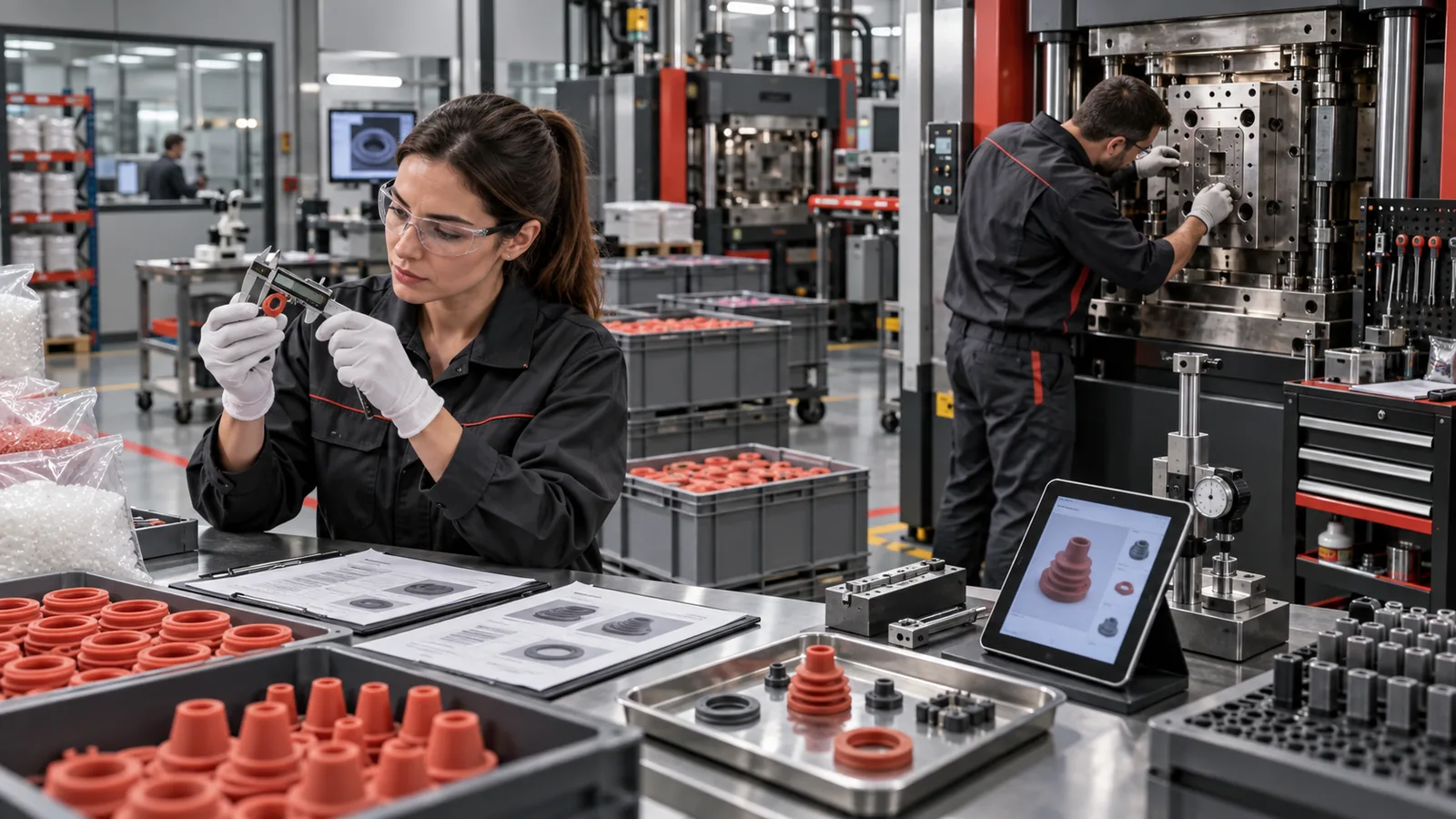
Tooling frequently becomes the true bottleneck for a large order. A buyer should confirm whether the project uses one tool, interchangeable inserts, duplicated tools or several cavity-identifiable molds, and whether those assets are finished, maintained and available during the proposed window. Mold ownership is not the same as mold readiness. Worn parting surfaces, blocked vents, damaged textures, unavailable inserts or overdue preventive maintenance can reduce output even when the press itself is idle.
The capacity file should connect every planned mold to its revision, cavity count, latest trial status, maintenance condition and storage location. When extra tooling is proposed to increase volume, price and timing remain conditional on DFM, steel procurement, trial corrections and buyer approval. Do not multiply the output of one successful cavity by an unbuilt cavity count and call the result verified capacity. The additional tool must reproduce critical dimensions, appearance and function before its output belongs in the shipment plan.
Secure Silicone Compound, Pigment and Bought-In Components
Raw silicone, catalyst system, pigment and any bonded component need their own readiness check. A press reservation cannot protect delivery if the approved compound has a long replenishment time, the required pigment batch is not released or an insert supplier has not confirmed quantity. Ask for the bill-of-material status by lead-time class, including the quantity already available, the quantity ordered, the release date and the substitution rule. Generic warehouse photographs cannot prove that the correct grade and color are secured for this SKU.
Material MOQ and batching rules also shape capacity. A low-volume color may require a minimum preparation batch, while many colors can consume cleaning, setup and first-off approval time that does not appear in a simple pieces-per-hour calculation. Certification availability must remain tied to the actual compound, color, finished product and destination requirement; a supplier certificate for another material is not evidence for the order. The production plan should flag any material or pigment change that requires written buyer review or renewed testing.
Map Qualified Labor and Quality Resources by Shift
Large orders compete for skilled people as well as machines. Silicone molding needs setup technicians, material preparation, operators, trim and finishing staff, inspectors, packers and maintenance support at the same time. A plan based on three shifts is weak if only the daytime shift has a qualified setup technician or if final inspection is staffed for one shift. Ask the factory to map the labor assumption to each bottleneck step and to identify how overtime or temporary labor would be qualified and supervised.
Quality capacity deserves separate attention because tighter cosmetic limits, cavity traceability or functional checks can slow release more than molding. Confirm the inspection method, sampling or full-check requirement, fixture availability, gauge calibration and disposition authority for nonconforming lots. A supplier should not solve a missed production target by quietly reducing inspection. If added shifts are proposed, first-piece approval, escalation and record review must remain available across those shifts, not postponed until cartons are already sealed.
SECTION 03
Validate Practical Throughput and the True Bottleneck
Connect capacity, inspection, packaging and shipment readiness to named milestones and escalation triggers.
Calculate Good-Part Output From Cycle, Uptime and Yield
The nominal cycle on a quotation is only one input to a credible output model. Practical output begins with verified good parts per cycle, then accounts for warm-up, setup, color change, maintenance, inspection holds, planned downtime and expected scrap. Calculate capacity by SKU and day using the validated cavity count and saleable yield, not by multiplying a brochure cycle by twenty-four perfect hours. Separate demonstrated values from estimates so the buyer can see which assumptions still require a pilot run.
Yield is especially important when appearance, flash, color, bonding or packaging standards are demanding. A line may mold quickly but accumulate work-in-process at trimming, washing, printing or inspection, leaving the true shipped rate far below the press rate. Record first-pass yield and rework separately; recovered pieces should not disguise recurring process instability. Performance claims remain conditional on the approved method, sample, equipment, shift pattern and acceptance criteria rather than becoming universal promises for every silicone product.
Use a Representative Pilot to Replace Assumptions
A capacity pilot should reproduce the planned manufacturing route long enough to expose the real constraint. Use the intended mold, compound, color, operator pattern, inspection method and pack-out, then record startup loss, good output by hour, cavity result, downtime reason and packing completion. A brief hand-finished sample run is useful for design approval but cannot establish sustainable large-order throughput. The pilot quantity should be selected from project risk and process maturity, not copied from an unrelated SKU.
Review the pilot as a flow, not only a total. Stable output near the end of the run may still hide a long startup, recurring cavity stop or packaging queue that matters during multiple changeovers. Conversely, one short interruption should be investigated rather than automatically used to reject the supplier. Agree which result updates the capacity model, what corrective action is required and whether another run is necessary before the purchase order or delivery promise becomes firm.
Trace Finishing, Inspection and Packaging Bottlenecks
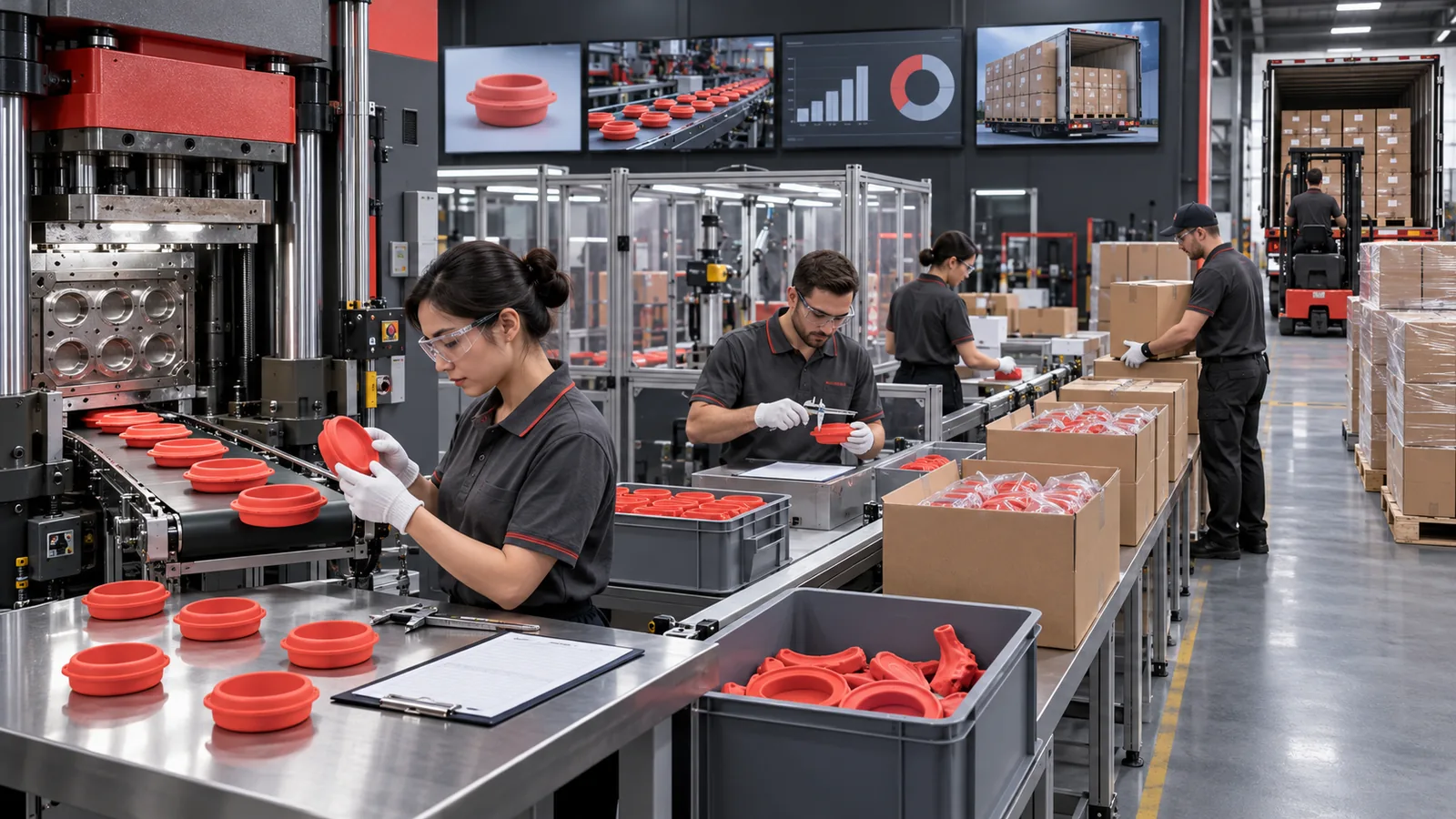
The constraint may sit after molding. Trimming, post-curing where applicable, washing, printing, assembly, metal detection, inspection, bagging, labeling and master-carton packing each have finite rates and queue space. We trace one production lot through the entire route and compare the slowest sustained step with the requested daily shipment rate. If unfinished parts will wait between steps, the plan should define identification, contamination protection, maximum hold condition and work-in-process limits.
Packaging material readiness must be shown beside product output. Printed boxes, inserts, labels, polybags, cartons and barcodes can arrive on different schedules, and a late artwork approval can consume the supposedly reserved packing window. Confirm line format, changeover, carton count, pallet requirement and warehouse space for the actual selling unit. A promise to finish molding by a date is not a cargo-ready commitment when the approved package, inspection release and export marks are still open.

SECTION 04
Convert Capacity Evidence Into a Purchase Commitment
Protect replenishment by recording review conditions for forecasts, prices, lead times, materials and order changes.
Build a Credible Contingency Around the True Constraint
A capacity commitment needs a named bottleneck and a credible response if it fails. The supplier should identify the most restrictive resource for the program, its warning indicator and the decision owner who can replan before the ship date is lost. Examples include one qualified mold, one compatible press family, one color-preparation route or one packaging cell. A contingency that simply says add workers or use another machine is not actionable until compatibility, training, fixtures and approval authority are addressed.
Buyers should also ask which demand change the plan can absorb. A modest quantity increase may fit within the reserved slot, while a new color or pack format can trigger more disruption than the extra units. Define a frozen horizon for SKU mix and a process for upside requests, partial releases or prioritized variants. Business-continuity planning can guide roles and escalation, but it does not prove that a specific backup source, machine or mold is ready for this order without project-level evidence.
Release the Order Through Evidence-Based Milestone Gates
Turn the evidence into milestone gates instead of collecting documents that no one uses. A practical release path can include forecast confirmation, DFM and tool readiness, approved compound and pigment, pilot-rate validation, packaging release, locked production slot, first-production review and shipment release. Each gate should name the record, owner, due date and consequence of failure. This structure helps purchasing distinguish a supplier's early estimate from the later order-specific commitment supported by current evidence.
Standards can strengthen the management framework without replacing factory evidence. ISO 22400-1 provides an industry-neutral framework for manufacturing operations KPIs, ISO 9001:2026 addresses controlled processes and performance evaluation, and ISO/TS 22318 addresses supply-chain continuity management. None of those documents certifies the output of this silicone SKU or guarantees delivery. The buyer still needs current order data, traceable records and a decision on whether the remaining exposure is acceptable.
Tie MOQ, Price and Lead Time to the Verified Plan
The final quotation should reference the same capacity scenario that engineering and operations reviewed. Unit price may change with quantity, cavity plan, color mix, inspection level, packaging labor, expedited material or added tooling, while MOQ may depend on compound, pigment and package batching. Lead time should separate open development work from confirmed material, production and packing windows. A low price based on an unsupported yield or overlapping reservation is not commercially comparable with a conservative evidence-based offer.
For a Naike Silicone capacity review, send the drawing or approved sample, finished-SKU quantities, color and package split, forecast, target cargo-ready date, destination and critical acceptance steps. We can return an order-specific readiness list, unresolved assumptions, proposed pilot evidence and milestone plan before a firm production commitment. Capacity, performance, certification scope, MOQ, price and lead time remain conditional on the verified design, material, tooling, quality plan, packaging and current factory schedule. That conditional record is more useful than a large number presented without its operating basis.
ACTION FRAMEWORK
Buyer Checklist Before Commercial Approval
Use this checklist as a meeting agenda. It is intentionally concise so the team can identify missing evidence without replacing its own quality, legal or supplier-management procedure.
| Check | Question | Why It Matters |
|---|---|---|
| Order scenario | Are SKU quantities, colors, package formats and the cargo-ready window fixed? | Capacity cannot be verified against an undefined mix or ambiguous delivery date. |
| Machine fit | Which compatible equipment group and shifts will run the approved process? | Installed machine count includes unavailable and technically unsuitable presses. |
| Tool readiness | Are mold revision, cavity status, maintenance and backup route documented? | Tooling can become the bottleneck even when machine hours are available. |
| Material release | Are the approved compound, pigment and bought-in parts secured by date? | A reserved press cannot run without the correct released inputs. |
| Qualified labor | Are setup, molding, inspection, maintenance and packing covered by shift? | A schedule based on shifts is unreliable when critical skills exist only on one shift. |
| Good-part rate | Does the model use demonstrated cavity output, downtime and first-pass yield? | Theoretical cycle multiplication overstates cargo-ready capacity. |
| Downstream flow | Can finishing, inspection, packaging and warehouse space match molding output? | A post-molding queue can delay shipment even when press output meets plan. |
| Reservation and contingency | What locks the slot, and what verified action follows a bottleneck warning? | Conditional reservations and vague backup promises should not be mistaken for firm capacity. |
NEXT READING
Continue the Supplier and Product Review
These internal resources connect the guide with Naike Silicone product, factory, customization and inquiry pages. Open the route that matches the next decision in your project.
Evaluate a silicone manufacturer
Use evaluate a silicone manufacturer to gather the next level of product, manufacturing or commercial information.
Open internal resource →Connect annual forecasts with silicone pricing
Use connect annual forecasts with silicone pricing to gather the next level of product, manufacturing or commercial information.
Open internal resource →Plan silicone order frequency
Use plan silicone order frequency to gather the next level of product, manufacturing or commercial information.
Open internal resource →Explore all silicone product categories
Use explore all silicone product categories to gather the next level of product, manufacturing or commercial information.
Open internal resource →Review Naike Silicone manufacturing knowledge
Use review naike silicone manufacturing knowledge to gather the next level of product, manufacturing or commercial information.
Open internal resource →Understand the customized-service workflow
Use understand the customized-service workflow to gather the next level of product, manufacturing or commercial information.
Open internal resource →PRIMARY REFERENCES
Authoritative External Sources
The sources below are official primary references. Applicability depends on the product, intended use and destination market. Buyers should obtain qualified advice for final legal or regulatory decisions.
ISO 22400-1:2014 Manufacturing Operations KPIs
Official ISO page for an industry-neutral framework describing manufacturing-operations key performance indicators; it does not prove the capacity of a particular silicone order.
ISO 9001:2026 Quality Management Systems
Official ISO page for the current 2026 quality-management-system requirements; it frames controlled information and processes but does not certify this particular silicone SKU.
ISO/TS 22318:2021 Supply Chain Continuity Management
Official ISO page for guidance on supply-chain continuity management; a buyer must still verify that order-specific backup tools, machines, materials and people are ready.
BUYER QUESTIONS
Frequently Asked Questions
What is the first document needed for silicone supplier capacity verification?
Start with one order scenario listing the finished SKU, quantity, color and packaging split, requested cargo-ready window and reorder forecast. The supplier can then map real tools, compatible machines, materials, labor, quality and packing resources to the same commercial requirement.
Is installed machine count enough to prove production capacity?
No. Installed machines may be incompatible, committed, under maintenance or unsupported by the required tool, material and qualified staff. Verify an available compatible equipment group, current load, reserved window, practical uptime and an approved contingency route.
How should buyers verify the stated daily output?
Use the approved mold and route in a representative pilot, then record good parts per cycle, startup loss, downtime, first-pass yield, rework and completion at downstream inspection and packing. Treat untested values as estimates until representative evidence supports them.
Can a supplier reserve capacity before the purchase order?
A provisional reservation is possible when both parties define the holding milestone, validity period and release conditions. Deposit, tooling approval, material release, artwork and packaging approval may affect when a slot becomes firm, so the commitment should state those dependencies.
What if the supplier proposes overtime or another machine?
Ask how operators, setup, inspection, maintenance and approval authority will be covered on the added shift. For another machine, confirm technical compatibility and complete any required transfer or first-piece checks before counting that route as reliable capacity.
Does ISO 9001 certification prove that a supplier can deliver a large order?
No. A quality-management certification can support confidence in controlled processes, but it does not prove order-specific machine availability, tooling readiness, materials, labor, yield or a reserved schedule. Review current project evidence and the certification's actual scope separately.
Editorial and Scope Note
Conclusion: Silicone Supplier Capacity Verification for Buyers
Move from buyer research to a controlled supplier brief
Silicone supplier capacity verification is an order-specific decision, not a factory-size claim. It should connect the approved SKU and forecast with compatible machines, ready tools, released materials, qualified people, practical yield, downstream packing flow, a reserved window and a credible contingency. ISO 22400-1, ISO 9001:2026 and ISO/TS 22318 provide useful management context but do not certify this SKU's output or delivery. Send Naike Silicone the drawing, quantity and color mix, package, forecast and required cargo-ready date to request a capacity-readiness review; performance, certification scope, MOQ, price, capacity and lead time remain conditional on the verified configuration, evidence plan and current schedule.
This factory-insider guide supports sourcing preparation and supplier discussion; it does not replace product-specific engineering, laboratory, regulatory, legal or commercial review for the destination market.