MATERIALS, QUALITY & COMPLIANCE
Factory Inspection vs Third-Party Pre-Shipment Inspection
Compare factory inspection with third-party pre-shipment inspection for silicone orders, including timing, sampling, independence, evidence and release decisions.
DIRECT ANSWER
What B2B Buyers Need to Know
Third-party pre-shipment inspection provides independent finished-lot evidence, while factory inspection supplies continuous process prevention and immediate correction. Neither method replaces the other. Select the mix from product risk, supplier maturity, order value, specification clarity and timing, then define the lot, sampling, defect limits, reporting and decision authority before production begins so each inspection supports a clear purchasing decision.
This guide is written for silicone product importers, supplier-quality engineers, sourcing managers, operations teams and private-label buyers. It provides a decision framework rather than legal advice or a universal specification. Product classification, use conditions and destination market should be confirmed before final testing, labelling or compliance decisions.
Key Takeaways
- Use factory inspection for continuous prevention and fast process correction.
- Use independent pre-shipment inspection when external lot evidence changes the buyer's release decision.
- Give both parties the same controlled specification, golden sample and defect definitions.
- Define the lot, readiness threshold, random-sampling method and AQL plan before inspection.
- Separate inspection results from the buyer's final disposition and shipment authority.
- Adjust external inspection frequency from supplier performance, order risk and controlled change triggers.
Factory Inspection and Third-Party Inspection Compared
The useful choice depends on the decision that must be supported. Many silicone programs use factory controls throughout production and independent verification at selected release gates.
| Decision factor | Factory inspection | Third-party pre-shipment inspection |
|---|---|---|
| Primary role | Prevent, detect and correct problems within the process | Verify a defined finished lot against buyer instructions |
| Timing | Incoming, first-piece, in-process, final and pack-out stages | Normally after an agreed completion and packing threshold |
| Independence | Embedded in the supplier organization and production schedule | Organizationally separate, subject to provider competence and impartiality |
| Best evidence | Process records, containment, correction, traceability and trend data | Random sample, lot status, photographs, measured results and report limitations |
| Main limitation | Potential schedule pressure, familiarity or unclear stop authority | Late discovery, generic checklist or unrepresentative incomplete lot |
| Buyer use | Supplier control confidence and early defect prevention | Pre-release verification, payment gate or risk-based oversight |
SECTION 01
Choose the Inspection Model From Risk and Timing
Define the intended use, market and risk assumptions before choosing test methods or requesting supplier documents.
Separate Factory Control From Independent Verification for third-party pre-shipment inspection
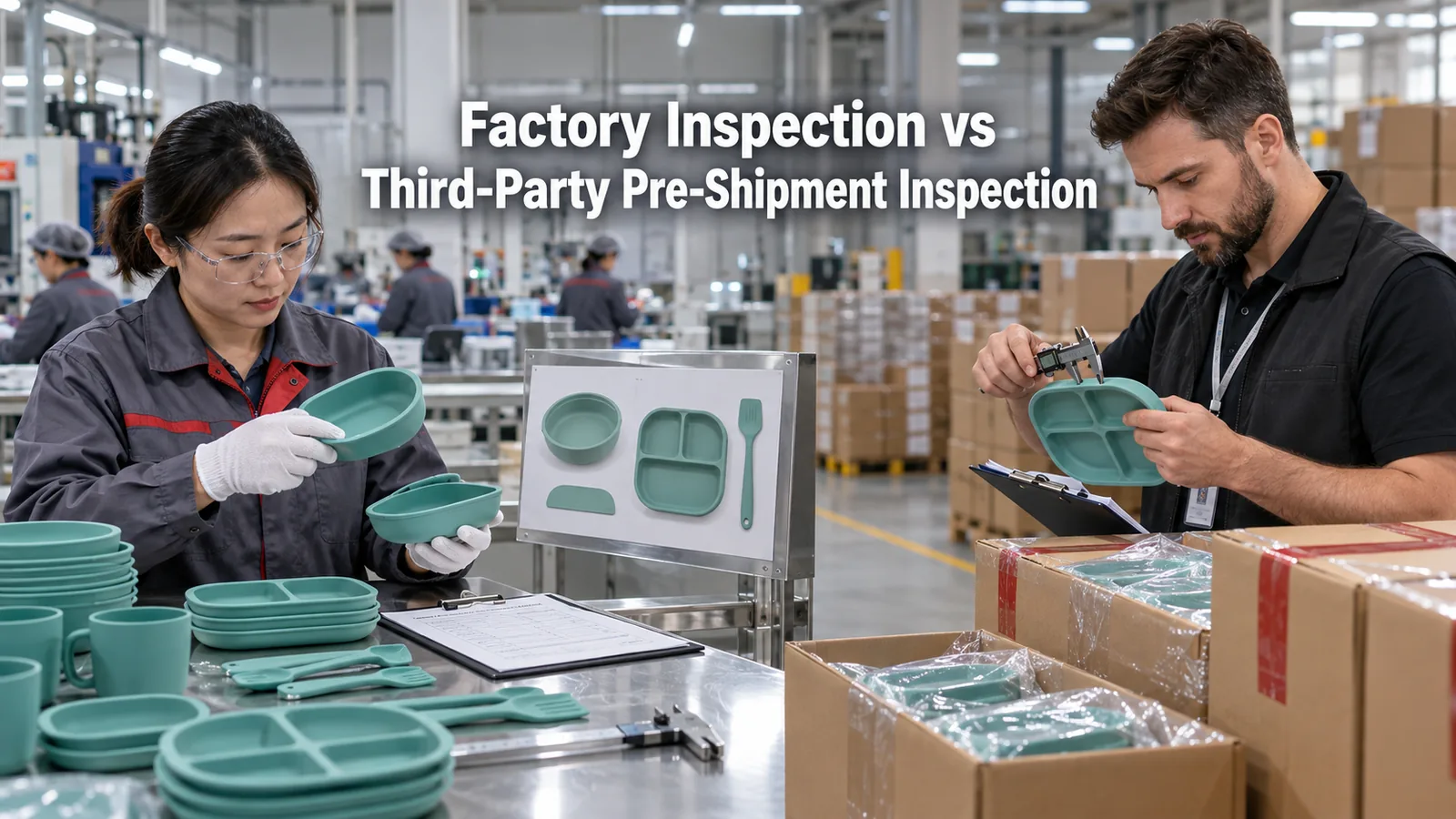
Factory inspection and third-party pre-shipment inspection answer different control questions. The factory team controls the process every day, while an independent inspector gives the buyer a time-bound view of a defined finished lot against an agreed instruction. A buyer should not ask which method is universally better; the useful decision is which risks must be prevented during production, which facts must be verified before release, and who is authorized to act on each result.
Begin with the order exposure rather than inspection tradition. Product safety, complex assembly, new tooling, tight cosmetic limits, unfamiliar packaging, a new supplier, a destination-specific claim or a costly launch may justify more independent evidence. Stable repeat orders with strong process records may need less external coverage, but they still require factory controls. Write the objective, lot, timing and release authority before selecting the inspection party so the activity produces a purchasing decision instead of another report.
Use Factory Inspection to Prevent Defects During Production
Factory inspection is strongest when it is built into the route and can stop a problem before quantity accumulates. Incoming material release, first-piece approval, cavity checks, color comparison, flash review, dimensional verification, functional testing and pack-out checks can occur close to the operation that created the risk. The team can adjust the mold, process, fixture or work instruction immediately, then contain affected work in process under the same lot identity.
Its limitation is not automatically competence; it is the possibility that schedule pressure, familiarity or unclear authority weakens objectivity. Buyers should review who reports to whom, whether inspectors can stop production or shipment, how rejected pieces are segregated, and whether supervisors can override a result without documented disposition. Factory inspection becomes credible when records show that failures were found, contained and corrected, not when every historical sheet is perfectly green.
Use Third-Party Inspection for an Independent Lot View
A third-party pre-shipment inspection adds separation between the supplier's production decision and the buyer's release evidence. The inspector normally works from a buyer-approved checklist, samples from a defined finished lot, verifies quantity and packaging, examines selected units, records findings and issues a report. This can reduce information asymmetry for remote buyers, new suppliers, high-value shipments or programs in which the final lot must be reviewed before balance payment or loading.
Independence does not make a vague inspection effective. The agency may arrive after cartons are sealed, use a generic checklist, miss product-specific functions or sample a lot that is not fully complete. Confirm inspector competence, site access, sampling method, equipment, photo rules, escalation contacts and report turnaround before booking. ISO/IEC 17020:2026 provides a framework for competence, impartiality and consistent operation of inspection bodies, but buyers still need to verify the provider and define the actual assignment.
SECTION 02
Build One Specification, Lot and Sampling Baseline
Match every claim and report to the correct material, finished SKU, sampling condition and current revision.
Place Each Inspection at the Right Production Gate
Timing determines what either method can prevent. In-process inspection can detect cavity drift, color variation, flash, bonding weakness or marking problems while corrective action is still practical. A pre-shipment inspection is better positioned to verify the completed lot, selling-unit configuration, carton count, labeling, assortment, packing condition and shipment readiness. It cannot recover lost production time when the same defect has already been repeated across the whole order.
For higher-risk launches, use progressive gates rather than one final visit. Factory first-piece release can confirm the approved setup, an early-production review can test whether controls work at scale, and independent pre-shipment inspection can verify the final lot. The buyer should define what happens after a failed gate: stop, contain, rework, resample, reinspect or request a deviation. Without that decision path, inspection timing becomes ceremonial and cartons continue moving while teams debate responsibility.
Issue One Revision-Controlled Inspection Specification
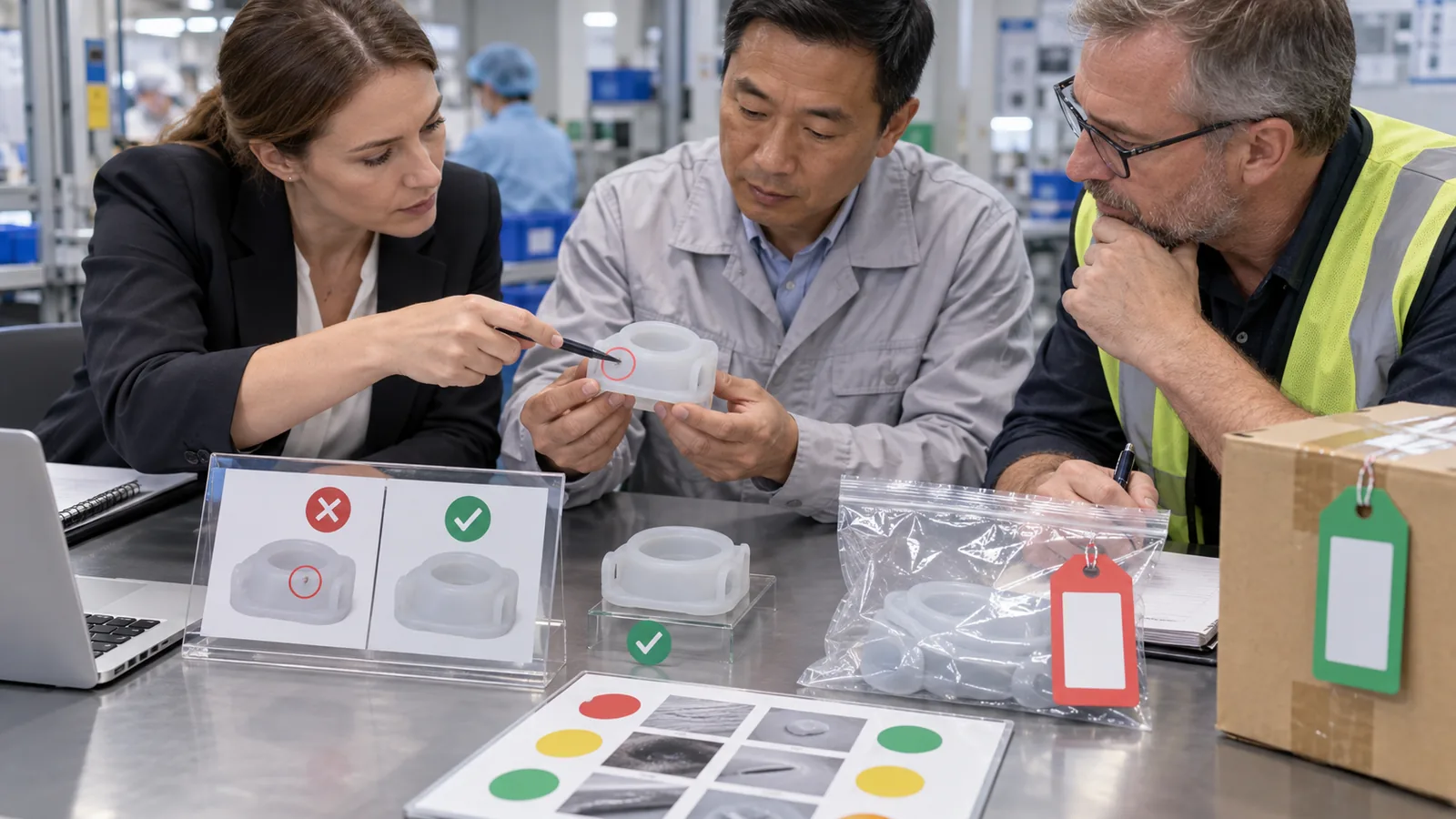
Both parties must inspect the same controlled specification pack. It should identify the SKU and revision, approved golden sample, drawings, critical dimensions, color and surface limits, functional checks, artwork, barcode data, selling-unit contents, carton construction, quantities and defect classification. Reference images should show acceptable and unacceptable conditions without replacing measurable requirements. Translate ambiguous terms such as clean, smooth or strong into observable criteria whenever the product permits it.
Issue one inspection instruction with revision control and name the document that prevails if a sample conflicts with a drawing. Send it early enough for the factory to build its process checks and for the third party to review feasibility before arrival. Last-minute checklist changes create false failures, missed equipment and disputes about price or lead time. Any approved deviation should state the affected lot, duration and signer so it does not silently become the repeat-order standard.
Define the Finished Lot and Random Sampling Plan
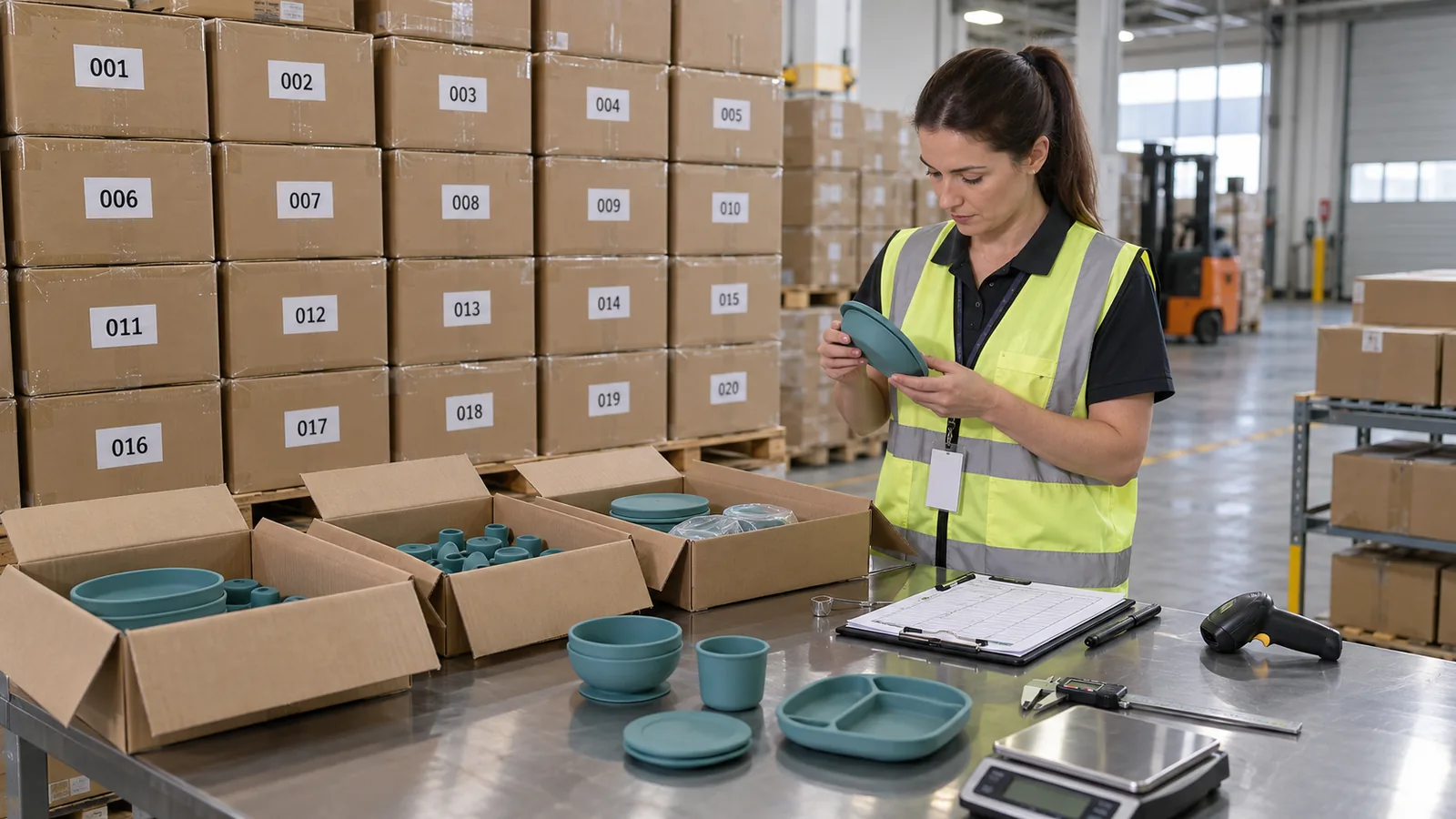
Define the inspection lot before choosing a sample size. The lot should have a known SKU mix, quantity, production completion status, packing status and physical location, with cartons arranged so selection is genuinely random. If unfinished goods, rework, hold stock or another order are mixed into the population, the sample no longer represents the shipment decision. Record the lot identity and carton population in the report before any units are opened.
ISO 2859-1:2026 provides AQL-indexed sampling schemes for lot-by-lot inspection by attributes, including sample sizes and acceptance or rejection thresholds. It does not choose the buyer's critical, major and minor defect limits or prove that a sampled lot is defect free. Set inspection level, AQL values, critical-defect treatment and switching or reinspection rules from product risk and contract terms. Functional or safety-critical characteristics may require different sampling or complete checks.
SECTION 03
Control Competence, Evidence and Defect Disposition
Build production checks around critical characteristics that can be measured, recorded and investigated by lot.
Verify Inspector Competence and Impartiality
Competence must match the assignment. A silicone product inspection may require understanding flexible dimensions, supported measurement, Shore hardness context, color viewing, surface defects, assembly fit, sealing, suction, release behavior, printing adhesion or food-contact documentation boundaries. Ask which tools the inspector will carry, how equipment status is controlled, what product training is provided and whether the report distinguishes measured results from visual judgment.
Impartiality also needs practical controls. Confirm whether the inspector or agency has commercial relationships that could influence the decision, who pays for reinspection, and whether the supplier can select samples or edit findings. Factory staff should assist with safe access and product handling without directing which cartons are opened. The buyer should receive the original report and escalation evidence directly, while the supplier receives enough detail to investigate and respond.
Check Dimensions, Function, Workmanship and Packaging
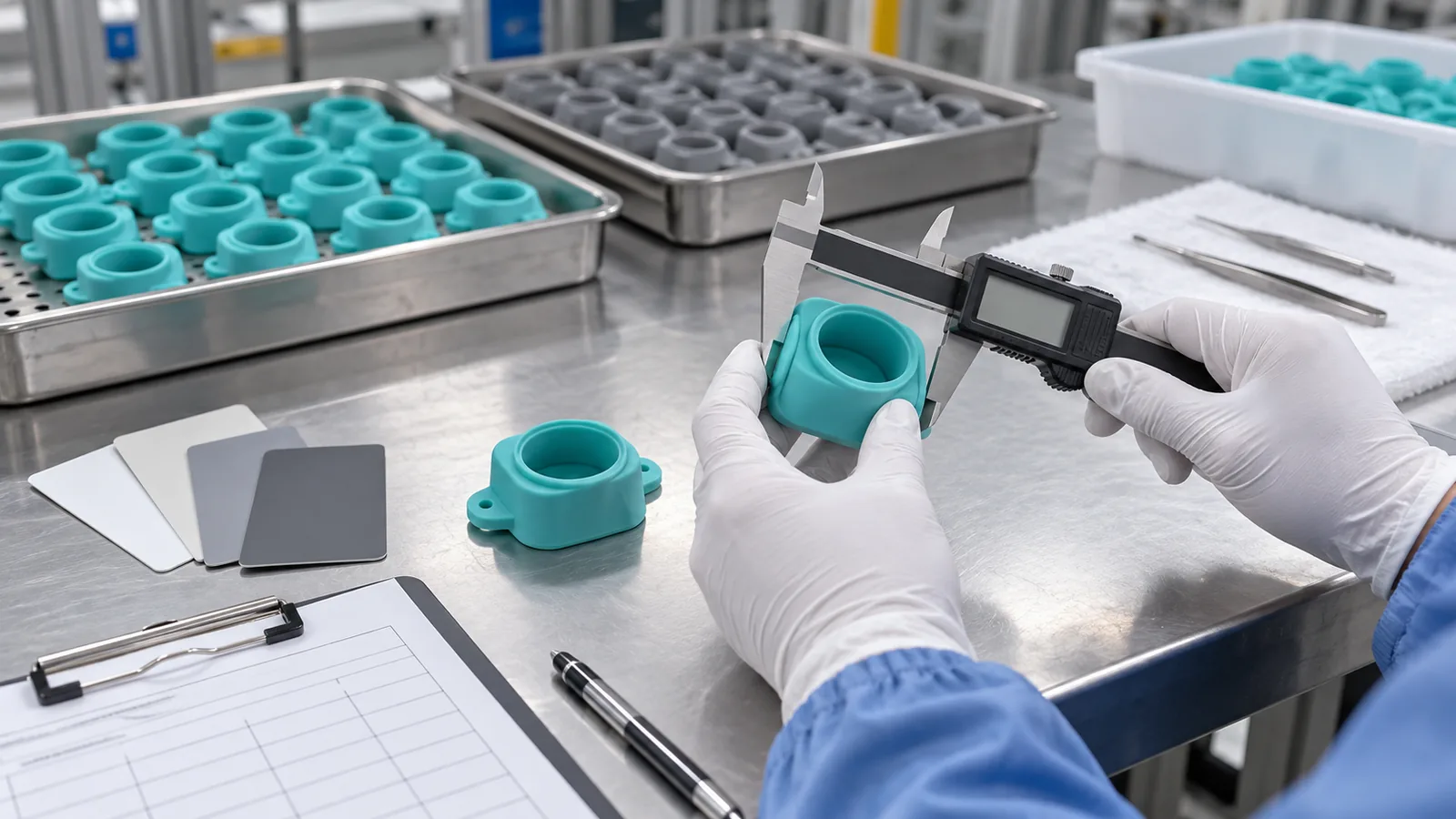
An effective inspection combines quantity, workmanship, dimensions, function and packaging instead of treating appearance as the whole product. Use calibrated or status-identified tools where measurement matters, support flexible parts in the agreed condition, and repeat functional checks with the approved fixture or mating component. Record actual values and units rather than only pass marks when the measurement is needed for traceability or repeat-order comparison.
Packaging checks should reconstruct the selling unit and export carton. Verify assortment, inserts, labels, barcodes, sealing, protective materials, carton marks, count, gross or net weight where specified and any agreed drop or fit check. A correct silicone part can still produce chargebacks or customer complaints when the pack contains the wrong color, missing component or unreadable code. Keep regulatory or certification conclusions outside the inspector's authority unless the assignment and competence explicitly cover them.
Classify Defects and Control Shipment Disposition
Defect categories must describe consequence, not appearance alone. A critical defect may involve safety, legality or an unacceptable hazard; a major defect may impair intended use, saleability or required presentation; a minor defect may depart from the specification without materially affecting use. Build product-specific examples before inspection and state whether repeated patterns, mixed assortments or packaging errors change the classification. The same mark can carry different significance depending on location and function.
Acceptance and disposition are separate decisions. A sampling result can trigger lot rejection under the agreed plan, but purchasing still needs a controlled response: containment, one-hundred-percent sorting, repair, rework, replacement, concession or cancellation. The supplier should not remove failed samples and present a new subset without documenting the original result. A reinspection must use a defined corrected lot and should not erase evidence of the first failure or the cost and schedule impact.
SECTION 04
Plan Cost, Corrective Action and Repeat-Order Coverage
Maintain an evidence file that remains usable when a material, color, process, supplier or destination market changes.
Require Traceable Reports and Fast Escalation
The report should let a remote decision maker reconstruct what happened. It needs the site, date, lot identity, quantity available, completion and packing status, sample-selection method, checklist revision, equipment, results, defect counts, photographs, carton references and unresolved limitations. Photographs should connect findings to sample or carton identity and include scale where size matters, while protecting confidential information that is not part of the assignment.
Require fast escalation for critical or decision-changing findings rather than waiting for the final PDF. The factory should open a corrective-action record that traces containment, cause, correction and verification, and the buyer should name who may release or continue holding the shipment. ISO 9001:2026 supports controlled processes, performance evaluation and improvement, yet a certificate does not replace the lot report, defect evidence or buyer disposition for this specific silicone order.
Budget Booking, Reinspection and Schedule Contingency
Compare inspection options using expected risk and decision value, not the fee alone. Factory inspection is part of normal production control; third-party cost varies with location, inspector days, travel, sample size, tests, report speed and reinspection. Booking too late can miss the cargo window, while booking before enough goods are complete can produce a nonrepresentative lot. Set the readiness threshold, notice period and cancellation rule in the order plan.
A failed inspection also consumes time for sorting, replacement, report review and another visit. Add this contingency to the delivery plan when the product or supplier is new instead of treating reinspection as an impossible event. Price, MOQ and lead time remain conditional on the SKU mix, inspection depth, testing, packaging and corrective work. A lower-cost method that cannot answer the release question is more expensive than a focused plan that prevents or exposes the relevant loss.
Build a Risk-Based Hybrid Model for Repeat Orders
Most B2B programs benefit from a layered model. Use factory inspection for daily prevention and process feedback, buyer or supplier-quality review for system and project controls, and independent pre-shipment inspection where external evidence changes the release decision. Adjust the mix as data develops: repeated stable lots may justify reduced external frequency, while a material, mold, site, artwork, supplier or defect trend should trigger renewed coverage.
For a Naike Silicone inspection plan, send the product drawing or approved sample, destination, quantity, SKU and color mix, packaging files, critical checks, defect definitions and cargo-ready target. We can map factory gates, retained evidence, random-lot access and third-party support into one release sequence before quotation confirmation. Certification scope, performance, MOQ, price, lead time and inspection coverage remain conditional on the approved material, product, package, lot and destination requirements.
ACTION FRAMEWORK
Buyer Checklist Before Commercial Approval
Use this checklist as a meeting agenda. It is intentionally concise so the team can identify missing evidence without replacing its own quality, legal or supplier-management procedure.
| Check | Question | Why It Matters |
|---|---|---|
| Inspection objective | Is the task preventing process defects or independently verifying a finished lot? | The objective determines timing, evidence and the suitable inspection party. |
| Controlled baseline | Do both parties hold the same SKU revision, golden sample and defect definitions? | Different references create disputes that no sample size can resolve. |
| Lot readiness | Are quantity, completion, packing status and carton population defined before sampling? | An incomplete or mixed population cannot represent the shipment decision. |
| Sampling plan | Are inspection level, AQL values, critical treatment and reinspection rules agreed? | Sampling must match product risk and the contract rather than habit. |
| Competence | Can the inspector perform the required silicone, function and packaging checks? | Independence without product-specific competence can produce weak evidence. |
| Decision authority | Who may hold, release, rework, reinspect or accept a deviation? | An inspection result is not a complete disposition workflow. |
| Evidence quality | Does the report trace findings to lot, carton, sample, method and checklist revision? | Remote buyers need enough context to reconstruct the result. |
| Repeat-order rule | Which performance or change trigger increases or reduces external coverage? | Inspection frequency should respond to evidence, not remain arbitrary. |
NEXT READING
Continue the Supplier and Product Review
These internal resources connect the guide with Naike Silicone product, factory, customization and inquiry pages. Open the route that matches the next decision in your project.
Build a silicone product quality-control checklist
Use build a silicone product quality-control checklist to gather the next level of product, manufacturing or commercial information.
Open internal resource →Review silicone test-report validity
Use review silicone test-report validity to gather the next level of product, manufacturing or commercial information.
Open internal resource →Evaluate a silicone manufacturer
Use evaluate a silicone manufacturer to gather the next level of product, manufacturing or commercial information.
Open internal resource →Explore all silicone product categories
Use explore all silicone product categories to gather the next level of product, manufacturing or commercial information.
Open internal resource →Review Naike Silicone manufacturing knowledge
Use review naike silicone manufacturing knowledge to gather the next level of product, manufacturing or commercial information.
Open internal resource →Understand the customized-service workflow
Use understand the customized-service workflow to gather the next level of product, manufacturing or commercial information.
Open internal resource →PRIMARY REFERENCES
Authoritative External Sources
The sources below are official primary references. Applicability depends on the product, intended use and destination market. Buyers should obtain qualified advice for final legal or regulatory decisions.
ISO 2859-1:2026 AQL Sampling for Lot-by-Lot Inspection
Official ISO page for the current sampling schemes indexed by acceptance quality limit for lot-by-lot inspection by attributes.
ISO/IEC 17020:2026 Requirements for Inspection Bodies
Official ISO page covering competence, impartiality and consistent operation of bodies performing inspection; it does not define the buyer's product-specific checklist or release decision.
ISO 9001:2026 Quality Management Systems
Official ISO page for the current 2026 quality-management-system requirements; it frames controlled information and processes but does not certify this particular silicone SKU.
BUYER QUESTIONS
Frequently Asked Questions
Is third-party pre-shipment inspection always better than factory inspection?
No. Factory inspection prevents and corrects problems during production, while an independent pre-shipment inspection verifies a defined finished lot for a buyer decision. Higher-risk orders often use both at different gates.
When should a silicone buyer book pre-shipment inspection?
Book after the factory confirms the agreed production and packing readiness threshold but early enough to allow report review, correction and possible reinspection before loading. Define notice, cancellation and readiness rules in the purchase plan.
Who should select cartons for a third-party inspection?
The inspector should select cartons independently from the complete accessible lot using the agreed random method. The factory may move cartons safely but should not preselect the sample population.
Does passing an AQL inspection mean the shipment has no defects?
No. Acceptance sampling supports a lot decision from a defined random sample and acceptance rule; it is not a guarantee that every unit is defect free. Critical characteristics may require tighter or complete checks.
What should happen after a failed pre-shipment inspection?
Hold the shipment, preserve the original evidence, define containment and corrective action, rebuild a clearly identified corrected lot, and obtain buyer authorization for reinspection, concession or another disposition.
Can the factory use the same checklist as the third-party inspector?
Yes, and alignment is valuable. The factory still needs earlier process controls and first-piece checks, while the third party uses the common final criteria on an independently selected finished-lot sample.
Editorial and Scope Note
Conclusion: Third-Party Pre-Shipment Inspection Buyer Guide
Move from buyer research to a controlled supplier brief
Factory inspection and third-party pre-shipment inspection should be designed as complementary controls. The factory prevents and corrects problems close to production, while an independent inspector can give the buyer a separate view of a defined finished lot. ISO 2859-1:2026 frames attribute sampling, ISO/IEC 17020:2026 addresses inspection-body competence and impartiality, and ISO 9001:2026 supports controlled quality processes; none supplies the product specification or buyer disposition. Share Naike Silicone the SKU, lot, package, defect limits and cargo-ready date to build a risk-based release plan; performance, certification scope, MOQ, price, lead time and inspection coverage remain conditional on the approved product, material, packaging, order and destination.
This factory-insider guide supports sourcing preparation and supplier discussion; it does not replace product-specific engineering, laboratory, regulatory, legal or commercial review for the destination market.