PRODUCT SOURCING GUIDES
Reusable Silicone Food Covers For Restaurants: How Should Restaurant Buyers Specify Reusable Silicone Food Covers?
Specify reusable silicone food covers for restaurants by container fit, cleaning, color control, repeated use, storage and replacement planning.
DIRECT ANSWER
What B2B Buyers Need to Know
Restaurant buyers should specify reusable silicone food covers as an operating system, not a generic lid assortment. Build a measured container matrix, define food and temperature duties, validate fit and claim boundaries, approve wash-rinse-sanitize-air-dry procedures, set color and storage rules, and establish inspection and replacement triggers. MOQ, price, capacity, lead time and evidence scope remain conditional on the approved sizes, colors, packaging and order plan.
This guide is written for restaurant groups, hospitality buyers, foodservice distributors, central kitchens, catering operators and procurement teams sourcing reusable silicone food covers. It provides a decision framework rather than legal advice or a universal specification. Product classification, use conditions and destination market should be confirmed before final testing, labelling or compliance decisions.
Key Takeaways
- Start with a measured restaurant-container matrix and assign every cover-to-vessel combination an approved status.
- Separate refrigerated retention, splash, inversion, transport and leakage claims because each requires its own conditions and evidence.
- Validate beads, tabs, markings and recovery through the actual wash-rinse-sanitize-air-dry workflow.
- Use colors, size marks and rack positions as documented controls rather than decoration or a substitute for cleaning.
- Define drying, storage, inspection, quarantine and retirement rules before calculating replacement quantities.
- Keep food-contact evidence, performance, MOQ, price, capacity and lead time conditional on the approved program.
Reusable Silicone Food Cover Program Decision Matrix
Use the same restaurant scenario, vessel identity and cleaning process when comparing sizes or suppliers. Every result remains conditional on the approved finished cover and operating method.
| Decision area | Buyer must define | Approval evidence |
|---|---|---|
| Container fit | Vessel model, material, outside rim, flange, corner, obstruction and assigned cover size | Controlled vessel matrix with approved, conditional and out-of-scope matches |
| Food duty | Food type, fill level, temperature, dwell, location and handling orientation | Scenario trial with claim-specific observations and defined failure limits |
| Cleaning | Pre-scrape, wash, rinse, sanitizer, concentration, contact time, temperature and air-dry method | Production-representative covers inspected after realistic soils and repeated cycles |
| Identification | Size marks, colors, station assignment, rack position and staff instructions | Workstation trial confirming fast selection and correct post-wash return |
| Retirement | Tears, cuts, deformation, residue, odor, staining and loss-of-fit criteria | Written inspection standard, quarantine route and failure-category record |
| Replacement | Active vessels, covers per rotation, reserve level, forecast and replenishment timing | Size-specific stock model linked to stable drawings, tools and repeat-order controls |
SECTION 01
Map the Restaurant Containers and Operating Scenarios
Begin with the target buyer, channel and assortment role so every specification decision supports a sellable range.
Define the Restaurant Scenario Before Selecting Covers for reusable silicone food covers for restaurants
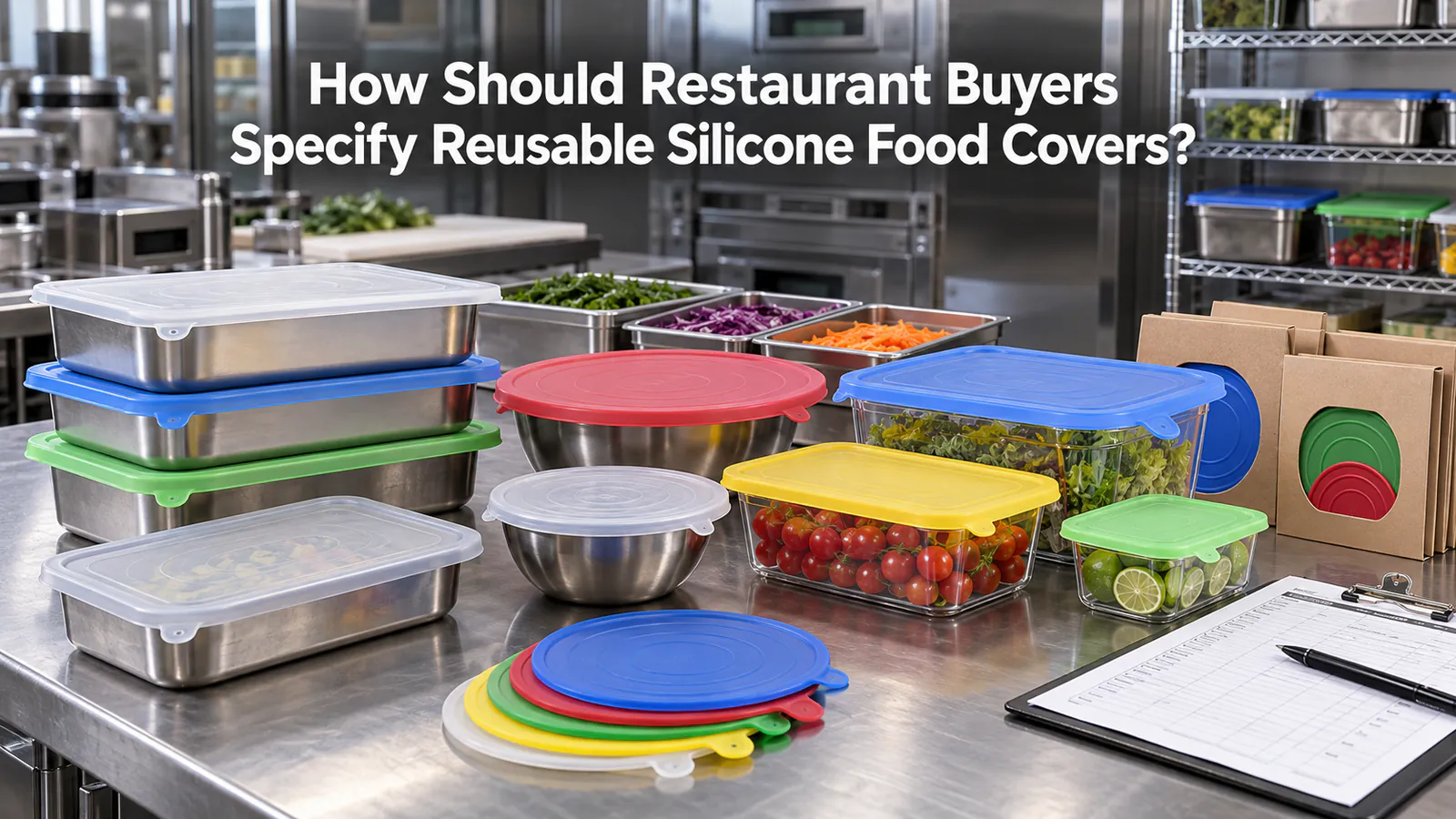
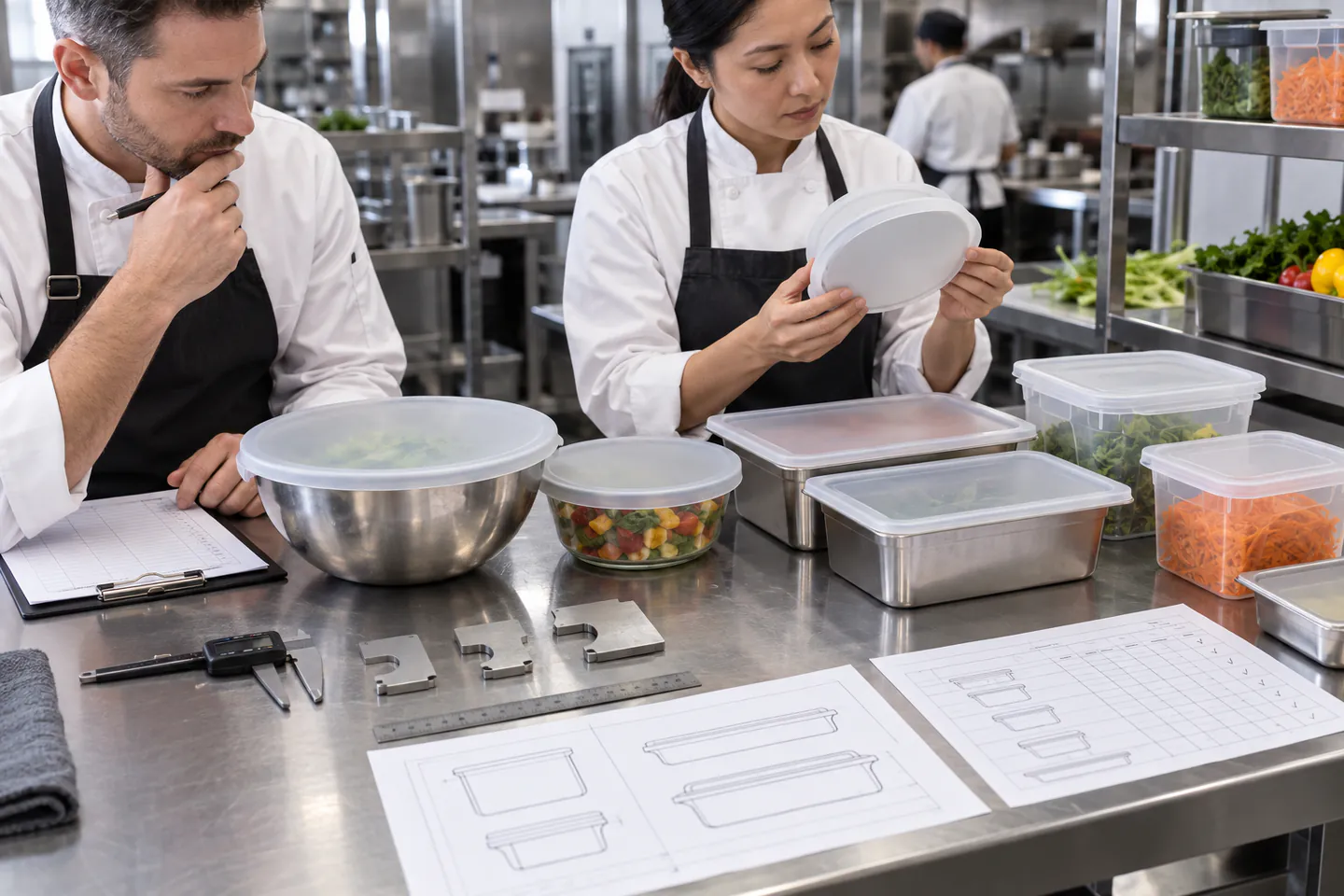
Restaurant buyers should begin with the operating system, not a catalog of lid diameters. Map prep bowls, gastronorm pans, ingredient tubs, proofing vessels and service containers by rim geometry, material, location and food duty. A reusable silicone food cover becomes useful only when staff can select it quickly, fit it consistently and return it to a controlled cleaning and storage loop.
Write a short scenario for each cover family: what container it closes, which food state it touches, how long it remains in use, where it is stored and who removes it. This prevents one generic SKU from being assigned to incompatible rims, hot pans, sharp edges or transport duties it was never validated to handle. The same scenario becomes the basis for samples, work instructions and supplier quotations.
Build a Measured Container and Rim Matrix
Build the container matrix from real restaurant assets rather than nominal capacity labels. Two pans sold as the same size can differ at the rolled rim, corner radius, flange width and stacking shoulder, while round bowls can vary in taper and outside diameter. Record supplier, model, material, rim dimensions and any handles or pour spouts that interrupt the cover contact zone.
For each vessel, classify the match as approved, conditional or out of scope. An approved combination should fit within the agreed application method and remain stable under the stated storage condition; a conditional combination may need a lower fill line, limited dwell time or special handling. Out-of-scope items should be visible in training materials so staff do not force a cover onto an unsafe or damaging edge.
Create Size and Color Logic Staff Can Follow
Commercial kitchens reward simple size logic because a cover that takes too long to identify will be bypassed during a rush. Buyers can use molded size codes, controlled colors, rack positions or container-family labels, but the scheme must remain distinguishable under kitchen lighting and after repeated washing. Color should support workflow and allergen controls only when the operation has documented what each color means.
Avoid creating more colors than the forecast can sustain. Every pigment split affects sample approval, MOQ, stock balance and replacement availability, and a low-volume color can disappear just when the restaurant needs a matched replacement. A smaller, clearly assigned size-and-color system often performs better than a visually broad range that fragments purchasing and confuses staff.
SECTION 02
Validate Fit, Claims, Cleaning and Cross-Contact Controls
Translate the range plan into comparable product, packaging and approval evidence before requesting final quotations.
Validate Application, Retention and Claim Boundaries
Fit acceptance should reproduce the staff motion used during service. Define whether the cover is centered first, anchored on one edge, stretched around corners or pressed onto a dedicated lip, then set a reasonable application and removal boundary. A factory technician can make a sensitive design appear easy, so include users with different hand sizes, reach and experience in the sample trial.
Retention and leakage require separate decisions. A cover can remain seated on a refrigerated ingredient pan without being suitable for inversion, transport or liquid containment, and a broad airtight statement can create misuse. Specify food simulant or actual food, fill level, temperature, orientation, dwell time, handling and permitted loss before any performance wording is approved.
Design the Wash-Rinse-Sanitize-Air-Dry Route
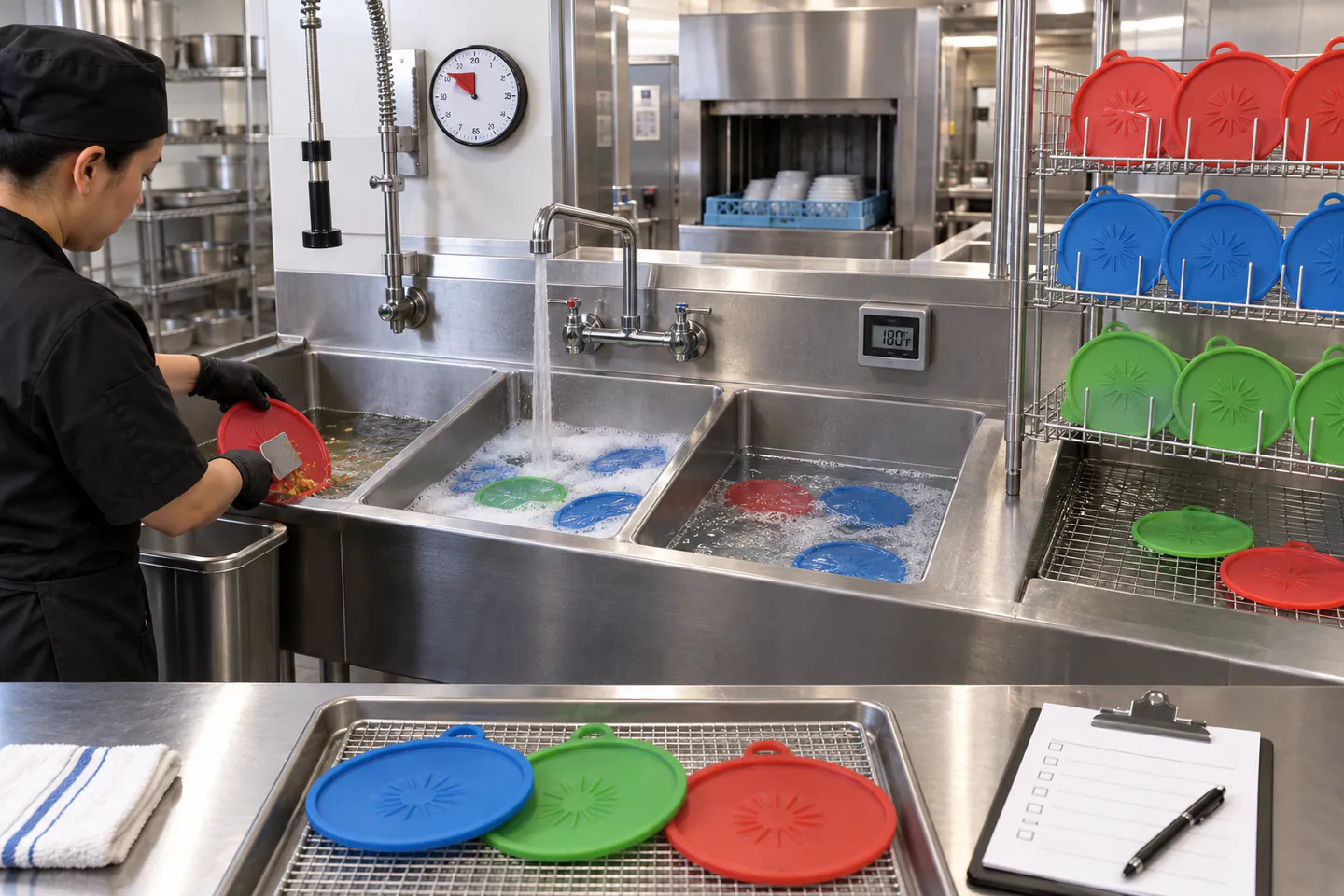
The cleaning route must be designed at the same time as the cover. Perimeter beads, pull tabs, reinforcing rings and embossed marks can collect residue even when the large membrane looks clean, so the buyer should inspect those features after the proposed wash cycle. Include oily sauces, starches, dairy, egg and strongly colored foods when they represent the restaurant menu rather than relying on water-only demonstrations.
FDA's Food Code is a model for retail and foodservice controls, but the restaurant still needs to follow the rules adopted by its jurisdiction and its own approved procedures. The workflow should distinguish cleaning, rinsing, sanitizing and air drying, and it should use the sanitizer concentration, contact time and temperature required by the approved process. A material claim does not replace those operational controls.
Control Allergen and Cross-Contact Risk
Cross-contact planning requires more than buying different colors. FDA research on retail food-contact surfaces found that full wash-rinse-sanitize-air-dry cleaning was effective for allergen removal in the studied conditions, while surface texture and material influenced removal and transfer. For silicone covers, the buyer should therefore validate the actual surface, bead, marks and wash procedure instead of assuming a color code makes a used cover safe for another duty.
Decide whether covers are dedicated by allergen family, production zone or container type, and define how that status survives washing and storage. If a cover moves between duties, the written cleaning verification and inspection standard should support that choice. Where local regulation, menu risk or internal policy requires stricter segregation, the product specification must preserve it through color, marking, racks and replacement stock.
SECTION 03
Control Rotation, Wear, Storage and Replacement
Protect margin by reviewing production controls, landed-cost drivers and launch risks as one commercial system.
Specify Drying Racks and Clean Storage
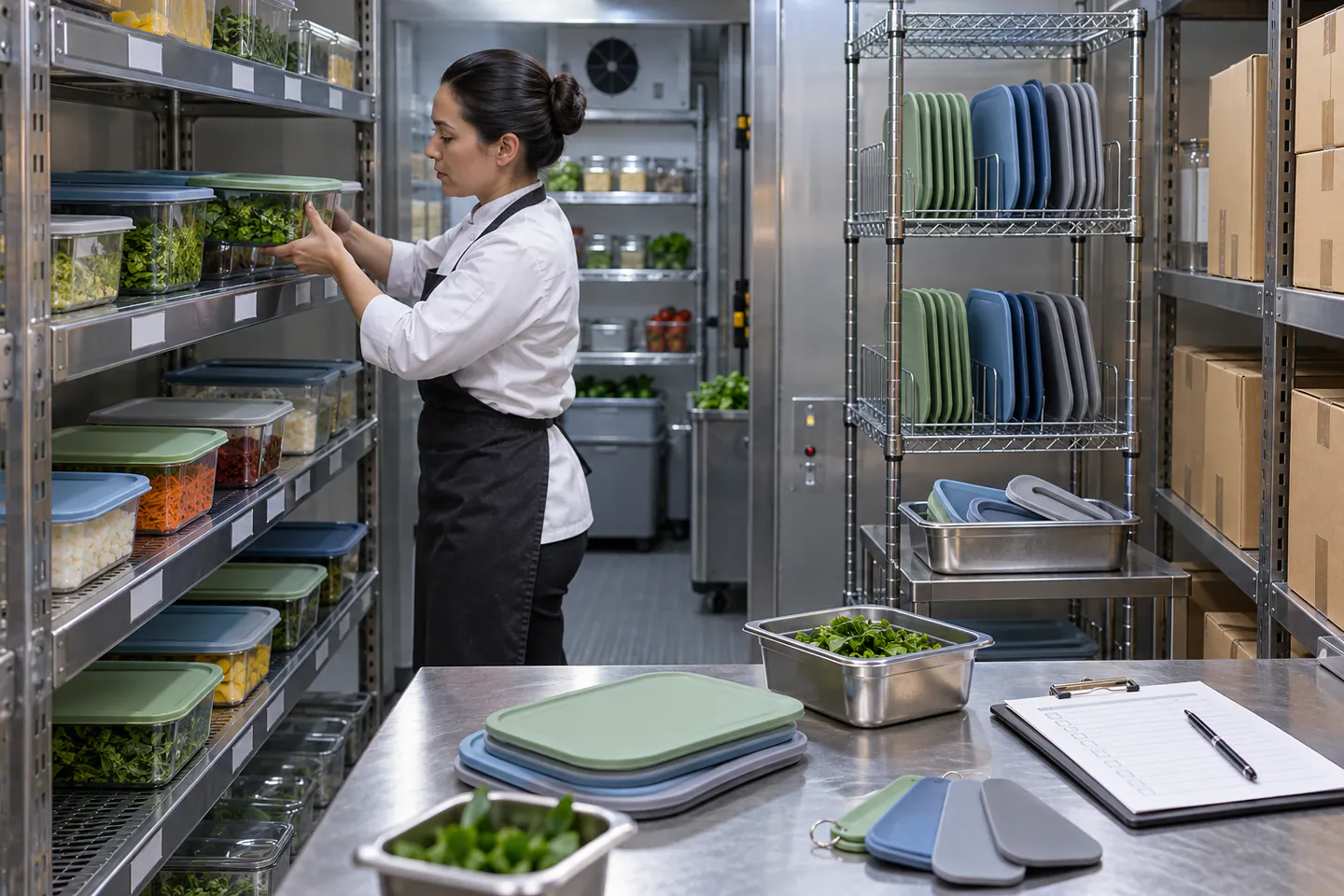
Drying and storage frequently determine whether a reusable program stays hygienic. Covers that are nested while wet can retain moisture between membranes, and flexible parts left folded under heavy utensils can take a temporary set or become difficult to inspect. Specify a rack orientation that exposes the bead and both surfaces, provides drainage and keeps cleaned covers protected from splash and raw-food zones.
The storage location should make the approved size obvious without encouraging staff to compress too many pieces into one slot. Use a first-in, first-out rotation where practical and separate clean stock, in-use stock and rejected items. A restaurant with several stations may need point-of-use sets plus a central reserve, but each location should follow the same identity and condition rules.
Run Repeated-Use Trials Around Real Shift Cycles
Repeated-use validation should mirror a realistic shift cycle rather than an abstract stretch demonstration. A useful sequence includes application to the upper and lower fit limits, refrigerated or ambient dwell, removal, cleaning, sanitizing, air drying and a defined recovery interval. At checkpoints, record relaxed dimensions, bead condition, tab integrity, tackiness, odor, staining and the ability to refit the assigned container.
Do not convert a limited cycle study into an unconditional service-life promise. Restaurant soils, sanitizer chemistry, wash temperature, user technique and container edges can change wear substantially, so the acceptance record should state the exact method and limitations. The purpose is to compare designs and set inspection triggers, not to predict the same replacement date for every kitchen.
Set Inspection, Quarantine and Retirement Criteria
Create a practical retirement standard before launch. Reject a cover for tears, cuts, split tabs, permanent bead roll, unacceptable deformation, persistent residue, odor outside the approved condition or loss of fit on its control vessel. Cosmetic staining may be treated differently from a functional defect, but the distinction must be documented so one location does not discard usable stock while another keeps unsafe pieces.
A quarantine tray keeps questionable covers out of circulation until a supervisor reviews them. Record the failure category, size, lot or purchase period and station because patterns can reveal a sharp container rim, overloaded rack, incorrect sanitizer, unsuitable size assignment or production variation. That evidence is more useful to the supplier than a photograph labeled only as damaged.
SECTION 04
Release Evidence, Packaging and Supplier Responsibilities
Use early sales and replenishment assumptions to decide which variants deserve expansion and which should remain controlled.
Plan Rotation Stock and Replacement Lead Time
Replacement planning should use the number of active containers, covers per rotation, wash turnaround and a controlled reserve percentage. A restaurant opening with one cover per vessel may run short during washing or when a piece is quarantined, while excessive reserve stock can age without inspection and obscure demand. Model each size separately because high-use prep pans and occasional event bowls do not consume replacements at the same rate.
Ask the supplier to keep size identity stable across repeat orders and to notify the buyer before changes to compound, pigment, tool, cavity, dimensions or packaging. A replacement cover must still fit the original approved vessel matrix, so retained samples and revision-controlled drawings are important. MOQ, production capacity and replenishment lead time remain conditional on the size mix, colors, packaging and current schedule.
Compare Packaging and Total Program Cost
Packaging for restaurant programs should support receiving and internal distribution. Individual retail cartons may be unnecessary, but bulk nesting without separators can lock thin covers together, hide size codes or deform beads during storage. Approve the nested order, count per inner pack, protective method, carton label, lot identity and instructions with a physical pack-out rather than a drawing alone.
Calculate cost per controlled use, not only price per cover. Include initial sets, reserve stock, washing labor, rack space, loss, premature retirement, replacement freight and any container damage caused by a poor fit. Reusable covers can reduce dependence on disposable film in suitable workflows, but the business case remains conditional on staff adoption, cleaning efficiency and actual replacement data.
Connect Evidence, Change Control and Supplier Review
The supplier release file should connect material identity, colors, drawings, fit matrix, approved samples, cleaning assumptions, repeated-use method, inspection limits and packaging revision. European food-contact rules and U.S. regulatory references can help frame evidence, but neither creates a universal certificate for every design, pigment and use condition. Ask what each report covers, what it excludes and which changes trigger reassessment.
For Naike Silicone, a productive review starts with the restaurant's vessel list, station map, food duties, wash process, desired color logic, forecast and replacement model. We can then compare existing molds, modified geometry or custom tooling, build a sample matrix and define approval checks before a commercial quotation is finalized. Certification scope, performance, MOQ, price, capacity and lead time stay conditional on the approved product program and purchase schedule.
ACTION FRAMEWORK
Buyer Checklist Before Commercial Approval
Use this checklist as a meeting agenda. It is intentionally concise so the team can identify missing evidence without replacing its own quality, legal or supplier-management procedure.
| Check | Question | Why It Matters |
|---|---|---|
| Vessel matrix | Are supplier, model, material, rim dimensions and obstructions recorded for every target container? | Capacity labels cannot describe the interface that the flexible cover must grip. |
| Use scenario | Are food, fill, temperature, dwell, location and handling conditions defined? | A cover suitable for refrigerated prep may not suit transport, inversion or hot duty. |
| Claim limits | Are retention, splash, leakage and transport statements separated? | One stable fit demonstration cannot support every closure claim. |
| Cleaning route | Does the trial reproduce washing, rinsing, sanitizing and air drying with representative soils? | Beads, tabs and markings can retain residue even when the membrane looks clean. |
| Cross-contact | Are color, station and allergen rules documented and supported by cleaning controls? | Color coding alone does not remove allergens or prevent incorrect reuse. |
| Storage | Can clean covers drain, dry and remain protected without tight wet nesting or damaging folds? | Poor storage can trap moisture, hide defects and make sizes harder to identify. |
| Retirement | Can staff identify, quarantine and record every reject condition? | Consistent failure categories support safety, cost control and corrective action. |
| Commercial basis | Do quotes use the same sizes, colors, evidence, packaging, reserve and delivery assumptions? | MOQ, price, capacity and lead time are comparable only on a shared program basis. |
NEXT READING
Continue the Supplier and Product Review
These internal resources connect the guide with Naike Silicone product, factory, customization and inquiry pages. Open the route that matches the next decision in your project.
Review the reusable silicone stretch lid set
Use review the reusable silicone stretch lid set to gather the next level of product, manufacturing or commercial information.
Open internal resource →Build a controlled stretch-lid fit matrix
Use build a controlled stretch-lid fit matrix to gather the next level of product, manufacturing or commercial information.
Open internal resource →Compare stretch lids with rigid storage lids
Use compare stretch lids with rigid storage lids to gather the next level of product, manufacturing or commercial information.
Open internal resource →Plan private-label packaging and pack-out
Use plan private-label packaging and pack-out to gather the next level of product, manufacturing or commercial information.
Open internal resource →Explore all silicone product categories
Use explore all silicone product categories to gather the next level of product, manufacturing or commercial information.
Open internal resource →Review Naike Silicone manufacturing knowledge
Use review naike silicone manufacturing knowledge to gather the next level of product, manufacturing or commercial information.
Open internal resource →PRIMARY REFERENCES
Authoritative External Sources
The sources below are official primary references. Applicability depends on the product, intended use and destination market. Buyers should obtain qualified advice for final legal or regulatory decisions.
FDA Food Code
Official FDA hub for the current Food Code, a model used by jurisdictions to regulate retail and foodservice operations; restaurants must confirm the rules adopted in their jurisdiction.
FDA: Allergen Removal and Transfer in Retail Food Establishments
Official FDA research summary on allergen removal and transfer using retail food-contact-surface wiping and full wash-rinse-sanitize-air-dry cleaning methods.
European Commission: Food Contact Materials
Official European Commission overview of the EU framework for materials and articles intended to contact food.
BUYER QUESTIONS
Frequently Asked Questions
Can one silicone cover size fit every restaurant container with the same stated capacity?
No. Capacity does not define outside rim dimensions, flange width, corner radius, taper or obstructions. Build a measured container matrix and approve each cover-to-vessel combination under the intended application and storage conditions.
Should restaurants assign silicone cover colors by food or allergen?
They may, but the rule must be documented, trained and supported by stable replacement colors. Color separation does not replace the validated cleaning, sanitizing, drying and cross-contact controls required by the operation.
Can reusable silicone food covers be washed in a commercial dishwasher?
Only when the finished cover and its instructions have been validated for the chosen machine, rack, detergent, sanitizer, temperature and cycle. Inspect beads, tabs, marks, odor, residue and fit after representative repeated cycles.
How should buyers test retention without making a leakproof claim?
Define the control vessel, fill level, food, temperature, orientation, dwell and handling motion, then record cover movement and failure modes. Keep refrigerated retention, splash resistance, inversion and liquid leakage as separate claims.
What indicates that a restaurant silicone cover should be replaced?
Typical retirement triggers include tears, cuts, split tabs, permanent deformation, residue that remains after the approved process, unacceptable odor or loss of fit on the control vessel. The buyer should approve the exact standard for its program.
What information is needed for a comparable restaurant-cover quotation?
Provide the vessel matrix, cover quantities by size and color, food and temperature duties, cleaning process, intended claims, destination market, evidence scope, packaging, forecast and replenishment plan. Tooling, MOQ, price, capacity and lead time become comparable only when those assumptions match.
Editorial and Scope Note
Conclusion: Reusable Silicone Food Covers for Restaurants
Move from buyer research to a controlled supplier brief
A restaurant silicone-cover program succeeds when the product, container matrix, food duties, claim limits, cleaning process, color logic, drying, inspection and replacement plan work together. The strongest specification makes each cover easy to select, clean, inspect and reorder while keeping evidence tied to the finished SKU and actual use conditions. Certification scope, performance, MOQ, price, capacity and lead time remain conditional on the approved sizes, colors, packaging, destination and schedule. Send Naike Silicone your vessel list, wash process, food duties, forecast and replacement assumptions to request a fit-matrix sample trial, cleaning review, tooling assessment or supplier-evaluation quotation.
This factory-insider guide supports sourcing preparation and supplier discussion; it does not replace product-specific engineering, laboratory, regulatory, legal or commercial review for the destination market.