CUSTOM MANUFACTURING & TOOLING
How Does Naike Silicone Move a Mold from DFM Review to Production Approval?
See how Naike Silicone moves a custom mold from DFM review through controlled trials, corrections, golden samples and production approval.

DIRECT ANSWER
What B2B Buyers Need to Know
Naike Silicone moves a mold to production through a controlled evidence chain: project input and DFM review, approved tooling release, cavity-identified trials, numbered corrections, comparable verification, production-representative samples, golden-sample control, inspection planning and authorized handover. Production is released only when the current drawing, mold revision, material, functional evidence, deviations and responsible approvals describe the same finished SKU.
This guide is written for silicone-product buyers, OEM engineers, private-label brands, tooling managers, quality teams, project managers and procurement leaders. It provides a decision framework rather than legal advice or a universal specification. Product classification, use conditions and destination market should be confirmed before final testing, labelling or compliance decisions.
Key Takeaways
- Freeze the commercial and engineering inputs before DFM comments can become tooling instructions.
- Close every DFM point through a named owner, documented disposition and controlled revision.
- Run mold trials as engineering experiments with cavity identity, process context and failure evidence.
- Convert findings into numbered corrections and verify them with comparable methods and configurations.
- Create golden samples only after drawing, material, function, appearance and deviations agree.
- Release production through a signed evidence chain, inspection plan, handover and change control.
Naike Silicone Mold Approval Gate Matrix
Each gate answers a different release question. Exact evidence and timing depend on part geometry, material route, cavity strategy, product risk and the buyer's approval plan.
| Gate | Release question | Evidence buyers should review |
|---|---|---|
| Project input | Is the current commercial and technical request complete enough for DFM? | Revision-controlled CAD or sample, intended use, interfaces, material direction, forecast, packaging concept and named owners |
| DFM closure | Are manufacturability risks and buyer trade-offs dispositioned? | Feature-linked comments, required-versus-optional classification, owner, decision and updated baseline |
| Tooling release | Is one controlled mold design authorized for machining? | Mold layout, cavity and insert strategy, critical methods, provisional features, deviations and signed release |
| Trial and correction | Does the mold function, and did numbered changes close observed risks? | Cavity-identified samples, process record, defect map, correction log and comparable before-and-after results |
| Production approval | Does the intended configuration produce a releasable finished SKU? | Representative consecutive output, critical inspection, functional evidence, deviations, golden samples and inspection plan |
| Handover and change control | Can production reproduce and protect the approved baseline? | Setup baseline, work instructions, retained references, responsible signatures, pilot disposition and reapproval triggers |
SECTION 01
Control Project Inputs and DFM Before Tooling Release
Convert the commercial concept into controlled dimensions, functions and approval criteria before DFM begins.
Freeze the Project Input and Decision Owners for Naike Silicone mold approval process
At Naike Silicone, mold approval starts by turning the buyer's commercial idea into one controlled development input. We collect the intended product use, destination market, CAD or reference sample, critical interfaces, material direction, color and finish, forecast, packaging concept and target launch sequence. Anything still estimated is marked as an assumption so it cannot quietly become an approved requirement later.
The project file identifies the product code, current revision, buyer contacts and decision owners before DFM comments are issued. Purchasing, engineering, quality and packaging information can arrive from different people, but the mold team needs one consolidated baseline. When two instructions conflict, the open point is held for resolution instead of being absorbed into steel or treated as factory discretion.
This intake gate does not promise that the design is manufacturable, compliant or ready for quotation. It establishes what Naike Silicone is being asked to review and which evidence will be needed to make later decisions. Tooling cost, cavity strategy, sample timing, production capacity and launch timing remain conditional until geometry, material, validation scope and the buyer's approval route are sufficiently defined.
Close DFM Comments Through a Responsibility Matrix
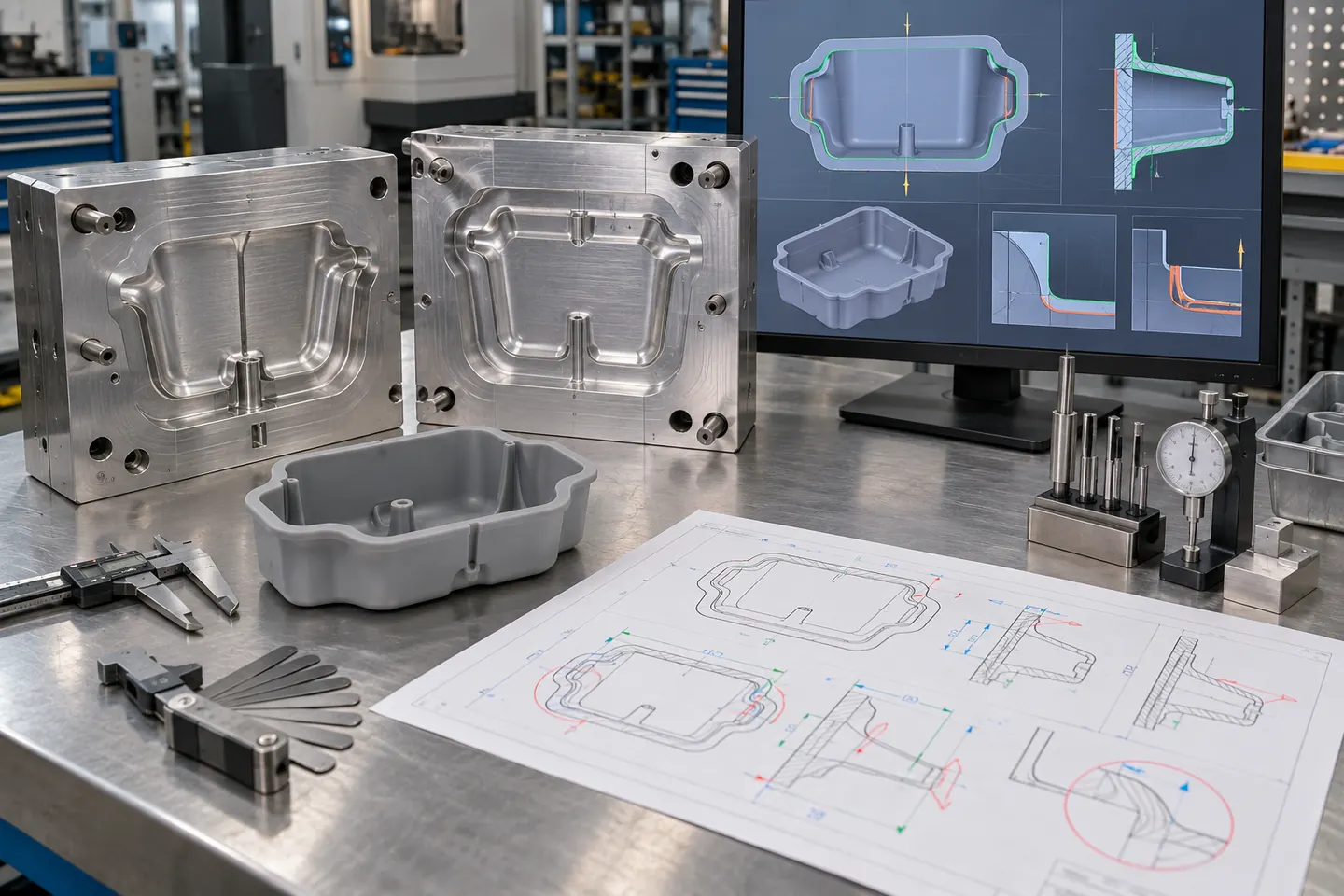
The DFM review connects product function to mold construction. Engineers examine wall transitions, undercuts, shutoffs, parting surfaces, draft where relevant, vents, overflow areas, gates, inserts, demolding direction, trimming access and the dimensions most sensitive to shrinkage or deformation. Comments are tied to drawing features or screenshots so the buyer can see what would change and why.
A useful DFM comment separates a required manufacturability correction from an optional improvement. Required items address conditions that may prevent molding, release, measurement or intended assembly; optional items may improve appearance, tool maintenance, cycle stability or cost. The buyer can then approve the trade-off without assuming every factory suggestion is mandatory or that preserving the original shape has no production consequence.
Naike Silicone records the owner and disposition for each DFM point: accepted, rejected with rationale, revised, pending evidence or deferred to trial. That status list becomes part of the tooling-release package rather than disappearing after a video call. If a decision affects function, claims, packaging or a mating component, the corresponding buyer stakeholder must close it before the design baseline advances.
Release Tool Design Against One Controlled Baseline
Tool design begins only after the input baseline and open-item list support a controlled direction. The file identifies mold type, cavity count, cavity identification method, insert strategy, steel-safe allowances, split lines, vent and gate concepts, texture status and maintenance-sensitive features. The exact construction depends on part geometry, material route, order volume, required evidence and the buyer's commercial plan.
Before machining release, Naike Silicone aligns the product drawing, mold layout and approval plan. Critical dimensions need datums and measurement methods; functional checks need fixtures or mating parts; appearance requirements need viewing conditions and defect references. A number on a drawing is not fully controlled when different operators can support or measure the flexible part in incompatible ways.
The tooling release record captures the revision being machined and any approved deviations. It also states which features remain provisional, such as final texture, pigment, logo depth or package fit, so a later trial is not judged against a condition the tool was never meant to prove. Authorization to machine does not equal authorization to mass-produce; it only releases the defined tool work.
SECTION 02
Build Trial Evidence and Close Mold Corrections
Close the process, material and mold decisions that determine tooling scope, trial evidence and revision cost.
Run the First Trial as an Engineering Experiment
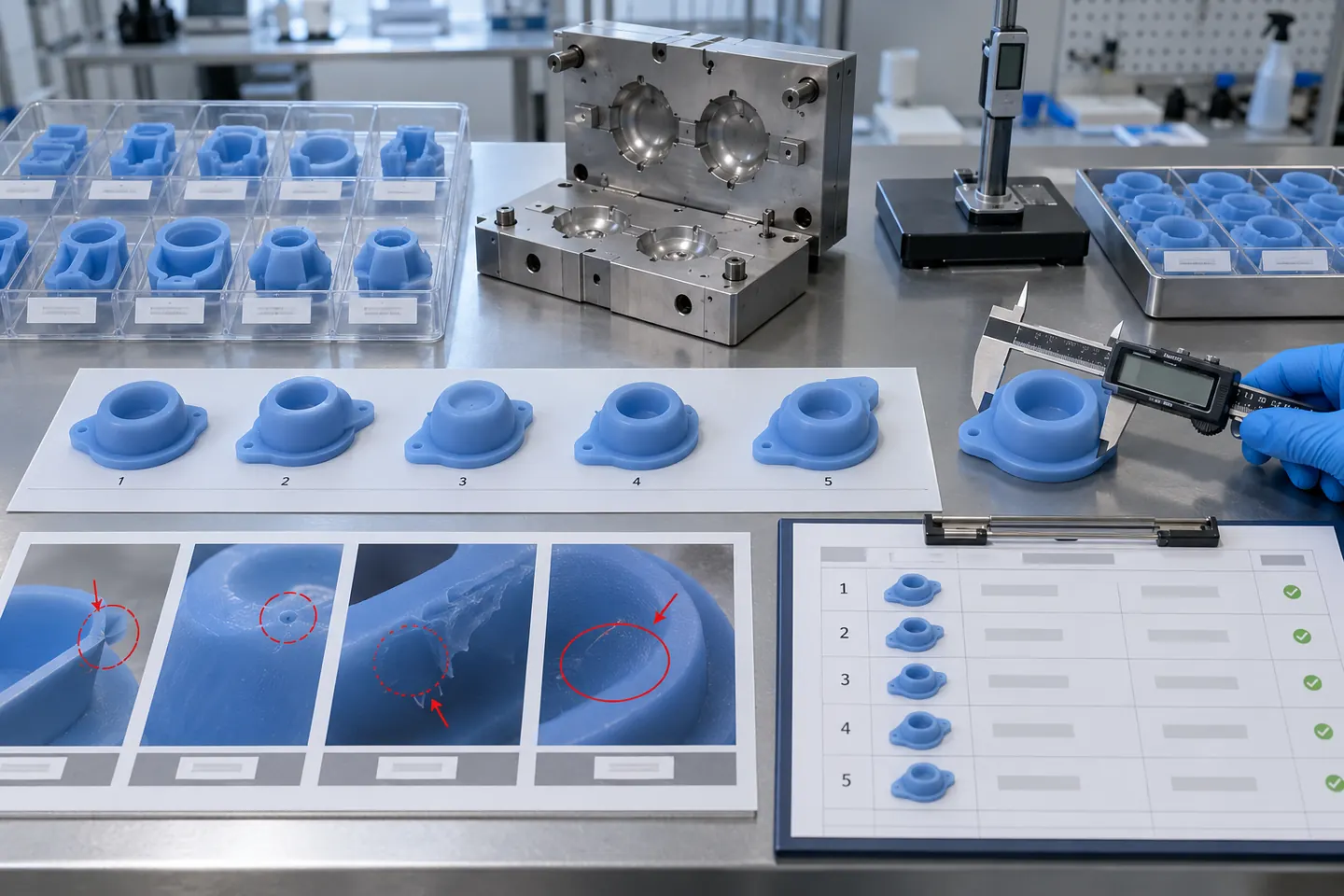
The first mold trial is planned as an engineering experiment, not a presentation event. The team records mold revision, cavity, material, pigment state, process settings, sample sequence and any temporary conditions. Parts are preserved by cavity and trial state so short shots, trapped air, flash, sticking, tearing, fill imbalance or release damage can be traced to a location and condition.
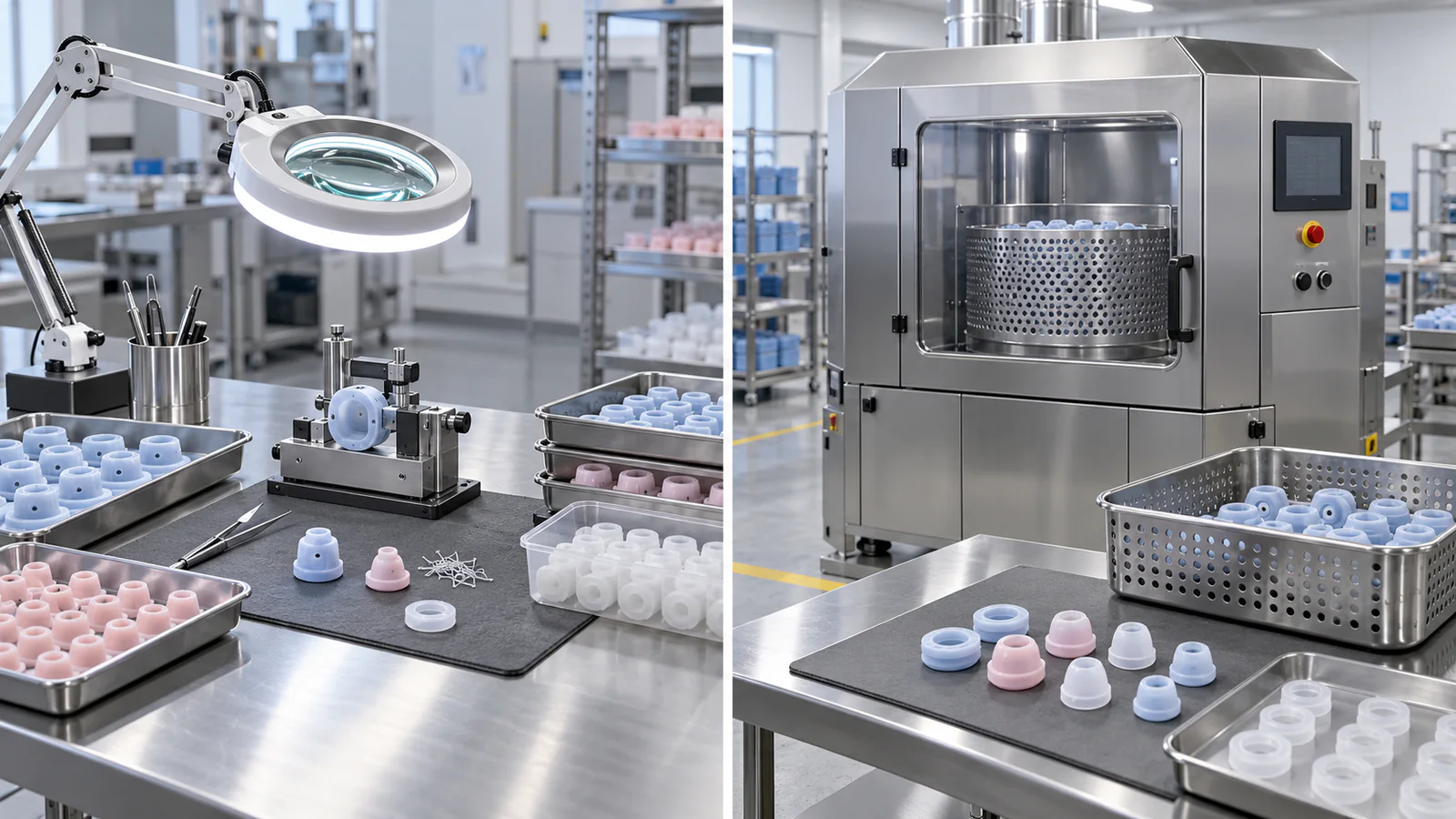
Naike Silicone reviews the untrimmed molding evidence before cosmetic preparation hides useful clues. Gate vestige, vent behavior, overflow, split-line flash and surface marks can show where tool or process correction is needed. Selected attractive pieces may still be photographed for communication, but the decision file also retains the failure pattern and the number of parts inspected.
The trial report states what the round established and what it did not. Basic tool function may be acceptable while critical dimensions, final color, texture, finishing, functional fit or consecutive-cycle consistency remain open. Buyers receive a decision-oriented summary rather than a claim that the mold is approved merely because it produced a recognizable silicone part.
Convert Findings Into Numbered Mold Corrections
Every trial finding is converted into a numbered correction or investigation item. The record names the affected feature, cavity, observed condition, proposed direction, responsible owner, due point and evidence required for closure. Vague requests such as make it tighter or improve the surface are translated into a dimension, boundary sample, functional method or explicit design decision before steel is changed.
Tool corrections are evaluated for reversibility and interaction. Removing steel may enlarge or deepen a feature but can be difficult to reverse, while adding material may require welding, a replacement insert or a revised component. A vent change can alter flash, a gate adjustment can change fill balance, and a local thickness revision can affect shrinkage or release elsewhere, so linked items are reviewed together.
Naike Silicone updates the controlled drawing or mold record when the agreed correction changes the baseline. Before-and-after photographs, dimensions and trial results stay with the same item, while unresolved points remain visible. This prevents a new sample round from resetting the discussion and gives procurement a traceable reason for additional tooling work, timing or quotation changes.
Verify Corrections With Comparable Evidence
Correction verification uses comparable evidence. The same datum, fixture, conditioning period, instrument and functional method should be used unless the method itself was identified as unsuitable and formally revised. If material, color or processing conditions change, the report distinguishes that variable from the physical tool correction rather than attributing every improvement to machining.
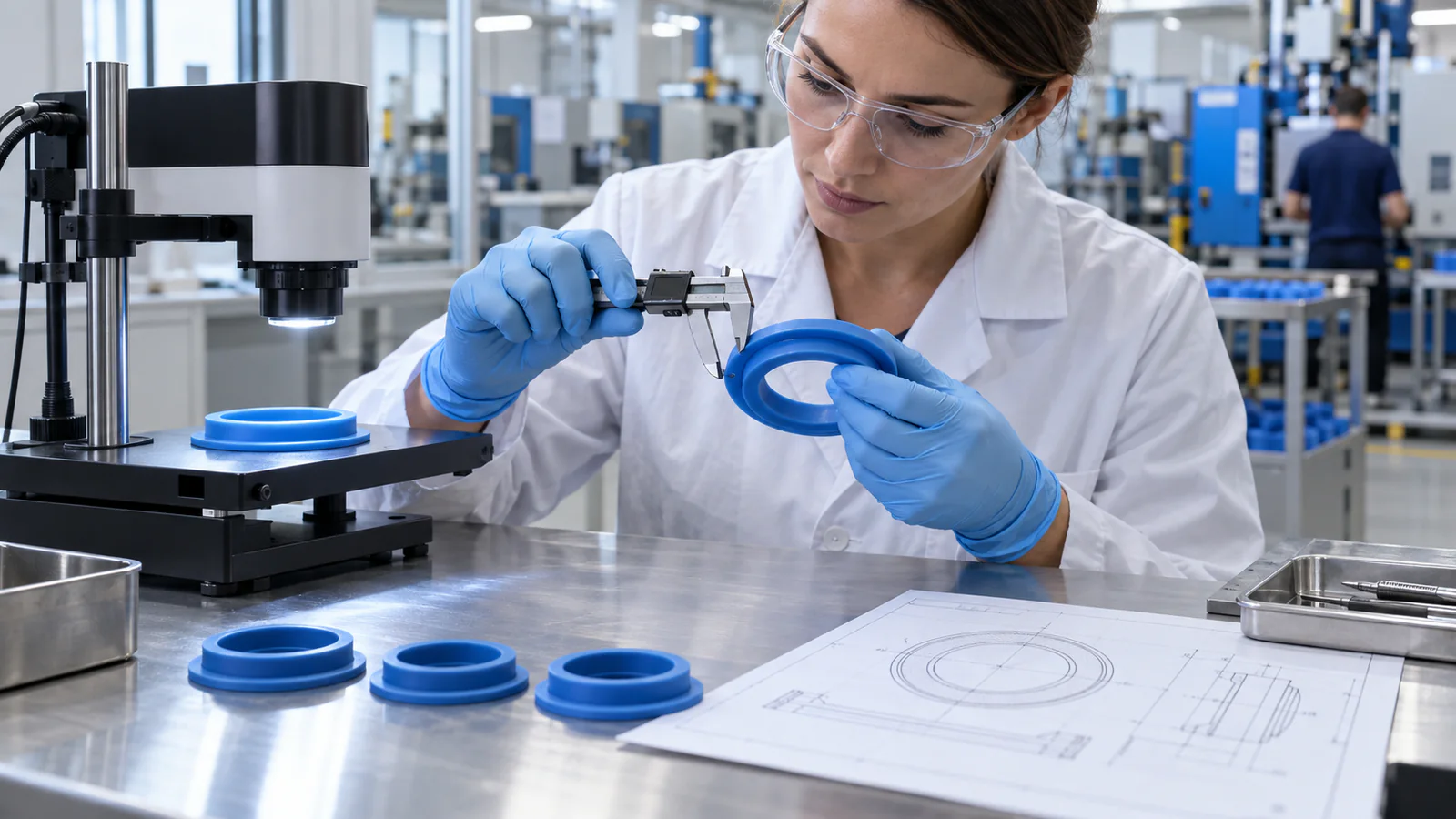
Critical dimensions are reviewed across active cavities, not only on the easiest sample. Flexible silicone can stretch, settle or distort under contact pressure, and readings can move with temperature and time after molding. ISO 23529 provides relevant principles for preparation, storage and conditioning of rubber test pieces, while Naike Silicone and the buyer still need a finished-part method suited to the actual geometry.
Functional evidence uses identified mating parts, fixtures and use conditions. Fit, seal, suction, flex, folding, lid engagement, pull or release results are recorded against an agreed acceptance limit and the revision of every interface. A passing sample closes only the requirement it was designed to test; it does not authorize unrelated durability, regulatory or universal-performance claims.
SECTION 03
Approve the Production Baseline and Handover Package
Treat each mold trial as a measured engineering gate rather than a visual sample-selection exercise.
Build a Production-Representative Approval Baseline
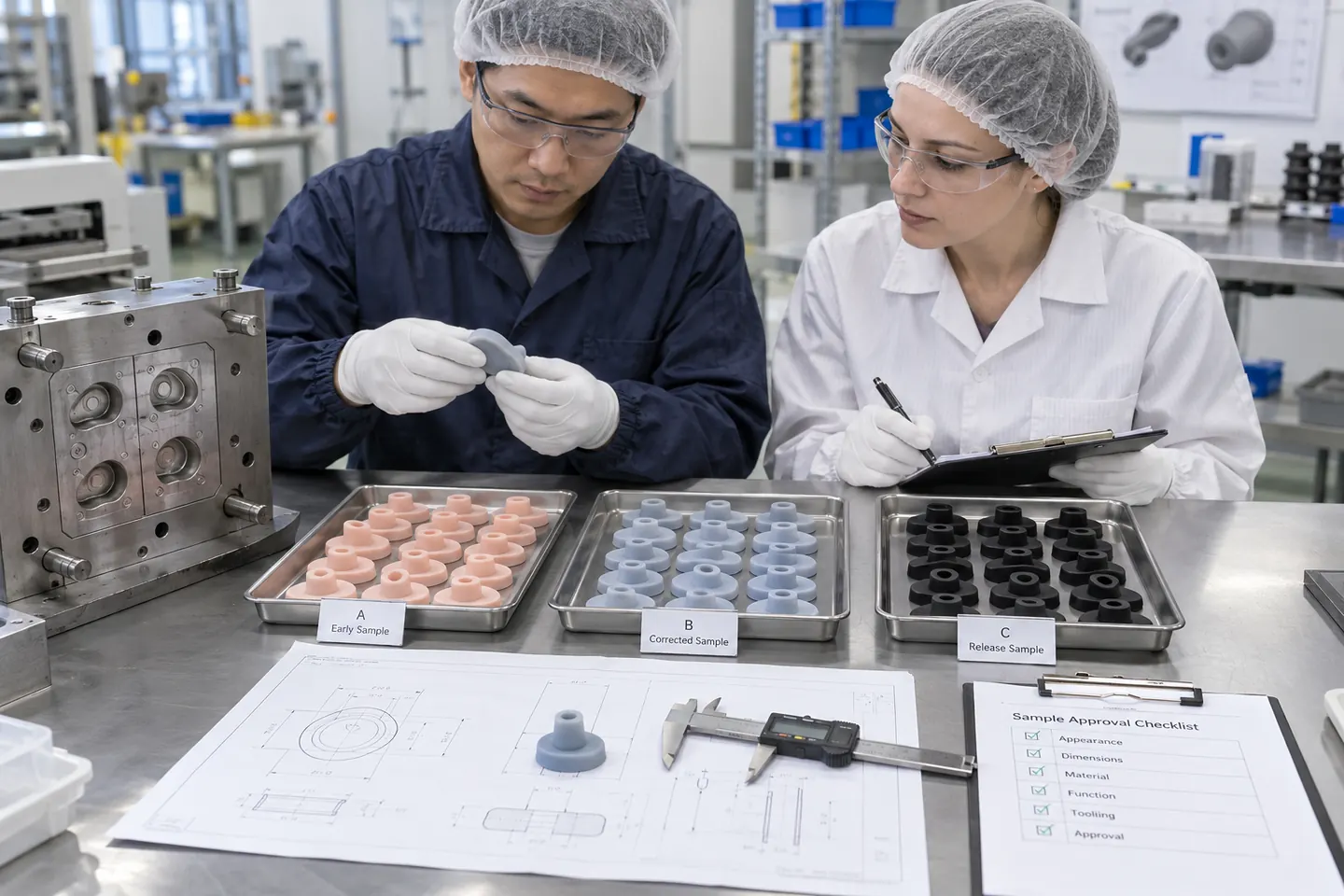
A production-approval round uses the intended mold revision, compound, pigment direction, finish, active cavities, trimming route and inspection method. The team evaluates consecutive output rather than a hand-selected courier sample, with the quantity based on cavity count, product risk and the decisions still open. Part weight, dimensions, appearance, cavity balance and functional results may all contribute to the baseline.
The buyer receives a release matrix showing each requirement, evidence reference and disposition. Items can be approved, rejected, conditionally accepted with a written deviation, or left open with an owner and next gate. Critical open points cannot be hidden inside general sample approval, while low-risk observations may proceed only when their consequence and follow-up are explicitly authorized.
ISO 3302-1 offers shared terminology for dimensional tolerances and flash classes for molded rubber products, but it does not select the correct tolerance or approve this silicone SKU. Product-specific limits still need to reflect function, measurement feasibility, mold capability and commercial risk. The approved matrix therefore links any standard reference to the actual drawing, sample and method.
Create Golden Samples and the Inspection Plan
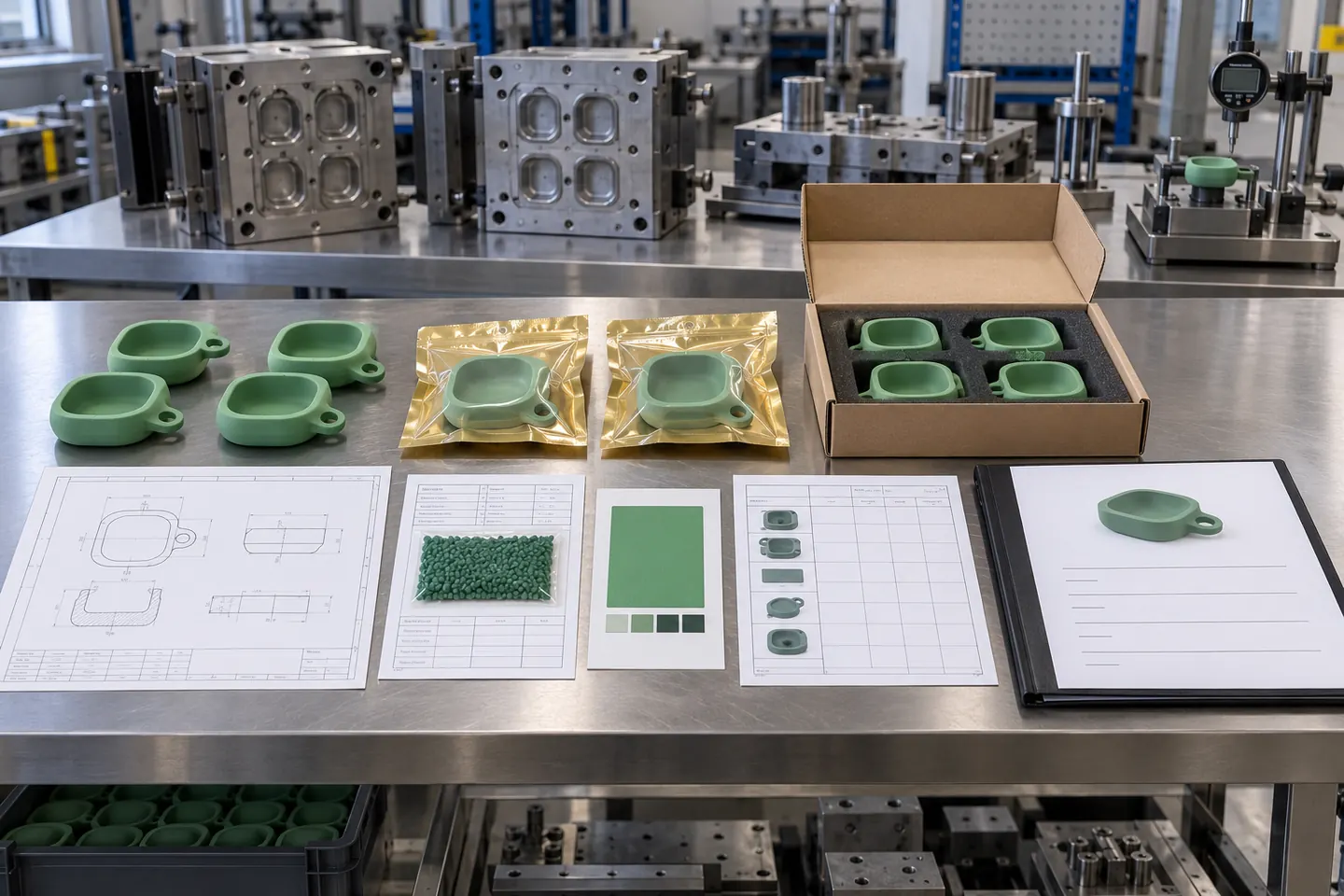
Golden samples are created after the drawing, material, color, finish, dimensions, function and deviations agree. Each retained sample carries product and revision identity, mold or cavity reference where necessary, approval date and protection requirements. Factory, buyer and inspection references are controlled so later handling, light exposure, dust or deformation does not silently change the comparison standard.
The golden sample does not replace numerical specifications, methods or defect-boundary samples. It represents the accepted overall product, while the drawing controls geometry and dedicated references define near-limit visual or trimming conditions more precisely. When records conflict, the release hierarchy identifies which document governs and requires the inconsistent item to be corrected.
Naike Silicone connects the approved product with an inspection plan covering first-off checks, in-process frequency, cavity rotation, critical dimensions, appearance, function, final sampling and escalation. ISO 2859-1 can support lot-by-lot attribute-sampling schemes, but the buyer and factory must still define defect severity, lot formation and any critical features requiring stronger control.
Hand the Mold From Toolroom to Production
The mold-shop handover package allows production to reproduce the approved condition without relying on memory. It identifies mold revision, inserts, setup requirements, approved material and color direction, process-window baseline, trimming instruction, fixtures, inspection points, retained samples and open preventive actions. Production and quality owners confirm receipt before the tool is treated as released.
A controlled pilot may be used when handling, cavity balance, finishing, color changeover, packaging or inspection agreement cannot be judged from a smaller trial. The pilot lot is identified, its saleable status is defined, and observations are routed back to engineering or quality. Pilot quantity and timing depend on the risk and current schedule rather than a universal factory rule.
Production approval is complete only when required evidence and responsible signatures refer to the same SKU revision. The tool can be mechanically ready while material, artwork, packaging or market documentation remains pending, so commercial release is separated from tool completion. This distinction helps the buyer avoid committing launch inventory on the strength of an incomplete engineering milestone.
SECTION 04
Protect the Released Mold Through Change Control
Release production only when drawings, golden samples, inspection records and change authority describe the same revision.
Protect Repeat Orders Through Change Control
After release, Naike Silicone preserves the baseline through change control and repeat-order review. Proposed changes to mold steel, inserts, vents, gates, texture, compound, hardness, pigment, cure route, trimming, fixtures, packaging or production location are assessed for their effect on approved evidence. The responsible owner chooses which drawing, measurement, functional or appearance checks must be repeated.
First-production and repeat-order records are compared with the approved references. Cavity findings, critical dimensions, flash, rework, functional results, rejects and complaints can reveal drift before it becomes a shipment dispute. When a trend approaches a limit, the appropriate response is investigation and controlled correction, not silent widening of the acceptance boundary.
For a new inquiry, buyers should send the current CAD or sample, intended use, critical interfaces, target material and color, forecast, package concept, validation needs and launch sequence. Naike Silicone can then propose a conditional DFM, tooling, trial and approval route. Final tooling cost, correction allowance, MOQ, unit price, capacity and lead time remain dependent on the approved scope and current production situation.
ACTION FRAMEWORK
Buyer Checklist Before Commercial Approval
Use this checklist as a meeting agenda. It is intentionally concise so the team can identify missing evidence without replacing its own quality, legal or supplier-management procedure.
| Check | Question | Why It Matters |
|---|---|---|
| Input baseline | Are CAD, use, interfaces, material, color, forecast and package assumptions identified? | An incomplete brief lets provisional information become an unintended tooling requirement. |
| DFM disposition | Does every comment show location, rationale, owner and closure status? | Untracked decisions can disappear before machining and reappear as expensive corrections. |
| Tool release | Are mold layout, cavities, inserts, steel-safe features and provisional items controlled? | Authorization to machine must refer to one revision and must not be mistaken for production approval. |
| Trial identity | Can every sample be traced to mold revision, cavity, material and trial condition? | Selected or mixed samples can hide imbalance and prevent targeted correction. |
| Correction evidence | Are before-and-after results comparable by method, fixture and configuration? | A correction cannot be closed when multiple variables changed without control. |
| Release matrix | Are all requirements approved, rejected, conditionally accepted or visibly open? | A general sample signature can conceal critical unresolved items. |
| Golden samples | Are retained references identified, protected and subordinate to controlled specifications? | A loose sample can drift or conflict with the drawing and inspection method. |
| Handover and change | Are production instructions, owners and reapproval triggers documented? | A released mold can still drift when steel, material, finishing, fixtures or location change. |
NEXT READING
Continue the Supplier and Product Review
These internal resources connect the guide with Naike Silicone product, factory, customization and inquiry pages. Open the route that matches the next decision in your project.
Define what T0, T1 and T2 silicone mold samples approve
Use define what t0, t1 and t2 silicone mold samples approve to gather the next level of product, manufacturing or commercial information.
Open internal resource →Set silicone flash and trim acceptance
Use set silicone flash and trim acceptance to gather the next level of product, manufacturing or commercial information.
Open internal resource →Prepare a silicone product DFM checklist
Use prepare a silicone product dfm checklist to gather the next level of product, manufacturing or commercial information.
Open internal resource →Review the Naike Silicone OEM and ODM process
Use review the naike silicone oem and odm process to gather the next level of product, manufacturing or commercial information.
Open internal resource →Request a mold-development review
Use request a mold-development review to gather the next level of product, manufacturing or commercial information.
Open internal resource →Explore all silicone product categories
Use explore all silicone product categories to gather the next level of product, manufacturing or commercial information.
Open internal resource →PRIMARY REFERENCES
Authoritative External Sources
The sources below are official primary references. Applicability depends on the product, intended use and destination market. Buyers should obtain qualified advice for final legal or regulatory decisions.
ISO 23529:2016 Rubber Test-Piece Preparation
Official ISO procedures for preparing, storing and conditioning rubber test pieces and the interval between forming and testing.
ISO 3302-1:2014 Rubber Product Dimensional Tolerances
Official ISO page for dimensional tolerance classes and flash-classification context for solid molded rubber products; it does not select a finishing route or approve a product-specific silicone edge.
ISO 2859-1:2026 AQL Sampling for Lot-by-Lot Inspection
Official ISO page for the current sampling schemes indexed by acceptance quality limit for lot-by-lot inspection by attributes.
BUYER QUESTIONS
Frequently Asked Questions
What does Naike Silicone need before starting a mold DFM review?
Provide the current CAD or reference sample, intended use, mating components, critical dimensions and functions, material and color direction, destination market, forecast, packaging concept and decision owners. Any provisional input should be marked as an assumption so DFM conclusions remain tied to the correct revision and scope.
Does DFM approval mean the silicone mold is ready for production?
No. DFM approval releases an agreed design direction for tool work; it does not prove molded dimensions, function, appearance, cavity balance or production repeatability. Those decisions require trial samples, documented corrections, representative evidence, retained references, an inspection plan and authorized production release.
How are silicone mold corrections approved?
Each correction receives an issue number, location, proposed direction, owner and closure evidence. Steel-removal and steel-addition consequences are reviewed before machining, linked drawings or mold records are revised, and the next sample round uses comparable measurements or functional methods to confirm whether the item is closed.
When does Naike Silicone create the golden sample?
The golden sample is created only after the applicable drawing, mold revision, compound, color, finish, dimensions, function and deviations agree. It is identified, signed or otherwise controlled, protected in storage and linked to the inspection plan; it does not replace numerical limits or defect-boundary samples.
Can production start while some approval items remain open?
Only when the open items are noncritical, their consequence is understood, and authorized owners document a conditional release, containment and closure point. Critical safety, fit, function, compliance or uncontrolled specification issues should not be hidden inside a general sample approval or commercial deadline.
What changes require mold or product reapproval after release?
Changes to mold steel, inserts, vents, gates, texture, material, hardness, pigment, cure route, trimming, fixtures, mating parts, packaging or production location require an impact review. The scope may be targeted rather than a complete restart, but the decision and repeated evidence must be documented.
Editorial and Scope Note
Conclusion: Naike Silicone Mold Approval Process
Move from buyer research to a controlled supplier brief
Naike Silicone moves a mold from DFM to production approval by keeping the product input, engineering decisions, tool revision, trial evidence, corrections, golden samples, inspection plan and authorized handover in one controlled chain. Approval depth, tooling cost, correction allowance, MOQ, unit price, capacity and lead time remain conditional on geometry, material, cavity strategy, validation scope and the current production schedule. Share the current CAD or sample, critical interfaces, forecast and launch plan to request a project-specific DFM and mold-approval route.
This factory-insider guide supports sourcing preparation and supplier discussion; it does not replace product-specific engineering, laboratory, regulatory, legal or commercial review for the destination market.