MATERIALS, QUALITY & COMPLIANCE
Frame-Supported vs All-Silicone Loaf Pans: Buyer Comparison
Compare frame-supported and all-silicone loaf pans for bakery and retail sourcing: handling, release, cleaning, durability, tooling, evidence and packout.
DIRECT ANSWER
What B2B Buyers Need to Know
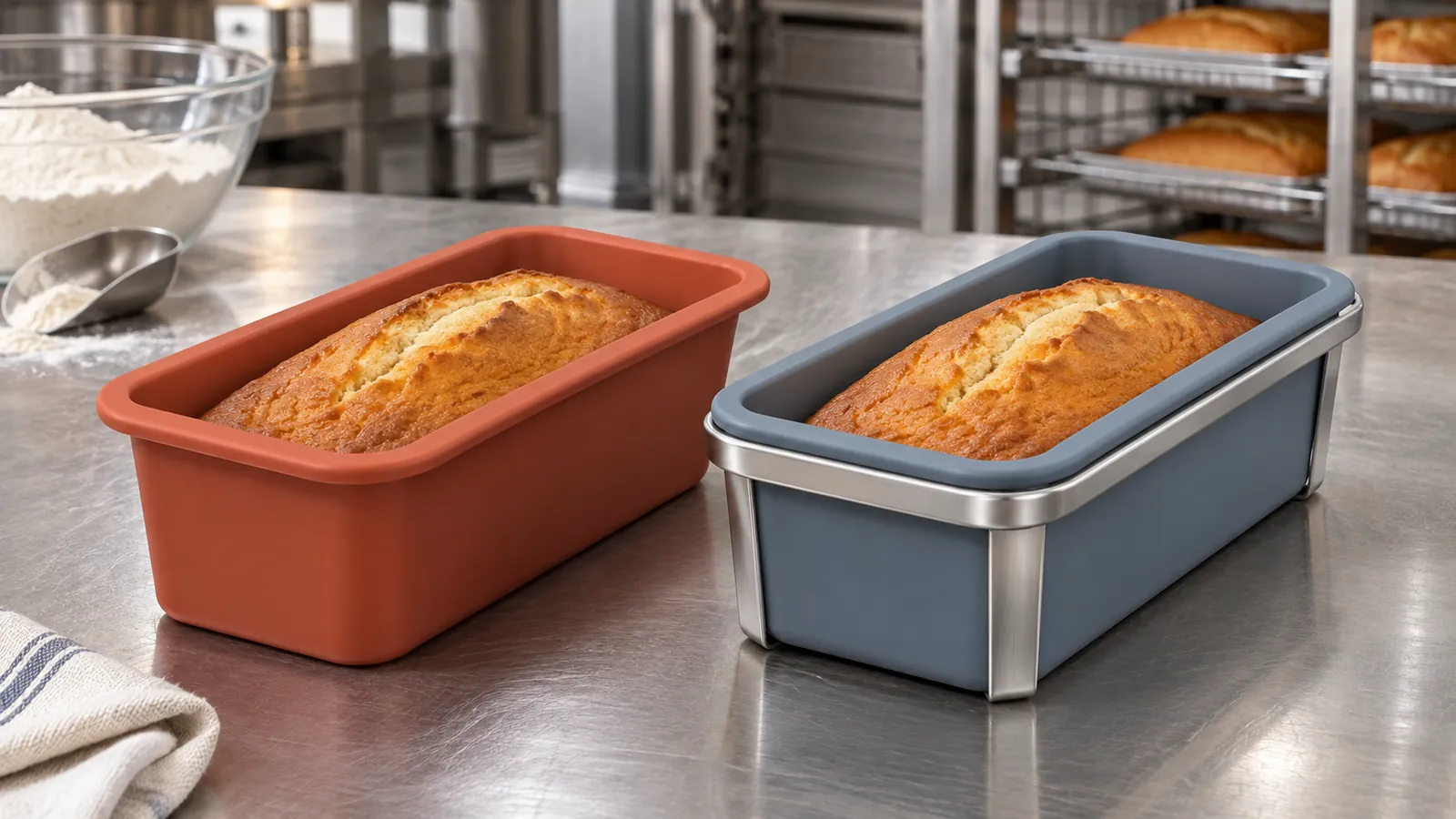
For frame-supported vs all-silicone loaf pans, choose the framed route when matched loaded-carry trials show the support solves a real handling problem without unacceptable cleaning or assembly risk. Choose the one-piece route when its molded rim and base remain stable under the intended fill and transfer method. Test both with the same loaf, oven, wash routine and packed SKU before approving claims.
This guide is written for B2B importers, distributors, retailers, private-label brands, product developers, quality teams and sourcing managers. It provides a decision framework rather than legal advice or a universal specification. Product classification, use conditions and destination market should be confirmed before final testing, labelling or compliance decisions.
Key Takeaways
- Compare equal useful cavity volume and the same batter, fill level and tray.
- Observe loaded carrying and hot-touch risks, not empty-pan stiffness alone.
- Validate loaf release at corners using the intended cooling and demolding sequence.
- Treat a frame as an additional material and cleaning interface requiring evidence.
- Quote tooling, component supply, packout and testing on the same scope.
- Freeze the chosen construction with retained samples and change triggers.
Frame-Supported vs All-Silicone Loaf Pan Decision Matrix
These are design tendencies to test, not guaranteed outcomes. Compare the same cavity volume and use conditions on identified samples.
| Buyer decision | Frame-supported route | All-silicone route |
|---|---|---|
| Loaded carrying | Support may reduce wall deformation; check seating and hot-touch zones | Rim and base must be tested at real fill mass and transfer distance |
| Loaf release | Frame removal or wall access may change the release sequence | Wall flex may aid release but still needs recipe-specific trials |
| Cleaning | Inspect the frame interface and separation or assembly method | Inspect ribs, rim folds and base corners for residue access |
| Durability | Check frame distortion, seating and silicone contact wear | Check rim set, grip tearing and base distortion |
| Commercial | Account for frame supply, assembly, packing and replacement | Account for molded support features, material use and shape protection |
SECTION 01
Define the Loaf and the Two Construction Routes
Define the intended use, market and risk assumptions before choosing test methods or requesting supplier documents.
Define the buyer use case for frame-supported vs all-silicone loaf pans
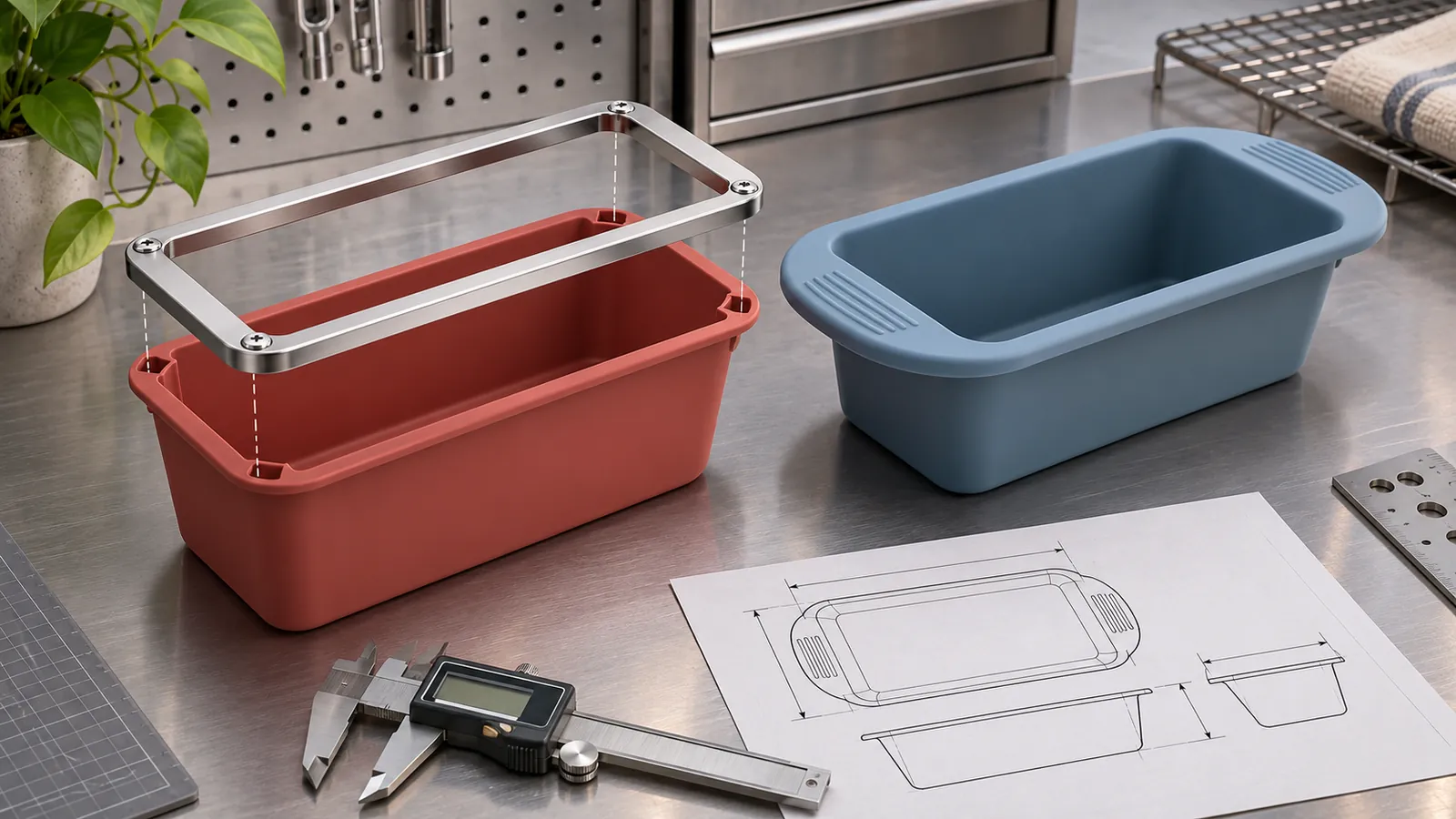
A frame-supported loaf pan and an all-silicone loaf pan can look interchangeable in a catalog thumbnail, yet the buyer is purchasing different handling systems. The relevant question is not which construction feels more premium on a desk. It is whether the intended operator can fill, carry, bake, release, clean and store the pan consistently with the recipe and equipment actually used. We begin by writing down loaf dimensions, batter mass, rack layout, operator sequence and the complete retail or professional selling unit before comparing samples.
In our factory reviews, the first misleading comparison is often an empty-pan flex demonstration. An unsupported pan may flex more by design, while the framed pan may owe its carrying stiffness to an insert that is removed for cleaning. Neither empty observation predicts how a filled loaf moves from preparation bench to oven, or how a cooled loaf releases at the corners. Buyers should photograph both pans under the same load and record the handling steps, not assign a winner from a single squeeze test.
Map the frame interface
A frame-supported design normally needs a defined relationship between the silicone body and its support member. The frame may be removable, captured, or integrated in another way; those are different products with different interfaces. State which components remain together during baking, which can be separated, and whether the user is expected to touch the frame while hot. If the quote says only 'silicone loaf pan with steel frame,' the buyer still lacks the construction needed to assess cleaning, assembly and replacement risk.
The all-silicone alternative is not automatically a single simple shape. A thickened lip, external ribs, broad base or localized grip zones can be molded to improve handling, but each feature affects tool design, material use and release. The factory should show the proposed cross-section at the rim, long wall and base corner, then explain how the wall stays supported at the defined fill level. Keep the comparison at equal useful cavity volume; a smaller all-silicone pan can appear stiffer simply because it carries less batter.
Keep cavity volume comparable
Define the actual loaf rather than borrowing a pan size from a retail listing. A batter that rises sharply, a dense dough and a chilled dessert place different demands on wall support, venting, release and cooling. Record target fill mass or volume, maximum fill line, expected expansion, pan orientation and whether the customer bakes on a sheet tray. Those conditions become the common test protocol for both construction routes and prevent a supplier from choosing a favorable demonstration that does not match the buyer's product.
SECTION 02
Compare Handling, Release and Heat Exposure
Match every claim and report to the correct material, finished SKU, sampling condition and current revision.
Test loaded transfer
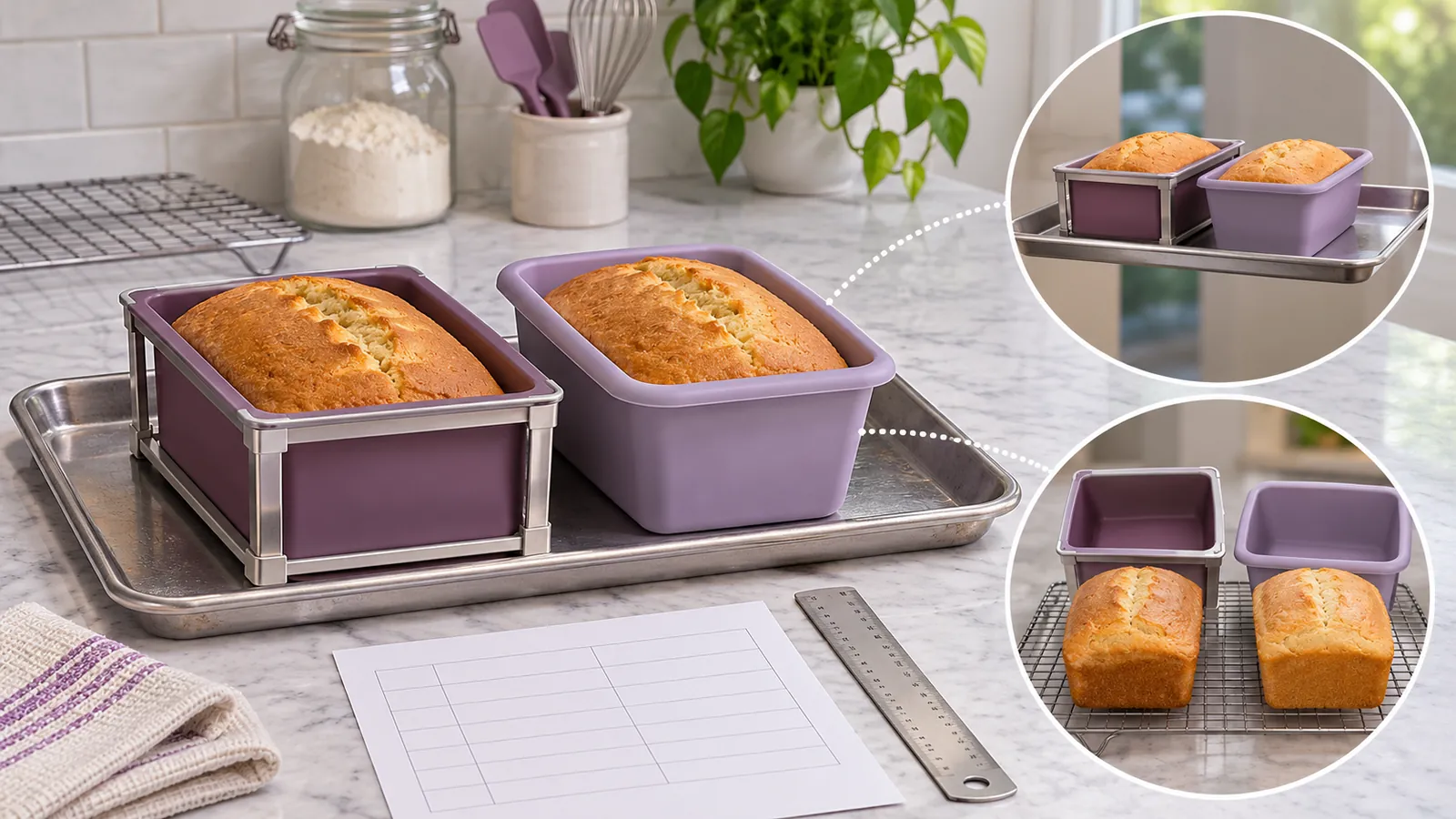
Carrying stability is the clearest structural trade-off, but it still needs an agreed observation method. Fill each candidate to the same mass with the same representative batter or a justified surrogate, lift it using the intended grip points and transfer it across the actual bench-to-rack distance. Record wall bow, rim twist, slosh, operator contact and any need for a secondary tray. A support frame can reduce deformation in one configuration, while a well-designed all-silicone rim may be adequate when a sheet tray is always used.
Do not turn that observation into a universal safety or load claim. A rigid perimeter may create a hot-touch point, a detachable member may shift if not fully seated, and a soft body may sag when lifted from an unintended location. Mark permitted handling zones on the sample and care draft, then check whether ordinary users follow them without instruction. If the retail channel expects a novice baker to lift a fully loaded pan bare, the validation should reflect that foreseeable behavior and its failure boundary.
Check demolding sequence
Demolding favors different mechanisms. A flexible all-silicone wall may let the operator peel away from the loaf, while a frame-supported wall may require removal of the frame or a different release sequence. The buyer should agree whether the loaf is removed warm or cool, whether it is inverted, and how much sidewall flex is acceptable without tearing the crumb. Track corner sticking, surface damage and time to release on several cycles, not only one presentation loaf chosen by the supplier.
Corner geometry deserves separate attention because the base-wall transition can trap batter, create a heavy baked edge or leave residue after release. Compare the same internal radii and surface finish across both candidates where possible, then document any unavoidable difference. If the frame changes how the wall is pulled, record the sequence used to separate the components and remove the loaf. A visually clean loaf from one careful operator does not prove that the design will perform under a bakery's ordinary shift routine.
Define heat exposure
Heat exposure is not a single material label. The intended oven program, rack position, preheat practice, baking duration, loaded tray and cleaning cycle all belong in the review, and a support member may have its own material and finish limitations. Ask the supplier to identify every component, including any metal, coating or fastening detail, rather than letting a silicone compound document stand for the assembly. The final use instructions and any temperature language must follow the approved construction and supporting evidence.
SECTION 03
Validate Cleaning, Durability and Food-Contact Scope
Build production checks around critical characteristics that can be measured, recorded and investigated by lot.
Inspect cleaning access
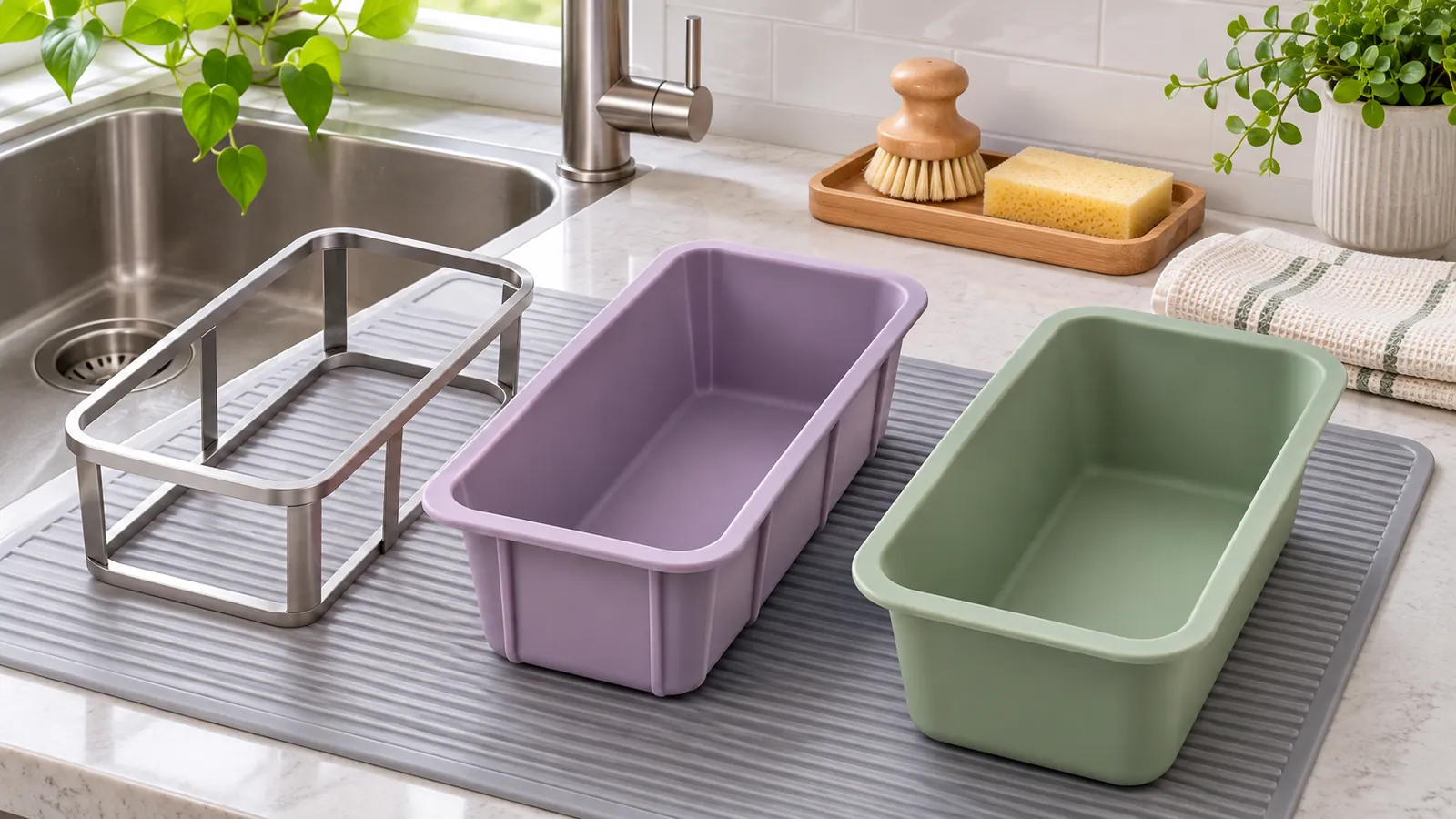
A frame creates an interface that needs a cleaning decision. If removable, the buyer must specify whether users will separate it after every bake, how the silicone edge is exposed, and how both components are dried before storage. If permanently captured, ask how food residue or wash water can be inspected at the boundary. An all-silicone pan avoids a second component but can still have deep external ribs or folded corners that collect residue if the geometry is not designed for access.
Observe cleaning with the real loaf recipe, including oils or sweet glaze if those are expected, and use the intended household or professional wash method. Compare residue at corners, under the rim, at frame contact and on any textured zones after a defined wash and dry sequence. A claim such as 'dishwasher safe' needs the relevant machine, detergent, rack position and cycle conditions; it should not be copied from an unrelated compound sheet. Keep the care instruction consistent with the validated assembly and destination-market requirements.
Assess repeated-use damage
Frame design also changes the failure map over repeated use. Look for frame distortion, loose seating, exposed edges, silicone abrasion at contact points and changes in removal force after repeated assembly. On an all-silicone pan, watch for permanent rim distortion, tearing at grip zones and base deformation after loaded storage. Neither route is intrinsically more durable without a cycle definition, sample count, failure criteria and evidence.
A useful comparison keeps failure modes separate. A slight cosmetic waviness may be acceptable for a bakery back-of-house pan but not for a premium retail gift set; a loose frame may be unacceptable in either channel if it affects handling. Record what constitutes a defect, when it is measured and who can authorize a deviation. If the design changes after a failed trial, repeat the affected test on the new revision instead of treating a corrected rendering as evidence that the original problem is closed.
Separate regulatory and mechanical evidence
Material evidence needs to match the finished article and the intended food-contact use. A silicone formulation, pigment and surface finish can change the evidentiary scope, while a frame may introduce another material that must be assessed for its actual contact or foreseeable contact role. The European Commission's food-contact overview and FDA's food-type and condition-of-use framework are useful starting points, not certificates for a specific pan. Ask for the exact sample identity, test conditions and destination-market interpretation before approving claims or packaging copy.
Mechanical performance and food-contact status are different files. A framed pan can pass a migration review yet fail a loaded-carry test; an all-silicone pan can demold well yet lack the evidence needed for a proposed market claim. The buyer should link both files to the same final drawing, color and compound revision so procurement cannot mix a favorable result from one candidate with a different production item. Keep any untested variants out of the approved SKU list until their change impact is reviewed.
SECTION 04
Approve Tooling, Packout and Repeat-Order Controls
Maintain an evidence file that remains usable when a material, color, process, supplier or destination market changes.
Compare packed selling units
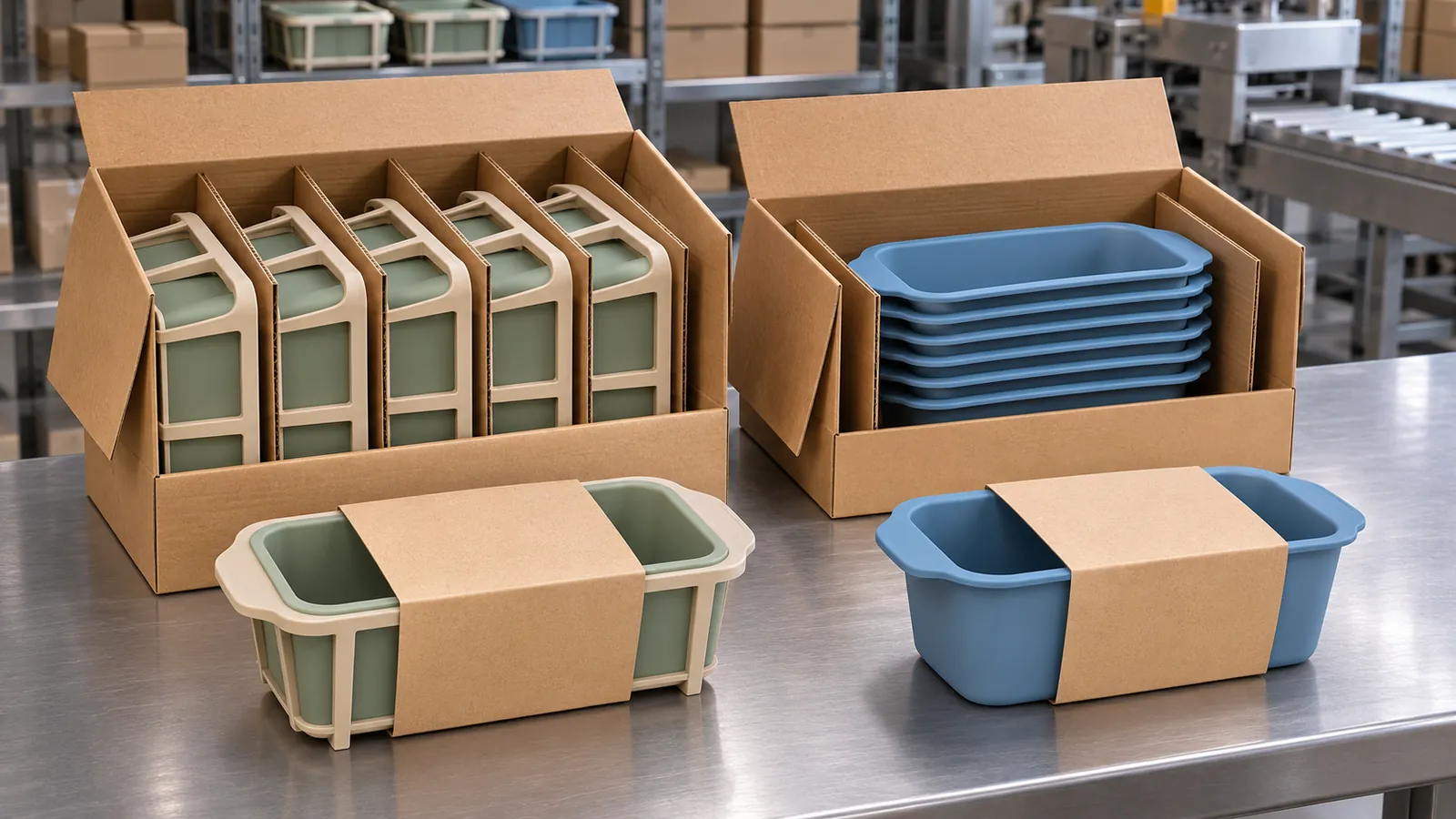
The complete selling unit changes the economics. A frame-supported pan can require component counting, assembly instructions, protective separators and a different carton depth, while an all-silicone pan may nest or fold differently but need shape protection to prevent deformation. Compare the physical packed samples, not just unit ex-factory price. Record gross pack dimensions, units per master carton, care insert, barcode location and whether users must assemble or remove a component before use.
Normalize tooling and MOQ
Tooling quotations need to identify what is being tooled and owned. An all-silicone pan may have one molded body with complex rim and base features; a framed design may need a silicone tool plus a formed, welded or otherwise manufactured support and an assembly fixture. Ask which correction rounds are included, what each tool produces, and whether the buyer can replace a frame or body independently. Keep drawings and golden samples for every component, not only the assembled catalog image.
MOQ and lead time should be compared on the approved bill of materials. A metal frame can introduce a separate supplier or minimum batch, while added silicone ribs can change molding cycle and material usage; packaging can be another bottleneck. Request a quotation that separates tooling, samples, finished unit, packout and testing, with assumptions for target volume and color mix. A headline lead time without component availability, buyer approval time and production-slot conditions is not a release-ready schedule.
Release repeat orders by revision
The selection meeting should end with a controlled decision, not a preference for the pan that feels firmer in a showroom. Put the two candidates against the same batter, use sequence, oven, wash method, packaging channel and destination market, then list which results are measured, which are observed and which remain assumptions. Approve a route only when the open items have owners and a date to close. Where evidence is inconclusive, a limited controlled trial may be more honest than a broad performance claim.
For repeat orders, compare first-off parts with retained references for cavity dimensions, rim behavior, frame fit where present, color, surface and packed configuration. A changed frame supplier, compound, pigment, rim thickness or carton can affect the approved result even when the marketing name is unchanged. Keep a change trigger in the purchase order and require a documented impact review before substitutions. That discipline lets the brand replenish the right loaf pan, not merely another pan with a similar photograph.
ACTION FRAMEWORK
Buyer Checklist Before Commercial Approval
Use this checklist as a meeting agenda. It is intentionally concise so the team can identify missing evidence without replacing its own quality, legal or supplier-management procedure.
| Check | Question | Why It Matters |
|---|---|---|
| Common baseline | Are the cavity, recipe, fill mass and oven conditions identical? | Different test inputs invalidate a construction comparison. |
| Handling | Who lifts the filled pan, from which grip and with what tray? | Empty-pan stiffness does not predict a loaded transfer. |
| Release | When and how is the loaf removed, and what counts as damage? | Flex and frame removal affect real bakery throughput. |
| Cleaning | Can every frame contact, rib and corner be washed and inspected? | An interface or deep feature may retain residue. |
| Evidence | Do records cover the exact compound, frame, color, food and market? | Generic material statements do not approve a finished pan. |
| Pack and quote | Are tooling, components, packout and validation in one quotation? | Headline unit prices can hide different commercial scopes. |
NEXT READING
Continue the Supplier and Product Review
These internal resources connect the guide with Naike Silicone product, factory, customization and inquiry pages. Open the route that matches the next decision in your project.
Explore silicone kitchen products
Use explore silicone kitchen products to gather the next level of product, manufacturing or commercial information.
Open internal resource →Review the 12-cavity silicone muffin pan
Use review the 12-cavity silicone muffin pan to gather the next level of product, manufacturing or commercial information.
Open internal resource →Compare reinforced and unreinforced pastry mats
Use compare reinforced and unreinforced pastry mats to gather the next level of product, manufacturing or commercial information.
Open internal resource →Review repeated dishwasher validation
Use review repeated dishwasher validation to gather the next level of product, manufacturing or commercial information.
Open internal resource →Review food-contact testing by market
Use review food-contact testing by market to gather the next level of product, manufacturing or commercial information.
Open internal resource →Review quality-control capabilities
Use review quality-control capabilities to gather the next level of product, manufacturing or commercial information.
Open internal resource →Request a loaf-pan construction review
Use request a loaf-pan construction review to gather the next level of product, manufacturing or commercial information.
Open internal resource →PRIMARY REFERENCES
Authoritative External Sources
The sources below are official primary references. Applicability depends on the product, intended use and destination market. Buyers should obtain qualified advice for final legal or regulatory decisions.
European Commission: Food Contact Materials
Official EU overview of food-contact material requirements; finished-product applicability depends on market, formulation and intended use.
FDA: Food types and conditions of use
Official FDA framework for food type and use conditions; it does not approve a finished silicone SKU or its mechanical performance.
ISO 188:2023 accelerated ageing and heat resistance
Official ISO method family for accelerated ageing of rubber; it is not a substitute for product-specific dishwasher-cycle validation.
ISO: Quality management principles
Official ISO overview of process-based quality management; it does not certify an individual product or supplier.
BUYER QUESTIONS
Frequently Asked Questions
Is a frame-supported silicone loaf pan always more stable?
Not always. It may improve loaded carrying in a particular geometry, but frame fit, grip, fill mass and use of a secondary tray matter. Compare production-representative samples under the same handling sequence.
Does an all-silicone loaf pan always release bread more easily?
No. Release depends on recipe, cavity geometry, surface, cooling and operator method. A flexible wall can help in some cases, but a matched bake-and-release trial is needed.
Should a support frame be removable for cleaning?
That is a design choice. A removable frame can expose the interface but introduces separation and reassembly steps; a captured frame needs an accessible, inspectable boundary. Validate the intended care routine.
Can one food-contact report cover both constructions?
Do not assume so. Review the exact silicone compound, pigments, finished article, frame contact role, intended foods and destination market before determining the applicable evidence scope.
What should the buyer send for a comparable quotation?
Send a common cavity drawing, target loaf and recipe, fill mass, oven and wash conditions, frame concept, order volume, color, selling-unit pack and destination. Ask each supplier to state exceptions and tooling scope.
How should repeated-use durability be checked?
Define representative bake, demold, wash and storage cycles plus checkpoints for dimensions, rim behavior, frame fit, damage and function. The pass criteria and sample identity must be agreed before testing.
When should the final structure be frozen?
Freeze it after matched trials and packed-sample review, before final tooling and printed claims are released. Any later component or geometry change should trigger an impact assessment and targeted revalidation.
Editorial and Scope Note
Conclusion: Frame-Supported vs All-Silicone Loaf Pans: Guide
Move from buyer research to a controlled supplier brief
Select the structure that passes a matched, product-specific use and evidence review, not the one that appears stiffest in a catalog. Send Naike Silicone the common loaf drawing, recipe and fill mass, oven and wash conditions, destination market, frame concept, target volume and packed-unit requirements for a controlled sample and quotation discussion.
This factory-insider guide supports sourcing preparation and supplier discussion; it does not replace product-specific engineering, laboratory, regulatory, legal or commercial review for the destination market.