PRODUCT SOURCING GUIDES
Private Label Silicone Feeding Set: Silicone Bowl and Plate Set Sourcing for Private-Label Programs
Source a private label silicone feeding set with controlled bowl, plate, color, packaging and approval decisions. Prepare a clearer B2B RFQ with Naike.

DIRECT ANSWER
What B2B Buyers Need to Know
A private label silicone feeding set should be sourced as one retail program, not as unrelated bowls, plates and accessories. From our factory perspective, define the target user, channel, selling unit, capacity, suction expectations, colors, branding and packaging before comparing suppliers. Those decisions show which molds can coordinate, where custom tooling adds useful differentiation and how samples should be approved. MOQ, price, lead time, capacity and performance remain conditional on the final SKU mix, artwork, testing scope and order schedule.
This guide is written for private-label brands, baby-product importers, retailers, distributors, category managers and sourcing teams. It provides a decision framework rather than legal advice or a universal specification. Product classification, use conditions and destination market should be confirmed before final testing, labelling or compliance decisions.
Key Takeaways
- Define the consumer, channel and selling unit before choosing molds or colors.
- Compare existing-mold, hybrid and fully custom routes against real differentiation and launch risk.
- Approve bowl capacity, plate layout, suction behavior and dimensional checkpoints separately.
- Treat color, logo and packaging as controlled parts of the finished SKU architecture.
- State volume by SKU and color because MOQ and unit price depend on the final order configuration.
- Retain a golden sample and revision-controlled file for repeat-order consistency.
Compare Three Buyer Decisions for private label silicone feeding set
Use these decision points to compare supplier responses on the same commercial and technical baseline. Exact requirements depend on product use, market, quantity and development route.
| Decision Area | Buyer Question | Evidence to Review |
|---|---|---|
| Target User, Channel and Retail Price Tier | Decide whether target user, channel and retail price tier creates meaningful differentiation or only adds low-volume SKU complexity. | A launch sheet showing how target user, channel and retail price tier changes the selling unit, margin, inventory and customer proposition. |
| Bowl Capacity and Plate Compartment Architecture | Give bowl capacity and plate compartment architecture a defined role in the assortment, channel and target price architecture before adding variants. | Channel requirements, comparable supplier responses, packaging mockups and a retained reference for bowl capacity and plate compartment architecture. |
| Suction Base Geometry and Table-Surface Conditions | Connect suction base geometry and table-surface conditions with the intended buyer, selling unit, pack format and replenishment plan. | A launch sheet showing how suction base geometry and table-surface conditions changes the selling unit, margin, inventory and customer proposition. |
SECTION 01
Define the Private Label Silicone Feeding Set as a Retail Offer
Begin with the target buyer, channel and assortment role so every specification decision supports a sellable range.
Target User, Channel and Retail Price Tier for private label silicone feeding set
The factory view of “Target User, Channel and Retail Price Tier” begins with the finished selling unit, not an isolated silicone part. Decide whether target user, channel and retail price tier creates meaningful differentiation or only adds low-volume SKU complexity. For this decision, a clear baseline also helps the supplier explain any trade-off instead of silently selecting the easiest manufacturing option.
Before the next project gate, both parties should agree on a launch sheet showing how target user, channel and retail price tier changes the selling unit, margin, inventory and customer proposition. The unresolved exposure is uncontrolled variants of target user, channel and retail price tier can fragment volume and weaken repeat-order economics. Record any deviation separately and prevent it from becoming an undocumented repeat-order precedent.
Bowl Capacity and Plate Compartment Architecture
A category buyer should judge “Bowl Capacity and Plate Compartment Architecture” by the role it plays in the assortment, price architecture and retail channel. Give bowl capacity and plate compartment architecture a defined role in the assortment, channel and target price architecture before adding variants. For this decision, the requirement becomes useful only when it can be converted into a drawing, sample, record or repeatable check.
The evidence package is stronger when it includes channel requirements, comparable supplier responses, packaging mockups and a retained reference for bowl capacity and plate compartment architecture. The unresolved exposure is weak channel assumptions around bowl capacity and plate compartment architecture can make a technically acceptable product commercially unworkable. Carry the approved limit into the inspection instruction rather than leaving it only in meeting notes.
Suction Base Geometry and Table-Surface Conditions
For private-label brands, baby-product importers, retailers, distributors, category managers and sourcing teams, the commercial question behind “Suction Base Geometry and Table-Surface Conditions” is whether it improves sell-through without creating avoidable SKU complexity. Connect suction base geometry and table-surface conditions with the intended buyer, selling unit, pack format and replenishment plan. For this decision, early alignment is less expensive than correcting a mold, replacing printed packaging or sorting finished inventory.
For an audit-ready decision, retain a launch sheet showing how suction base geometry and table-surface conditions changes the selling unit, margin, inventory and customer proposition. The unresolved exposure is selecting suction base geometry and table-surface conditions from appearance alone can hide landed-cost, packaging and replenishment constraints. Retain enough context to distinguish a process correction from a change to the buyer's requirement.

SECTION 02
Specify Bowl and Plate Function Before Supplier Comparison
Translate the range plan into comparable product, packaging and approval evidence before requesting final quotations.
Wall Thickness, Rim Feel and Product Weight
Before a sourcing team adds another product option, “Wall Thickness, Rim Feel and Product Weight” needs a clear buyer, channel and repeat-order purpose. Compare wall thickness, rim feel and product weight across entry, core and premium scenarios instead of reviewing one sample in isolation. For this decision, a named decision owner prevents an open requirement from moving unnoticed into tooling or shipment release.
The buyer's release packet should preserve channel requirements, comparable supplier responses, packaging mockups and a retained reference for wall thickness, rim feel and product weight. The unresolved exposure is undefined assortment logic for wall thickness, rim feel and product weight can multiply inventory without improving the buyer proposition. Reference the applicable drawing and order so evidence from another configuration is not substituted.
Shared Colors and Coordinated Component Strategy
The factory view of “Shared Colors and Coordinated Component Strategy” begins with the finished selling unit, not an isolated silicone part. Decide whether shared colors and coordinated component strategy creates meaningful differentiation or only adds low-volume SKU complexity. For this decision, the buyer should distinguish a mandatory acceptance point from a preference that can be traded against cost or timing.
A traceable project record should connect a launch sheet showing how shared colors and coordinated component strategy changes the selling unit, margin, inventory and customer proposition. The unresolved exposure is uncontrolled variants of shared colors and coordinated component strategy can fragment volume and weaken repeat-order economics. Assign an escalation trigger for any material, tooling, packaging or destination-market change.
Logo Method, Placement and Artwork Control
A category buyer should judge “Logo Method, Placement and Artwork Control” by the role it plays in the assortment, price architecture and retail channel. Give logo method, placement and artwork control a defined role in the assortment, channel and target price architecture before adding variants. For this decision, recording the applicable condition keeps the requirement from being reused outside its original product and market scope.
The next decision gate should reference channel requirements, comparable supplier responses, packaging mockups and a retained reference for logo method, placement and artwork control. The unresolved exposure is weak channel assumptions around logo method, placement and artwork control can make a technically acceptable product commercially unworkable. Make the result accessible to purchasing, engineering and quality before the next commercial commitment.
SECTION 03
Approve Color, Branding and Packaging as One Selling Unit
Protect margin by reviewing production controls, landed-cost drivers and launch risks as one commercial system.
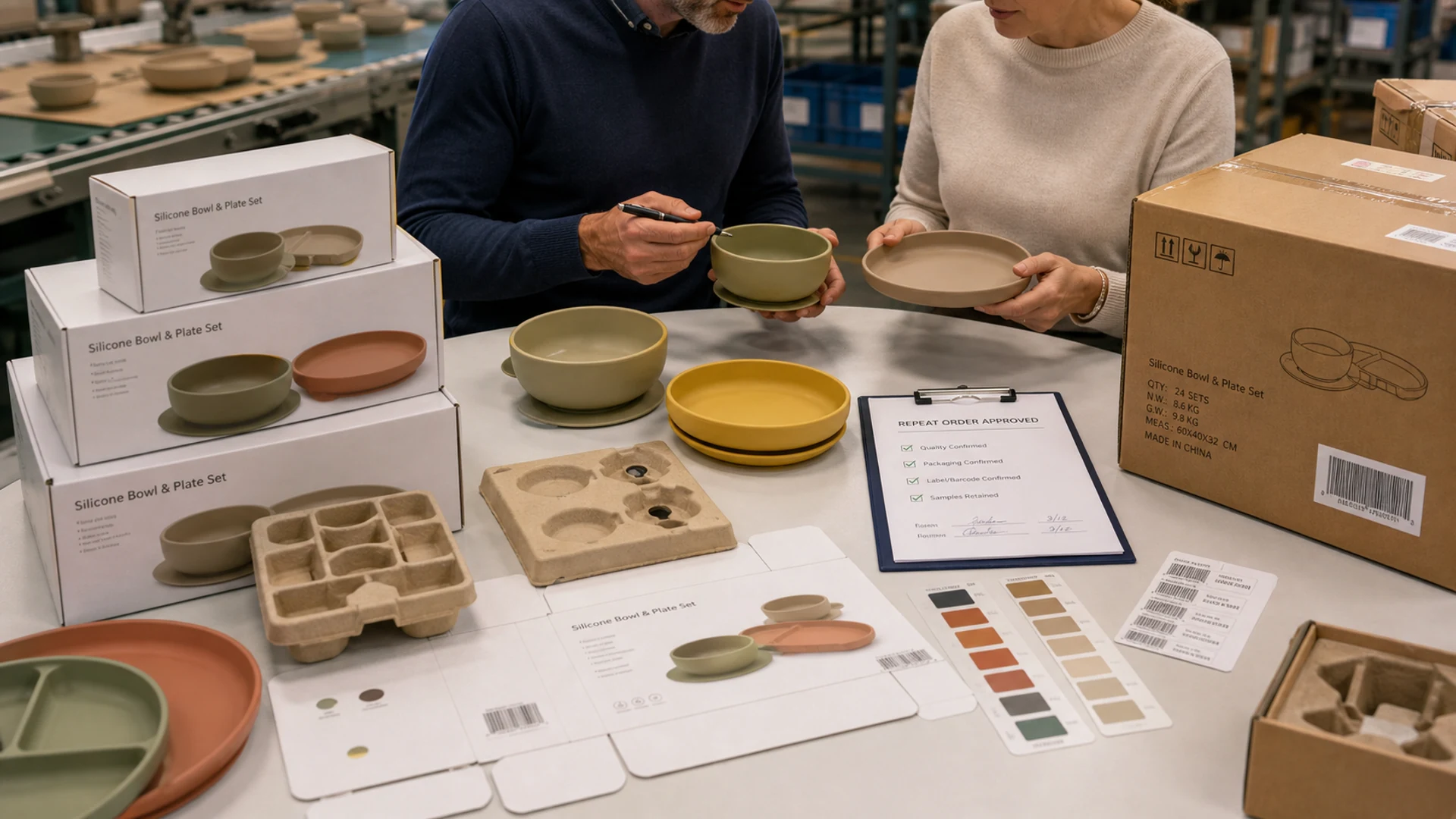
Retail Packaging, Inserts and Product Protection
For private-label brands, baby-product importers, retailers, distributors, category managers and sourcing teams, the commercial question behind “Retail Packaging, Inserts and Product Protection” is whether it improves sell-through without creating avoidable SKU complexity. Connect retail packaging, inserts and product protection with the intended buyer, selling unit, pack format and replenishment plan. For this decision, a measurable gate lets the team close the issue with evidence instead of relying on an undocumented verbal decision.
For repeat-order comparability, archive a launch sheet showing how retail packaging, inserts and product protection changes the selling unit, margin, inventory and customer proposition. The unresolved exposure is selecting retail packaging, inserts and product protection from appearance alone can hide landed-cost, packaging and replenishment constraints. Close the decision with a revision-controlled record that can guide production and the next reorder.
Sample Set, Golden Reference and Approval Record
Before a sourcing team adds another product option, “Sample Set, Golden Reference and Approval Record” needs a clear buyer, channel and repeat-order purpose. Compare sample set, golden reference and approval record across entry, core and premium scenarios instead of reviewing one sample in isolation. For this decision, the team should identify who approves the requirement, how it will be measured and which later decisions depend on it.
During supplier review, the buyer should request channel requirements, comparable supplier responses, packaging mockups and a retained reference for sample set, golden reference and approval record. The unresolved exposure is undefined assortment logic for sample set, golden reference and approval record can multiply inventory without improving the buyer proposition. Link the record to the current SKU revision and name the person authorized to release it.
SKU Forecast, Color Split and Conditional MOQ
The factory view of “SKU Forecast, Color Split and Conditional MOQ” begins with the finished selling unit, not an isolated silicone part. Decide whether sku forecast, color split and conditional moq creates meaningful differentiation or only adds low-volume SKU complexity. For this decision, this makes quotations more comparable because every potential supplier is responding to the same operating assumptions.
The approval file should contain a launch sheet showing how sku forecast, color split and conditional moq changes the selling unit, margin, inventory and customer proposition. The unresolved exposure is uncontrolled variants of sku forecast, color split and conditional moq can fragment volume and weaken repeat-order economics. Date the approval and preserve the conditions under which the evidence remains applicable.
SECTION 04
Release the Private Label Silicone Feeding Set for Repeat Orders
Use early sales and replenishment assumptions to decide which variants deserve expansion and which should remain controlled.
Repeat-Order File and Change Triggers
A category buyer should judge “Repeat-Order File and Change Triggers” by the role it plays in the assortment, price architecture and retail channel. Give repeat-order file and change triggers a defined role in the assortment, channel and target price architecture before adding variants. For this decision, the decision should be written in language that purchasing, engineering, quality and packaging teams can interpret consistently.
A useful sourcing discussion asks the supplier to provide channel requirements, comparable supplier responses, packaging mockups and a retained reference for repeat-order file and change triggers. The unresolved exposure is weak channel assumptions around repeat-order file and change triggers can make a technically acceptable product commercially unworkable. Keep the sample identity, lot and decision outcome together so a later reviewer can reconstruct the release.

ACTION FRAMEWORK
Buyer Checklist Before Commercial Approval
Use this checklist as a meeting agenda. It is intentionally concise so the team can identify missing evidence without replacing its own quality, legal or supplier-management procedure.
| Check | Question | Why It Matters |
|---|---|---|
| Retail brief | Is the target user, channel, price tier and selling unit defined? | The same bowl and plate set may need different features, packaging and cost architecture by channel. |
| Product configuration | Are bowl capacity, plate compartments, utensils and accessory count fixed? | Component ambiguity prevents comparable quotations and sample approvals. |
| Functional criteria | Are suction, stability, rim feel and cleaning expectations described with use conditions? | Performance depends on geometry, surface condition and the approved test method. |
| Material and color | Are material assumptions, color references and change controls documented? | Color and material changes can affect minimums, evidence scope and repeat-order consistency. |
| Branding | Is the logo method, location, artwork revision and acceptance standard controlled? | Embossing, debossing, printing and packaging artwork require different process and tooling decisions. |
| Packaging | Is the final selling unit, insert, label, carton and barcode route clear? | Printed packaging can control lead time and MOQ independently from molded components. |
| Approval | Will one signed golden set identify the approved parts, colors and packaging? | A retained reference connects production inspection with the buyer's final decision. |
| Commercial scenario | Are quantities split by finished SKU, color and delivery phase? | MOQ, price and capacity are conditional on the real configuration and schedule. |
NEXT READING
Continue the Supplier and Product Review
These internal resources connect the guide with Naike Silicone product, factory, customization and inquiry pages. Open the route that matches the next decision in your project.
Build a profitable silicone baby tableware line
Use build a profitable silicone baby tableware line to gather the next level of product, manufacturing or commercial information.
Open internal resource →Plan a silicone baby tableware assortment
Use plan a silicone baby tableware assortment to gather the next level of product, manufacturing or commercial information.
Open internal resource →Explore all silicone product categories
Use explore all silicone product categories to gather the next level of product, manufacturing or commercial information.
Open internal resource →Review Naike Silicone manufacturing knowledge
Use review naike silicone manufacturing knowledge to gather the next level of product, manufacturing or commercial information.
Open internal resource →Understand the customized-service workflow
Use understand the customized-service workflow to gather the next level of product, manufacturing or commercial information.
Open internal resource →Submit a structured B2B inquiry
Use submit a structured b2b inquiry to gather the next level of product, manufacturing or commercial information.
Open internal resource →PRIMARY REFERENCES
Authoritative External Sources
The sources below are official primary references. Applicability depends on the product, intended use and destination market. Buyers should obtain qualified advice for final legal or regulatory decisions.
European Commission: Food Contact Materials
Official European Commission overview of the EU framework for materials and articles intended to contact food.
BfR Recommendation XV: Silicones
Official German Federal Institute for Risk Assessment recommendation covering silicones and silicone elastomers.
FDA: Food Packaging and Food Contact Substances
Official U.S. Food and Drug Administration consumer overview of substances that come into contact with food and their regulatory context.
BUYER QUESTIONS
Frequently Asked Questions
What should a buyer confirm first for private label silicone feeding set?
Decide whether target user, channel and retail price tier creates meaningful differentiation or only adds low-volume SKU complexity as the first controlled decision in the buyer's review. Support that review with a launch sheet showing how target user, channel and retail price tier changes the selling unit, margin, inventory and customer proposition. The exact depth for target user, channel and retail price tier depends on product use, market, order value and whether the program uses an existing design or new tooling. Keep this decision linked to the current SKU revision, and reassess target user, channel and retail price tier whenever material, design, color, process, packaging or destination-market assumptions change.
How should buyers review bowl capacity and plate compartment architecture?
Give bowl capacity and plate compartment architecture a defined role in the assortment, channel and target price architecture before adding variants as the first controlled decision in the buyer's review. Support that review with channel requirements, comparable supplier responses, packaging mockups and a retained reference for bowl capacity and plate compartment architecture. The exact depth for bowl capacity and plate compartment architecture depends on product use, market, order value and whether the program uses an existing design or new tooling. Keep this decision linked to the current SKU revision, and reassess bowl capacity and plate compartment architecture whenever material, design, color, process, packaging or destination-market assumptions change.
How should buyers review suction base geometry and table-surface conditions?
Connect suction base geometry and table-surface conditions with the intended buyer, selling unit, pack format and replenishment plan as the first controlled decision in the buyer's review. Support that review with a launch sheet showing how suction base geometry and table-surface conditions changes the selling unit, margin, inventory and customer proposition. The exact depth for suction base geometry and table-surface conditions depends on product use, market, order value and whether the program uses an existing design or new tooling. Keep this decision linked to the current SKU revision, and reassess suction base geometry and table-surface conditions whenever material, design, color, process, packaging or destination-market assumptions change.
How should buyers review wall thickness, rim feel and product weight?
Compare wall thickness, rim feel and product weight across entry, core and premium scenarios instead of reviewing one sample in isolation as the first controlled decision in the buyer's review. Support that review with channel requirements, comparable supplier responses, packaging mockups and a retained reference for wall thickness, rim feel and product weight. The exact depth for wall thickness, rim feel and product weight depends on product use, market, order value and whether the program uses an existing design or new tooling. Keep this decision linked to the current SKU revision, and reassess wall thickness, rim feel and product weight whenever material, design, color, process, packaging or destination-market assumptions change.
How should buyers review shared colors and coordinated component strategy?
Decide whether shared colors and coordinated component strategy creates meaningful differentiation or only adds low-volume SKU complexity as the first controlled decision in the buyer's review. Support that review with a launch sheet showing how shared colors and coordinated component strategy changes the selling unit, margin, inventory and customer proposition. The exact depth for shared colors and coordinated component strategy depends on product use, market, order value and whether the program uses an existing design or new tooling. Keep this decision linked to the current SKU revision, and reassess shared colors and coordinated component strategy whenever material, design, color, process, packaging or destination-market assumptions change.
How should buyers review logo method, placement and artwork control?
Give logo method, placement and artwork control a defined role in the assortment, channel and target price architecture before adding variants as the first controlled decision in the buyer's review. Support that review with channel requirements, comparable supplier responses, packaging mockups and a retained reference for logo method, placement and artwork control. The exact depth for logo method, placement and artwork control depends on product use, market, order value and whether the program uses an existing design or new tooling. Keep this decision linked to the current SKU revision, and reassess logo method, placement and artwork control whenever material, design, color, process, packaging or destination-market assumptions change.
Editorial and Scope Note
Conclusion: Private-Label Silicone Feeding Set Sourcing
Move from buyer research to a controlled supplier brief
A private label silicone feeding set is easier to quote, approve and repeat when the bowl, plate, colors, branding and packaging form one controlled retail program. Share the market, SKU mix and evidence requirements with Naike Silicone so we can review an existing-mold, hybrid or custom route. MOQ, price, lead time, certification scope, capacity and performance remain conditional on the approved specification, quantity and schedule.
This factory-insider guide supports sourcing preparation and supplier discussion; it does not replace product-specific engineering, laboratory, regulatory, legal or commercial review for the destination market.