
Hydraulic compression molding lines
Flexible capacity for suction plates, bowls, molds and larger silicone components.
B2B FACTORY & TEAM REVIEW
SILICONE-ONLY MANUFACTURING
Naike Silicone focuses exclusively on silicone manufacturing. Our workflow is built around the behavior of platinum-cured liquid silicone rubber and high-consistency rubber rather than a mixed-material production model. This focus helps our engineering, tooling, molding and quality teams work from a shared technical standard.
Projects can move from an early sketch or 3D file through mold development, color sampling, pilot production and volume manufacturing within one coordinated organization. The same internal team follows the approved material, critical dimensions, surface finish, logo method, packaging and destination-market requirements.
Our facility supports children's tableware, silicone bibs, ice and freezer molds, bakeware, kitchen kitchenware and custom-molded products. Production planning separates material preparation, molding, finishing, inspection and packing to keep batch status and responsibilities clear.
Flexible capacity for suction plates, bowls, molds and larger silicone components.
Repeatable LSR production for cups, utensils and products with detailed geometry.
Planned capacity across our core food-grade silicone product categories.
Incoming material, in-process control and outgoing inspection for every production batch.
INSIDE OUR FACTORY
Six connected stages turn an approved design into repeatable, shipment-ready silicone products. Each stage has defined inputs, approval references and quality responsibilities.
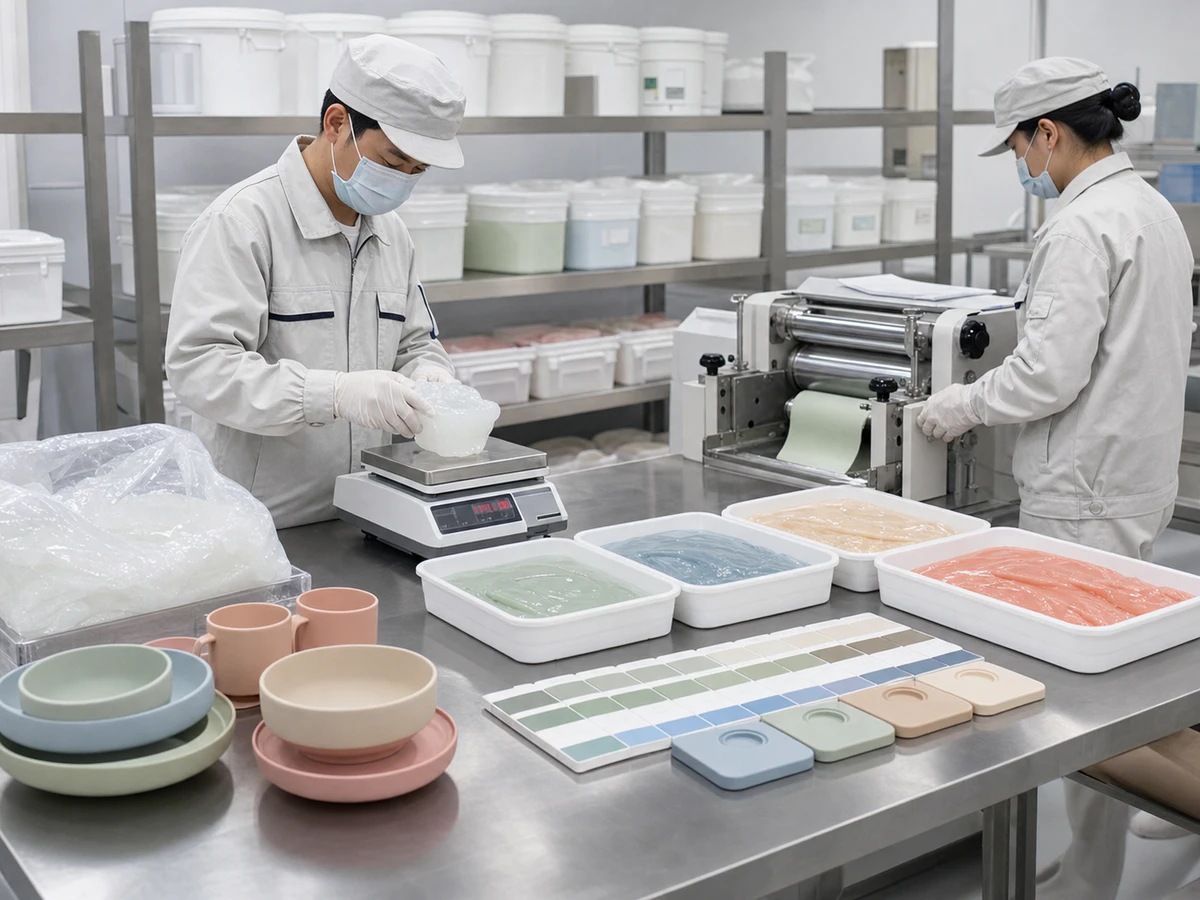 01
01Each project begins with approved platinum-cured LSR or HCR. Material identity, target hardness and color requirements are checked before weighing and mixing. Color plaques and approved samples help the team compare tone, surface finish and consistency before a production batch is released.
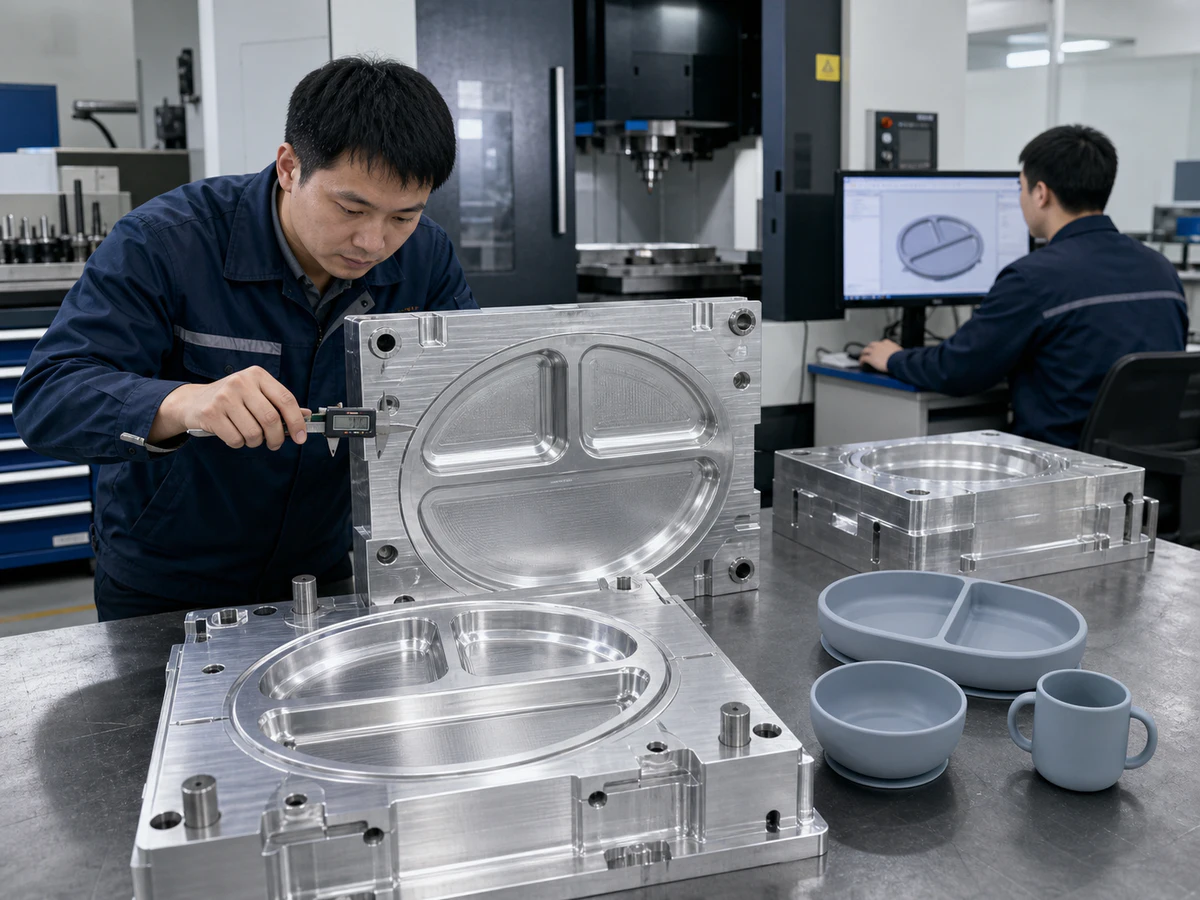 02
02Our mold team converts product drawings into manufacturable tooling for suction plates, bowls, cups and utensils. Engineers review parting lines, wall thickness, venting, suction-base geometry and demolding before CNC machining, fitting, trial molding and sample confirmation.
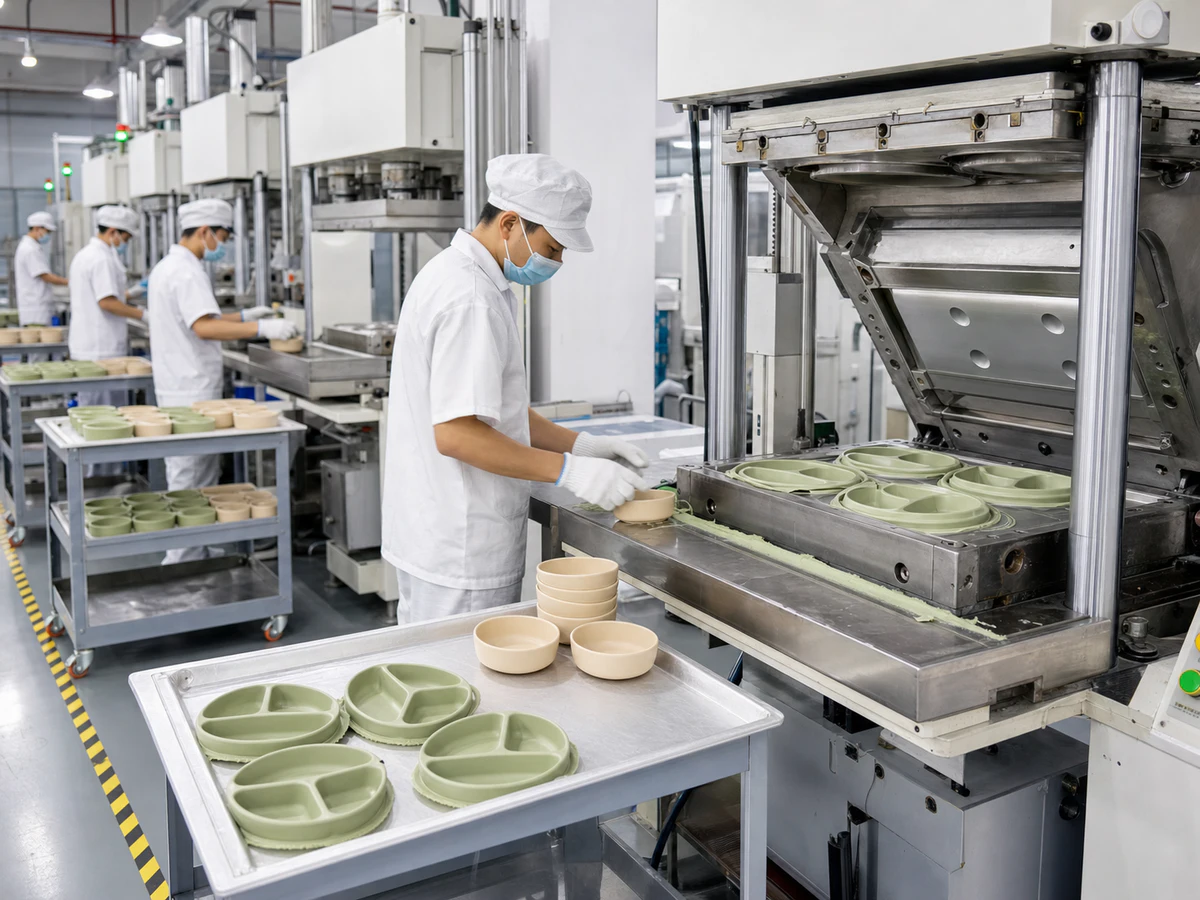 03
03Three hydraulic compression lines support tableware, bakeware and larger silicone parts. Operators follow approved material weights, mold temperatures, pressure and vulcanization time. First-piece checks are completed before the batch moves into continuous production.
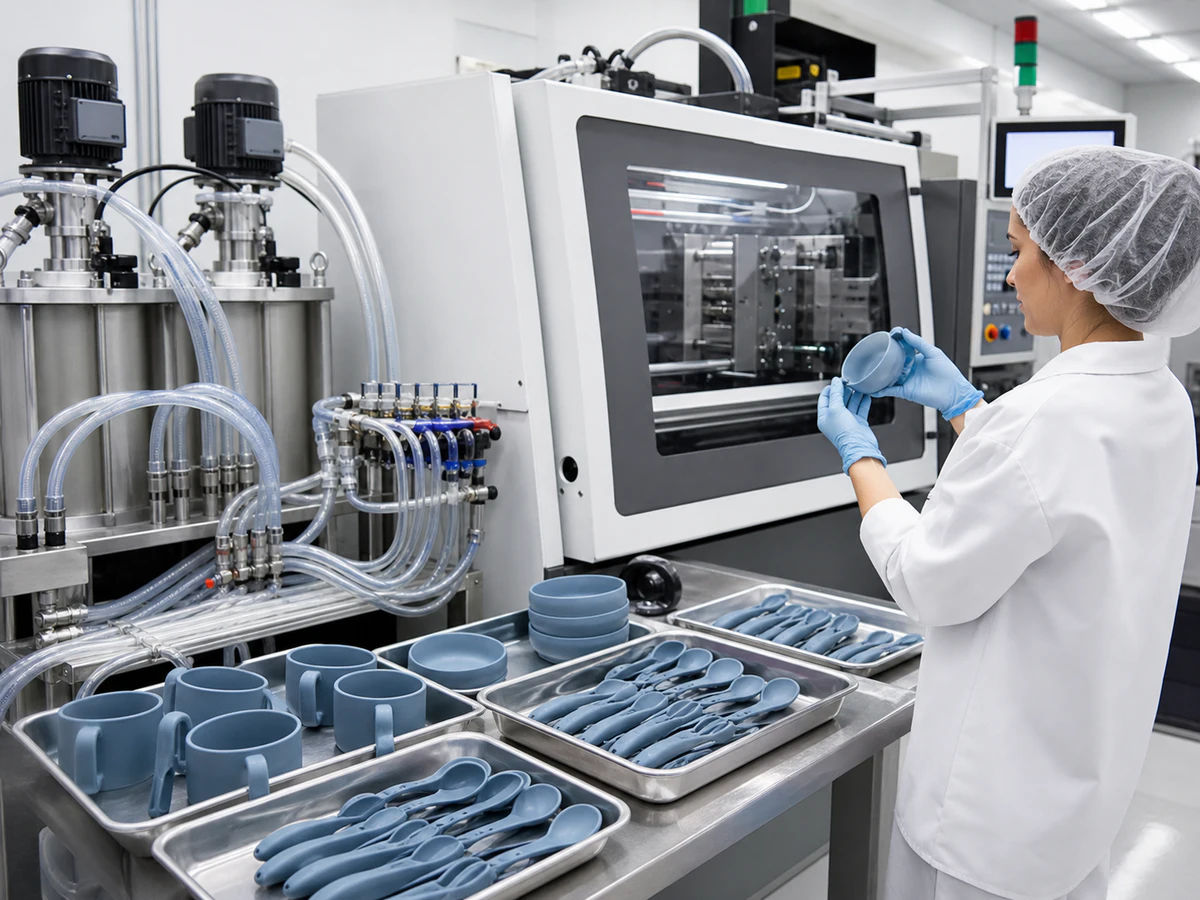 04
04Two liquid silicone injection lines are used for detailed products that benefit from automated dosing and repeatable cavity filling. Controlled A/B component delivery supports stable molding of training cups, soft feeding utensils and precision components.
 05
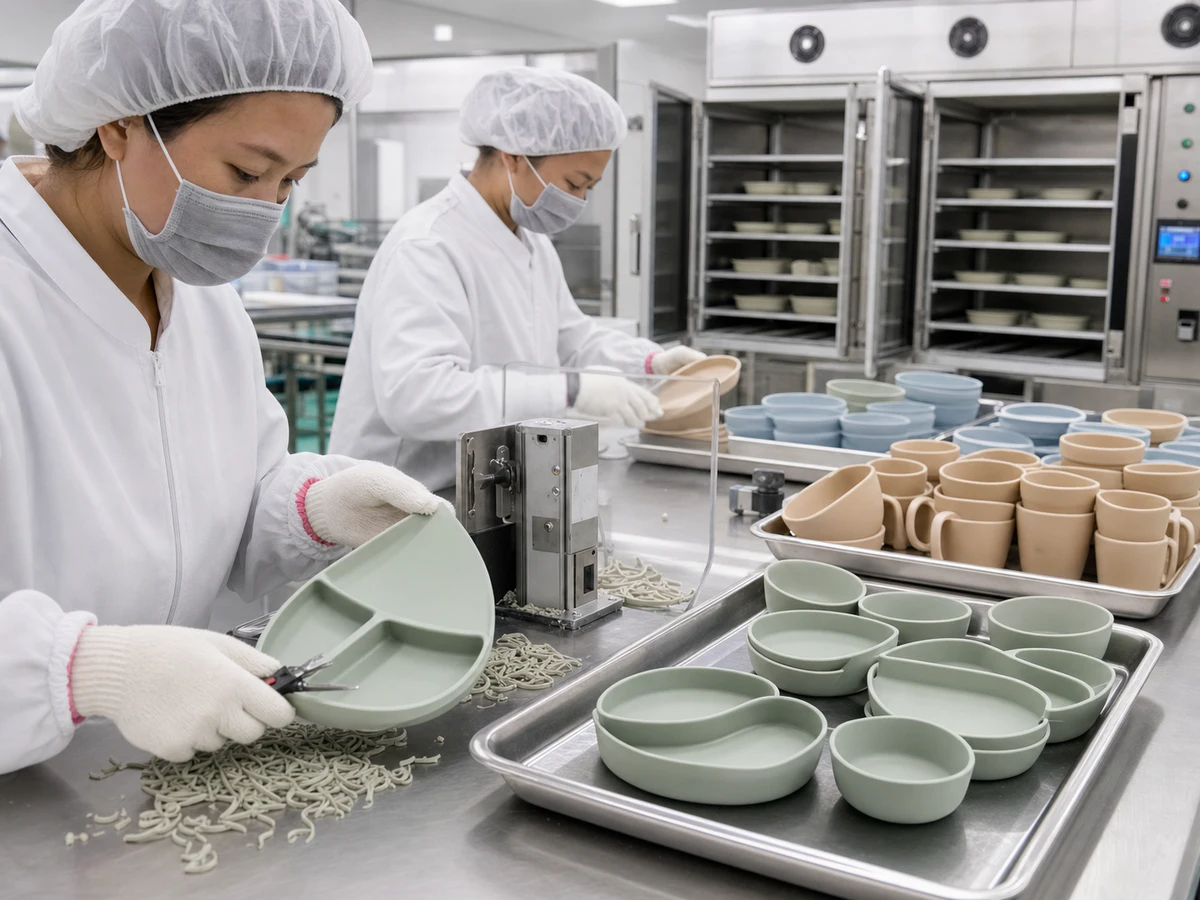
05After molding, trained operators remove flash and inspect edges, handles, compartments and suction surfaces. Products are separated by batch and processed according to the approved post-cure requirement to support low odor and stable food-contact performance.
 06
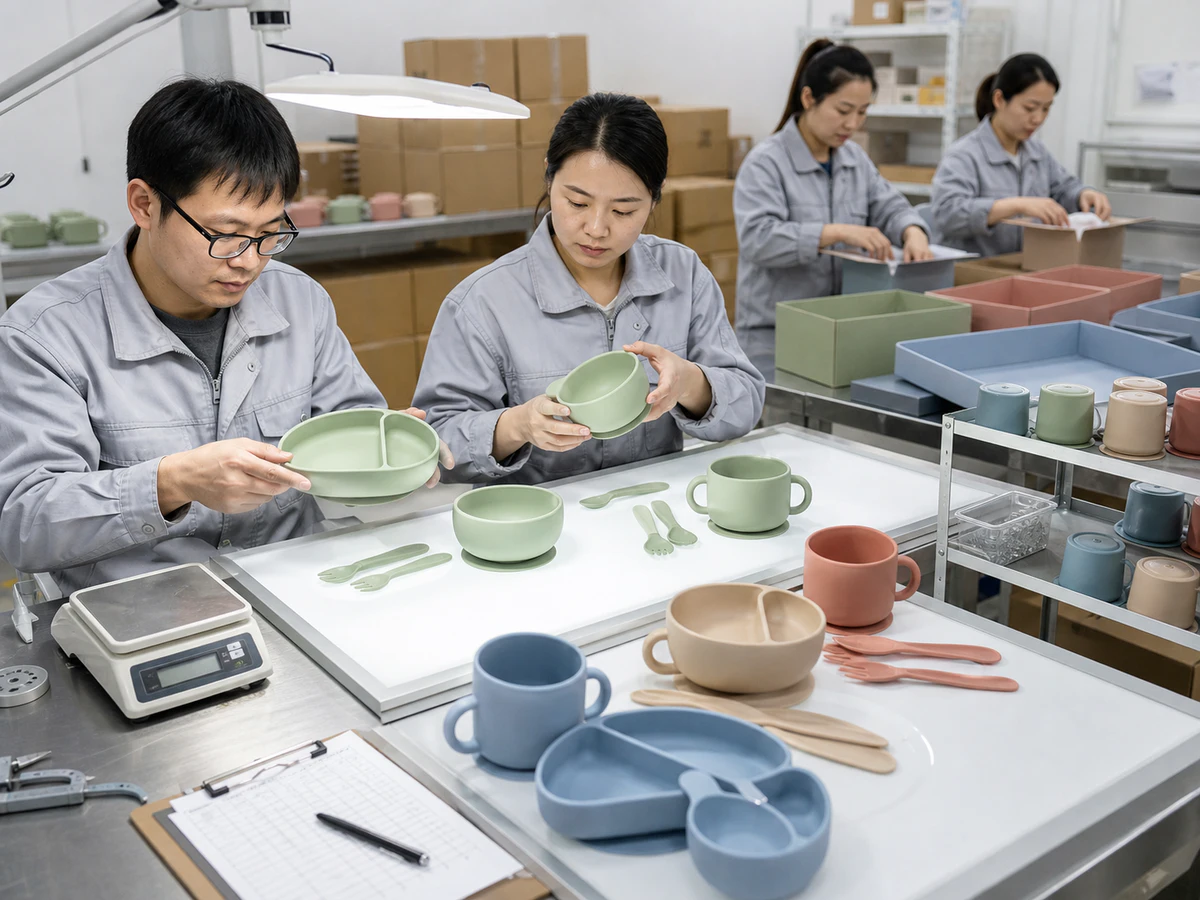
06Final inspection covers appearance, dimensions, color, function and agreed packaging. Approved products are packed with the specified inserts, labels and cartons. Shipment records, sample retention and supporting documents are prepared for customer review and repeat-order control.
BATCH CONTROL
A clear approval path connects customer requirements with machine settings, inspection criteria and repeat-order records.
Material grade, target market, product dimensions, color, logo, packaging and test needs are recorded before sampling.
A signed sample, color reference and packaging specification become the working standard for production and inspection.
The first molded pieces are reviewed for appearance, weight, critical dimensions, suction performance and demolding quality.
Operators and IPQC monitor machine settings, cure conditions, flash, contamination, color variation and visible defects.
OQC checks finished products and packing against the approved specification before the batch is released for shipment.
Approved samples, tooling condition, process settings and inspection criteria are retained to support consistent repeat production.
CONNECTED PROJECT TEAM
Customer-facing colleagues work directly with engineering, tooling, production and quality. This reduces information gaps when a product, color, mold, package or schedule changes and gives buyers one coordinated path for decisions and follow-up.
Reviews concepts, 3D files and functional requirements, then coordinates DFM, mold structure, prototypes and technical revisions.
Plans material, machines, operators and batch flow while keeping compression molding, LSR molding, finishing and post-cure coordinated.
Builds inspection criteria around the approved sample and supports food-contact testing, batch documentation and customer quality reviews.
Connects quotations, samples, packaging, order schedules, shipment documents and buyer feedback with the internal factory team.
B2B PROJECT INQUIRY
Share the intended product, destination market, order quantity and launch plan. Our project team will review the information and identify the next practical step.
Drawings are helpful but not required. A sketch, reference photo or physical sample can be used for an initial discussion.
GENERAL SOURCING INQUIRY