
SUPPLY CHAIN & PROCUREMENT
Private Label Silicone Product Launch Checklist: Private-Label Silicone Product Launch Checklist
A cross-functional B2B checklist for product scope, tooling, compliance, quality, packaging, logistics and launch readiness.
DIRECT ANSWER
What B2B Buyers Need to Know
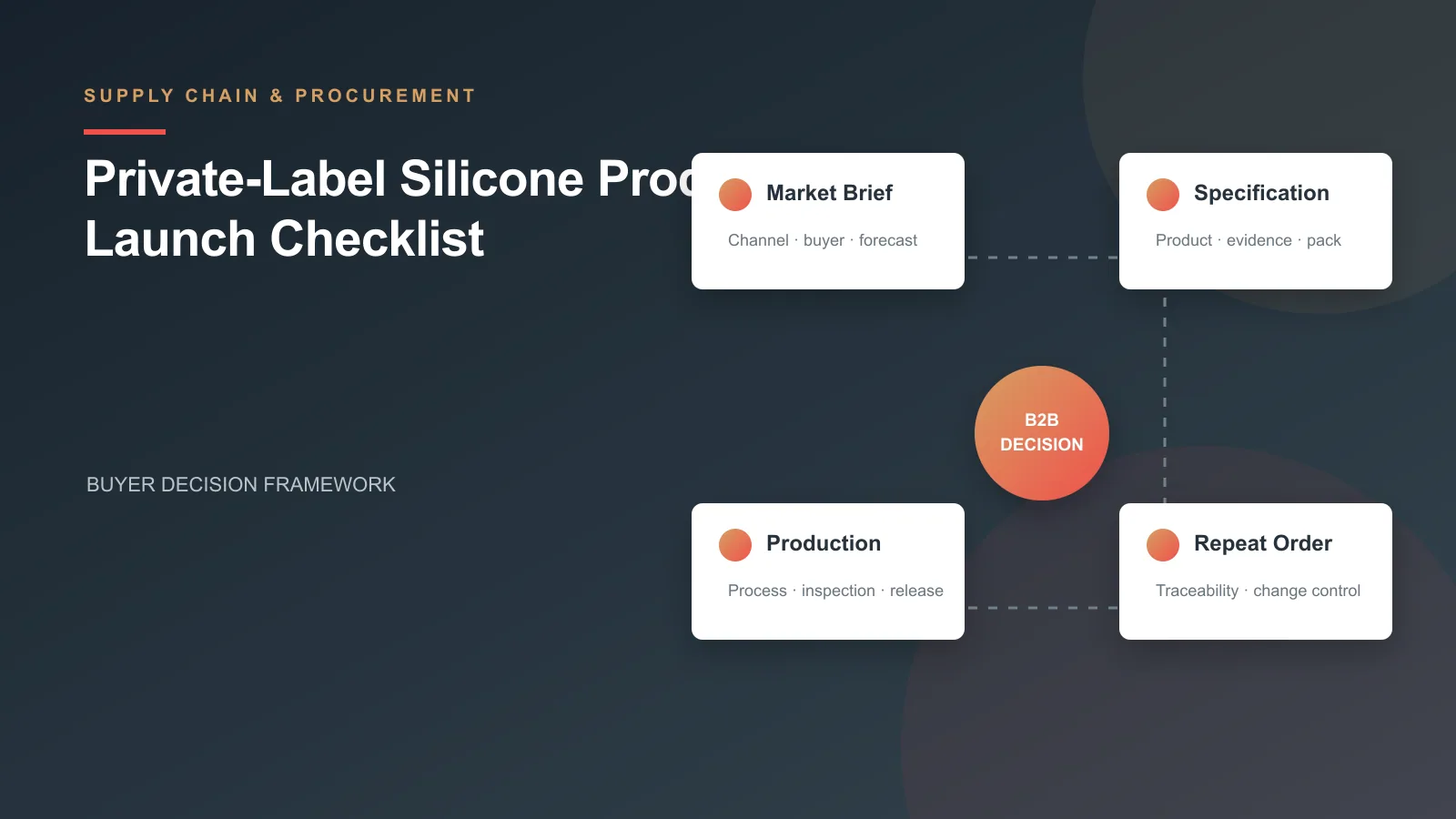
A private-label silicone launch is ready only when product, compliance, packaging, operations and commercial teams are working from the same approved SKU definition. The checklist should track dependencies from the brief through tooling, tests, batch release and retailer delivery. Launch readiness is evidence that open risks are owned and controlled, not simply that a production date has been booked.
This guide is written for brand owners, retailers, importers, product managers, sourcing teams and launch operations teams. It provides a decision framework rather than legal advice or a universal specification. Product classification, use conditions and destination market should be confirmed before final testing, labelling or compliance decisions.
Key Takeaways
- Create one controlled SKU master.
- Link every milestone to an owner and approval output.
- Freeze claims only after evidence review.
- Validate pack-out and logistics before mass production.
- Use a pilot or first-production review proportionate to risk.
- Record post-launch learning for repeat orders.
Compare Three Buyer Decisions for private label silicone product launch checklist
Use these decision points to compare supplier responses on the same commercial and technical baseline. Exact requirements depend on product use, market, quantity and development route.
| Decision Area | Buyer Question | Evidence to Review |
|---|---|---|
| Confirm launch strategy | Define customer, channel, price, assortment, geography and success measures. | Approved launch brief and SKU business case. |
| Freeze the SKU master | Align product name, components, dimensions, color, code, packaging and market by item. | Revision-controlled SKU matrix shared across teams and supplier. |
| Close product development | Complete DFM, tooling trials, corrections and production-standard approval. | Signed drawings, bill of materials, golden samples and open-issue log at zero critical items. |
SECTION 01
private label silicone product launch checklist: Build the Buyer Brief and Product Baseline
Set the purchasing scenario with a realistic SKU mix, forecast, delivery window and cost-comparison basis.
Confirm launch strategy for private label silicone product launch checklist
Procurement should evaluate “Confirm launch strategy” through total landed cost, timing exposure and continuity of supply. Define customer, channel, price, assortment, geography and success measures. For this decision, the decision should be written in language that purchasing, engineering, quality and packaging teams can interpret consistently.
A useful sourcing discussion asks the supplier to provide approved launch brief and SKU business case. The unresolved exposure is a product can be manufactured correctly yet fail because positioning remains unclear. Keep the sample identity, lot and decision outcome together so a later reviewer can reconstruct the release.
Freeze the SKU master
A workable commercial agreement makes the assumptions behind “Freeze the SKU master” visible to both buyer and factory. Align product name, components, dimensions, color, code, packaging and market by item. For this decision, a clear baseline also helps the supplier explain any trade-off instead of silently selecting the easiest manufacturing option.
Before the next project gate, both parties should agree on revision-controlled SKU matrix shared across teams and supplier. The unresolved exposure is different spreadsheets create mismatched orders, artwork and test samples. Record any deviation separately and prevent it from becoming an undocumented repeat-order precedent.
Close product development
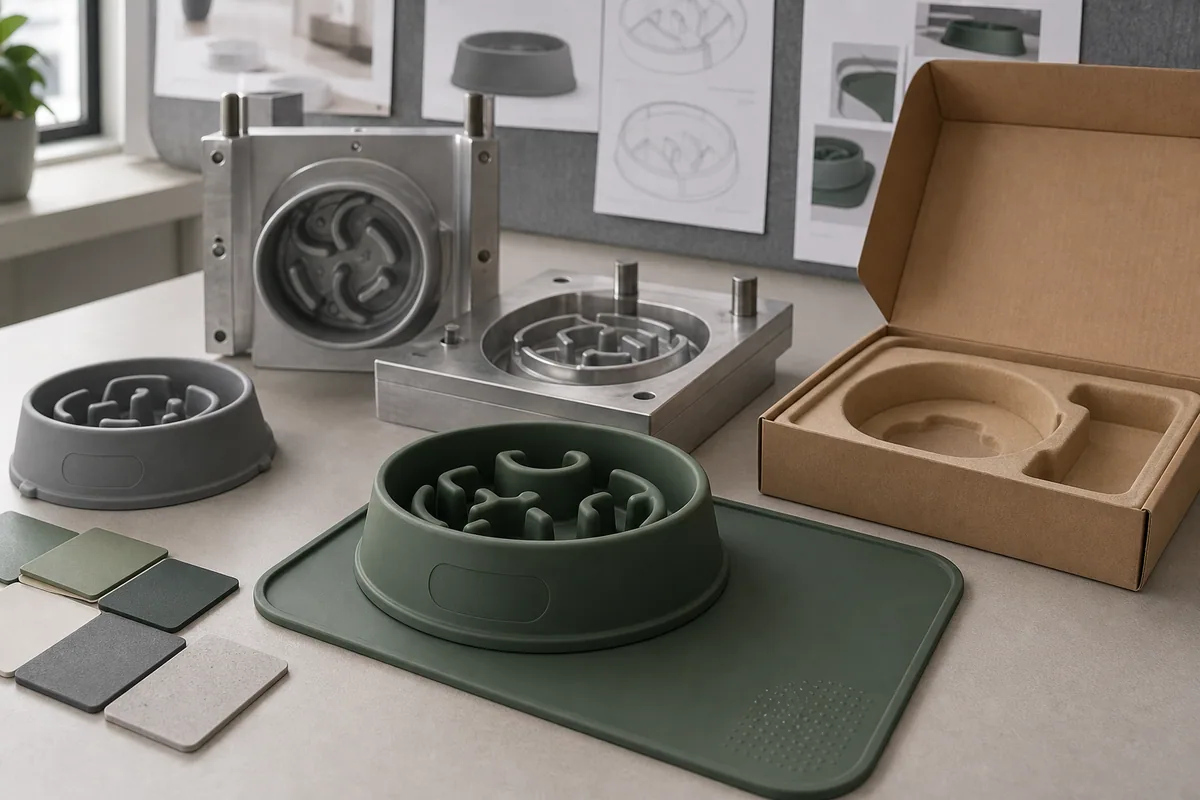
The sourcing risk around “Close product development” usually appears when volume, SKU mix and delivery timing are discussed separately. Complete DFM, tooling trials, corrections and production-standard approval. For this decision, the requirement becomes useful only when it can be converted into a drawing, sample, record or repeatable check.
The evidence package is stronger when it includes signed drawings, bill of materials, golden samples and open-issue log at zero critical items. The unresolved exposure is accepting unresolved trial issues transfers development into mass production. Carry the approved limit into the inspection instruction rather than leaving it only in meeting notes.
SECTION 02
Verify Technical Fit and Approval Evidence
Separate fixed development costs from variable production and logistics costs before negotiating commercial terms.
Complete compliance planning
For a repeat-order program, “Complete compliance planning” needs an owner, a trigger for review and a documented commercial baseline. Classify products, confirm markets, tests, labels, technical files and responsible parties. For this decision, early alignment is less expensive than correcting a mold, replacing printed packaging or sorting finished inventory.
For an audit-ready decision, retain compliance matrix and approved evidence package for each SKU. The unresolved exposure is testing without a locked product identity can create reports that do not support sale units. Retain enough context to distinguish a process correction from a change to the buyer's requirement.
Approve claims and content
Procurement should evaluate “Approve claims and content” through total landed cost, timing exposure and continuity of supply. Check packaging, listing, instructions and marketing statements against evidence. For this decision, a named decision owner prevents an open requirement from moving unnoticed into tooling or shipment release.
The buyer's release packet should preserve controlled copy deck and approval record from responsible functions. The unresolved exposure is creative teams may repeat attractive but unsupported supplier language. Reference the applicable drawing and order so evidence from another configuration is not substituted.
Validate branding and packaging
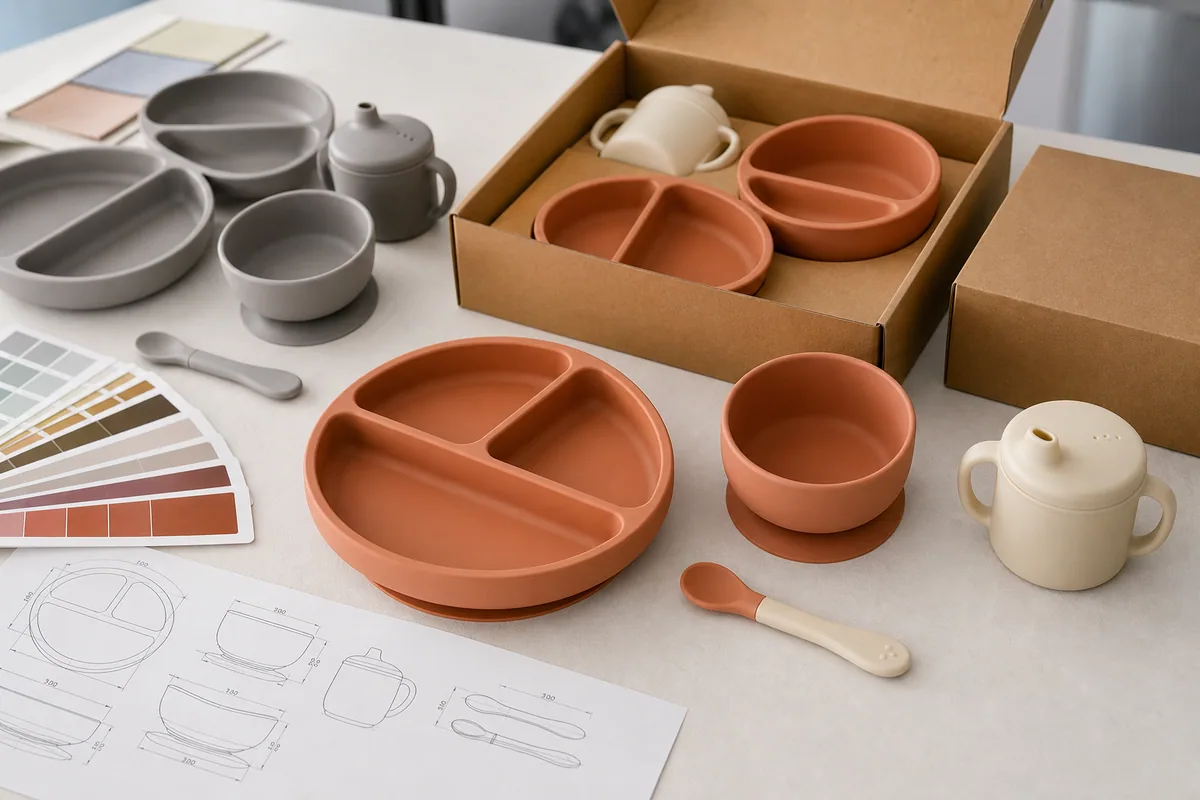
A workable commercial agreement makes the assumptions behind “Validate branding and packaging” visible to both buyer and factory. Approve decoration, color, dielines, inserts, codes and unpacking experience. For this decision, the buyer should distinguish a mandatory acceptance point from a preference that can be traded against cost or timing.
A traceable project record should connect physical preproduction pack-out plus final artwork files. The unresolved exposure is digital artwork approval cannot reveal fit, deformation or finish problems. Assign an escalation trigger for any material, tooling, packaging or destination-market change.
SECTION 03
Control Production, Quality and Commercial Risk
Connect capacity, inspection, packaging and shipment readiness to named milestones and escalation triggers.
Prepare production quality
The sourcing risk around “Prepare production quality” usually appears when volume, SKU mix and delivery timing are discussed separately. Convert approvals into first-article, in-process, final and packaging checks. For this decision, recording the applicable condition keeps the requirement from being reused outside its original product and market scope.
The next decision gate should reference control plan, defect standards, sampling logic and release authority. The unresolved exposure is inspectors cannot protect requirements that were never translated into criteria. Make the result accessible to purchasing, engineering and quality before the next commercial commitment.
Secure capacity and materials
For a repeat-order program, “Secure capacity and materials” needs an owner, a trigger for review and a documented commercial baseline. Confirm tooling availability, material, pigments, packaging and production slot. For this decision, a measurable gate lets the team close the issue with evidence instead of relying on an undocumented verbal decision.
For repeat-order comparability, archive purchase order, forecast, milestone schedule and readiness review. The unresolved exposure is booking production before artwork or materials are ready can waste the reserved window. Close the decision with a revision-controlled record that can guide production and the next reorder.
Plan logistics and trade terms
Procurement should evaluate “Plan logistics and trade terms” through total landed cost, timing exposure and continuity of supply. Set carton data, shipping marks, Incoterms, forwarder, documents and delivery windows. For this decision, the team should identify who approves the requirement, how it will be measured and which later decisions depend on it.
During supplier review, the buyer should request approved logistics instruction and shipment checklist. The unresolved exposure is a factory-ready order can still miss launch when transport ownership is unclear. Link the record to the current SKU revision and name the person authorized to release it.
SECTION 04
Protect Launch Readiness and Repeat Orders
Protect replenishment by recording review conditions for forecasts, prices, lead times, materials and order changes.
Run launch-readiness review
A workable commercial agreement makes the assumptions behind “Run launch-readiness review” visible to both buyer and factory. Bring product, quality, compliance, packaging, sales and operations decisions together. For this decision, this makes quotations more comparable because every potential supplier is responding to the same operating assumptions.
The approval file should contain red-amber-green tracker with evidence links, owners and due dates. The unresolved exposure is status reported from memory can hide dependencies between apparently separate tasks. Date the approval and preserve the conditions under which the evidence remains applicable.
Control first production
The sourcing risk around “Control first production” usually appears when volume, SKU mix and delivery timing are discussed separately. Increase oversight for setup, cavity results, packaging line and batch release. For this decision, the decision should be written in language that purchasing, engineering, quality and packaging teams can interpret consistently.
A useful sourcing discussion asks the supplier to provide first-production report, retained samples and deviation closure. The unresolved exposure is assuming the first full run will match a hand-finished trial sample is avoidable risk. Keep the sample identity, lot and decision outcome together so a later reviewer can reconstruct the release.
Capture post-launch learning
For a repeat-order program, “Capture post-launch learning” needs an owner, a trigger for review and a documented commercial baseline. Review returns, reviews, retailer feedback, quality data, forecast and supplier performance. For this decision, a clear baseline also helps the supplier explain any trade-off instead of silently selecting the easiest manufacturing option.
Before the next project gate, both parties should agree on structured lessons log and approved repeat-order changes. The unresolved exposure is moving directly to reorder repeats problems and loses evidence for improvement. Record any deviation separately and prevent it from becoming an undocumented repeat-order precedent.
ACTION FRAMEWORK
Buyer Checklist Before Commercial Approval
Use this checklist as a meeting agenda. It is intentionally concise so the team can identify missing evidence without replacing its own quality, legal or supplier-management procedure.
| Check | Question | Why It Matters |
|---|---|---|
| Confirm launch strategy | Create one controlled SKU master. | A product can be manufactured correctly yet fail because positioning remains unclear. |
| Freeze the SKU master | Link every milestone to an owner and approval output. | Different spreadsheets create mismatched orders, artwork and test samples. |
| Close product development | Freeze claims only after evidence review. | Accepting unresolved trial issues transfers development into mass production. |
| Complete compliance planning | Validate pack-out and logistics before mass production. | Testing without a locked product identity can create reports that do not support sale units. |
| Approve claims and content | Use a pilot or first-production review proportionate to risk. | Creative teams may repeat attractive but unsupported supplier language. |
| Validate branding and packaging | Record post-launch learning for repeat orders. | Digital artwork approval cannot reveal fit, deformation or finish problems. |
NEXT READING
Continue the Supplier and Product Review
These internal resources connect the guide with Naike Silicone product, factory, customization and inquiry pages. Open the route that matches the next decision in your project.
Review customer case examples
Use review customer case examples to gather the next level of product, manufacturing or commercial information.
Open internal resource →Explore all silicone product categories
Use explore all silicone product categories to gather the next level of product, manufacturing or commercial information.
Open internal resource →Review Naike Silicone manufacturing knowledge
Use review naike silicone manufacturing knowledge to gather the next level of product, manufacturing or commercial information.
Open internal resource →Understand the customized-service workflow
Use understand the customized-service workflow to gather the next level of product, manufacturing or commercial information.
Open internal resource →Evaluate the factory and team
Use evaluate the factory and team to gather the next level of product, manufacturing or commercial information.
Open internal resource →Submit a structured B2B inquiry
Use submit a structured b2b inquiry to gather the next level of product, manufacturing or commercial information.
Open internal resource →PRIMARY REFERENCES
Authoritative External Sources
The sources below are official primary references. Applicability depends on the product, intended use and destination market. Buyers should obtain qualified advice for final legal or regulatory decisions.
European Commission: Product Safety
Official EU product-safety and labelling overview for businesses.
GS1 Barcode Standards
Official overview of barcode standards used to identify products, cases and logistics units.
GS1 Global Traceability Standard
Official framework for interoperable supply-chain traceability.
ICC Incoterms 2020
Official ICC source for the current Incoterms rules used in international trade contracts.
WIPO: Industrial Designs
Official overview of industrial-design protection and the role of design rights.
BUYER QUESTIONS
Frequently Asked Questions
What should a buyer confirm first for private label silicone product launch checklist?
Define customer, channel, price, assortment, geography and success measures as the first controlled decision in the buyer's review. Support that review with approved launch brief and SKU business case. The exact depth for confirm launch strategy depends on product use, market, order value and whether the program uses an existing design or new tooling. Keep this decision linked to the current SKU revision, and reassess confirm launch strategy whenever material, design, color, process, packaging or destination-market assumptions change.
How should buyers review freeze the sku master?
Align product name, components, dimensions, color, code, packaging and market by item as the first controlled decision in the buyer's review. Support that review with revision-controlled SKU matrix shared across teams and supplier. The exact depth for freeze the sku master depends on product use, market, order value and whether the program uses an existing design or new tooling. Keep this decision linked to the current SKU revision, and reassess freeze the sku master whenever material, design, color, process, packaging or destination-market assumptions change.
How should buyers review close product development?
Complete DFM, tooling trials, corrections and production-standard approval as the first controlled decision in the buyer's review. Support that review with signed drawings, bill of materials, golden samples and open-issue log at zero critical items. The exact depth for close product development depends on product use, market, order value and whether the program uses an existing design or new tooling. Keep this decision linked to the current SKU revision, and reassess close product development whenever material, design, color, process, packaging or destination-market assumptions change.
How should buyers review complete compliance planning?
Classify products, confirm markets, tests, labels, technical files and responsible parties as the first controlled decision in the buyer's review. Support that review with compliance matrix and approved evidence package for each SKU. The exact depth for complete compliance planning depends on product use, market, order value and whether the program uses an existing design or new tooling. Keep this decision linked to the current SKU revision, and reassess complete compliance planning whenever material, design, color, process, packaging or destination-market assumptions change.
How should buyers review approve claims and content?
Check packaging, listing, instructions and marketing statements against evidence as the first controlled decision in the buyer's review. Support that review with controlled copy deck and approval record from responsible functions. The exact depth for approve claims and content depends on product use, market, order value and whether the program uses an existing design or new tooling. Keep this decision linked to the current SKU revision, and reassess approve claims and content whenever material, design, color, process, packaging or destination-market assumptions change.
How should buyers review validate branding and packaging?
Approve decoration, color, dielines, inserts, codes and unpacking experience as the first controlled decision in the buyer's review. Support that review with physical preproduction pack-out plus final artwork files. The exact depth for validate branding and packaging depends on product use, market, order value and whether the program uses an existing design or new tooling. Keep this decision linked to the current SKU revision, and reassess validate branding and packaging whenever material, design, color, process, packaging or destination-market assumptions change.
Editorial and Scope Note
Conclusion: Private-Label Launch Checklist
Move from buyer research to a controlled supplier brief
A controlled private label silicone product launch checklist program connects the buyer brief, approved specification, supplier evidence, production controls and repeat-order assumptions. The exact material, tooling, testing, MOQ, price and lead-time route depends on product design, destination market, forecast and packaging scope. Share those project conditions with Naike Silicone to turn this framework into a practical supplier review.
This factory-insider guide supports sourcing preparation and supplier discussion; it does not replace product-specific engineering, laboratory, regulatory, legal or commercial review for the destination market.
Before issuing a purchase order, bring purchasing, product, quality, compliance, packaging and logistics stakeholders into one evidence review. Confirm which drawing, sample, material reference, artwork revision and inspection standard controls the sale-ready SKU. Record unresolved assumptions with an owner and due date instead of allowing them to remain hidden inside quotation notes or informal messages.
Supplier capability should be judged against the proposed product and order scenario rather than a general factory presentation. Ask how the selected process, tooling route, test plan, capacity window and change-control method apply to the current revision. This creates a clearer basis for quotation comparison, sample approval, first-production release and repeat-order evaluation without treating conditional figures as unconditional guarantees.
A useful final review also separates confirmed facts from estimates that still depend on drawings, samples, testing, production trials or forecast commitments. Buyers should document the assumptions behind cost, MOQ, tooling, capacity and timing, then identify which project milestone can convert each estimate into a firmer decision. This discipline prevents early planning figures from being repeated later as unconditional promises, gives the supplier a clear route for updating the quotation, and helps the buying team compare risk as carefully as headline price. Before release, record the accepted scenario, approval evidence, open actions and change triggers in the sourcing file so later production and repeat-order discussions begin from the same approved commercial baseline.