PRODUCT SOURCING GUIDES
Private Label Silicone Bib: Private-Label Silicone Bib Sourcing Guide
How B2B buyers can specify silicone bibs, evaluate closures and pockets, develop branding, plan packaging and control production quality.
DIRECT ANSWER
What B2B Buyers Need to Know
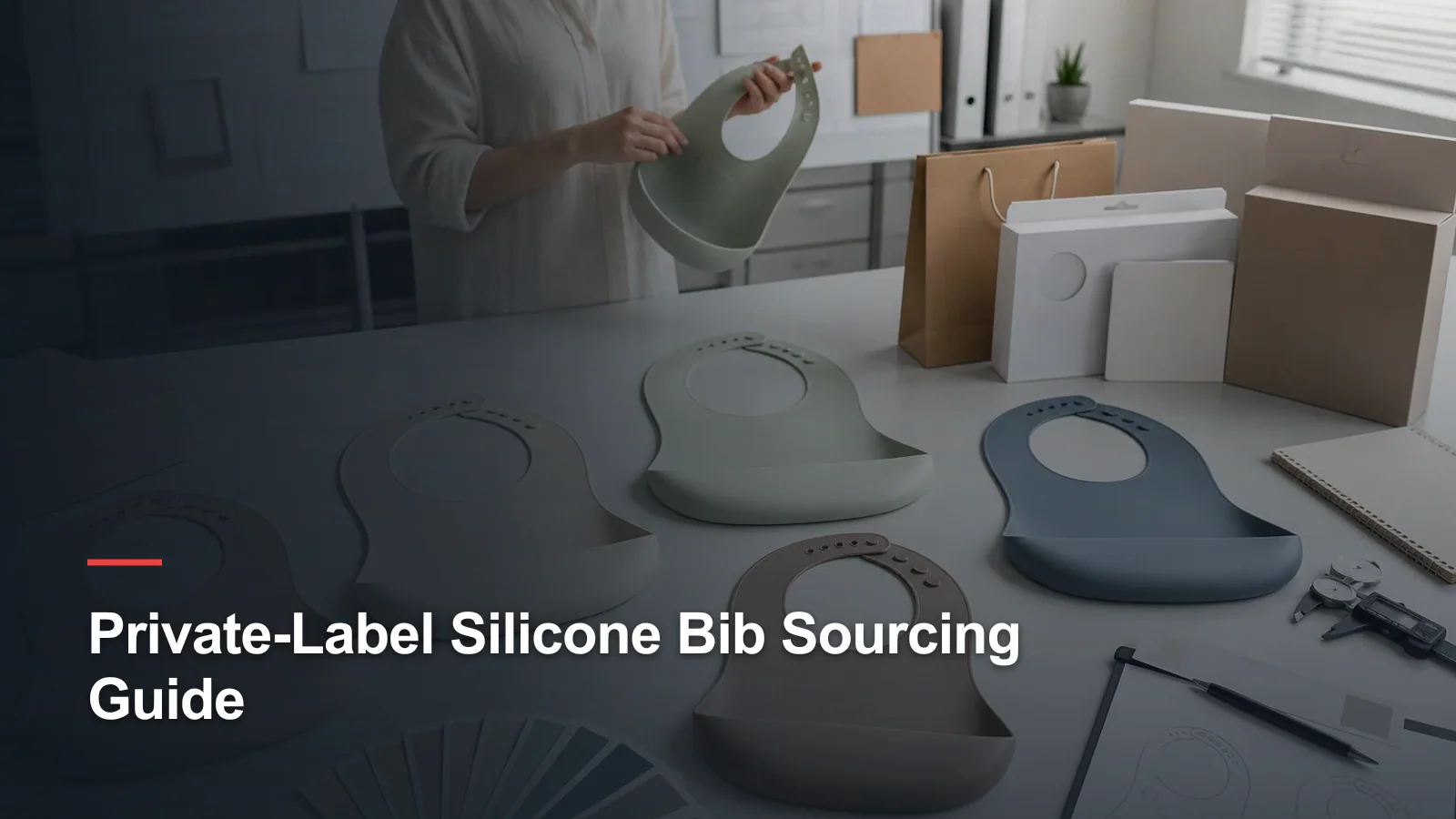
A private-label silicone bib program should be evaluated as a wearable product, a feeding accessory and a branded retail item at the same time. Neck adjustment, skin-contact surfaces, pocket geometry, weight, odor, cleaning, logo execution and packaging all affect buyer acceptance. A controlled brief and realistic fit trials are more valuable than choosing a bib only by catalog photography.
This guide is written for baby-product brands, importers, chain retailers, distributors and gift-set developers. It provides a decision framework rather than legal advice or a universal specification. Product classification, use conditions and destination market should be confirmed before final testing, labelling or compliance decisions.
Key Takeaways
- Specify fit and closure behavior before styling details.
- Evaluate pocket opening under real wearing conditions.
- Treat logo, color and packaging as controlled approvals.
- Confirm product classification and market requirements early.
- Use wear, wash and pull checks during sampling.
- Keep every repeat order tied to the approved bib version.
Compare Three Buyer Decisions for private label silicone bib
Use these decision points to compare supplier responses on the same commercial and technical baseline. Exact requirements depend on product use, market, quantity and development route.
| Decision Area | Buyer Question | Evidence to Review |
|---|---|---|
| Define wearer and channel | Set age positioning, neck range, retail format and whether the bib is sold alone or in a set. | A concise product brief with user scenario, target market, quantity and price positioning. |
| Specify neck adjustment | Choose hole spacing, button geometry, strap flexibility and intended adjustment positions. | Dimensioned drawings plus repeated fastening and pull checks on representative samples. |
| Engineer the catch pocket | Control pocket opening, depth, sidewall stiffness and behavior when the bib is worn. | Fit trials, load checks and side-view photography against an approved reference. |
SECTION 01
private label silicone bib: Build the Buyer Brief and Product Baseline
Begin with the target buyer, channel and assortment role so every specification decision supports a sellable range.
Define wearer and channel for private label silicone bib
The factory view of “Define wearer and channel” begins with the finished selling unit, not an isolated silicone part. Set age positioning, neck range, retail format and whether the bib is sold alone or in a set. For this decision, early alignment is less expensive than correcting a mold, replacing printed packaging or sorting finished inventory.
For an audit-ready decision, retain a concise product brief with user scenario, target market, quantity and price positioning. The unresolved exposure is a one-size claim without a defined fit range can create poor reviews and inconsistent expectations. Retain enough context to distinguish a process correction from a change to the buyer's requirement.
Specify neck adjustment
A category buyer should judge “Specify neck adjustment” by the role it plays in the assortment, price architecture and retail channel. Choose hole spacing, button geometry, strap flexibility and intended adjustment positions. For this decision, a named decision owner prevents an open requirement from moving unnoticed into tooling or shipment release.
The buyer's release packet should preserve dimensioned drawings plus repeated fastening and pull checks on representative samples. The unresolved exposure is closures that are too stiff, too loose or poorly spaced reduce comfort and usable life. Reference the applicable drawing and order so evidence from another configuration is not substituted.
Engineer the catch pocket
For baby-product brands, importers, chain retailers, distributors and gift-set developers, the commercial question behind “Engineer the catch pocket” is whether it improves sell-through without creating avoidable SKU complexity. Control pocket opening, depth, sidewall stiffness and behavior when the bib is worn. For this decision, the buyer should distinguish a mandatory acceptance point from a preference that can be traded against cost or timing.
A traceable project record should connect fit trials, load checks and side-view photography against an approved reference. The unresolved exposure is a pocket that looks deep while flat may collapse against the body and catch little food. Assign an escalation trigger for any material, tooling, packaging or destination-market change.

SECTION 02
Verify Technical Fit and Approval Evidence
Translate the range plan into comparable product, packaging and approval evidence before requesting final quotations.
Balance softness and stability
Before a sourcing team adds another product option, “Balance softness and stability” needs a clear buyer, channel and repeat-order purpose. Select hardness and thickness that support comfort without making the bib curl excessively. For this decision, recording the applicable condition keeps the requirement from being reused outside its original product and market scope.
The next decision gate should reference material specification, thickness map, hanging observation and recovery checks. The unresolved exposure is reducing weight only to lower cost can weaken the pocket and make the product feel insubstantial. Make the result accessible to purchasing, engineering and quality before the next commercial commitment.
Review skin-contact finish
The factory view of “Review skin-contact finish” begins with the finished selling unit, not an isolated silicone part. Inspect edges, parting lines, gate areas, texture and any printed or molded decoration. For this decision, a measurable gate lets the team close the issue with evidence instead of relying on an undocumented verbal decision.
For repeat-order comparability, archive close-up approval samples, touch checks and a documented cosmetic standard. The unresolved exposure is sharp flash, rough trimming or decoration in sensitive areas can undermine a premium claim. Close the decision with a revision-controlled record that can guide production and the next reorder.
Plan logo execution
A category buyer should judge “Plan logo execution” by the role it plays in the assortment, price architecture and retail channel. Choose embossed, debossed, printed or integrated branding based on artwork and cleaning exposure. For this decision, the team should identify who approves the requirement, how it will be measured and which later decisions depend on it.
During supplier review, the buyer should request vector artwork, location drawing, size approval and decorated durability samples. The unresolved exposure is small details may fill, distort or become unreadable when transferred into a soft molded surface. Link the record to the current SKU revision and name the person authorized to release it.
SECTION 03
Control Production, Quality and Commercial Risk
Protect margin by reviewing production controls, landed-cost drivers and launch risks as one commercial system.
Control colors across sets
For baby-product brands, importers, chain retailers, distributors and gift-set developers, the commercial question behind “Control colors across sets” is whether it improves sell-through without creating avoidable SKU complexity. Coordinate the bib with bowls, spoons or packaging while allowing material-specific color behavior. For this decision, this makes quotations more comparable because every potential supplier is responding to the same operating assumptions.
The approval file should contain physical master chips and assembled set samples viewed under controlled lighting. The unresolved exposure is assuming different silicone parts will match from screen values alone creates visible set inconsistency. Date the approval and preserve the conditions under which the evidence remains applicable.
Confirm cleaning and durability
Before a sourcing team adds another product option, “Confirm cleaning and durability” needs a clear buyer, channel and repeat-order purpose. Define expected dishwashing, sterilization or hand-washing conditions and reasonable lifetime checks. For this decision, the decision should be written in language that purchasing, engineering, quality and packaging teams can interpret consistently.
A useful sourcing discussion asks the supplier to provide repeated cleaning trials, closure cycling, stain observation and retained pretest samples. The unresolved exposure is unsupported care claims can expose the brand when users apply harsher conditions than tested. Keep the sample identity, lot and decision outcome together so a later reviewer can reconstruct the release.
Develop retail packaging
The factory view of “Develop retail packaging” begins with the finished selling unit, not an isolated silicone part. Protect the bib from deformation while communicating use, care, origin and required market information. For this decision, a clear baseline also helps the supplier explain any trade-off instead of silently selecting the easiest manufacturing option.
Before the next project gate, both parties should agree on final folded configuration, dielines, label copy approval and carton pack-out sample. The unresolved exposure is tight folds may leave a pocket distorted, while oversized packaging raises freight and shelf costs. Record any deviation separately and prevent it from becoming an undocumented repeat-order precedent.
SECTION 04
Protect Launch Readiness and Repeat Orders
Use early sales and replenishment assumptions to decide which variants deserve expansion and which should remain controlled.
Address market-specific obligations
A category buyer should judge “Address market-specific obligations” by the role it plays in the assortment, price architecture and retail channel. Classify the product correctly before selecting chemical, labeling or children's-product evidence. For this decision, the requirement becomes useful only when it can be converted into a drawing, sample, record or repeatable check.
The evidence package is stronger when it includes a compliance matrix prepared for the destination market and finished SKU. The unresolved exposure is copying a certificate list from another baby product may request irrelevant evidence or miss an applicable rule. Carry the approved limit into the inspection instruction rather than leaving it only in meeting notes.
Set the production reference
For baby-product brands, importers, chain retailers, distributors and gift-set developers, the commercial question behind “Set the production reference” is whether it improves sell-through without creating avoidable SKU complexity. Approve dimensions, color, feel, closure force, cosmetics, logo and packaging together. For this decision, early alignment is less expensive than correcting a mold, replacing printed packaging or sorting finished inventory.
For an audit-ready decision, retain signed golden samples, drawing revision and inspection checklist available to production and QC. The unresolved exposure is a color-approved sample alone cannot control function, fit or packaged presentation. Retain enough context to distinguish a process correction from a change to the buyer's requirement.
Prepare repeat-order governance
Before a sourcing team adds another product option, “Prepare repeat-order governance” needs a clear buyer, channel and repeat-order purpose. Record mold identity, material code, pigment reference, decoration and packaging revision. For this decision, a named decision owner prevents an open requirement from moving unnoticed into tooling or shipment release.
The buyer's release packet should preserve a repeat-order confirmation that highlights unchanged requirements and approved revisions. The unresolved exposure is untracked packaging or logo changes can delay production even when the molded bib is unchanged. Reference the applicable drawing and order so evidence from another configuration is not substituted.
ACTION FRAMEWORK
Buyer Checklist Before Commercial Approval
Use this checklist as a meeting agenda. It is intentionally concise so the team can identify missing evidence without replacing its own quality, legal or supplier-management procedure.
| Check | Question | Why It Matters |
|---|---|---|
| Define wearer and channel | Specify fit and closure behavior before styling details. | A one-size claim without a defined fit range can create poor reviews and inconsistent expectations. |
| Specify neck adjustment | Evaluate pocket opening under real wearing conditions. | Closures that are too stiff, too loose or poorly spaced reduce comfort and usable life. |
| Engineer the catch pocket | Treat logo, color and packaging as controlled approvals. | A pocket that looks deep while flat may collapse against the body and catch little food. |
| Balance softness and stability | Confirm product classification and market requirements early. | Reducing weight only to lower cost can weaken the pocket and make the product feel insubstantial. |
| Review skin-contact finish | Use wear, wash and pull checks during sampling. | Sharp flash, rough trimming or decoration in sensitive areas can undermine a premium claim. |
| Plan logo execution | Keep every repeat order tied to the approved bib version. | Small details may fill, distort or become unreadable when transferred into a soft molded surface. |
NEXT READING
Continue the Supplier and Product Review
These internal resources connect the guide with Naike Silicone product, factory, customization and inquiry pages. Open the route that matches the next decision in your project.
Browse silicone bib products
Use browse silicone bib products to gather the next level of product, manufacturing or commercial information.
Open internal resource →Explore all silicone product categories
Use explore all silicone product categories to gather the next level of product, manufacturing or commercial information.
Open internal resource →Review Naike Silicone manufacturing knowledge
Use review naike silicone manufacturing knowledge to gather the next level of product, manufacturing or commercial information.
Open internal resource →Understand the customized-service workflow
Use understand the customized-service workflow to gather the next level of product, manufacturing or commercial information.
Open internal resource →Evaluate the factory and team
Use evaluate the factory and team to gather the next level of product, manufacturing or commercial information.
Open internal resource →Submit a structured B2B inquiry
Use submit a structured b2b inquiry to gather the next level of product, manufacturing or commercial information.
Open internal resource →PRIMARY REFERENCES
Authoritative External Sources
The sources below are official primary references. Applicability depends on the product, intended use and destination market. Buyers should obtain qualified advice for final legal or regulatory decisions.
CPSC: Initial Certification Testing
Official U.S. guidance on certification testing when a product falls within an applicable consumer-product rule.
CPSC: Tracking Labels
Official information about tracking-label obligations for covered children's products.
WIPO: Industrial Designs
Official overview of industrial-design protection and the role of design rights.
ECHA: Understanding REACH
Official explanation of the EU chemicals regulation and supply-chain responsibilities.
BUYER QUESTIONS
Frequently Asked Questions
What should a buyer confirm first for private label silicone bib?
Set age positioning, neck range, retail format and whether the bib is sold alone or in a set as the first controlled decision in the buyer's review. Support that review with a concise product brief with user scenario, target market, quantity and price positioning. The exact depth for define wearer and channel depends on product use, market, order value and whether the program uses an existing design or new tooling. Keep this decision linked to the current SKU revision, and reassess define wearer and channel whenever material, design, color, process, packaging or destination-market assumptions change.
How should buyers review specify neck adjustment?
Choose hole spacing, button geometry, strap flexibility and intended adjustment positions as the first controlled decision in the buyer's review. Support that review with dimensioned drawings plus repeated fastening and pull checks on representative samples. The exact depth for specify neck adjustment depends on product use, market, order value and whether the program uses an existing design or new tooling. Keep this decision linked to the current SKU revision, and reassess specify neck adjustment whenever material, design, color, process, packaging or destination-market assumptions change.
How should buyers review engineer the catch pocket?
Control pocket opening, depth, sidewall stiffness and behavior when the bib is worn as the first controlled decision in the buyer's review. Support that review with fit trials, load checks and side-view photography against an approved reference. The exact depth for engineer the catch pocket depends on product use, market, order value and whether the program uses an existing design or new tooling. Keep this decision linked to the current SKU revision, and reassess engineer the catch pocket whenever material, design, color, process, packaging or destination-market assumptions change.
How should buyers review balance softness and stability?
Select hardness and thickness that support comfort without making the bib curl excessively as the first controlled decision in the buyer's review. Support that review with material specification, thickness map, hanging observation and recovery checks. The exact depth for balance softness and stability depends on product use, market, order value and whether the program uses an existing design or new tooling. Keep this decision linked to the current SKU revision, and reassess balance softness and stability whenever material, design, color, process, packaging or destination-market assumptions change.
How should buyers review review skin-contact finish?
Inspect edges, parting lines, gate areas, texture and any printed or molded decoration as the first controlled decision in the buyer's review. Support that review with close-up approval samples, touch checks and a documented cosmetic standard. The exact depth for review skin-contact finish depends on product use, market, order value and whether the program uses an existing design or new tooling. Keep this decision linked to the current SKU revision, and reassess review skin-contact finish whenever material, design, color, process, packaging or destination-market assumptions change.
How should buyers review plan logo execution?
Choose embossed, debossed, printed or integrated branding based on artwork and cleaning exposure as the first controlled decision in the buyer's review. Support that review with vector artwork, location drawing, size approval and decorated durability samples. The exact depth for plan logo execution depends on product use, market, order value and whether the program uses an existing design or new tooling. Keep this decision linked to the current SKU revision, and reassess plan logo execution whenever material, design, color, process, packaging or destination-market assumptions change.
Editorial and Scope Note
Conclusion: Silicone Bib Sourcing Guide
Move from buyer research to a controlled supplier brief
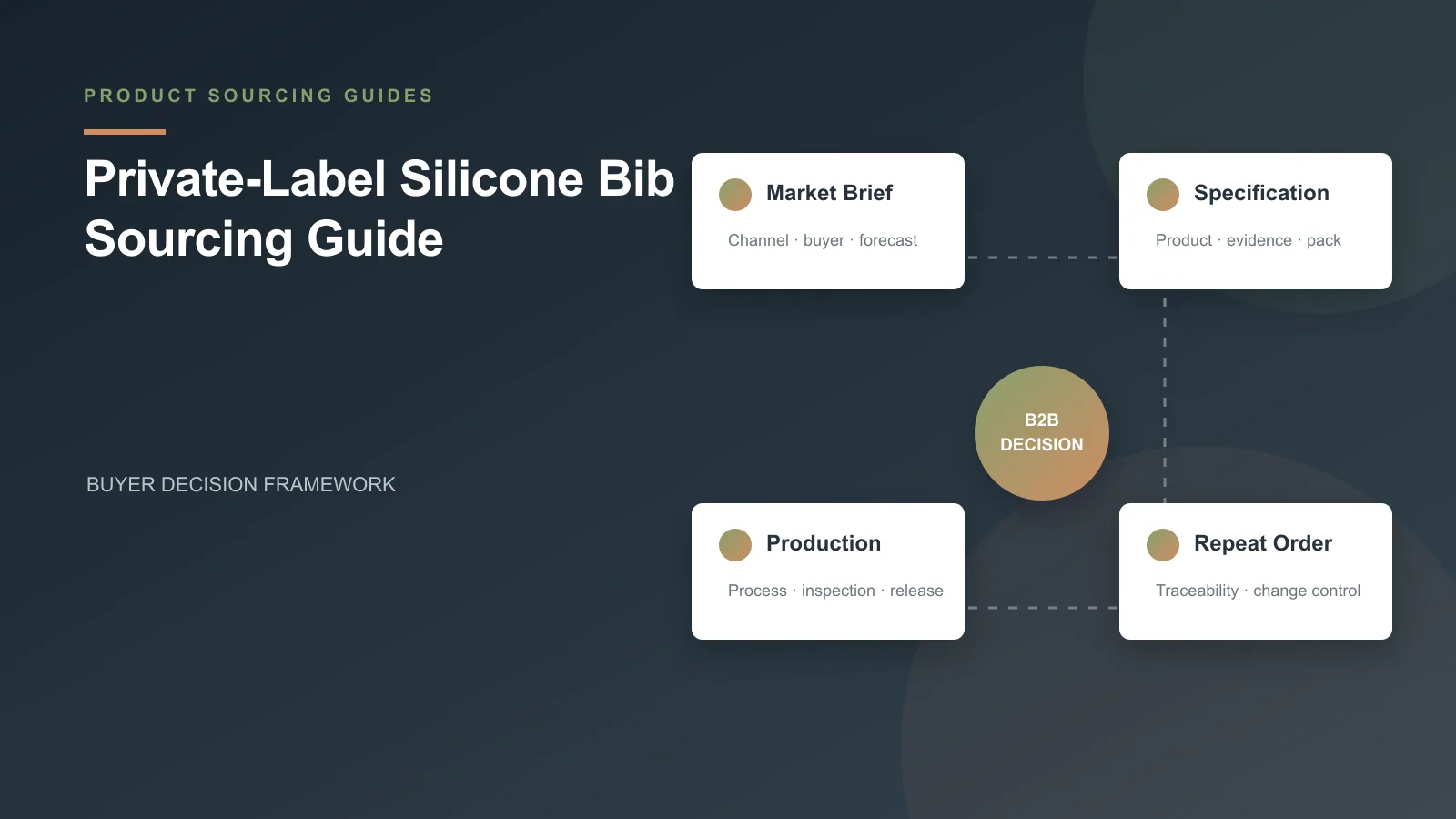
A controlled private label silicone bib program connects the buyer brief, approved specification, supplier evidence, production controls and repeat-order assumptions. The exact material, tooling, testing, MOQ, price and lead-time route depends on product design, destination market, forecast and packaging scope. Share those project conditions with Naike Silicone to turn this framework into a practical supplier review.
This factory-insider guide supports sourcing preparation and supplier discussion; it does not replace product-specific engineering, laboratory, regulatory, legal or commercial review for the destination market.