
Engineering Review
Geometry, material behavior, molding route, tooling risks and measurable requirements are reviewed early.
OEM & ODM PROJECT PROCESS
Proposed parent: Customized Service. This route is not linked from the live navigation.
FROM CONCEPT TO COMMERCIAL PROGRAM
A custom silicone project brings product design, material performance, mold engineering, branding, packaging, compliance, cost and delivery into one commercial decision. If these areas are handled separately, changes often appear after tooling has started.
Naike Silicone uses a stage-gated OEM and ODM process to clarify what must be approved before the project advances. Buyers can begin with a sketch, reference image, physical sample, 2D drawing or 3D CAD file.
The workflow is suitable for importers, wholesalers, distributors, retailers and private-label brands that need a clear path from idea to repeat supply. Project depth is adjusted to the product's complexity and the buyer's internal approval requirements.
Start a Custom Project ReviewGeometry, material behavior, molding route, tooling risks and measurable requirements are reviewed early.
Timing direction for selected custom tools after final design and commercial approval.
Adapt an established design or develop a dedicated product around a new buyer brief.
Product, mold, sample, production, branding and packaging decisions remain connected.
TOOL TRIAL & SAMPLE APPROVAL
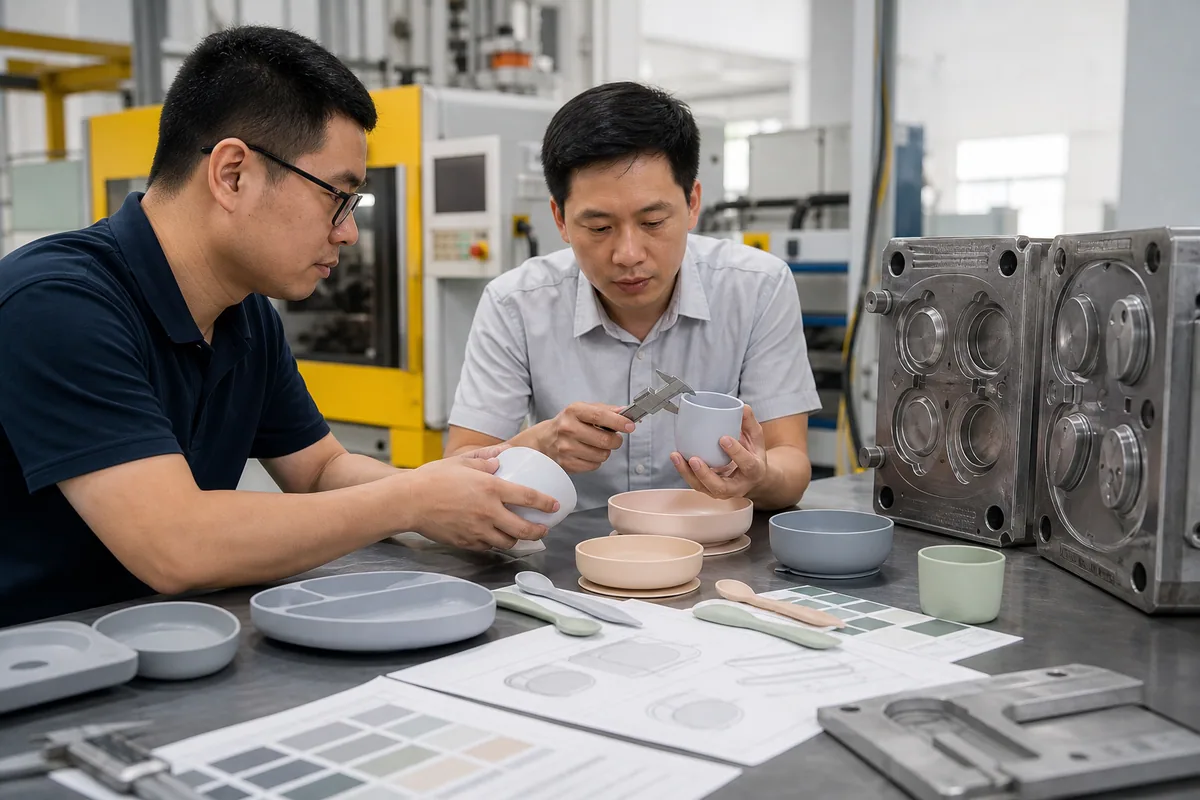
A tooling sample should answer engineering and commercial questions before mass production. Dimensions, wall thickness, function, demolding, surface condition, color, logo execution and assembly are reviewed against the current requirement.
The first trial may identify improvements to venting, flash control, parting lines, deformation or cycle stability. Changes are documented, prioritized and confirmed before another trial or sample submission.
Buyer feedback should be consolidated into one revision. Clear comments, marked photographs and updated drawings reduce contradictory instructions and protect the agreed timeline. The approved sample then supports pilot production and packaging validation.
Geometry, dimensions and functional performance
Surface, flash, color and logo execution
Mold corrections and documented revisions
Golden sample and pilot-production approval
PROJECT DEFINITION
A lower-detail brief can start the conversation, but these inputs are needed before tooling and production commitments become reliable.
Describe the product, intended user, use environment and the problem it should solve. Functional priorities help engineering distinguish essential features from optional styling.
Provide a CAD file, drawing, sample, photograph or competitor reference. Clearly identify which dimensions, features or appearance elements must change rather than asking for an undefined copy.
Define intended use, hardness direction, temperature, flexibility, food contact and other performance needs. Final material selection must suit both the product and molding route.
Share trial quantity, first-order volume, annual forecast and target price position. These numbers influence cavities, tooling investment, automation and unit-cost assumptions.
Specify color direction, logo method, artwork, retail format, set configuration, labels and export cartons. Packaging can change dimensions, testing and production timing.
Identify destination markets, buyer test protocols, retailer requirements, sample approvers and launch timing. This establishes the documentation and decision path before tooling begins.
STAGE-GATED DEVELOPMENT
Each gate produces a decision or deliverable that protects the next investment.
The project team reviews intended use, reference files, volume, market and timing, then identifies missing information and the likely production route.
Engineering evaluates geometry, draft, parting line, venting, tolerances, mold construction, cavities and cost-driving requirements before commercial confirmation.
Approved design data guides mold manufacture. Tool ownership, change control, maintenance expectations and sample responsibilities are recorded for the program.
First articles are measured and reviewed. Corrections are completed until the product, color, function and appearance meet the agreed approval standard.
A controlled pilot checks production settings, trimming, post-curing, inspection, assembly, branding, packing instructions and the complete finished SKU.
Approved references guide batch production and release. Repeat orders use the latest specification while any proposed change follows documented buyer approval.
PROJECT DELIVERABLES
Deliverables depend on project scope, but the approval route should remain visible from the first review onward.
A consolidated view of product use, geometry, material, performance, market, volume, branding, packaging and project timing.
Engineering observations on manufacturability, draft, undercuts, wall thickness, tolerances, demolding, flash, deformation and inspection feasibility.
Recommended mold route, cavity direction, development timing, tooling cost assumptions, expected sample stages and responsibilities for approved changes.
Physical samples supported by relevant measurements, observations, color references and open points that require buyer feedback or approval.
The controlled drawing, material, color, logo, process notes, workmanship reference, packaging and revision used for mass production.
MOQ, volume pricing basis, production lead time, packaging quantity, shipment plan and repeat-order assumptions aligned with the approved SKU.
OEM & ODM FAQ
The best time to answer these questions is before design freeze and tooling authorization.
Yes. A sketch, sample, image or dimensioned concept can begin feasibility review. A controlled 3D model and drawing will still be required before a custom production mold is manufactured.
Confidentiality requirements and NDA review can be discussed before detailed drawings are exchanged. Access should be limited to the team members needed for quotation, engineering and production.
Tool ownership, storage, maintenance, lifetime expectations and transfer conditions should be stated in the quotation or agreement. These terms are confirmed before tooling payment.
The number depends on design maturity, mold complexity, functional risk and the quality of consolidated feedback. A simple product may need fewer rounds, while new structures may require additional correction.
Yes. Packaging should be reviewed early because product dimensions, set combinations, labeling, drop protection and retailer requirements can affect both cost and launch timing.
Engineering first evaluates whether the existing mold can be modified. The impact on cost, timing, sample approval and mold reliability is shared before the buyer authorizes the change.
B2B PROJECT INQUIRY
Share the intended product, destination market, order quantity and launch plan. Our project team will review the information and identify the next practical step.
Drawings are helpful but not required. A sketch, reference photo or physical sample can be used for an initial discussion.
GENERAL SOURCING INQUIRY