
Neck and Outlet
Set outlet diameter, taper and insertion depth around a documented receiving-vessel family.
NON-STICK BAKEWARE
PRODUCT OVERVIEW
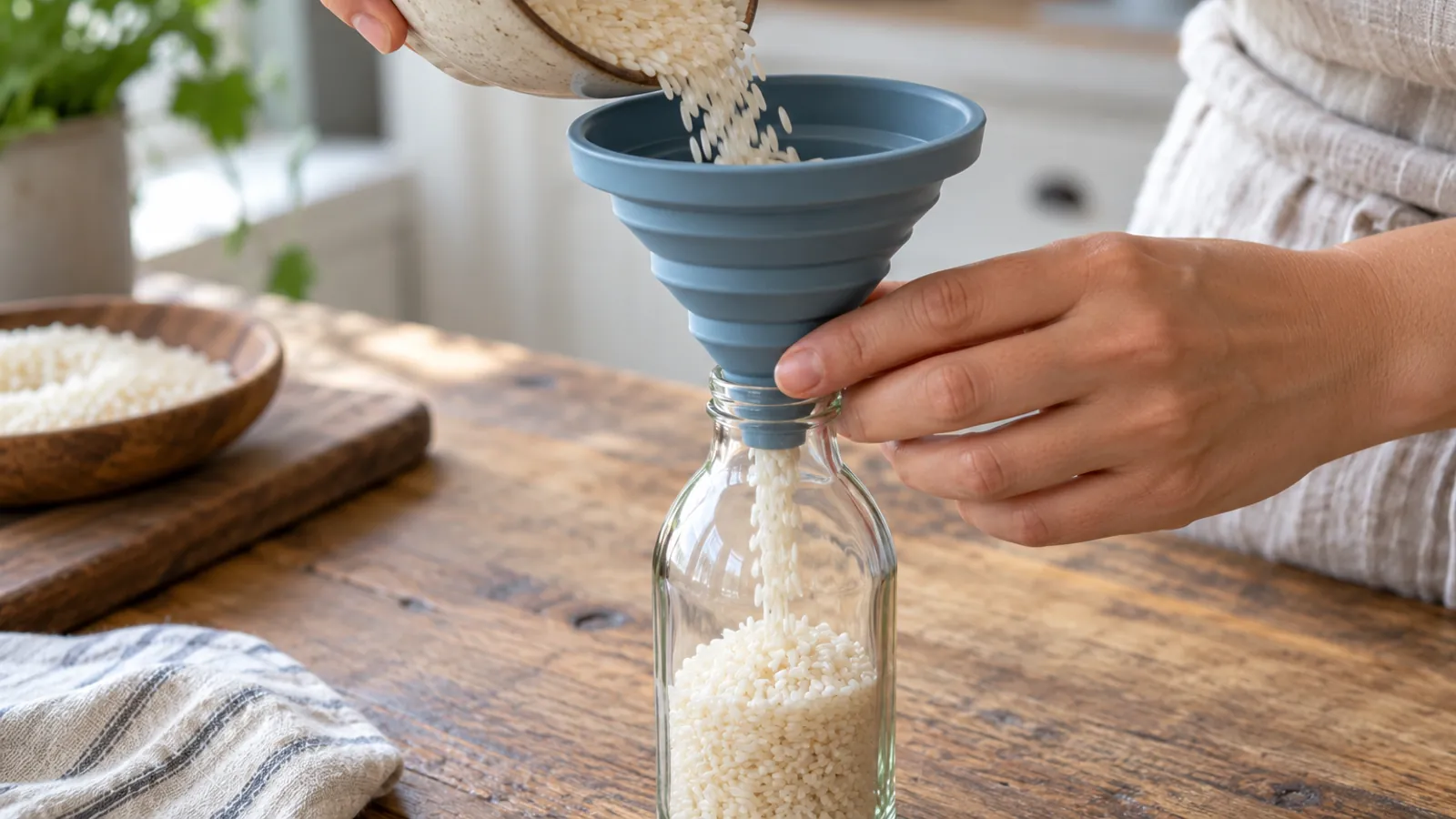
A custom collapsible silicone funnel should be designed for named bottle-neck dimensions and actual transfer materials, not sold as a universal fit. Naike Silicone can review rim diameter, outlet length, bellows profile, hanging tab and collapsed height against the buyer's intended storage and use cases. The concept shown here is illustrative and is not a photograph of an existing Naike production run.
A reliable brief identifies the smallest receiving neck, the widest filling vessel, target powders or liquids, fill rate, temperature, cleaning method and handling pattern. Those choices drive outlet clearance, fold-wall section, rim stiffness, venting, mold parting and demolding. Samples should be compared in expanded and collapsed states, with spills, fold recovery, residue and bottle stability recorded under an agreed method.
Color, branding, compound, hardness, tooling, MOQ, sample quantity and delivery are agreed after drawing and application review. Food-contact, hot-liquid and dishwasher claims require evidence for the finished formulation and destination market; a generic silicone description is not proof. Send bottle samples or neck drawings, transfer materials, target dimensions, forecast and packaging references for a product-specific DFM review.
Product page updated:
Request a B2B QuotationENGINEERING & APPROVAL EVIDENCE
Each stage addresses a different purchasing risk: manufacturability, functional fit and private-label presentation.
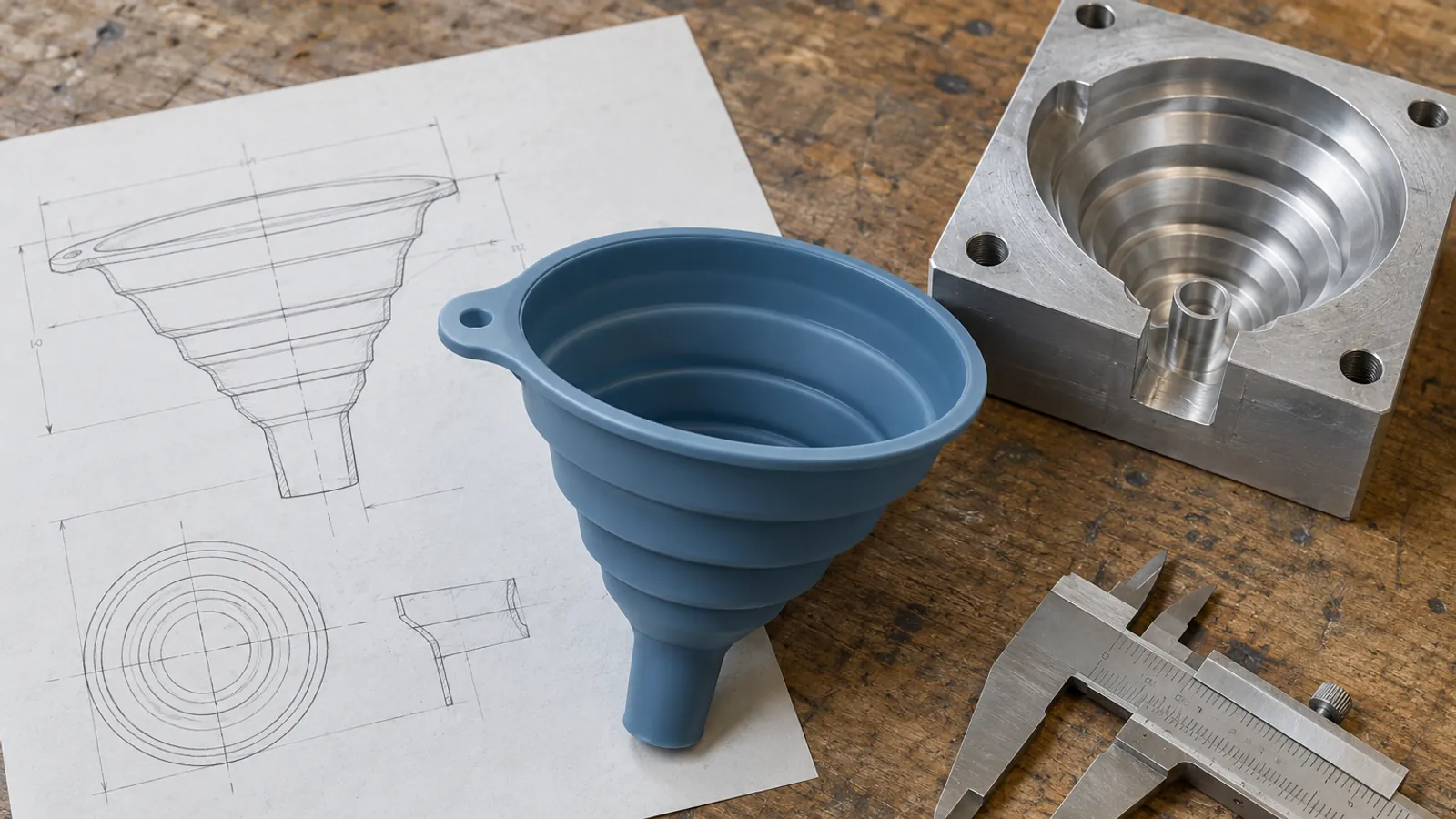
Illustrative scene: align rim support, fold radii, outlet geometry, parting and venting before tooling release.

Illustrative scene: check the named neck range, transfer medium, cleaning and repeated fold recovery with recorded criteria.
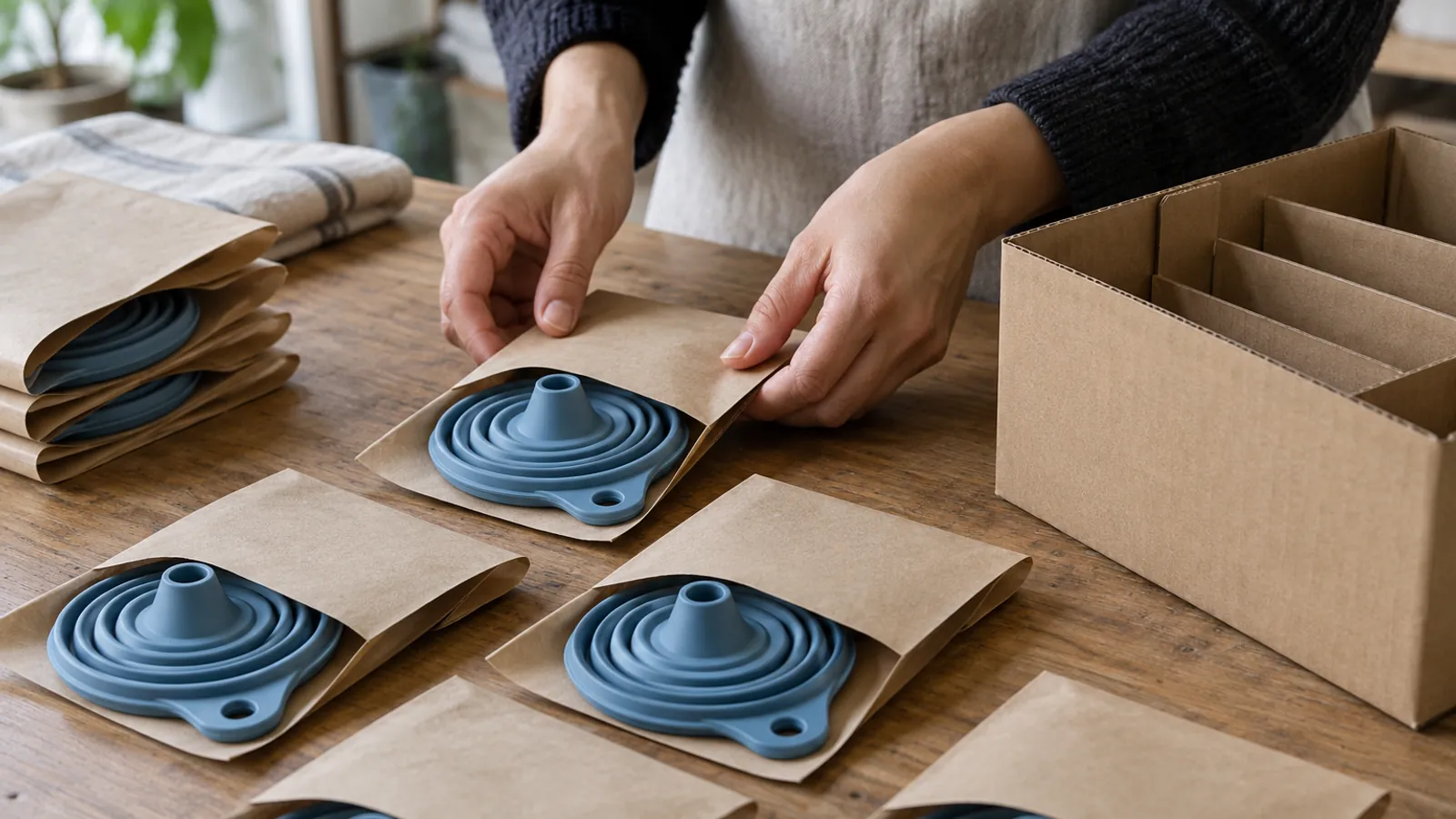
Illustrative scene: approve collapsed height, sleeve clearance, color reference and carton configuration together.
B2B SOURCING SNAPSHOT
Final terms depend on the approved specification, packaging, quantity and delivery plan.
| Control Point | Buyer Decision | Approval Basis |
|---|---|---|
| Receiving neck | Named bottle-neck inner diameter and shoulder shape | Buyer vessel samples or controlled neck drawing |
| Transfer medium | Specified dry ingredient or liquid and fill conditions | Agreed flow and residue observations |
| Funnel geometry | Rim, outlet, wall and hanging-tab dimensions | First-article dimensional inspection |
| Fold system | Expanded height, collapsed height and recovery | Defined cycle and shape-recovery comparison |
| Material and cleaning | Compound, hardness, color and intended cleaning method | Application-specific documentation and sample review |
| Commercial release | Tooling, MOQ, packaging and timing | Confirmed after drawing, sample and capacity review |
Each project is reviewed as a complete product specification.
Set outlet diameter, taper and insertion depth around a documented receiving-vessel family.
Balance top opening, fold radii, wall transitions and collapsed height for the target use.
Add or omit a storage tab after checking strength, cleaning access and pack orientation.
Review hardness, pigment and intended contact conditions against the approved sample plan.
Plan parting, venting, flash limits, fold detail, T0/T1 corrections and golden-sample sign-off.
Coordinate sleeve, card, bag or multipack dimensions with the funnel in its approved folded state.
B2B BUYER FAQ
These answers define the decisions required before tooling, sampling and a reliable quotation.
Send receiving-vessel neck drawings or samples, filling vessel, transfer materials, desired expanded and folded dimensions, color, forecast, destination market and packaging concept.
No. Define a neck and shoulder matrix, then trial the outlet and stability on representative vessels before making any compatibility claim.
Specify each material, pour rate and cleaning method. Powder bridging, residue and liquid splash require separate observations under controlled conditions.
Wall section, fold radii, compound choice and handling cycles all matter. Approve a measurable recovery method on physical samples.
Only if the intended temperature, duration, handling and finished-product evidence support that use. Do not infer a heat rating from silicone alone.
Suitability depends on the actual formulation, finished design, intended use, market and cleaning conditions. Request applicable evidence before publishing a claim.
Review T0/T1 samples for dimensions, fold lines, outlet fill, flash, demolding, fit and agreed transfer tests against one drawing revision.
Cavity count, tooling adjustments, color split, branding, sample iterations and packaging complexity affect commercial terms. Confirm them after the scope is fixed.
CATEGORY-SPECIFIC REVIEW
Release, heat exposure, shape support and repeated-use durability.
Draft, radii, detail definition and balanced wall thickness.
Cake forms, pastry trays, mats, cups and coordinated tools.
Prototype handling, baking tests, packaging and approved samples.
INQUIRY CHECKLIST
Providing clear requirements helps us evaluate tooling, samples, price and lead time.
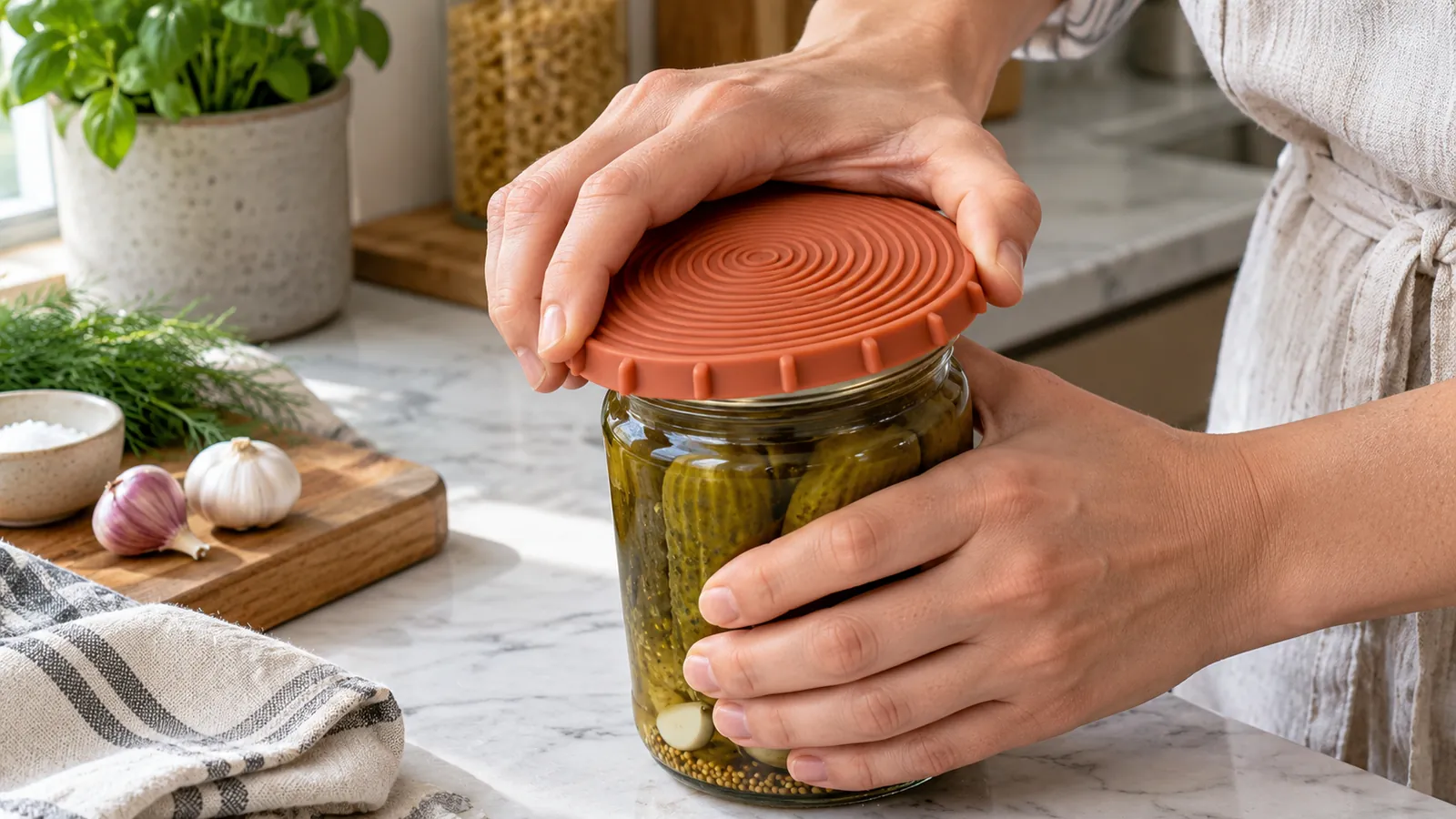
A flexible silicone grip pad developed around named jar-lid diameters, hand contact, texture depth, cleaning and retail pack-out rather than generic anti-slip claims.
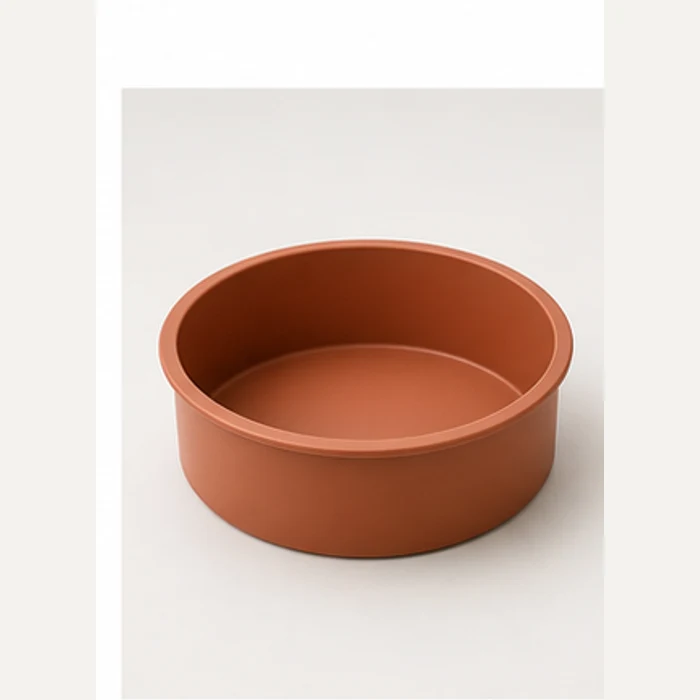
Classic flexible form for cakes, breads and chilled desserts.
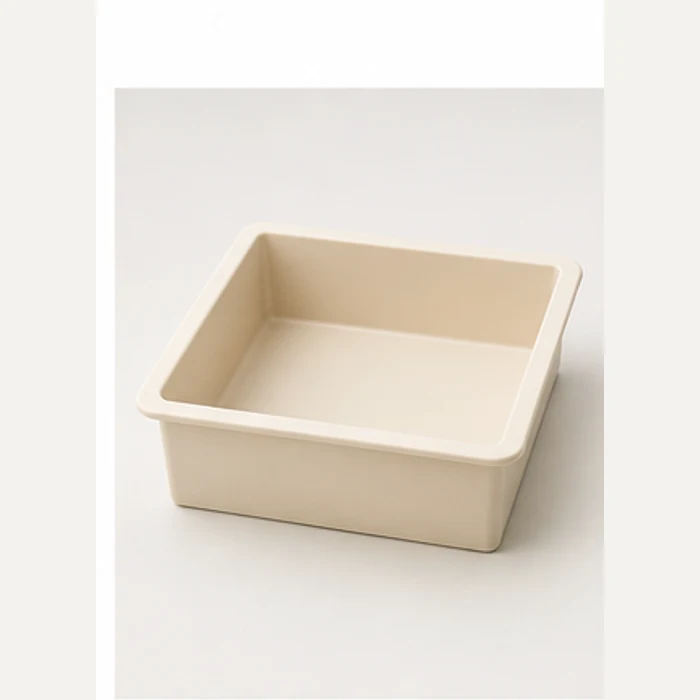
Straight-sided reusable mold for baking and presentation.
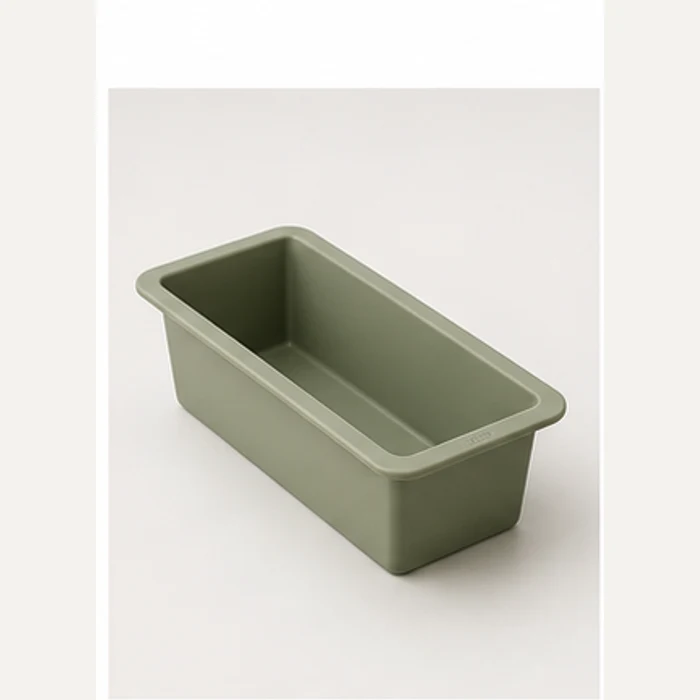
Easy-release loaf mold for bread, cake and private-label bakeware sets.
B2B PROJECT INQUIRY
Share the intended product, destination market, order quantity and launch plan. Our project team will review the information and identify the next practical step.
Drawings are helpful but not required. A sketch, reference photo or physical sample can be used for an initial discussion.
GENERAL SOURCING INQUIRY