
Bore and Length Family
Develop controlled sizes around approved probe envelopes and tolerances.
FREEZE, RELEASE & REUSE
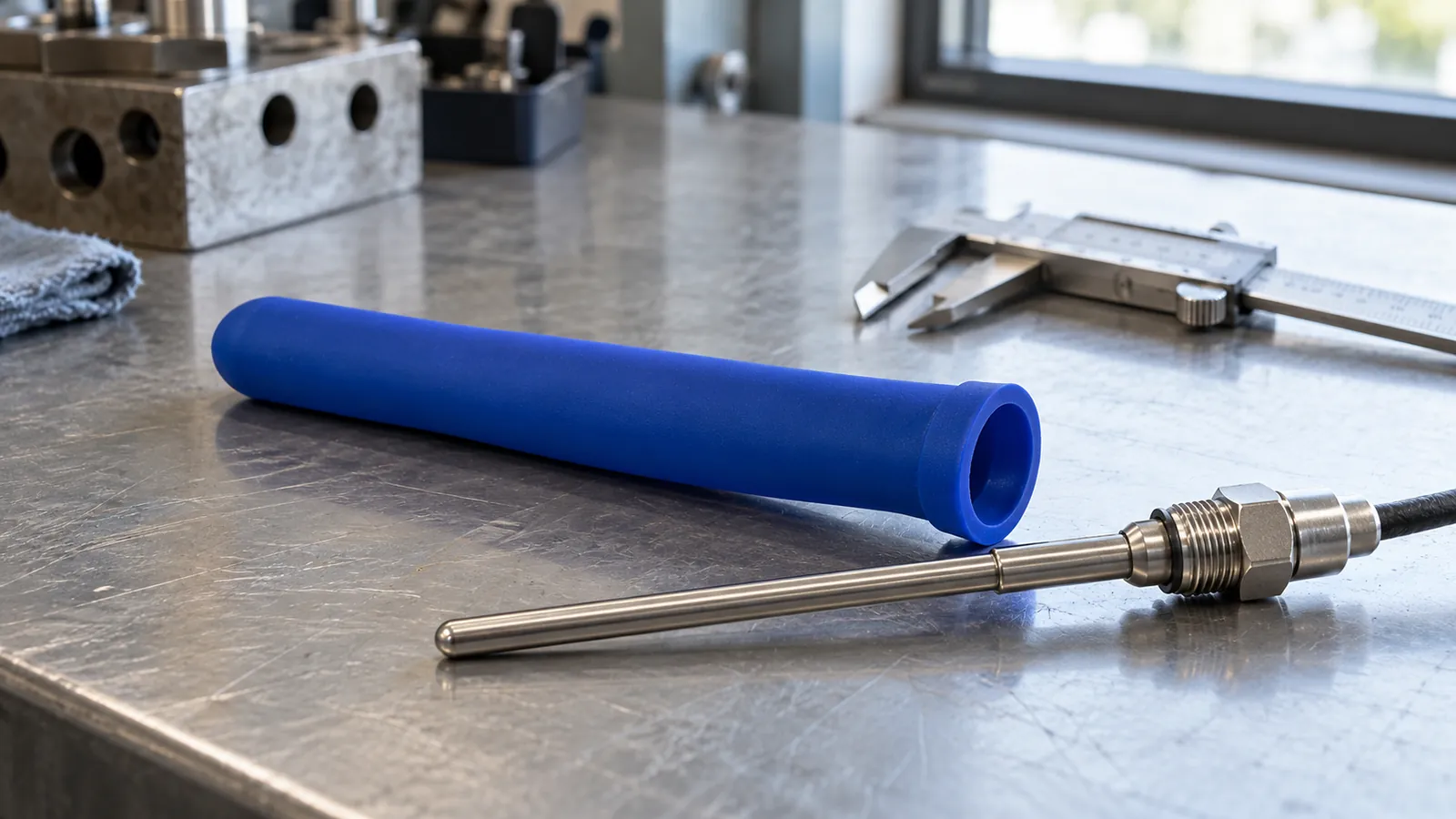
PRODUCT OVERVIEW
A custom silicone sensor probe protective sleeve can protect a named probe during storage, transport or handling when its geometry and material are matched to the actual assembly. It is not an unrestricted heat, chemical, impact or ingress-protection claim. Naike Silicone can review the probe drawing, tip shape, shaft diameter, connector clearance and intended installation sequence to establish a controlled development brief.
A buyer should identify whether the sleeve is a removable transport guard, a reusable handling cover or a component retained in use. The design choice changes the bore interference, closed-tip clearance, collar retention, grip texture, wall thickness, venting, demolding direction and inspection approach. Prototype samples should be tested on representative probes at the intended temperature and after the named cleaning or handling cycle.
Compound, hardness, pigment, tooling route, cavity count, pack format, MOQ and lead time remain project-specific. Send a dimensioned probe drawing or controlled physical sample, intended exposure and target quantity for DFM, sample and quotation review. Any electrical, sealing or regulatory suitability claim requires separate application-specific evidence and is not inferred from the sleeve image.
Product page updated:
Request a B2B QuotationENGINEERING & APPROVAL EVIDENCE
Each stage addresses a different purchasing risk: manufacturability, functional fit and private-label presentation.
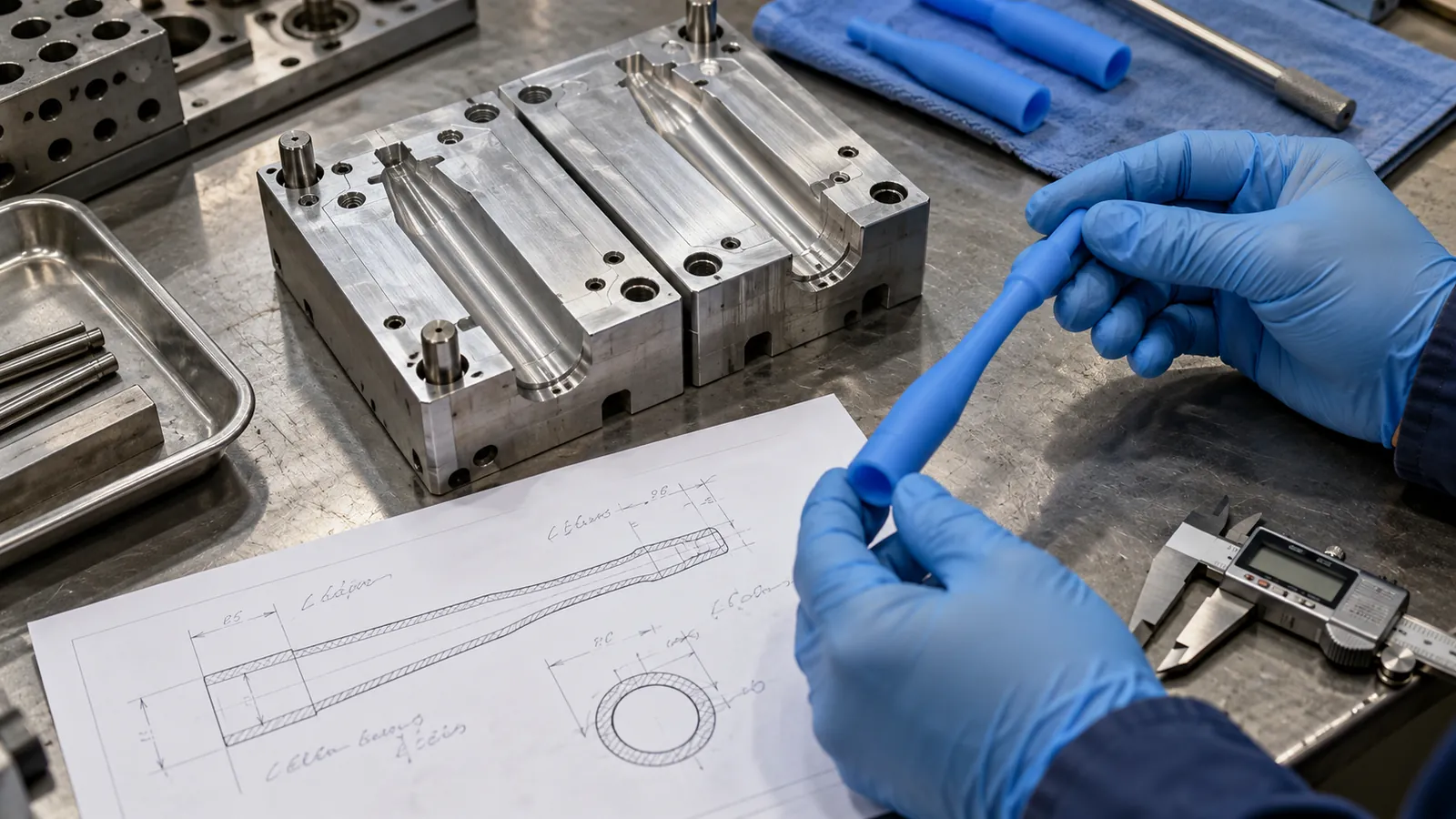
Illustrative scene: review bore, tip clearance, collar, parting, vents and demolding before tool release.

Illustrative scene: record insertion, retention, removal and dimensional results on traceable samples.
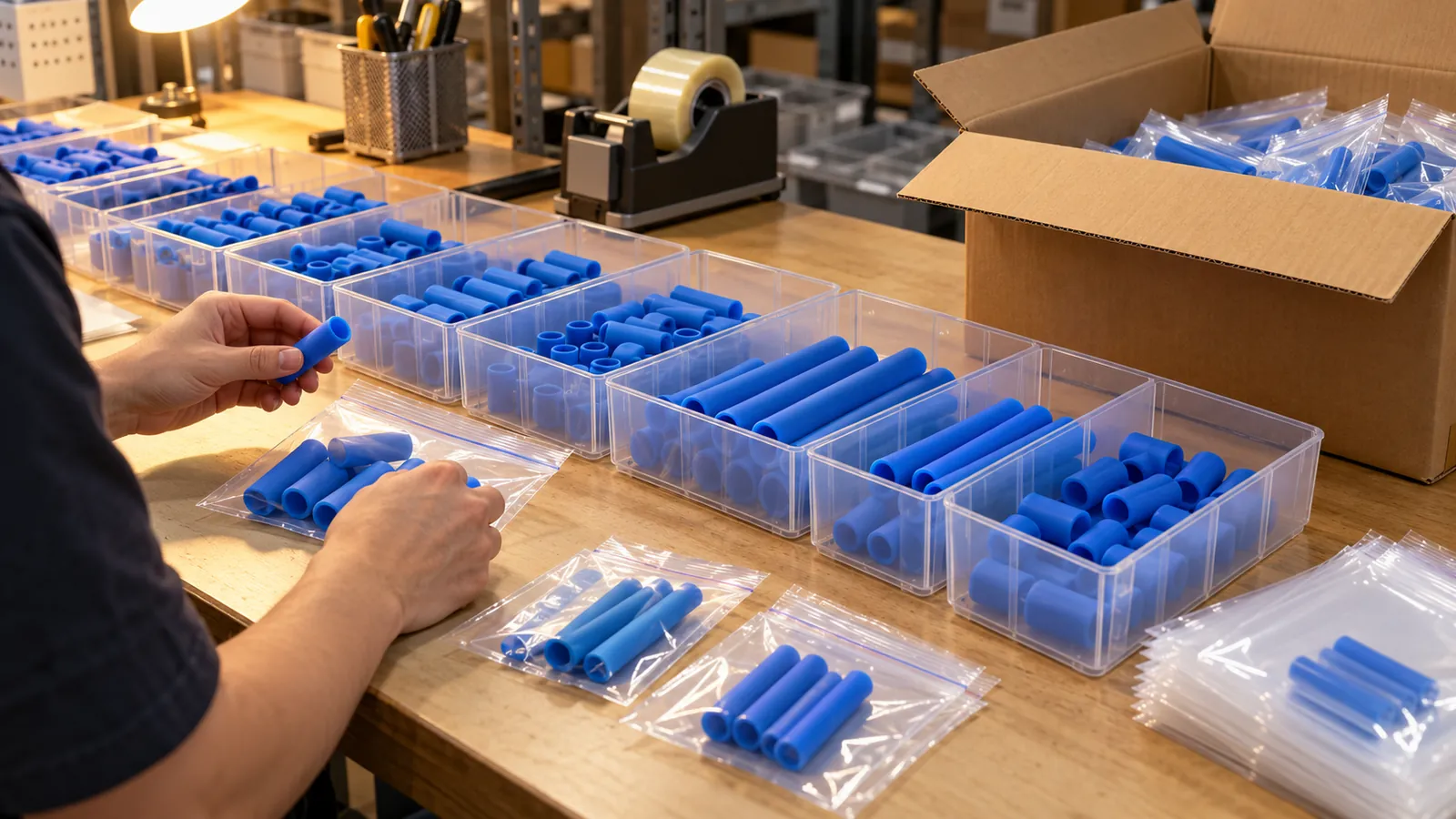
Illustrative scene: keep size variants, counts, sample identity and pack configuration under one approved matrix.
B2B SOURCING SNAPSHOT
Final terms depend on the approved specification, packaging, quantity and delivery plan.
| Control Point | Buyer Decision | Approval Basis |
|---|---|---|
| Probe interface | Shaft diameter, tip profile, shoulders and connector keep-out | Buyer drawing or controlled physical probe |
| Sleeve geometry | Bore, length, closed-tip clearance, wall profile and collar | Dimensioned drawing and first-article inspection |
| Installation | Insertion direction, grip access, retention and removal | Agreed force and handling evaluation on representative probes |
| Material boundary | Silicone grade, hardness, color and named exposure | Application-specific material review and sample trial |
| Inspection | Flash, tears, contamination, bore and closed-tip integrity | Approved visual standard and dimensional sample map |
| Commercial scope | Tooling, cavities, MOQ, packaging and delivery | Confirmed after DFM and current-capacity review |
Each project is reviewed as a complete product specification.
Develop controlled sizes around approved probe envelopes and tolerances.
Tune clearance and tip wall around the named storage or handling risk.
Review a flange, rib or textured grip for the defined installation method.
Select candidates against named exposure and size-identification needs.
Review core support, parting, venting, demolding and correction loops with sample approval.
Specify single-size bags, mixed kits, separators and carton counts without mixing revisions.
B2B BUYER FAQ
These answers define the decisions required before tooling, sampling and a reliable quotation.
Send a dimensioned probe drawing or controlled sample, tolerances, intended purpose, exposure, target quantity and pack format. State whether the sleeve is removed before use.
Only if the approved diameter and tip matrix supports installation, retention and removal on every named probe. Similar appearance does not prove compatibility.
No ingress-protection claim follows from the sleeve alone. A system-level seal requires its own interface design and validated test method.
Hardness is reviewed with bore interference, wall thickness, grip and installation force on the actual probe. A generic Shore A value is not a final fit specification.
Suitability depends on exact compound, time, temperature, chemistry and required function afterward. Approve application-specific conditioning and limits before making a claim.
Review first articles for bore, tip, collar, flash, tears, insertion, retention and removal against an approved drawing. Record tool revisions and retain signed samples.
Yes, subject to pigment and compound review. Link each color to a controlled size code and packed reference so substitutions do not cause mix-ups.
Geometry, core length, cavities, material, validation, size range and packaging change cost and timing. Confirm commercial terms only after DFM and quantity review.
CATEGORY-SPECIFIC REVIEW
Cavity draft, flexibility, spacing and practical demolding direction.
Tray stiffness, fill level, lids, stacking and freezer storage.
Artwork conversion, detail depth and manufacturable branded shapes.
Retail sleeves, sets, food-service packs and promotional programs.
INQUIRY CHECKLIST
Providing clear requirements helps us evaluate tooling, samples, price and lead time.
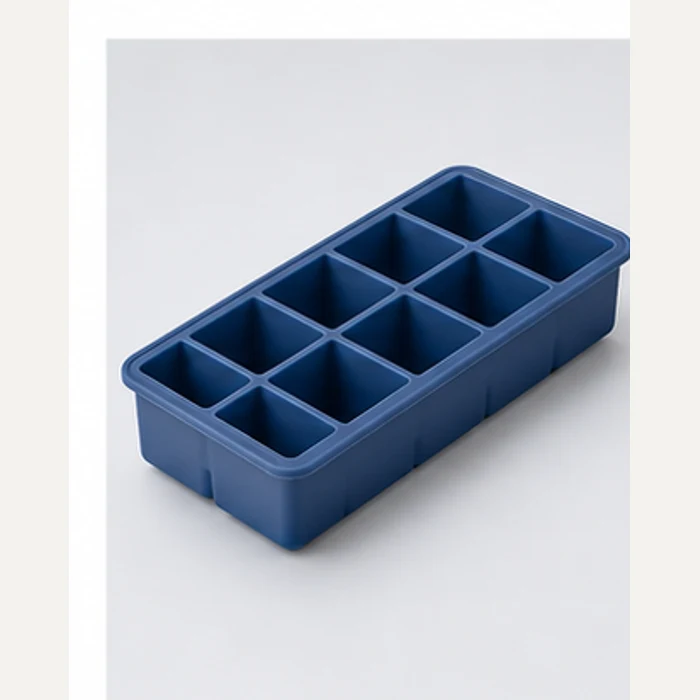
Flexible multi-cavity tray for everyday freezer use.
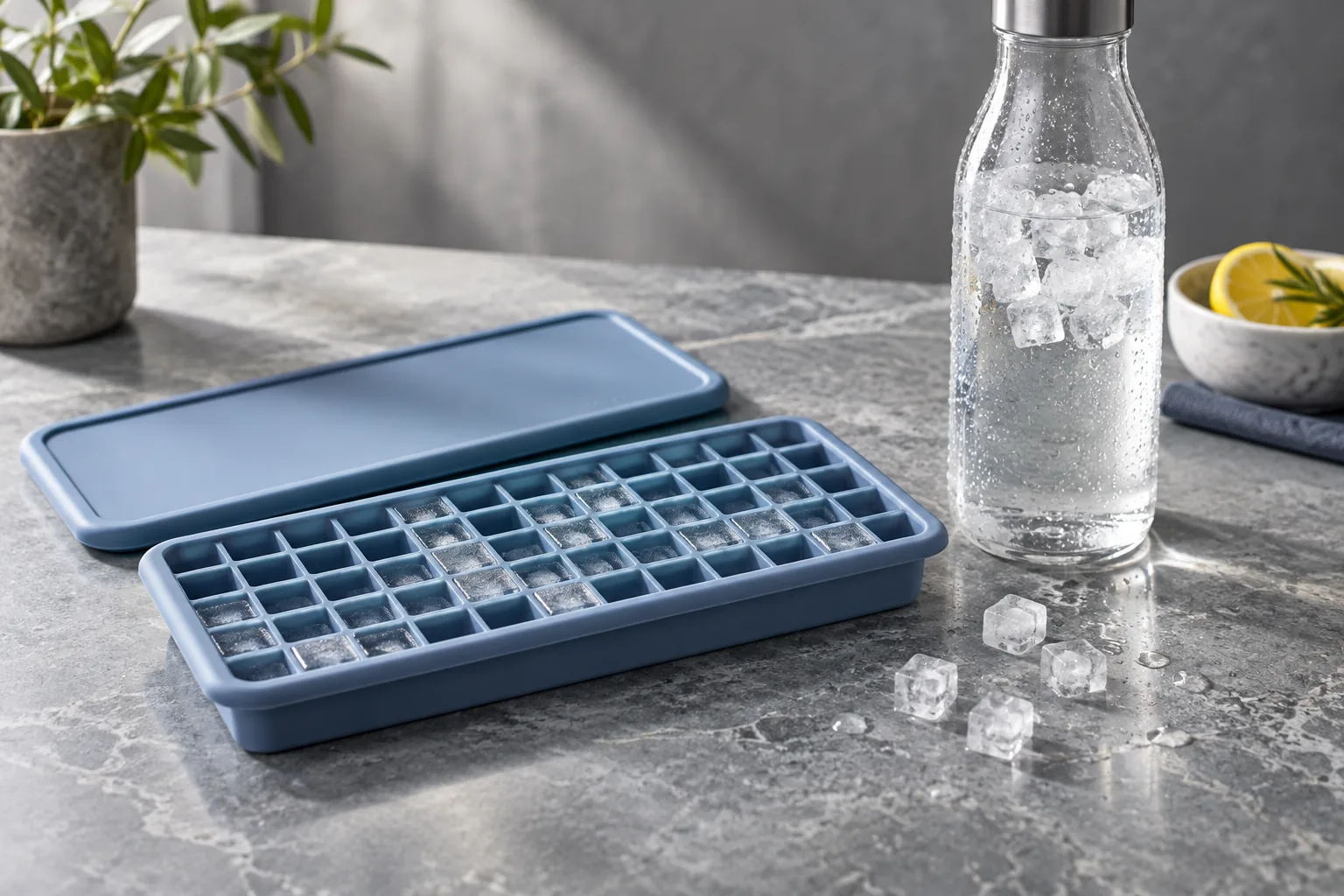
A private-label small-cavity tray developed for bottle-friendly ice, repeatable filling, flexible release and compact freezer stacking.
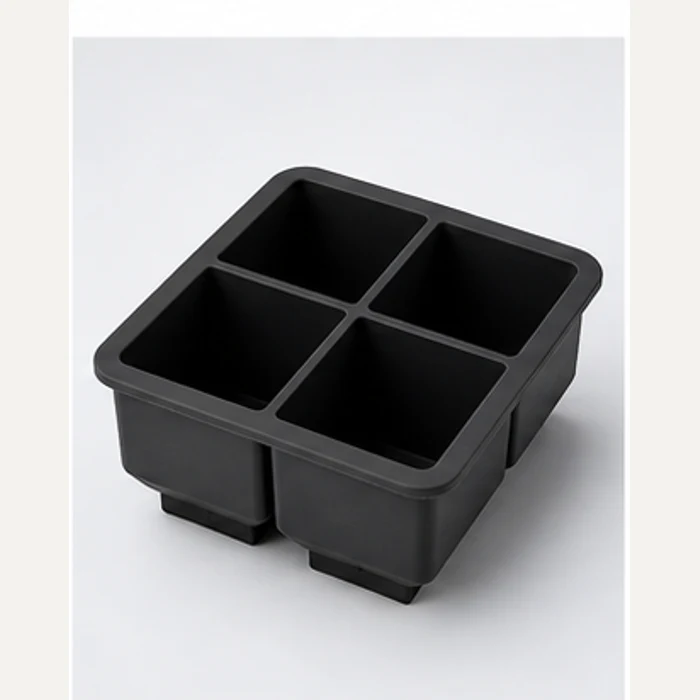
Slow-melting large cube format for premium beverages.
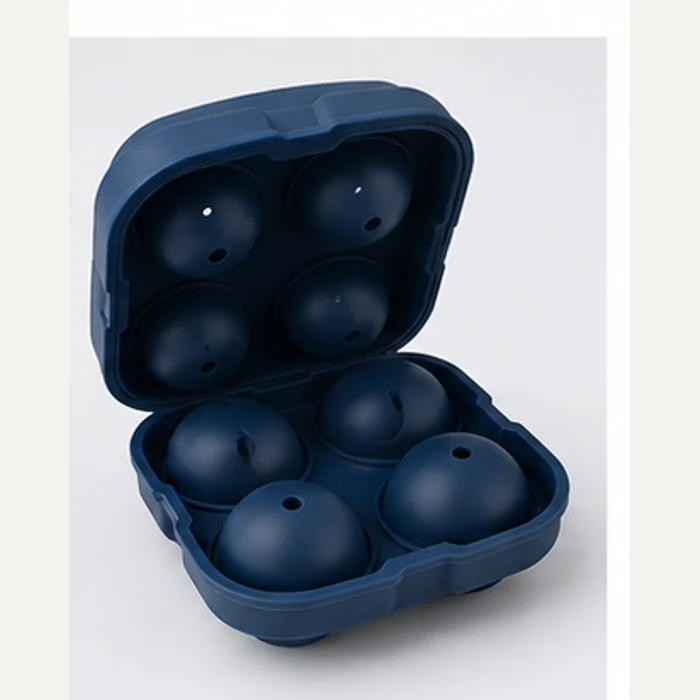
Two-part sphere mold for cocktails and presentation-focused drinks.
B2B PROJECT INQUIRY
Share the intended product, destination market, order quantity and launch plan. Our project team will review the information and identify the next practical step.
Drawings are helpful but not required. A sketch, reference photo or physical sample can be used for an initial discussion.
GENERAL SOURCING INQUIRY