
Round and Rectangular Profiles
Develop internal geometry around measured tubes, ports, threads, connectors or buyer-owned components rather than nominal size alone.
FREEZE, RELEASE & REUSE
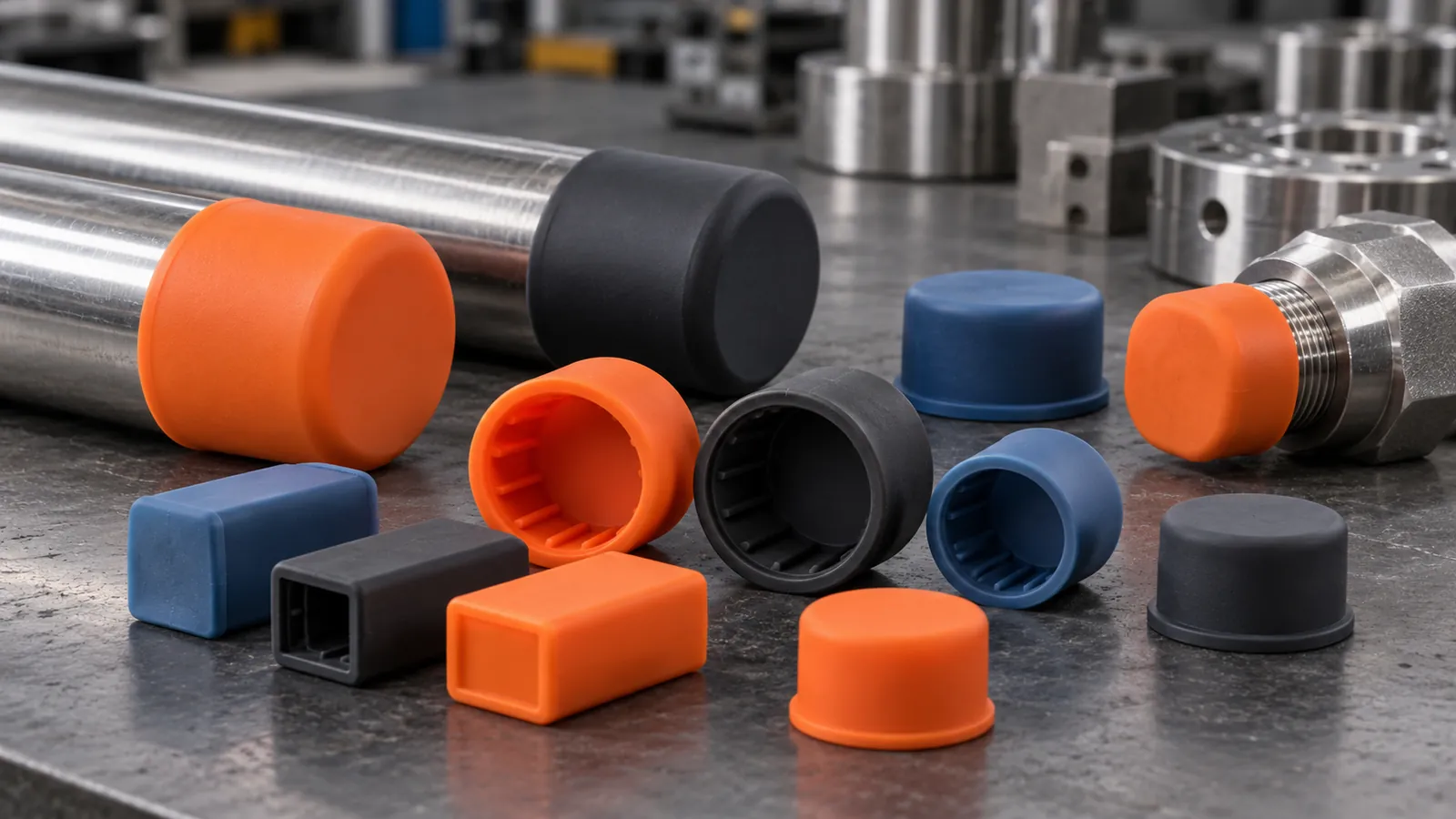
PRODUCT OVERVIEW
A custom silicone protective end cap is only as useful as the interface it fits and the condition it must withstand. Naike Silicone can develop round, rectangular, flanged or internally ribbed caps around buyer-supplied dimensions, but nominal tube or thread size alone is not enough to establish retention, sealing or masking performance.
The engineering brief should define the mating-part material, maximum and minimum outside dimensions, edge condition, insertion depth, required removal access, exposure temperature, chemicals, handling cycles and whether the cap protects during storage, transport, finishing or assembly. Those inputs guide interference, taper, wall thickness, internal ribs, flange geometry, venting, mold split and demolding direction.
Compound selection, performance evidence, tooling cost, MOQ, sampling and production timing remain conditional on the approved drawing, representative mating parts, buyer-agreed validation methods, color or size coding, packaging and current factory capacity. Claims apply only to the approved cap revision and documented conditions, not to every silicone formulation or unmeasured interface.
Product page updated:
Request a B2B QuotationENGINEERING & APPROVAL EVIDENCE
Each stage addresses a different purchasing risk: manufacturability, functional fit and private-label presentation.
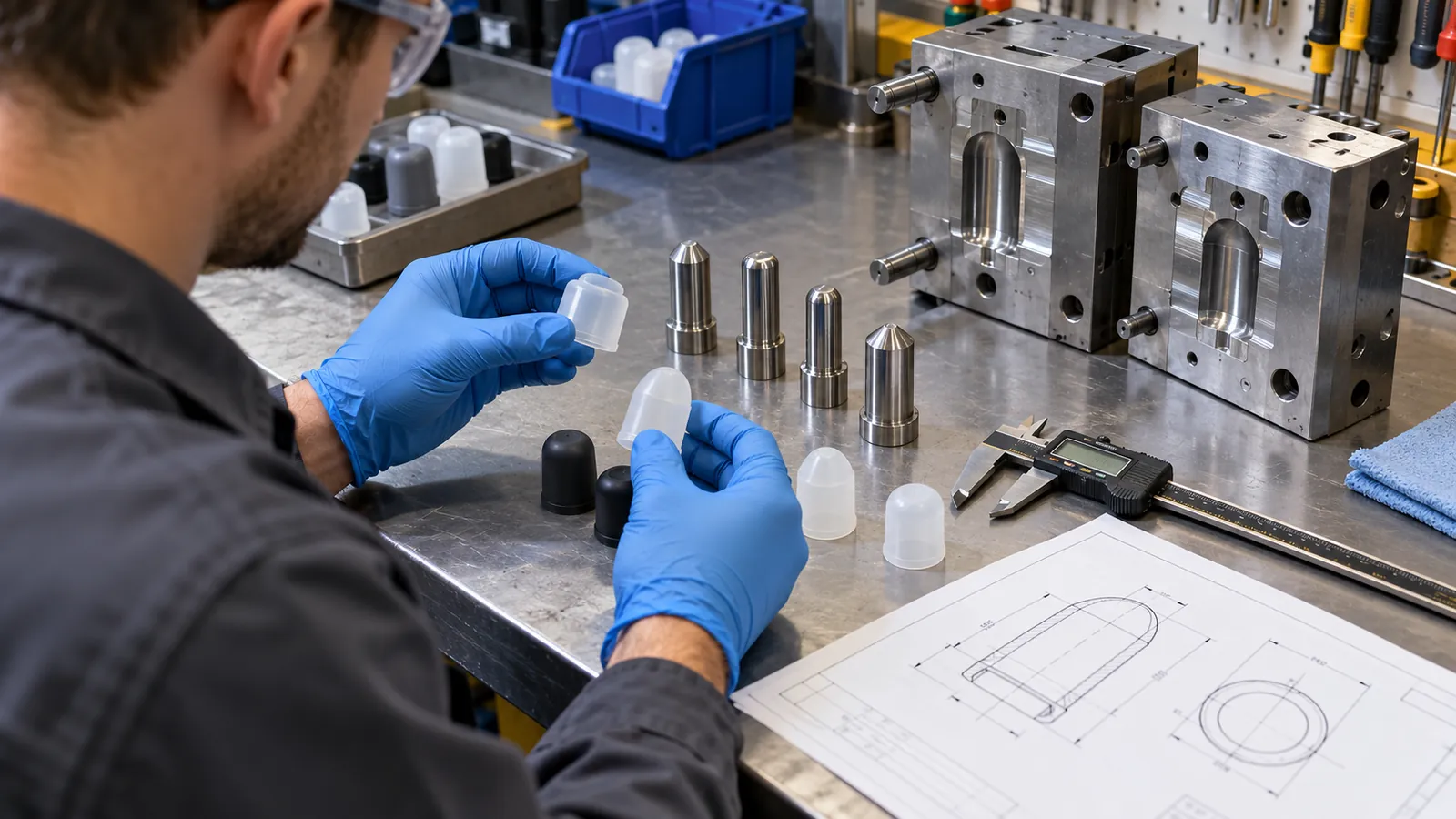
Illustrative factory scene: mating pins, cap sections, draft, wall balance, internal grip features, parting surfaces and venting are reviewed before tooling release.
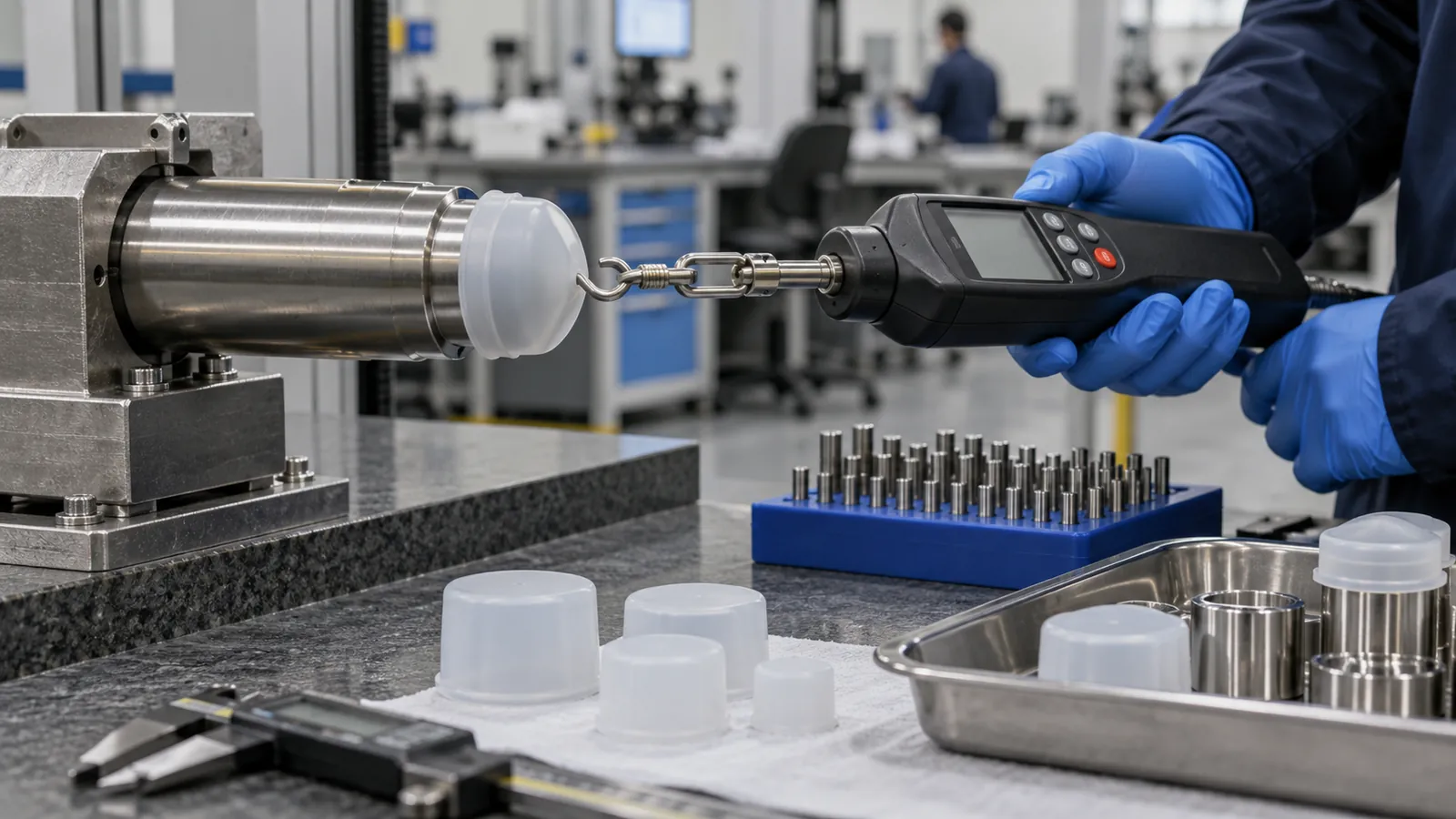
Illustrative validation scene: a buyer-agreed fixture can measure installation and removal force after defined conditioning, with results tied to the tested cap and mating-part revisions.
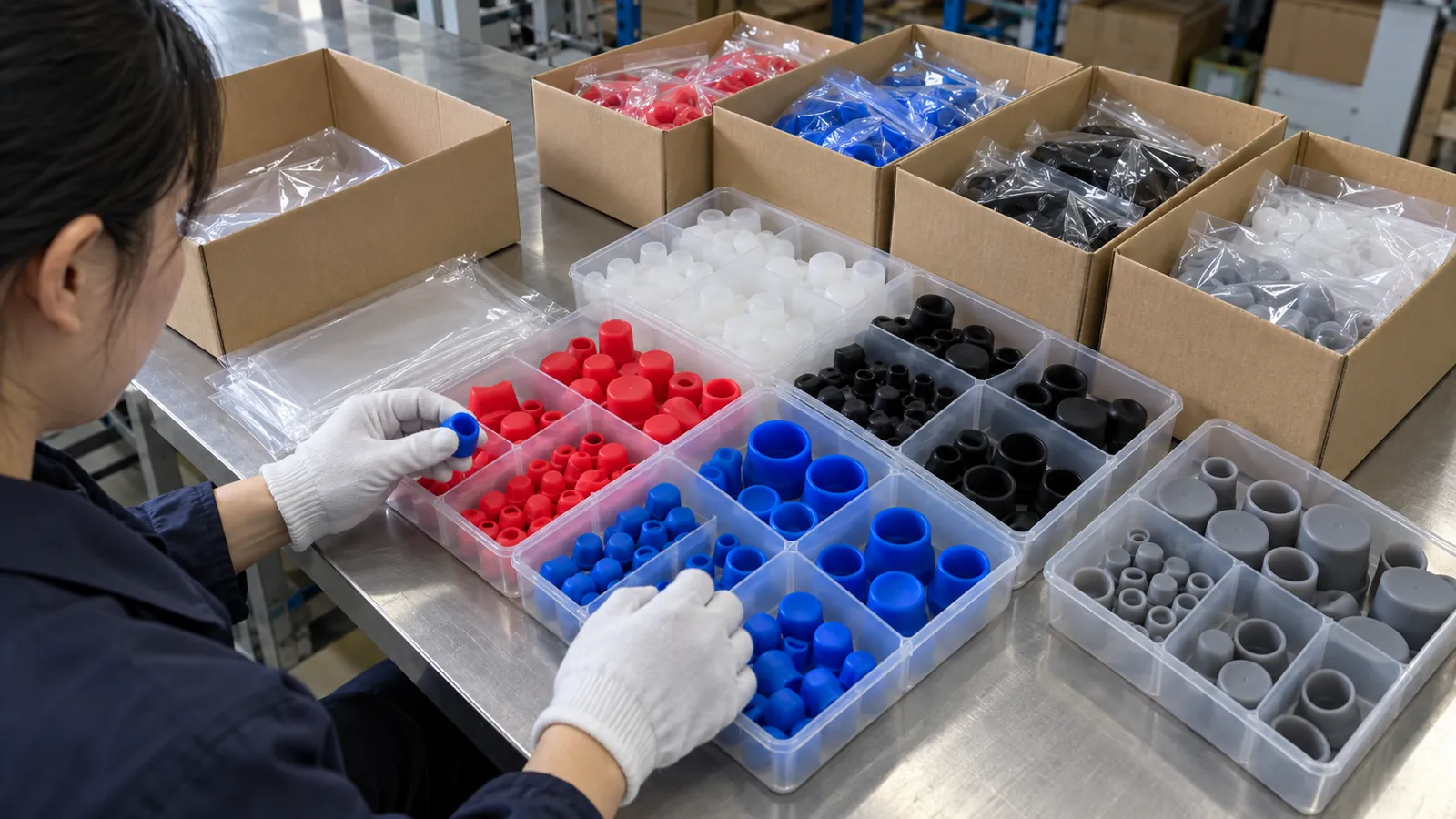
Illustrative packout scene: sizes, profiles and color codes are separated, counted and protected against mix-ups using an approved packing specification.
B2B SOURCING SNAPSHOT
Final terms depend on the approved specification, packaging, quantity and delivery plan.
| Control Point | Buyer Decision | Approval Basis |
|---|---|---|
| Mating interface | Round or rectangular profile, nominal size, measured tolerance and edge condition | Confirmed from controlled drawing, gauge or approved representative components |
| Cap geometry | Insertion depth, wall thickness, internal ribs, taper, flange and removal feature | Controlled by section drawing and dimensional report |
| Fit and retention | Installation method, seating position and acceptable removal-force window | Validated with named mating parts, conditioning and buyer-agreed fixture |
| Silicone compound | Cure route, hardness, pigment and exposure compatibility | Selected against documented temperature, media, duration and market requirements |
| Variant control | Size coding, color allocation, molded identification and pack quantity | Approved through variant matrix, samples and packout inspection |
| Commercial release | Tooling route, cavity plan, MOQ, samples and production timing | Quoted after interface, validation, variants, packaging and forecast are defined |
Each project is reviewed as a complete product specification.
Develop internal geometry around measured tubes, ports, threads, connectors or buyer-owned components rather than nominal size alone.
Review controlled interference, taper, ribs or bead details around installation force, retention and clean removal.
Add a stop flange, grip tab or removal lip where access, handling and mold release permit.
Select a silicone route, Shore A target and pigment for the defined exposure and fit window; avoid transferring evidence from another formulation.
Use approved color coding, molded size marks or profile differences to reduce variant confusion without compromising the interface.
Define bag quantity, tray or divider needs, dust protection, variant labels and carton segregation after samples are approved.
B2B BUYER FAQ
These answers define the decisions required before tooling, sampling and a reliable quotation.
Send the mating-part drawing or samples, minimum and maximum interface dimensions, insertion depth, use environment, installation and removal method, required quantity, variants, colors, packaging and validation requirements.
A controlled fit range may be possible when the interface tolerances and required retention allow it, but universal fit should not be assumed. Representative minimum and maximum mating parts must be included in the sample plan.
The engineering review considers mating-part dimensions, edge condition, silicone hardness, wall section, insertion depth, internal features and conditioning. Installation and removal-force limits should be agreed before testing.
A masking application requires the actual process temperature, duration, chemicals, pressure, reuse expectation and acceptance criteria. Material and finished-cap evidence must match those conditions; the product name alone does not establish suitability.
Yes, where the interface and mold route support them. These features affect local wall thickness, installation, retention, removal, parting and demolding, so they must be reviewed together in the drawing and samples.
Use representative mating parts at tolerance limits, a defined installation depth and method, documented conditioning and a repeatable force or handling check. Record raw results and retain the approved cap and interface references.
Yes. Pantone-referenced color families or molded identifiers can support variant control, but the buyer should approve the complete matrix, tolerance, packaging labels and segregation method before production.
Profile complexity, dimensions, cavity plan, compound, number of variants, validation scope, packaging, volume and current capacity affect the project. A reliable quotation follows interface and approval-plan review.
CATEGORY-SPECIFIC REVIEW
Cavity draft, flexibility, spacing and practical demolding direction.
Tray stiffness, fill level, lids, stacking and freezer storage.
Artwork conversion, detail depth and manufacturable branded shapes.
Retail sleeves, sets, food-service packs and promotional programs.
INQUIRY CHECKLIST
Providing clear requirements helps us evaluate tooling, samples, price and lead time.
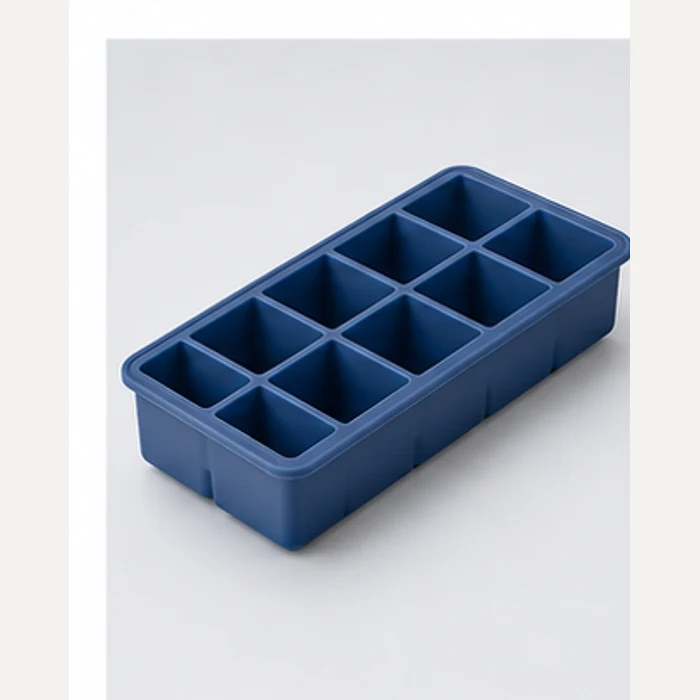
Flexible multi-cavity tray for everyday freezer use.
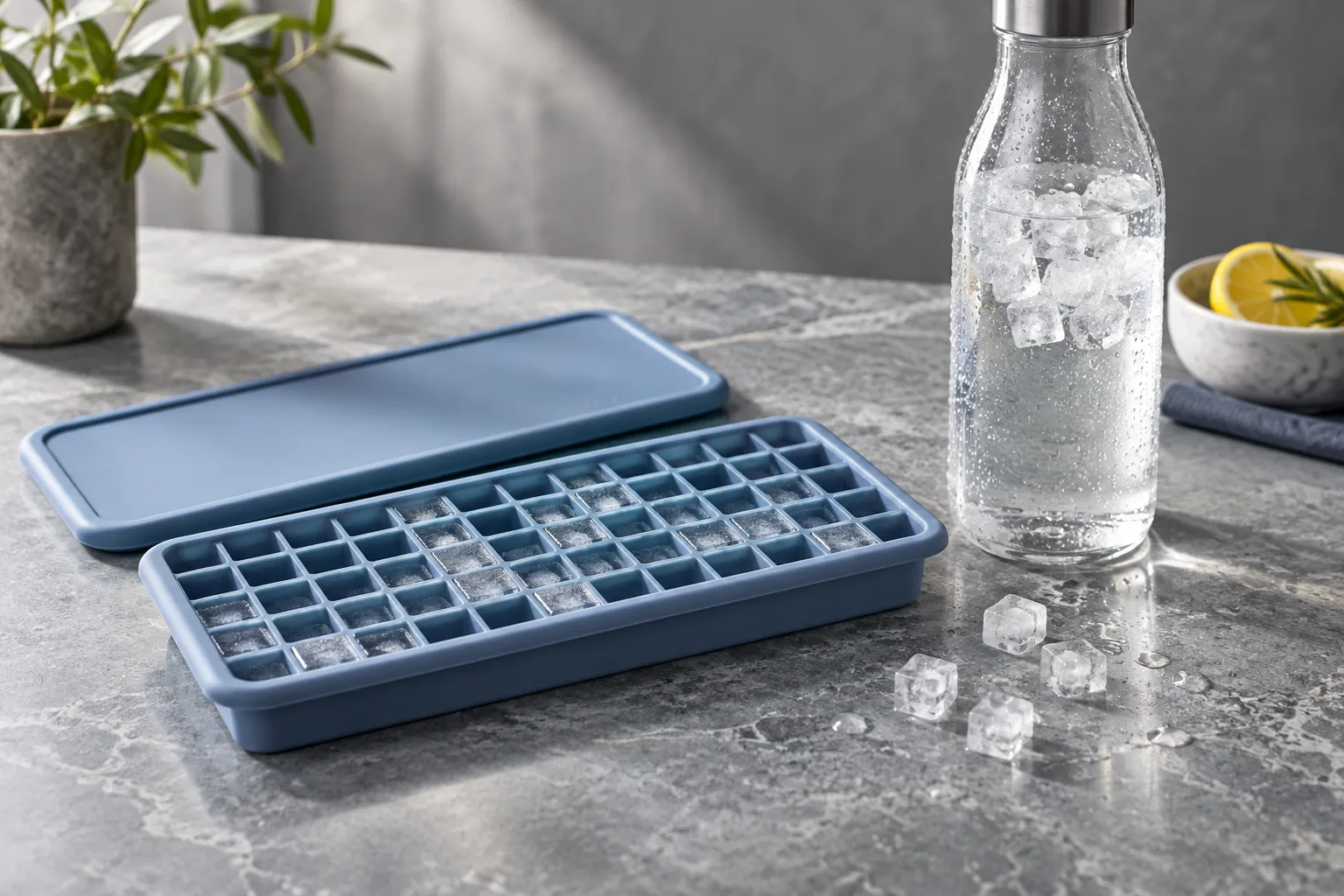
A private-label small-cavity tray developed for bottle-friendly ice, repeatable filling, flexible release and compact freezer stacking.
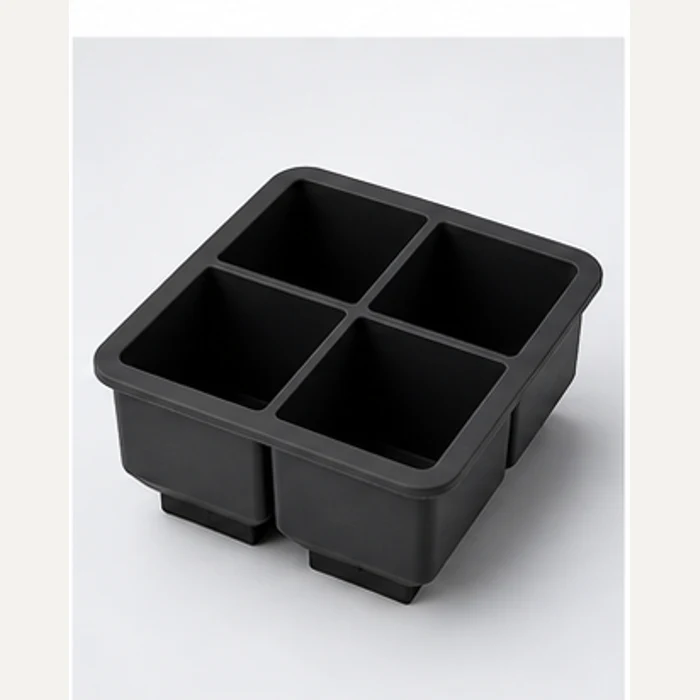
Slow-melting large cube format for premium beverages.
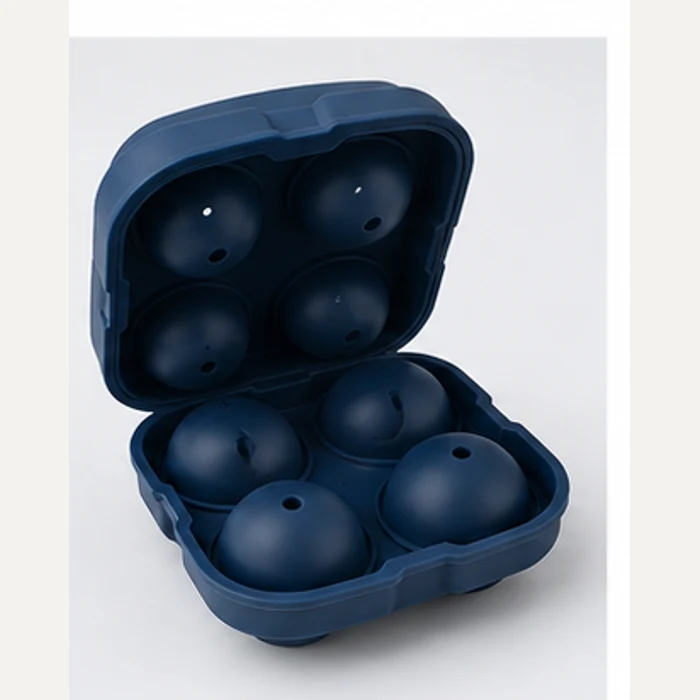
Two-part sphere mold for cocktails and presentation-focused drinks.
B2B PROJECT INQUIRY
Share the intended product, destination market, order quantity and launch plan. Our project team will review the information and identify the next practical step.
Drawings are helpful but not required. A sketch, reference photo or physical sample can be used for an initial discussion.
GENERAL SOURCING INQUIRY