
Sphere Diameter
Set the finished ice size around glassware clearance, beverage presentation and practical freezer handling.
FREEZE, RELEASE & REUSE
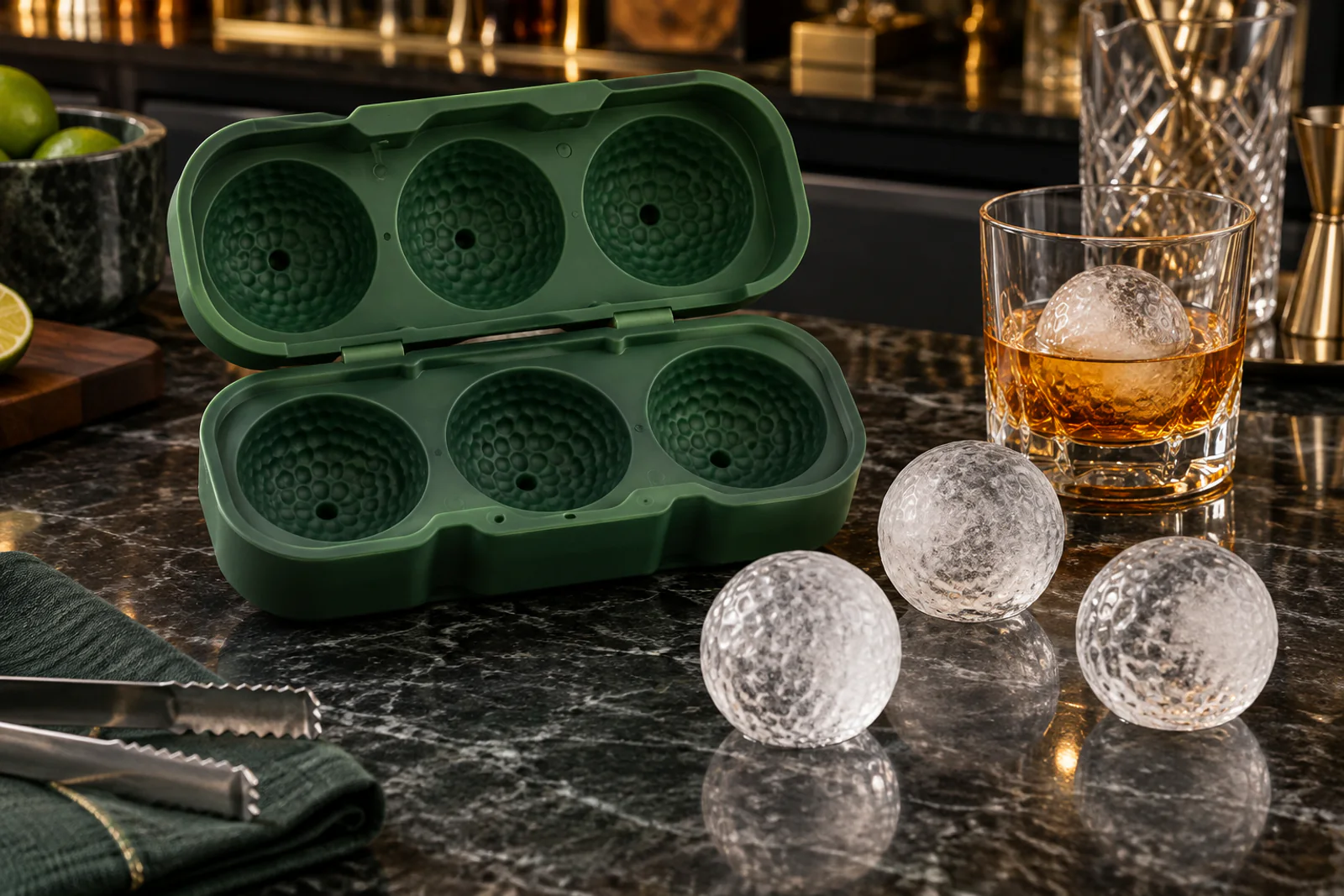
PRODUCT OVERVIEW
A custom silicone golf ball ice mold converts a recognizable dimple pattern into a beverage or event product whose sphere size, surface definition and packed presentation can be controlled. Naike Silicone develops the upper and lower mold sections as one registered system, connecting cavity texture, seam position, fill route, air release and demolding to an approved product rather than a generic visual concept.
The buyer brief should identify finished sphere diameter, cavity count, glassware clearance, freezer footprint, filling workflow, desired dimple character and retail or hospitality channel. Those inputs guide dimple depth and spacing, cavity draft, wall balance, registration keys, perimeter contact, fill openings, vents, support ribs and handling tabs. Prototype review can document assembly, leakage, frozen roundness, seam appearance, texture transfer and release under agreed conditions.
Material evidence, color approval and food-contact positioning are matched to the selected compound, pigment and finished SKU for the destination market. Tooling cost, MOQ, price, sampling time, available capacity and lead time remain conditional on the frozen drawings, validation scope, color split, packaging, quantity and current factory schedule. A sample result is not a universal performance promise for every freezer, filling method or beverage program.
Product page updated:
Request a B2B QuotationENGINEERING & APPROVAL EVIDENCE
Each stage addresses a different purchasing risk: manufacturability, functional fit and private-label presentation.
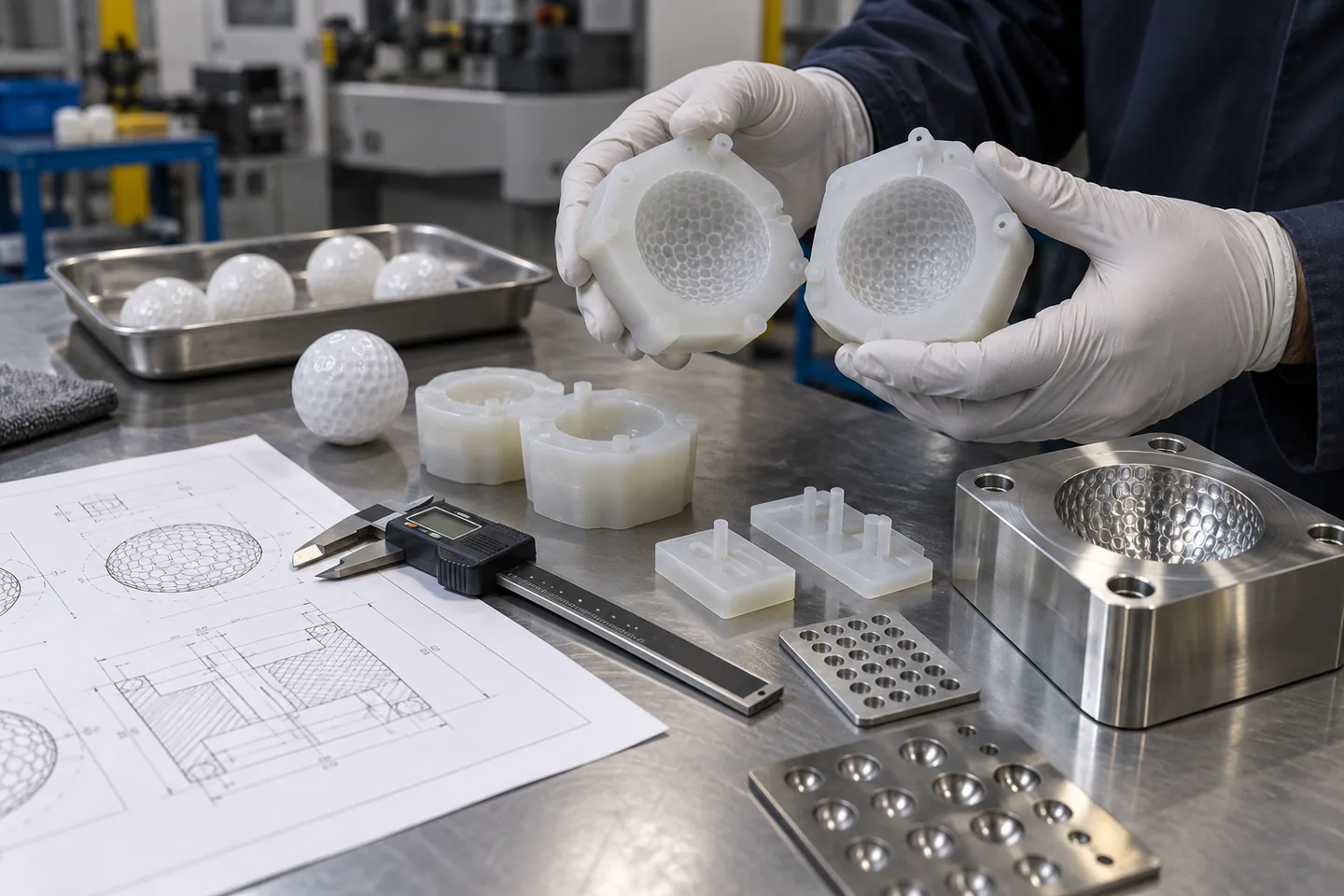
Sphere diameter, dimple hierarchy, registration, wall balance, venting, parting surfaces and release direction are reviewed before tooling approval.
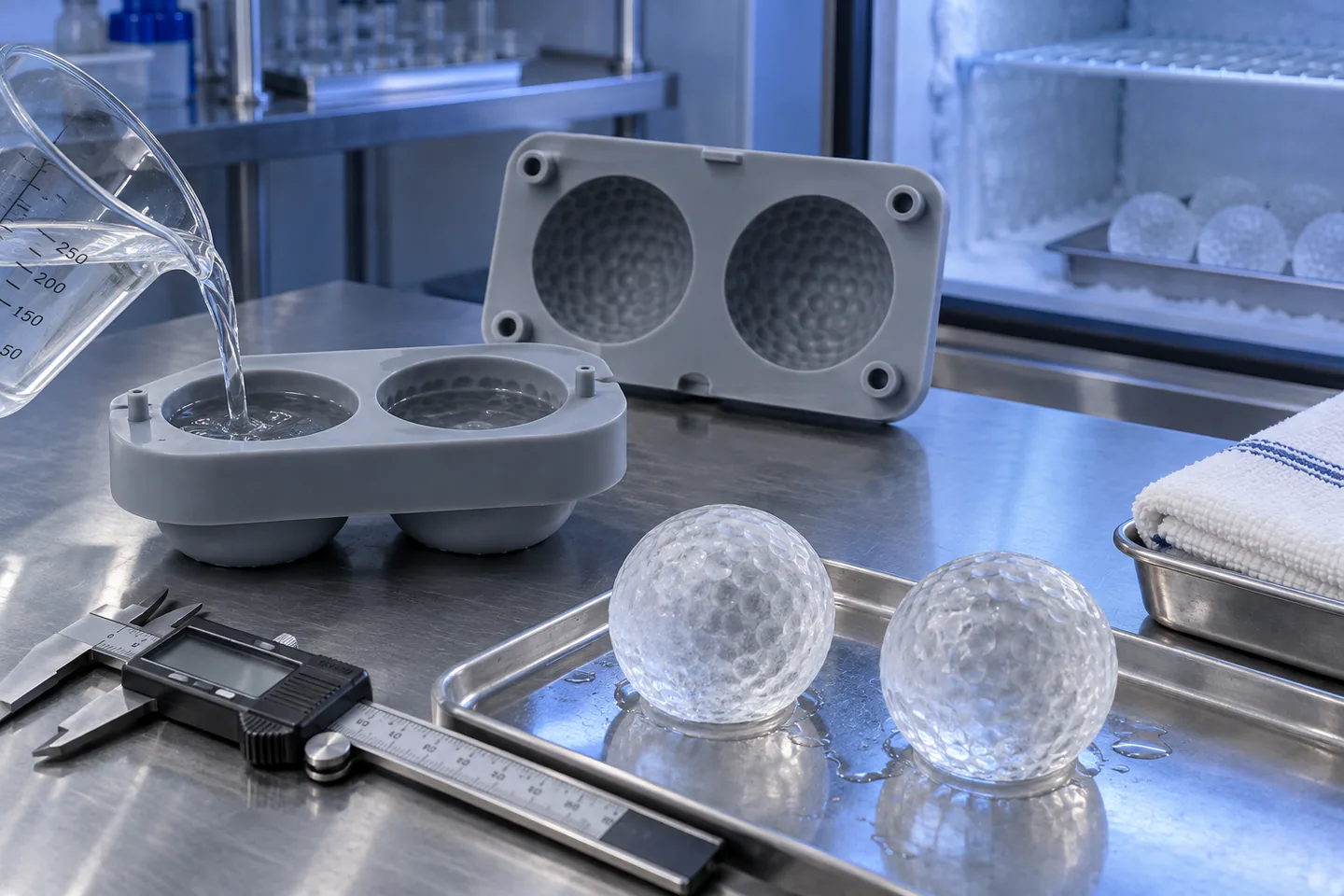
A documented trial connects water input, assembly, freezing conditions and release method with sphere dimensions, seam appearance and texture findings.
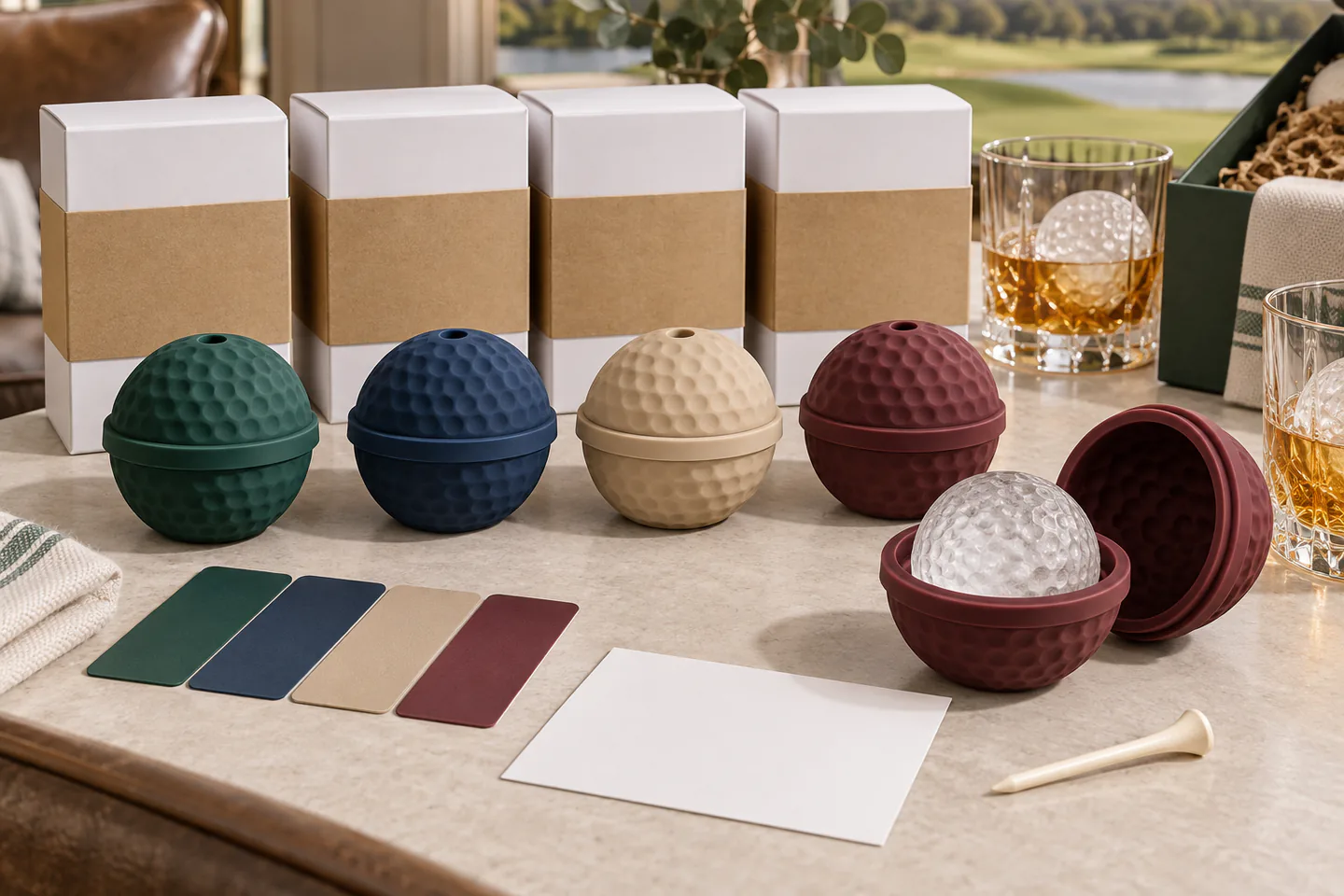
Approved colors, selling-unit quantity, blank brand zones, sleeves, cartons and export protection are aligned to the final SKU.
B2B SOURCING SNAPSHOT
Final terms depend on the approved specification, packaging, quantity and delivery plan.
| Control Point | Buyer Decision | Approval Basis |
|---|---|---|
| Sphere and texture | Finished diameter, dimple size, depth, spacing and surface hierarchy | Frozen from buyer artwork, reference geometry and approved sample |
| Two-part registration | Alignment keys, perimeter contact, seam position and assembly action | Checked through dimensional review and repeated sample assembly |
| Fill and vent route | Fill opening, air escape, target water level and handling sequence | Validated with the agreed water, freezer and operating method |
| Material and use | Silicone grade, cure route, hardness, pigment and cleaning conditions | Evidence and claims matched to the finished SKU and destination market |
| Private-label execution | Pantone-referenced color, molded mark, set count, sleeve or carton | Approved through artwork, physical references and packed golden sample |
| Commercial release | Tooling, MOQ, price, sampling, capacity and shipment window | Confirmed after design, validation, quantity, pack-out and schedule approval |
Each project is reviewed as a complete product specification.
Set the finished ice size around glassware clearance, beverage presentation and practical freezer handling.
Develop buyer-owned or reference-led dimple scale, spacing and depth within manufacturable filling and release limits.
Coordinate cavity count, spacing, support ribs and freezer footprint for the intended selling unit.
Review keys, perimeter contact, fill ports, air vents and handling tabs as one two-part system.
Approve silicone specification, hardness, physical Pantone-referenced colors and a manufacturable molded mark.
Plan set count, sleeve, box, insert, instructions, barcode zone and export carton after sample approval.
B2B BUYER FAQ
These answers define the decisions required before tooling, sampling and a reliable quotation.
Send the target sphere diameter, cavity count, dimple reference or artwork, filling method, freezer footprint, quantity, destination market, colors, logo artwork and packaging concept. Target glassware and a preferred ice presentation help define the DFM review.
Yes. Dimple diameter, depth, spacing and hierarchy can be developed within practical molding and ice-release limits. Buyer-owned artwork or geometry should be reviewed for manufacturability and intellectual-property authorization before tooling.
Cavity symmetry, part registration, perimeter contact, fill level, air displacement and freezing conditions all affect the result. The approval plan should define measurement locations and an acceptable seam or roundness range.
Both routes can be evaluated. Cavity count changes tray footprint, filling behavior, support, mold size, cycle planning and packaging, so the selected configuration requires its own drawing and quotation.
Buyer and factory should agree water condition, fill volume, assembly sequence, freezer setting, duration, conditioning and demolding action. Results apply only to the approved product and documented conditions.
Yes. Pantone-referenced colors, manufacturable molded marks, sleeves, boxes and event packs can be developed. Physical color, artwork and a packed golden sample require approval before production.
Define the destination market, intended food-contact use, cleaning method and finished colors first. Applicable compound, pigment and finished-product evidence can then be reviewed for that scope rather than borrowed from another formula.
Sphere geometry, dimple detail, cavity count, mold construction, compound, colors, validation, packaging, order quantity and current capacity all affect the program. Commercial figures follow the approved revision and production window.
CATEGORY-SPECIFIC REVIEW
Cavity draft, flexibility, spacing and practical demolding direction.
Tray stiffness, fill level, lids, stacking and freezer storage.
Artwork conversion, detail depth and manufacturable branded shapes.
Retail sleeves, sets, food-service packs and promotional programs.
INQUIRY CHECKLIST
Providing clear requirements helps us evaluate tooling, samples, price and lead time.
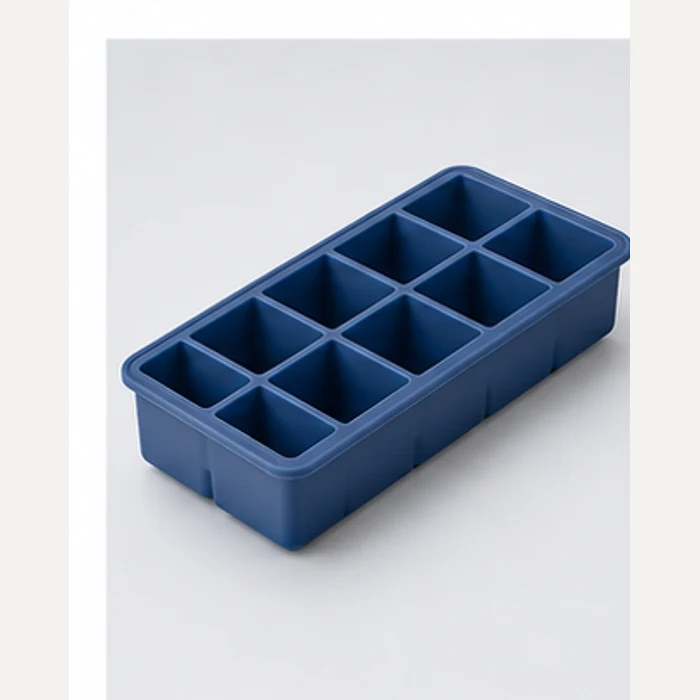
Flexible multi-cavity tray for everyday freezer use.
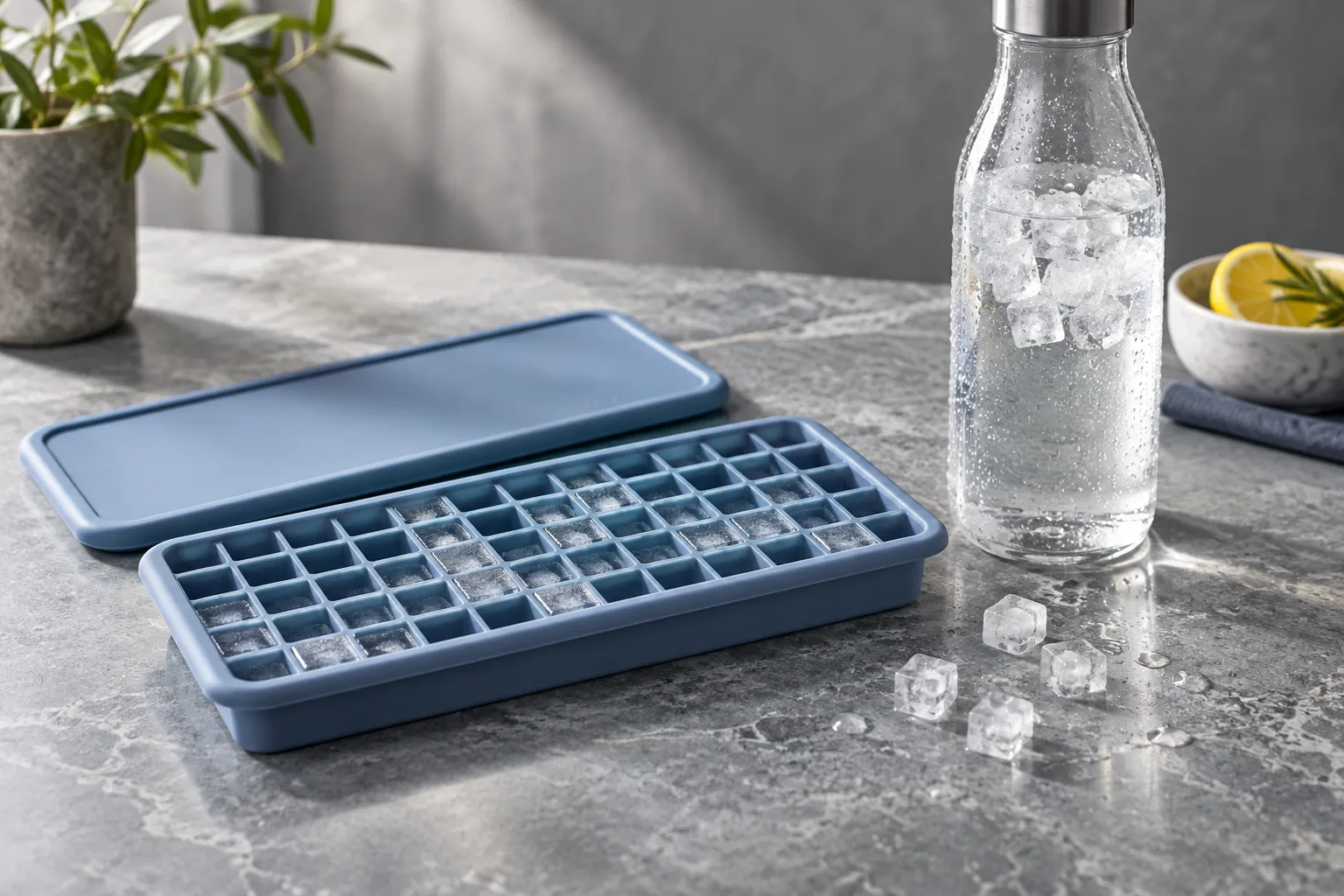
A private-label small-cavity tray developed for bottle-friendly ice, repeatable filling, flexible release and compact freezer stacking.
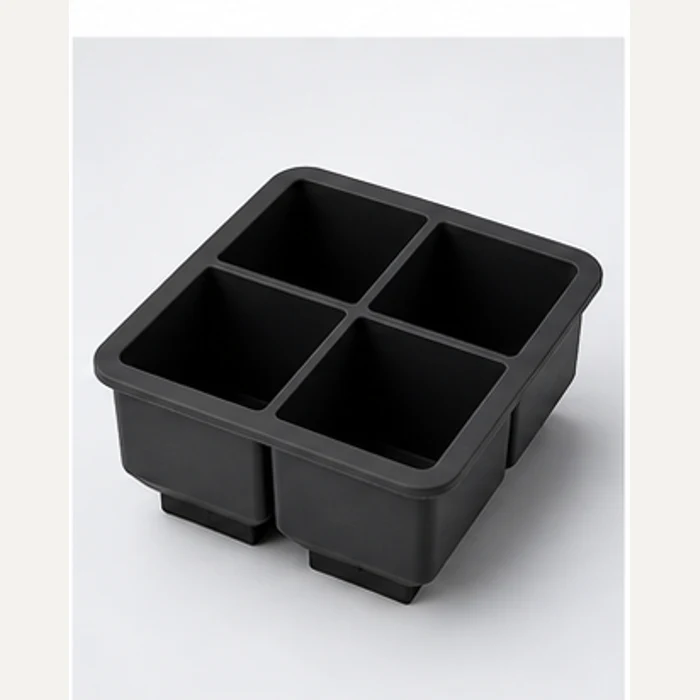
Slow-melting large cube format for premium beverages.
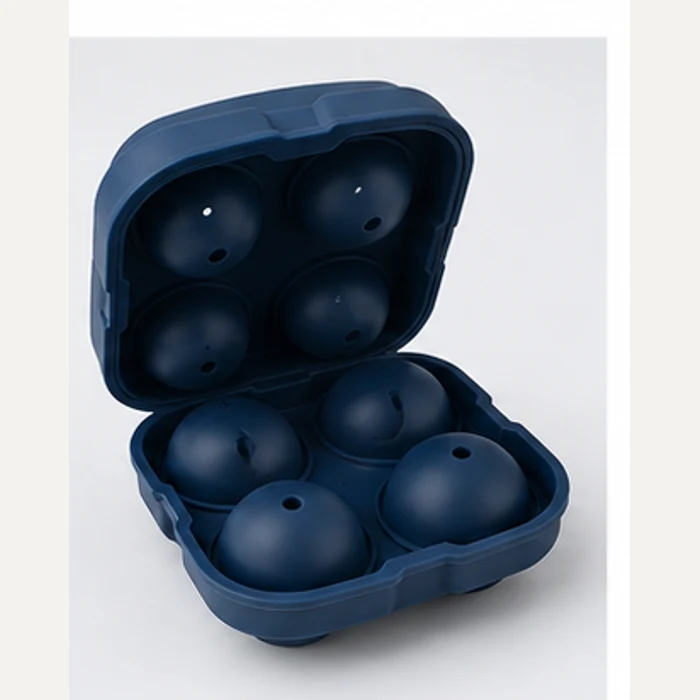
Two-part sphere mold for cocktails and presentation-focused drinks.
B2B PROJECT INQUIRY
Share the intended product, destination market, order quantity and launch plan. Our project team will review the information and identify the next practical step.
Drawings are helpful but not required. A sketch, reference photo or physical sample can be used for an initial discussion.
GENERAL SOURCING INQUIRY