
Panel Groove Profile
Adjust groove diameter, width, depth and flange overlap around the controlled cutout and panel-thickness range.
FREEZE, RELEASE & REUSE
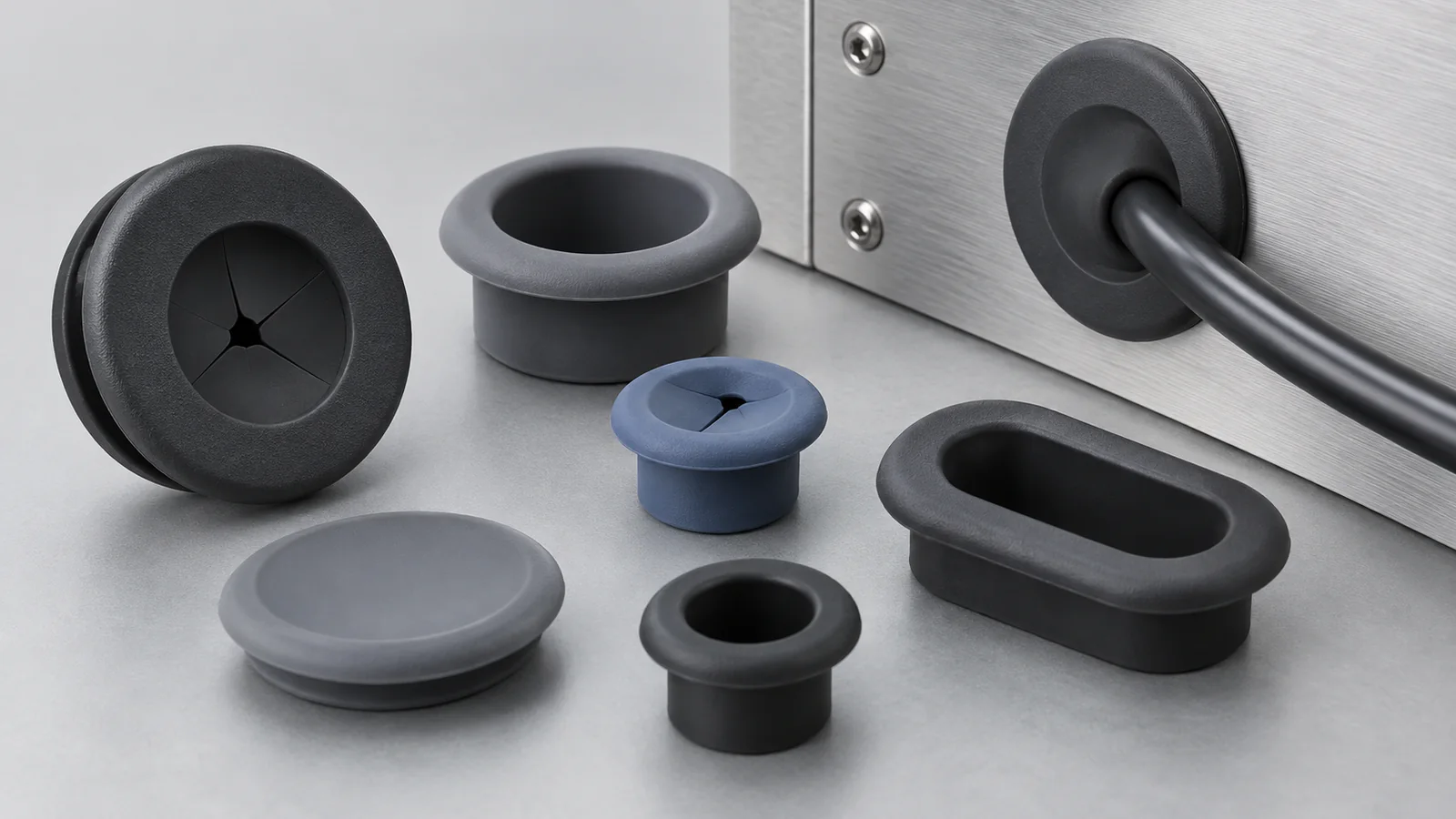
PRODUCT OVERVIEW
A custom silicone cable grommet should be engineered around the panel, cable and installation sequence rather than selected only by a nominal hole diameter. Naike Silicone develops round, oval, open-bore, membrane and slit-entry profiles using the buyer's panel cutout, panel thickness, cable outside diameter, bend direction and retention priorities. The flange, groove, body, entry lip and optional membrane work as one molded geometry, so changing one dimension can affect insertion, seating, cable movement, edge coverage and demolding.
The buyer brief should identify panel material and thickness range, cutout dimensions and edge condition, cable or harness diameter range, connector constraints, installation direction, expected movement, temperature and environmental exposure, cleaning or maintenance route, color coding and packed quantity. These inputs guide flange diameter, groove width and depth, bore or slit design, local wall thickness, hardness, parting line, venting, mold cavities and inspection fixtures. Production-representative samples can be evaluated for panel fit, cable passage, visible damage, retention and dimensional recovery under buyer-agreed methods.
A silicone grommet does not automatically establish an ingress-protection, flame, electrical-insulation, chemical-resistance or service-life claim. Required evidence must match the selected compound, pigment, finished geometry, mating panel, cable, use conditions and destination requirements. Tooling price, MOQ, unit price, sample timing, available capacity and lead time remain conditional on the approved drawing, validation scope, color split, packaging, quantity and current production schedule.
Product page updated:
Request a B2B QuotationENGINEERING & APPROVAL EVIDENCE
Each stage addresses a different purchasing risk: manufacturability, functional fit and private-label presentation.

Flange, groove, panel range, bore, membrane, wall balance, parting line, venting and cavity strategy are reviewed before tooling release.
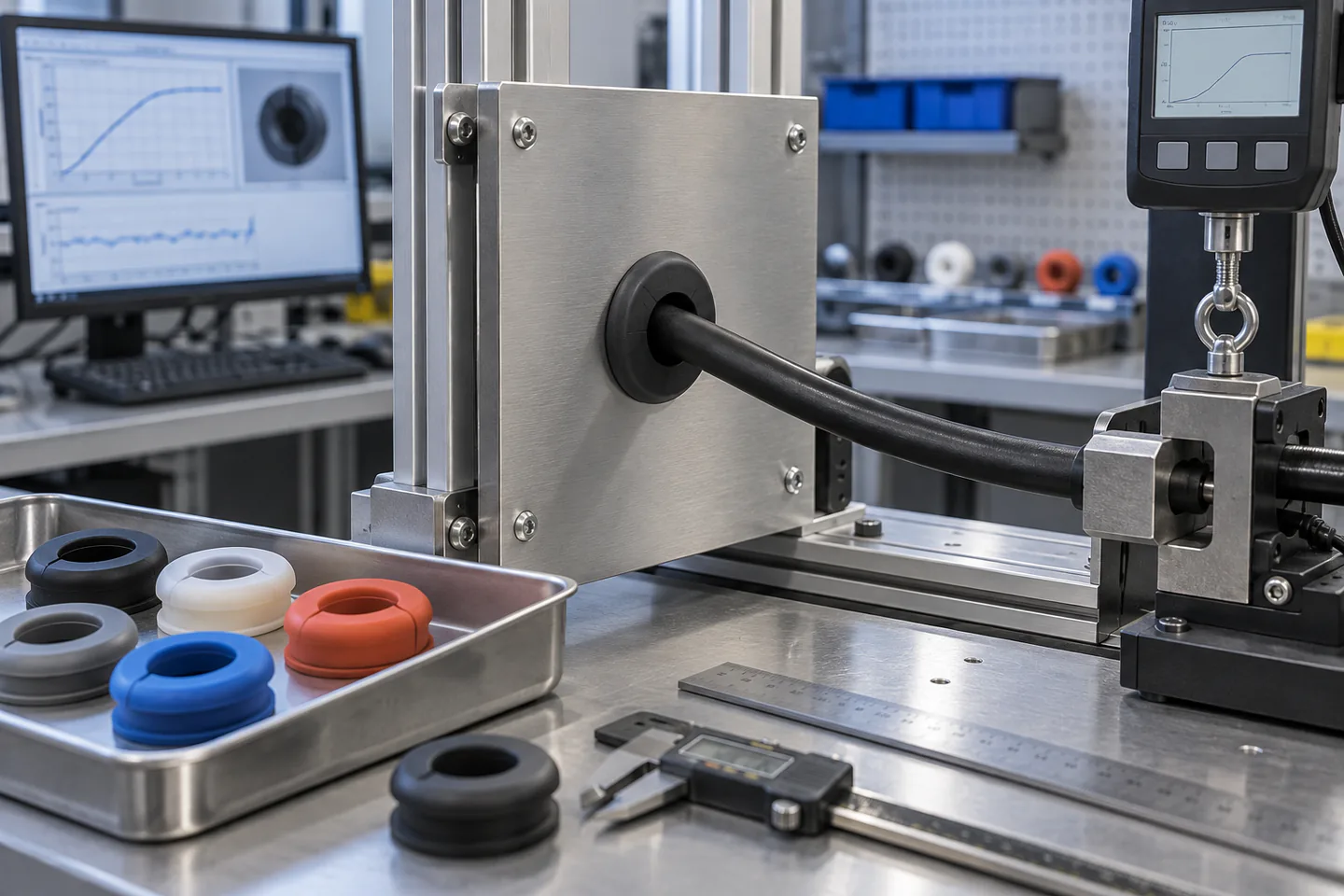
A documented sample plan can check installation, seating, cable passage, pull direction, edge protection and recovery on identified panels and cables.
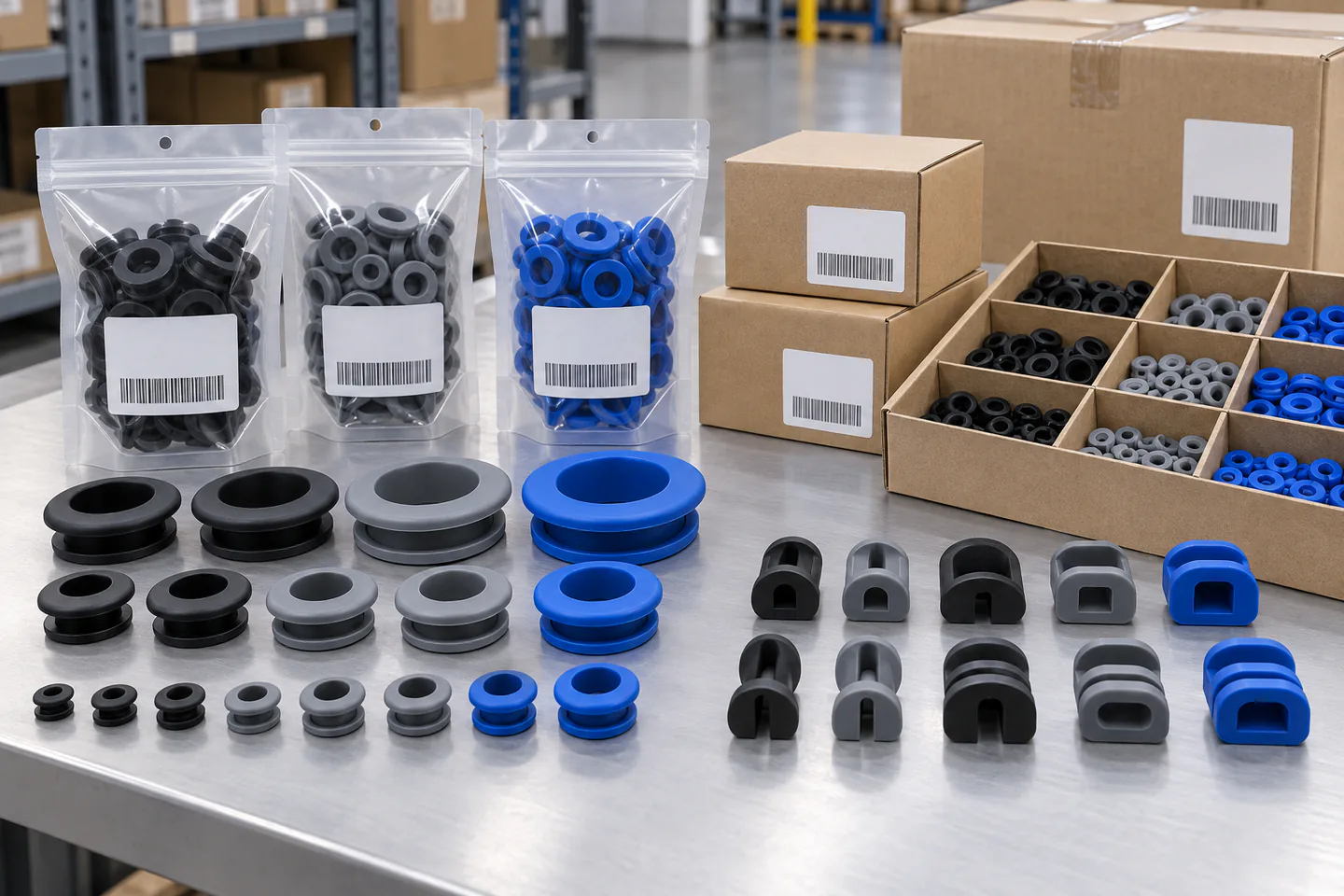
Approved sizes, colors, part codes, bag quantities, labels, compartment packs and export cartons are tied to the same product revision.
B2B SOURCING SNAPSHOT
Final terms depend on the approved specification, packaging, quantity and delivery plan.
| Control Point | Buyer Decision | Approval Basis |
|---|---|---|
| Panel interface | Cutout diameter or outline, edge condition, panel thickness range and installation direction | Confirmed with controlled panel drawings, identified fixtures and approved samples |
| Grommet geometry | Flange outside diameter, groove diameter, groove width, body depth and local radii | Defined on the drawing and checked after agreed conditioning |
| Cable entry | Open bore, cross-slit, membrane, oval path or harness opening with target cable range | Evaluated using identified cables, connectors and buyer-agreed installation steps |
| Material and exposure | Silicone compound, cure route, hardness, pigment, temperature and environmental conditions | Evidence matched to the finished part, use scope and destination requirements |
| Identification and packout | Color code, molded part mark, bag count, label, divider and master carton | Approved through physical references and a complete packed sample |
| Commercial basis | Tooling, cavities, MOQ, unit price, samples, capacity and delivery window | Confirmed after geometry, validation, variants, packaging and quantity are fixed |
Each project is reviewed as a complete product specification.
Adjust groove diameter, width, depth and flange overlap around the controlled cutout and panel-thickness range.
Develop an open bore, slit, membrane or oval opening around the intended cable, harness and connector sequence.
Review compound hardness with flange flexibility, groove engagement, installation force and dimensional recovery.
Create round, oval or buyer-specific outlines with Pantone-referenced colors for size, assembly or service identification.
Add a manufacturable part number, size mark or orientation cue away from sealing, flex and panel-contact zones.
Configure counted bags, compartment trays, labels, barcodes, work-cell packs and export cartons after SKU approval.
B2B BUYER FAQ
These answers define the decisions required before tooling, sampling and a reliable quotation.
Send the panel cutout drawing, panel material and thickness range, cable or harness dimensions, connector constraints, installation direction, exposure conditions, annual and batch quantities, colors, molded marking and packaging requirements. Identify any proposed ingress, flame, electrical or chemical claim for separate evidence review.
A controlled thickness range may be possible by coordinating groove width, groove depth, flange flexibility and hardness. The range must be checked on identified panels with defined edge conditions. A loose sample or one nominal panel does not approve every sheet thickness or cutout tolerance.
Yes. Cross-slit, radial-slit, thin-membrane and shaped openings can be reviewed around the cable range and installation route. The design must balance insertion, edge contact, tearing risk, cable movement, moldability and inspection. Samples should be tested with the actual cable or harness.
Buyer and factory should agree the panel fixture, installation method, cable direction, force or displacement, cycle count if relevant, observation points and acceptance limits. Results apply only to the documented grommet revision, panel, cable, conditioning and test method.
Not automatically. An ingress rating applies to a defined enclosure assembly and test condition, not to the loose grommet alone. The responsible buyer should define the target rating, enclosure, panel, cable, assembly and applicable test route before approving any claim.
Yes. Pantone-referenced colors and molded identification can be developed within practical pigment, tooling and readability limits. Approve the physical color, mark size, depth, location, orientation and revision before production, and connect the code to packaging and inventory records.
First define the service temperature, contact materials, environment, destination and any industry-specific requirement. Existing compound information can then be matched to that scope, while product- or assembly-specific tests are planned separately. Evidence from another formula, color or geometry is not automatic coverage.
Profile complexity, membrane or slit features, cavity count, compound, color split, dimensional inspection, functional validation, packaging, order quantity and current capacity all affect the program. Commercial figures become firmer after the approved revision, variant mix and production window are agreed.
CATEGORY-SPECIFIC REVIEW
Cavity draft, flexibility, spacing and practical demolding direction.
Tray stiffness, fill level, lids, stacking and freezer storage.
Artwork conversion, detail depth and manufacturable branded shapes.
Retail sleeves, sets, food-service packs and promotional programs.
INQUIRY CHECKLIST
Providing clear requirements helps us evaluate tooling, samples, price and lead time.
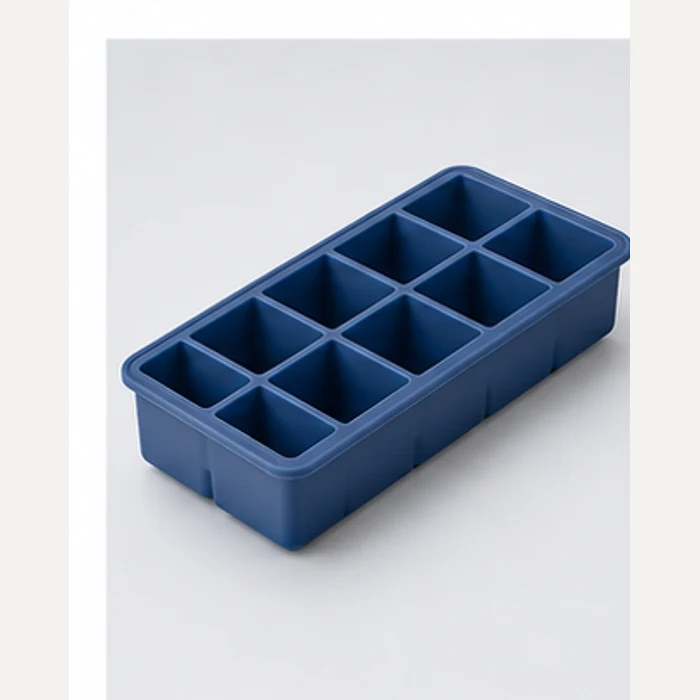
Flexible multi-cavity tray for everyday freezer use.
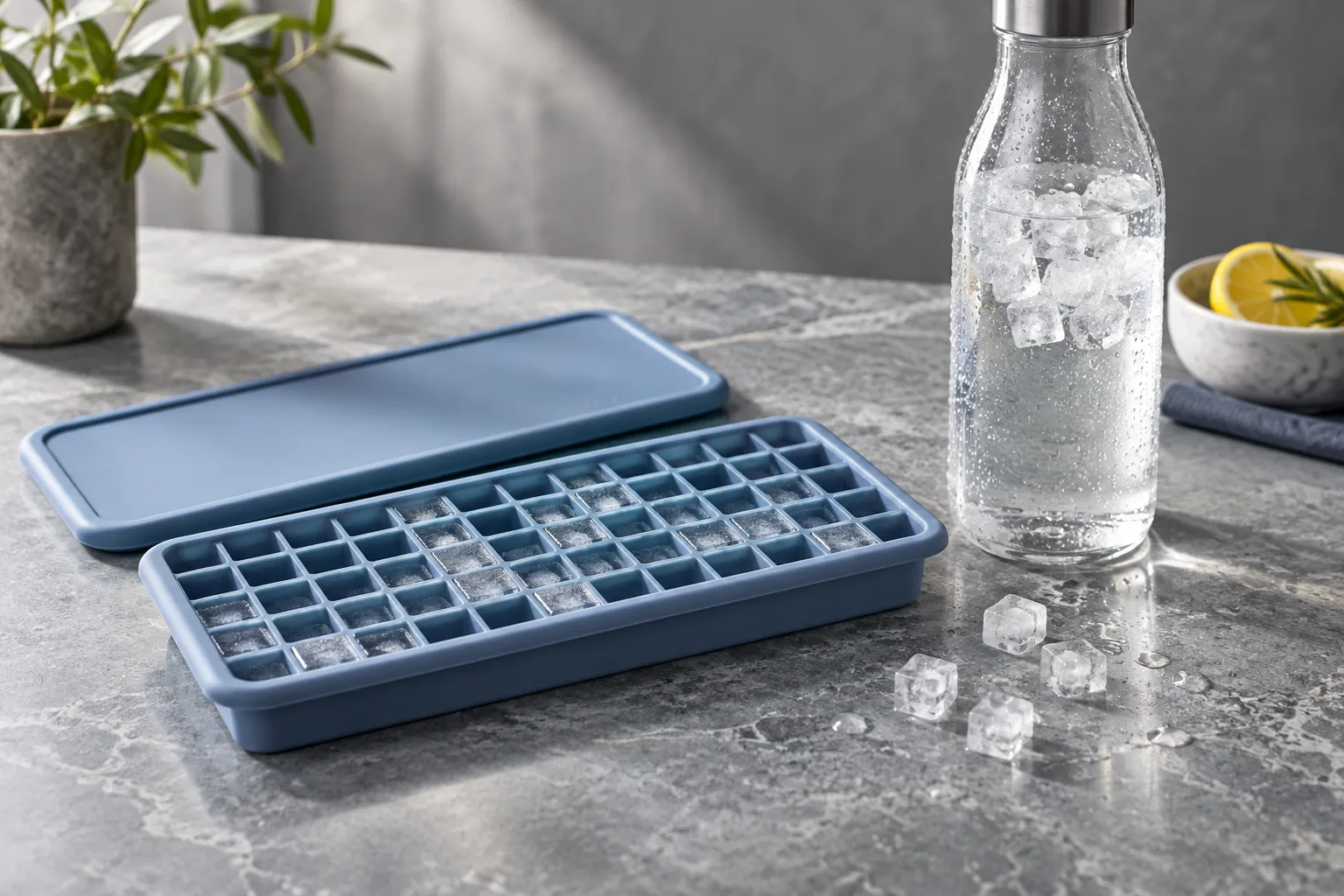
A private-label small-cavity tray developed for bottle-friendly ice, repeatable filling, flexible release and compact freezer stacking.
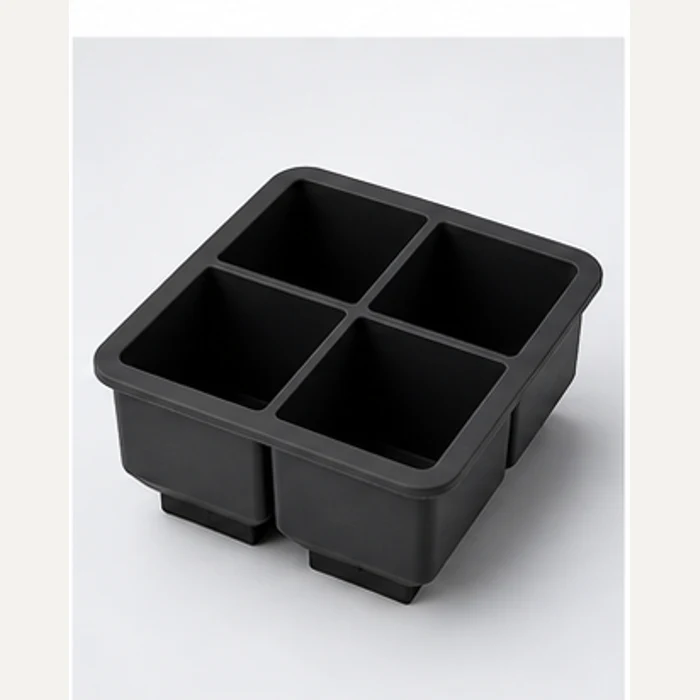
Slow-melting large cube format for premium beverages.
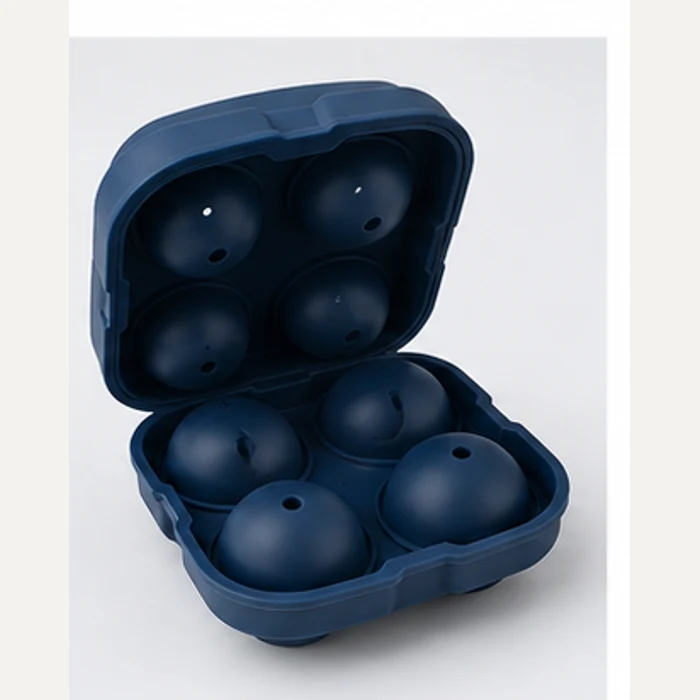
Two-part sphere mold for cocktails and presentation-focused drinks.
B2B PROJECT INQUIRY
Share the intended product, destination market, order quantity and launch plan. Our project team will review the information and identify the next practical step.
Drawings are helpful but not required. A sketch, reference photo or physical sample can be used for an initial discussion.
GENERAL SOURCING INQUIRY