
End-Cuff Geometry
Develop stepped cuffs, straight sleeves, shoulders or clamp grooves around the actual mating parts.
FREEZE, RELEASE & REUSE
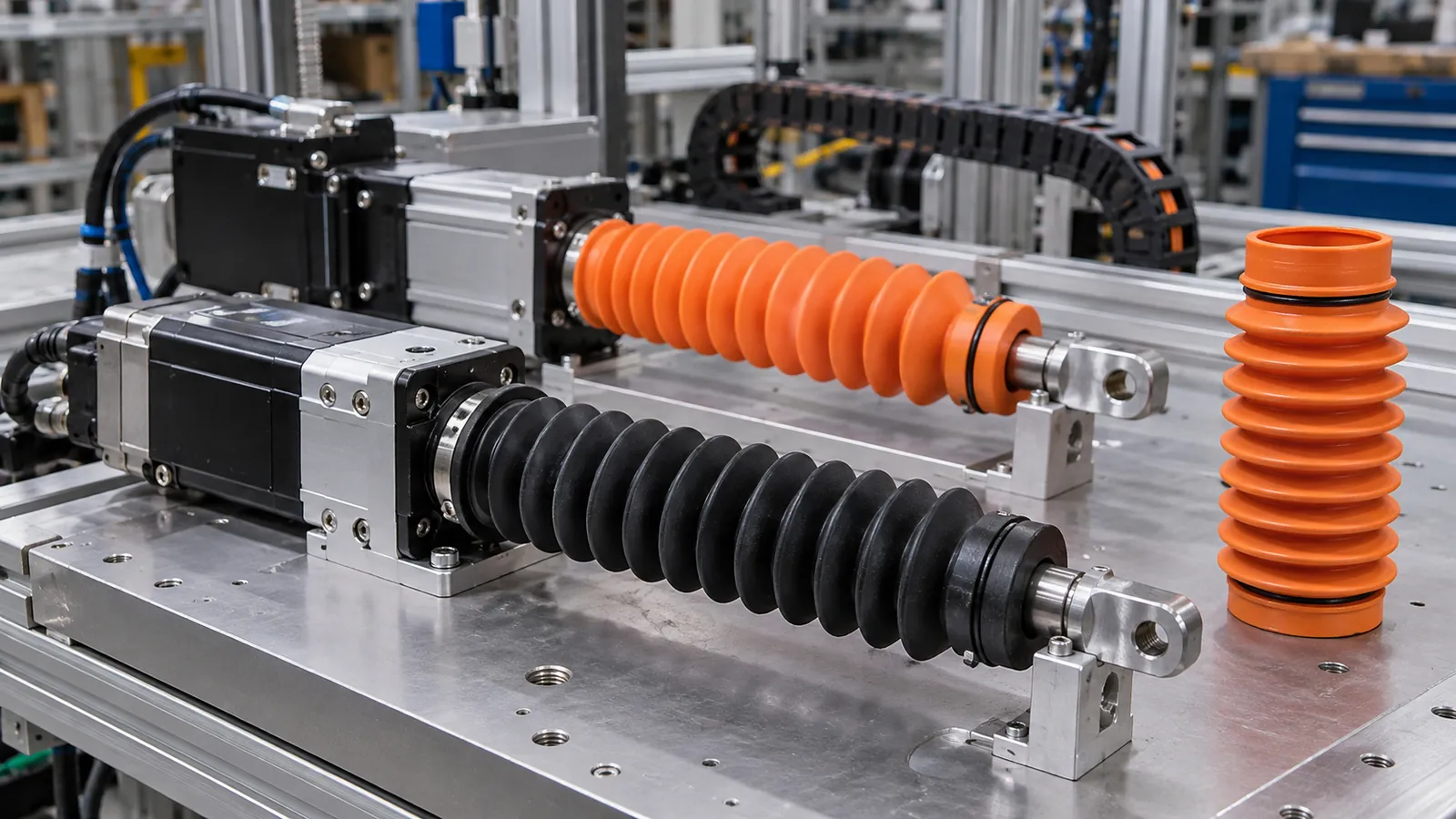
PRODUCT OVERVIEW
A custom silicone bellows boot protects a moving interface only when its cuff geometry, convolution stack and working stroke match the actual assembly. Naike Silicone develops inside diameters, end lengths, clamp grooves, compressed and extended lengths, convolution count, wall transitions and mounting orientation around buyer drawings or representative hardware rather than treating one bellows as universally compatible.
The engineering brief should record both interface diameters, available envelope, neutral length, minimum compressed length, maximum extended length, stroke frequency, articulation, pressure equalization, contaminants, temperature, cleaning agents and installation method. These inputs guide convolution pitch and depth, root and crest radii, wall balance, end-cuff reinforcement, parting line, venting, mold release and whether separate sizes are required.
Protection, cycle-life and environmental statements must be limited to finished-product evidence under defined conditions. Buyers should specify fixture geometry, stroke, speed, dwell, temperature, contamination exposure, cycle count and acceptance criteria; material identity alone does not establish service life or ingress protection. Tooling, compound, MOQ, price, samples, documentation and timing follow the approved drawing and validation plan.
Product page updated:
Request a B2B QuotationENGINEERING & APPROVAL EVIDENCE
Each stage addresses a different purchasing risk: manufacturability, functional fit and private-label presentation.
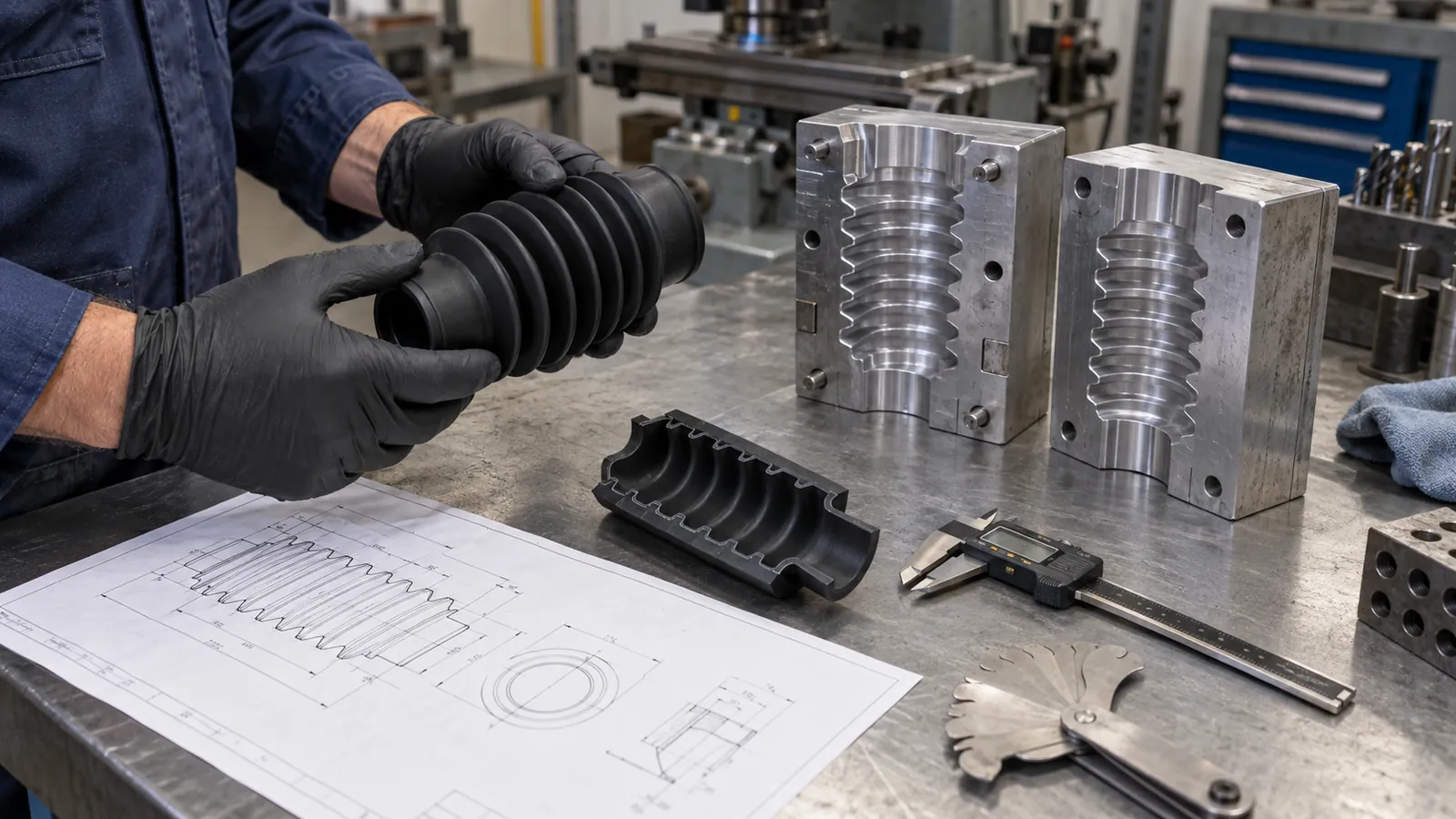
Compressed stack, working extension, convolution radii, wall balance, cuff retention, parting and release are reviewed before tooling approval.
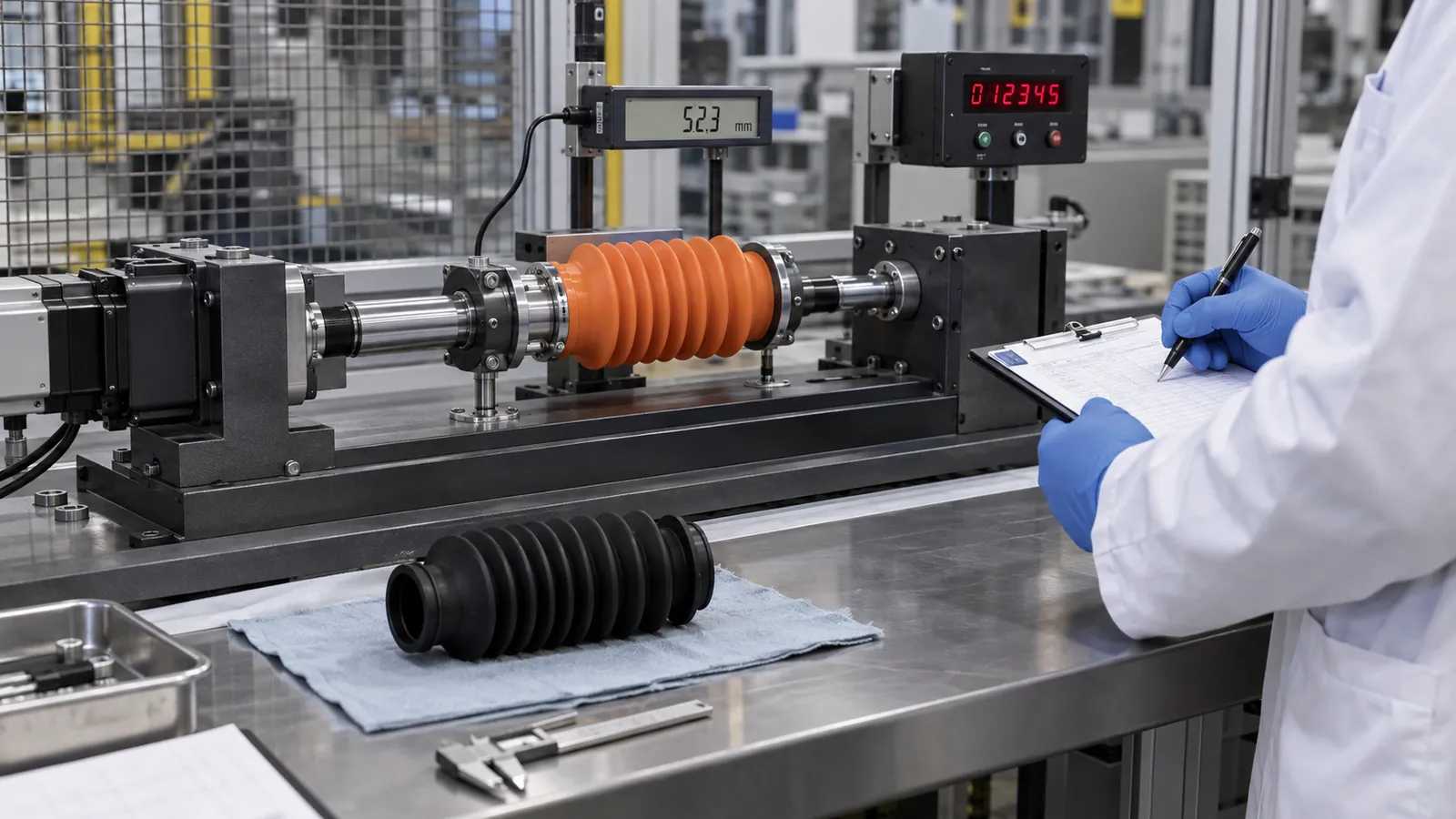
A defined fixture, stroke, speed, dwell, environment and inspection method support evidence for the approved revision.
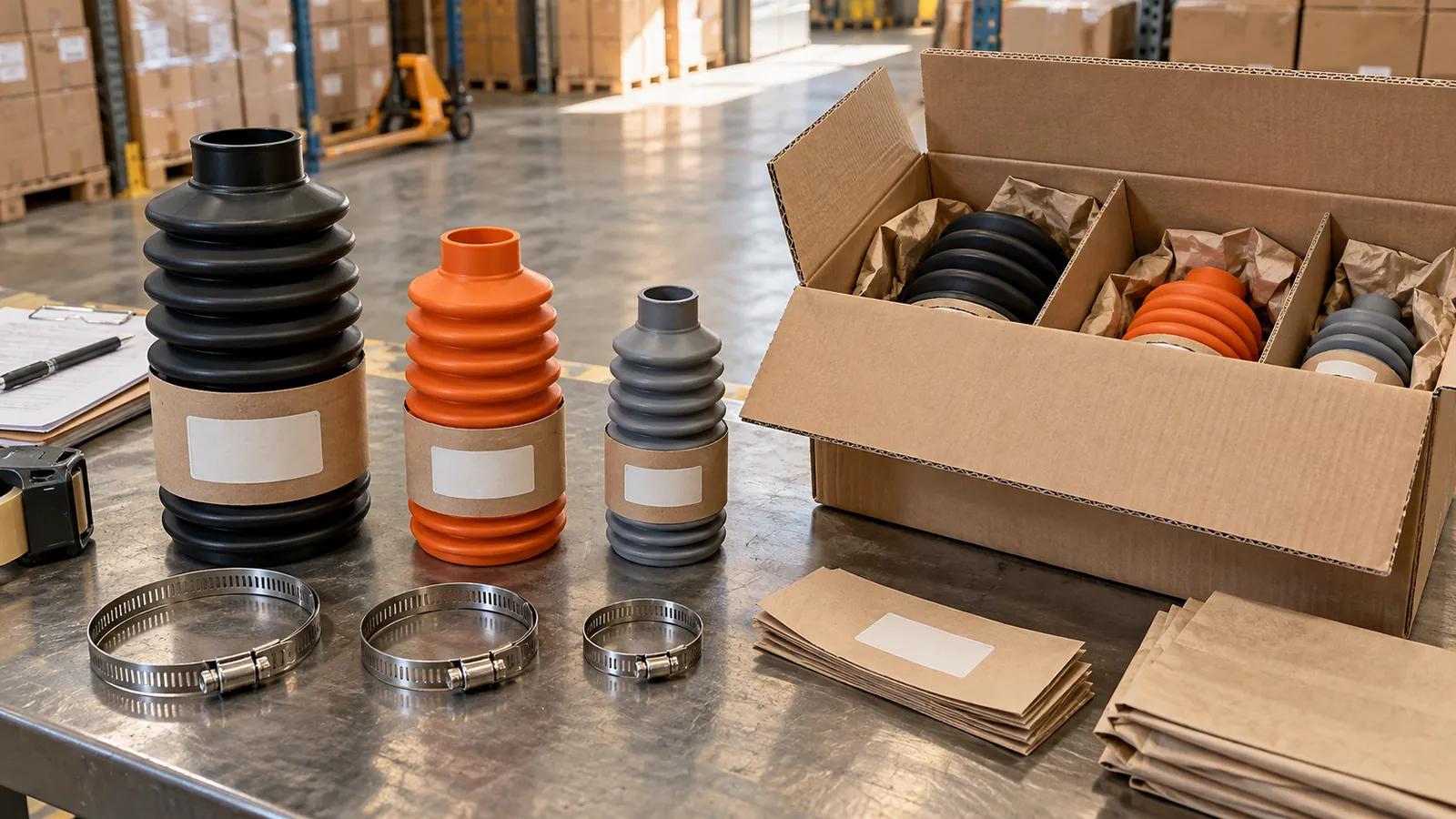
Size codes, colors, clamp sets, protective sleeves, labels and export-carton dividers are approved together.
B2B SOURCING SNAPSHOT
Final terms depend on the approved specification, packaging, quantity and delivery plan.
| Control Point | Buyer Decision | Approval Basis |
|---|---|---|
| Machine interface | End-cuff inside diameters, lengths, shoulders and clamp grooves | Verified from controlled drawings, gauges or representative hardware |
| Motion envelope | Neutral, minimum compressed and maximum extended length plus articulation | Evaluated on the named fixture with agreed stroke, speed and dwell |
| Convolution design | Count, pitch, depth, crest/root radii and wall transitions | Controlled by drawing, molding review and approved physical sample |
| Material environment | Silicone grade, cure, hardness, pigment, temperature and exposure media | Selected for defined conditions and buyer-required evidence |
| Identification | Molded mark, part code, color reference, clamps and packaging | Approved through artwork, reference sample and assembled pack |
| Commercial release | Tool route, cavity plan, size mix, MOQ, validation and schedule | Quoted after specification and current capacity are confirmed |
Each project is reviewed as a complete product specification.
Develop stepped cuffs, straight sleeves, shoulders or clamp grooves around the actual mating parts.
Balance convolution count, pitch, depth and wall transitions across compressed and extended limits.
Review vent or drain concepts only where required by the assembly and contamination-control plan.
Evaluate compound, cure, hardness, pigment and finish for the defined thermal and chemical environment.
Add a part number, size code or orientation mark outside critical flex and sealing zones.
Coordinate clamps, sleeves, labels, lot identification, dividers and export protection after approval.
B2B BUYER FAQ
These answers define the decisions required before tooling, sampling and a reliable quotation.
Send mating-part drawings, cuff diameters, mounting details, compressed and extended lengths, stroke, speed, articulation, environment, quantity, destination, color and packaging requirements. Representative hardware can resolve interface details.
Only if a controlled interface and motion range is designed and validated for those assemblies. Diameter, shoulders, clamp space, stroke and surrounding clearance vary, so universal compatibility should not be assumed.
The review balances count, pitch, depth, crest and root radii, wall transitions and compressed stack height against the working extension, molding route and release direction. Physical samples confirm the motion envelope.
A cycle statement requires an agreed fixture, stroke, speed, dwell, temperature, contaminants, sample conditioning, inspection intervals and acceptance criteria. Results apply only to the tested compound, geometry and conditions.
No. Ingress performance depends on the complete installed system, including cuffs, clamps, joints, vents and mating components. Any rating must follow a suitable test on the defined assembly.
Yes. Clamp type, Pantone-referenced color and molded identification can be coordinated after confirming that they do not interfere with flex, retention or inspection.
Define the actual media, concentration, temperature, duration, mechanical state and acceptance method. Material data can guide selection, but finished-product suitability requires project-specific evidence.
Bellows length, convolution complexity, cuff geometry, undercuts, cavity plan, compound, colors, validation and pack-out all affect the commercial plan. Terms follow drawing approval and capacity review.
CATEGORY-SPECIFIC REVIEW
Cavity draft, flexibility, spacing and practical demolding direction.
Tray stiffness, fill level, lids, stacking and freezer storage.
Artwork conversion, detail depth and manufacturable branded shapes.
Retail sleeves, sets, food-service packs and promotional programs.
INQUIRY CHECKLIST
Providing clear requirements helps us evaluate tooling, samples, price and lead time.
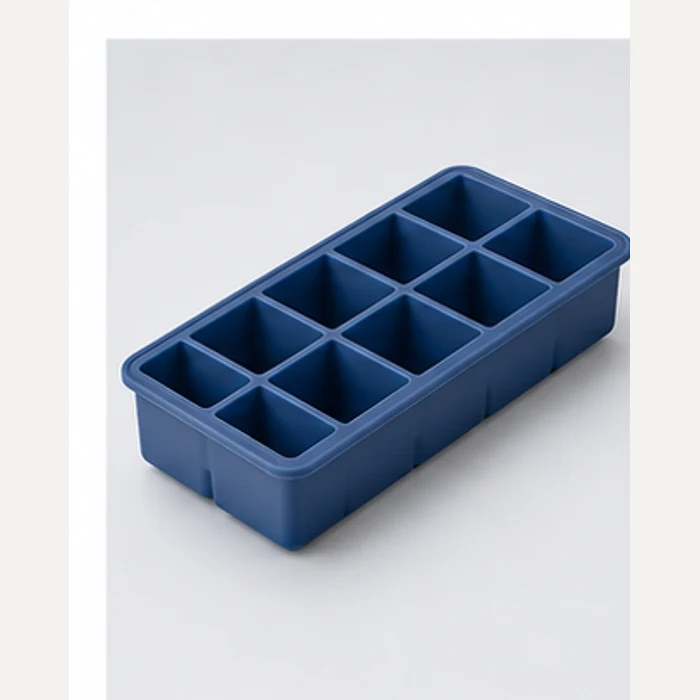
Flexible multi-cavity tray for everyday freezer use.
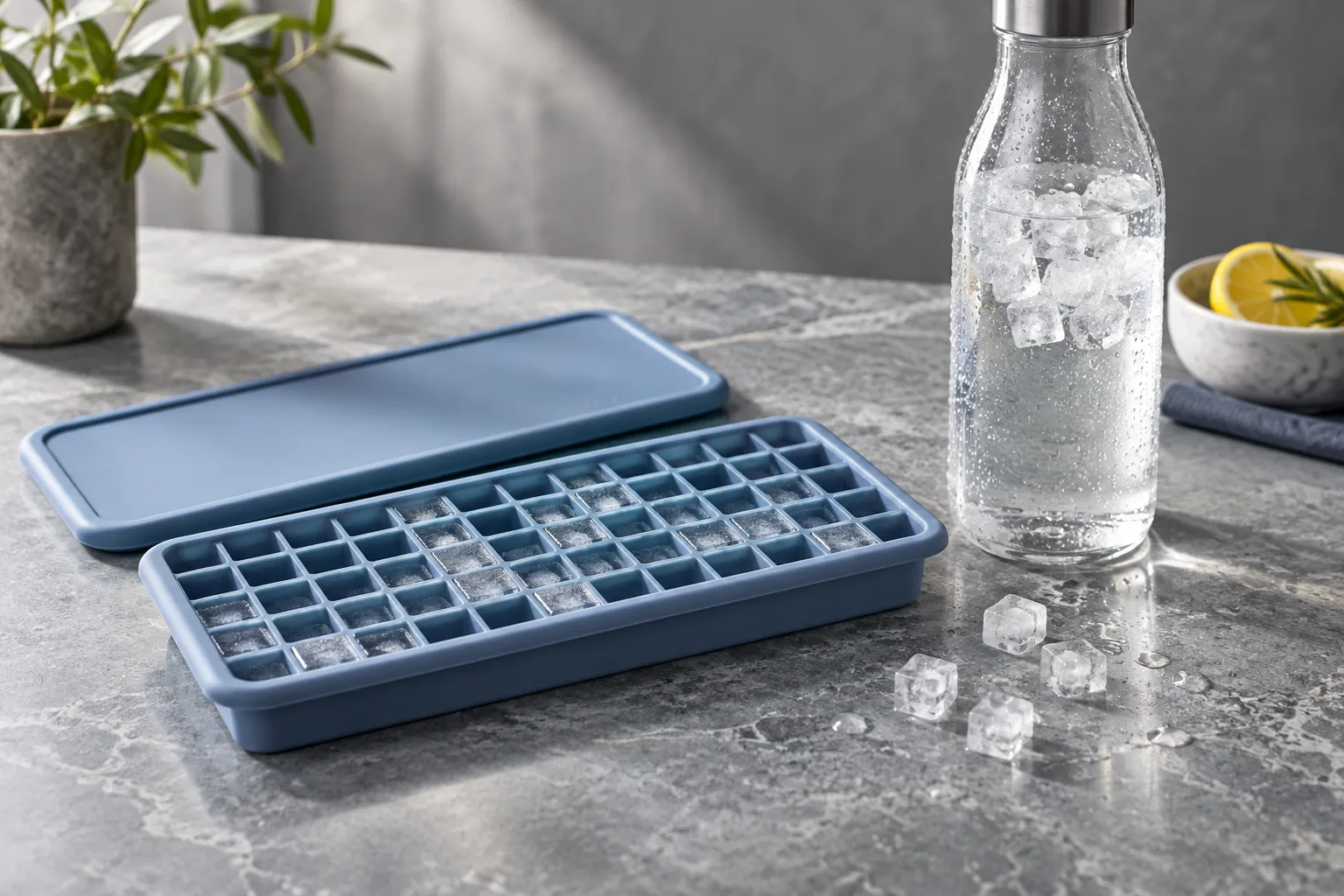
A private-label small-cavity tray developed for bottle-friendly ice, repeatable filling, flexible release and compact freezer stacking.
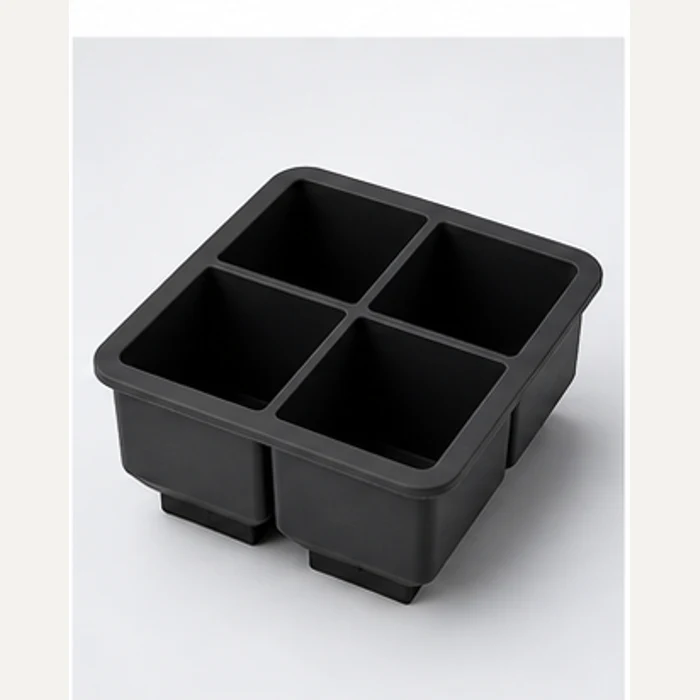
Slow-melting large cube format for premium beverages.
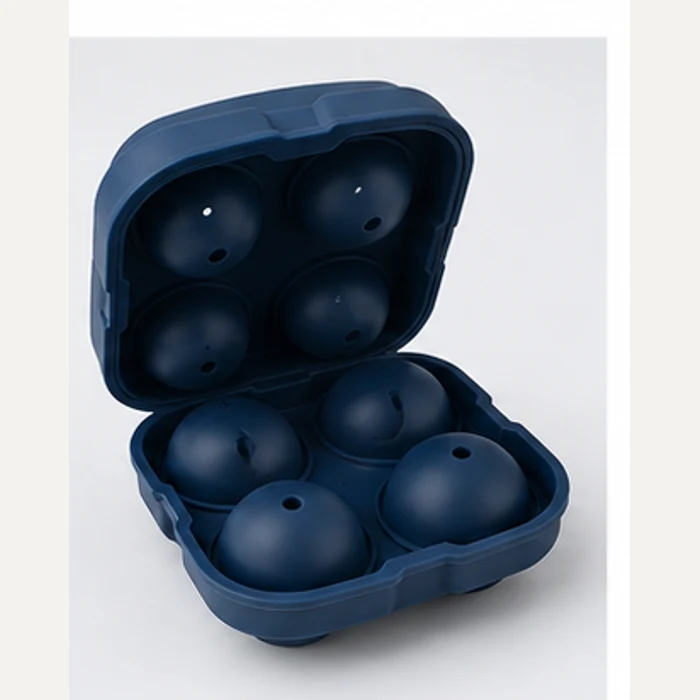
Two-part sphere mold for cocktails and presentation-focused drinks.
B2B PROJECT INQUIRY
Share the intended product, destination market, order quantity and launch plan. Our project team will review the information and identify the next practical step.
Drawings are helpful but not required. A sketch, reference photo or physical sample can be used for an initial discussion.
GENERAL SOURCING INQUIRY