
Length and Coverage
Set overall length, top-strip width, end profile and optional buyer-approved trim references around the target installation.
KITCHEN TOOLS & FOOD STORAGE
PRODUCT OVERVIEW
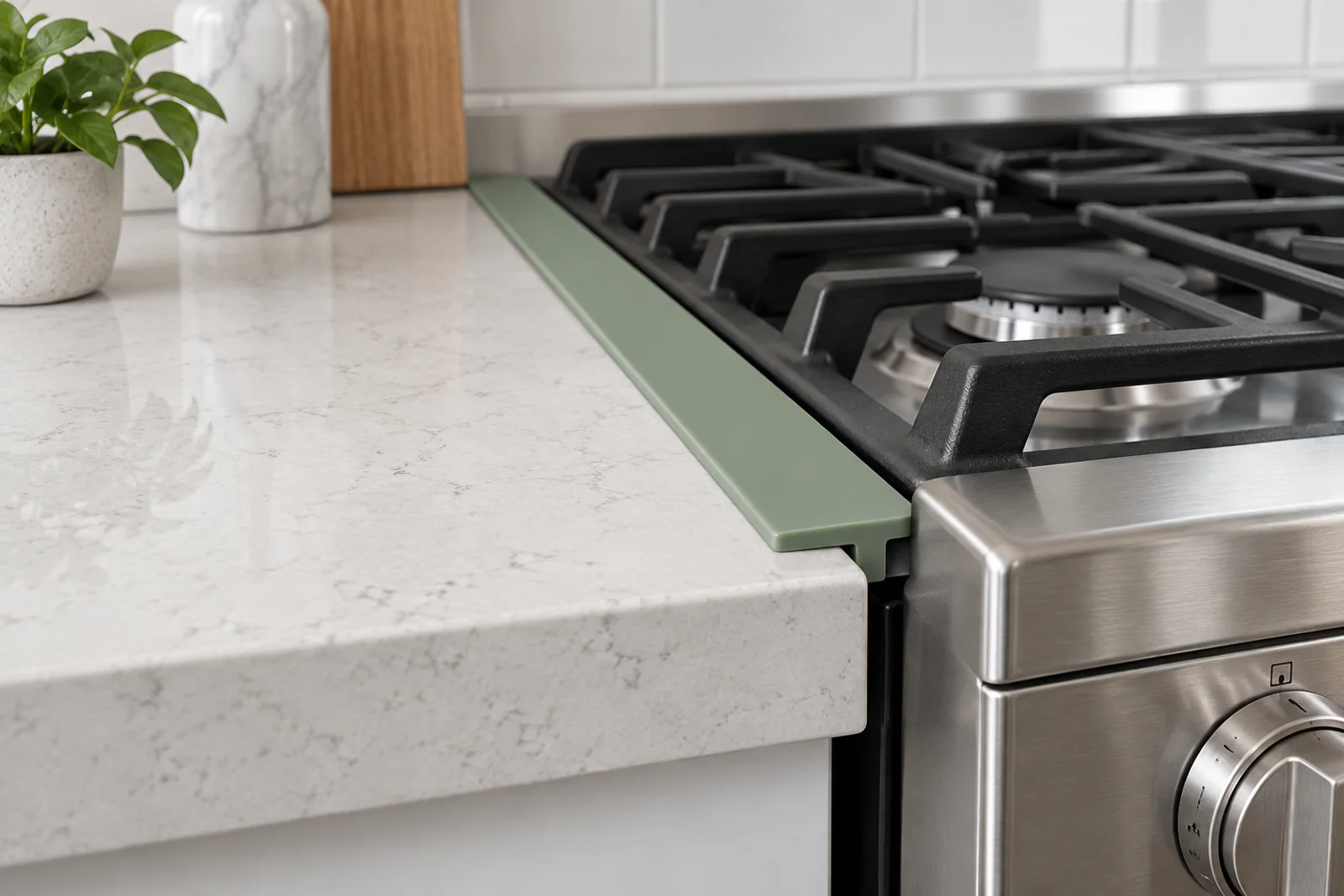
A custom silicone stove gap cover should bridge a documented seam without interfering with appliance controls, cookware or cleaning access. The useful design begins with the range and countertop geometry, then connects strip width, anchoring profile, lip thickness, end treatment and material flexibility to that installation. Naike Silicone can develop straight, trim-to-fit or buyer-specific profiles, but fit and heat-adjacent performance apply only to the approved sample and stated conditions.
The development brief should identify gap width and depth, counter height relative to the appliance, available clearance from heat sources, required length, cleaning routine and preferred installation method. Those inputs guide the T-profile or flexible rib, top-surface coverage, underside contact, corner radii, cut marks and molded branding position. Prototype review can record seating, movement, spill interception, removal, cleaning and dimensional recovery using a representative fixture and buyer-agreed method.
Commercial release also depends on the selected silicone compound, pigments, physical color references, selling-unit format and destination market. Material evidence and any temperature or food-area positioning are reviewed for the finished SKU rather than transferred from an unrelated formulation. Tooling cost, MOQ, price, sampling time, available capacity and lead time remain conditional on the frozen drawing, validation scope, color split, order quantity, packaging and current factory schedule.
Product page updated:
Request a B2B QuotationENGINEERING & APPROVAL EVIDENCE
Each stage addresses a different purchasing risk: manufacturability, functional fit and private-label presentation.

Strip width, anchoring profile, lip thickness, end geometry, tolerances and mold release are reviewed before tooling approval.
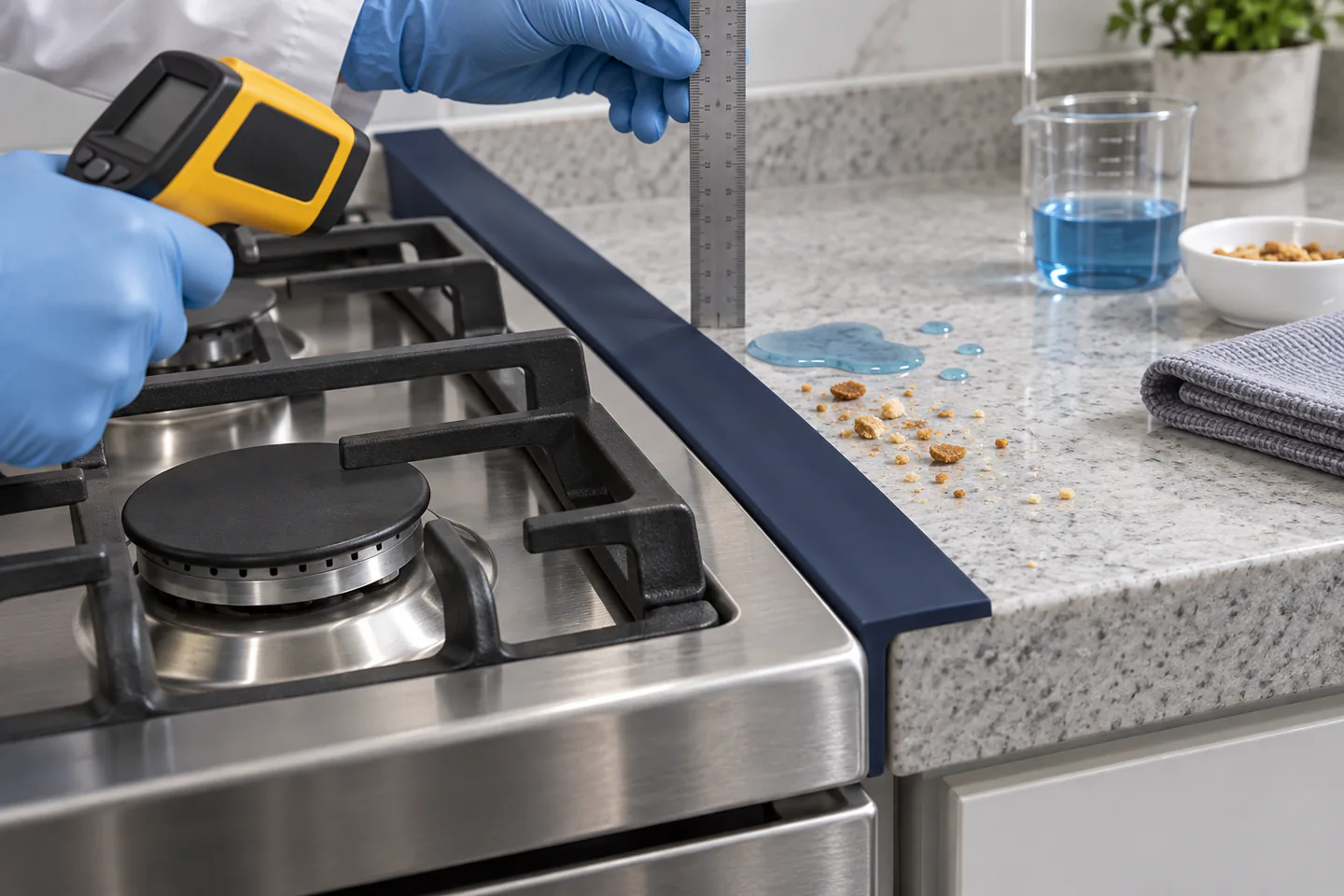
A representative fixture connects defined seam dimensions, safe heat clearance, spill input, cleaning access and observation time with documented findings.
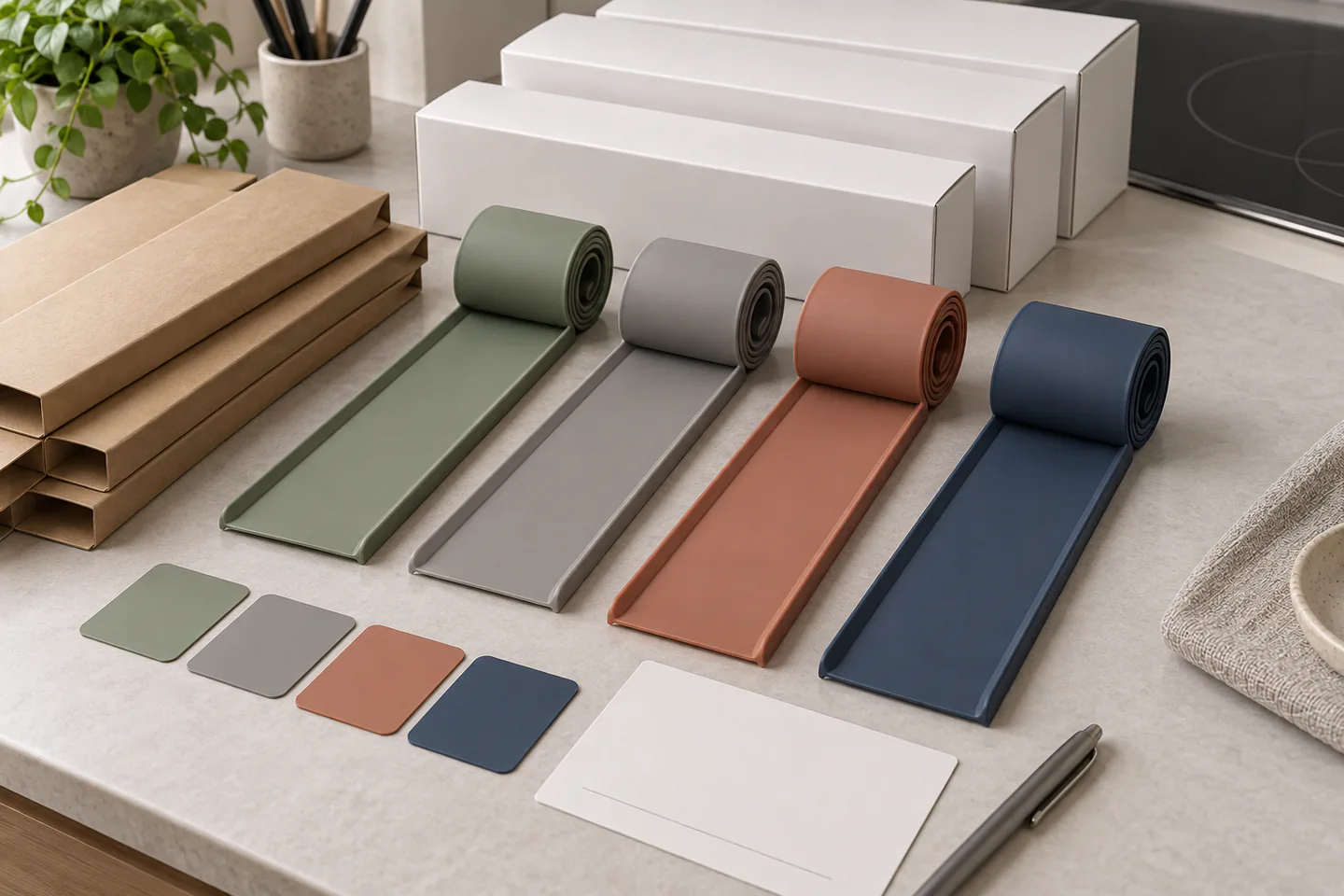
Approved colorways, flat or rolled presentation, sleeve dimensions, labels and export protection are aligned to the finished selling unit.
B2B SOURCING SNAPSHOT
Final terms depend on the approved specification, packaging, quantity and delivery plan.
| Control Point | Buyer Decision | Approval Basis |
|---|---|---|
| Installation envelope | Gap width and depth, counter-to-range height difference, usable length and heat-source clearance | Frozen from buyer measurements, fixture drawings or an approved physical reference |
| Retention profile | T-section or flexible rib width, insertion depth, local compression and movement resistance | Checked across the agreed seam range on representative fixtures |
| Top coverage | Strip width, lip thickness, edge radii, surface texture and optional trim marks | Reviewed for spill interception, cleaning access and acceptable visual fit |
| Material and use | Silicone grade, cure route, hardness, pigment and heat-adjacent conditions | Evidence and claims matched to the finished SKU and documented use conditions |
| Private-label execution | Pantone-referenced color, molded mark, pair or single pack, sleeve or carton | Approved through artwork, physical references and a packed golden sample |
| Commercial release | Tooling, MOQ, price, sampling, capacity and shipment window | Confirmed after design, validation, quantity, pack-out and current schedule approval |
Each project is reviewed as a complete product specification.
Set overall length, top-strip width, end profile and optional buyer-approved trim references around the target installation.
Develop a T-section, tapered rib or flexible anchoring geometry for the documented seam width and depth range.
Coordinate lip thickness, corner radii, non-slip underside detail and cleanable matte or fine-textured surfaces.
Review silicone specification, Shore A hardness, cure route, surface feel and physical Pantone-referenced colors.
Place an embossed or debossed mark where it does not create a spill path, cleaning trap or interference point.
Coordinate single or pair sets, flat or rolled presentation, sleeve, carton, instructions, labels and shipping protection.
B2B BUYER FAQ
These answers define the decisions required before tooling, sampling and a reliable quotation.
Send the gap width and depth, counter and appliance height relationship, required length, heat-source clearance, reference photos or drawings, first-order quantity, destination market, colors, logo artwork and packaging concept. Measurements from more than one target installation help define the intended fit range.
A controlled fit range can be developed through the retention geometry and material flexibility, but universal compatibility should not be assumed. The minimum and maximum seam dimensions require documentation and representative-fixture validation.
A trim-to-fit concept and optional cut references can be evaluated when the edge remains clean and the instructions are clear. The approved sample should be checked for cut quality, retained profile function and safe final positioning.
The buyer and factory can define liquid volume, crumb type, fixture slope, observation period, removal method and acceptance criteria. Results apply to the approved geometry and representative installation rather than every kitchen configuration.
Material capability alone does not establish safe placement. The relevant temperature, exposure time, distance from burners or hot surfaces and appliance instructions must be agreed, and the product should not be positioned in direct flame or prohibited high-heat zones.
Yes. Pantone-referenced colors, manufacturable molded marks, pair packs, sleeves, boxes and instruction cards can be developed. Physical color, artwork and a packed golden sample require approval before production.
Define the destination, intended contact, heat-adjacent conditions, cleaning method and finished colors first. Applicable compound, pigment and finished-product evidence can then be reviewed for that scope; an unrelated report is not a universal certificate.
Length, profile complexity, mold construction, compound, color allocation, validation, packaging, order quantity and current capacity all affect the program. Commercial figures are confirmed against the approved revision and actual production window.
CATEGORY-SPECIFIC REVIEW
Contact conditions, heat, cleaning, storage and expected service life.
Hardness, flexibility, grip, texture and surface appearance.
Sizes, color families, product sets and price-position planning.
Retail boxes, hanging cards, inserts, labels and export cartons.
INQUIRY CHECKLIST
Providing clear requirements helps us evaluate tooling, samples, price and lead time.
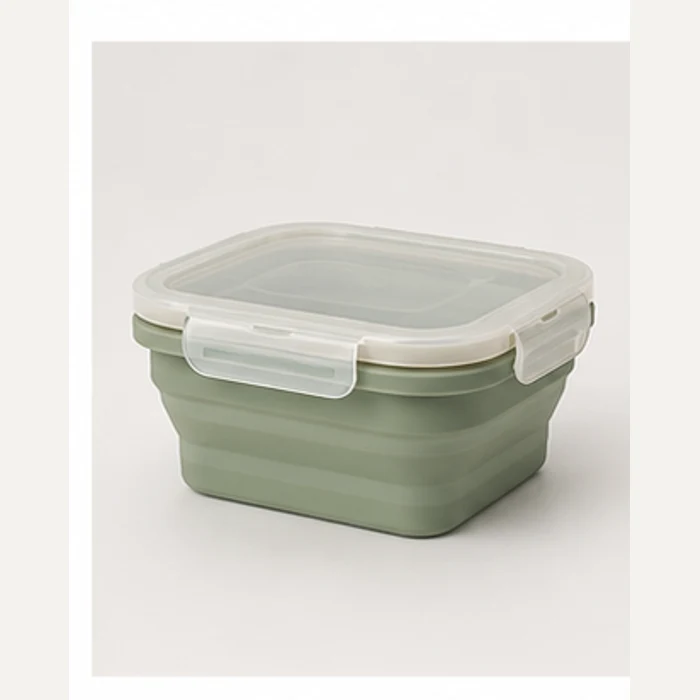
Foldable storage format for space-efficient kitchens.
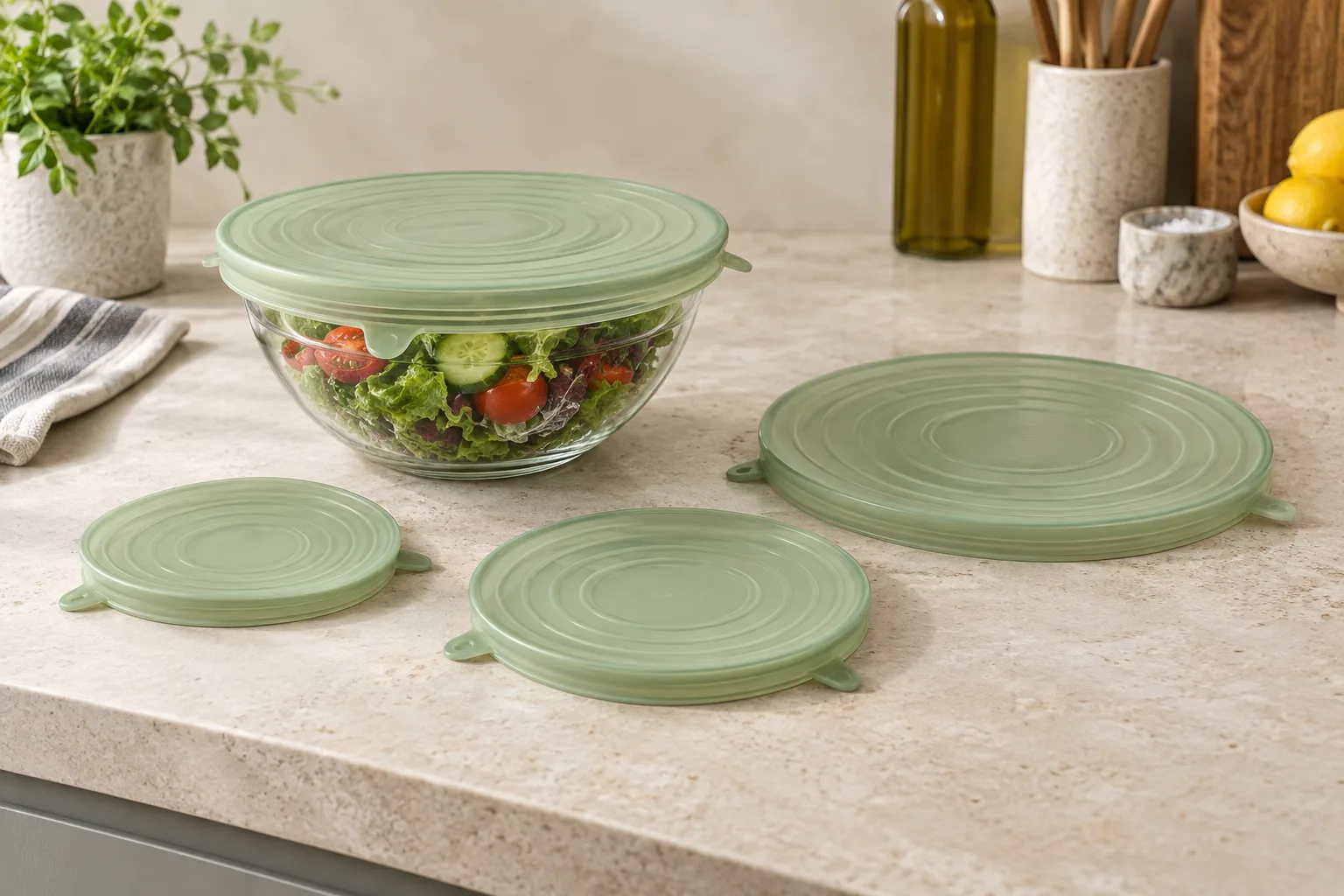
A private-label multi-size cover set developed around vessel-rim fit, elastic recovery, pull-tab usability and a controlled retail size mix.
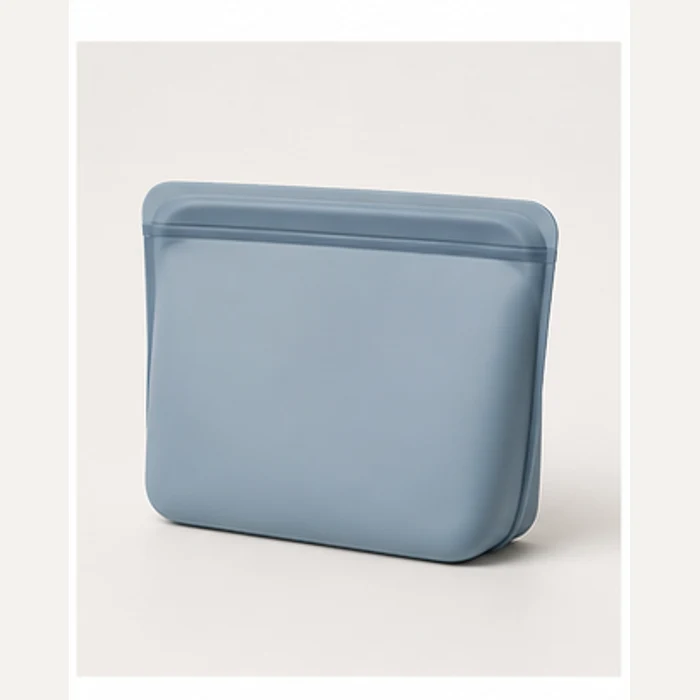
Easy-clean reusable bag for snacks and meal preparation.
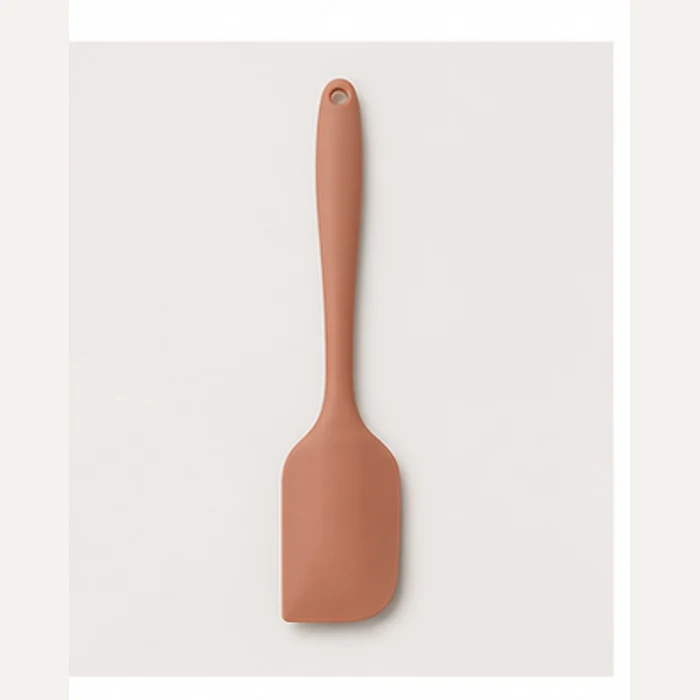
One-piece cooking tool with hygienic construction.
B2B PROJECT INQUIRY
Share the intended product, destination market, order quantity and launch plan. Our project team will review the information and identify the next practical step.
Drawings are helpful but not required. A sketch, reference photo or physical sample can be used for an initial discussion.
GENERAL SOURCING INQUIRY