
Handle Interface
Create a size family from measured width, height, taper, cross-section, attachment neck and named pan models.
KITCHEN TOOLS & FOOD STORAGE
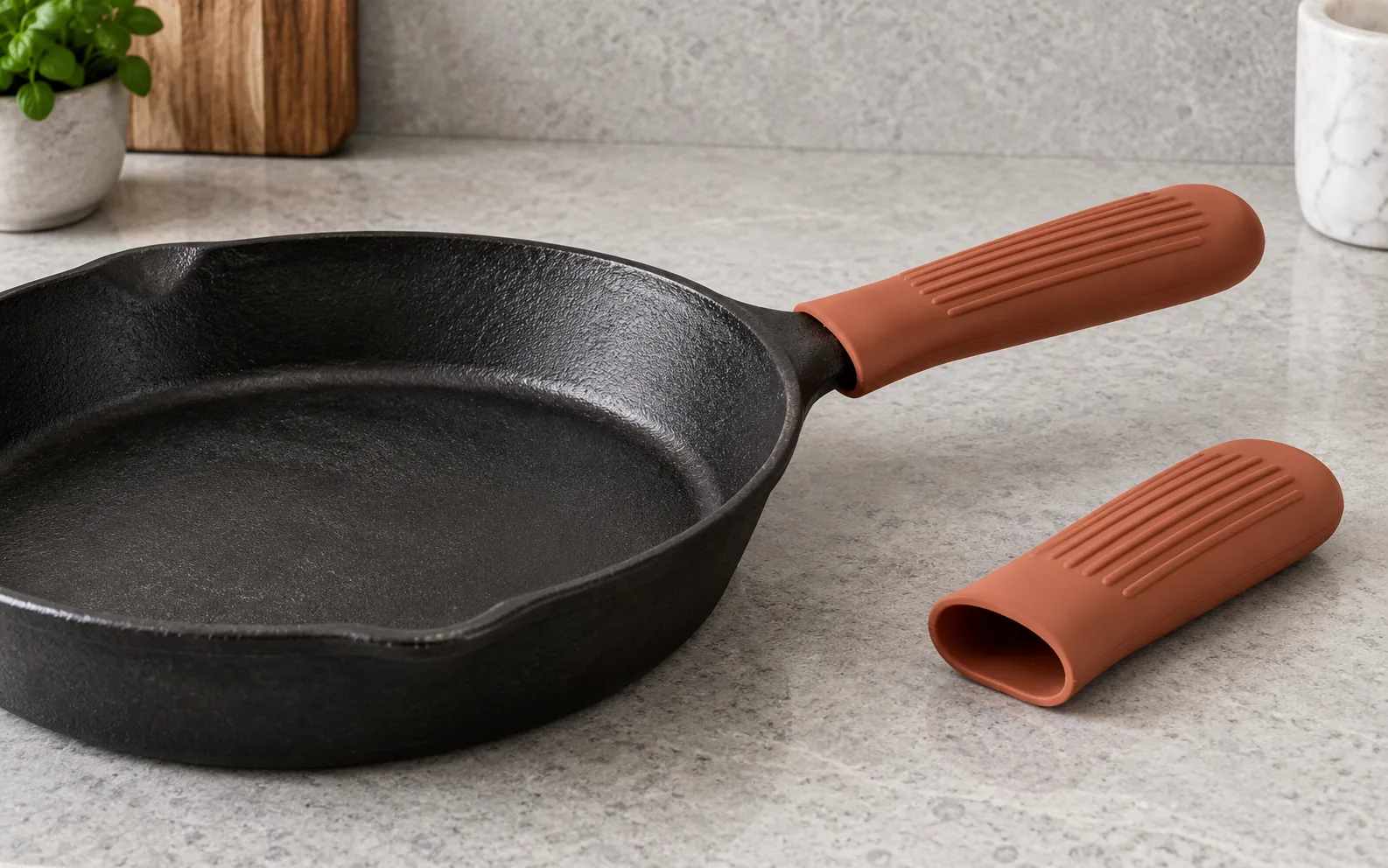
PRODUCT OVERVIEW
A silicone pan-handle sleeve is a removable accessory whose usefulness depends on the handle it is meant to cover. Naike Silicone develops the bore, sleeve length, end opening, insertion stop and exterior grip around a buyer-named pan or a measured handle family, rather than implying that one sleeve fits every skillet.
The engineering brief should capture the handle's length, width, thickness, taper, cross-section, attachment neck, surface texture and any nearby hanging feature. Those measurements guide wall distribution, entry chamfer, closed-end or open-end geometry, longitudinal grip ribs, parting line, vent placement and the tool's release direction; a physical handle sample can resolve details that a photograph misses.
Use and safety language must follow the finished-product design and its actual exposure. Buyers should define cookware type, source of heat, contact duration, handling method, cleaning routine and acceptance criteria before samples are evaluated; a silicone cover must not be presented as making a hot handle safe to grasp without product-specific evidence. Tooling, material, MOQ, price, samples, compliance documents and delivery timing are confirmed against the approved drawing, destination and order configuration.
Product page updated:
Request a B2B QuotationENGINEERING & APPROVAL EVIDENCE
Each stage addresses a different purchasing risk: manufacturability, functional fit and private-label presentation.
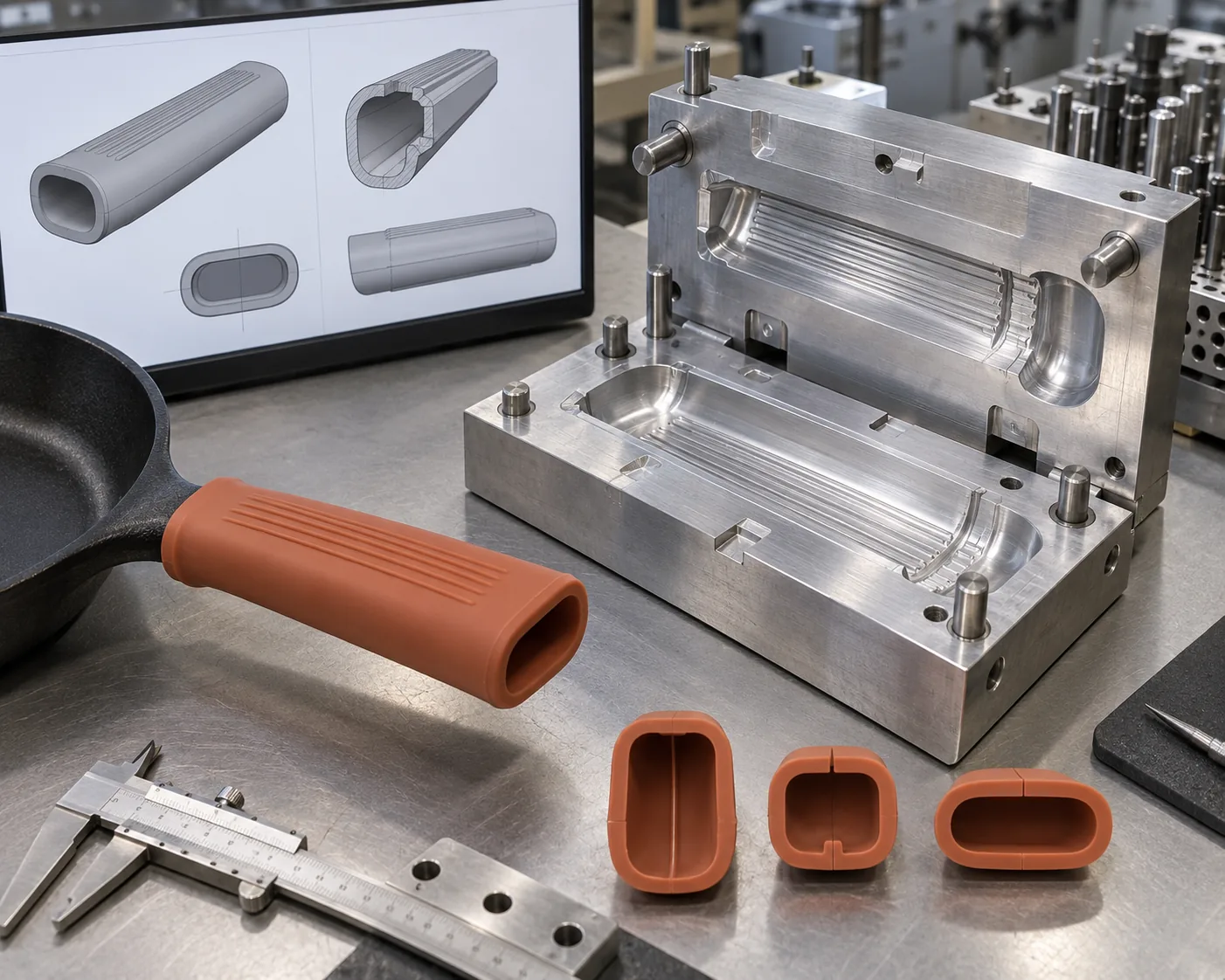
Bore section, wall balance, open end, insertion stop, rib depth, parting line, venting and mold release are reviewed before the drawing is frozen.
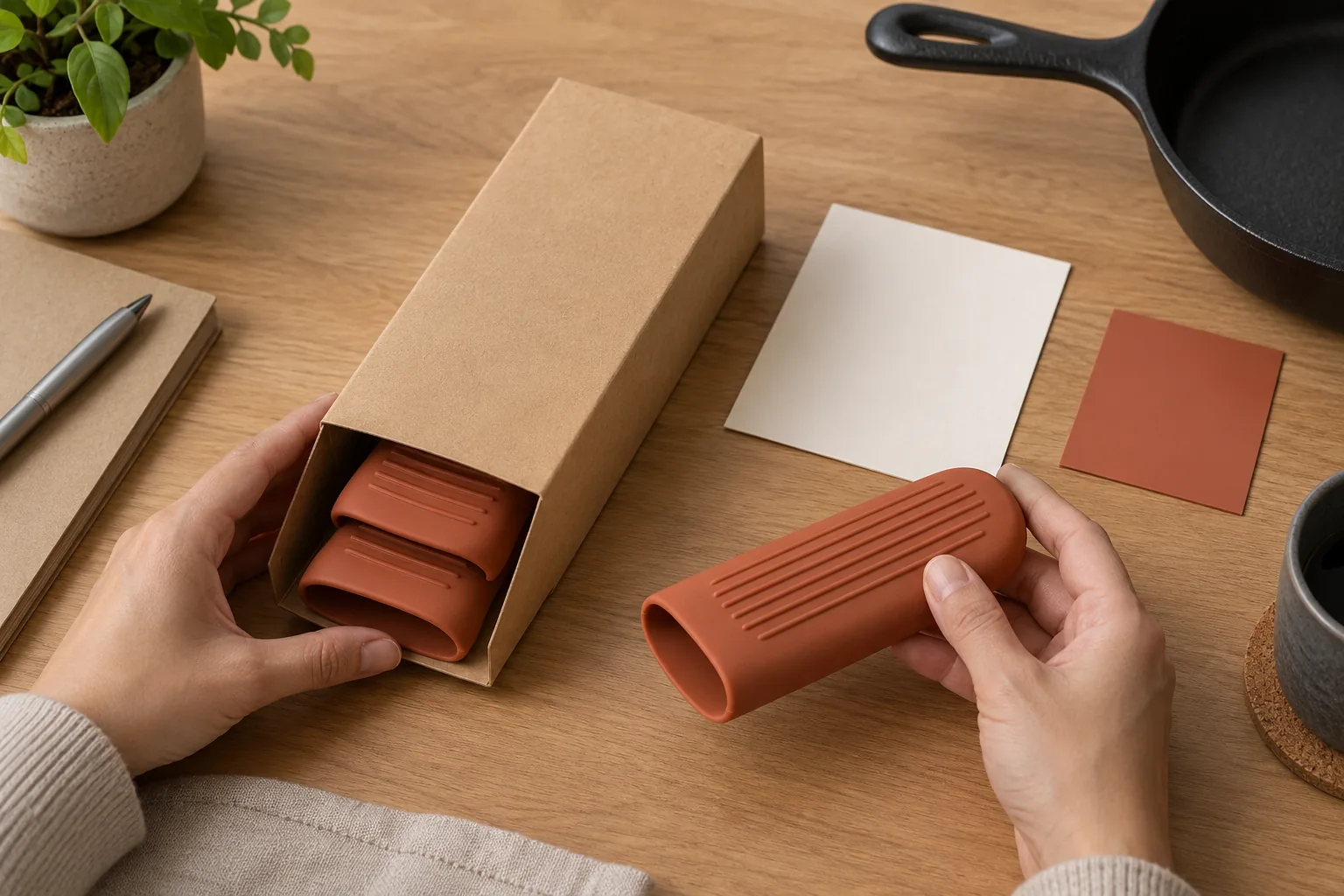
Representative handle samples support checks for insertion, seating, removal and grip under the buyer's documented cookware and use conditions.
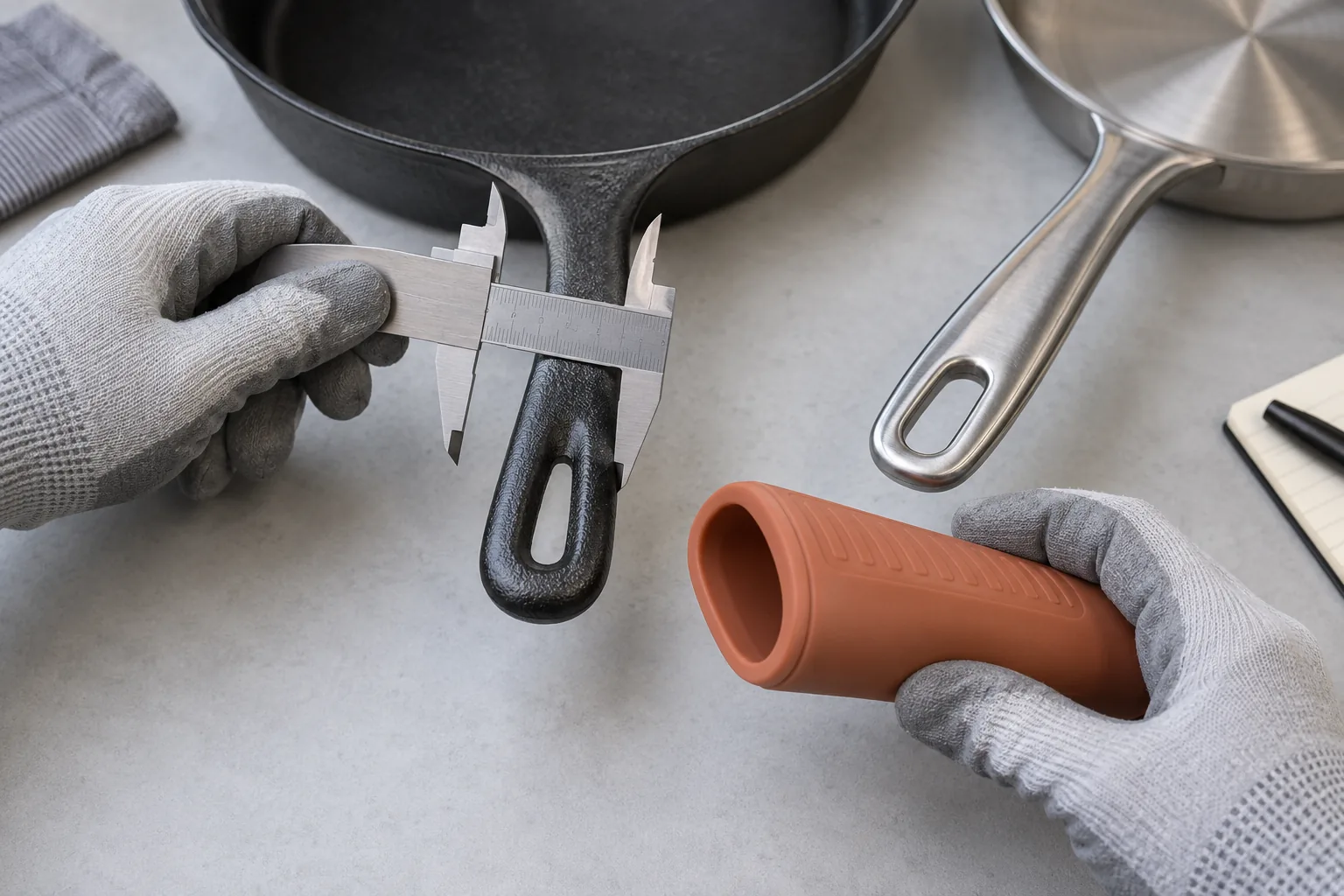
The approved sleeve count, color reference, instruction insert and packaging fit are reviewed as one controlled retail SKU.
B2B SOURCING SNAPSHOT
Final terms depend on the approved specification, packaging, quantity and delivery plan.
| Control Point | Buyer Decision | Approval Basis |
|---|---|---|
| Cookware family | Named pan models or a defined handle range with material and attachment style | Verified from dimensioned drawings, representative handles or approved physical references |
| Sleeve envelope | Overall length, internal width and height, end opening and intended coverage | Controlled by drawing and a fit review on the buyer's selected handle samples |
| Entry and retention | Lead-in, insertion stop, internal clearance and removal direction | Checked for stable placement without assuming a universal fit or permanent attachment |
| Grip surface | Rib pitch, texture, exterior section and logo-free grip area | Compared on conditioned samples using an agreed handling observation method |
| Material and color | Silicone grade, cure route, hardness, pigment and finish | Selected for the defined exposure, cleaning conditions and destination-market review |
| Commercial release | Tool route, cavity plan, color allocation, MOQ, packaging and schedule | Quoted after design inputs, sample scope, order mix and current production capacity are confirmed |
Each project is reviewed as a complete product specification.
Create a size family from measured width, height, taper, cross-section, attachment neck and named pan models.
Adjust length, open-end profile and insertion stop to cover the specified grasp zone while preserving the intended attachment clearance.
Review longitudinal ribs, shallow texture, smooth panels and branding zones against cleaning, handling and mold-release requirements.
Balance internal clearance, wall distribution, lead-in geometry and local transitions using the actual handle envelope and selected molding route.
Evaluate silicone grade, cure route, hardness, pigment and finish for the buyer-defined use and market; approve the physical color reference before production.
Coordinate sleeve count, care and use instructions, blank or printed sleeve box, protective insert, labels and export carton after the SKU is approved.
B2B BUYER FAQ
These answers define the decisions required before tooling, sampling and a reliable quotation.
Send the target cookware models or handle drawings, overall dimensions, cross-section, attachment-neck details, desired coverage length, use conditions, quantity, destination, color direction, logo files and packaging preference. A physical handle or sample pan helps confirm geometry before the tool brief is finalized.
No universal fit should be assumed. Handle width, thickness, taper, neck shape, surface finish and nearby hardware can change insertion and retention. The applicable range should be named and checked against representative handles before a compatibility claim is approved.
Record the handle's maximum and minimum cross-sections, taper, length, attachment shoulder and required clearance. Review the sleeve bore and wall section in a drawing, then confirm insertion and removal using physical samples from the target cookware range.
Only after the exact compound, sleeve geometry, pan, heat source, exposure duration, handling method and acceptance criteria have been evaluated. A material name or a photograph does not establish a safe-touch temperature, and the sleeve should not be promoted as protection without product-specific evidence.
Buyer and supplier can agree on representative handle samples, dry or conditioned surface state, insertion direction, removal force observation and any handling sequence. The method should distinguish sleeve retention from the pan's thermal condition and document which product revision was assessed.
Yes. Molded logos, Pantone-referenced colors and separate size variants can be reviewed. Each added size may require its own bore, tooling insert or mold, sample approval and packaging identification, so the final SKU mix should be agreed before quotation.
Do not assume appliance compatibility from silicone alone. The buyer must define the exact product, selected material, appliance program, exposure, cleaning method and pass criteria, then approve applicable test evidence and clear care instructions for the finished SKU.
Sleeve length, bore geometry, rib detail, cavity plan, compound, color allocation, sample iterations, validation scope, packaging and order mix all affect the commercial plan. MOQ, price and timing are confirmed after the drawing, approval route and current production schedule are reviewed.
CATEGORY-SPECIFIC REVIEW
Contact conditions, heat, cleaning, storage and expected service life.
Hardness, flexibility, grip, texture and surface appearance.
Sizes, color families, product sets and price-position planning.
Retail boxes, hanging cards, inserts, labels and export cartons.
INQUIRY CHECKLIST
Providing clear requirements helps us evaluate tooling, samples, price and lead time.
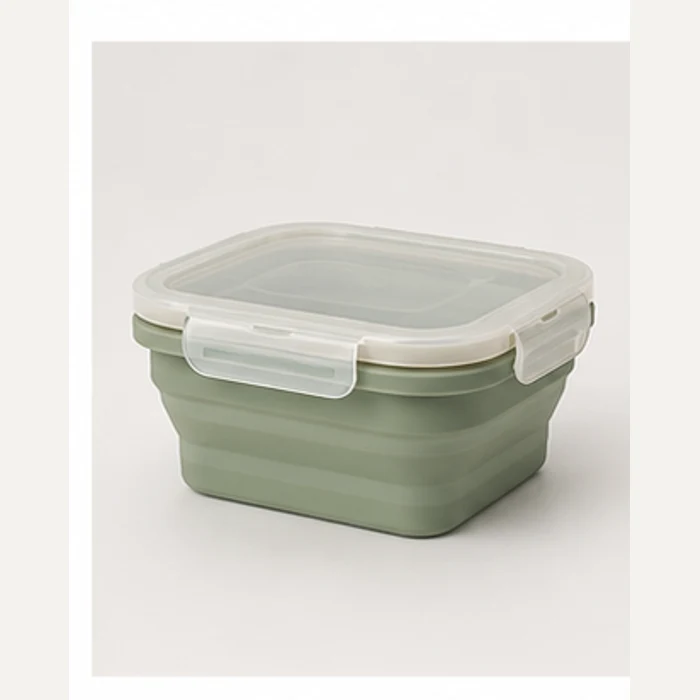
Foldable storage format for space-efficient kitchens.
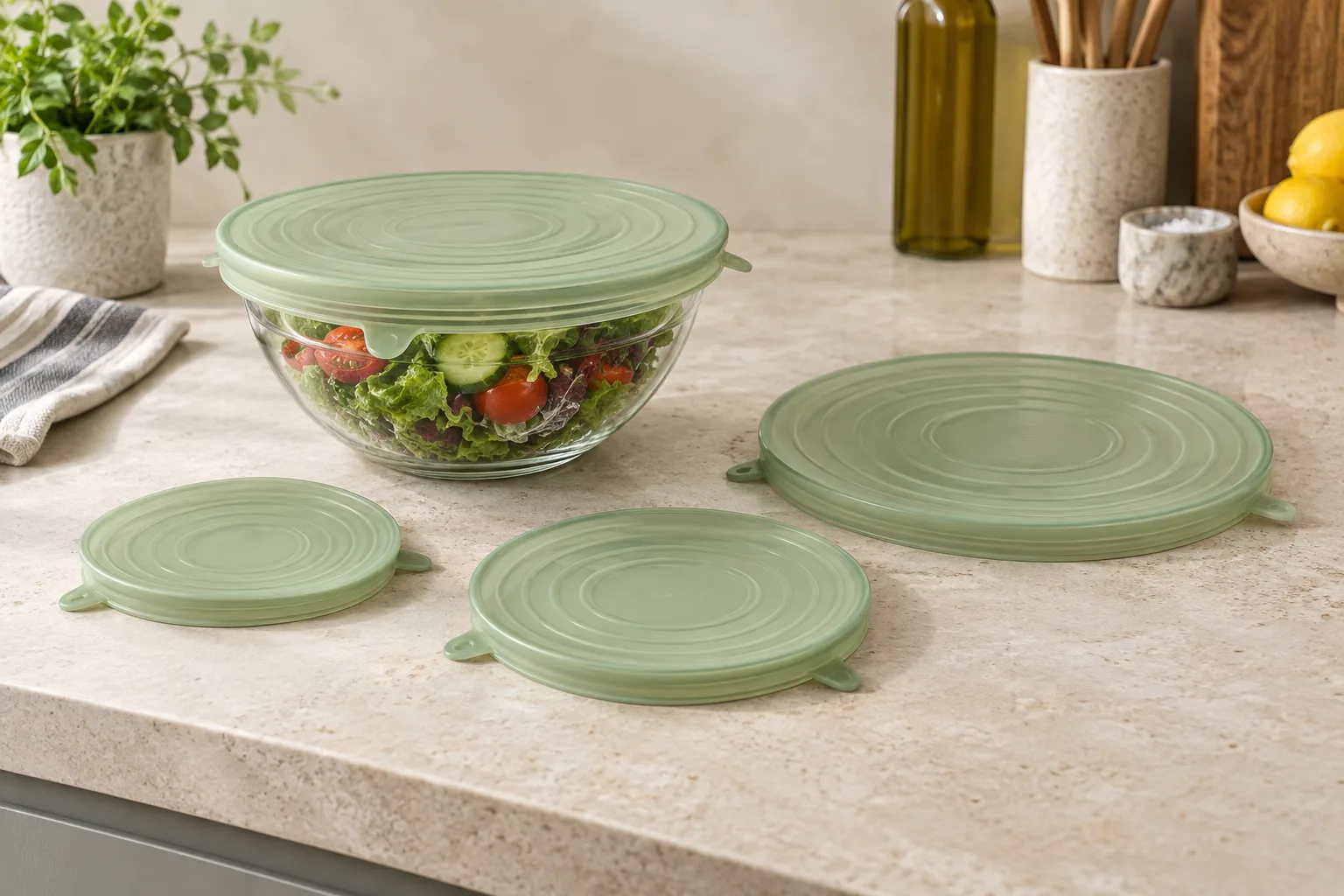
A private-label multi-size cover set developed around vessel-rim fit, elastic recovery, pull-tab usability and a controlled retail size mix.
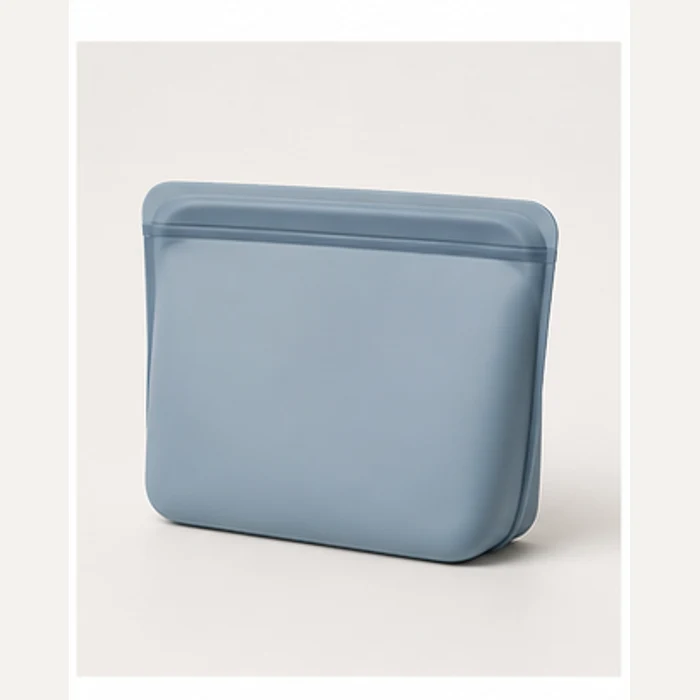
Easy-clean reusable bag for snacks and meal preparation.
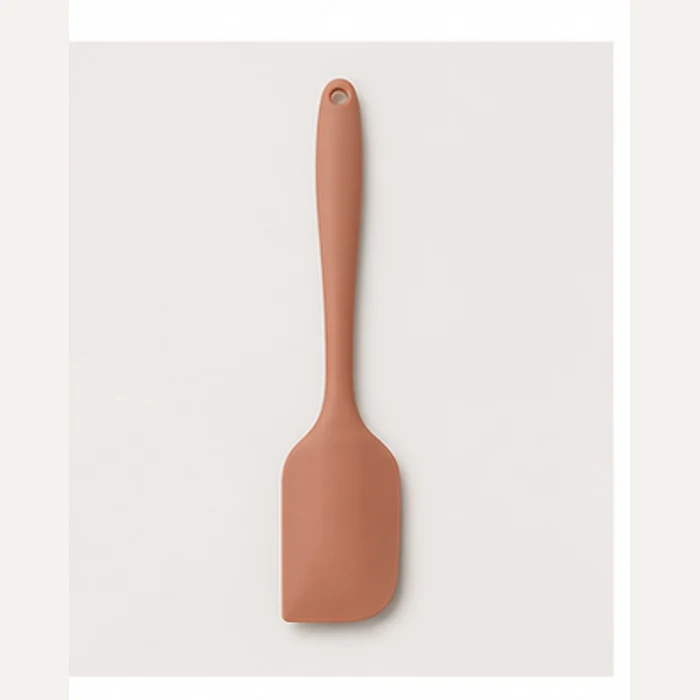
One-piece cooking tool with hygienic construction.
B2B PROJECT INQUIRY
Share the intended product, destination market, order quantity and launch plan. Our project team will review the information and identify the next practical step.
Drawings are helpful but not required. A sketch, reference photo or physical sample can be used for an initial discussion.
GENERAL SOURCING INQUIRY