
Container Size Range
Develop one or more capacities around target portions, shelf dimensions and the required open-to-folded height ratio.
KITCHEN TOOLS & FOOD STORAGE
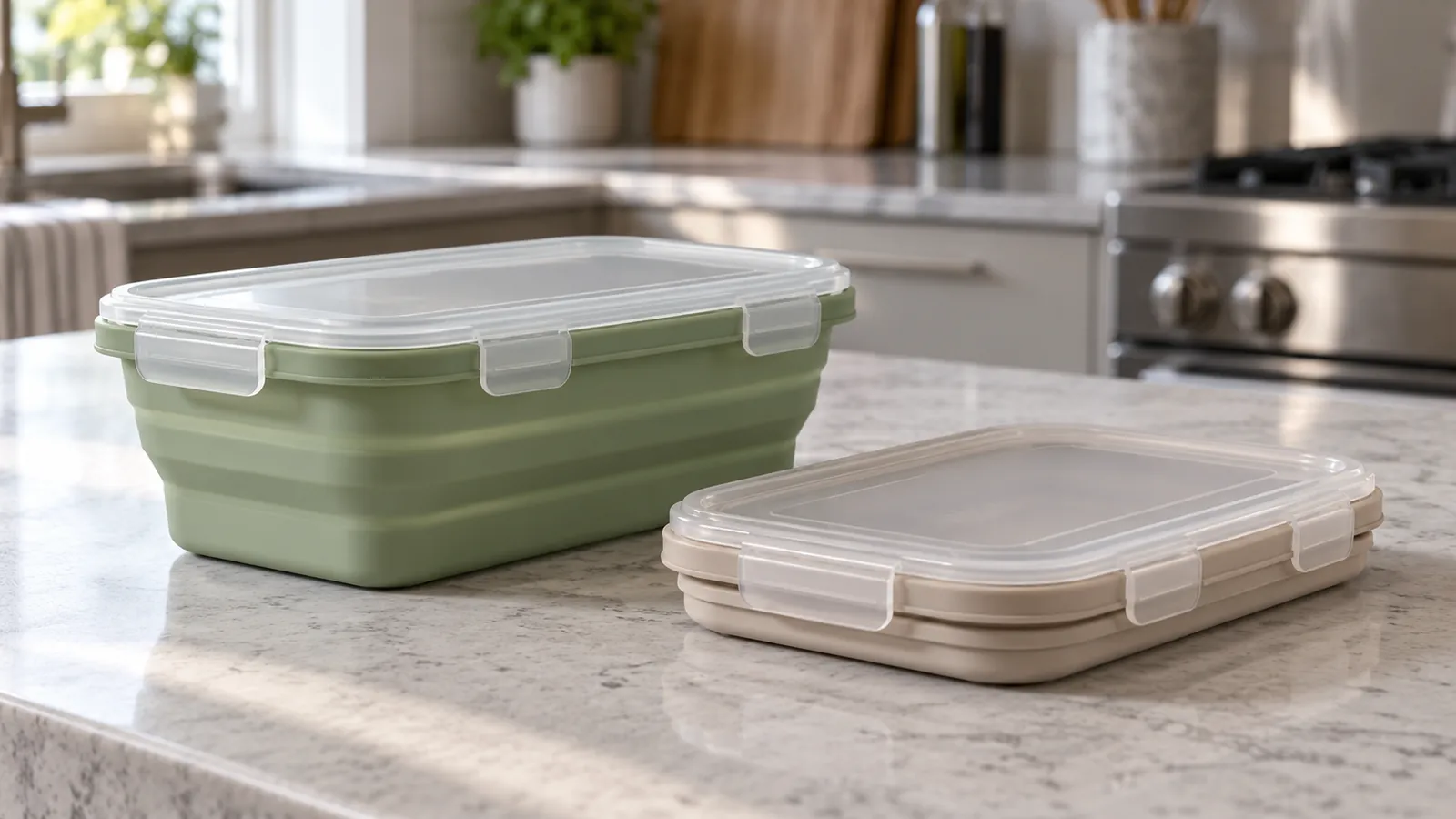
PRODUCT OVERVIEW
A custom collapsible silicone food container must balance usable volume with a compact folded height without creating weak hinges or an unstable rim. Naike Silicone develops the container body, accordion transitions, rigid or silicone-supported rim, lid interface and removal features as one controlled SKU rather than treating collapse as a decorative feature.
The buyer brief should identify open and collapsed dimensions, nominal capacity, intended foods, temperature and cleaning conditions, lid style, stacking requirement and selling-unit configuration. Those inputs guide fold count, local wall thickness, transition radii, rim support, corner geometry, mold parting, vent locations and the sequence used to expand or collapse the product.
Material selection, food-contact evidence, tooling cost, MOQ, sample timing and production lead time remain conditional on the approved drawing, validation plan, destination market, color split, lid construction, packaging and current factory schedule. Development can begin from a target capacity, reference sample, annotated sketch or buyer-owned CAD file, followed by a controlled physical-sample approval route.
Product page updated:
Request a B2B QuotationENGINEERING & APPROVAL EVIDENCE
Each stage addresses a different purchasing risk: manufacturability, functional fit and private-label presentation.

Illustrative factory scene: fold radii, wall transitions, rim support, lid interface, parting surfaces and vent locations are reviewed before tool release.

Illustrative validation scene: a buyer-agreed sequence can record fold recovery, open height, rim stability, lid engagement and visible damage at planned checkpoints.
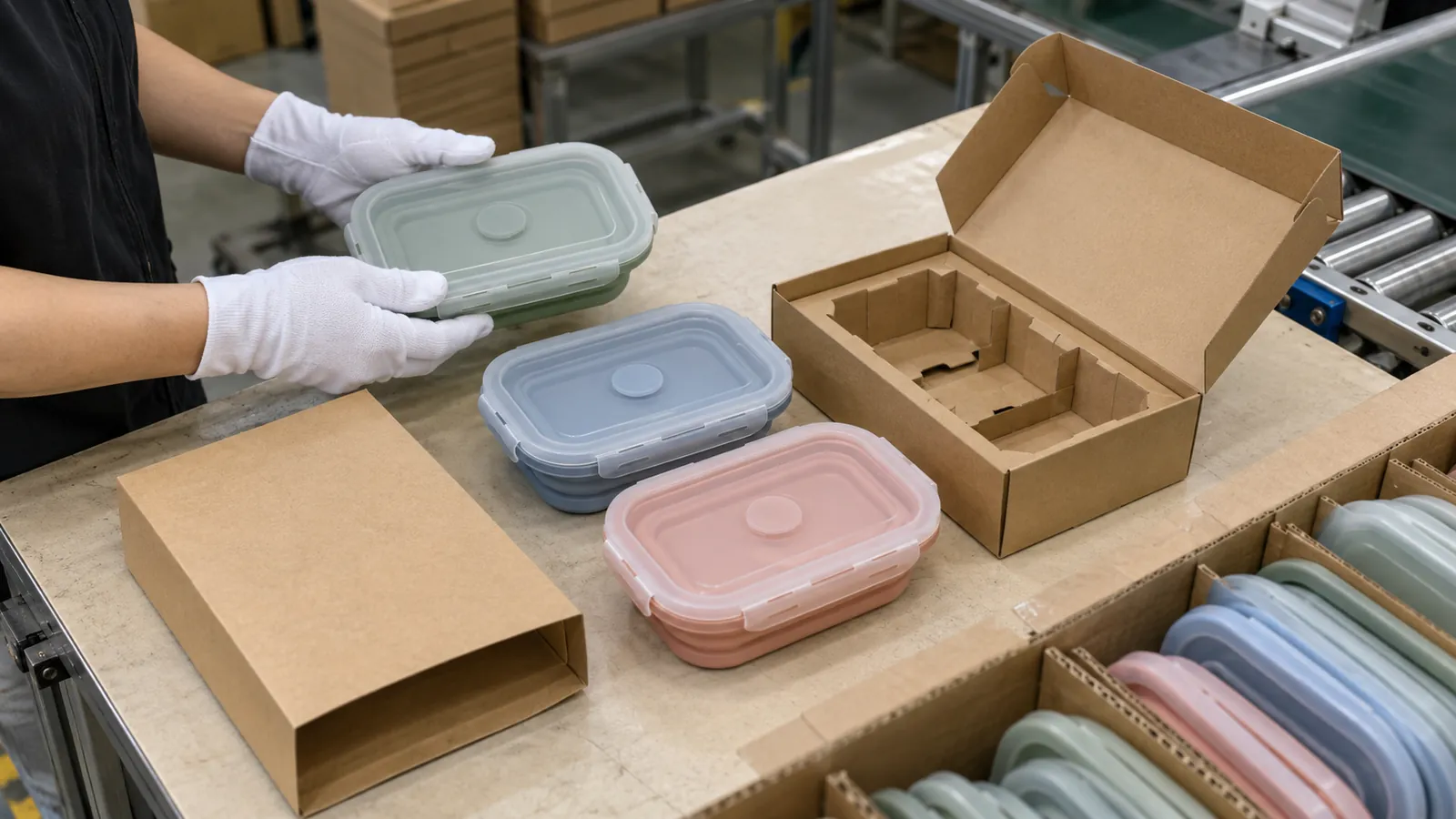
Illustrative packout scene: approved colors, collapsed orientation, lid retention, insert fit and carton protection are checked against the same SKU revision.
B2B SOURCING SNAPSHOT
Final terms depend on the approved specification, packaging, quantity and delivery plan.
| Control Point | Buyer Decision | Approval Basis |
|---|---|---|
| Capacity and footprint | Nominal volume, open length, width, height and corner radius | Confirmed by controlled fill and dimensional inspection on approved samples |
| Collapse architecture | Fold count, collapsed height, transition radii and local wall thickness | Controlled by section drawing and repeated buyer-agreed cycle evaluation |
| Rim and lid interface | Rim stiffness, sealing bead, latch or press-fit route and removal feature | Checked for engagement, retention and opening under defined conditions |
| Silicone material | Grade, cure route, hardness, pigment and surface finish | Selected for intended contact, conditioning and destination-market requirements |
| Private-label execution | Molded logo, Pantone reference, size coding, sleeve or box | Approved through artwork, color standard and packed golden sample |
| Commercial program | Tooling route, MOQ, sample plan and production schedule | Quoted after geometry, testing, packaging, quantity and timing are agreed |
Each project is reviewed as a complete product specification.
Develop one or more capacities around target portions, shelf dimensions and the required open-to-folded height ratio.
Review fold number, transition radii and wall sections around expansion force, recovery, cleaning and practical mold release.
Evaluate silicone, reinforced or mixed-material lid routes with defined engagement, venting, removal and stacking requirements.
Confirm silicone grade, cure route, hardness, finish and Pantone-referenced color family for the intended market and use.
Place an embossed or debossed logo away from critical fold, seal and food-cleaning zones after DFM review.
Coordinate collapsed orientation, lid retention, sleeve or box, insert, care information, barcode area and export carton.
B2B BUYER FAQ
These answers define the decisions required before tooling, sampling and a reliable quotation.
Send the target capacity, open and folded dimensions, intended foods and use conditions, lid preference, reference sample or drawing, quantity, destination market, colors, logo artwork, packaging format and required evaluations.
Fold count depends on open height, collapsed height, wall section, corner geometry, expansion force, cleaning access and tooling. The final architecture should be reviewed by section drawing and physical samples rather than copied from an unrelated container.
A defined closure and leak-evaluation route can be developed, but the claim must state the orientation, fill level, liquid, temperature, dwell time, handling and acceptance criteria. A single bench observation does not prove universal leak-proof performance.
The buyer and factory should agree the expansion and collapse sequence, cycle count, conditioning, checkpoints and acceptance limits for cracking, whitening, permanent deformation, height recovery, rim stability and lid fit. Results apply to the approved SKU and method.
Selection depends on fold recovery, rim support, surface feel, food-contact conditions, cleaning and destination-market requirements. The proposed compound, cure route and hardness are confirmed with the geometry and sample plan.
Yes. A coordinated range can use a common color family and design language, but each capacity needs its own drawing, fit and cycle approval. Packaging must control size identification, lid pairing and selling-unit count.
Pantone-referenced colors, manufacturable molded branding, sleeves, boxes and inserts can be evaluated. Artwork, logo depth, color tolerance, care language, packed orientation and carton protection require approval before production.
Overall size, fold complexity, lid construction, cavity plan, material, colors, validation scope, packaging, order quantity and current capacity affect the project. A reliable quotation follows specification and approval-plan review.
CATEGORY-SPECIFIC REVIEW
Contact conditions, heat, cleaning, storage and expected service life.
Hardness, flexibility, grip, texture and surface appearance.
Sizes, color families, product sets and price-position planning.
Retail boxes, hanging cards, inserts, labels and export cartons.
INQUIRY CHECKLIST
Providing clear requirements helps us evaluate tooling, samples, price and lead time.
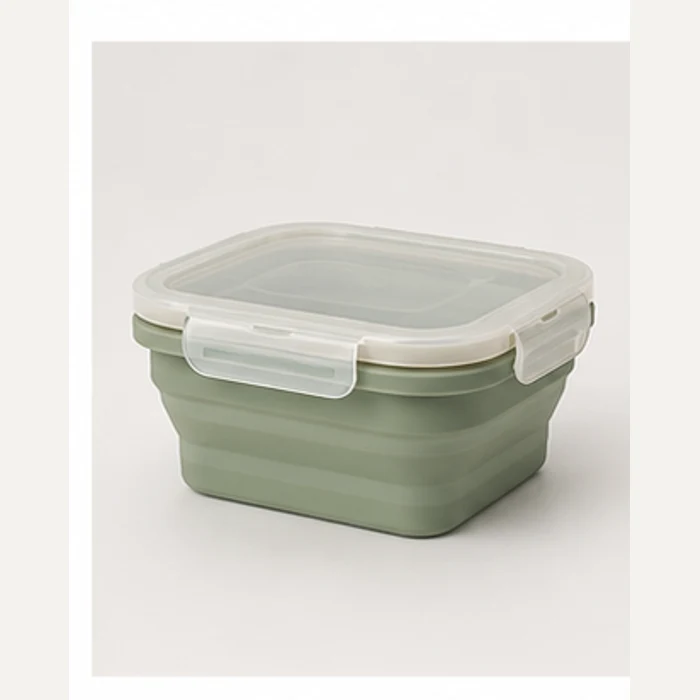
Foldable storage format for space-efficient kitchens.
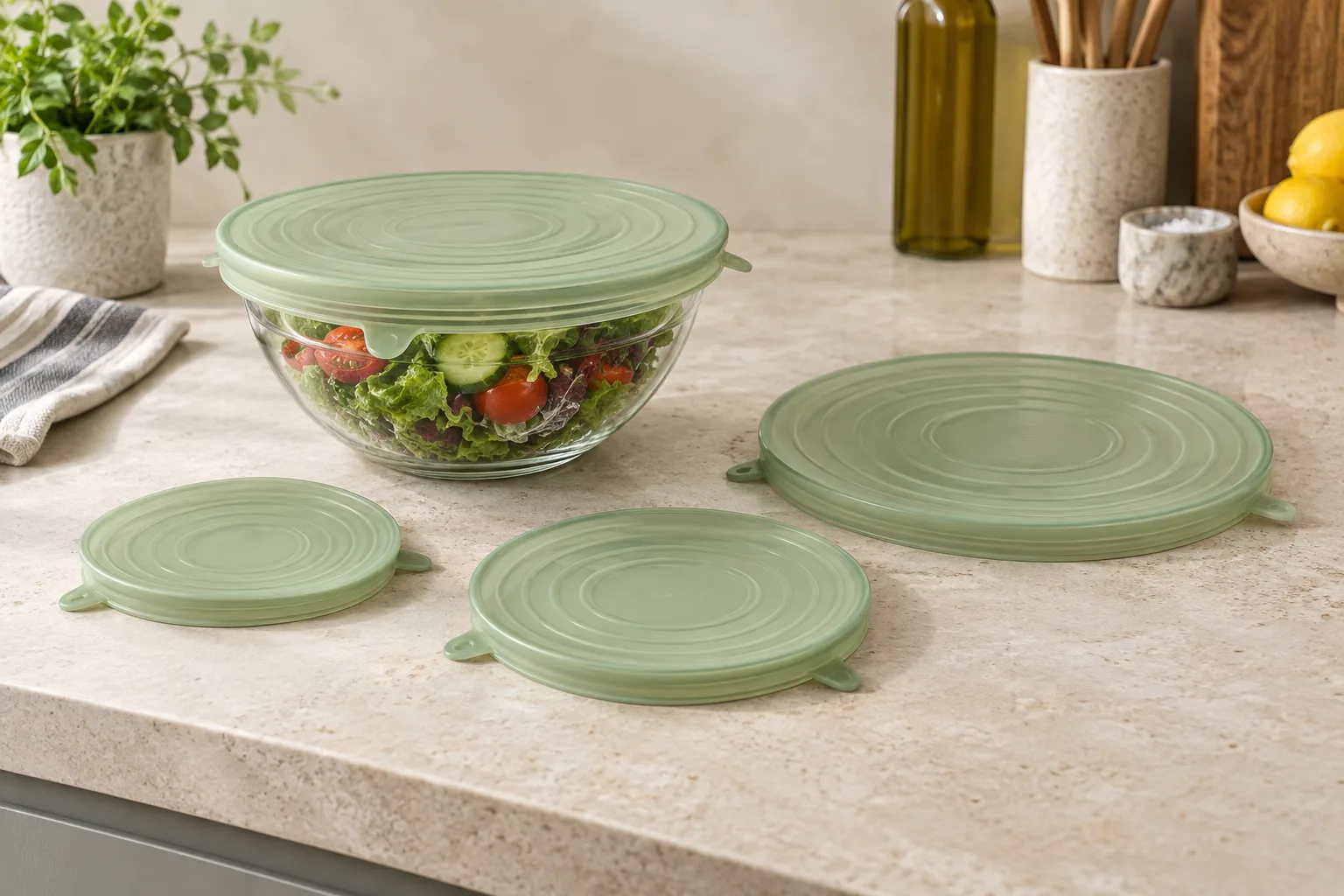
A private-label multi-size cover set developed around vessel-rim fit, elastic recovery, pull-tab usability and a controlled retail size mix.
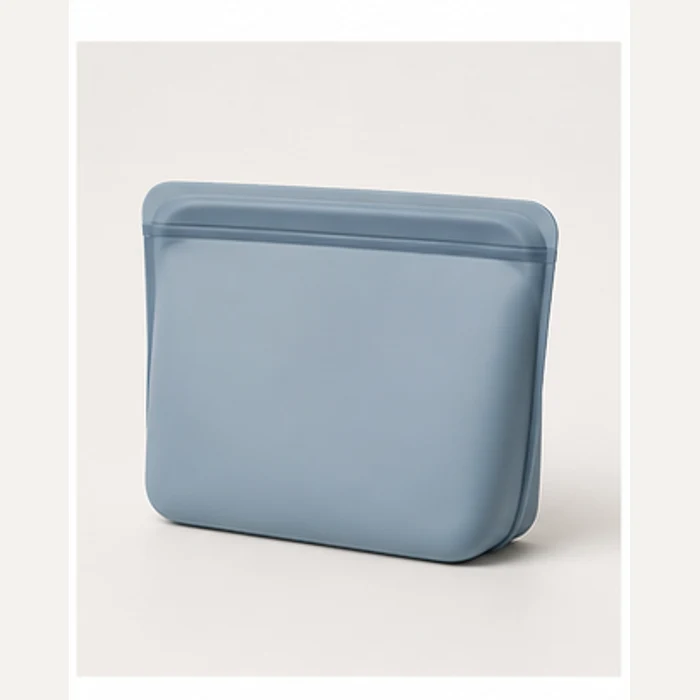
Easy-clean reusable bag for snacks and meal preparation.
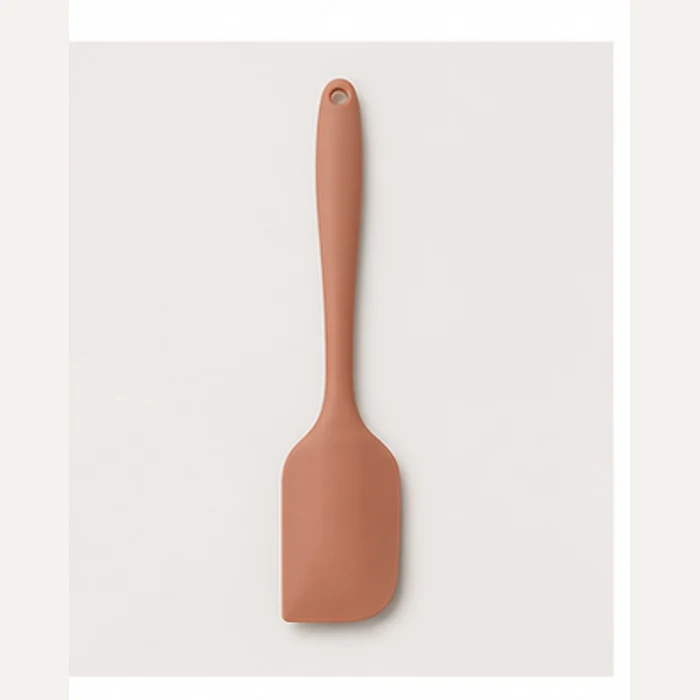
One-piece cooking tool with hygienic construction.
B2B PROJECT INQUIRY
Share the intended product, destination market, order quantity and launch plan. Our project team will review the information and identify the next practical step.
Drawings are helpful but not required. A sketch, reference photo or physical sample can be used for an initial discussion.
GENERAL SOURCING INQUIRY