
Ring and Grip Geometry
Adjust the outer silhouette, central opening and handling zones around the intended user profile while preserving manufacturable radii and wall balance.
BABY & TODDLER FEEDING
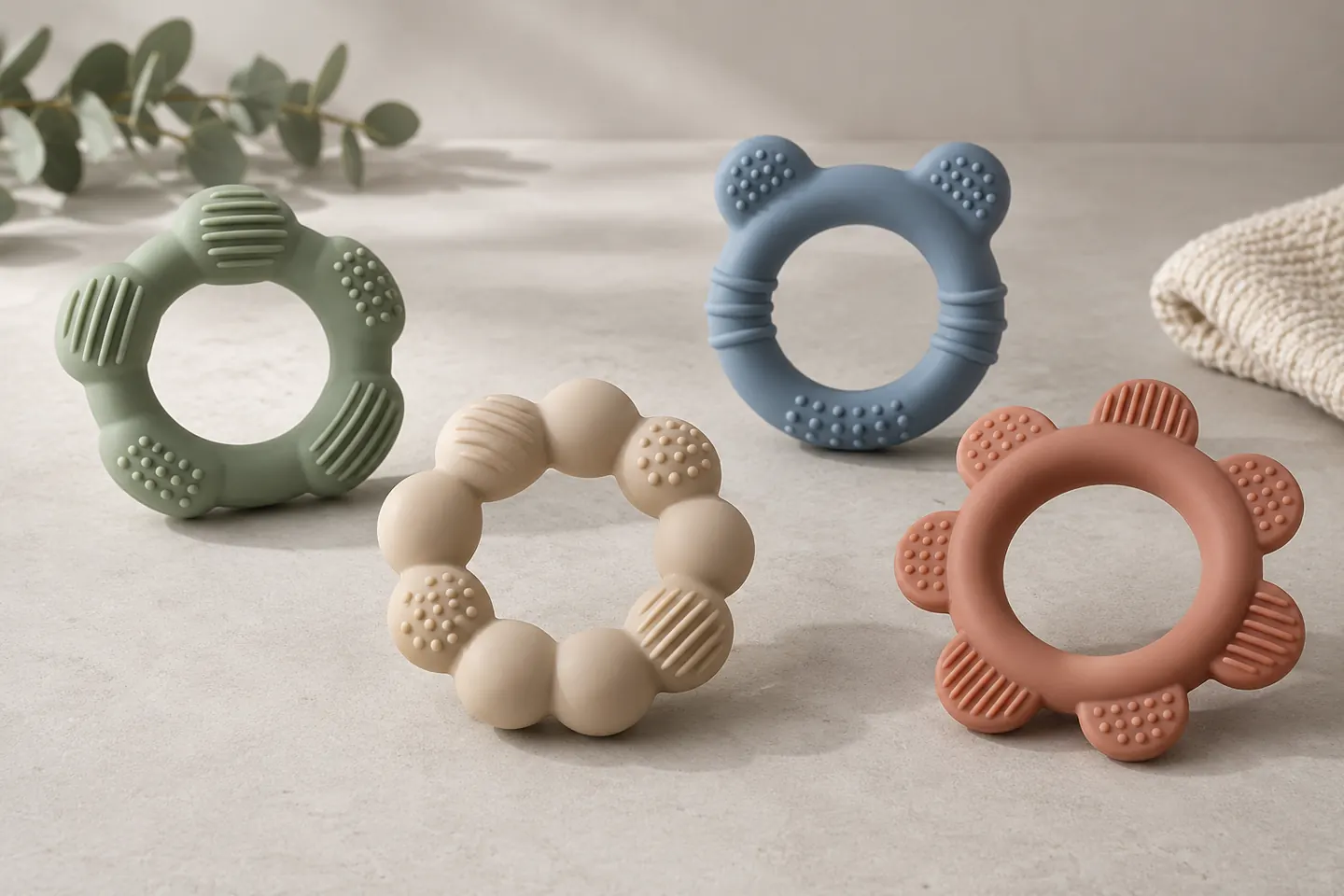
PRODUCT OVERVIEW
A custom silicone teething ring should be engineered as a child-use product with controlled dimensions, transitions and surface details, not selected only by color or character outline. Naike Silicone reviews the outer profile, central grip opening, accessible projections, local thickness, radii, tactile features, parting line and overall mass as one molded system. These choices affect handling, cleanability, mold filling, demolding and the scope of finished-product evaluation.
The buyer brief should define the intended user and market, target overall size, grip concept, proposed chew zones, cleaning method, compound and cure route, color program, molded branding, selling-unit count and packaging. Those inputs guide drawing tolerances, wall balance, texture depth, venting, gate and parting-line locations, cavity layout and inspection points. Production-representative samples should then be assessed against an agreed protocol before artwork, claims or mass production are approved.
A material report alone does not establish compliance or suitability for every age group, market or product geometry. Required physical, mechanical, chemical, labeling and traceability work depends on the finished SKU, intended use and destination rules. Tooling, MOQ, price, sample timing, capacity and lead time remain conditional on the approved drawing, test plan, colors, packaging, quantity and current factory schedule.
Product page updated:
Request a B2B QuotationENGINEERING & APPROVAL EVIDENCE
Each stage addresses a different purchasing risk: manufacturability, functional fit and private-label presentation.
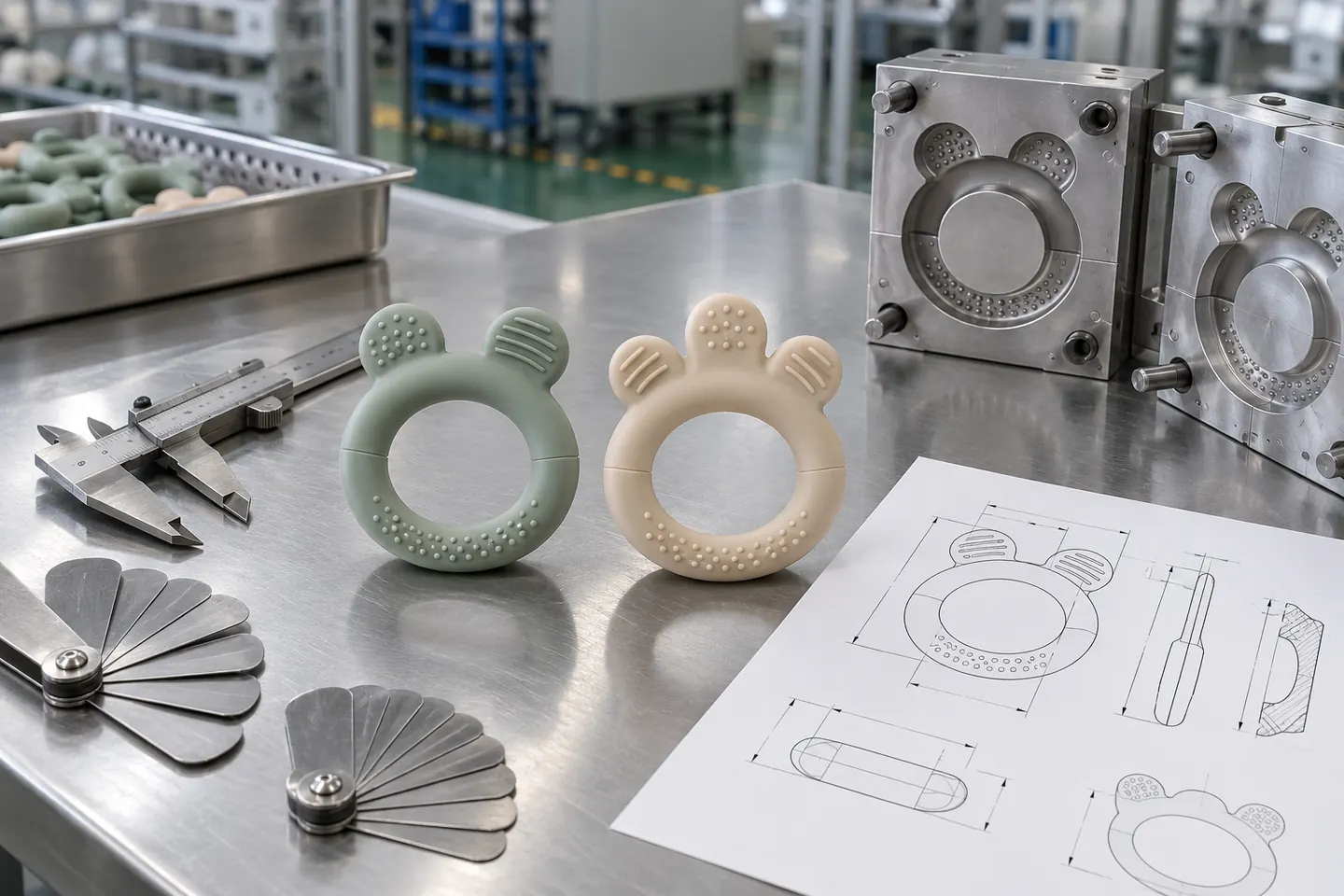
Local thickness, radii, texture depth, parting line, vents, gate position and cavity layout are reviewed before tooling release.
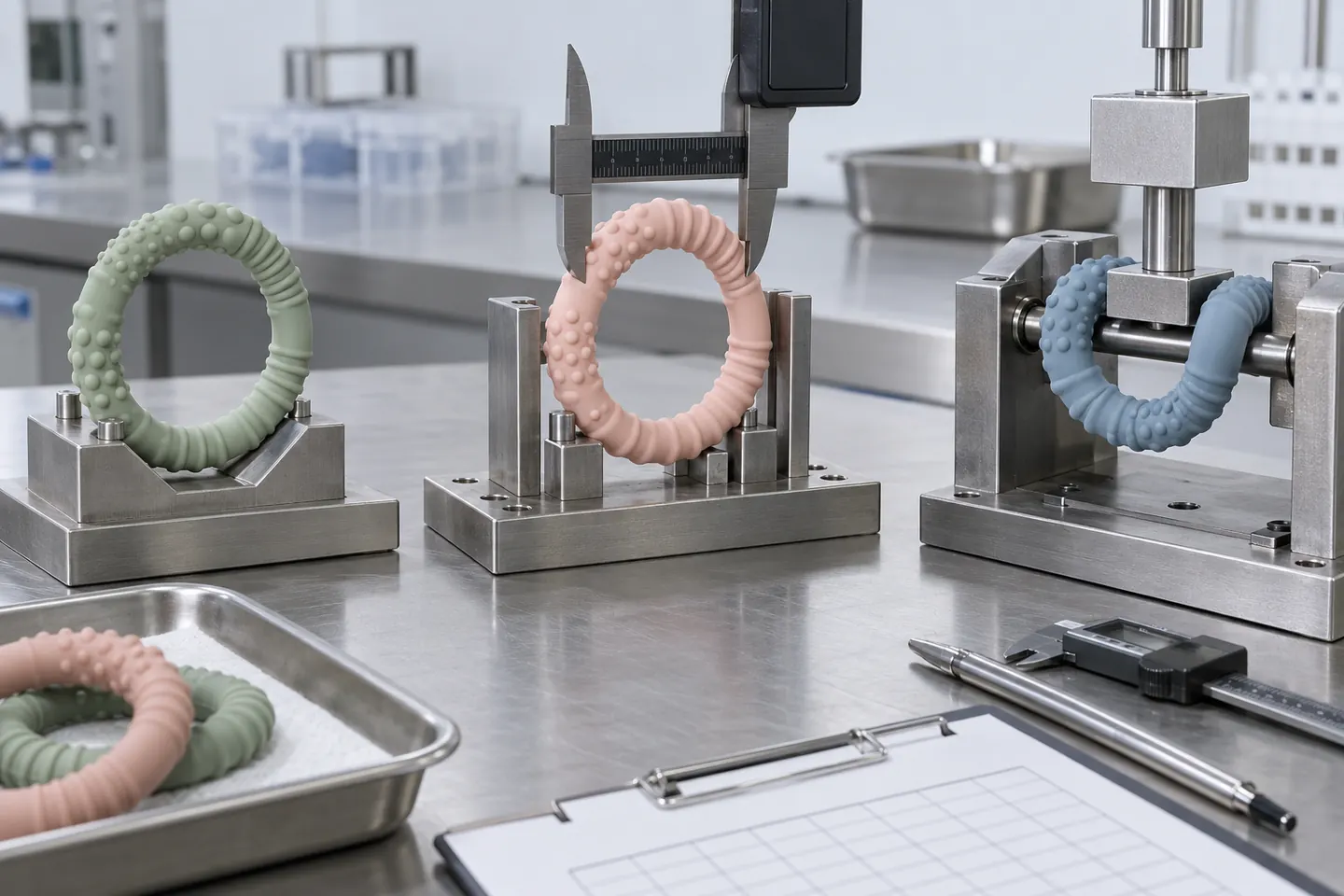
Buyer-approved dimensional, flex, pull and inspection methods create a documented basis for sample approval in the target market.
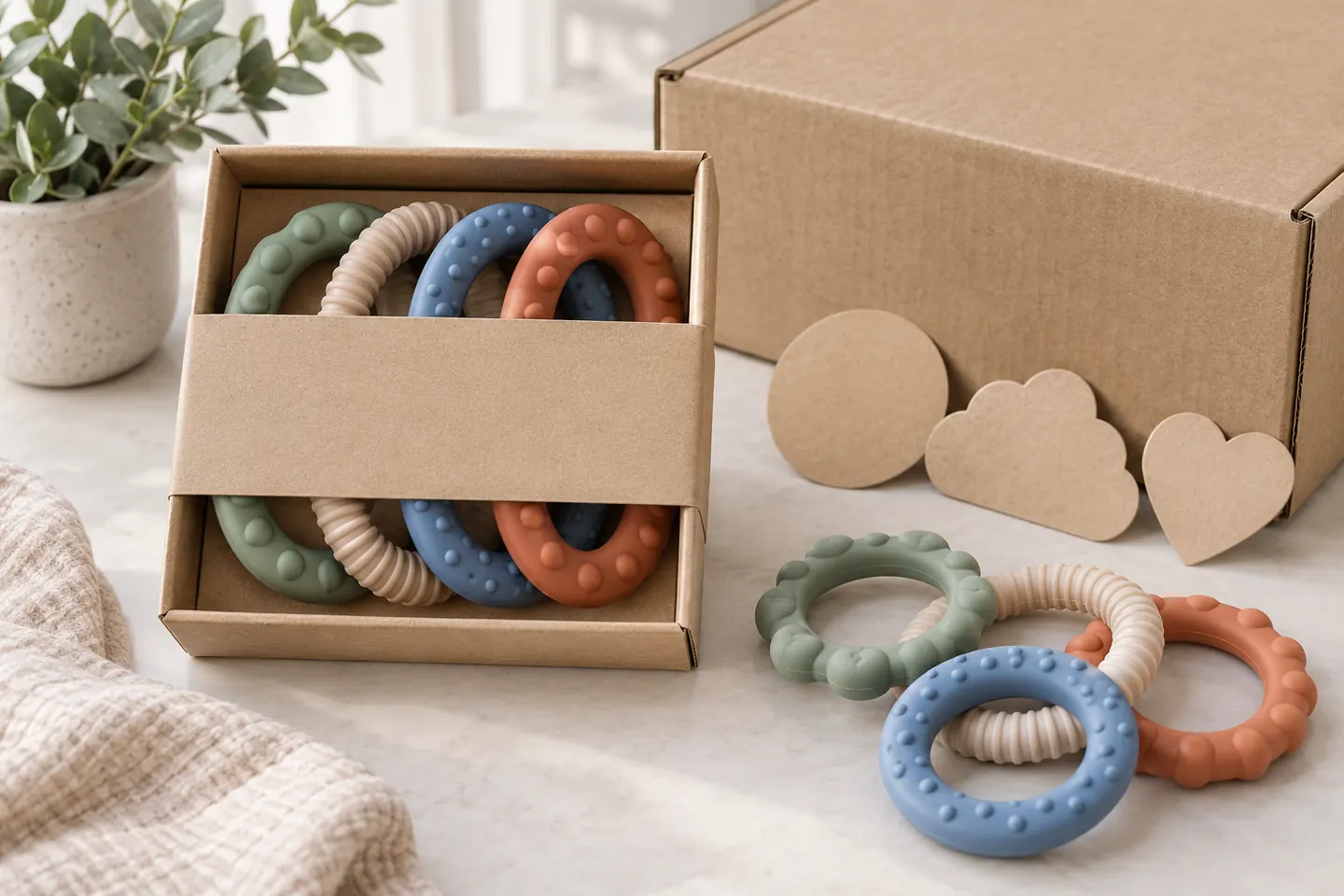
Pantone-referenced colors, molded marks, instructions, retail box and export-carton protection are approved as one finished SKU.
B2B SOURCING SNAPSHOT
Final terms depend on the approved specification, packaging, quantity and delivery plan.
| Control Point | Buyer Decision | Approval Basis |
|---|---|---|
| Product architecture | Overall outline, central grip opening, projection reach, local thickness and mass | Controlled drawing plus production-representative molded sample |
| Surface geometry | Tactile feature height, spacing, radii, transition zones and cleanability | DFM review, dimensional inspection and agreed cleaning assessment |
| Physical validation | Applicable dimensional, flex, tension, torque or other market-specific checks | Named protocol, conditioned samples and documented acceptance criteria |
| Material and color | Silicone compound, cure route, hardness, pigment and intended contact conditions | Finished-SKU evidence matched to the destination market and test scope |
| Branding and packout | Molded mark, color allocation, instructions, retail box and master carton | Artwork, physical color reference and complete packed golden sample |
| Commercial basis | Tooling, cavities, MOQ, unit price, samples, capacity and delivery plan | Confirmed after geometry, evidence, packaging, quantity and schedule approval |
Each project is reviewed as a complete product specification.
Adjust the outer silhouette, central opening and handling zones around the intended user profile while preserving manufacturable radii and wall balance.
Develop raised ribs, dots or soft contours with controlled height, spacing and transitions that can be molded, inspected and cleaned.
Review compound, cure route, hardness and pigment against the finished geometry, intended conditions and destination-market evidence plan.
Position tooling splits, gates and vents away from critical use areas where practical, then define trimming and surface acceptance criteria.
Create Pantone-referenced colors plus manufacturable embossed or debossed identity marks outside critical flex or textured zones.
Configure single or multi-piece sets, instructions, labels, barcode zones, retail boxes and protective export cartons for the approved channel.
B2B BUYER FAQ
These answers define the decisions required before tooling, sampling and a reliable quotation.
Send the intended user and destination market, target dimensions, reference sample or drawing, proposed grip and tactile features, quantity by color, logo artwork, packaging concept and required test scope. These inputs define the tooling and approval route.
Yes. The overall silhouette, grip opening, ribs, dots and other molded details can be reviewed together. Final geometry must account for local thickness, radii, mold filling, demolding, trimming, cleaning and the applicable physical evaluation.
Hardness is considered with ring cross-section, mass, flex response, tactile detail, handling and test requirements. A nominal Shore value should not be selected in isolation; approve the finished production-representative sample under the agreed conditioning and method.
No. A raw-material or compound report does not cover every finished geometry, pigment, intended user, physical hazard, label or destination rule. The evidence plan must match the actual SKU and the responsible buyer's target market.
The applicable methods depend on product classification, intended age or user group and destination market. Buyers should confirm the governing requirements, then define sample conditioning, dimensional, tension, torque, flex or other checks with a qualified laboratory or compliance specialist.
Yes, after the exact piece count, geometry revisions, color references, molded marks, instructions and nesting or retention method are approved. Added shapes or colors can change tooling, sampling, inventory and packaging minimums.
The tooling review identifies split, gate and vent locations, while the quality plan defines measurable trimming and visual acceptance criteria. Buyers should approve representative samples and defect references rather than rely on a generic description such as seamless.
The number of geometries and cavities, compound, pigment allocation, evidence and inspection scope, branding, packaging, order quantity and current capacity all influence the program. Commercial figures become firmer after the drawing, test plan and selling-unit specification are approved.
CATEGORY-SPECIFIC REVIEW
Suction stability, grip, portion layout and easy-clean geometry.
Coordinated plates, bowls, cups, utensils and gift sets.
Pantone colors, molded logos and retail-ready packaging.
Age suitability, food-contact requirements and physical samples.
INQUIRY CHECKLIST
Providing clear requirements helps us evaluate tooling, samples, price and lead time.
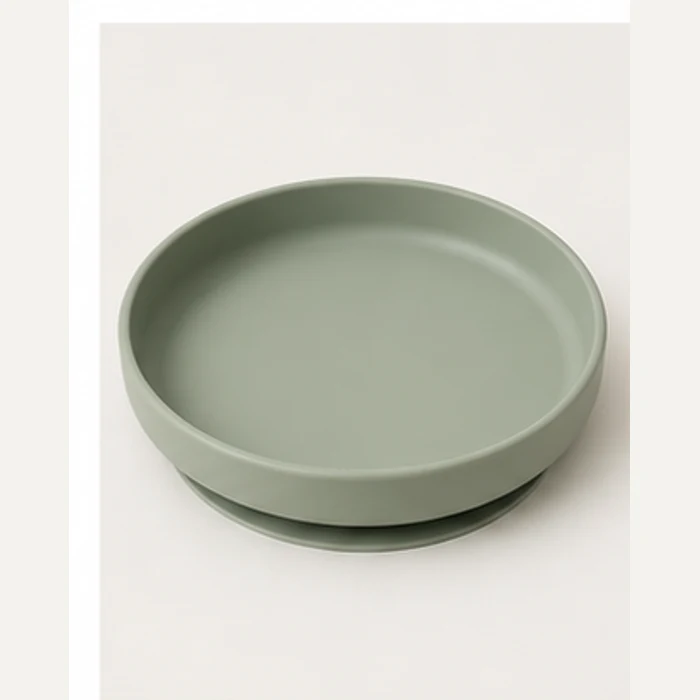
Stable one-piece plate with an easy-clean food-contact surface.
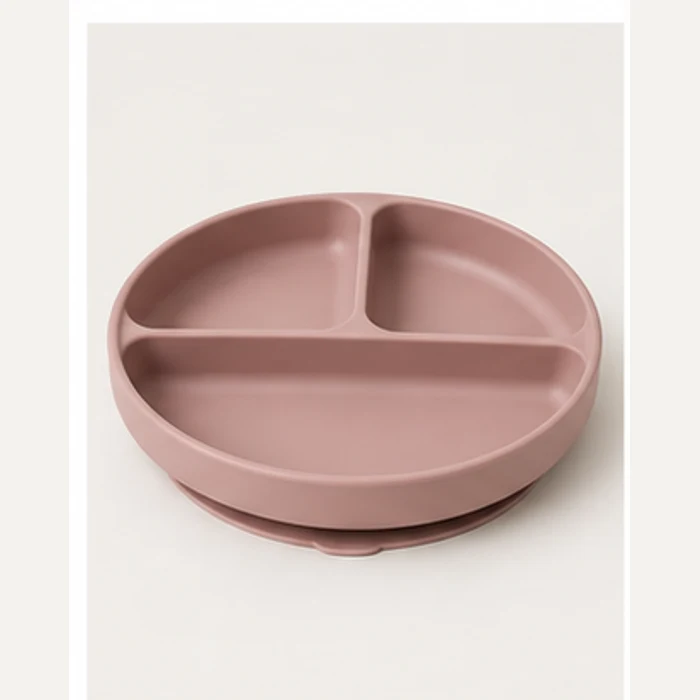
Compartment design for organized toddler meals and portioning.
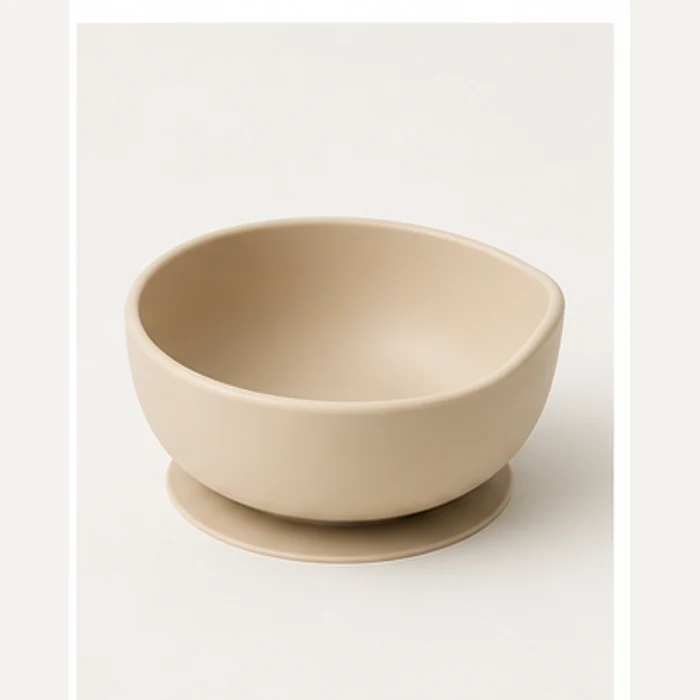
Soft feeding bowl with a stable base for first solids.
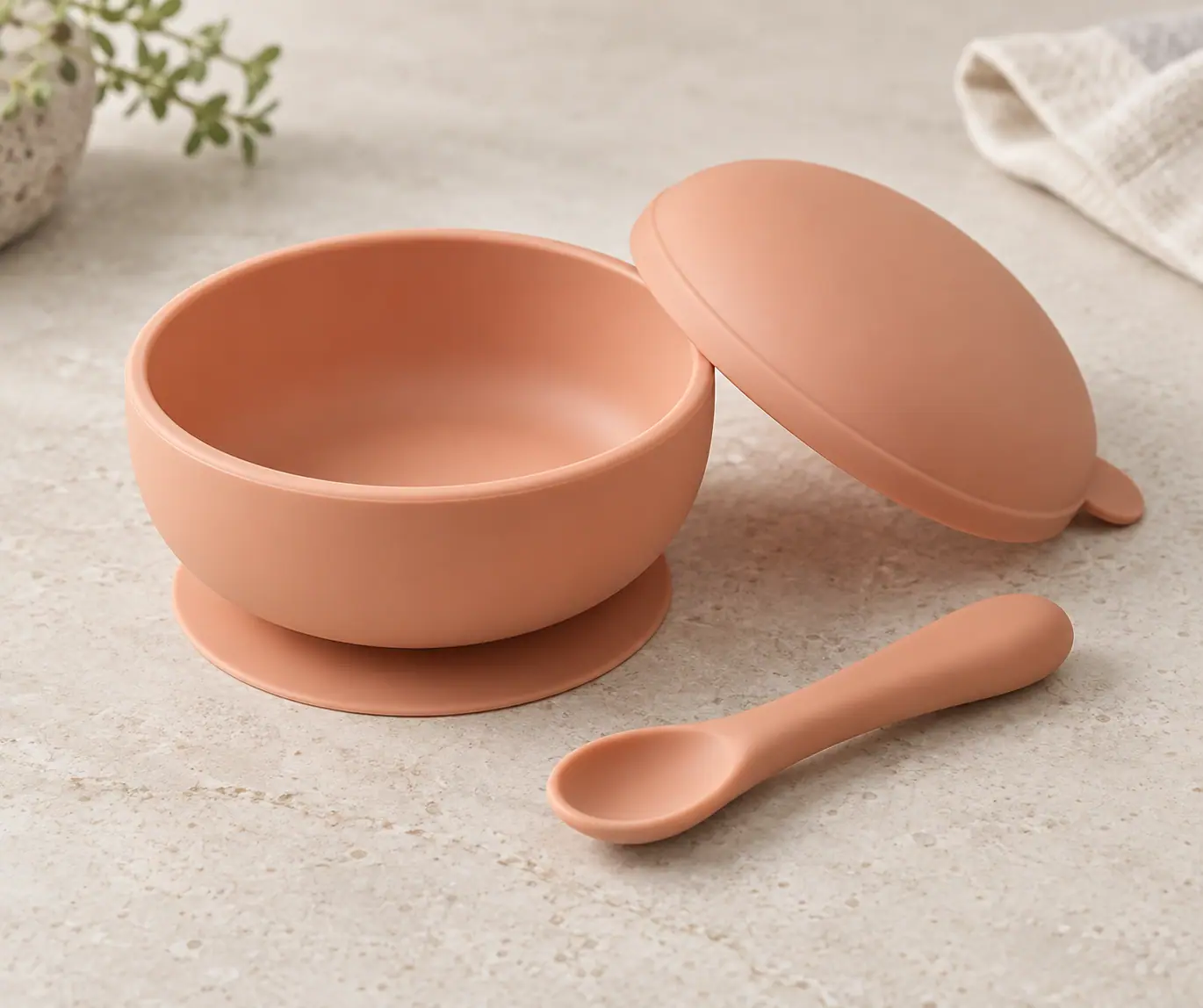
A private-label feeding bowl developed around table contact, rim-and-lid fit, practical spoon access and one controlled retail selling unit.
B2B PROJECT INQUIRY
Share the intended product, destination market, order quantity and launch plan. Our project team will review the information and identify the next practical step.
Drawings are helpful but not required. A sketch, reference photo or physical sample can be used for an initial discussion.
GENERAL SOURCING INQUIRY