
Capacity and Bowl Profile
Define usable volume, rim height, inner radii and spoon access around the intended feeding portion and user.
BABY & TODDLER FEEDING
PRODUCT OVERVIEW
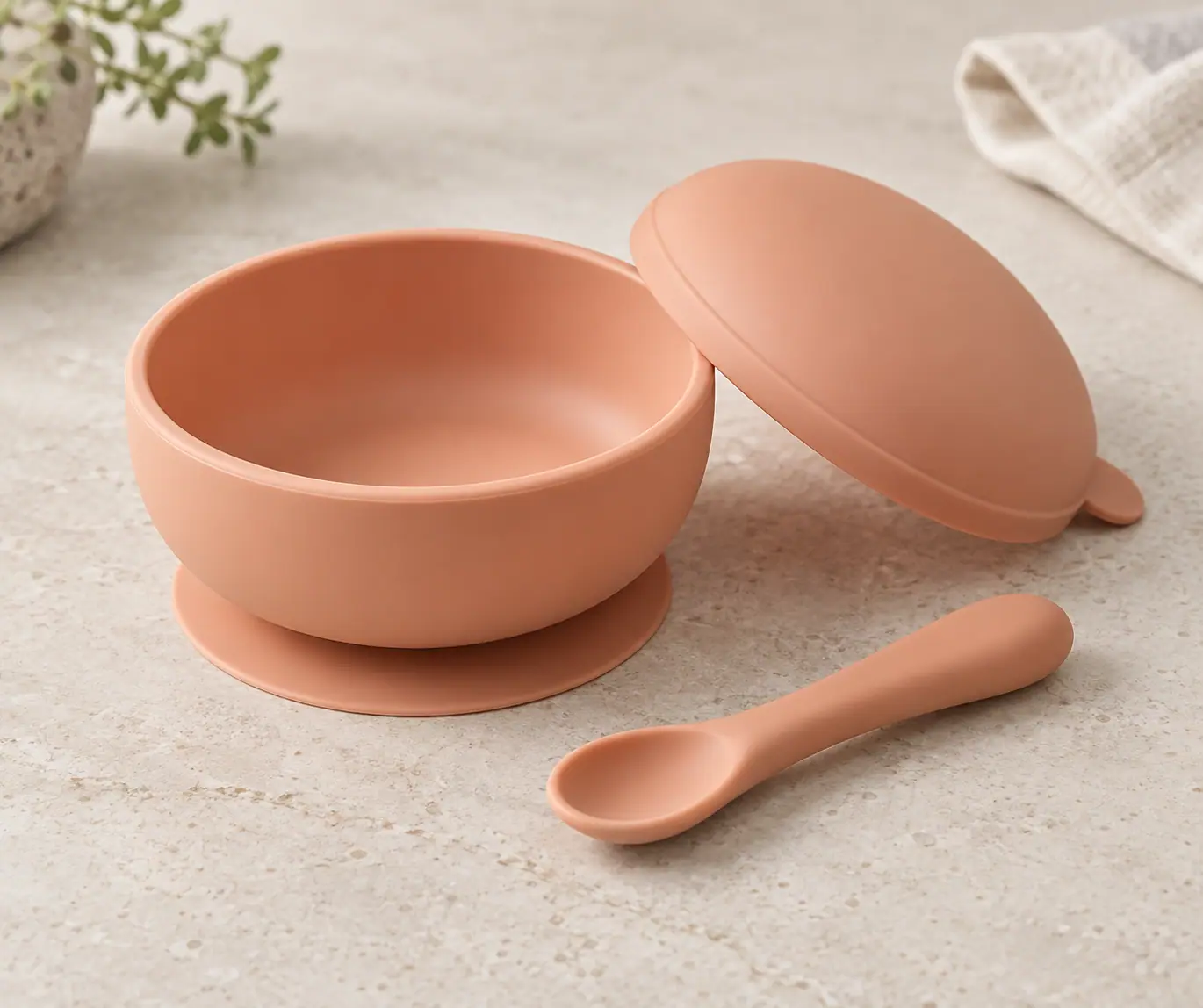
A suction bowl with a lid combines two interfaces that must be approved separately: the bowl-to-table contact and the lid-to-rim engagement. Naike Silicone can develop the bowl profile, integrated base, release tab and cover as one private-label SKU, but a stable result depends on the named surface, cleanliness, loading and user action. The lid can support covered serving or short-term handling only within conditions agreed by the buyer; it should not be described as leakproof, airtight or transport-safe without suitable evidence.
Start with the target user, bowl capacity, table or high-chair surface, feeding posture, spoon access and intended lid use. The tooling review connects inner radius, wall support, rim section, base contact profile, tab geometry and lid engagement. A controlled sample plan can then record contact behavior on representative surfaces, cover alignment, removal effort, nesting and any dimensional changes after the agreed cleaning cycle.
The selling unit may include the bowl, lid and a matched spoon, but every component, color and instruction must point to the same approved revision. Food-contact documents and age or care statements depend on the finished material, pigment, intended use and destination. MOQ, price, tooling, sample timing, capacity and delivery remain conditional on the final geometry, evidence scope, variant split, package and current factory schedule.
Product page updated:
Request a B2B QuotationENGINEERING & APPROVAL EVIDENCE
Each stage addresses a different purchasing risk: manufacturability, functional fit and private-label presentation.
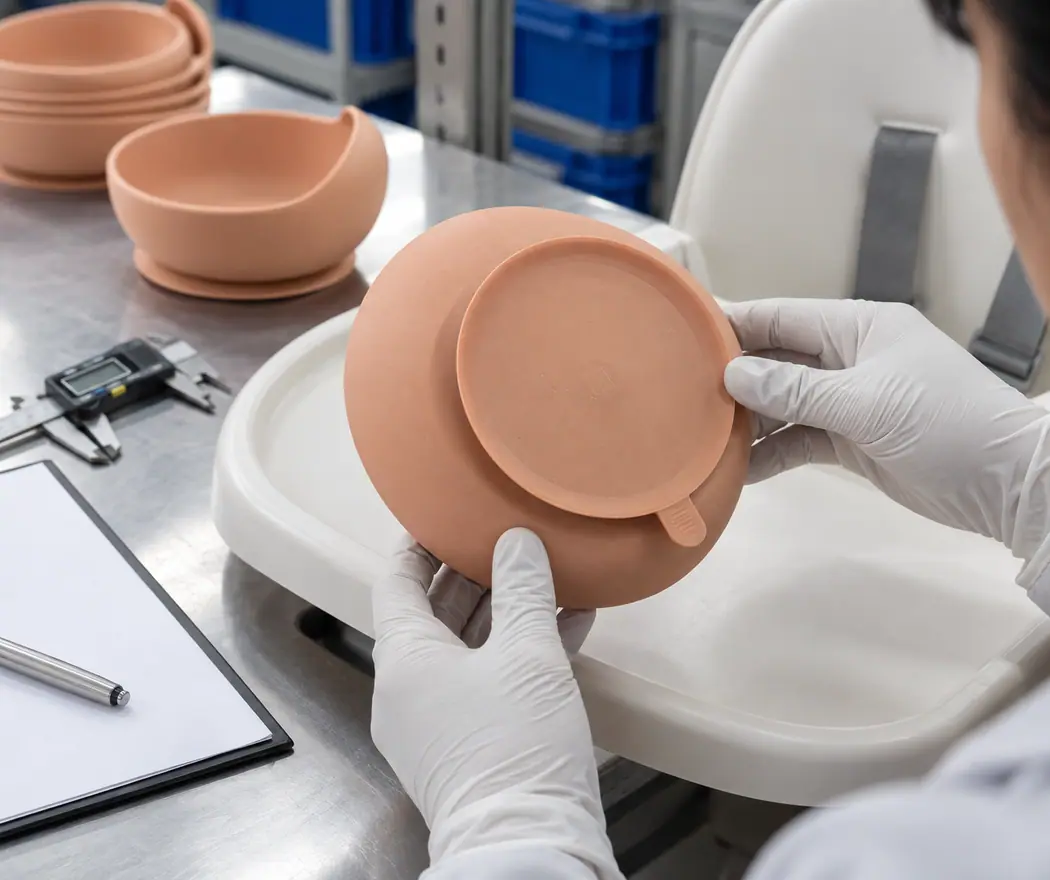
Base diameter, lip continuity, tab position and the named smooth surface are reviewed before setting any retention criterion.
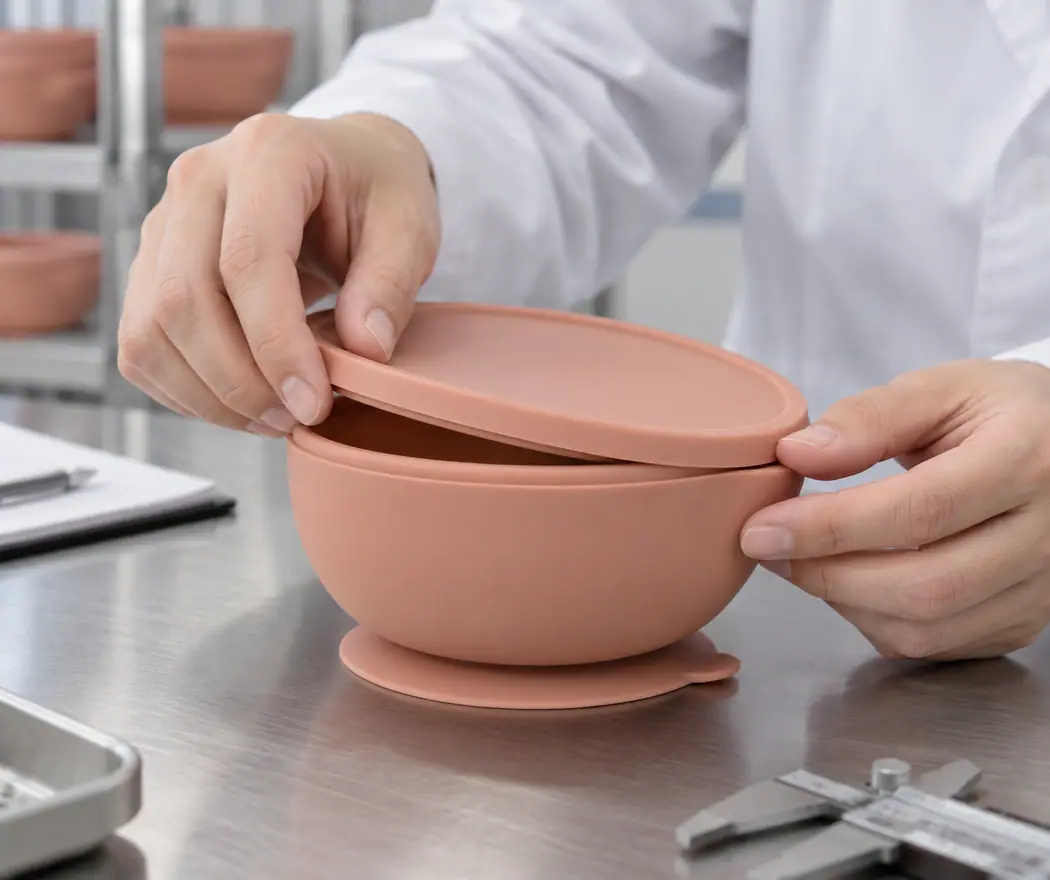
The cover is checked for alignment, practical opening and engagement against the approved bowl revision without making an untested seal claim.
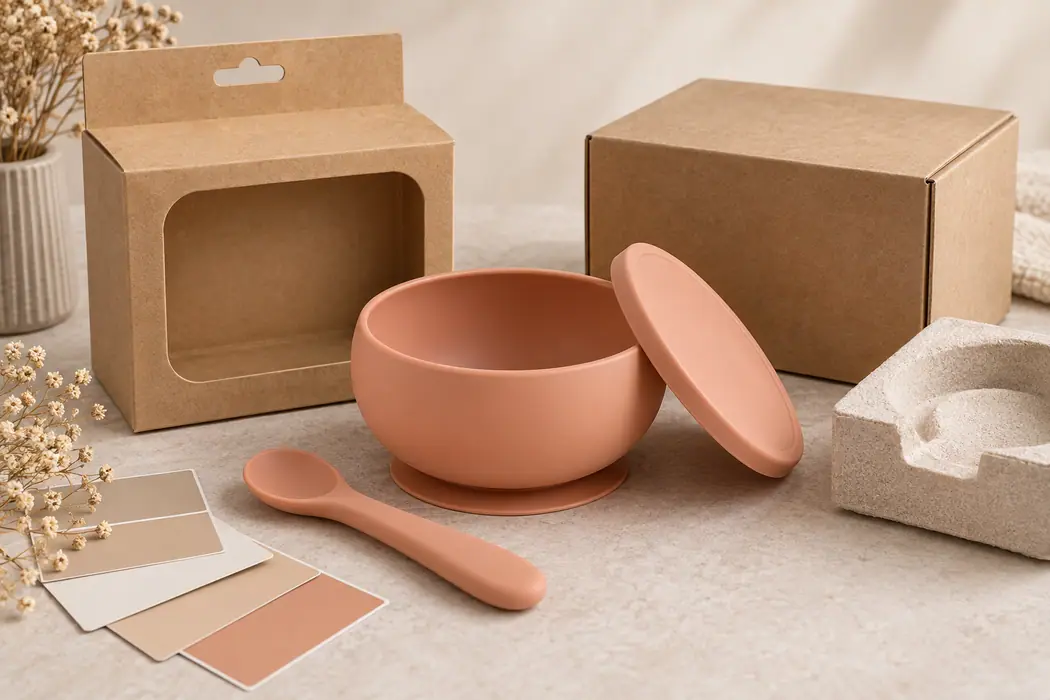
Component count, color, artwork, instructions, protective insert and carton are approved as one physical selling unit.
B2B SOURCING SNAPSHOT
Final terms depend on the approved specification, packaging, quantity and delivery plan.
| Control Point | Buyer Decision | Approval Basis |
|---|---|---|
| Bowl geometry | Usable capacity, inner radius, wall profile, rim and spoon-access direction | Drawing, measured samples and buyer-approved feeding review |
| Surface interface | Base diameter, contact lip, release tab and named table or tray surface | Defined placement and release observations under agreed clean and loading conditions |
| Lid engagement | Rim section, cover overlap, pull tab, nesting and intended covered-use scenario | Dimensional check and repeated fit review on the approved bowl-and-lid pair |
| Material identity | Silicone grade, cure route, hardness, pigment, finish and intended food contact | Finished-SKU evidence reviewed for the destination and stated conditions |
| Set configuration | Bowl, lid, optional spoon, molded mark, colors, instructions and package | Signed component bill, artwork and packed golden sample |
| Commercial basis | Tooling, component cavities, variant split, MOQ, price and delivery plan | Quotation after specification, evidence, order mix and current capacity are confirmed |
Each project is reviewed as a complete product specification.
Define usable volume, rim height, inner radii and spoon access around the intended feeding portion and user.
Review base diameter, flexible lip, release tab and target surface instead of claiming universal suction.
Develop rim overlap, lid tab and nesting around the approved bowl; validate any retention or spill wording separately.
Coordinate spoon length, tip shape, handle section, color and packing clearance if it belongs in the selling unit.
Select a controlled compound, hardness, finish, Pantone-referenced pigment and manufacturable molded logo position.
Approve component count, care language, sleeve or box, insert, barcode and export carton with an assembled sample.
B2B BUYER FAQ
These answers define the decisions required before tooling, sampling and a reliable quotation.
Send target capacity and dimensions, intended user, reference surface, lid use, first-order quantity, destination, colors, logo artwork, spoon requirement and package concept. A sample, sketch or marked photograph helps align the tooling and validation scope.
No universal claim should be made. Surface material, flatness, texture, cleanliness, loading and user action affect contact. Identify representative surfaces and agree a repeatable placement, observation and release method before approving wording.
Not by default. A fitted lid may cover the bowl, but airtightness, leak resistance and transport suitability are separate claims requiring defined contents, orientation, handling and acceptance criteria on the exact bowl-and-lid revision.
Yes, subject to DFM, wall balance, mold access and physical approval. The rim also controls the lid interface, so changes should be evaluated across both components rather than approved on an isolated bowl drawing.
Yes. Confirm spoon geometry, material, color, quantity, logo and packed orientation as part of the SKU. The spoon needs its own drawing, sample criteria and applicable intended-use evidence rather than inheriting approval from the bowl.
The buyer should define destination, food type, contact duration, temperature and cleaning method. Review finished-material and pigment evidence for that scope and avoid copying a generic report or care instruction from another product.
Molded marks, Pantone-referenced colors, printed sleeves or boxes can be reviewed. Approve mark geometry, component colors, artwork, instructions and one packed golden sample before printed-material release.
They depend on bowl and lid geometry, spoon inclusion, mold and cavity plan, compound, pigment split, tests, package minimums, order quantity and current capacity. Commercial terms follow the confirmed configuration and approval route.
CATEGORY-SPECIFIC REVIEW
Suction stability, grip, portion layout and easy-clean geometry.
Coordinated plates, bowls, cups, utensils and gift sets.
Pantone colors, molded logos and retail-ready packaging.
Age suitability, food-contact requirements and physical samples.
INQUIRY CHECKLIST
Providing clear requirements helps us evaluate tooling, samples, price and lead time.
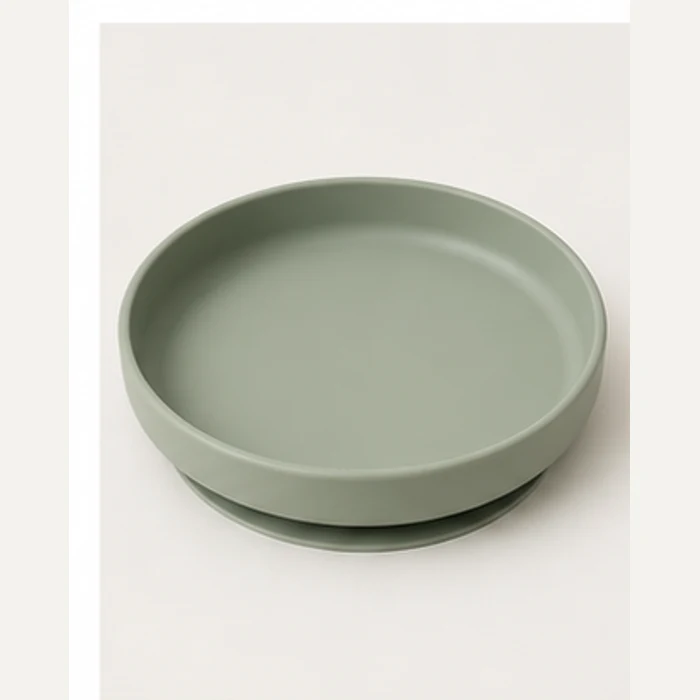
Stable one-piece plate with an easy-clean food-contact surface.
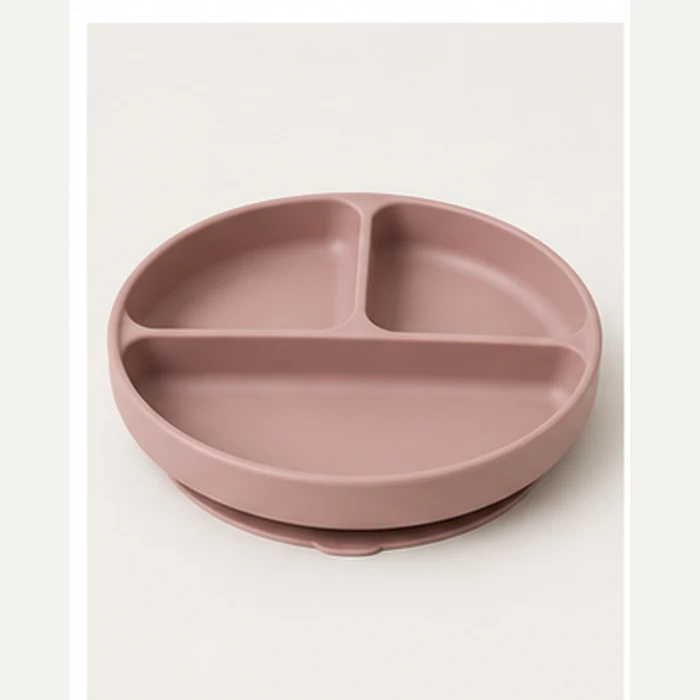
Compartment design for organized toddler meals and portioning.
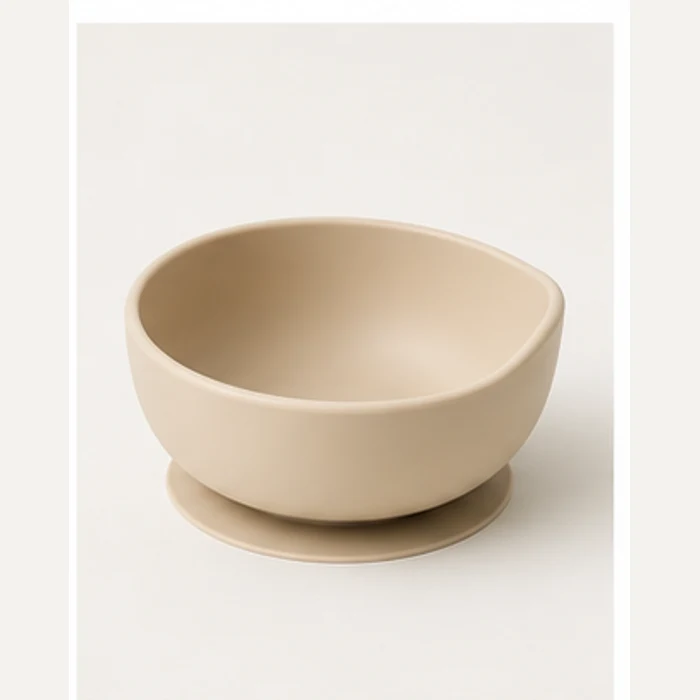
Soft feeding bowl with a stable base for first solids.
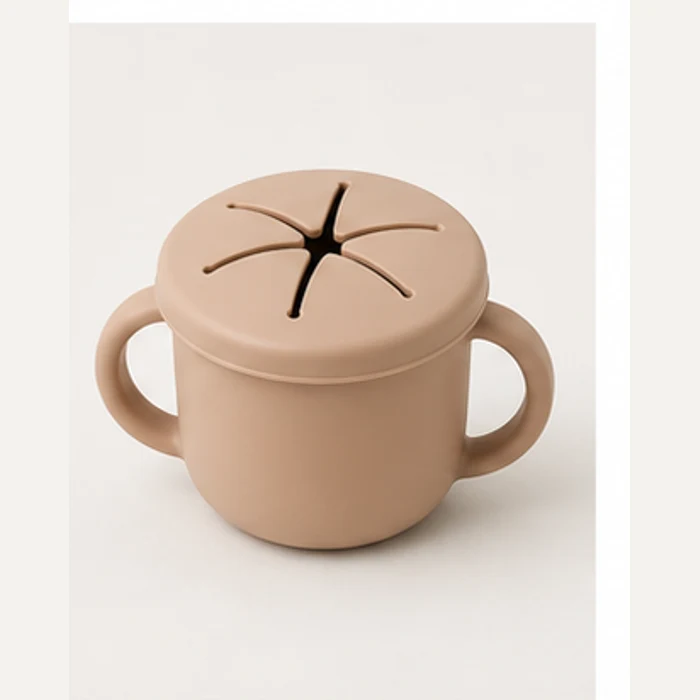
Soft-opening snack container designed for small hands.
B2B PROJECT INQUIRY
Share the intended product, destination market, order quantity and launch plan. Our project team will review the information and identify the next practical step.
Drawings are helpful but not required. A sketch, reference photo or physical sample can be used for an initial discussion.
GENERAL SOURCING INQUIRY