
Utensil-Specific Interior
Develop the internal length, width, head pockets, handle restraints and clearance around the buyer's named spoon and fork.
BABY & TODDLER FEEDING
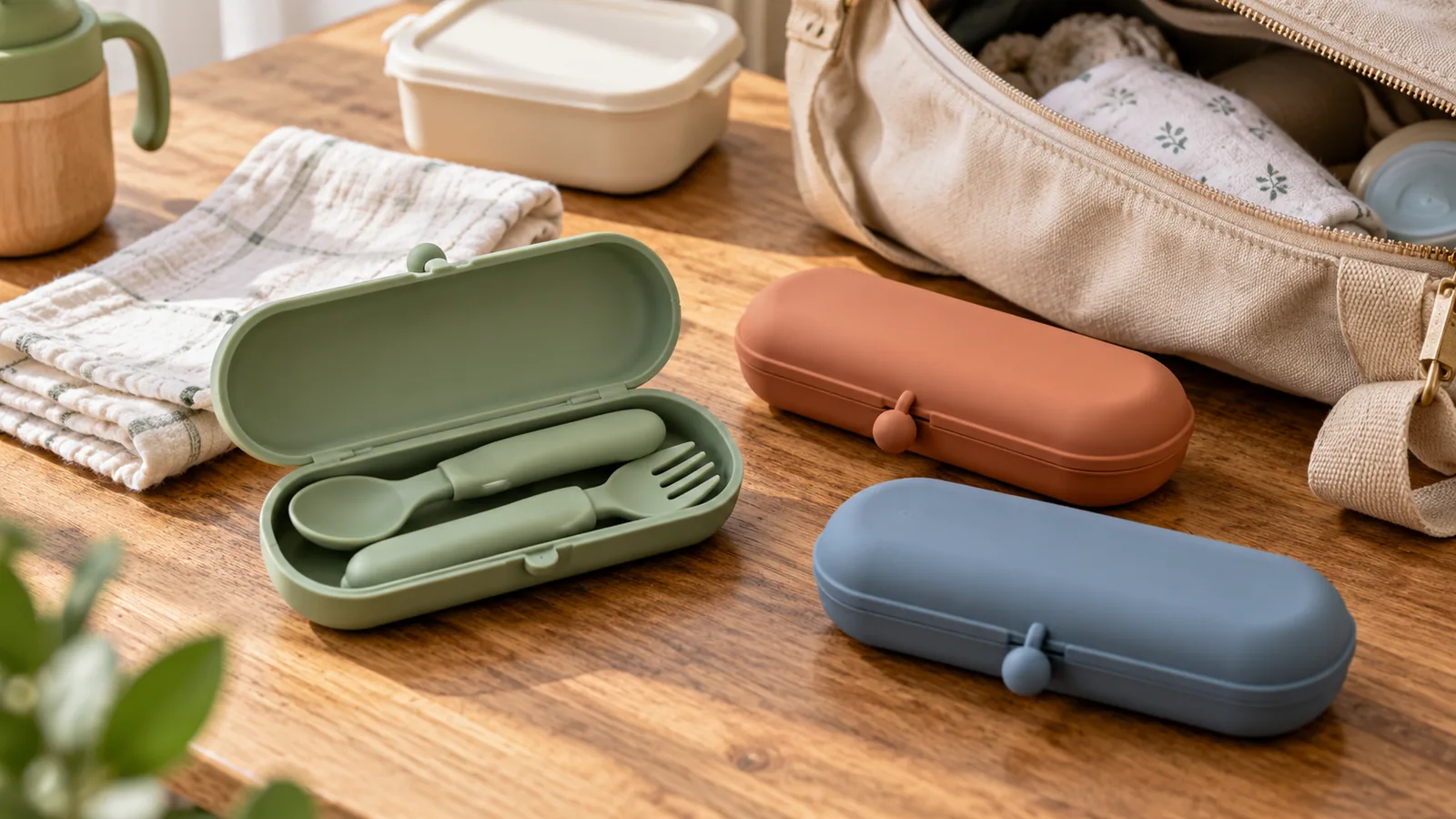
PRODUCT OVERVIEW
A custom silicone baby utensil travel case should protect the buyer-defined spoon and fork during transport while remaining practical to open, clean and dry. Naike Silicone develops the internal envelope, handle restraints, flexible hinge, closure interface, wall balance, drainage details and branding zone as one controlled selling unit rather than assuming one case fits every utensil profile.
The sourcing brief should identify the exact utensils, maximum handle and head dimensions, target pack orientation, expected carrying environment, cleaning route, color allocation, logo position and retail package. These inputs guide clearance, retention features, compression around the closure, parting line, venting, flash boundaries, release direction and whether the utensil set can move without forcing the case open.
Fit, closure retention, flex life, drainage, cleaning and temperature statements require an agreed sample method and acceptance criteria. Material, tooling, MOQ, price, samples, documentation and delivery timing are confirmed only after the utensil matrix, drawing, compound, colors, molded marking, package structure, destination requirements and current factory capacity are reviewed.
Product page updated:
Request a B2B QuotationENGINEERING & APPROVAL EVIDENCE
Each stage addresses a different purchasing risk: manufacturability, functional fit and private-label presentation.
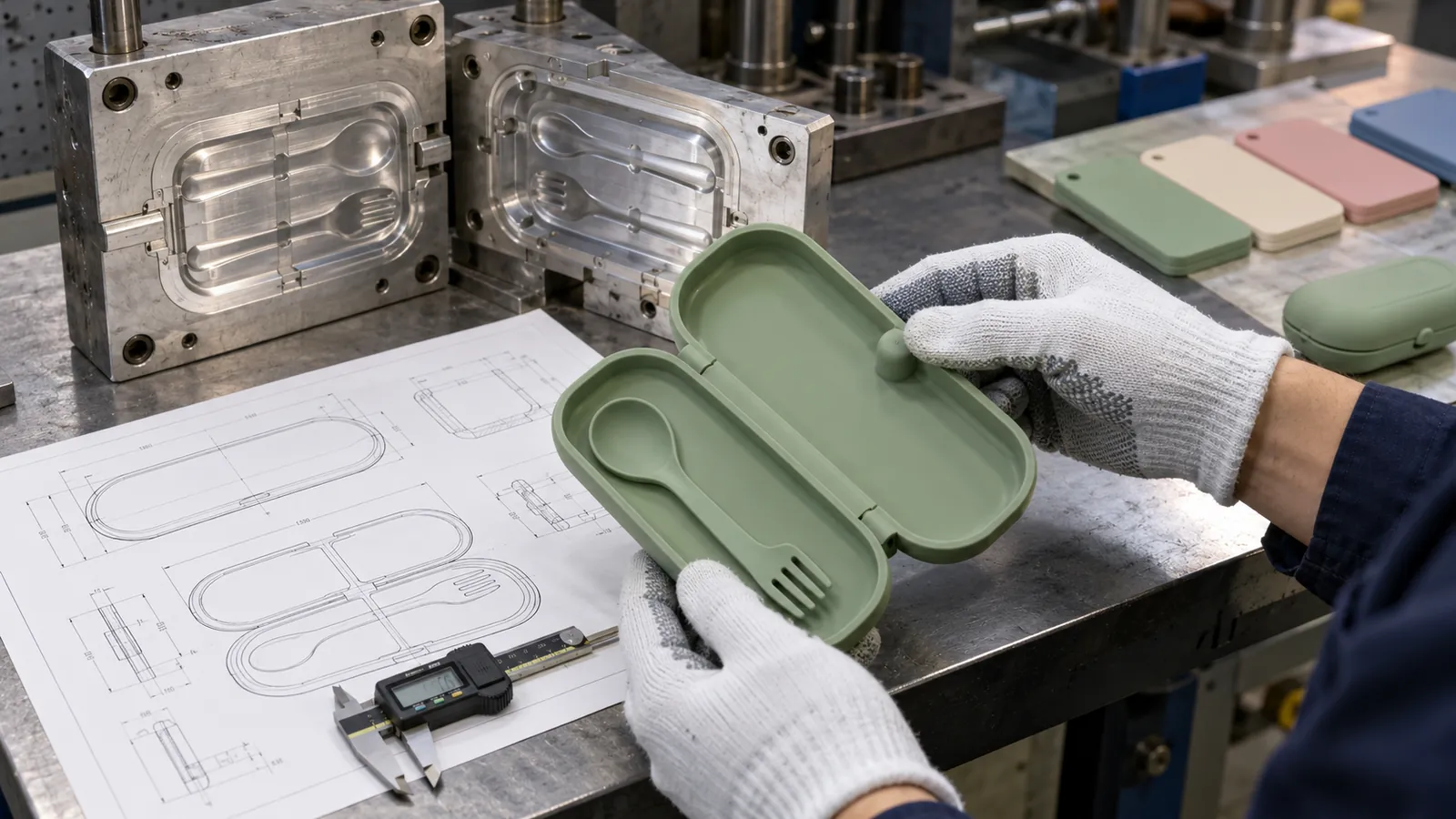
Illustrative scene: utensil clearance, wall balance, hinge web, closure bead, parting line and vent locations are reviewed before tooling release.
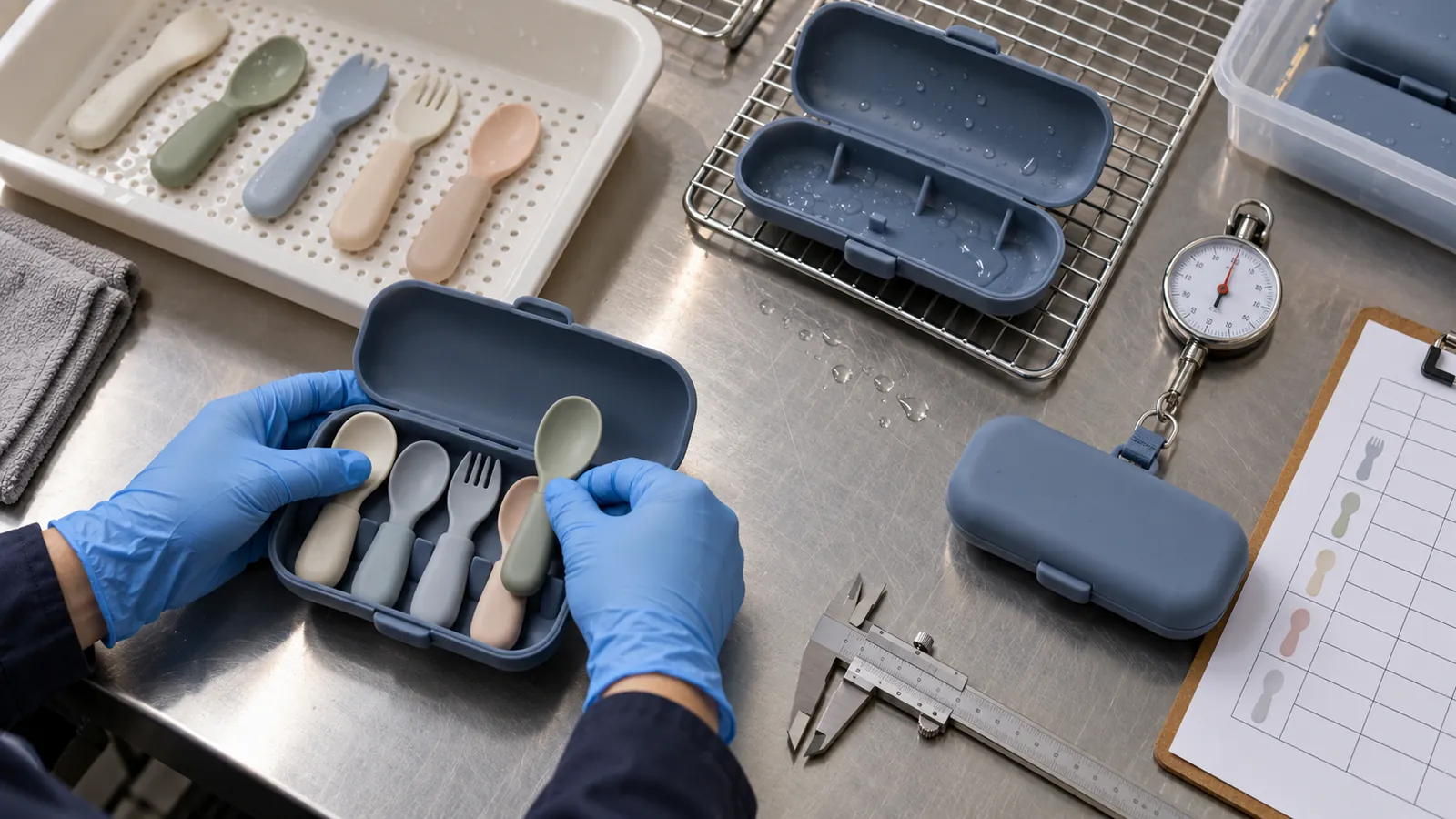
Illustrative scene: the approved utensils and case are checked using buyer-agreed fit, retention, cleaning and drying conditions.
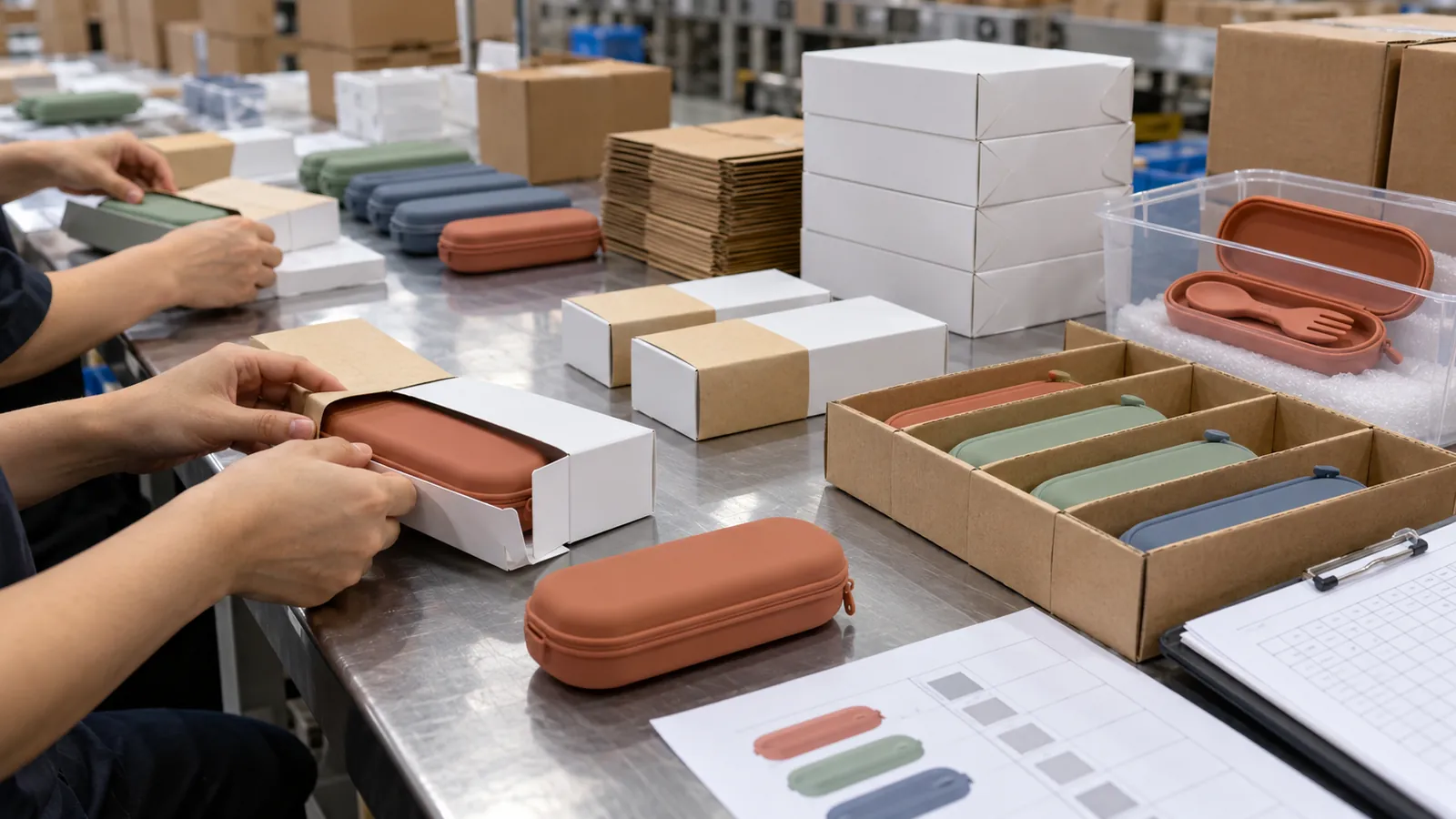
Illustrative scene: color ratios, selling-unit contents, sleeve or box, counts and export-carton protection are approved together.
B2B SOURCING SNAPSHOT
Final terms depend on the approved specification, packaging, quantity and delivery plan.
| Control Point | Buyer Decision | Approval Basis |
|---|---|---|
| Utensil fit envelope | Named spoon and fork head, handle, thickness, nesting direction and movement allowance | Controlled drawing, compatibility matrix and approved physical set |
| Closure interface | Bead and groove geometry, opening force, retention and repeated-use condition | First-article measurements plus buyer-agreed closure-cycle review |
| Hinge and case body | Web thickness, bend radius, wall balance, corner radii and flash boundaries | DFM review, dimensional inspection and conditioned flex evaluation |
| Cleaning and drainage | Internal radii, drainage path, drying position and buyer-defined cleaning route | Representative cleaning and drying check on the approved selling unit |
| Material and identity | Silicone grade, cure, hardness, pigment, texture, molded logo and part code | Project specification, color sample and applicable material evidence |
| Commercial release | Tool route, cavities, MOQ, samples, validation, packaging and delivery | Confirmed after specification approval and current capacity review |
Each project is reviewed as a complete product specification.
Develop the internal length, width, head pockets, handle restraints and clearance around the buyer's named spoon and fork.
Adjust bead engagement, tab reach and opening force against the approved compound, wall thickness and intended carrying condition.
Review the flexible web, bend radius, internal transitions and drainage details for molding, cleaning, drying and repeated use.
Select silicone grade, hardness, pigment and surface texture against intended contact, appearance and validation requirements.
Place an embossed or debossed logo, part code or orientation cue outside critical hinge, closure and cleaning zones, subject to DFM.
Coordinate selling-unit contents, sleeve or box, instructions, barcode space, color ratios, counts and export-carton protection.
B2B BUYER FAQ
These answers define the decisions required before tooling, sampling and a reliable quotation.
Send the exact spoon and fork or their dimensioned drawings, preferred nesting direction, closure concept, cleaning method, colors, logo artwork, order quantity, destination and packaging. A physical utensil set helps establish the compatibility matrix and tooling review.
It can be evaluated for a named utensil family, but universal fit should not be assumed. Maximum head, handle and thickness dimensions, movement allowance and closure condition must be checked with representative physical sets.
The buyer and factory agree on sample conditioning, opening direction, pull method, cycle count, contents and acceptance range. Results apply only to the tested case, compound and utensil configuration.
Drainage depends on internal radii, channels, orientation, surface tension and drying method. Approve a cleaning and drying procedure with observable criteria instead of making an unrestricted quick-dry claim.
Any cleaning or temperature statement must be tied to the exact finished design, appliance method, temperature, detergent, position, cycle and repeat count. Guidance is released after representative-sample review.
Yes. Pigment references and embossed or debossed branding can be evaluated during DFM. Approve the physical color sample, logo size, depth, location and cavity result before mass production.
Yes, when the utensil set, case and package are treated as one approved SKU. Confirm supplier responsibility, material specifications, fit matrix, color matching, inspection points and packed reference sample.
Case size, hinge and closure geometry, cavity strategy, compound, color split, utensil sourcing, validation, package minimums and order volume affect the commercial plan. Final terms follow an approved specification and current capacity review.
CATEGORY-SPECIFIC REVIEW
Suction stability, grip, portion layout and easy-clean geometry.
Coordinated plates, bowls, cups, utensils and gift sets.
Pantone colors, molded logos and retail-ready packaging.
Age suitability, food-contact requirements and physical samples.
INQUIRY CHECKLIST
Providing clear requirements helps us evaluate tooling, samples, price and lead time.
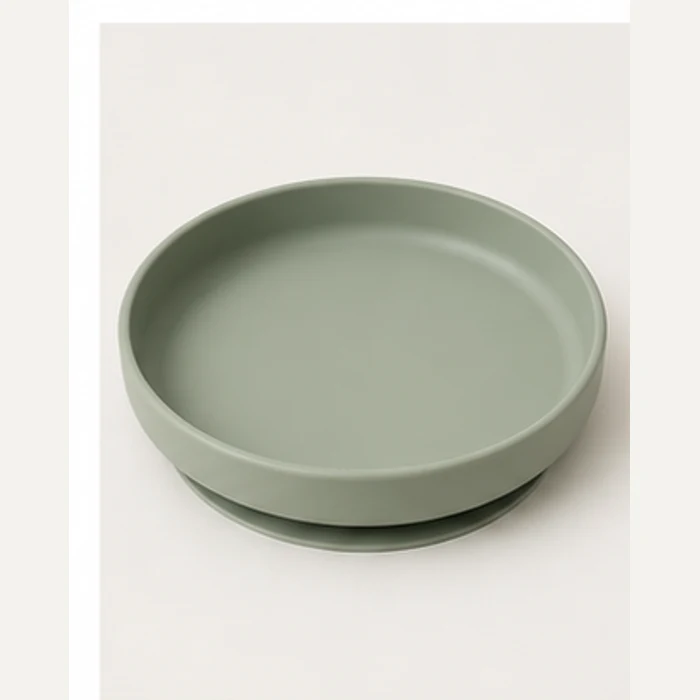
Stable one-piece plate with an easy-clean food-contact surface.
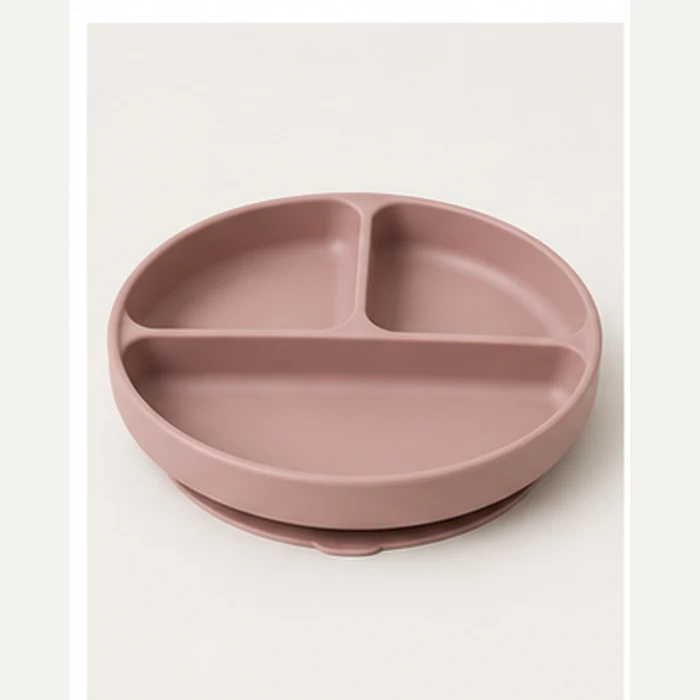
Compartment design for organized toddler meals and portioning.
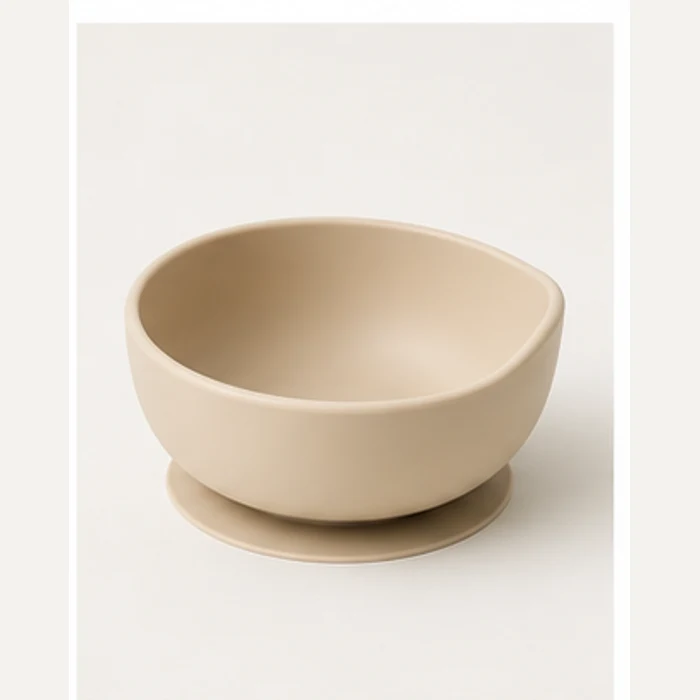
Soft feeding bowl with a stable base for first solids.
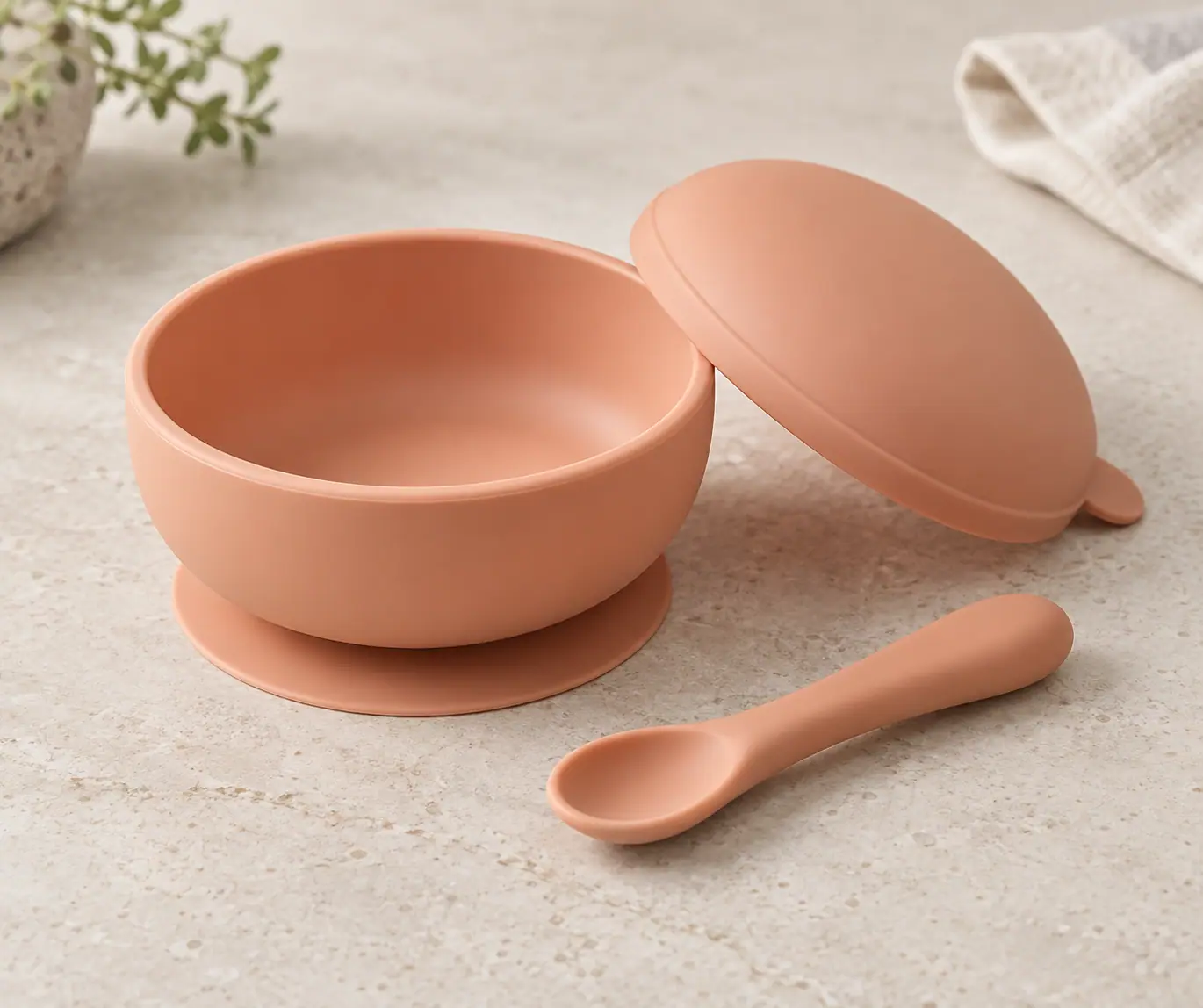
A private-label feeding bowl developed around table contact, rim-and-lid fit, practical spoon access and one controlled retail selling unit.
B2B PROJECT INQUIRY
Share the intended product, destination market, order quantity and launch plan. Our project team will review the information and identify the next practical step.
Drawings are helpful but not required. A sketch, reference photo or physical sample can be used for an initial discussion.
GENERAL SOURCING INQUIRY