
Footprint and Shape
Adjust width, depth, corner form and feeding-zone layout around the intended table, tray and package limits.
BABY & TODDLER FEEDING
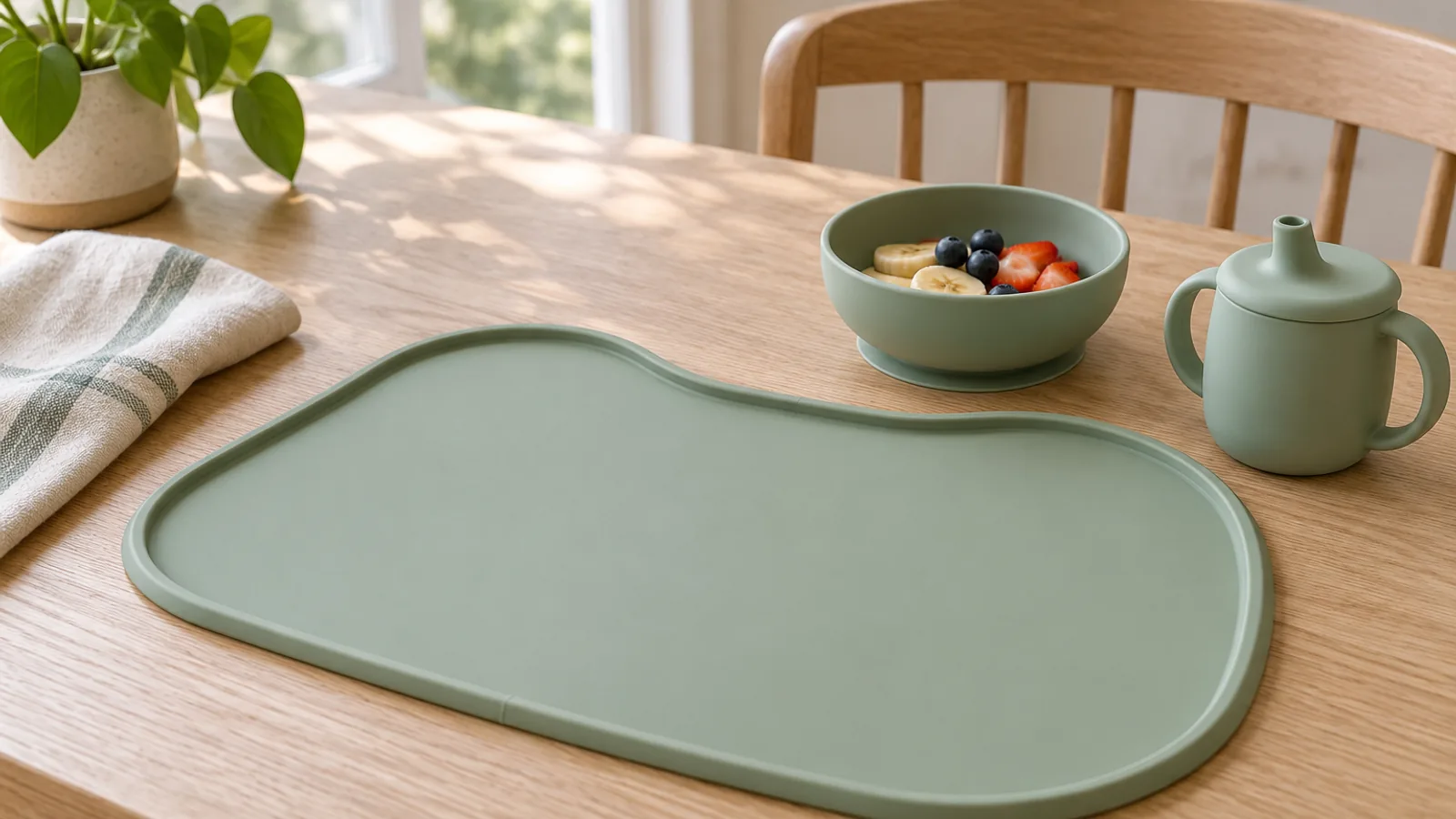
PRODUCT OVERVIEW
A custom silicone baby feeding placemat should cover the buyer-defined eating area, remain stable on the intended table and contain ordinary mealtime spills without creating hard-to-clean corners. Naike Silicone develops the overall footprint, perimeter profile, local thickness, corner radii, surface texture, roll direction and branding zone as one controlled product revision.
The sourcing brief should identify the table or high-chair surface, available width and depth, target user, desired spill boundary, storage method, cleaning route, package format and selling-unit dimensions. These inputs guide material hardness, wall balance, mold split, venting, flash boundaries, release direction and whether the mat should ship flat, loosely rolled or folded only under an approved method.
Flatness, stain resistance, spill containment, cleaning and roll recovery are conditional claims that require an agreed sample method and acceptance criteria. Material, tooling, MOQ, price, samples, documentation and delivery timing are confirmed only after the drawing, color, molded marking, package structure, destination requirements and current capacity are reviewed.
Product page updated:
Request a B2B QuotationENGINEERING & APPROVAL EVIDENCE
Each stage addresses a different purchasing risk: manufacturability, functional fit and private-label presentation.
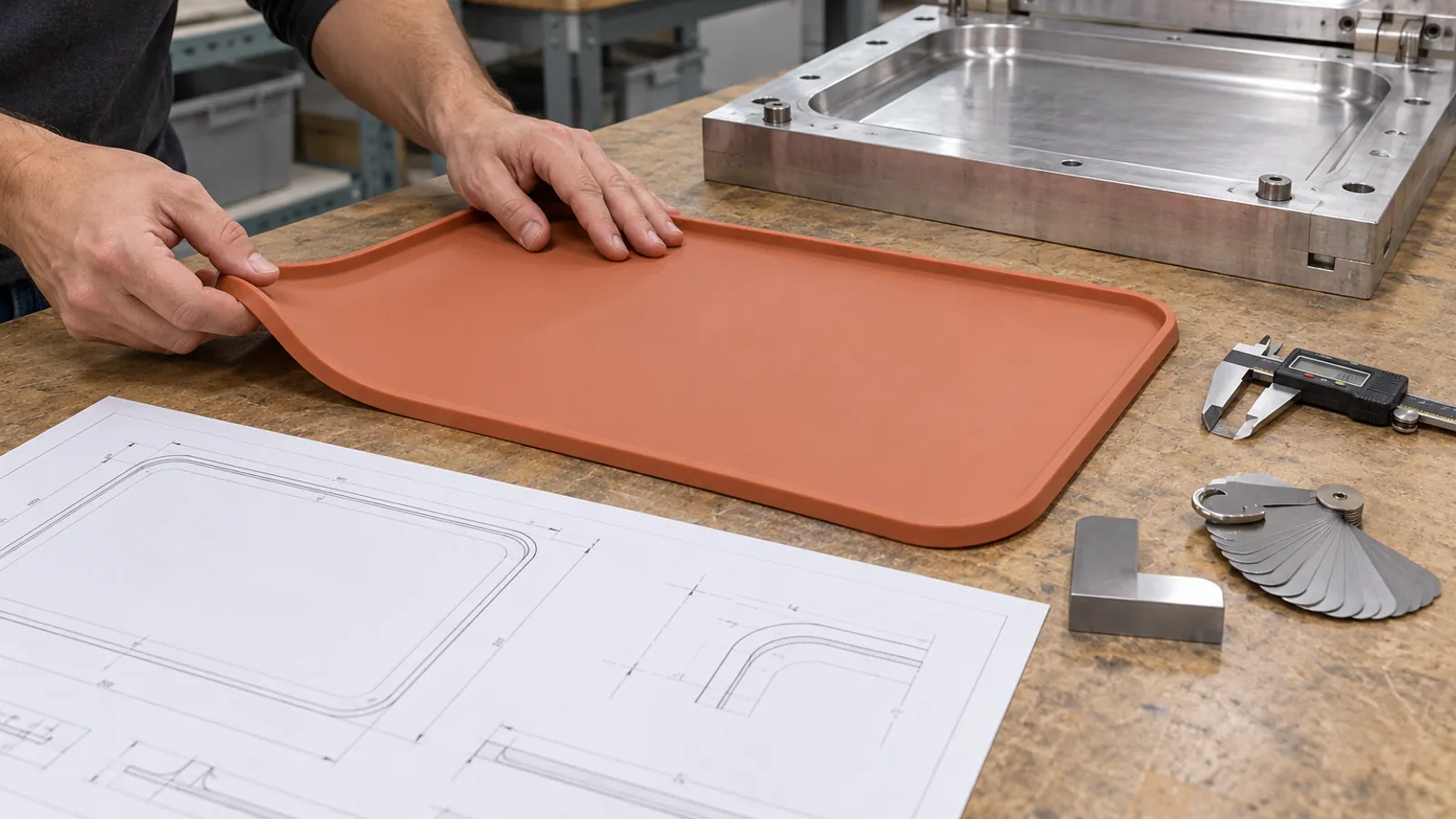
Illustrative scene: wall balance, edge radii, venting, flash boundaries, logo depth and release direction are reviewed before tooling approval.
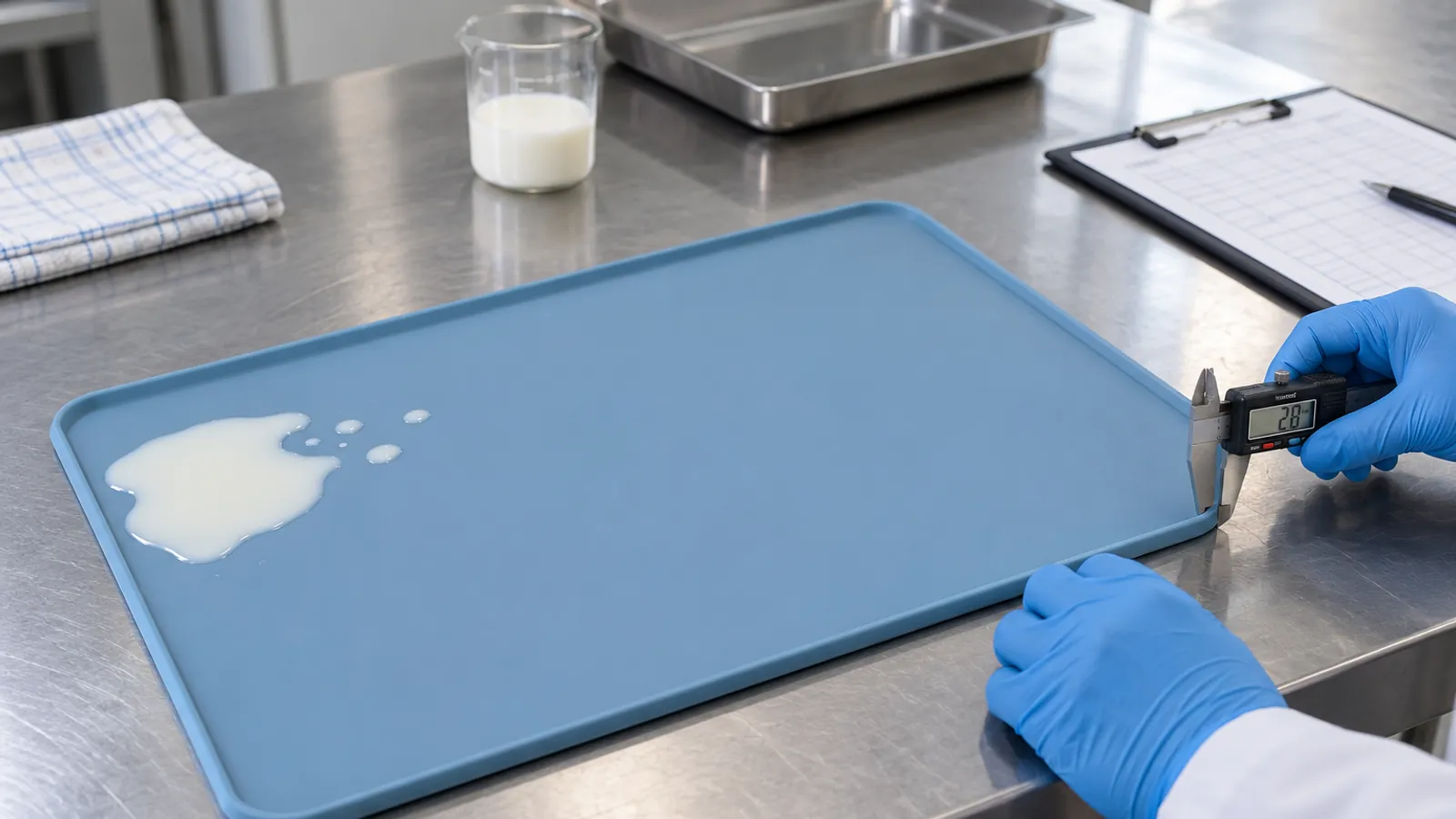
Illustrative scene: the approved sample is checked on a named surface using agreed flatness, spill, cleaning and recovery criteria.
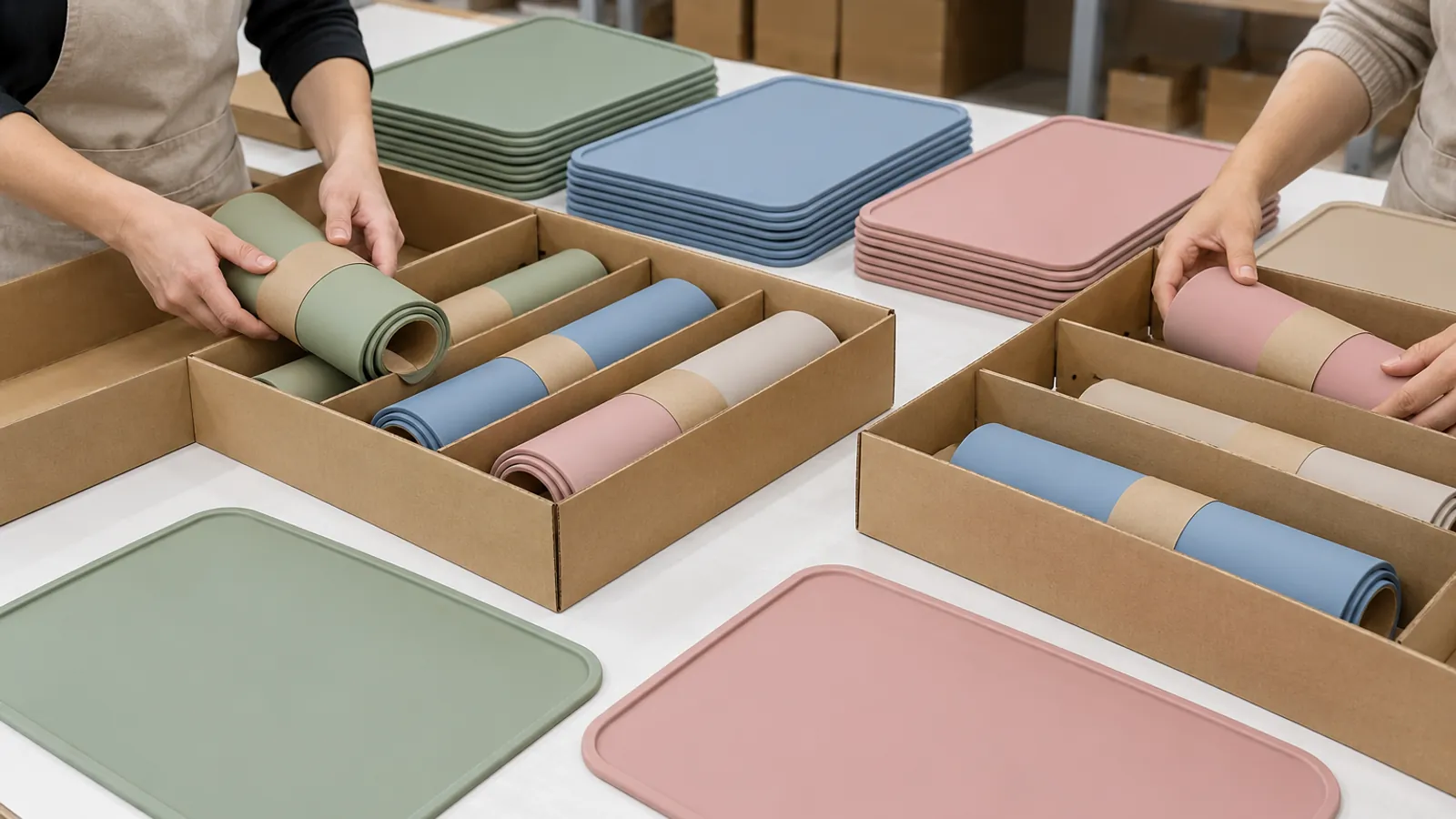
Illustrative scene: color allocation, molded identity, roll protection, sleeve dimensions, counts and carton orientation are approved together.
B2B SOURCING SNAPSHOT
Final terms depend on the approved specification, packaging, quantity and delivery plan.
| Control Point | Buyer Decision | Approval Basis |
|---|---|---|
| Mat footprint | Overall width, depth, corner radius, table coverage and usable feeding zone | Controlled drawing plus fit review on the buyer-named surface |
| Perimeter geometry | Raised-edge height, width, transition radius and spill boundary | First-article measurements and buyer-agreed spill evaluation |
| Flatness and storage | Local thickness, surface contact, roll direction, recovery time and package constraint | Conditioned sample review after the agreed packing and rest sequence |
| Material system | Silicone grade, cure, hardness, pigment, texture and intended contact conditions | Project specification plus applicable material and finished-product evidence |
| Branding and pack-out | Molded logo, color reference, sleeve or box, count and carton orientation | Artwork, color sample and packed golden-sample approval |
| Commercial release | Tool route, cavities, MOQ, samples, validation, documentation and delivery | Confirmed after specification approval and current capacity review |
Each project is reviewed as a complete product specification.
Adjust width, depth, corner form and feeding-zone layout around the intended table, tray and package limits.
Develop edge height, width and transition radii to balance containment, wiping access, mold filling and release.
Review compound, hardness and texture against table grip, cleaning, rolling, visual finish and intended contact.
Define allowed rolling direction, packed diameter, conditioning period and flatness acceptance for the approved SKU.
Place a logo, part code or orientation cue away from critical contact and cleaning zones, subject to DFM approval.
Coordinate sleeve or box dimensions, instructions, barcode space, color ratios, counts and export-carton protection.
B2B BUYER FAQ
These answers define the decisions required before tooling, sampling and a reliable quotation.
Send the target width and depth, table or tray dimensions, raised-edge concept, thickness, cleaning method, storage format, color, logo artwork, order quantity, destination and packaging. A sketch, reference sample or CAD file helps define the tooling review.
Yes. Overall footprint, corner geometry, feeding zone and perimeter shape can be developed within practical mold, press, packing and freight limits. The final drawing and physical sample establish the approved dimensions.
The buyer and factory agree on the test surface, mat condition, liquid volume, pour location, dwell time and pass criteria. Results apply to the tested design and conditions; a raised edge does not justify an unlimited spill-proof claim.
Flatness depends on thickness balance, material, packing direction, compression, storage time and conditioning. Approve a packing and recovery method with measurable acceptance criteria rather than assuming every rolled or folded mat behaves identically.
Any dishwasher statement should be tied to the exact finished design, detergent, rack position, temperature, cycle and repeat count. Cleaning guidance is approved only after the buyer-defined method is reviewed on representative samples.
Yes. Pigment references and embossed or debossed branding can be evaluated during DFM. Approve the physical color sample, logo size, depth, position and cavity result before mass production.
The pack should protect the raised edge and control rolling or compression. Buyers should approve the selling unit, sleeve or box, instructions, roll diameter, color ratio, count, carton orientation and packed sample.
Footprint, thickness, edge geometry, cavity strategy, compound, color split, validation, package minimums and order volume affect the commercial plan. Final terms follow an approved specification and current production-capacity review.
CATEGORY-SPECIFIC REVIEW
Suction stability, grip, portion layout and easy-clean geometry.
Coordinated plates, bowls, cups, utensils and gift sets.
Pantone colors, molded logos and retail-ready packaging.
Age suitability, food-contact requirements and physical samples.
INQUIRY CHECKLIST
Providing clear requirements helps us evaluate tooling, samples, price and lead time.
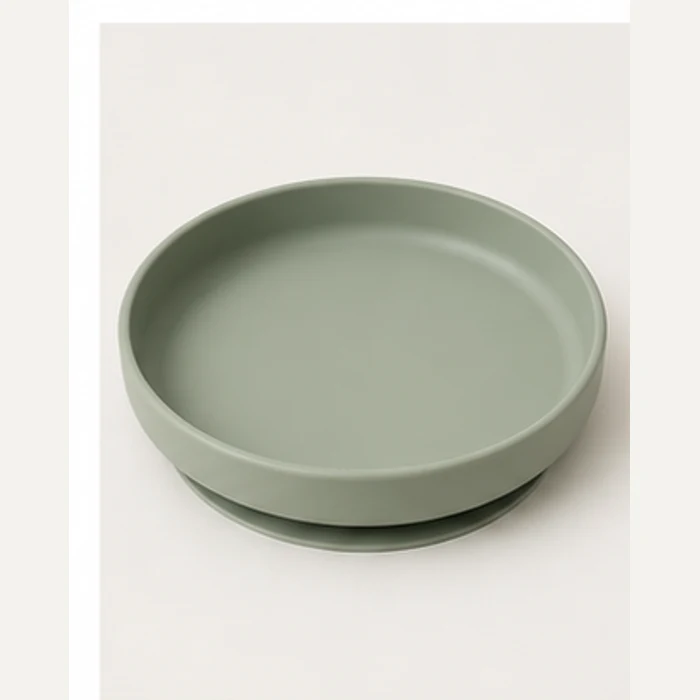
Stable one-piece plate with an easy-clean food-contact surface.
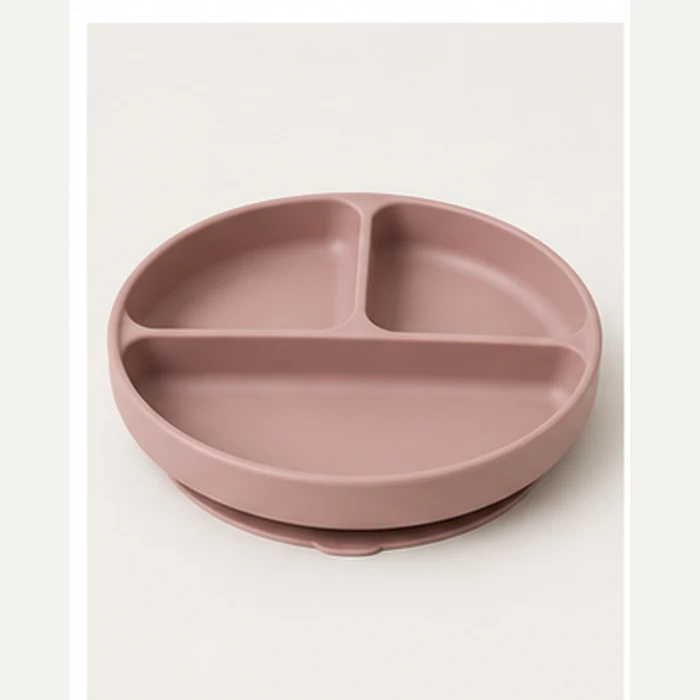
Compartment design for organized toddler meals and portioning.
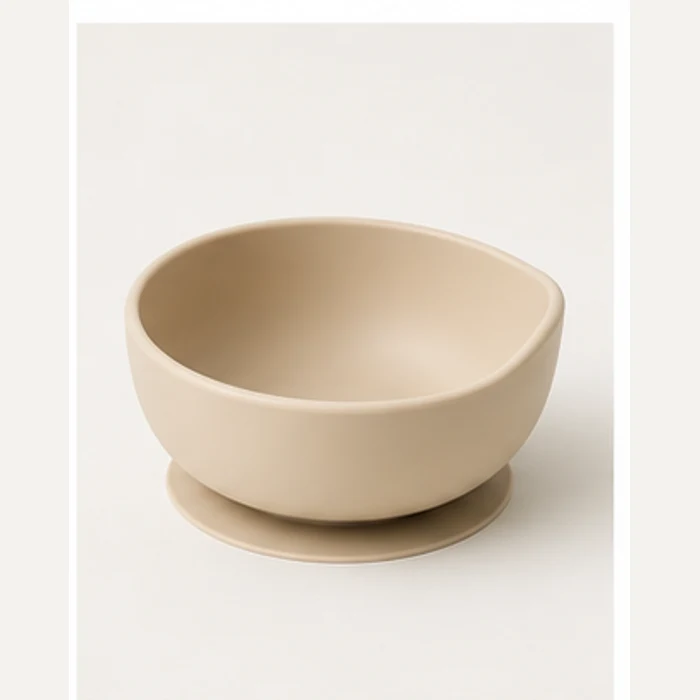
Soft feeding bowl with a stable base for first solids.
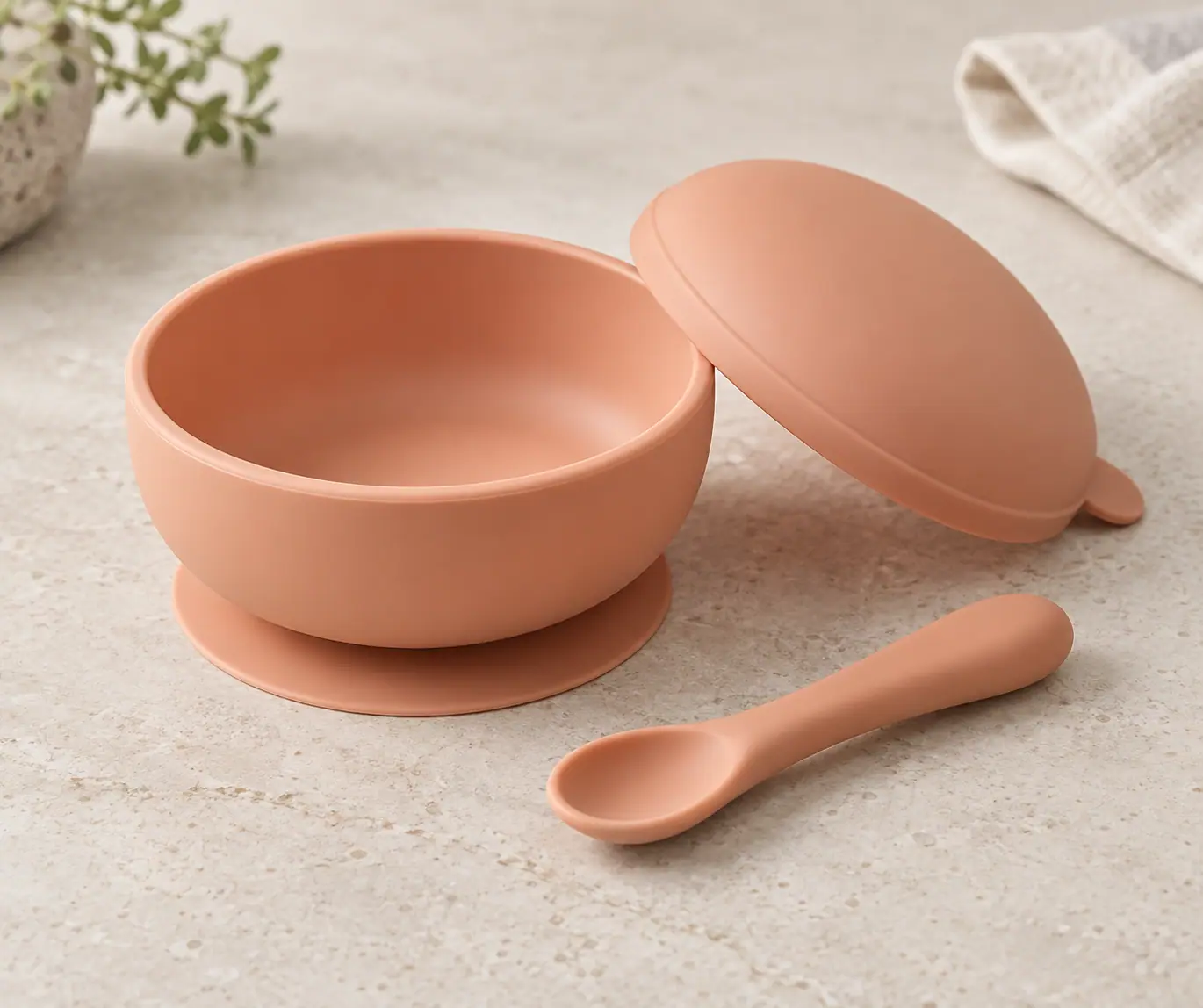
A private-label feeding bowl developed around table contact, rim-and-lid fit, practical spoon access and one controlled retail selling unit.
B2B PROJECT INQUIRY
Share the intended product, destination market, order quantity and launch plan. Our project team will review the information and identify the next practical step.
Drawings are helpful but not required. A sketch, reference photo or physical sample can be used for an initial discussion.
GENERAL SOURCING INQUIRY