
Capacity Architecture
Develop cup height, diameter, base and working fill range around the buyer's dosing workflow.
CONTROLLED SILICONE PRODUCT DEVELOPMENT
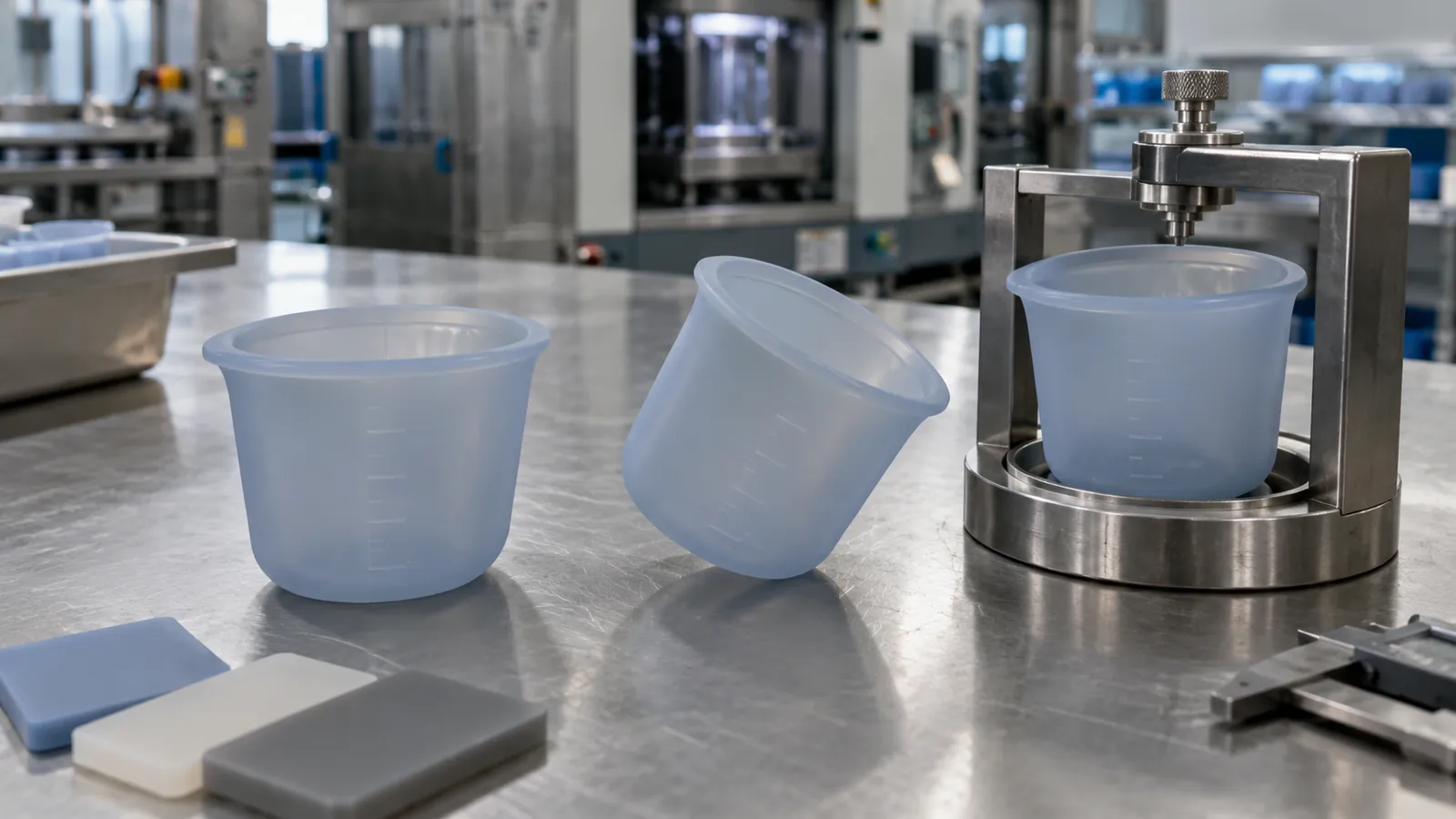
PRODUCT OVERVIEW
A custom silicone medicine cup is a specification-controlled measuring accessory, not a generic container. Naike Silicone develops nominal capacity, internal diameter, wall profile, standing base, flexible rim, pour feature and molded graduation layout around the buyer's intended workflow, target users and acceptance method.
The engineering brief should identify the required capacity range, graduation interval, readable side, fill reference, dimensional tolerances, silicone grade, cure system, hardness, color, transparency, cleaning method, reuse expectation and packaging status. These inputs guide core geometry, wall balance, draft, venting, parting line, demolding direction and whether raised or recessed tick marks can be molded consistently without compromising cleaning access.
Capacity accuracy, material suitability, cleaning endurance and any medical-use statement require evidence for the finished cup under an agreed protocol. Buyers should define the measuring liquid, temperature, conditioning, reference equipment, sampling plan and acceptance limits. Material, tooling, MOQ, pricing, samples, documentation and timing are confirmed only after the drawing and validation plan are approved.
Product page updated:
Request a B2B QuotationENGINEERING & APPROVAL EVIDENCE
Each stage addresses a different purchasing risk: manufacturability, functional fit and private-label presentation.
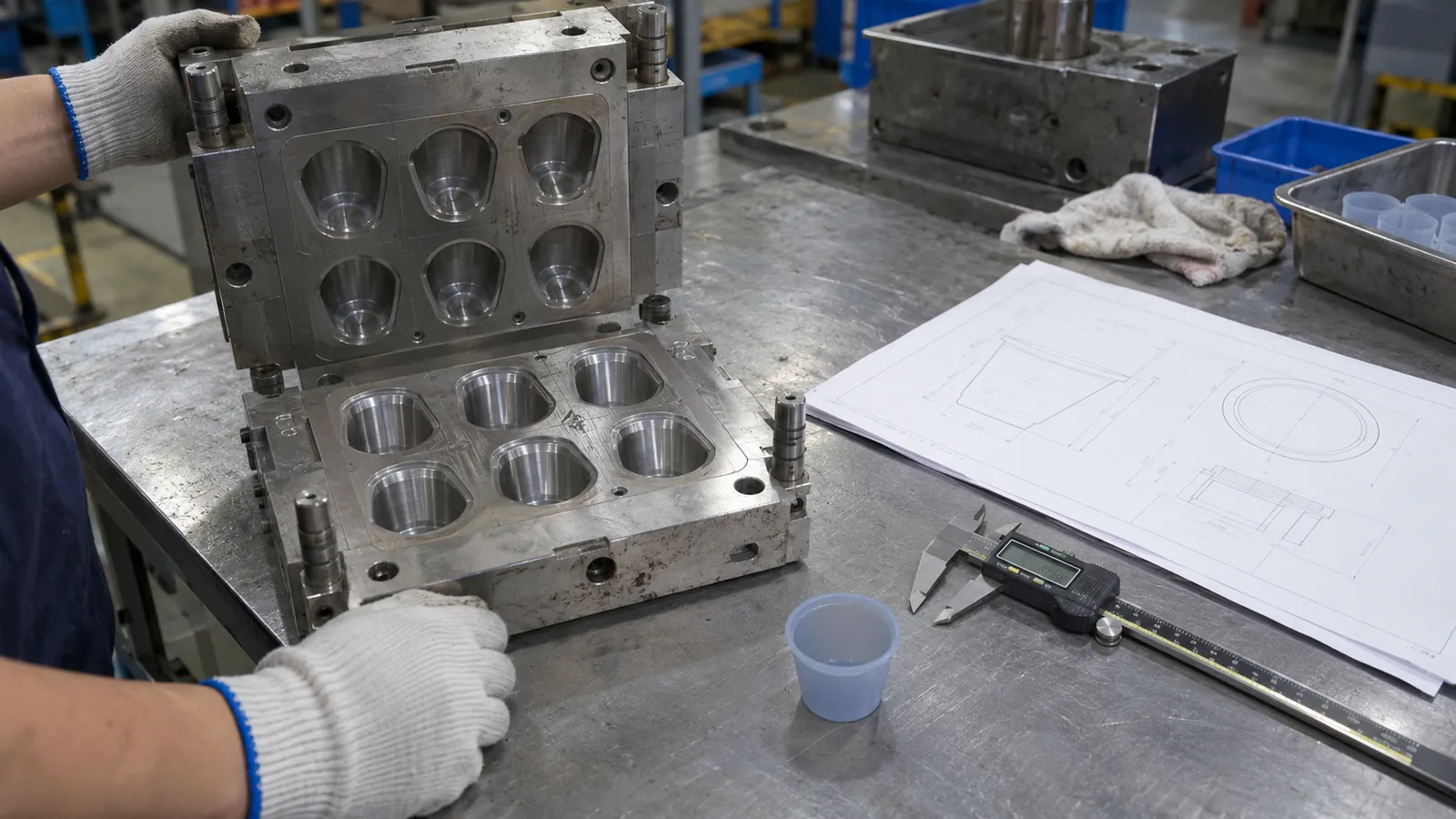
Core alignment, wall balance, rim section, base flatness, molded marks, vents and release direction are reviewed before tool approval.
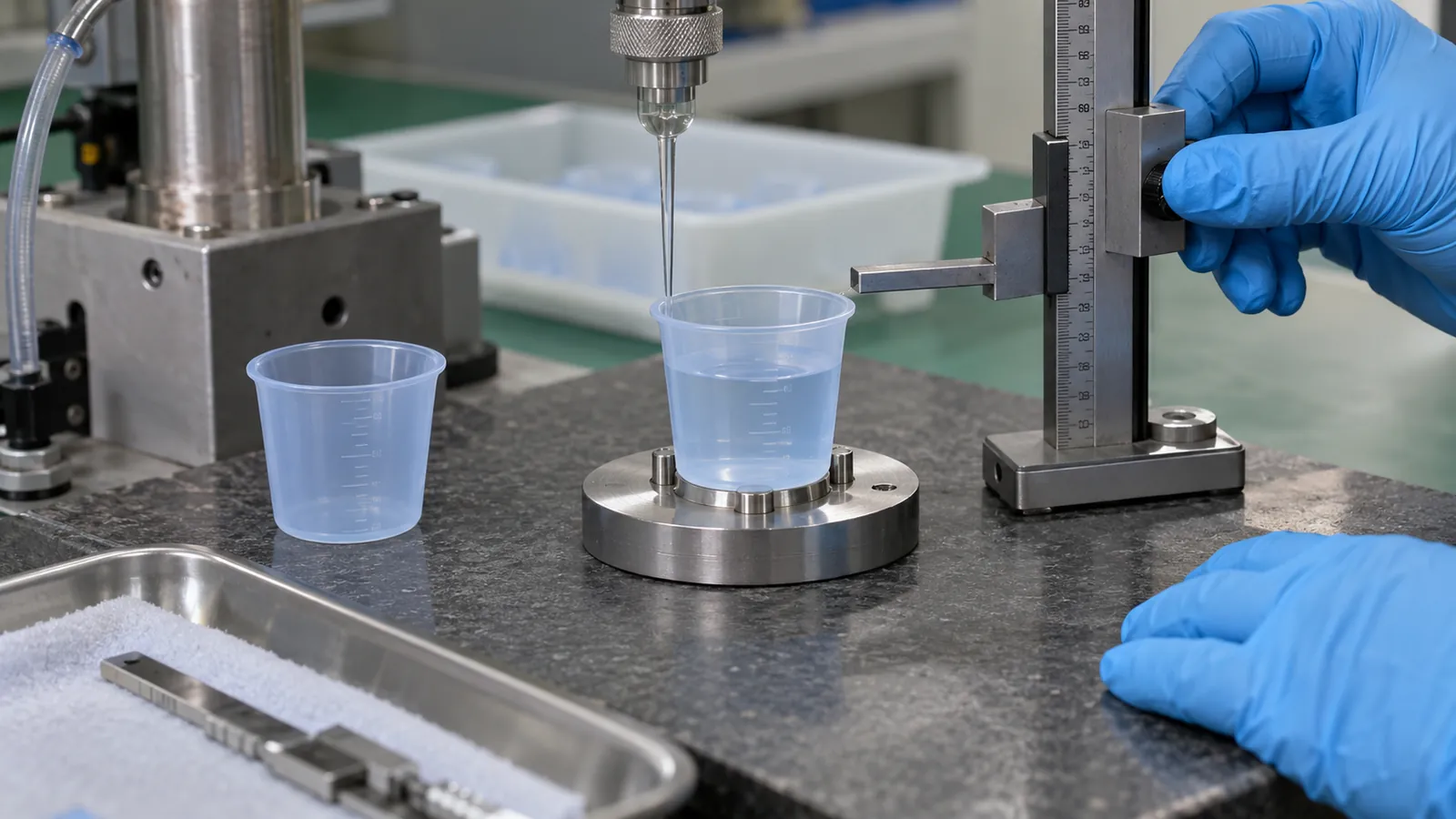
A named liquid, temperature, reference instrument and fill-point method support evidence for the approved cup revision.
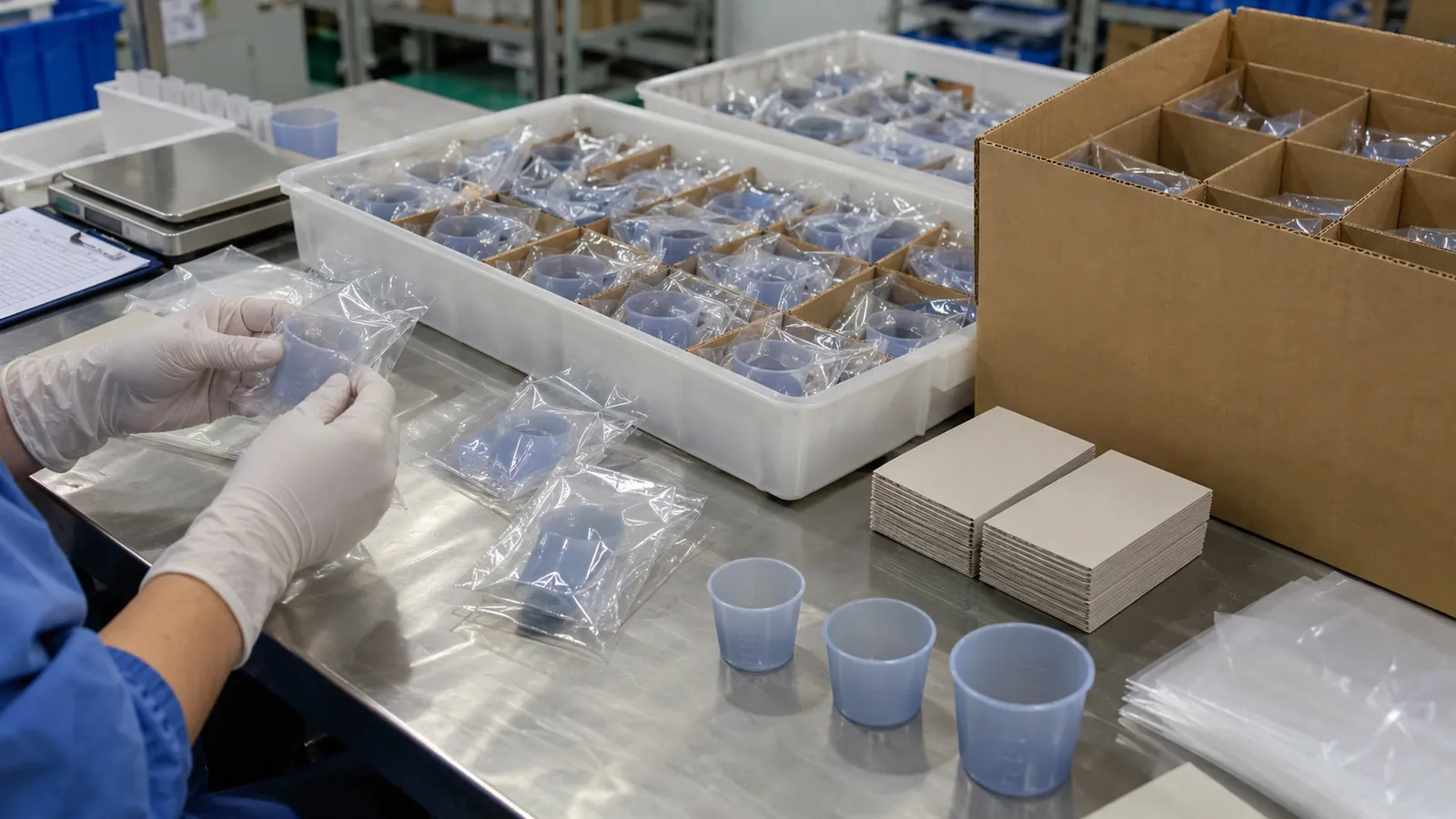
Unit protection, lot separation, labels, count verification and carton configuration are approved without implying sterile supply.
B2B SOURCING SNAPSHOT
Final terms depend on the approved specification, packaging, quantity and delivery plan.
| Control Point | Buyer Decision | Approval Basis |
|---|---|---|
| Capacity and range | Nominal volume, maximum fill, graduation interval and reference fill point | Approved drawing plus controlled liquid-capacity evaluation |
| Cup geometry | Inside diameter, height, wall profile, rim, pour zone and stable base | Dimensional inspection and representative handling review |
| Molded graduations | Raised or recessed ticks, readable side, spacing and contrast strategy | Tool trial, visual review, cleaning assessment and buyer signoff |
| Material system | Silicone grade, cure, hardness, pigment, translucency and cleaning exposure | Project specification and required material or finished-product evidence |
| Identification and pack-out | Molded code, color, unit bag, label, tray, carton and non-sterile status | Artwork, pack sample, count check and release record |
| Commercial release | Tool route, cavities, MOQ, samples, testing, documents and delivery plan | Confirmed after drawing approval and current capacity review |
Each project is reviewed as a complete product specification.
Develop cup height, diameter, base and working fill range around the buyer's dosing workflow.
Review tick spacing, fill reference, molding relief and reading orientation without promising accuracy before validation.
Tune rim thickness, local flexibility and an optional pour zone for the named handling method.
Evaluate silicone grade, cure, hardness, translucency and pigment against cleaning and market requirements.
Place a part code, size cue or orientation mark away from measuring and cleaning-critical surfaces.
Coordinate unit bags, trays, labels, lot separation, count verification and export-carton protection.
B2B BUYER FAQ
These answers define the decisions required before tooling, sampling and a reliable quotation.
Send the target capacity, graduation interval, drawing or sample, intended workflow, silicone requirement, cleaning method, quantity, destination market, identification and packaging needs. State whether the requested supply is non-sterile or requires a separately reviewed process.
They can provide a measuring reference only after the finished design is evaluated with an agreed liquid, temperature, fill point, instrument, sampling plan and tolerance. Molded marks alone do not establish dosing accuracy.
Silicone can be developed in translucent or pigmented options, subject to the selected compound and wall section. Color and optical appearance should be approved on physical samples under controlled lighting.
The protocol should define conditioning, liquid, temperature, reference equipment, meniscus or fill-point reading, repetitions and acceptance limits. Results apply to the tested revision and method.
The standard page describes non-sterile supply. Any sterile presentation requires a separate review covering the complete product, packaging system, validated sterilization process, regulatory responsibilities and documented release controls.
Hardness depends on wall thickness, rim flexibility, standing stability, handling and cleaning. The choice is confirmed through DFM and sample review rather than a universal Shore value.
Yes. Molded identification, color coding, unit bags, labels, trays and cartons can be coordinated after placement, traceability, artwork and pack-out requirements are approved.
Cup size, graduation detail, wall transitions, cavity count, compound, color allocation, validation, documentation and packaging all influence the commercial plan. Terms follow specification approval and capacity review.
CATEGORY-SPECIFIC REVIEW
Neck adjustment, soft edges, coverage and comfortable thickness.
Opening stability, depth, cleaning access and shape recovery.
Coordinated colors, patterns, molded logos and multi-packs.
Roll-up presentation, paper bands, boxes and gift-set combinations.
Product-specific dimensions, handling, cleaning or conditioning evidence.
INQUIRY CHECKLIST
Providing clear requirements helps us evaluate tooling, samples, price and lead time.
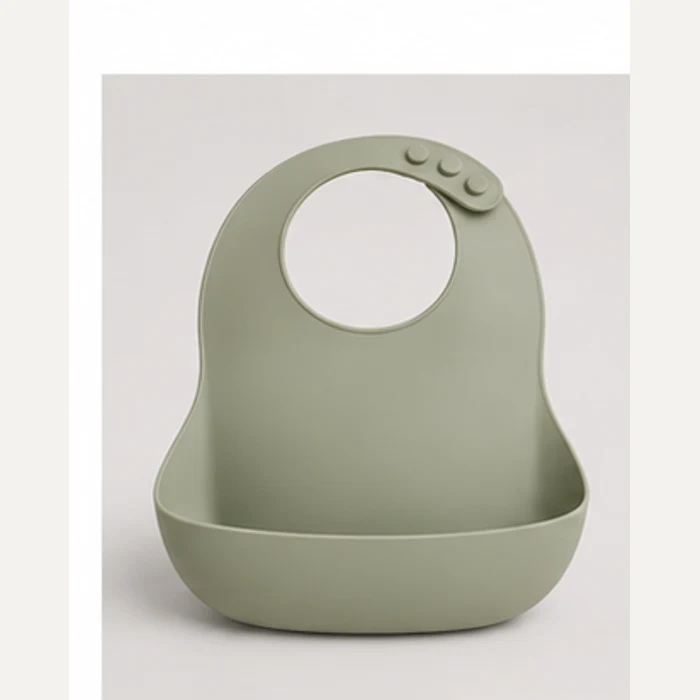
One-piece waterproof bib with a deep integrated food-catching pocket.
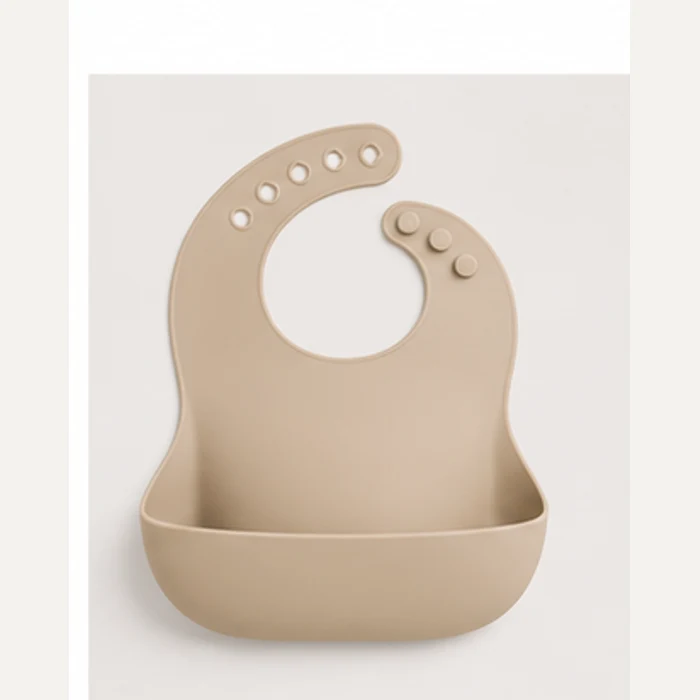
Multiple closure positions support a comfortable growing fit.
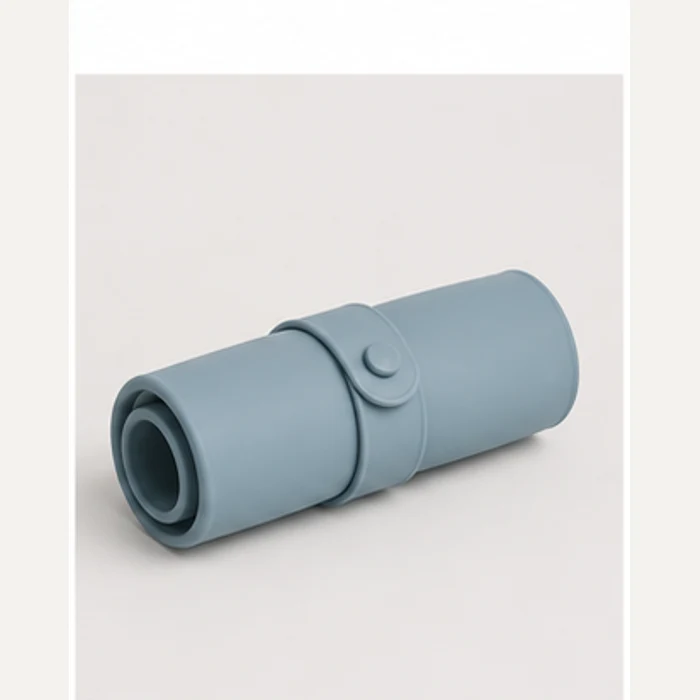
Flexible lightweight bib designed for compact storage and dining out.
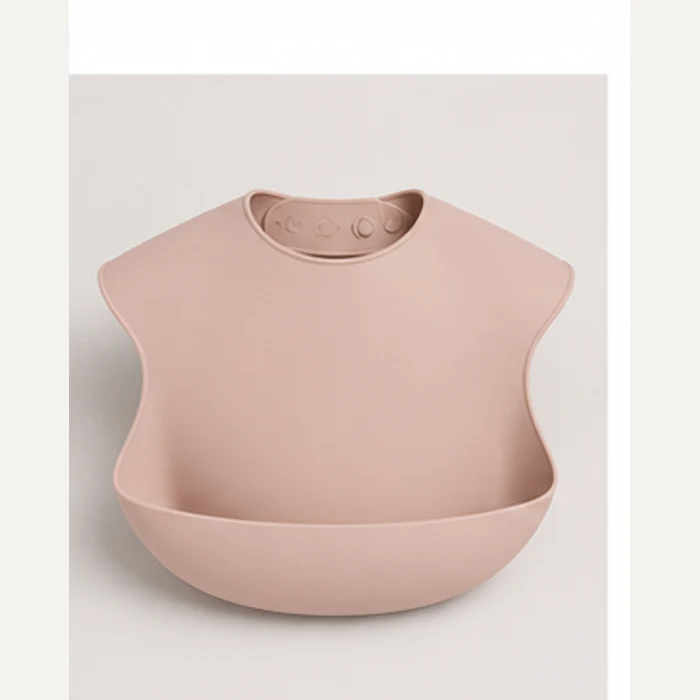
Broader front panel provides additional protection during mealtime.
B2B PROJECT INQUIRY
Share the intended product, destination market, order quantity and launch plan. Our project team will review the information and identify the next practical step.
Drawings are helpful but not required. A sketch, reference photo or physical sample can be used for an initial discussion.
GENERAL SOURCING INQUIRY