
Bib Geometry
Develop the neckline, adjustment buttons, front-panel coverage and catch-pocket profile for the defined user range.
CONTROLLED SILICONE PRODUCT DEVELOPMENT
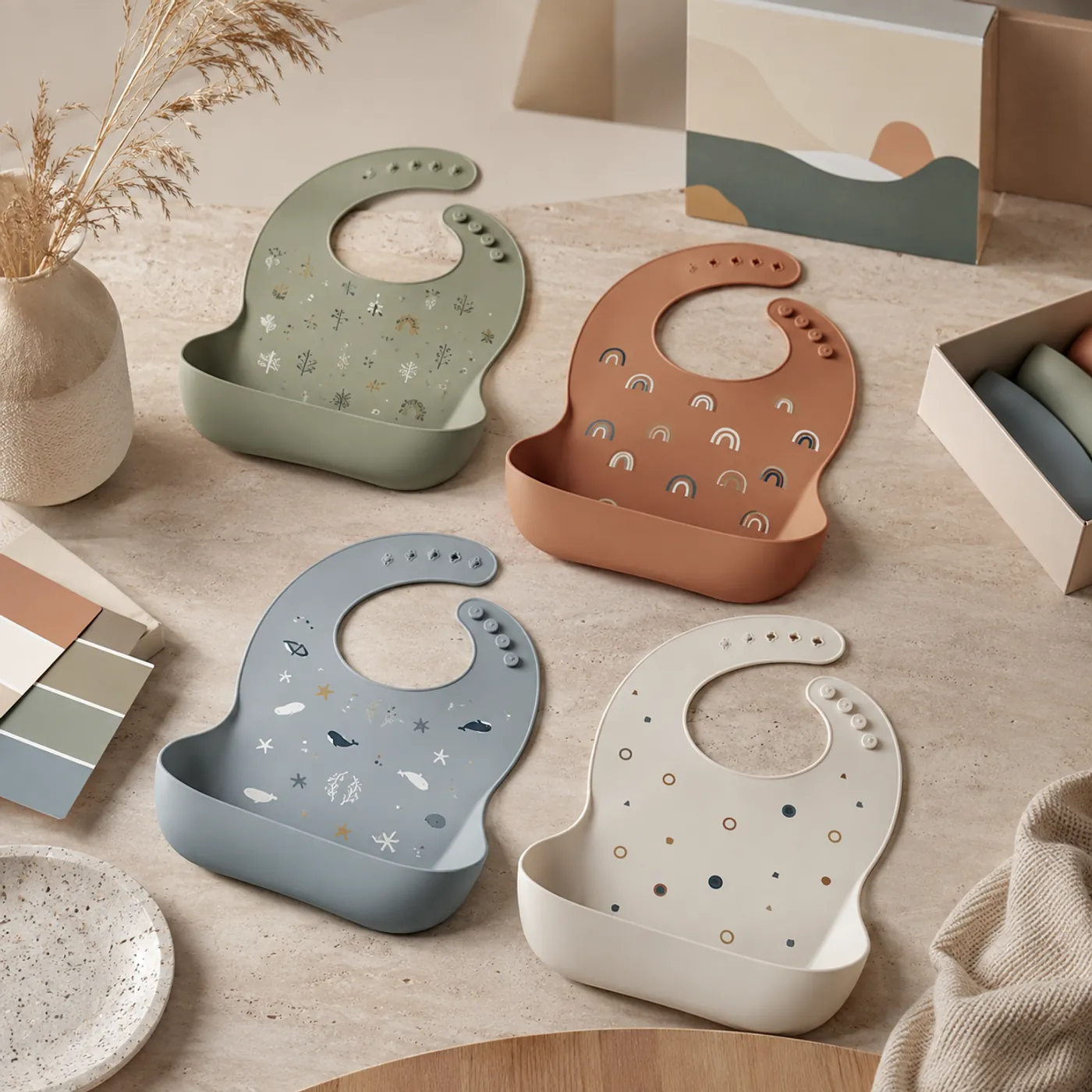
PRODUCT OVERVIEW
A custom printed silicone baby bib gives private-label brands a visual storytelling surface while retaining the adjustable neckline, flexible panel and integrated catch pocket as one molded product. Naike Silicone treats base-bib geometry and decoration as linked approval stages because surface finish, artwork density, ink selection and curing conditions can affect the final appearance.
The buyer brief should identify the target age range, bib outline, pocket depth, base colors, artwork files, print coverage, repeat pattern, registration tolerance and expected cleaning conditions. These inputs guide printable-zone boundaries, edge clearance, surface preparation, color sequence, fixture design, inspection method and packed presentation.
Decoration suitability, durability statements, tooling cost, MOQ, sample timing and production lead time remain conditional on the approved silicone, artwork, print process, validation method, destination market, packaging and current factory schedule. Buyers can begin with vector artwork, a mood board, a physical reference or an existing plain-bib specification.
Product page updated:
Request a B2B QuotationENGINEERING & APPROVAL EVIDENCE
Each stage addresses a different purchasing risk: manufacturability, functional fit and private-label presentation.
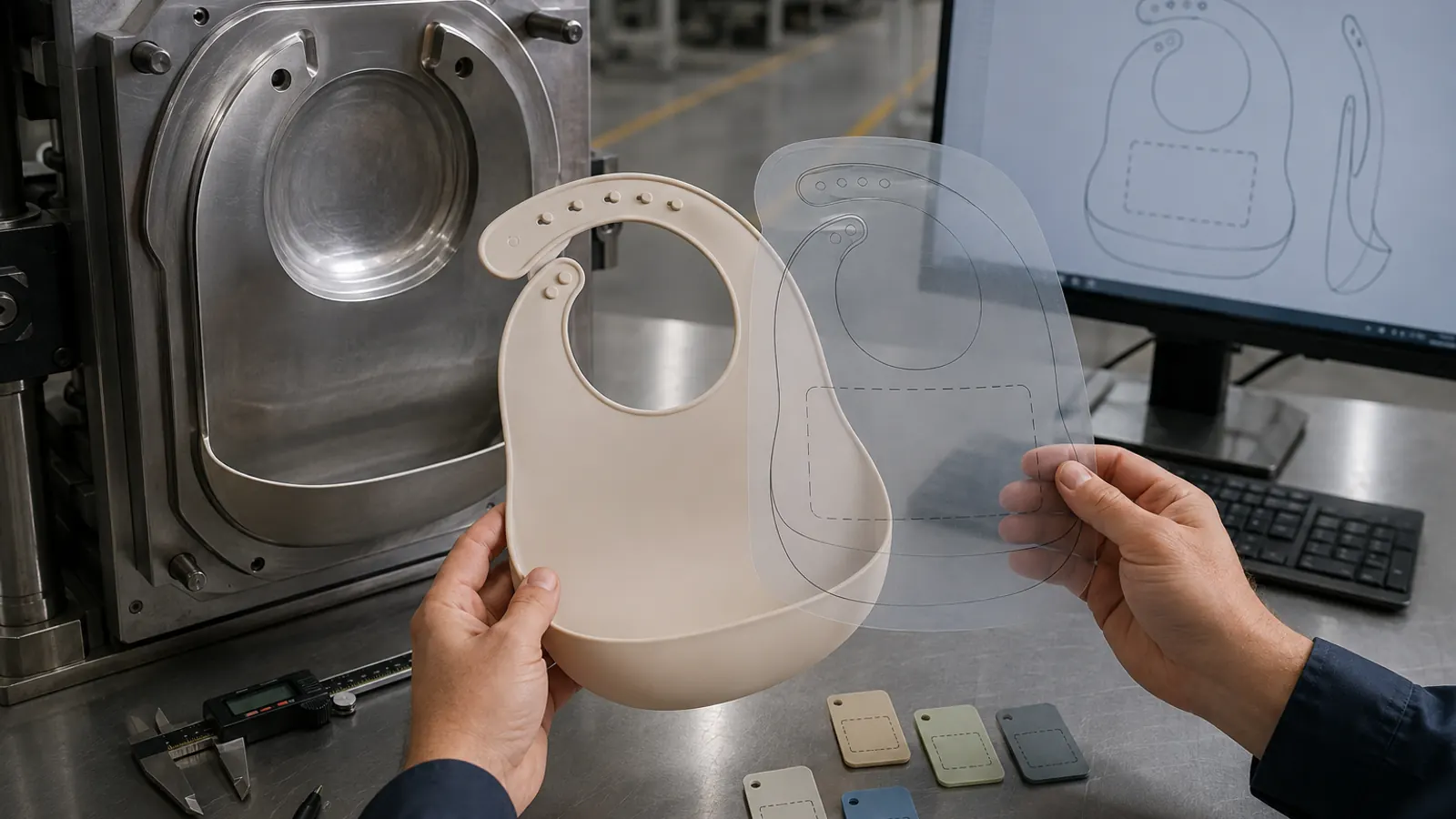
Neck closure, panel thickness, pocket core, printable boundary, artwork clearance and production fixture needs are reviewed before mold and decoration approval.
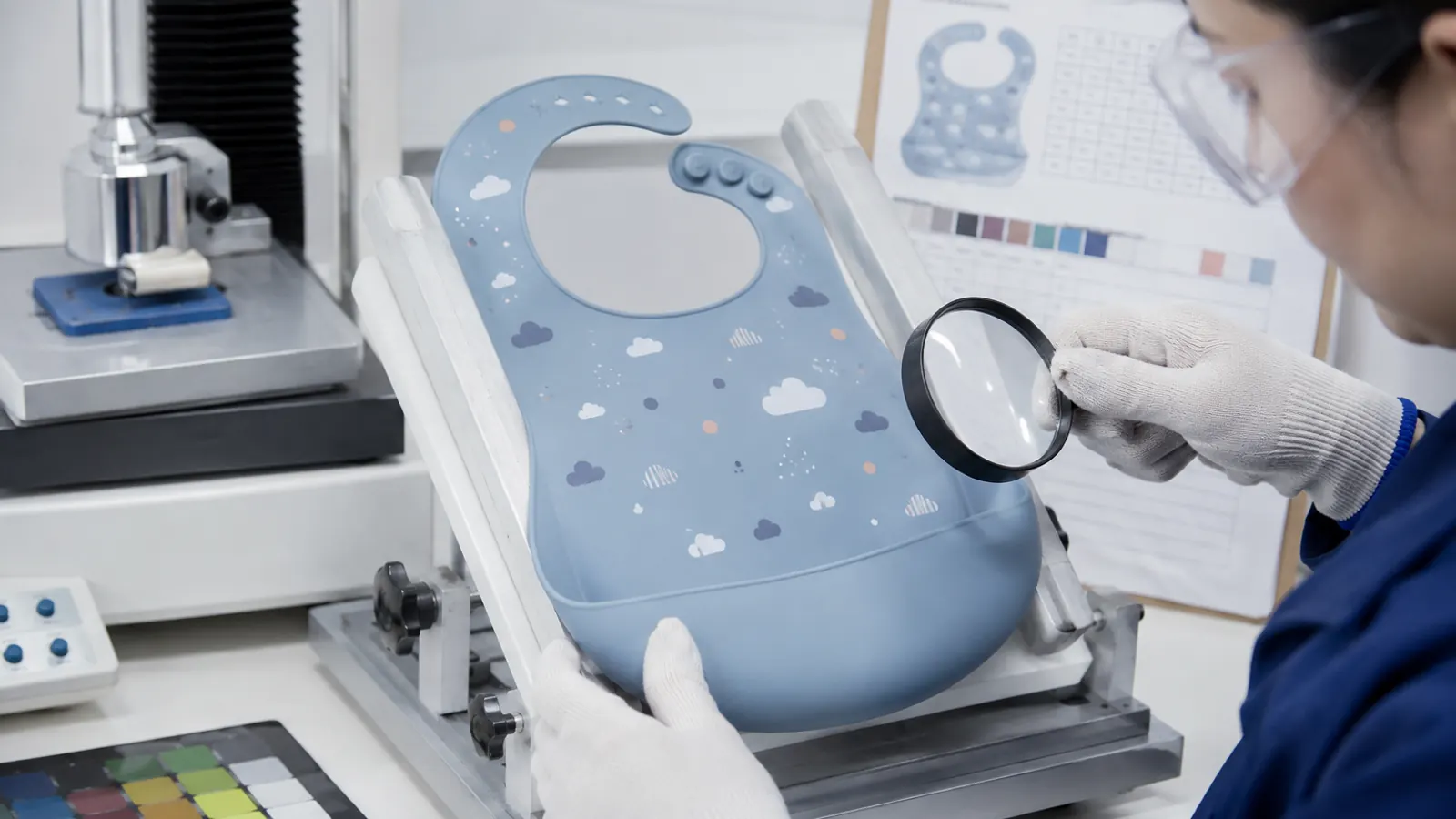
A buyer-agreed inspection can examine artwork position, edge definition, color alignment and appearance after a documented rub or cleaning procedure.
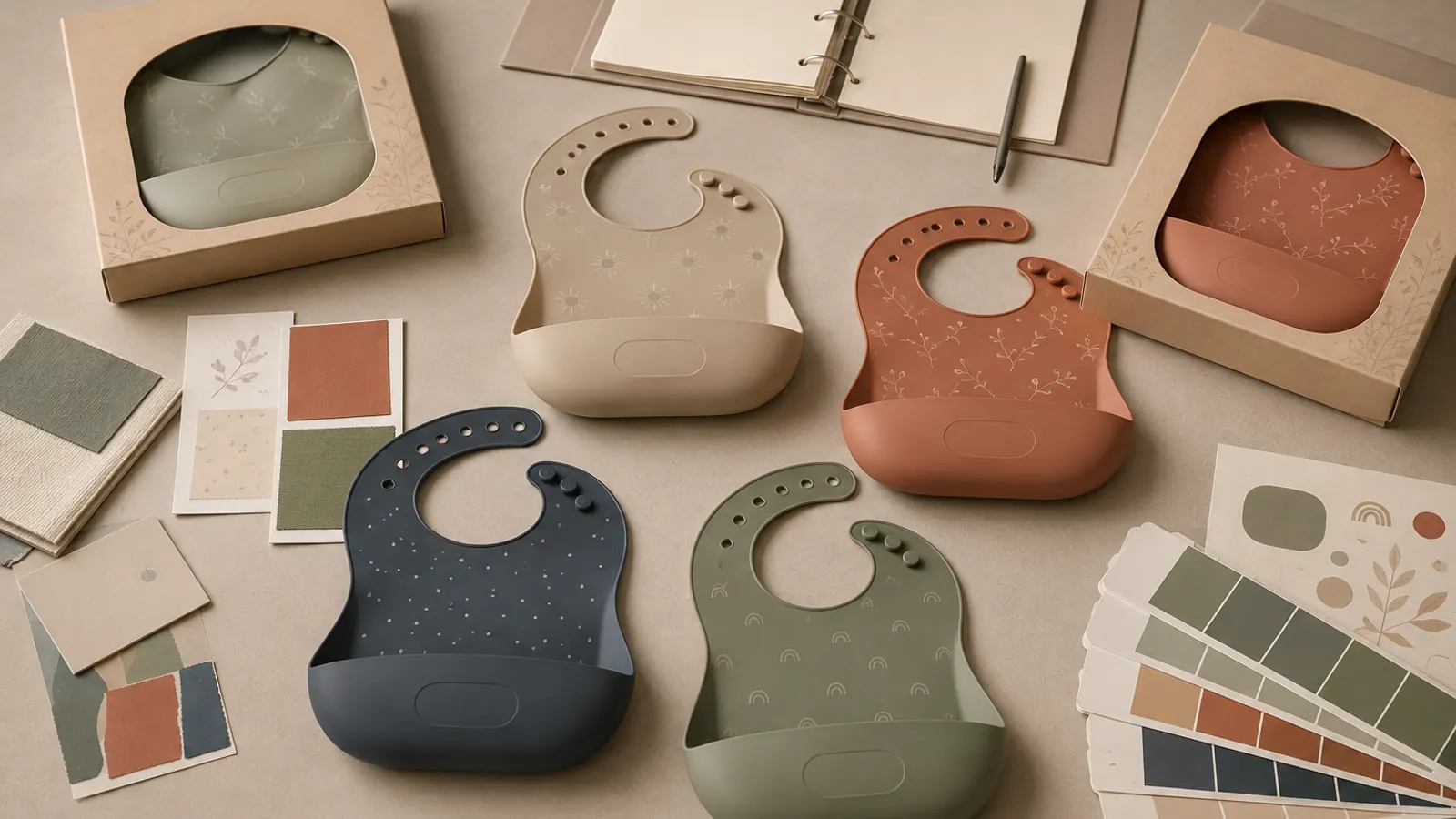
Base colors, individual patterns, molded brand zones, box windows, sleeves and selling-unit combinations are approved against controlled artwork and golden samples.
B2B SOURCING SNAPSHOT
Final terms depend on the approved specification, packaging, quantity and delivery plan.
| Control Point | Buyer Decision | Approval Basis |
|---|---|---|
| Bib construction | Panel outline, neckline, closure positions, pocket depth and wall balance | Confirmed by product drawing and approved physical sample |
| Artwork control | Vector file, printable zone, edge clearance, repeat, scale and orientation | Approved through a placement proof and decorated sample |
| Print execution | Color sequence, registration, surface preparation and curing route | Qualified for the selected silicone, artwork and agreed process window |
| Validation scope | Visual criteria, rub or cleaning method, cycles and acceptance limit | Defined by buyer and factory before testing; results apply to documented conditions |
| Private-label range | Base colors, motif allocation, molded brand area, packs and cartons | Approved through color references, artwork revisions and packed golden sample |
| Commercial program | Mold route, decoration setup, MOQ, sampling and production schedule | Quoted after design, colors, testing, packing, quantity and timing are defined |
Each project is reviewed as a complete product specification.
Develop the neckline, adjustment buttons, front-panel coverage and catch-pocket profile for the defined user range.
Set safe artwork boundaries and clearance around edges, neck closures, deep curves and pocket transitions.
Coordinate motif scale, repeat, orientation and color separation with the selected decoration route.
Match Pantone-referenced base colors while checking how each substrate tone influences printed color appearance.
Combine qualified print artwork with an embossed or debossed logo zone where cleaning and mold release remain practical.
Plan sleeves, window boxes, two-packs, gift sets, inserts, labels and export cartons after decorated samples are approved.
B2B BUYER FAQ
These answers define the decisions required before tooling, sampling and a reliable quotation.
Send the target bib dimensions or reference, intended age range, vector artwork, base and print colors, expected order quantity, destination market, packaging format and required appearance or durability checks.
Editable vector artwork is preferred because scale, color separation, line width and print boundaries can be reviewed accurately. Final suitability depends on detail size, color count, surface geometry and the selected process.
Decoration on deep curves and pocket transitions requires case-by-case review because registration and contact pressure are less uniform than on the flat panel. Artwork may need to be simplified, repositioned or divided into approved zones.
Buyer and factory should agree the conditioning, cleaning or rubbing medium, force, cycle count, drying interval and acceptable visual change. Any result applies only to the approved silicone, ink system, artwork and documented conditions.
A coordinated assortment can be reviewed, but minimum quantities and setup depend on the number of base colors, artwork versions, print colors, packaging combinations and production changeovers.
Yes, when the molded brand zone, print boundary, cleaning access and visual hierarchy are coordinated in the drawing. Both treatments require artwork and physical-sample approval.
They depend on whether a new bib mold is required, artwork count, print process, color allocation, validation scope, packaging, quantity and current production capacity. A reliable quotation follows specification review.
Approve the product and mold drawings, silicone specification, critical dimensions, master artwork, print positions, color references, decorated golden samples, packaging, labels and inspection criteria for every pattern version.
CATEGORY-SPECIFIC REVIEW
Neck adjustment, soft edges, coverage and comfortable thickness.
Opening stability, depth, cleaning access and shape recovery.
Coordinated colors, patterns, molded logos and multi-packs.
Roll-up presentation, paper bands, boxes and gift-set combinations.
Product-specific dimensions, handling, cleaning or conditioning evidence.
INQUIRY CHECKLIST
Providing clear requirements helps us evaluate tooling, samples, price and lead time.
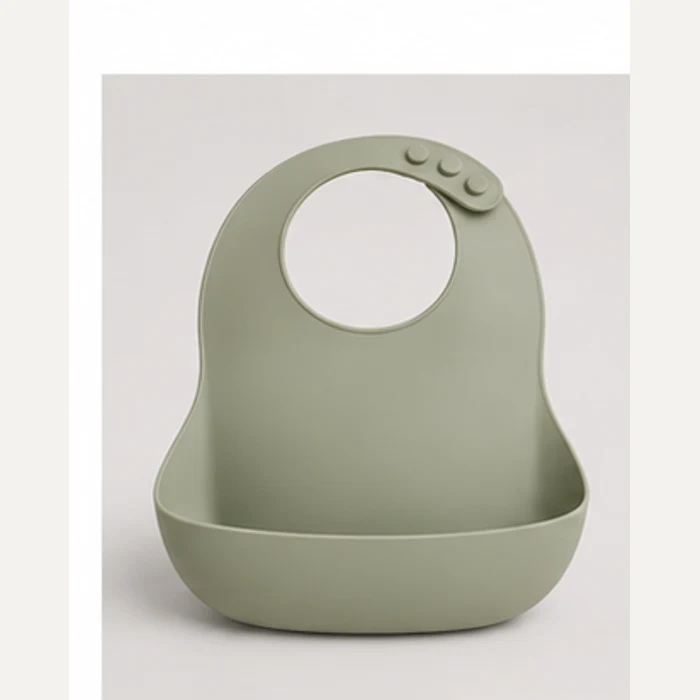
One-piece waterproof bib with a deep integrated food-catching pocket.
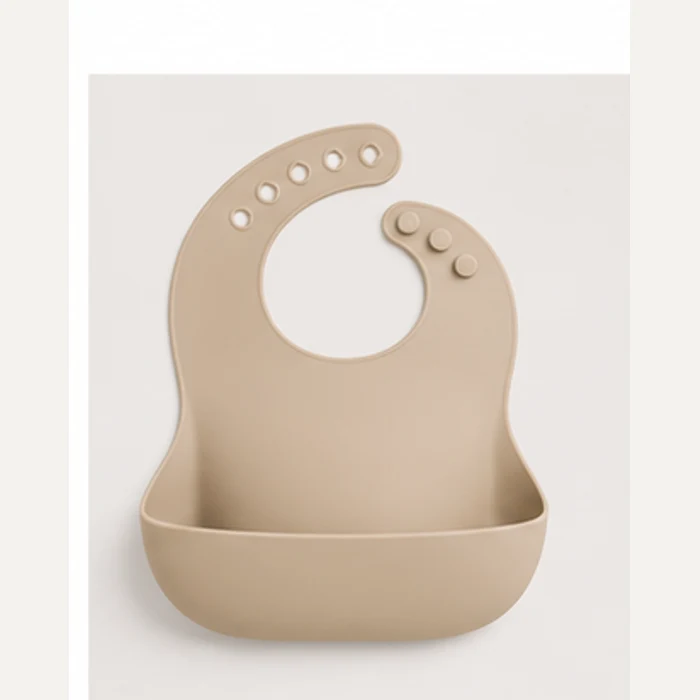
Multiple closure positions support a comfortable growing fit.
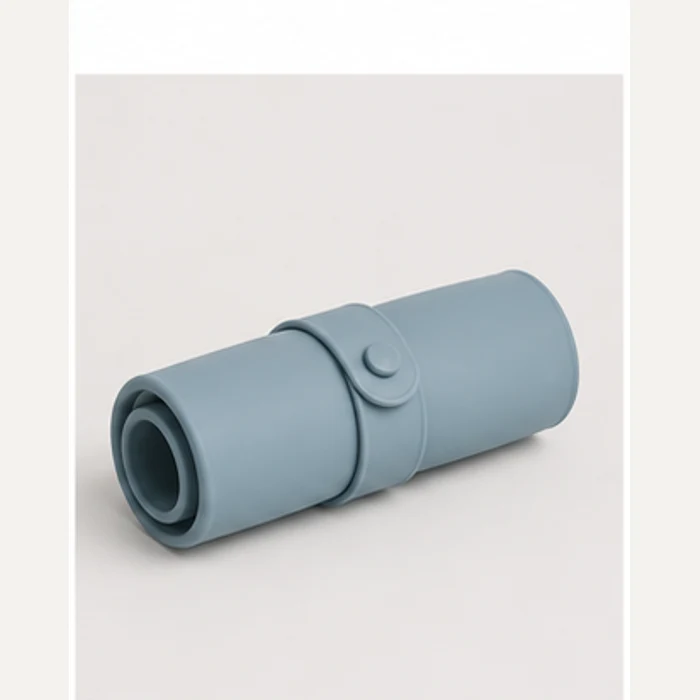
Flexible lightweight bib designed for compact storage and dining out.
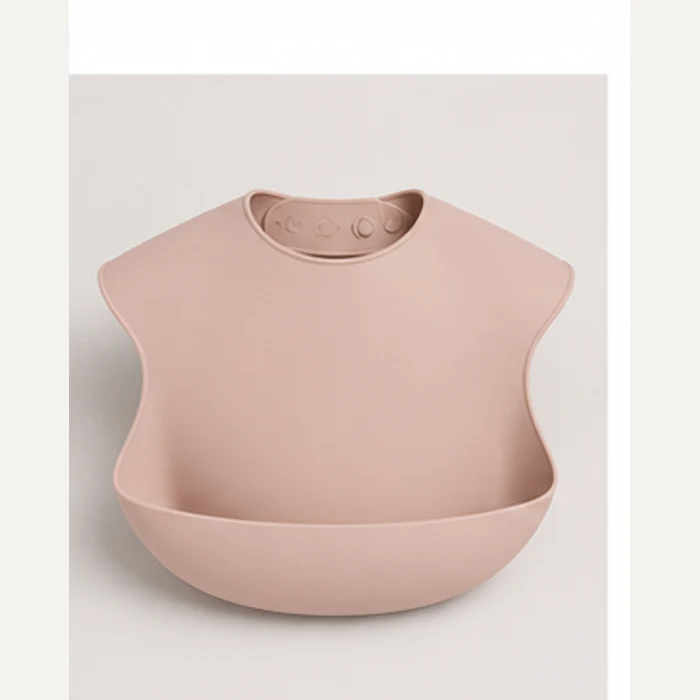
Broader front panel provides additional protection during mealtime.
B2B PROJECT INQUIRY
Share the intended product, destination market, order quantity and launch plan. Our project team will review the information and identify the next practical step.
Drawings are helpful but not required. A sketch, reference photo or physical sample can be used for an initial discussion.
GENERAL SOURCING INQUIRY