
Component Mix
Choose a bib, plate or bowl, cup and utensil combination based on the feeding stage, channel and target price position.
CONTROLLED SILICONE PRODUCT DEVELOPMENT
PRODUCT OVERVIEW
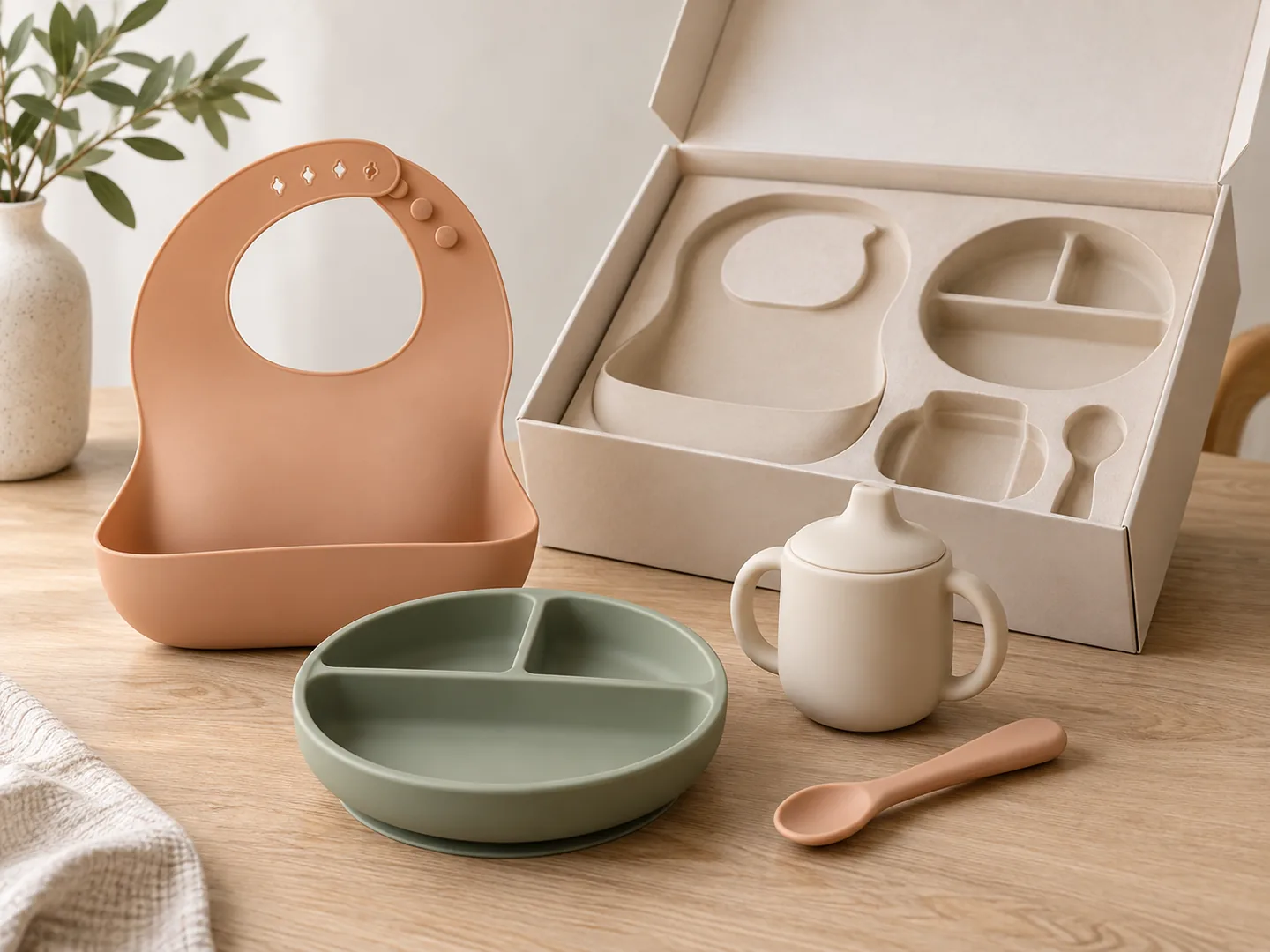
A custom silicone baby feeding gift set lets brands combine a catch-pocket bib, divided suction plate, handled training cup and spoon under one commercial SKU. Naike Silicone controls the component list, proportions, material scope, color family, branding and presentation together so the assortment is approved as a selling unit rather than as four unrelated samples.
The buyer brief should define the target feeding stage, included components, neck range, plate capacity, cup-lid route, spoon dimensions, color allocation, box size and retail channel. Those inputs guide individual tool reviews, shared design cues, component-specific validation, packed orientation, insert clearances and the order in which drawings and golden samples are approved.
Material documentation, performance statements, tool investment, MOQ, price, sampling, capacity and lead time remain conditional on the final set composition, component revisions, destination, test scope, color split, packaging minimums and current factory schedule. Buyers may combine established designs or request buyer-owned geometry after DFM review.
Product page updated:
Request a B2B QuotationENGINEERING & APPROVAL EVIDENCE
Each stage addresses a different purchasing risk: manufacturability, functional fit and private-label presentation.
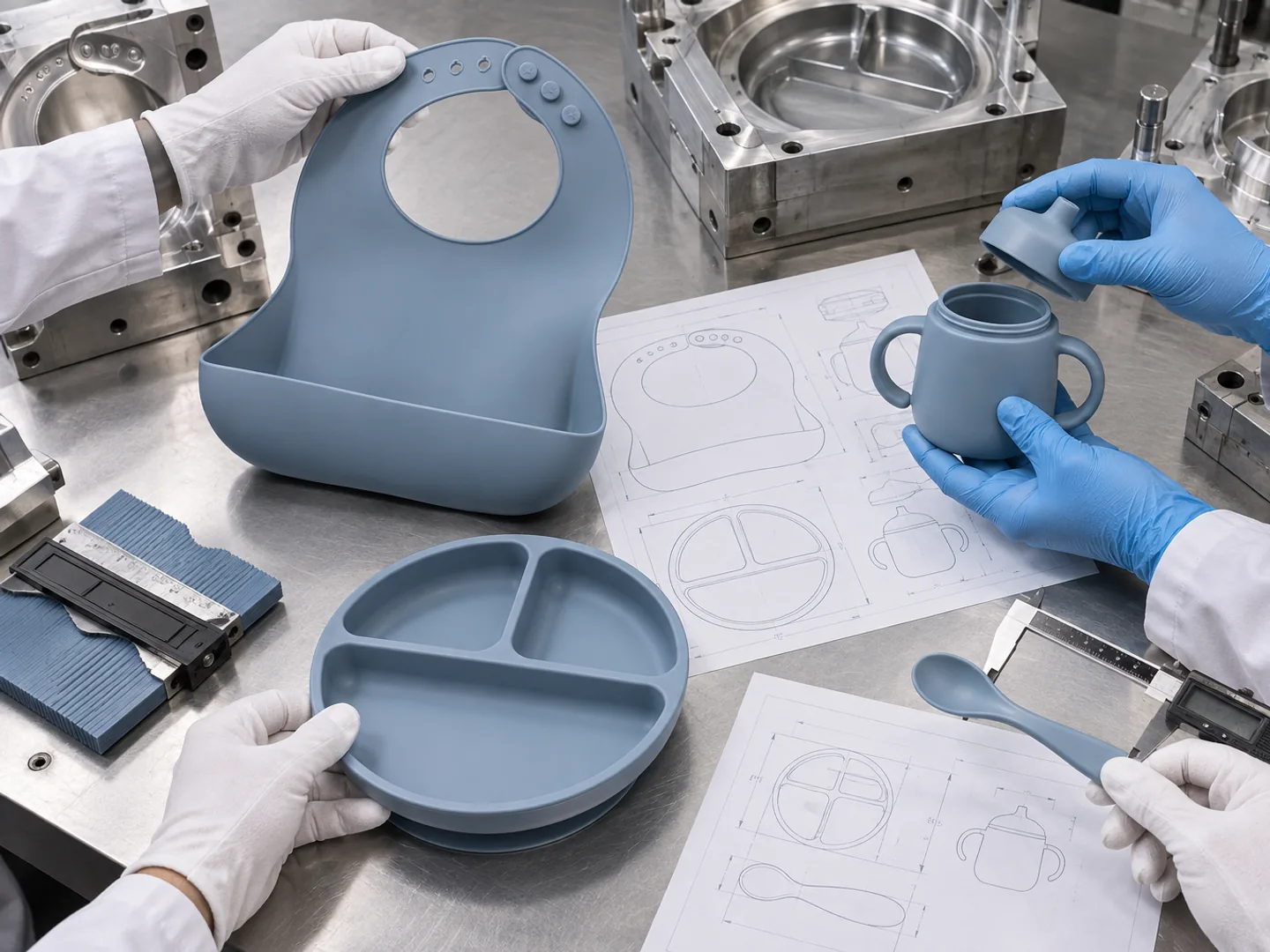
Neck closure, pocket opening, suction base, cup-lid interface and spoon geometry retain separate control points within one range specification.
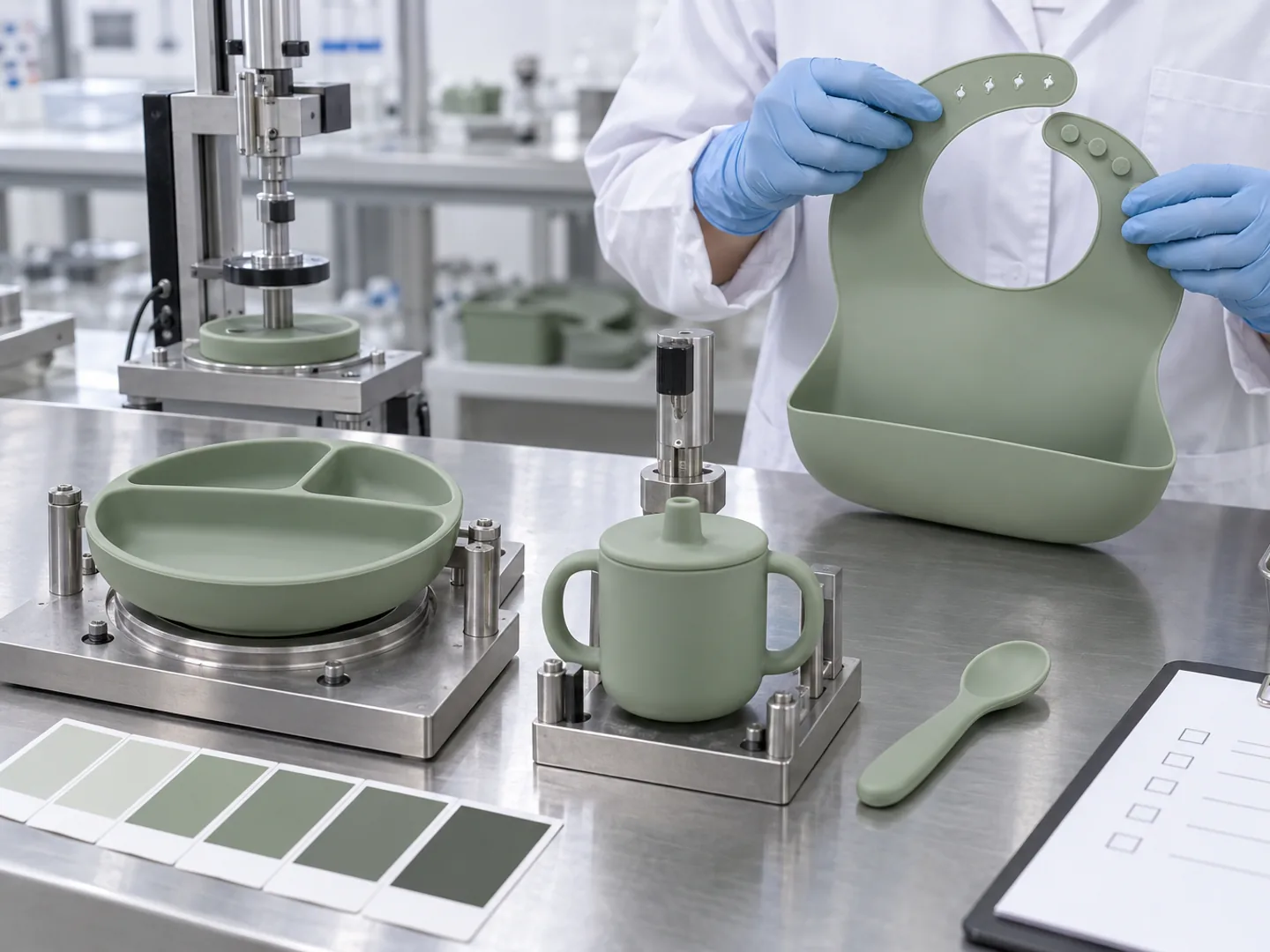
Component methods and physical color references are reviewed together without transferring one product's result to the rest of the set.
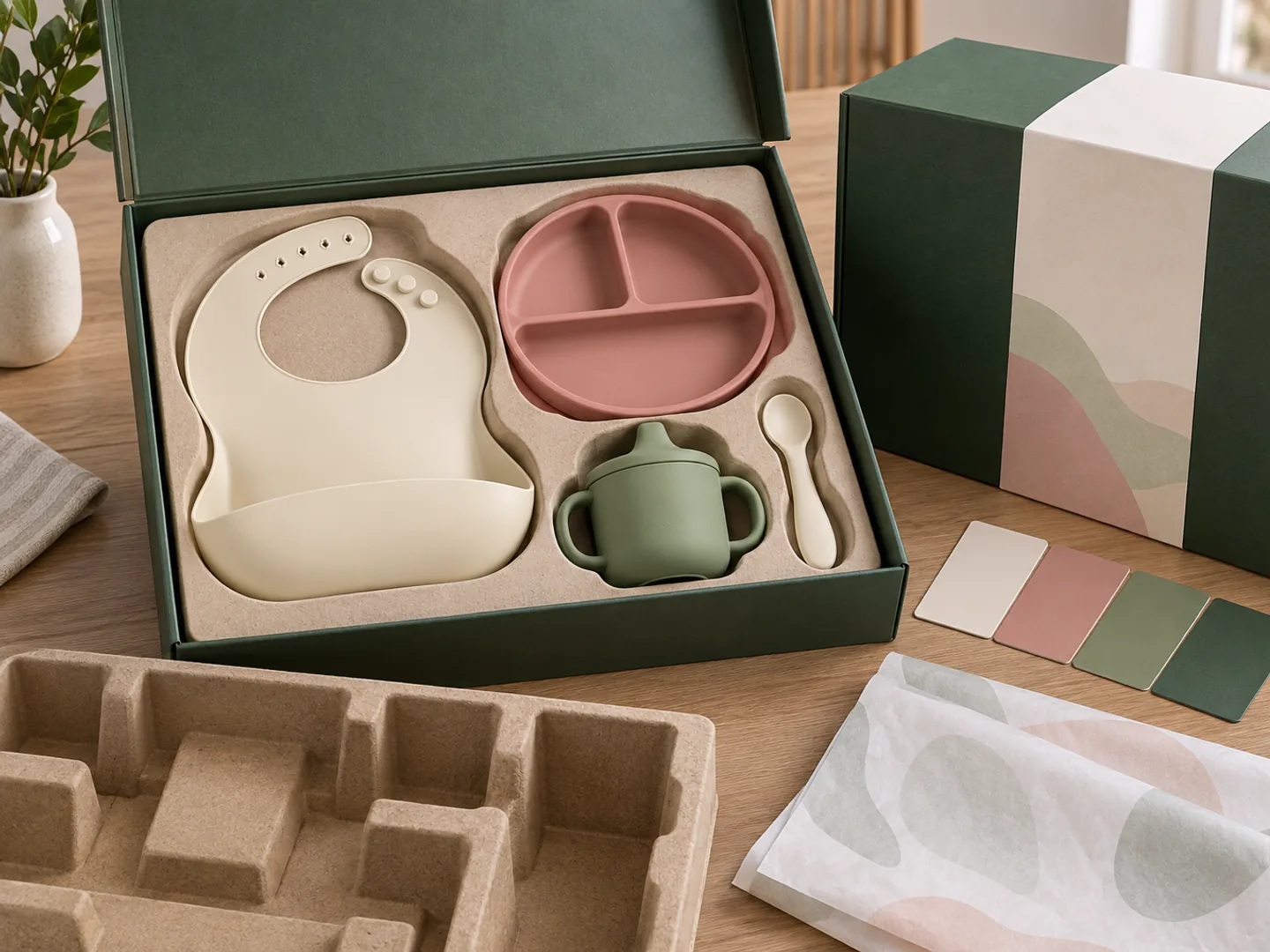
Insert fit, product orientation, artwork, protection and carton configuration are frozen against the complete assembled selling unit.
B2B SOURCING SNAPSHOT
Final terms depend on the approved specification, packaging, quantity and delivery plan.
| Control Point | Buyer Decision | Approval Basis |
|---|---|---|
| Set architecture | Included components, target feeding stage, color allocation and selling-unit count | Controlled range specification and approved complete set |
| Bib system | Neck positions, panel coverage, pocket opening and storage condition | Drawing, fit reference and buyer-agreed pocket and recovery observations |
| Tableware system | Plate capacity and base, cup-lid interface, handle clearance and spoon size | Component drawings, representative fixtures and approved physical samples |
| Material and color | Compound, cure route, hardness, pigment and component-to-component color tolerance | Finished-SKU evidence plus signed physical color standards for each part |
| Gift presentation | Molded marks, insert clearances, box, instructions, barcode area and carton protection | Artwork and complete packed golden sample |
| Commercial basis | Tool route, component quantities, MOQ, price, capacity and delivery phases | Quoted after set revision, test scope, packaging minimums and current loading are confirmed |
Each project is reviewed as a complete product specification.
Choose a bib, plate or bowl, cup and utensil combination based on the feeding stage, channel and target price position.
Adapt individual products or develop new molds while keeping each component's DFM and approval record separate.
Create a physical color family with solid or mixed shades and part-specific tolerance references rather than relying only on screen values.
Place molded marks and qualified decoration where they do not interfere with fit, food-contact priorities, flex zones or cleaning.
Develop molded-pulp or paperboard retention around actual samples, removal sequence, product protection and presentation.
Scope material, food-contact, labeling and instruction evidence to the destination and every finished component in the selling unit.
B2B BUYER FAQ
These answers define the decisions required before tooling, sampling and a reliable quotation.
Send the required components, target feeding stage, reference designs or drawings, expected set quantity, destination, color allocation, logo artwork, gift-box concept, test scope and delivery target.
Yes. A plate may be exchanged for a bowl, and cup or utensil formats can be reviewed, but each change affects tooling, validation, insert dimensions, package volume, MOQ and quotation basis.
Yes, subject to dimensional, material, visual and packaging review. Established designs can shorten one part of development, while buyer-owned components retain their own tooling and approval milestones.
Pantone direction starts the process, but pigment, thickness, texture, cure route and lighting influence appearance. Approve physical color references for every component and define the allowable family relationship.
Not automatically. Evidence scope depends on each compound, pigment, finished geometry, intended food, temperature, duration and destination. The document matrix should identify which record applies to which finished SKU.
The actual approved samples are placed in the proposed insert to check clearance, retention, removal, surface protection and movement through the agreed handling or transport simulation. CAD alone is not the final pack reference.
Yes, after the product set is frozen. Approve artwork, materials, insert fit, warnings, language variants, barcode position and a packed golden sample before printed-material release.
They depend on the chosen components, new and existing tools, color split, test plan, package minimums, order quantity and current capacity. A reliable program quotation follows set and pack-out review.
CATEGORY-SPECIFIC REVIEW
Neck adjustment, soft edges, coverage and comfortable thickness.
Opening stability, depth, cleaning access and shape recovery.
Coordinated colors, patterns, molded logos and multi-packs.
Roll-up presentation, paper bands, boxes and gift-set combinations.
Product-specific dimensions, handling, cleaning or conditioning evidence.
INQUIRY CHECKLIST
Providing clear requirements helps us evaluate tooling, samples, price and lead time.
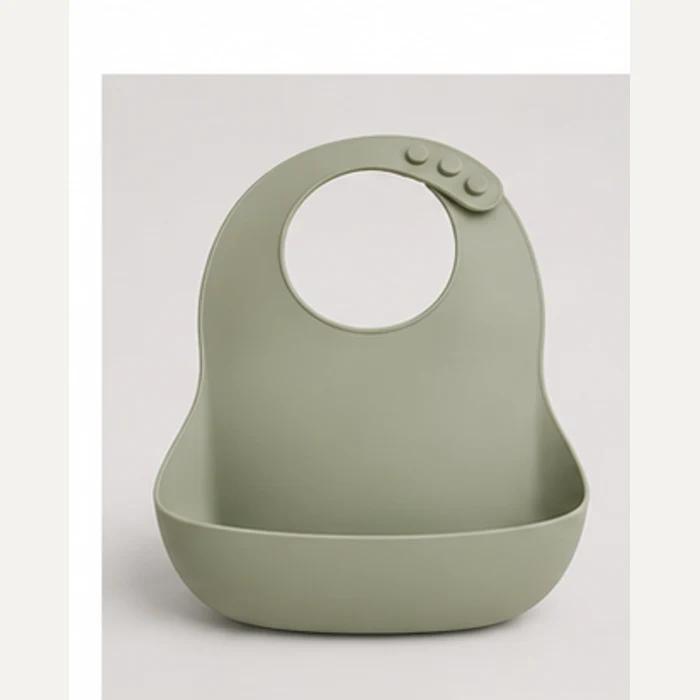
One-piece waterproof bib with a deep integrated food-catching pocket.
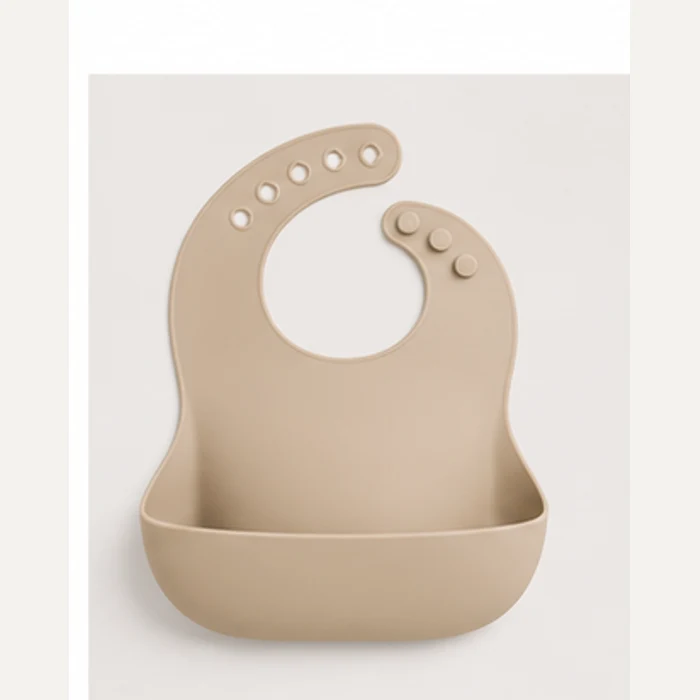
Multiple closure positions support a comfortable growing fit.
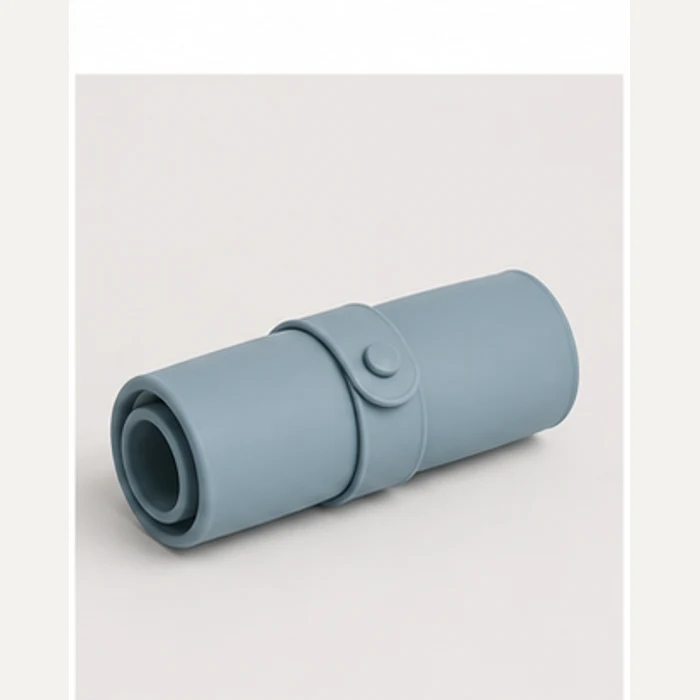
Flexible lightweight bib designed for compact storage and dining out.
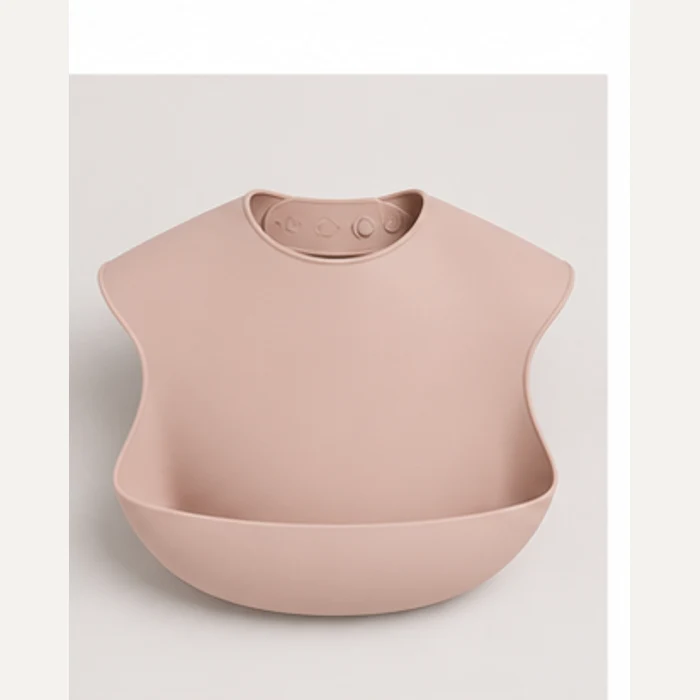
Broader front panel provides additional protection during mealtime.
B2B PROJECT INQUIRY
Share the intended product, destination market, order quantity and launch plan. Our project team will review the information and identify the next practical step.
Drawings are helpful but not required. A sketch, reference photo or physical sample can be used for an initial discussion.
GENERAL SOURCING INQUIRY