
Ring and Portion Geometry
Adjust outer ring diameter, center-post diameter, cavity depth, base profile and target fill volume around the approved product concept.
NON-STICK BAKEWARE
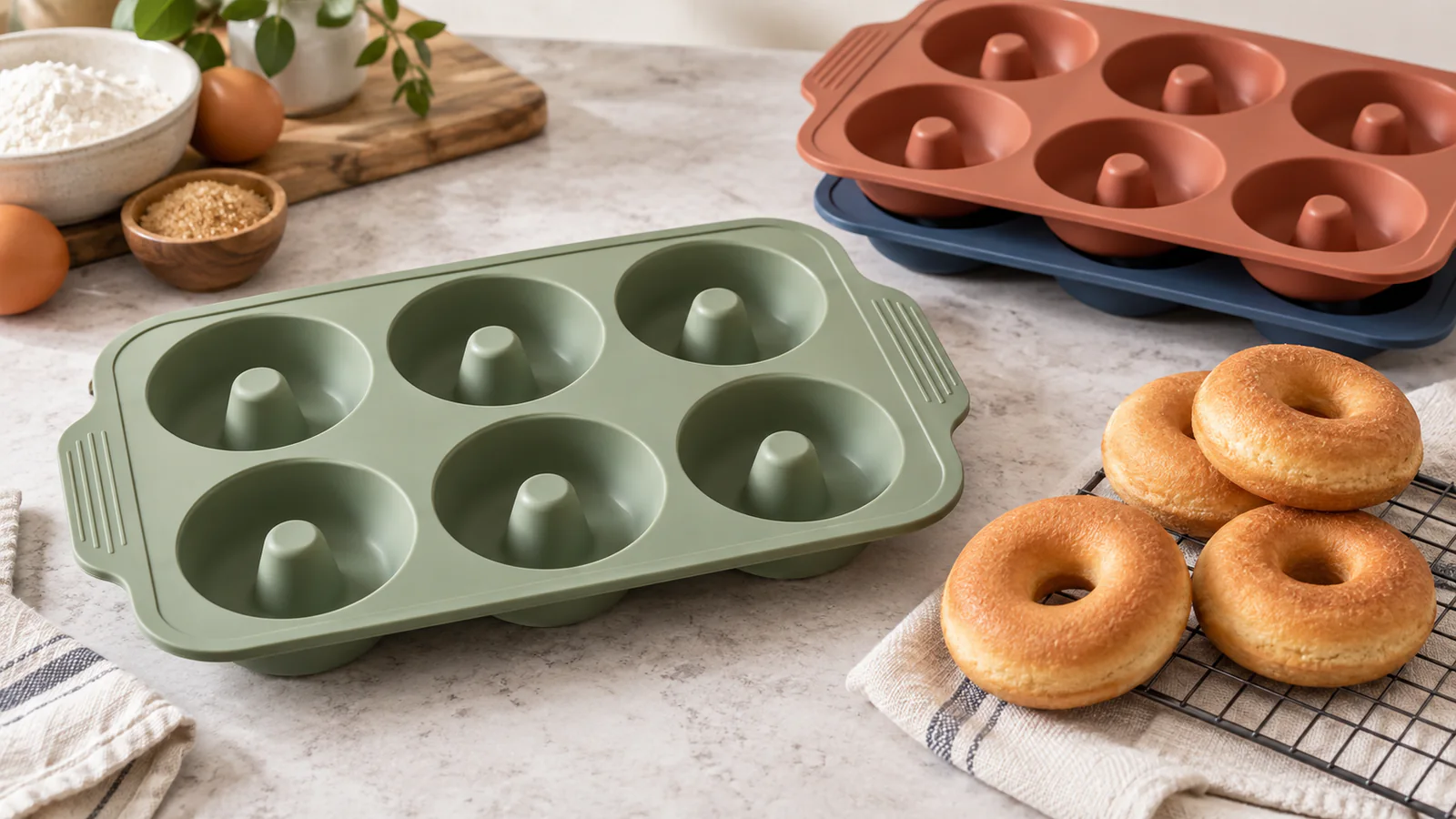
PRODUCT OVERVIEW
A custom silicone donut baking mold should be developed around a defined donut profile and handling method, not treated as a generic tray with interchangeable dimensions. Naike Silicone reviews the six-cavity layout, ring diameter, center-post geometry, cavity depth, spacing, wall transitions, rim support and overall footprint as one molded system. Those decisions affect fill volume, shape definition, tray stability, release behavior and packing efficiency.
The buyer brief should identify the representative recipe, target portion, oven or rack constraints, support surface, filling and demolding method, intended temperature and cycle conditions, cleaning method, destination market, annual demand, colors, molded branding and packaging. These inputs guide compound review, hardness, local thickness, draft, radii, parting line, vents, mold layout and inspection points. Production-representative samples can then be evaluated under named conditions before the design and selling claims are approved.
A successful trial with one recipe does not guarantee identical results with every formulation, oven, fill level or release method. Food-contact evidence, use temperatures, care language and destination-market responsibilities depend on the final compound, pigment, geometry and intended conditions. Tooling, MOQ, price, sample timing, capacity and lead time remain conditional on the approved drawing, validation plan, packaging, quantity and current factory schedule.
Product page updated:
Request a B2B QuotationENGINEERING & APPROVAL EVIDENCE
Each stage addresses a different purchasing risk: manufacturability, functional fit and private-label presentation.
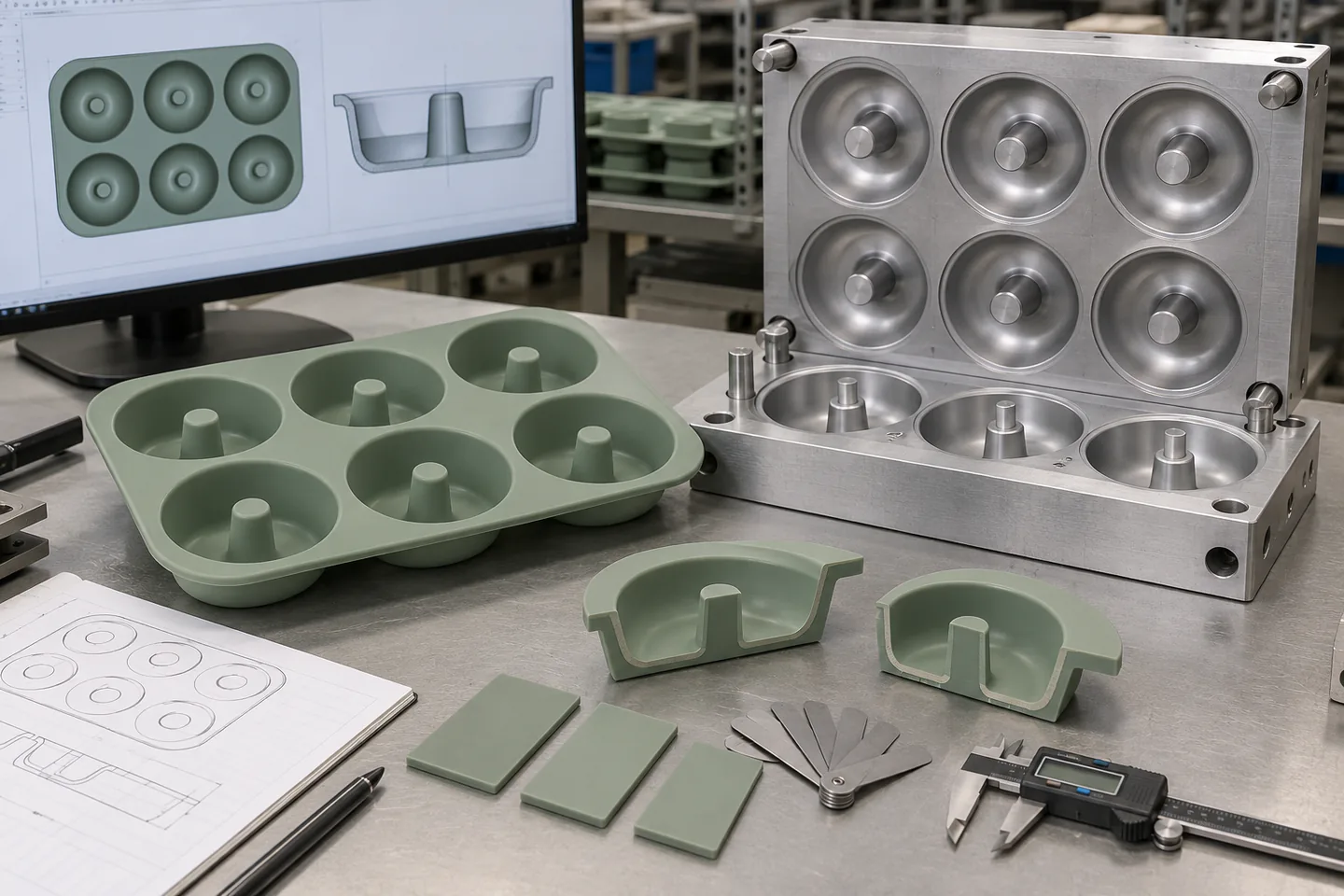
Ring diameter, center post, cavity depth, draft, wall transitions, rim support, parting line, vents and cavity layout are reviewed before tooling release.
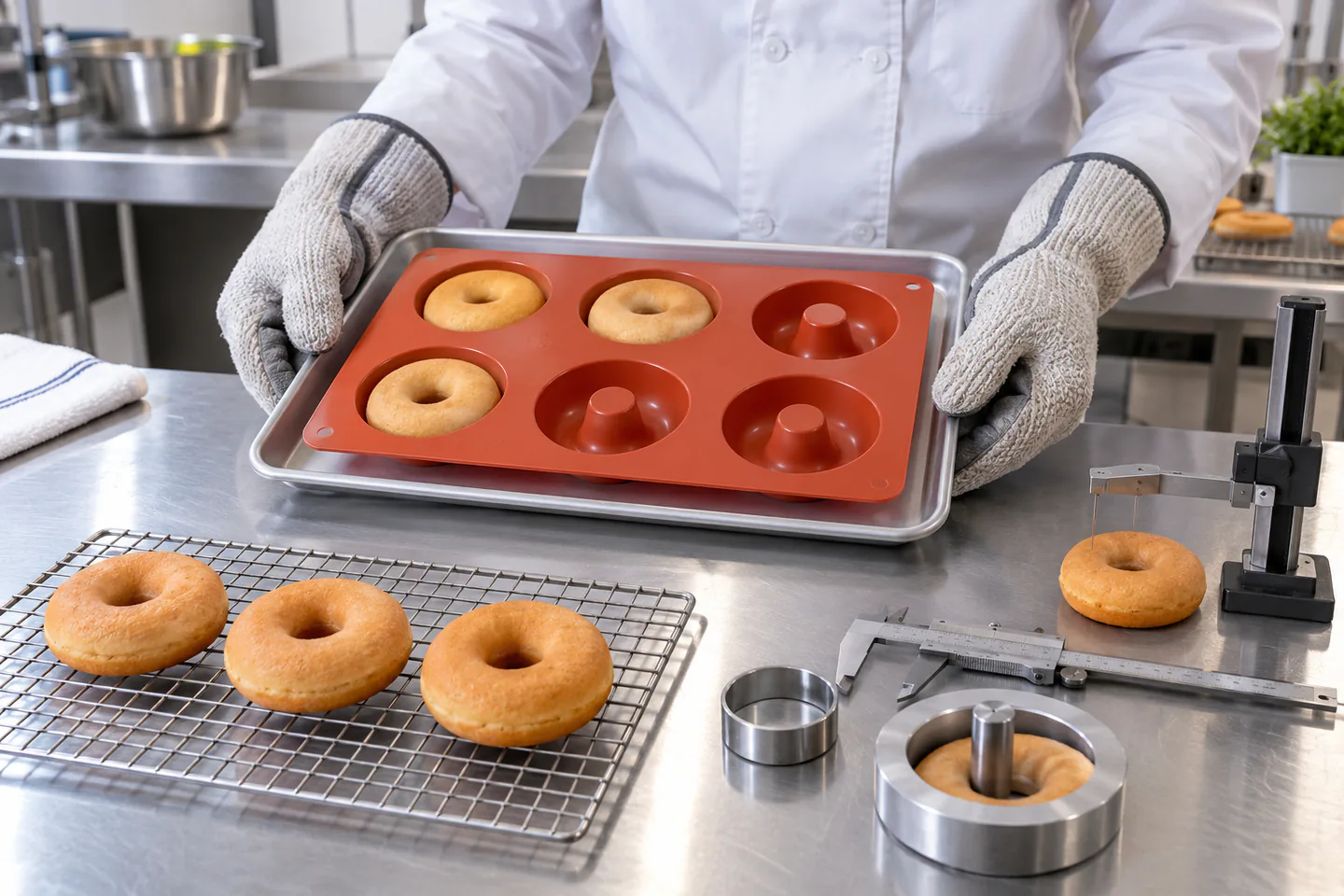
Buyer-approved recipes and named support, bake, cooling and demolding conditions provide a controlled basis for sample approval.
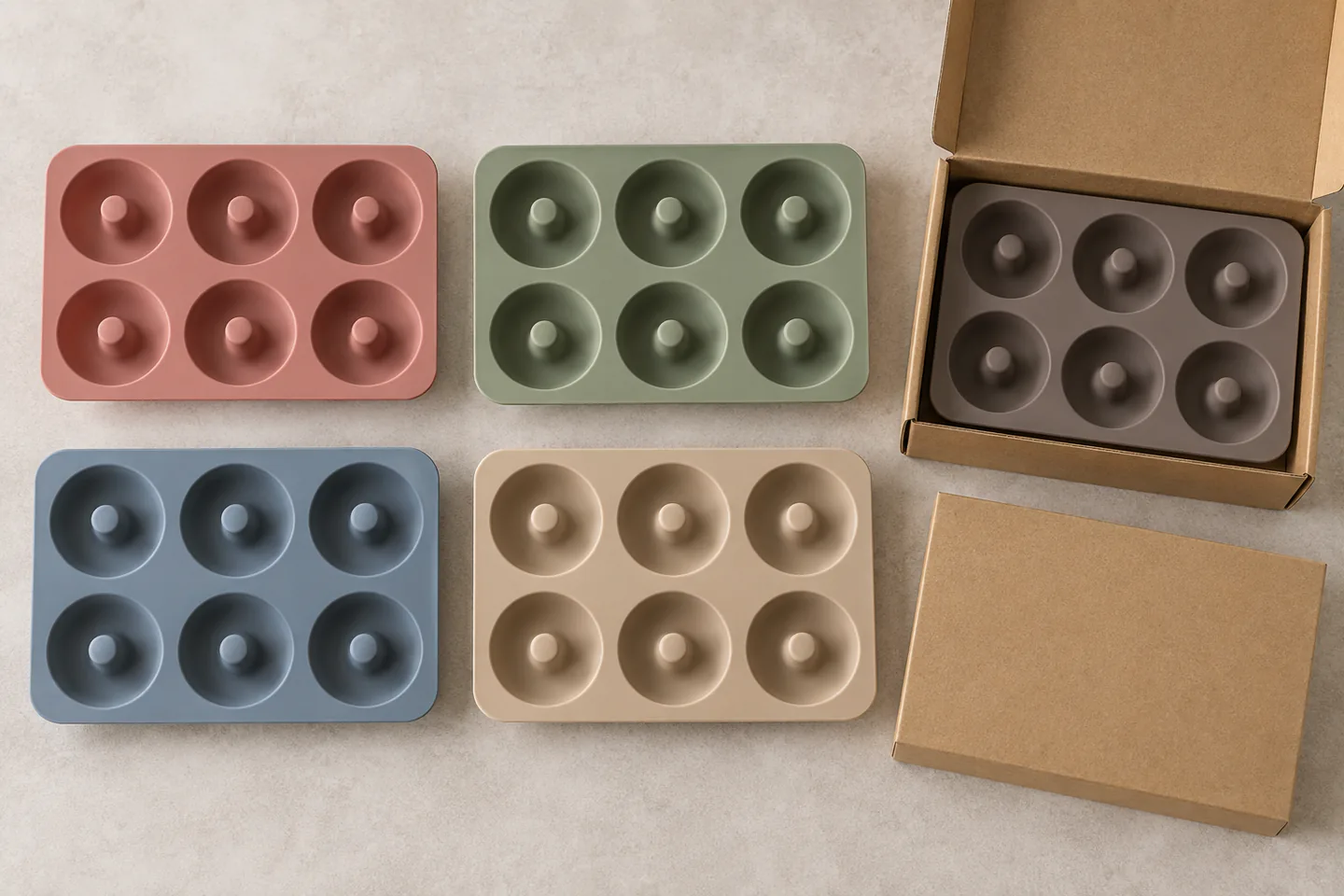
Pantone-referenced colors, molded brand zones, labels, retail boxes, carton count and protective packout are approved as one selling unit.
B2B SOURCING SNAPSHOT
Final terms depend on the approved specification, packaging, quantity and delivery plan.
| Control Point | Buyer Decision | Approval Basis |
|---|---|---|
| Cavity architecture | Six ring cavities with defined outer diameter, center post, depth, spacing and fill volume | Controlled drawing plus production-representative molded sample |
| Tray construction | Overall footprint, rim width, local thickness, corner radii and handling zones | Dimensions and loaded handling checked under the agreed support method |
| Baking validation | Representative recipe, fill level, support surface, time, temperature, cooling and demolding | Named trial method, observations and retained approval sample |
| Material and care | Silicone compound, cure route, hardness, pigment, intended conditions and cleaning method | Evidence and care language matched to the finished SKU and market |
| Branding and packout | Molded logo, color, marks, retail box or sleeve, inserts and master carton | Physical color reference and complete packed golden sample |
| Commercial basis | Tooling, cavities, MOQ, unit price, samples, capacity and delivery plan | Confirmed after geometry, material, validation, packaging and quantity approval |
Each project is reviewed as a complete product specification.
Adjust outer ring diameter, center-post diameter, cavity depth, base profile and target fill volume around the approved product concept.
Coordinate cavity spacing, rim width, corner shape, local thickness and handling zones with the named oven tray or support method.
Review compound, cure route, hardness, wall balance and conditioning response for the documented baking, cooling and cleaning conditions.
Set draft, radii and mold-surface finish for the approved recipe and demolding method without making an unsupported universal release claim.
Create Pantone-referenced colors plus manufacturable embossed or debossed logos and simple orientation or cavity marks.
Configure sleeves or boxes, care cards, labels, barcode zones, carton count and protection for retail or e-commerce distribution.
B2B BUYER FAQ
These answers define the decisions required before tooling, sampling and a reliable quotation.
Send the target donut dimensions, cavity count and tray footprint, representative recipe and fill volume, oven or rack constraints, support and demolding method, destination market, expected quantity, colors, branding and packaging. A dimensional sketch, reference sample or CAD file helps define the tooling scope.
Yes. Outer ring diameter, center-post diameter and taper, cavity depth, base profile and spacing can be reviewed together. The final geometry should be approved by drawing and production-representative sample because these dimensions interact with fill volume, shape and release.
Rim width, local thickness, cavity spacing and handling zones can be balanced for the agreed support method. Buyers should define whether the flexible mold will sit on a rigid baking tray, rack or other surface during filling, transfer and baking.
Buyer and factory agree a representative recipe, fill level, surface preparation, support surface, bake time and temperature, cooling period and demolding method. Results apply to those documented conditions and do not guarantee identical release with every recipe or oven.
Any release statement should be based on the approved compound, surface, recipe and validation method. We recommend precise care and use language supported by representative trials rather than an absolute claim that covers all formulations and conditions.
The evidence package depends on the selected compound, pigment, finished geometry, destination market and requested test scope. Confirm the required regulation and laboratory scope before approval so the supplied documents match the actual production SKU.
Yes. Pantone-referenced colors, manufacturable embossed or debossed brand zones, simple marks, sleeves or boxes, care cards, labels and export cartons can be developed. Approve a complete packed sample to control repeat orders.
Cavity geometry, mold layout, compound, hardness, color splits, validation, branding, packaging, order quantity and current capacity all influence the program. Commercial figures become firmer after the drawing, sample plan and selling-unit specification are approved.
CATEGORY-SPECIFIC REVIEW
Release, heat exposure, shape support and repeated-use durability.
Draft, radii, detail definition and balanced wall thickness.
Cake forms, pastry trays, mats, cups and coordinated tools.
Prototype handling, baking tests, packaging and approved samples.
INQUIRY CHECKLIST
Providing clear requirements helps us evaluate tooling, samples, price and lead time.
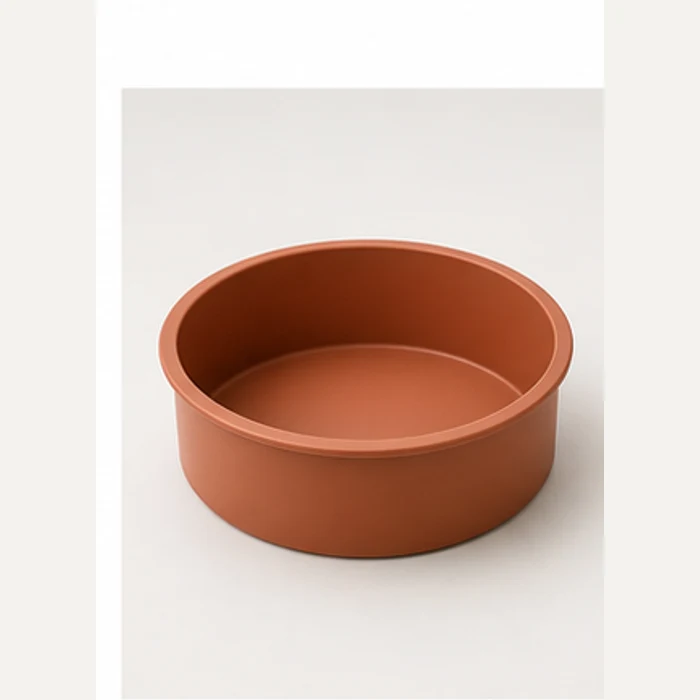
Classic flexible form for cakes, breads and chilled desserts.
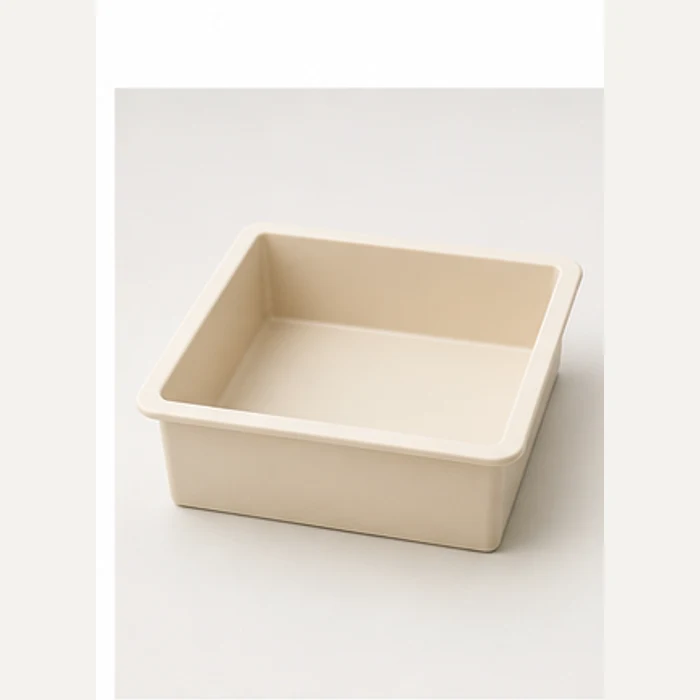
Straight-sided reusable mold for baking and presentation.
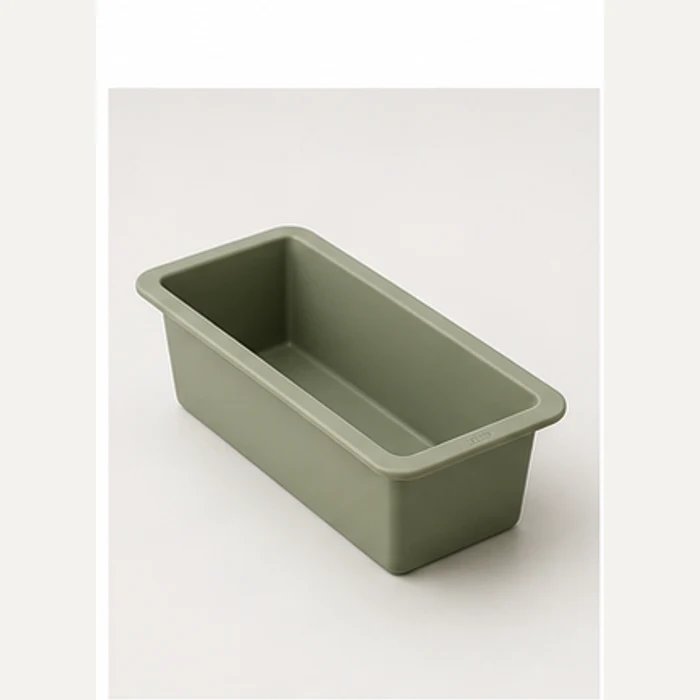
Easy-release loaf mold for bread, cake and private-label bakeware sets.
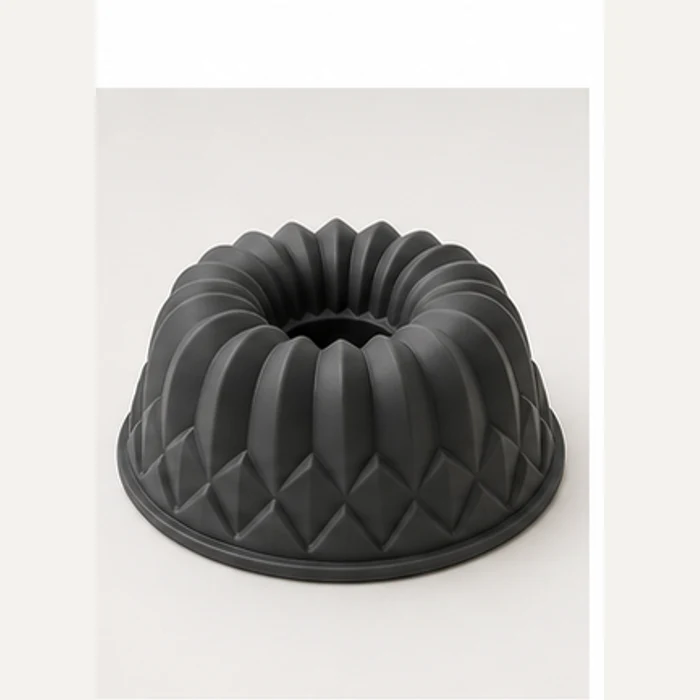
Detailed ring profile for distinctive baked finishes.
B2B PROJECT INQUIRY
Share the intended product, destination market, order quantity and launch plan. Our project team will review the information and identify the next practical step.
Drawings are helpful but not required. A sketch, reference photo or physical sample can be used for an initial discussion.
GENERAL SOURCING INQUIRY