
Cross-Section Development
Review beads, lips, flanges, radii and local thickness around the real mating groove and compression window.
CUSTOM DESIGN, TOOLING & PRODUCTION
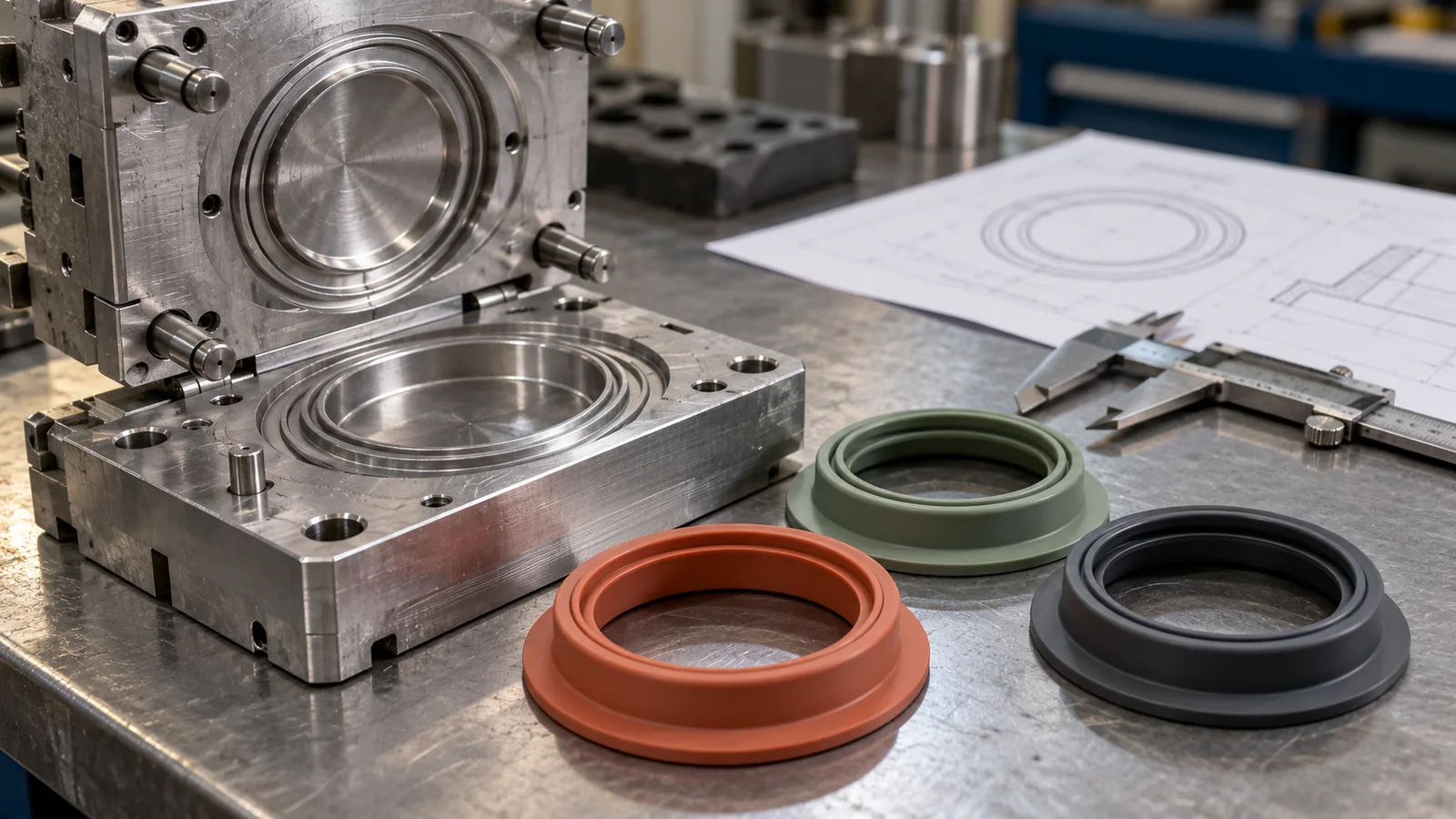
MOLD & TOOLING OVERVIEW
A custom silicone gasket prototype mold should answer specific design questions before production-tool investment: whether the sealing bead fills cleanly, whether the part releases without distortion, where flash can be controlled and whether the finished geometry can be measured repeatably. Naike Silicone reviews the buyer's CAD, mating interface, compression target, material concept and intended validation method before selecting a practical prototype-tool route.
The DFM review covers cross-section transitions, minimum wall, corner radii, groove interaction, parting surface, vent position, charge or gate strategy, shrinkage allowance, datum scheme and demolding direction. Rapid aluminum tooling can shorten the learning loop for suitable designs, but tool construction, cavity count and expected use remain project-specific and are confirmed only after drawing review.
First articles are evaluated against an approved drawing and inspection plan, not a general sealing promise. Dimensional, visual, compression, media, temperature and aging checks require named fixtures, conditioning, repetitions and acceptance criteria. Prototype findings can inform production-tool revisions, while material evidence, MOQ, price, lead time and release timing remain conditional on the approved scope and current capacity.
Product page updated:
Request a B2B QuotationENGINEERING & APPROVAL EVIDENCE
Each stage addresses a different purchasing risk: manufacturability, functional fit and private-label presentation.
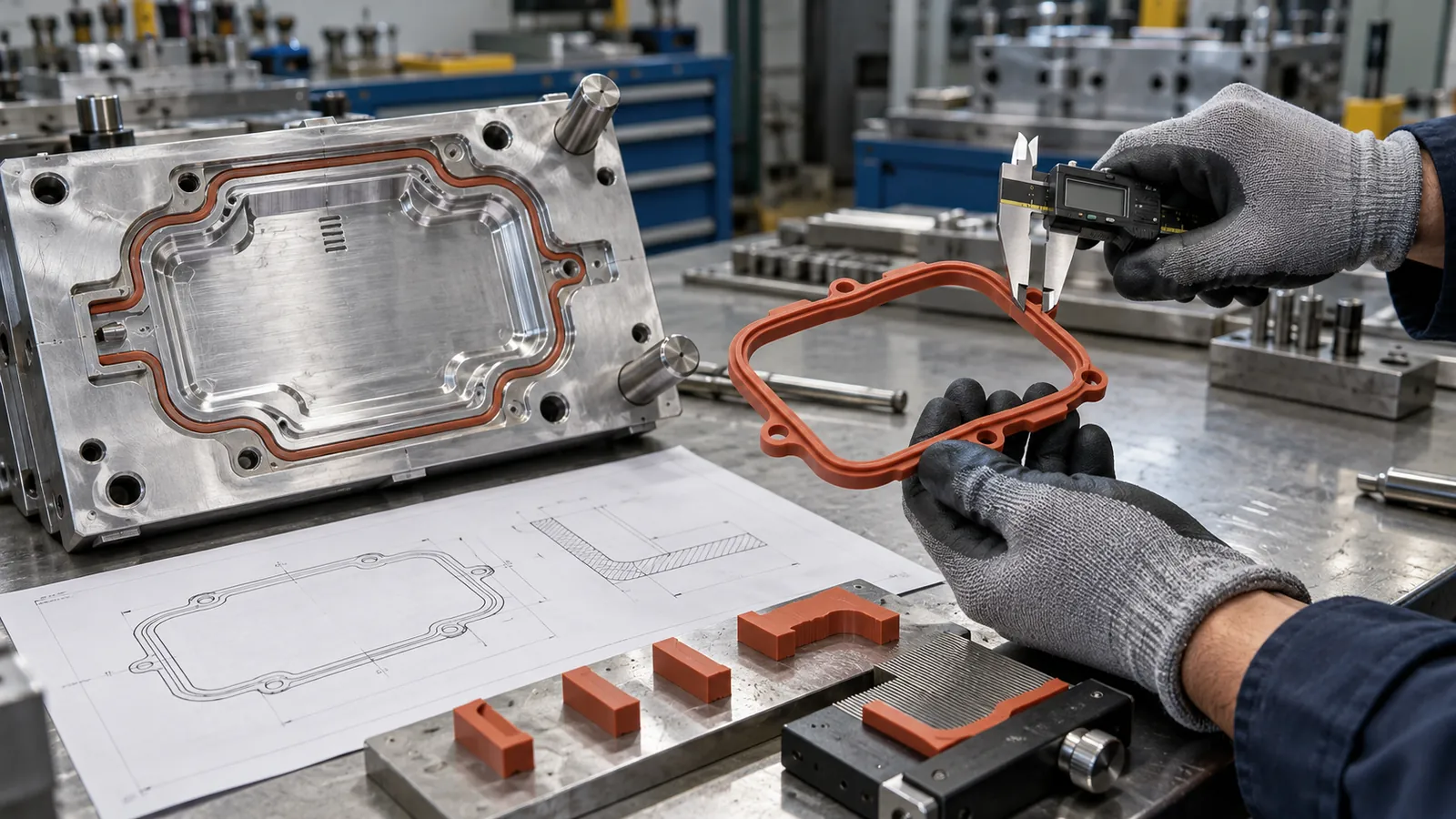
Illustrative scene: bead section, flange, datums, vents, flash boundary and release direction are checked before a tooling revision is approved.
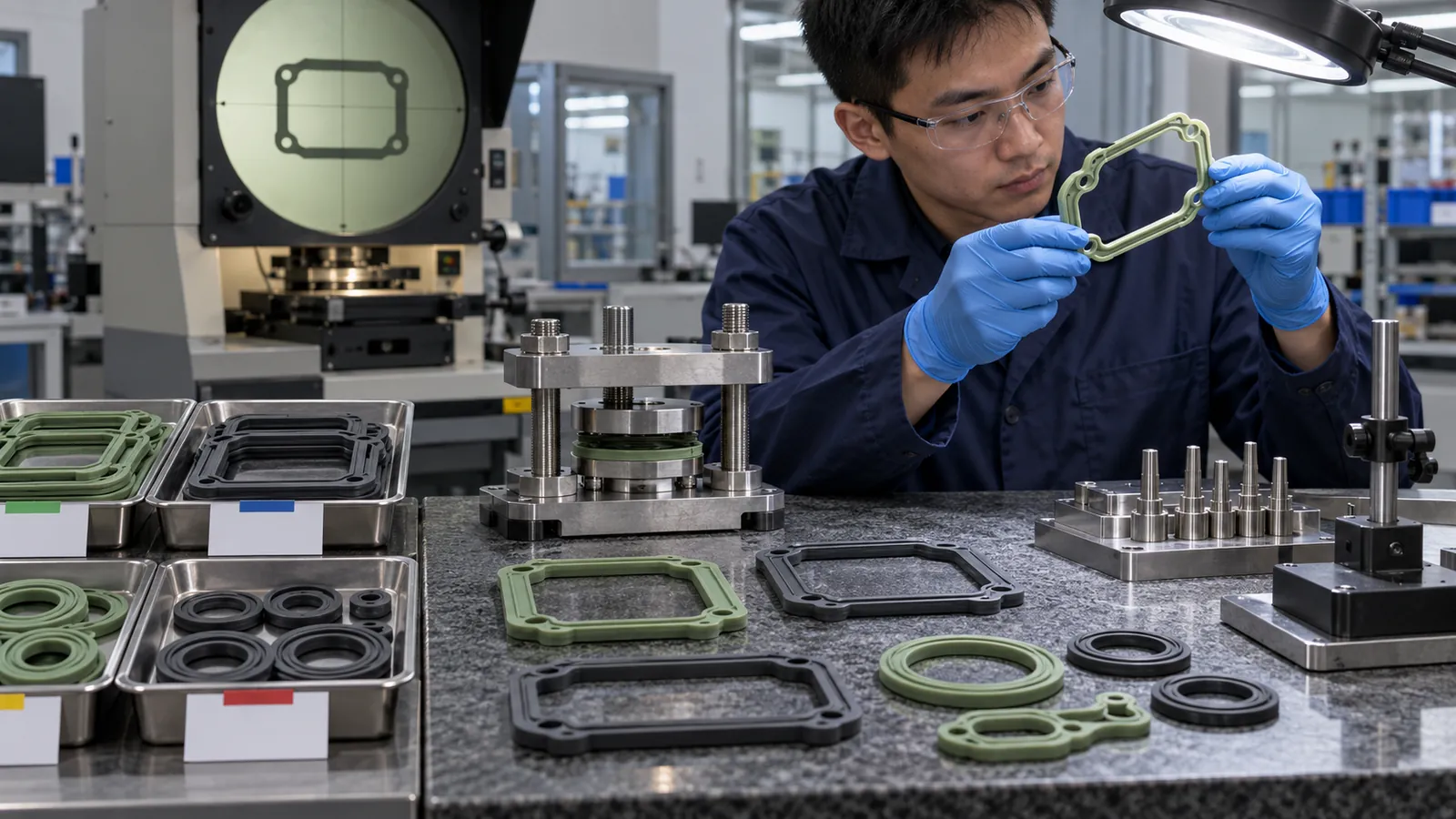
Illustrative scene: dimensional, visual and fixture-based checks follow buyer-approved conditioning and acceptance criteria; no result is implied by the image.
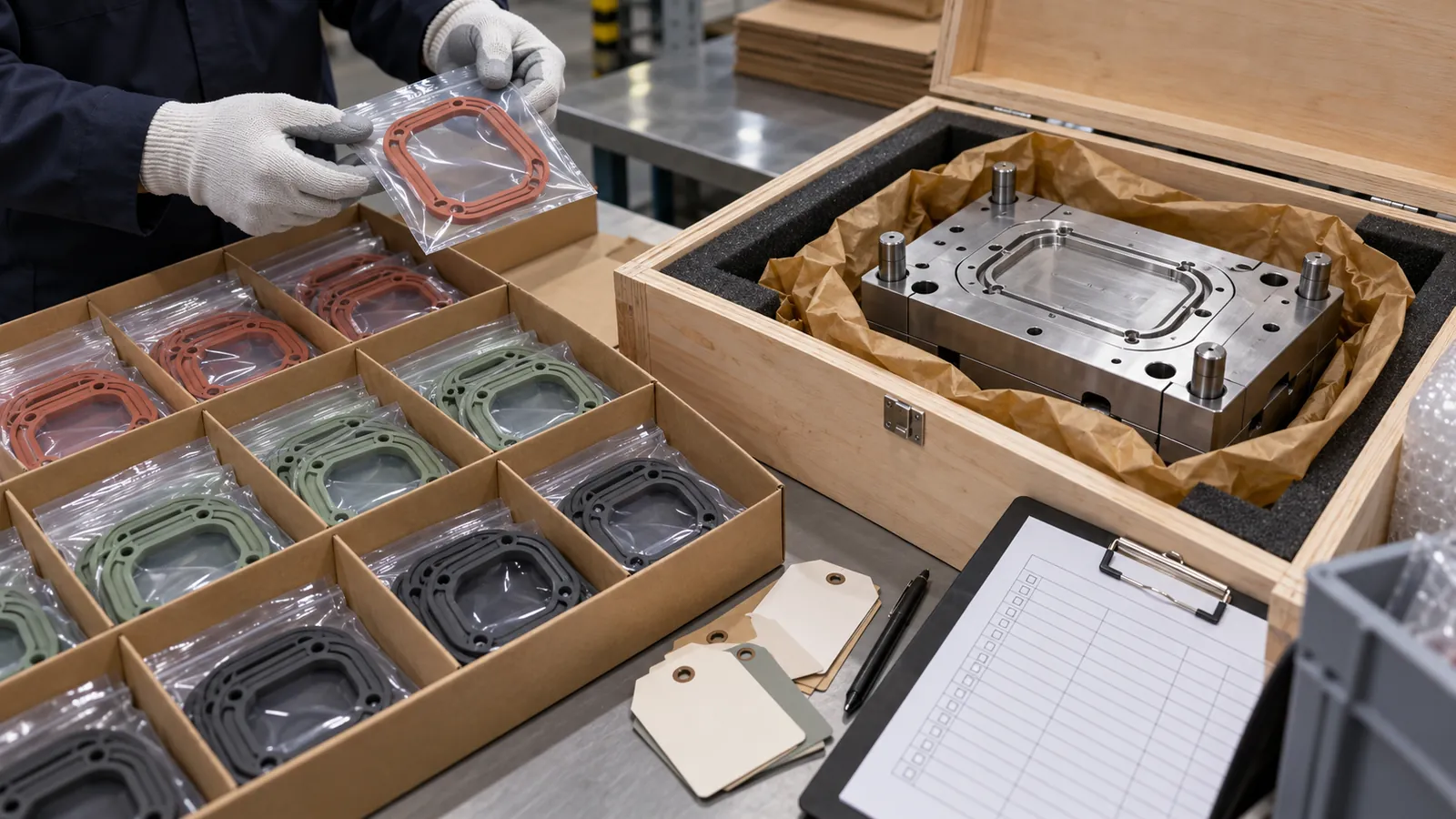
Illustrative scene: sample identity, revision status, count, surface protection and tool preservation are controlled before dispatch.
B2B SOURCING SNAPSHOT
Final terms depend on the approved specification, packaging, quantity and delivery plan.
| Control Point | Buyer Decision | Approval Basis |
|---|---|---|
| Design input | 3D CAD, controlled drawing, mating groove, datums and critical sealing section | Revision-identified files and a written design-intent review |
| Tool concept | Prototype material, cavity count, parting surface, vents, feed route and demolding | DFM approval before machining and documented changes after trial |
| Silicone system | Compound family, cure route, hardness, color and intended media or temperature exposure | Project specification plus applicable material evidence and sample conditioning |
| First article | Dimensions, flash zones, surface, fill, deformation and traceable sample identity | Inspection plan tied to the approved drawing and tool revision |
| Functional validation | Compression, sealing or recovery method, fixture, media, cycles and limits | Buyer-approved protocol; results apply only to the tested configuration |
| Production transfer | Revision closure, steel-safe changes, cavity strategy, control plan and golden sample | Formal release package before production-tool or repeat-order commitment |
Each project is reviewed as a complete product specification.
Review beads, lips, flanges, radii and local thickness around the real mating groove and compression window.
Select aluminum or another suitable trial-tool construction according to geometry, sample quantity and learning objectives.
Position parting surfaces, vents and overflow areas to protect functional sealing zones and enable controlled trimming.
Compare project-appropriate compound, cure, hardness and pigment options against the intended environment and test plan.
Define datums, critical dimensions, visual boundaries, sample identity and report format before the first tooling trial.
Convert approved prototype findings into a controlled production-tool revision, cavity plan and repeat-supply specification.
B2B BUYER FAQ
These answers define the decisions required before tooling, sampling and a reliable quotation.
Send 3D CAD and a controlled drawing, mating-part or groove dimensions, intended media and temperature range, compression target, material preference, sample quantity, validation plan and destination. If CAD is unavailable, provide measured samples and identify which dimensions are functional.
It can suit many early functional trials, subject to part size, cross-section, undercuts, tolerance, sample volume and expected tool use. The selected construction and its limits are confirmed after DFM rather than assumed from the material name.
Often yes when the selected compounds are compatible with the tool and process window. Each material condition needs its own traceable samples, conditioning and evaluation; comparable geometry does not make the results interchangeable.
DFM places the parting surface away from critical sealing zones where practical and defines vents, overflow areas and trimming boundaries. First articles are inspected against the approved visual and dimensional criteria before a revision is released.
No. Sealing depends on the final material, mating parts, compression, surface condition, media, temperature, assembly and test method. Prototype results support a defined decision only under the documented conditions.
The scope can include dimensions, mass, fill, surface, flash, deformation, fixture fit and buyer-defined functional checks. The exact report, sample count and acceptance limits should be agreed before the tooling trial.
Approved changes are closed against a revision-controlled drawing and DFM record. Production tool material, cavities, feed balance, process window, inspection plan and golden sample are then reviewed as a separate release stage.
Part size, cross-section complexity, undercuts, tolerance, tool construction, cavities, material trials, inspection, validation and packaging affect the plan. Commercial terms follow the approved scope and current manufacturing capacity.
CATEGORY-SPECIFIC REVIEW
Sketches, samples, drawings, CAD files and measurable performance requirements.
Parting lines, draft, wall thickness, venting, cavities and demolding strategy.
Dimensions, function, color, finish, logo and golden-sample signoff.
Controlled specifications, mold maintenance, batch inspection and change records.
INQUIRY CHECKLIST
Providing clear requirements helps us evaluate tooling, samples, price and lead time.
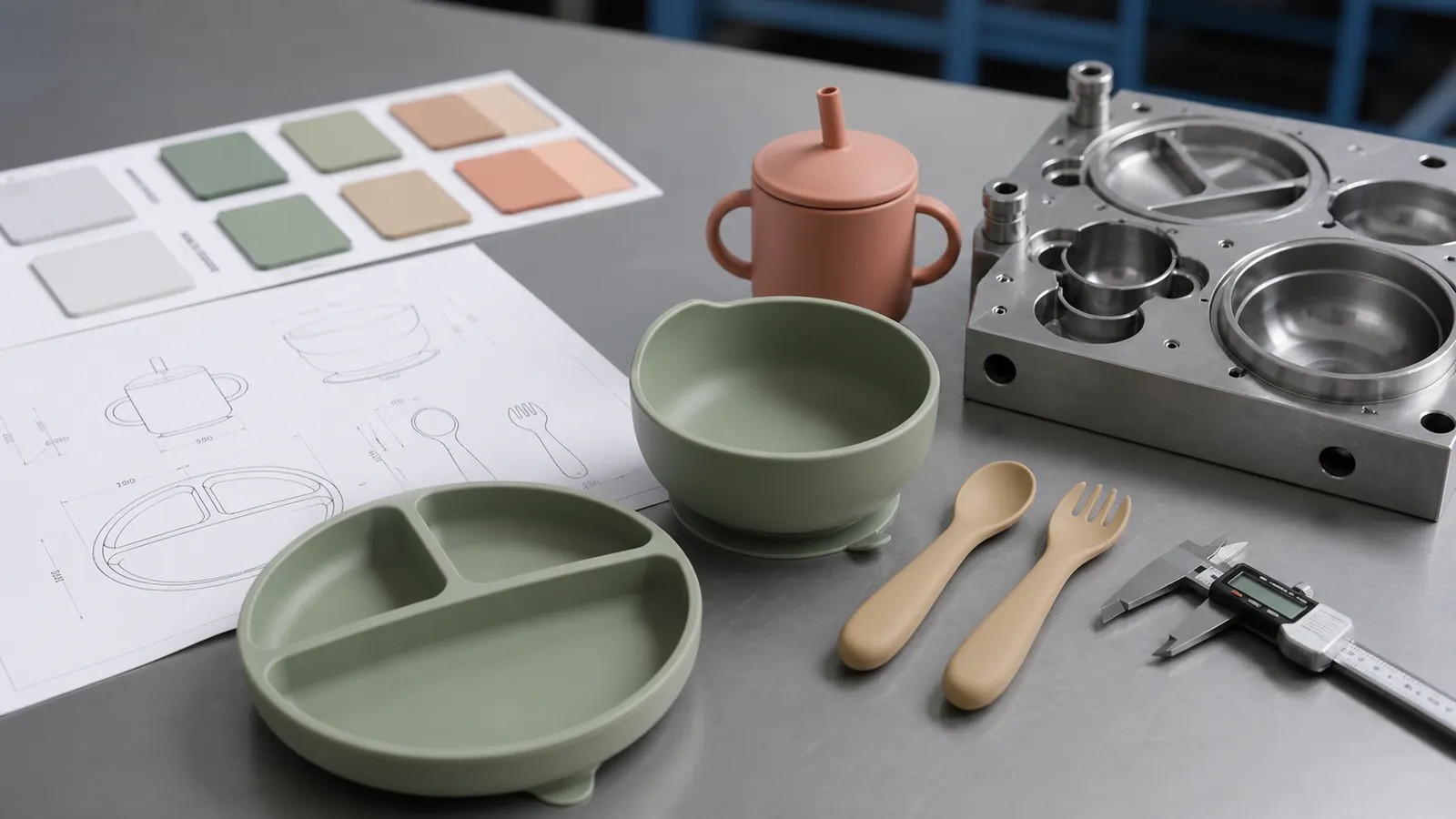
Compression tooling developed around plate flatness, suction geometry and clean demolding.
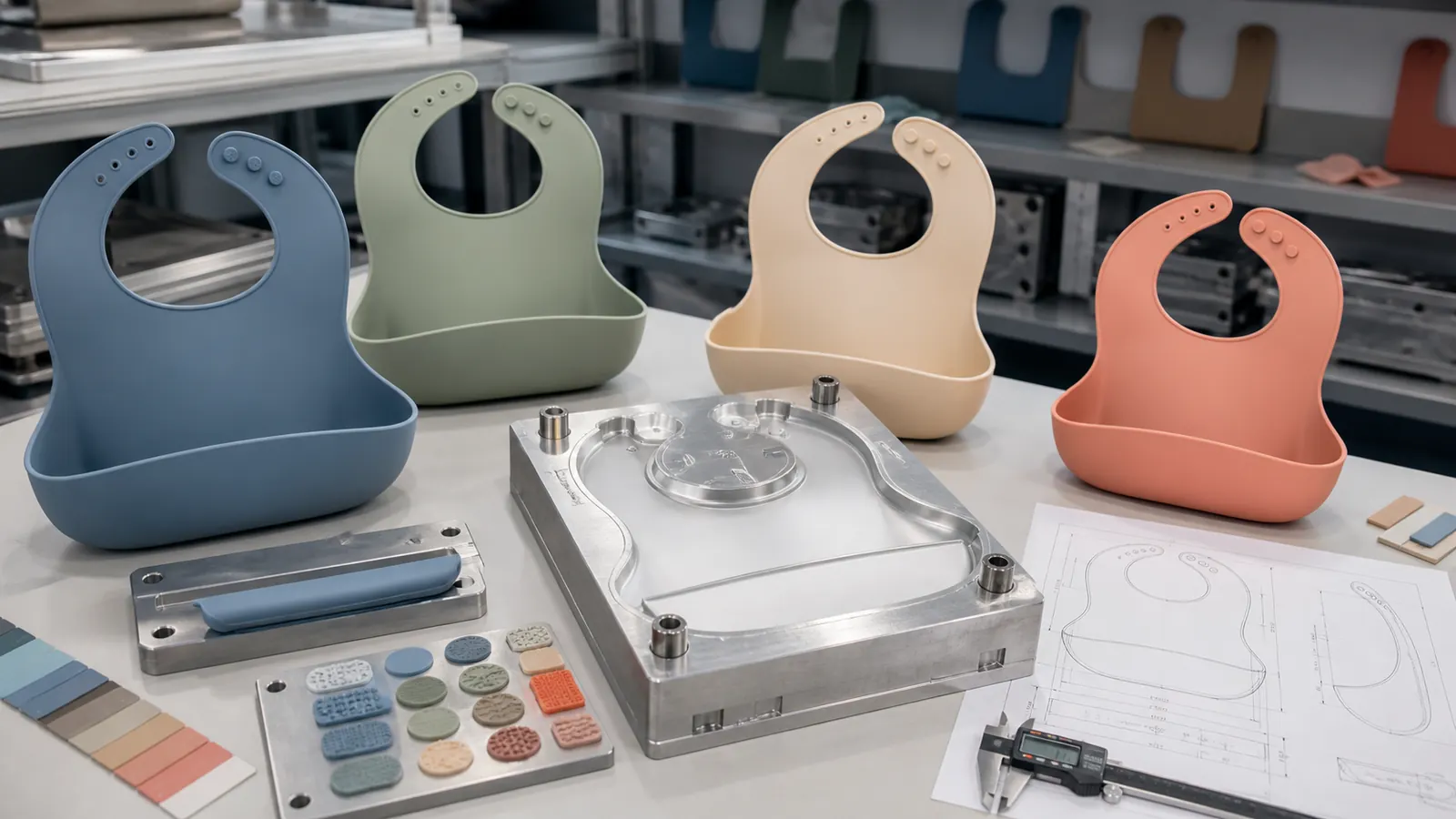
Dedicated bib tooling for thin flexible panels, adjustable neck details and a stable catch pocket.
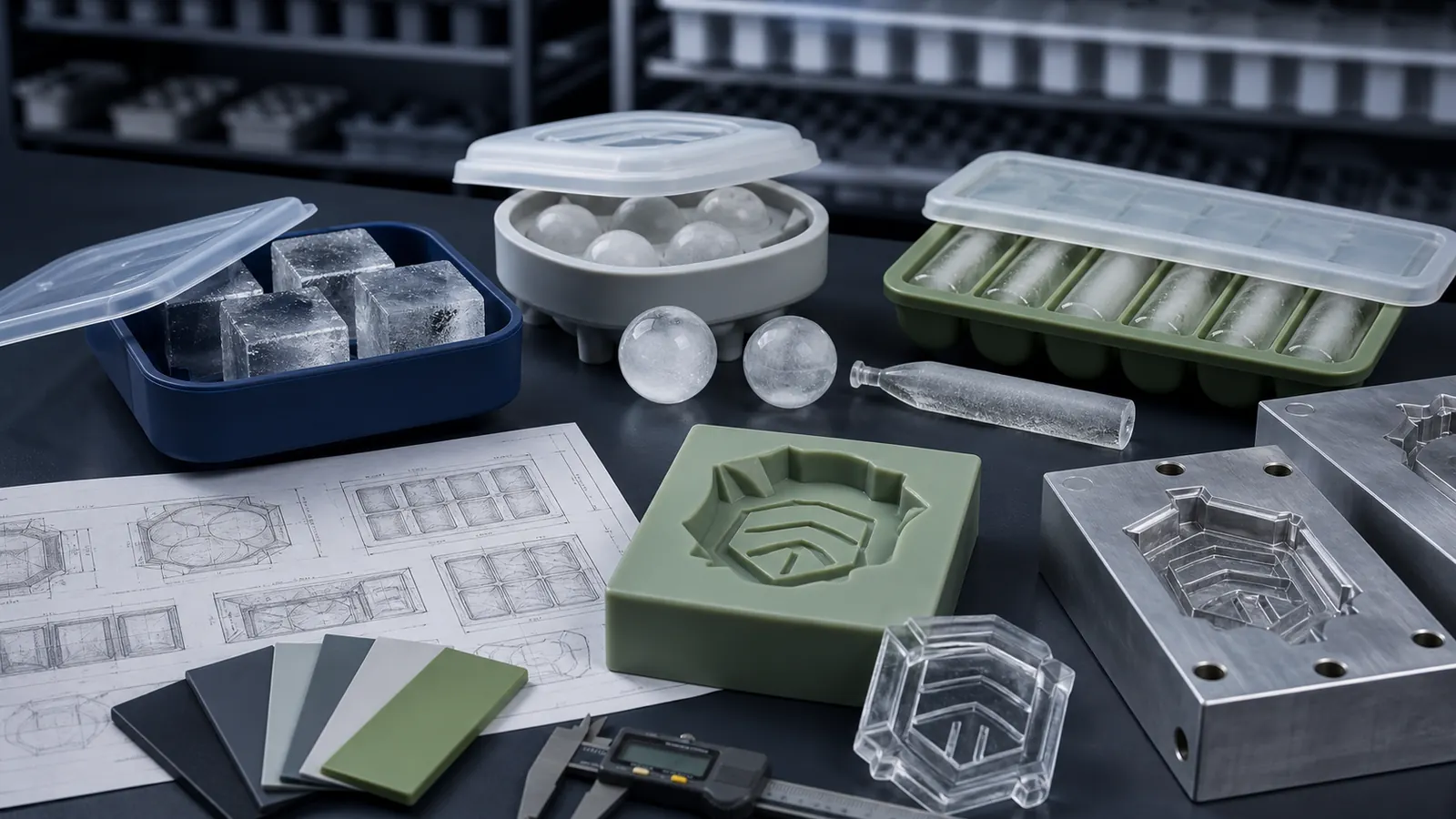
Custom-cavity tooling for branded ice shapes, freezer release and consistent fill volume.
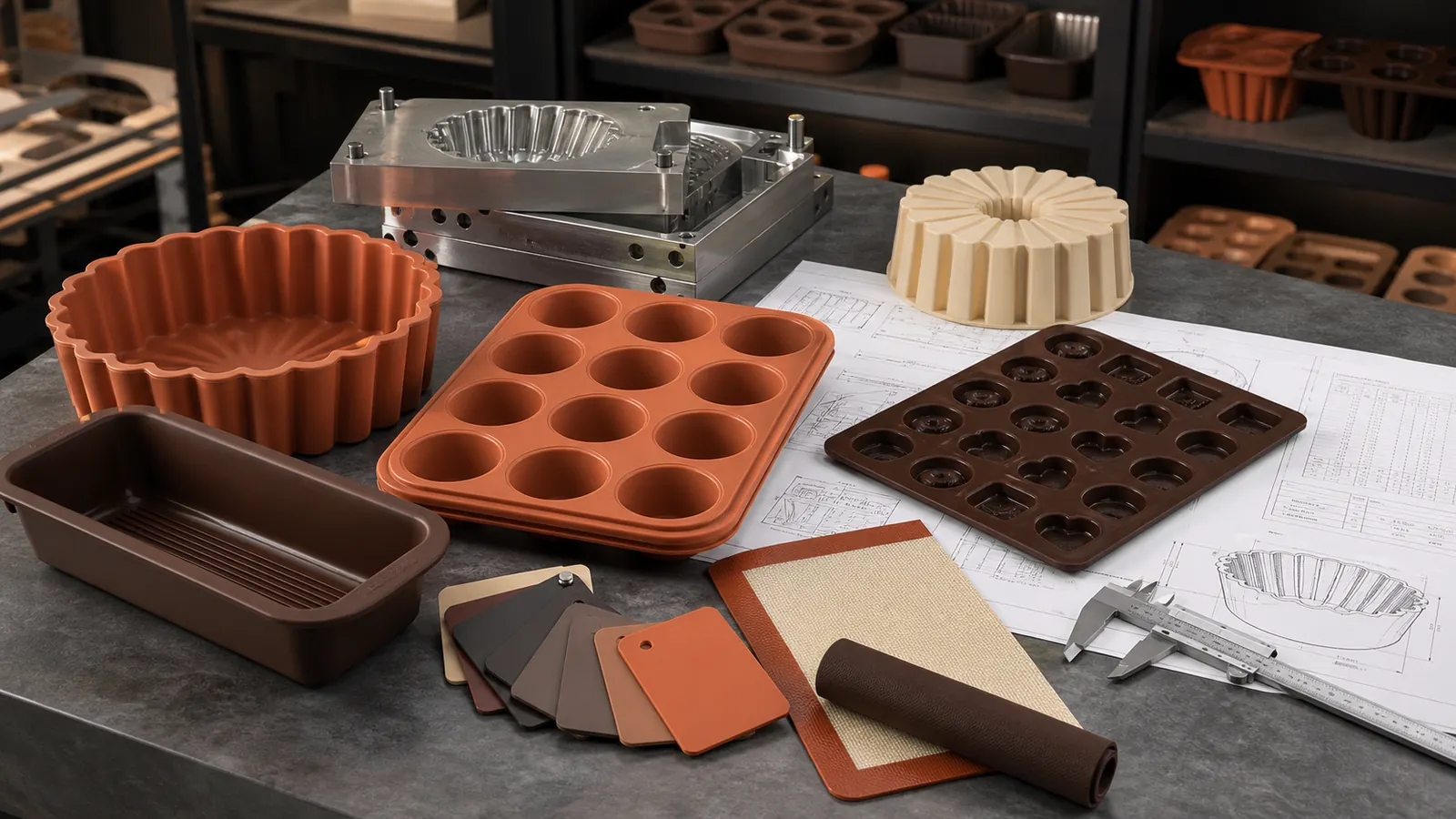
Heat-resistant bakeware tooling for detailed pastry shapes and repeated multi-cavity production.
B2B PROJECT INQUIRY
Share the intended product, destination market, order quantity and launch plan. Our project team will review the information and identify the next practical step.
Drawings are helpful but not required. A sketch, reference photo or physical sample can be used for an initial discussion.
GENERAL SOURCING INQUIRY